

Key Takeaways
-
Gross yearly income calculation
-
Estimated post-tax take-home pay
-
Standard monthly budget breakdown
-
Realistic cost-of-living perspective
-
Practical wealth-building strategies
Ever stared at your paycheck and wondered how it all adds up over a whole year?
If you are making exactly 21 dollars per hour annual salary, you might be trying to figure out if that is enough to cover your bills, save up for a rainy day, or even splurge on a nice dinner now and then.
Let’s face it, budgeting can feel like a chore. But knowing exactly where you stand financially changes everything.
So, let’s look at the numbers together and break down exactly 21 an hour is how much a year without any confusing financial jargon.
AI Overview
If you work a standard 40-hour work week for 52 weeks, earning 21 an hour brings your gross annual salary to $43,680 before taxes. Your actual 21 an hour take home pay will be lower depending on state and federal deductions. For most people, living on 21 an hour is completely doable with a solid budget, smart spending habits, and an eye on long-term savings goals.
The Raw Numbers: Your Annual Base Salary
Let’s calculate the absolute baseline of your income.
Assuming you work a standard full-time schedule, you are putting in 40 hours every single week.
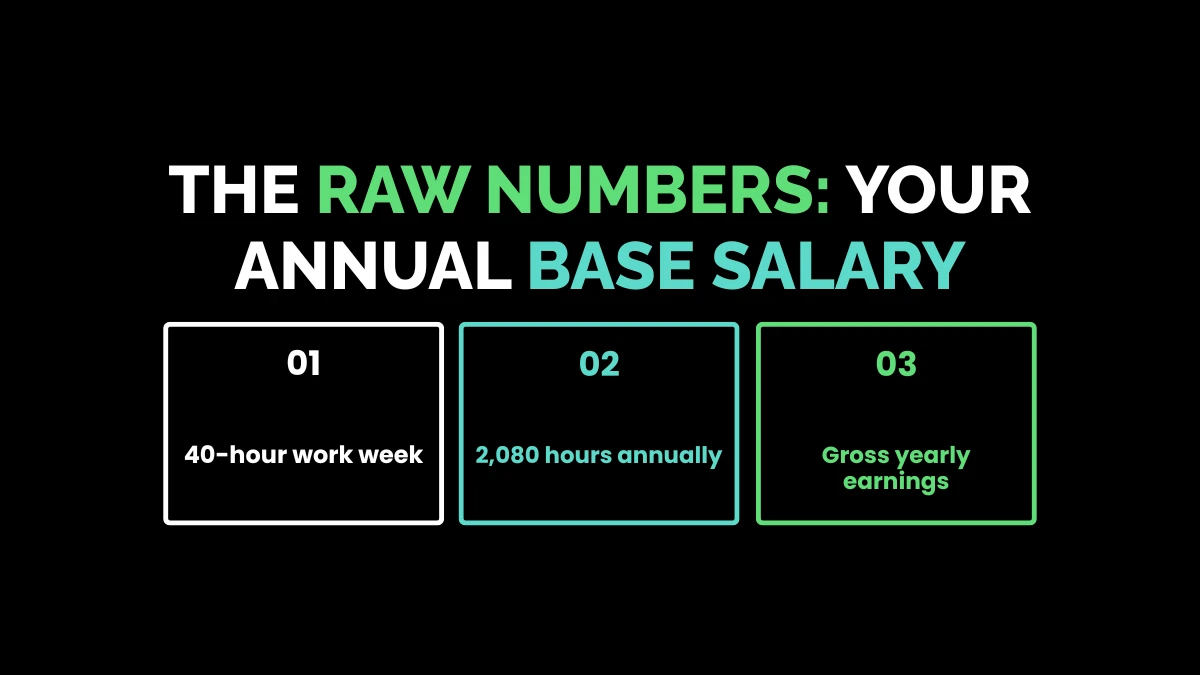
Multiply those 40 hours by 52 weeks, and you get a grand total of 2,080 working hours in a single year.
So, your gross annual salary is exactly $43,680.
This is the big number you see on an official job offer letter before Uncle Sam takes his cut.
Part-Time Variations
What if you do not work a full 40 hours every week?
Many of us work fluctuating schedules or part-time shifts.
Here is how your annual total shifts based on the actual hours you put in each week.
| Hours Worked Per Week | Total Annual Gross Pay |
| 15 Hours (Part-Time) | $16,380 |
| 20 Hours (Part-Time) | $21,840 |
| 30 Hours (Part-Time) | $32,760 |
| 40 Hours (Full-Time) | $43,680 |
| 50 Hours (With Overtime) | $57,330 |
Note: The 50-hour calculation assumes standard time-and-a-half pay ($31.50) for the 10 overtime hours.
The Reality Check: 21 an Hour Take Home Pay
We all know that gross pay is not what actually hits your bank account on payday.
Taxes, insurance, and retirement contributions eat away at that big number rather quickly.
Your actual 21 an hour take home pay depends heavily on the state you live in and your filing status.
Generally speaking, you can expect to lose roughly 15% to 25% of your gross income to various taxes.
Let’s look at a realistic estimate of what your actual paycheck will look like after standard deductions.
| Pay Period | Gross Pay Amount | Estimated Tax Deduction (20%) | Estimated Net Take-Home Pay |
| Hourly | $21.00 | $4.20 | $16.80 |
| Daily (8 Hours) | $168.00 | $33.60 | $134.40 |
| Weekly (40 Hours) | $840.00 | $168.00 | $672.00 |
| Bi-Weekly (80 Hours) | $1,680.00 | $336.00 | $1,344.00 |
| Monthly | $3,640.00 | $728.00 | $2,912.00 |
| Annually | $43,680.00 | $8,736.00 | $34,944.00 |
Based on available data, a net income of around $2,912 every single month is what you will actually have available to pay your rent and buy your groceries.
Monthly Budget Blueprint
Now that you know your estimated monthly take-home pay is around $2,912, how do you spend it wisely?
Here at Weird Wealth, we love breaking down complex money situations into simple, actionable steps.
Let’s use a popular budgeting framework called the 50/30/20 rule to organize your cash.
This rule splits your net income into three distinct buckets: needs, wants, and savings.
The Budget Breakdown
-
50% for Needs ($1,456): Rent, utilities, groceries, transport, and minimum loan payments.
-
30% for Wants ($874): Dining out, streaming services, hobbies, and weekend trips.
-
20% for Savings & Debt ($582): Emergency fund, retirement accounts, or extra debt paydown.
If your rent is incredibly high, you might have to borrow some money from your wants bucket to cover your needs.
Living on 21 an Hour: Is It Actually Enough?
The honest answer to this question depends entirely on your lifestyle and where you choose to live.
If you are trying to rent a trendy apartment in downtown Los Angeles or New York City, things will feel incredibly tight.
However, in medium or low-cost-of-living areas, a 21 dollars per hour annual salary provides a perfectly stable, comfortable life.
Housing and Rent Realities
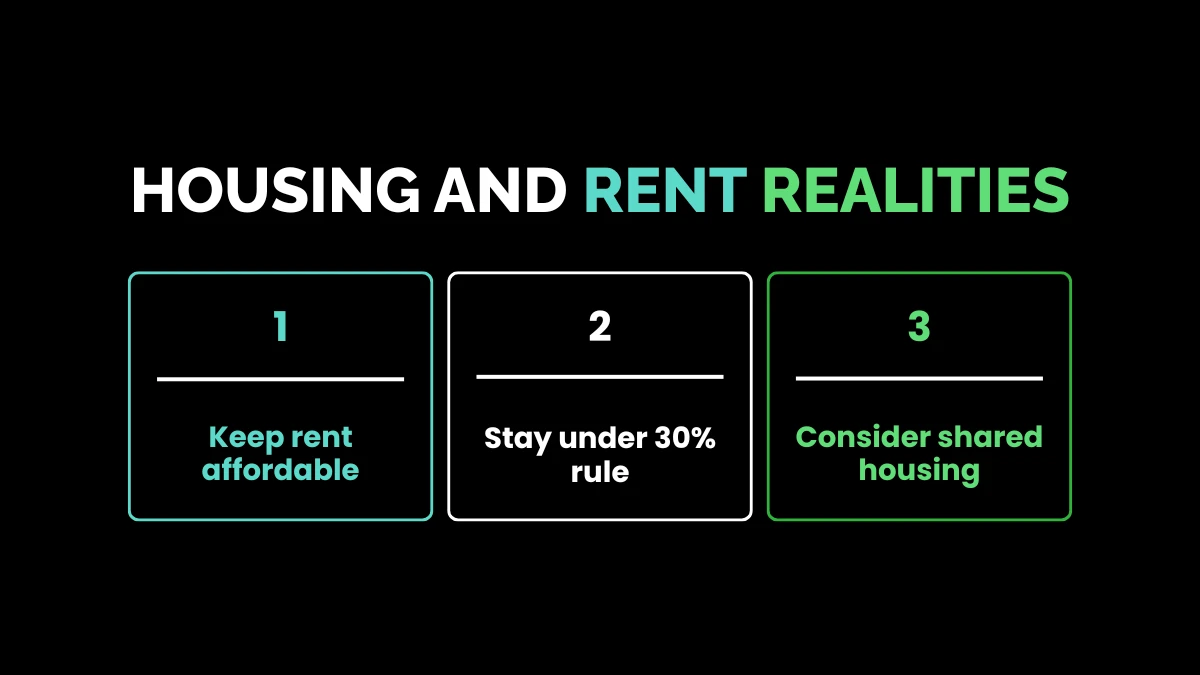
The golden rule of personal finance is to keep your housing costs under 30% of your gross income.
For you, that means aiming for a monthly rent payment of around $1,092 or less.
Finding an apartment at this price point can be a bit of a challenge in major metropolitan areas.
You might want to consider living with a roommate to split the bills down the middle.
Smart Strategies to Maximize Your Hourly Wage
You do not need a six-figure salary to start building real momentum with your personal finances.
Small, intentional changes to your daily habits can free up hundreds of dollars every single month.
Let’s look at a few practical ways to make your money stretch much further.
-
Automate Your Savings: Set up your bank account to automatically move $50 from every single paycheck directly into a high-yield savings account.
-
Meal Prep on Sundays: Cooking your own meals instead of ordering takeout can easily save you over $200 every month.
-
Audit Your Subscriptions: Look through your statements and cancel those old gym memberships or streaming platforms you completely forgot about.
-
Shop Secondhand First: Before buying brand new furniture or clothes, check online marketplaces for gently used options at a fraction of the retail cost.
How to Boost Your Income Beyond 21 an Hour
If you find that living on 21 an hour is leaving you feeling stressed out, it might be time to look for ways to increase your earning power.
You do not have to settle for your current wage forever.
There are plenty of accessible paths to upgrade your income over time.
Upskilling and Career Growth

Talk to your boss about what it takes to get a promotion within your current company.
Sometimes, taking on a tiny bit of extra responsibility can lead to a significant bump in your hourly rate.
You can also look into free online certifications to learn valuable new skills like data analysis, digital marketing, or project management.
Side Hustles
We focus heavily on creative ways to build extra revenue streams here at Weird Wealth.
Even spending just four or five hours a week on a flexible side gig can bring in an extra $100 a week.
Consider driving for a rideshare app, walking neighborhood dogs, or freelancing your skills online during your spare time.
Paid Time Off vs. Unpaid Time Off
One massive factor that alters your total annual earnings is whether your employer provides paid time off.
If your job includes paid holidays and vacation days, your income stays completely steady at $43,680.
But what happens if you do not get paid when you take time off from work?
The Cost of Missing Work
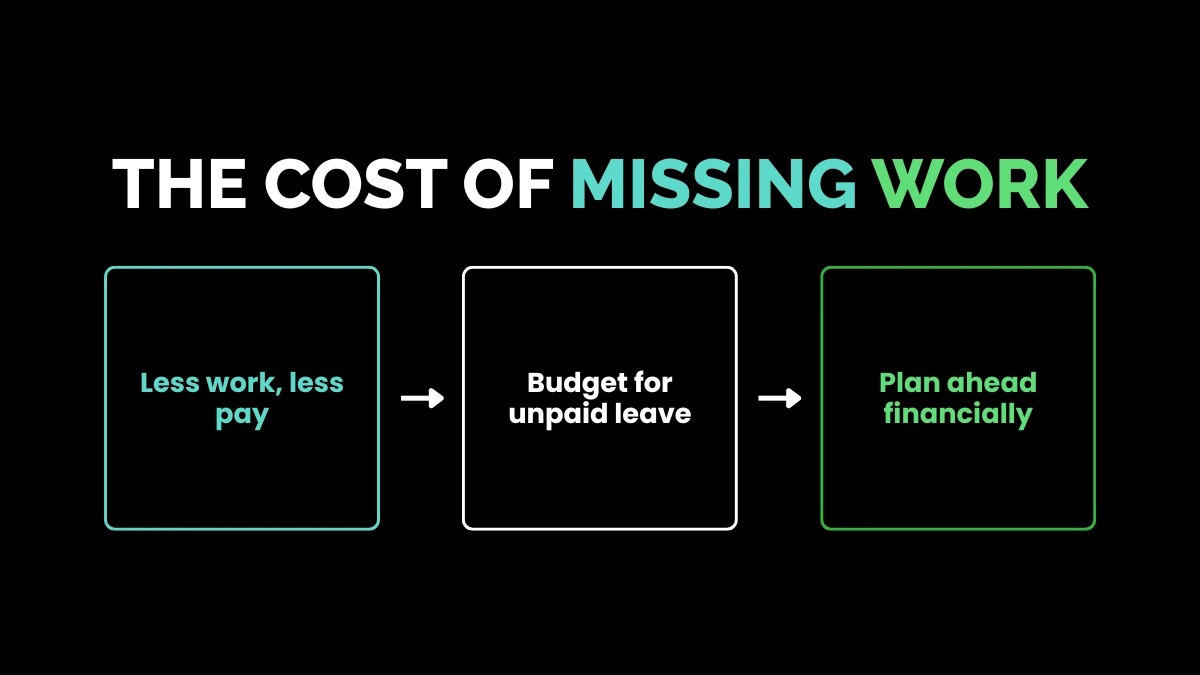
Let’s assume you take two weeks of unpaid vacation time off each year to travel or rest.
Instead of getting paid for 52 weeks, you are now only earning money for 50 weeks out of the year.
Taking just two weeks of unpaid time off drops your total annual gross income by exactly $1,680.
It is always smart to factor these potential gaps into your primary monthly budget strategy.
Comparing 21 an Hour to the National Average
It helps to have a little bit of outside perspective on where your hourly wage places you.
Earning a 21 dollars per hour annual salary puts you well above the federal minimum wage, which has been stuck at $7.25 for quite a long time.
In many rural and suburban areas across the country, making $21 an hour is considered a very solid, respectable entry-level or mid-level wage.
You are making enough money to cover your basic expenses while simultaneously building up an emergency savings fund.
Final Thoughts
At the end of the day, knowing that 21 an hour is how much a year is just the very first step.
The real magic happens when you take control of your 21 an hour take home pay and make it work for your specific long-term goals.
With a simple budget, minimal lifestyle inflation, and a focus on consistent saving, you can easily build a fantastic financial foundation.
Remember, it is not just about how much money you make, it is entirely about how much of that money you keep.
Frequently Asked Questions
Is 21 dollars an hour considered a good salary for a single person?
In most cases, yes, it is a very stable wage for a single individual living in a medium-cost area. It allows you to cover your basic needs comfortably while saving a bit each month.
What is the monthly take home pay for 21 dollars an hour after taxes?
Your estimated monthly take-home pay will be roughly $2,912, assuming an average 20% tax deduction rate across federal, state, and local payroll taxes.
Can I afford to buy a house making 21 dollars an hour?
It is generally difficult in expensive markets, but based on available data, you can potentially qualify for a modest home in affordable regions if you have zero debt.
How much money is 21 an hour if I work part-time?
If you work a part-time schedule of exactly 20 hours per week, your gross annual salary will come out to a total of $21,840 before deductions.
What should my maximum monthly rent be on a 21 an hour wage?
You should generally try to keep your monthly rent payments under $1,092 to avoid overstretching your budget and leaving yourself cash-strapped for other vital needs.