

You have been staring at job boards for hours. Everything either needs a degree, a car, or twenty years of experience. Then you stumble across something that sounds almost too simple: get paid to watch cameras from home. No commute. No boss breathing down your neck. Just you, a laptop, and a live feed.
It sounds like something you would see on a late-night infomercial. Which is exactly why most people click away without giving it a second look.
Here is the thing though: remote surveillance jobs and passive monitoring income opportunities are real. They exist. People are doing them. But there is a wide gap between the polished promise and the actual paycheck, and if you do not know what you are walking into, you will either waste your time or lose money you cannot afford to lose.
This article gives you the full picture, no fluff, no hype, no affiliate spin.
What Does It Actually Mean to Get Paid to Watch Cameras?
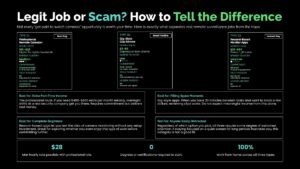
Remote camera monitoring is exactly what the name says. A business, property owner, or security company installs cameras at their location. Instead of hiring an on-site guard, they pay someone remotely to watch those feeds and respond if something looks off.
That response might mean calling a contact number, alerting local authorities, or logging an incident report. You are not chasing anyone down. You are a set of eyes on a screen.
There are two main categories this falls into:
1. Professional Remote Surveillance Jobs
These are actual employment roles, usually part-time or contract, offered by licensed security companies. You monitor live feeds for retail stores, parking lots, construction sites, warehouses, or apartment complexes. You are legally accountable, trained, and sometimes required to have a guard card or security certification depending on your state or country.
2. Crowd-Sourced or Passive Monitoring Platforms
These are apps or platforms that pay regular people to review footage clips, flag unusual activity, or watch live feeds in exchange for small payments or rewards. Think of it as a gig-economy version of security work. The pay is lower, the commitment is lighter, and the barrier to entry is almost nonexistent.
Real Platforms and Companies That Pay for Camera Monitoring
Before getting into numbers, a quick reminder: the market changes fast. Some of these platforms have grown, some have pivoted, and a few have shut down. Always verify current status before you invest time in signing up.
Agents of Surveillance / Remote Monitoring Companies
Companies like Stealth Monitoring, Securitas Technology, and Allied Universal hire remote video surveillance operators. These are real W-2 or contract roles. Pay typically runs between $13 and $22 per hour depending on your location, experience, and whether you hold any security licensing.
What they usually require:
- Clean background check
- Reliable high-speed internet at home
- A dedicated monitor setup (often dual screens)
- Quiet environment free from distractions
- State-specific guard card in some US states (California, Texas, Florida)
Crowd-Sourced Security Apps
This space is newer and more experimental. A few platforms have tested the idea of paying everyday users to review short clips or watch live feeds and report suspicious activity. The pay model in this category tends to be point-based, task-based, or tied to a reward system rather than a standard hourly rate.
Earnings in this category are typically quite low, often translating to a few cents per clip reviewed. The idea of passive monitoring income through these apps is appealing on paper but rarely translates into anything close to a livable wage.
How Much Can You Actually Make Watching Cameras from Home?
Let us be direct about this because most articles will dance around the numbers.
- Professional remote surveillance roles: $13 to $22 per hour, sometimes up to $28 with experience and overnight shifts
- Gig-style clip review platforms: $0.05 to $0.50 per clip, which might amount to $2 to $8 per hour if the clips are flowing consistently
- Passive monitoring reward apps: gift cards, points, or token payouts that rarely translate to more than $20 to $50 per month
If your goal is a solid part-time income, the professional route is the only one that gets you there. If you are just looking for something light to do in the evenings for a bit of pocket money, the gig-style options have less friction.
Is It Actually Legit? How to Tell the Real Opportunities from the Scams
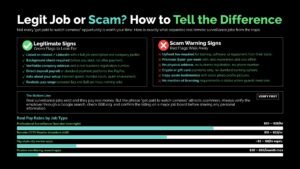
This is where things get messy, because scammers have noticed that “get paid to watch cameras” is a search people are actually doing. So they have built fake platforms to capitalize on that curiosity.
Red Flags to Walk Away From
- Any platform asking you to pay a signup fee, buy training materials, or purchase equipment through their own store before you earn a single cent
- Promises of $500 to $1,000 per week for part-time cam era watching with zero experience required
- No company address, no physical office, no verifiable business registration
- Payment only in crypto or gift cards, with no option for bank transfer or PayPal
- Testimonials that all sound identical and stock photos used as profile pictures of supposed workers
Green Flags That Signal a Legitimate Setup
- The company is a registered security firm with a physical office and verifiable license number
- The job listing appears on Indeed, LinkedIn, or ZipRecruiter with a proper job description
- The interview process involves ID verification and a background check
- Pay is discussed upfront, deposited via direct deposit or standard payment method, and is consistent with industry ranges
What Skills and Setup Do You Need for Remote Surveillance Jobs?
You do not need a security degree to do this work, but you do need to be genuinely suited for it. Not everyone is cut out for long stretches of focused watching without the social energy of a regular workplace.
Traits That Make You a Strong Candidate
- High attention to detail over long periods without external stimulation
- Calm and clear-headed when reporting or escalating incidents
- Ability to stay alert during overnight or early morning shifts when action is rare
- Comfort with written incident documentation
Technical Setup Most Employers Expect
- Internet speed of at least 25 Mbps download, wired preferred over Wi-Fi
- A computer with enough processing power to handle multiple live feeds simultaneously
- A second monitor, or at minimum a large primary display
- A quiet, private space where you will not be interrupted mid-shift
The Passive Monitoring Income Reality Check
The phrase “passive monitoring income” gets tossed around a lot in side hustle content. The word “passive” is doing a lot of heavy lifting there.
Camera monitoring, even at its lightest, requires your active attention. There is nothing passive about watching a feed and waiting to spot something unusual. What some people mean by passive monitoring income is setting up your own camera network and monetizing it, either through crime-deterrent services for neighbors, or by renting your camera access to a security aggregator. This does exist, but it comes with serious legal and privacy considerations that vary by location.
If you are looking for something genuinely passive where you set it and forget it, camera monitoring is not it. What you can realistically find is flexible, part-time remote work that fits around your schedule without requiring you to leave the house.
Where to Find Legitimate Remote Camera Monitoring Jobs
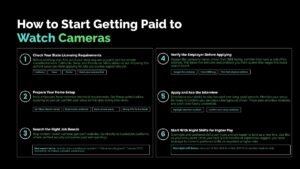
Skip any website that has “get paid to watch cameras” plastered across its homepage with no company information underneath. Here is where the real listings live:
- Indeed and LinkedIn: Search “remote video surveillance operator” or “remote CCTV monitoring” for current openings at registered security firms
- ZipRecruiter and Glassdoor: These platforms sometimes list part-time remote monitoring roles with salary transparency
- Direct applications to security companies: Firms like Securitas, Allied Universal, and Stealth Monitoring sometimes post remote roles directly on their own career pages
- Freelancer and Upwork: Occasionally businesses post one-off or recurring surveillance review tasks here, especially for reviewing recorded footage rather than live monitoring
Is Getting Paid to Watch Cameras a Good Side Hustle for You?
It depends entirely on what you are after. If you want flexibility, you can work overnight shifts around a day job. If you want no commute, you get that. If you want decent hourly pay for remote work that does not require a portfolio or a degree, the professional route delivers.
Where it falls short: it is not truly passive, it requires sustained focus, overnight shifts can wear you down, and the gig-style apps rarely pay enough to matter. If you are prone to distraction or cannot commit to uninterrupted monitoring windows, this is not a natural fit.
It is a real option. Not a miracle. Not a scam. Just a job, the remote kind, with a specific skillset that not everyone will enjoy doing.
For more off-the-beaten-path ways to earn online, explore the full collection of odd side hustles at WeirdWealth.io.
Frequently Asked Questions
Can you really get paid to watch security cameras from home?
Yes, this is a real job category. Licensed security companies hire remote video surveillance operators to monitor live feeds from commercial and residential properties. Pay ranges from $13 to $22 per hour depending on experience, location, and shift type. You will need a clean background check and in some states a security guard license.
What apps pay you to watch cameras?
There are a small number of crowd-sourced apps and platforms that pay users to review security footage clips or flag suspicious activity. These tend to pay very small amounts per task, often a few cents per clip. The income from these apps is more of a minor supplement than a meaningful side hustle, and availability varies significantly by country.
How much do remote surveillance operators make?
Entry-level remote surveillance operators typically earn between $13 and $17 per hour. With experience or overnight shifts, that can climb to $20 to $28 per hour. Full-time annual salaries at security companies for this role generally fall between $30,000 and $50,000 depending on the employer and the market.
Do I need a license to do remote camera monitoring work?
It depends on where you live and what type of work you are doing. In several US states including California, Texas, and Florida, you will need a guard card or a private security license even for remote roles. Other states and countries have no licensing requirement. Always check the specific requirements for your location before applying.
Is passive monitoring income from cameras actually passive?
Not in the traditional sense. Even the lightest camera monitoring tasks require active attention. The term passive monitoring income is often used loosely to describe flexible, work-from-home monitoring roles rather than a genuinely hands-off income stream. If you are looking for income that runs while you sleep, this is not the right category.