You post for months. Real face, real effort, real vulnerability. And the algorithm rewards you with 200 views. Meanwhile, a cartoon character with no face, no voice, and no personal brand story is racking up brand deals worth five figures a month.That feels wrong. But it is exactly what is happening right now across Instagram, TikTok, YouTube, and LinkedIn. AI influencer income is not a future concept.
It is a current income stream that is growing fast, and the people building these virtual accounts quietly are not waiting for permission.
This article breaks down how virtual influencer monetization actually works, what the real numbers look like, and what you need to start building one yourself. No hype, no vague promises. Just the honest mechanics behind a model that is changing what it means to be a creator.
What Is an AI Influencer, and Why Does It Matter for Income?
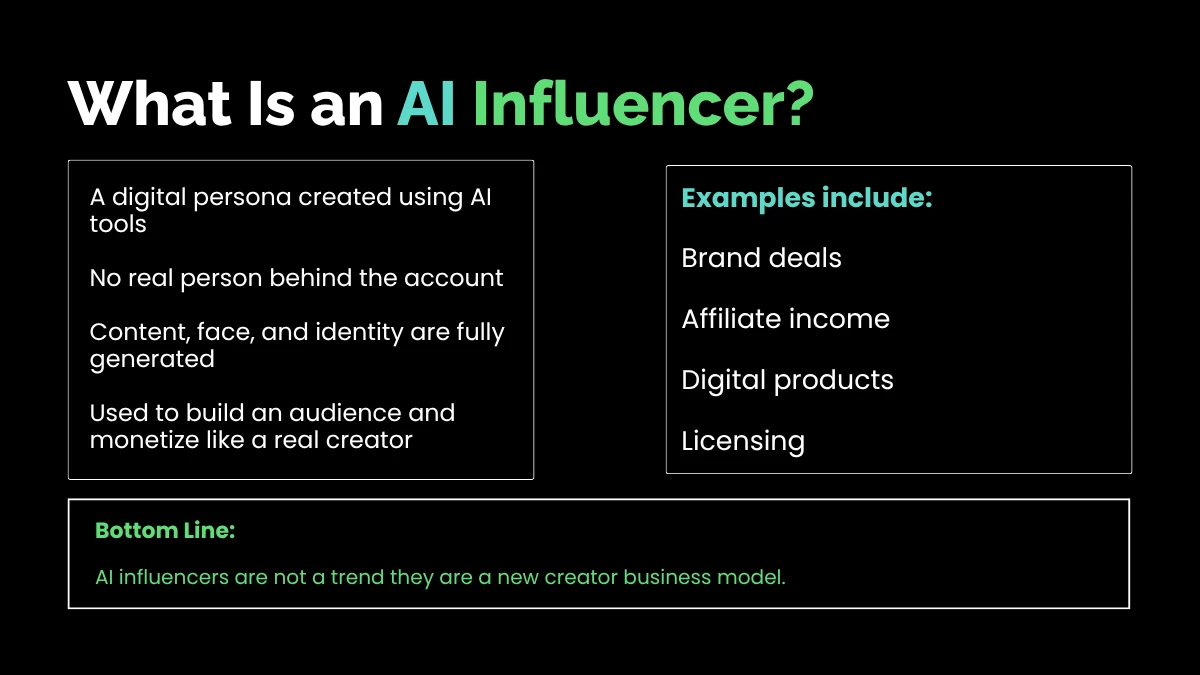
An AI influencer is a digital persona created using artificial intelligence tools. It can look hyper-realistic like a human model, or stylized like an animated character. Either way, there is no real person behind the camera. The content is generated, the face is synthetic, and the brand is entirely manufactured.
The most well-known examples include Lil Miquela, a CGI Instagram personality with over 2.5 million followers who has worked with Prada, Calvin Klein, and Samsung. There is also Shudu Gram, a virtual supermodel created by a British photographer, and Imma, a Japanese AI model signed with major fashion houses.
But here is the part most articles skip over. You do not need a million-dollar production studio to build a profitable AI influencer. The barrier to entry dropped massively in 2023 and 2024. With tools like Midjourney, Leonardo AI, HeyGen, and CapCut, a solo creator can build a consistent faceless persona and start generating ai influencer income within weeks.
The Real Numbers Behind AI Influencer Income in 2025
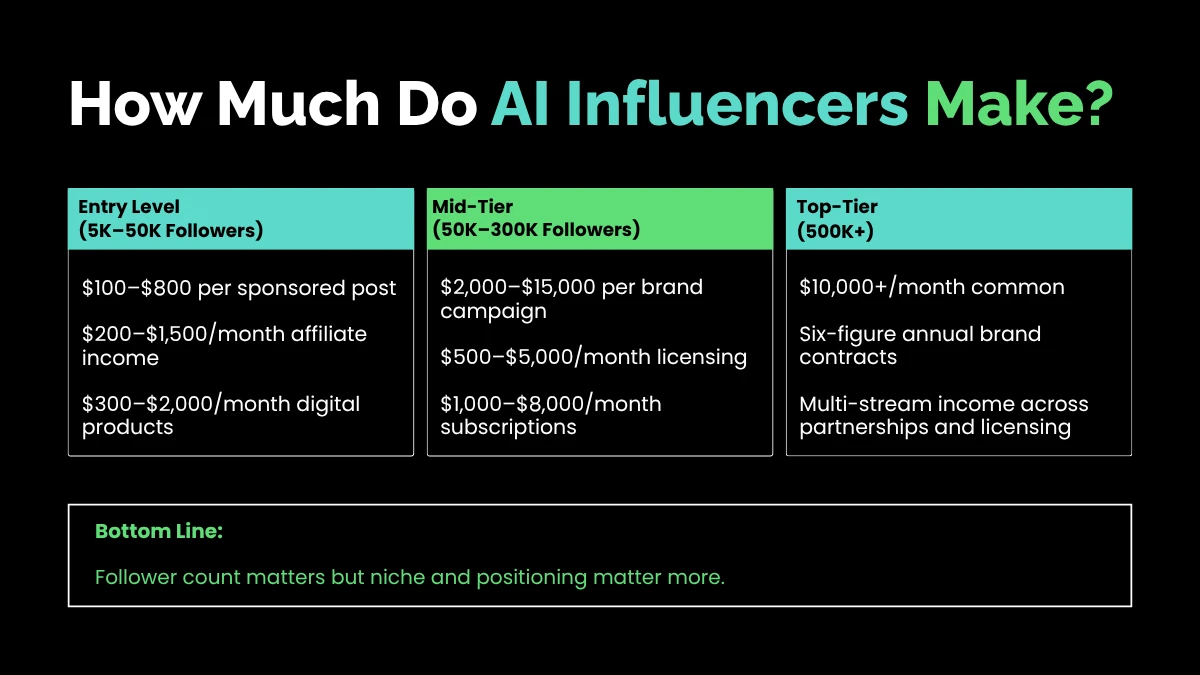
Before getting into strategy, let us talk about what virtual influencer monetization actually looks like at different stages. These figures are drawn from documented case studies, creator disclosures, and industry reports.
Entry-Level: 5,000 to 50,000 Followers
At this stage, a well-positioned AI persona on Instagram can earn:
- Sponsored posts: $100 to $800 per post depending on niche and engagement
- Affiliate commissions: $200 to $1,500 per month from product links
- Digital products: $300 to $2,000 per month selling presets, guides, or prompts
Mid-Tier: 50,000 to 300,000 Followers
This is where faceless Instagram income gets serious:
- Brand partnerships: $2,000 to $15,000 per campaign
- Licensing the AI persona: $500 to $5,000 per month from brands using the character in their own ads
- Subscription content: $1,000 to $8,000 per month via Patreon or exclusive newsletters
Top-Tier: 500,000 and Above
At this level, the income model expands significantly:
- Lil Miquela reportedly earned over $11 million in 2023 across brand deals and licensing
- Virtual influencers like Aitana Lopez (a Spanish AI model) were generating $10,000 to $11,000 per month at under 200,000 followers because of hyper-targeted brand fit
- Agency-run AI personas were closing six-figure annual contracts with fashion, beauty, and fintech brands
Case Study: Aitana Lopez and the Power of a Niche AI Persona
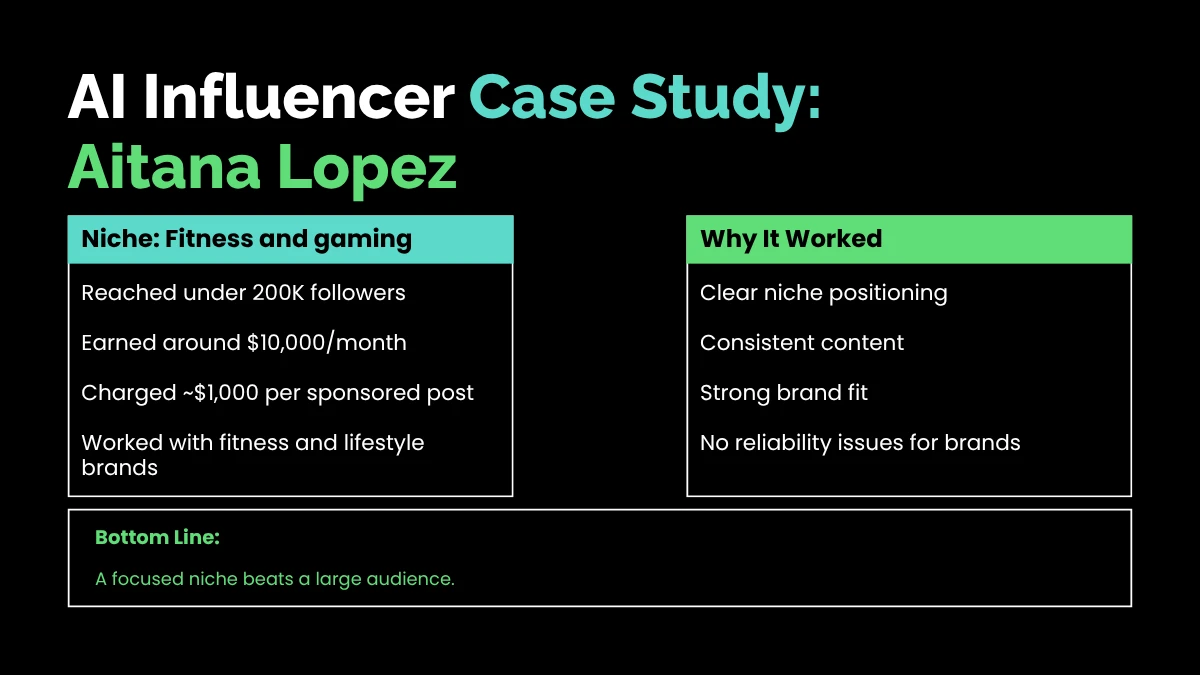
Aitana Lopez is one of the most talked-about examples of virtual influencer monetization done right. She was created by a Barcelona-based agency called The Clueless in late 2023. The founder built her to solve a specific problem: real models were unreliable, expensive, and hard to scale.
Aitana is a pink-haired, tattooed AI model positioned in the fitness and gaming niche. Her Instagram content features her at real-looking locations, wearing branded clothing, and living a curated lifestyle that her audience connects with emotionally.
The results were not gradual. Within months, brands started reaching out. She landed partnerships with fitness supplement companies, gaming peripherals brands, and clothing lines. Her per-post rate reached around $1,000 and her monthly ai influencer income crossed $10,000 well before she hit 200,000 followers.
What made it work was not just the quality of the images. It was the clarity of the niche, the consistency of the posting schedule, and the fact that brands could work with her without any of the drama, cancellation risk, or negotiation friction that comes with human talent.
How Virtual Influencer Monetization Actually Works: The 5 Revenue Streams
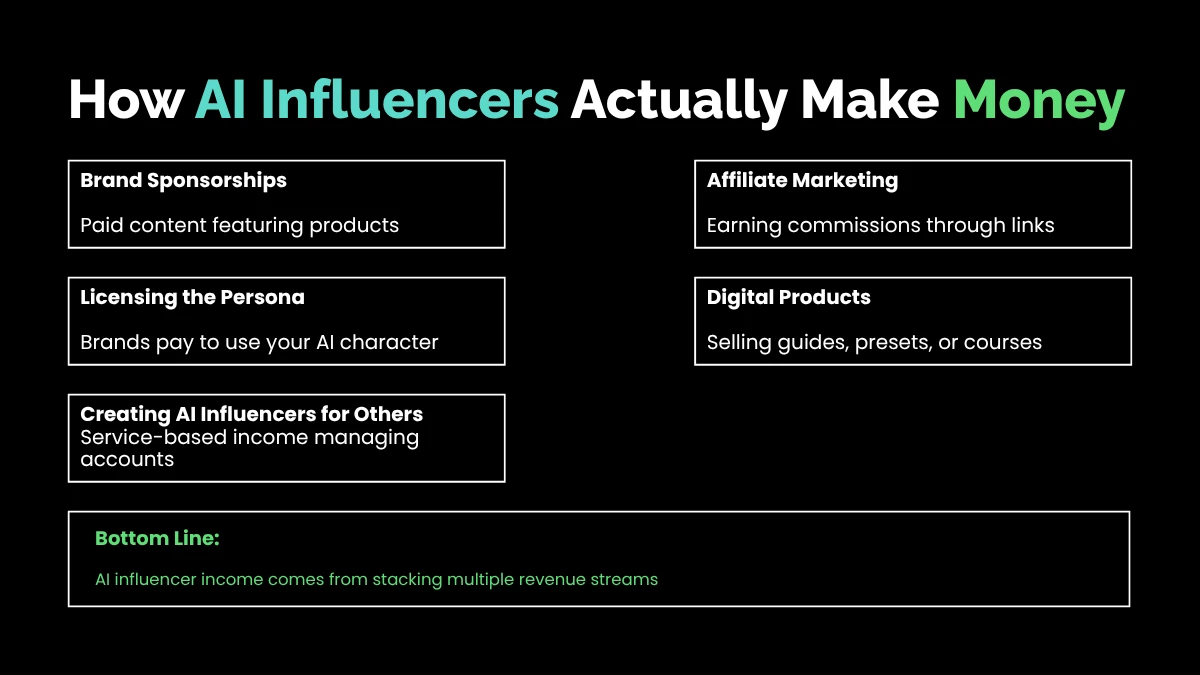
Understanding the income mechanics is key. There is not one path. There are at least five distinct revenue streams that successful AI creators are using right now.
1. Brand Sponsorships and Paid Partnerships
This is the most direct form of virtual influencer monetization. A brand pays you to feature their product in your AI persona’s content. The rate depends on your follower count, engagement rate, and niche relevance. Brands in beauty, fashion, tech, fitness, and fintech are currently the most active spenders in this space.
The advantage over human influencers is significant. You can guarantee content delivery dates, produce multiple formats simultaneously, modify the content after the fact if the brand needs edits, and accept back-to-back campaigns without burnout or scheduling conflicts.
2. Affiliate Marketing Through a Virtual Persona
Affiliate links work just as well through an AI account as a human one. The key is positioning your persona as a trusted recommender in a specific category. A virtual fitness influencer can promote supplements, workout gear, and apps. A virtual finance persona can push tools, platforms, and courses.
This is one of the most accessible entry points for someone building faceless Instagram income from scratch. You do not need a big following. You need a targeted audience and product-audience fit.
3. Licensing the AI Persona
This is the stream that most new creators overlook. Once your AI persona has a recognizable look and following, you can license that character to brands for use in their own ads, campaigns, and content. The brand pays you a monthly or per-use fee to deploy your persona without you having to create the content at all.
This model scales exceptionally well. One virtual persona can be licensed to multiple non-competing brands simultaneously, creating true passive income from a digital asset you built once.
4. Selling Digital Products and Courses
Your AI influencer can act as the face of a digital product business. Many creators are using their virtual persona to sell AI prompt packs, Lightroom presets, social media templates, niche-specific guides, and even courses teaching others how to build their own AI influencers.
This works particularly well because the persona itself is proof of concept. If your AI character looks polished and real, buyers trust that the creator behind it knows what they are doing.
5. Creating AI Personas for Other Businesses
This is a service-based model that sits alongside running your own persona. Once you have the workflow down, you can charge businesses to build and manage AI influencer accounts for them. Small brands, e-commerce stores, and startups are actively looking for this service and paying anywhere from $1,500 to $10,000 per month for turnkey virtual influencer management.
Faceless Instagram Income: Why the Platform Still Leads in 2025
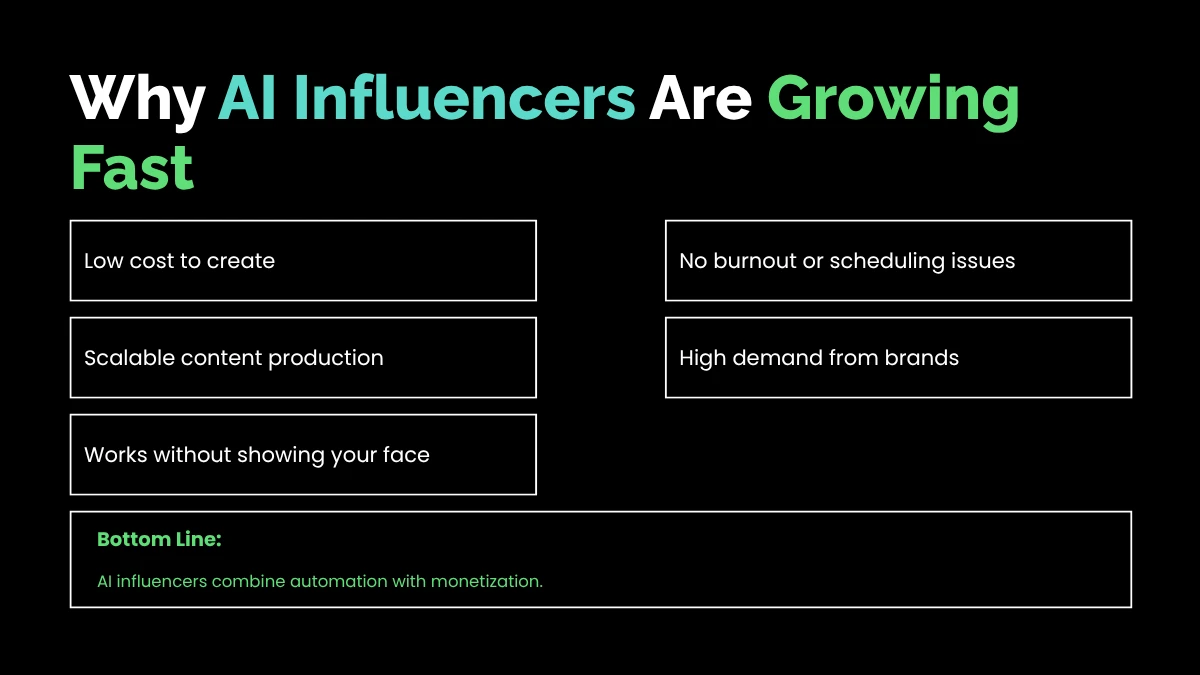
Instagram remains the primary platform for faceless Instagram income because of how the algorithm treats visually consistent content. AI-generated personas tend to have a uniform aesthetic, which Instagram’s algorithm rewards with reach. The content looks professional from day one, the feed is cohesive, and the posting frequency can be maintained without the creative fatigue that burns out human creators.
The Reels format in particular has accelerated growth for AI personas. Short, visually striking clips featuring a virtual character in a lifestyle context can go viral without any of the personal risk that comes from a human face being attached.
Brand discovery also happens faster on Instagram than most other platforms. Procurement teams, marketing managers, and influencer agencies actively browse the platform looking for new talent, and they are increasingly open to virtual creators. Several agencies now have dedicated divisions for AI talent representation.
What Brands Actually Look for When Working with AI Influencers
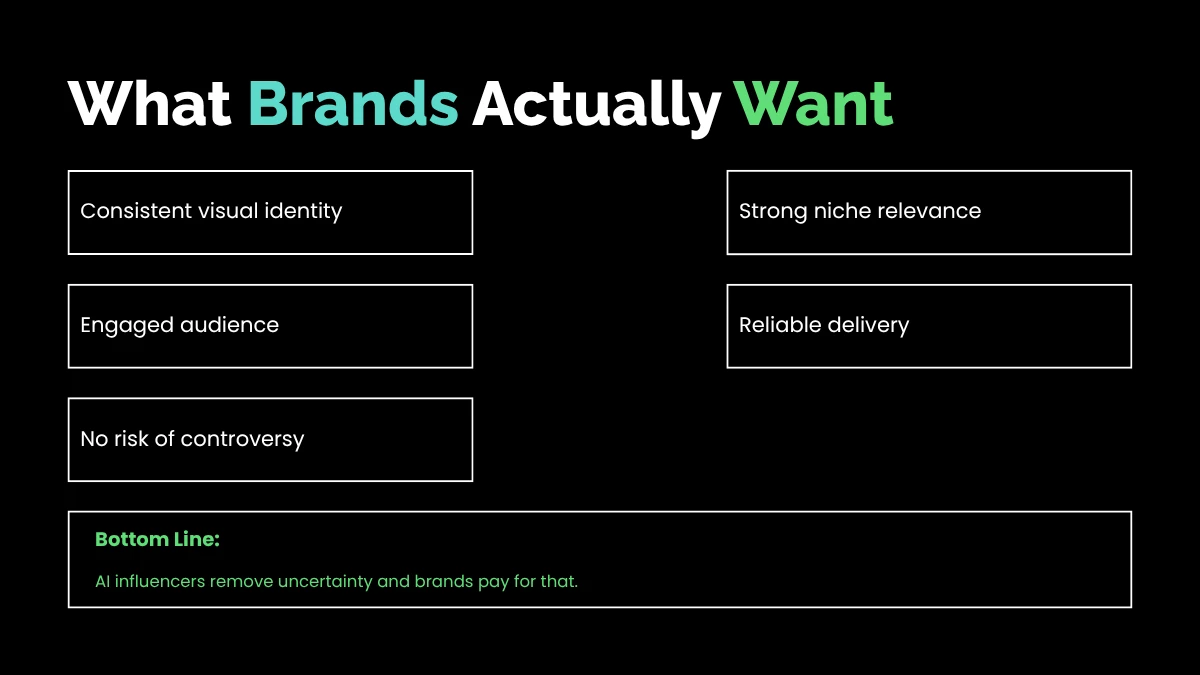
Understanding brand psychology here saves you months of wasted effort. Brands are not just paying for followers. They are paying for four specific things:
- Visual coherence: Your persona should look the same across every post. Inconsistency kills brand trust fast.
- Niche authority: A virtual fitness model who only posts fitness content will outperform a general lifestyle AI persona every time when it comes to supplement or activewear deals.
- Engagement quality: Comments and saves matter more than follower count. An engaged audience of 20,000 is worth more to most brands than a passive audience of 200,000.
- Reliability: This is the biggest advantage of the AI model. You can promise and deliver. Deadlines are met. Brand guidelines are followed precisely. There is no sick day, no controversy, no contract renegotiation.
How to Start Building an AI Influencer That Actually Earns
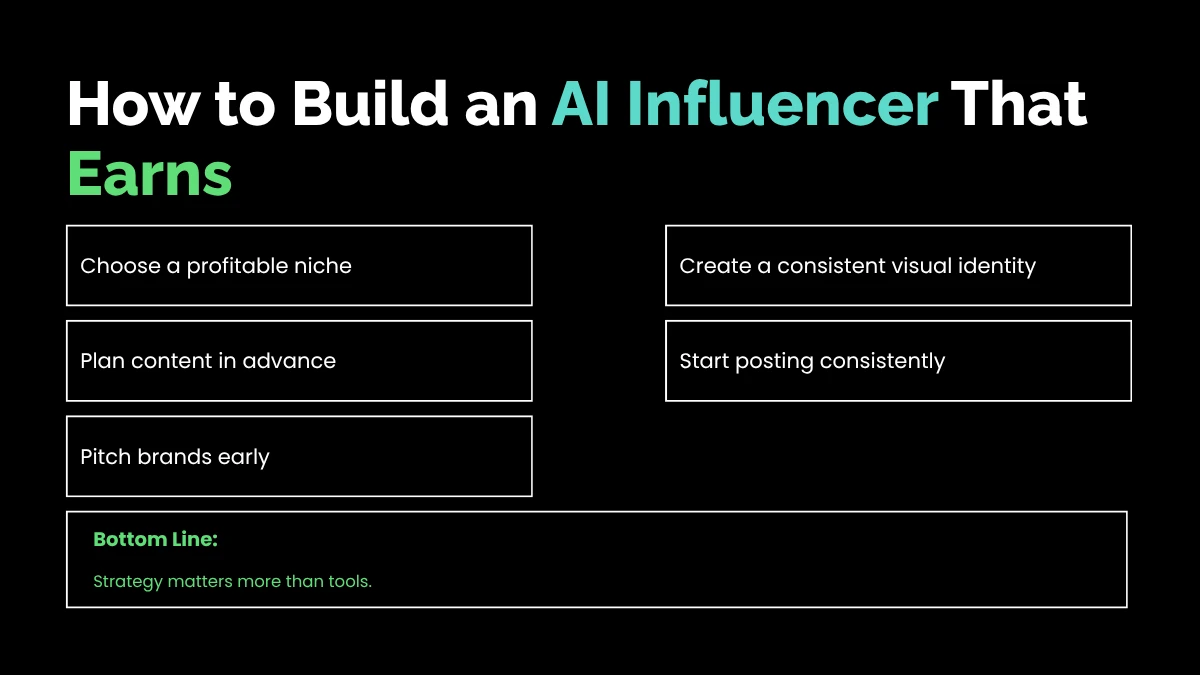
The technical steps are simpler than most people expect. What is harder is the strategic thinking before you create anything.
Step 1: Choose a Profitable Niche First
Fitness, beauty, fashion, travel, finance, gaming, and food are the highest-converting niches for AI influencer income right now. Pick one. Build your persona’s entire identity around it. The mistake most beginners make is building a pretty character with no clear audience or monetization pathway.
Step 2: Build a Consistent Visual Identity
Use tools like Midjourney or Leonardo AI to establish a base character with specific physical features, a consistent art style, and a defined color palette. Save your seed settings and prompts so every image you generate looks like the same person. This consistency is what turns a content account into a recognizable brand.
Step 3: Create a Content System, Not Just Content
Map out 30 days of content before you post anything. Each post should serve a purpose: building personality, showcasing lifestyle, demonstrating niche authority, or soft-promoting a product. The accounts that fail treat each post as a one-off. The ones that earn treat the whole feed as a story.
Step 4: Pitch Before You Are Ready
Most creators wait until they feel big enough to approach brands. That is too late. Start pitching with 2,000 followers if your niche is tight and your content is clean. Draft a simple media kit that shows your audience demographics, engagement rate, content style, and a clear collaboration package with pricing.
Small brands and startups are especially receptive to AI influencer pitches right now because they see the novelty value and the lower cost compared to human talent.
The Ethics Question: Do You Have to Disclose?
Yes. Disclosure is both a legal and practical requirement that is becoming more strictly enforced. In most markets, particularly the US and EU, you are required to disclose that a persona is AI-generated in sponsored content. The FTC has been expanding its influencer marketing disclosure guidelines, and regulators in the UK and Australia have moved similarly.
Practically speaking, most successful AI influencers disclose and it does not hurt their income at all. Audiences have become comfortable with virtual creators. What they do not forgive is deception. Transparency often builds more loyalty than anonymity.
The Bottom Line on AI Influencer Income
The shift is already happening. Brands are writing checks for virtual creators. Audiences are following AI personas with genuine emotional investment. And solo creators with the right tools and the right strategy are building real income streams without showing their face, recording their voice, or sacrificing their privacy.
AI influencer income is not a get-rich-quick scheme. It is a business model that rewards consistency, niche clarity, and smart outreach. The creators winning right now started six to twelve months ago with imperfect tools and a clear direction.
The best time to start was last year. The second-best time is today.
Want more case studies on unconventional income streams? Visit weirdwealth
Frequently Asked Questions
How much does an AI influencer make per month?
It varies widely based on follower count, niche, and monetization strategy. At the entry level, an AI influencer account with 10,000 to 50,000 followers in a focused niche can bring in $500 to $3,000 per month. Mid-tier accounts earning $5,000 to $15,000 monthly are common among creators who have built a clear brand identity and are actively pitching partnerships. Some top-tier virtual influencers are earning over $10,000 per month with under 200,000 followers when their niche alignment with brand budgets is strong.
Can you really make money with faceless Instagram income through AI characters?
Yes, and the evidence is growing. Faceless Instagram income through AI personas is no longer experimental. Brands are actively allocating influencer marketing budgets toward virtual creators because they are cost-effective, reliable, and carry no reputational risk. The income model works best when the account has a clearly defined niche, consistent visual output, and an engaged audience rather than just a high follower count.
What tools do you need to create an AI influencer?
The core toolkit for building a monetizable AI persona includes an image generation tool like Midjourney or Leonardo AI for creating your character, a video tool like HeyGen or Kling AI if you want animated or lip-sync content, a scheduling platform like Later or Buffer for consistent posting, and a simple media kit builder for brand outreach. Most of these tools have free tiers or cost under $50 per month combined.
Do you need to disclose that your influencer is AI-generated?
In most countries, yes. If your AI persona is involved in sponsored content or affiliate promotions, disclosure is a legal requirement in the US under FTC guidelines, in the UK under ASA rules, and in the EU under the Digital Services Act. Most platforms including Instagram and TikTok are also beginning to require AI-generated content labels. Beyond legal compliance, being transparent about your persona’s nature tends to build stronger community trust.
How do you get brand deals as an AI influencer with a small following?
Start with direct outreach to small and medium brands in your niche. Build a one-page media kit that highlights your engagement rate, your audience demographic, and your content style. Many brands care more about niche alignment and content quality than raw follower numbers. Platforms like Collabstr, AspireIQ, and Creator.co list brand partnership opportunities and are increasingly open to AI creators. Consistent outreach beats waiting to be discovered.
Is the AI influencer market saturated?
Not even close, especially outside the most obvious niches. While there are many general lifestyle AI personas being built, specific categories like AI influencers in B2B tech, sustainable fashion, niche travel, and senior wellness are wide open. The saturation point for virtual influencer monetization is still several years away in most verticals. The bigger limiting factor right now is execution quality, not competition.