
Quick Answer
You can get paid to sleep in hotels by working as a hotel bed tester, a mattress reviewer, or a mystery guest. Hotels and travel brands hire people to nap in suites, score the pillows, and write honest feedback. Pay ranges from a free stay to around $1,500 per booking, with some long-term gigs paying more.
Get paid to sleep in hotels sounds like a prank your cousin made up. It is not. Some people actually fold themselves into 600-thread-count sheets, drift off, and cash a check for it. The job hides in plain sight under names like sleep tester, bed reviewer, or hotel auditor. Most travelers never hear about it.
This article pulls back the curtain on the weirdest side hustle in the hospitality world. You will see who hires, what the work looks like at 2 a.m., and how to slip your name into the running.
What Does It Actually Mean to Get Paid to Sleep in Hotels?
The phrase covers a small cluster of jobs that share one thing. You sleep, the company learns something. Sometimes the brand wants honest reviews. Sometimes a new resort needs a soft launch before paying guests arrive.
Sleep testers might track room temperature, mattress firmness, blackout curtain quality, even the hum of the mini fridge at night. Mystery guests, on the other hand, behave like normal travelers and grade the staff. Both groups can get paid to sleep in hotels, though the paperwork looks a little different.
It is not a pajama party. Brief sheets can run ten pages. You take notes, snap photos, and sometimes wear a wrist tracker that records your heart rate while you snore.
Who Actually Hires Sleep Testers?
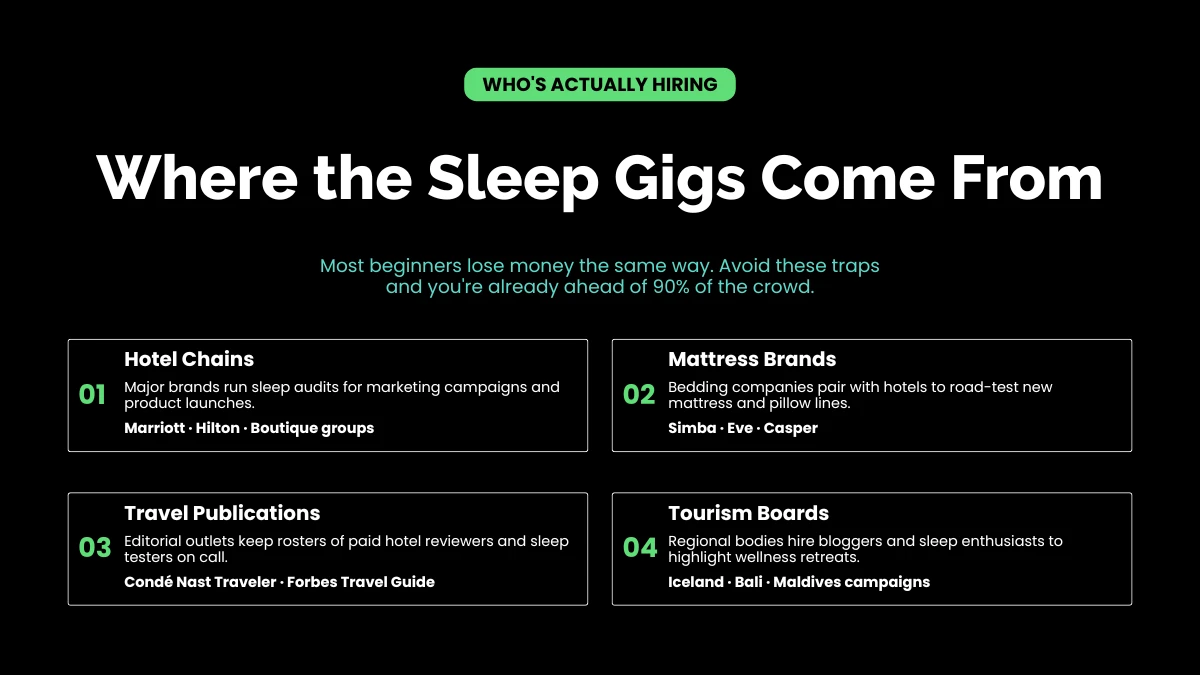
The list is shorter than you would guess, but the names carry weight.
- Hotel chains: Marriott, Hilton, and smaller boutique groups have run sleep audits for marketing campaigns and product launches.
- Mattress brands: Companies like Simba, Eve, and Casper have paired with hotels to road-test new bedding lines.
- Travel publications: Sites like Travelodge, Forbes Travel Guide, and Condé Nast Traveler keep rosters of paid reviewers.
- Tourism boards: Some regions hire bloggers and sleep enthusiasts to highlight new properties or wellness retreats.
A few one-off campaigns made headlines too. Travelodge once paid someone over $30,000 a year to test beds across its UK properties. Hilton has run pop-up sleep ambassador roles tied to wellness packages. These openings rarely get posted on Indeed. They land on niche job boards, brand Instagram pages, or inside travel writer Slack groups.
How Much Can You Earn?
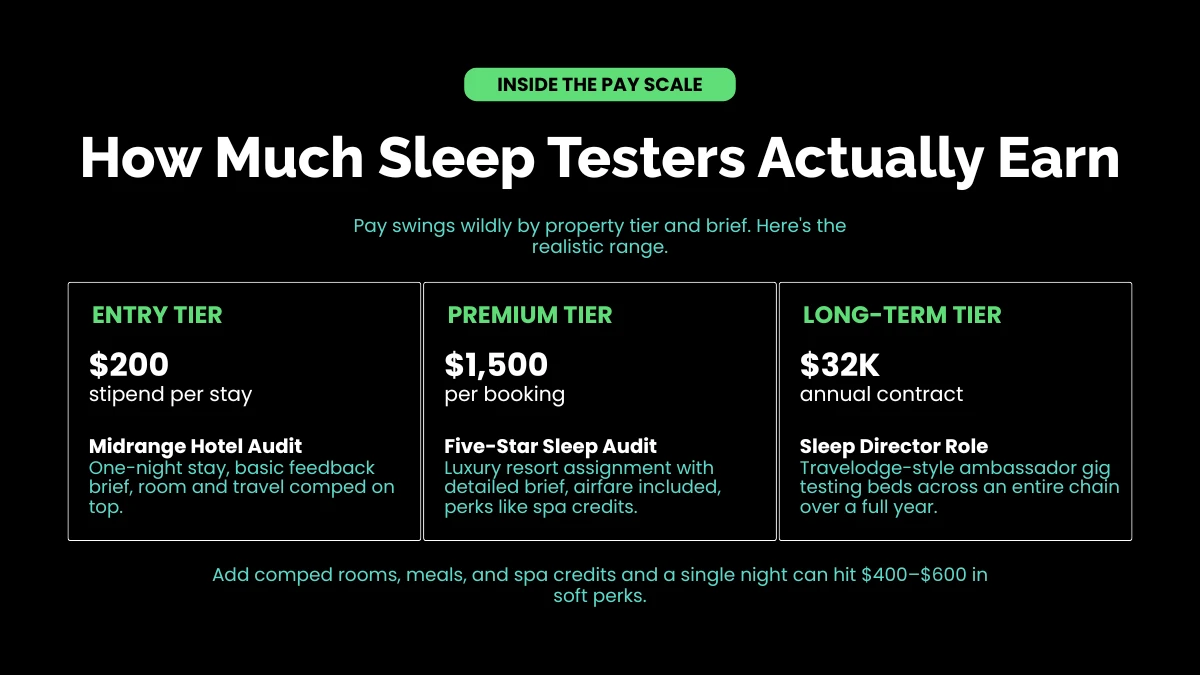
Pay swings wildly. A one-night stay at a midrange hotel might cover travel and a $200 stipend. A luxury sleep audit at a five-star property in the Maldives can hit $1,500 plus airfare. Long-term contracts, like the Travelodge Director of Sleep gig, paid an annual salary close to $32,000.
Mystery guest assignments usually pay less in cash but throw in free meals, spa credits, and the room itself. Add it all up and a single night can be worth $400 to $600 in soft perks.
The catch? Work is gig-based. Few people make this their only income. Most stack it with travel writing, photography, or hospitality consulting.
What the Job Actually Looks Like
A typical assignment runs like this.
Before arrival: You read the brief. The hotel might ask for feedback on twelve specific items, from check-in speed to the firmness of the second pillow.
During the stay: You log everything. Photos of the bed setup, the temperature reading at 11 p.m., notes on noise from the hallway. Some testers wear a Fitbit or Oura ring so the brand can study sleep cycles.
After checkout: You file a report. Most are 800 to 2,000 words. Some include a star rating across categories. The hotel reviews it, asks follow-up questions, then pays out.
It is not always glamorous either. One reviewer told me about a five-star resort where the air conditioner sounded like a lawn mower. She got two hours of sleep, then had to write 1,500 words pretending to be objective.
How to Get Paid to Sleep in Hotels (Without Connections)
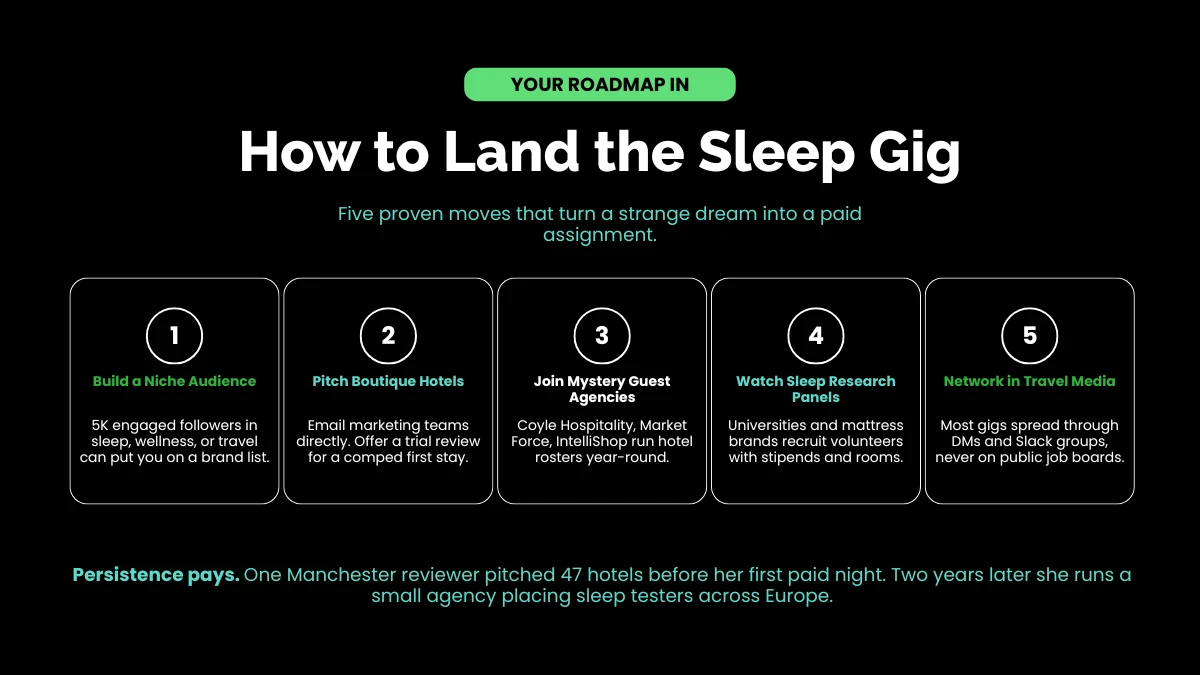
Breaking in takes patience. Hotels do not run open auditions. Try these moves:
- Build a travel blog or Instagram. Even 5,000 engaged followers in a sleep or wellness niche can land you on a brand list.
- Pitch directly. Email the marketing teams at boutique hotels. Offer a trial review in exchange for a comped stay, then build from there.
- Sign up with mystery guest agencies. Coyle Hospitality, Market Force, and IntelliShop run rosters that include hotel assignments.
- Watch sleep research panels. Universities and mattress companies sometimes recruit volunteers who get hotel-like accommodations and a stipend.
- Network in travel media. Many gigs spread through DMs and word of mouth, not job ads.
Persistence pays. One reviewer in Manchester pitched 47 hotels before her first paid night. Two years later she runs a small agency that places sleep testers across Europe.
The Strange Side of Sleeping for Money
There is a quirk no one mentions in the glossy articles. Your sleep gets worse. Tracking, scoring, photographing, all of it pulls you out of rest. Several testers say they switched to white-noise machines just to fall asleep on assignment.
Privacy is another wrinkle. Some contracts allow brands to use your sleep data in marketing. Read the fine print before you sign. A few testers have found their snoring stats quoted in press releases.
Then there is the awkward dinner conversation. Try explaining at a wedding that you get paid to sleep in hotels. Half the table thinks you are joking, the other half wants your job.
Is It Worth It?
If you love hotels, hate routine, and write decently, yes. The first paycheck feels surreal. Stay in a beachfront suite, eat the breakfast buffet, send a 1,200-word note, and watch money land in your account a week later.
But it is not a path to retirement. Treat it as a side door into hospitality, travel writing, or wellness consulting. Many testers move on to bigger roles inside hotel brands or launch their own review platforms.
Final Thoughts
The chance to get paid to sleep in hotels is real, rare, and oddly competitive. It will not replace a full salary, but it can fund travel, sharpen your writing, and open doors most travelers never see. Pitch one hotel this week. The worst they can say is no, and the best is a free night in a place you would have paid to visit anyway.
Frequently Asked Questions
Can you really get paid to sleep in hotels?
Yes. Hotels, mattress brands, and travel publications hire sleep testers, mystery guests, and bed reviewers. Pay ranges from a free room to over $1,500 per assignment, depending on the property and brief.
How do I become a hotel sleep tester?
Start by building a small audience around travel or wellness, then pitch boutique hotels directly. Mystery guest agencies like Coyle Hospitality also recruit testers for hotel assignments.
Do you need experience to apply?
Not always. Brands look for clear writers with attention to detail. A blog, a strong Instagram, or past hospitality work helps you stand out, but persistence often beats résumé.
How much do hotel sleep testers earn per night?
Most one-night gigs pay between $200 and $600 plus the comped room. Luxury assignments can reach $1,500. Long-term sleep ambassador roles have paid up to $32,000 a year.
Are these jobs only in the US?
No. Sleep tester roles pop up in the UK, UAE, Japan, and across Europe. Hotels in tourist hotspots like Bali, the Maldives, and Iceland have all hired testers in recent years.