| Quick Answer: The best ways to make money while you sleep include selling digital products, licensing creative assets, peer-to-peer lending, automated dropshipping, print-on-demand, renting out physical assets, creating online courses, writing royalty-earning books, building niche affiliate sites, and selling stock photos or videos. These models generate income with minimal ongoing effort after the initial setup. |
Ways to make money while you sleep are no longer reserved for Silicon Valley founders or Wall Street investors. Today, a person with a laptop and a solid idea can set up income streams that run around the clock, even on weekends, even on vacation, even at 3 a.m. when they are deep asleep.
The idea sounds appealing, but the reality requires honesty. Passive income is not zero work. It is upfront work that pays you repeatedly over time. The setups below range from the well-known to the genuinely strange, and each one has real people earning from it right now.
This guide covers 10 odd and proven ways to build overnight income, what each one actually involves, how long it takes to gain traction, and what kind of person each method suits best.
Why Most Passive Income Advice Fails You
Most articles on passive income list the same five options. Invest in dividend stocks. Start a YouTube channel. Write a blog. Buy rental property. Launch a course. That advice is not wrong. It is just incomplete and, for most people, impractical without significant capital or a large existing audience.
The methods below work precisely because they sit in less crowded corners of the market. Some require creative skills. Some require a small upfront financial investment. A few require nothing more than owning something most people already have. What they all share is the ability to generate income without your direct hourly presence.
10 Odd Ways to Make Money While You Sleep
1. Sell Notion Templates and Digital Productivity Tools
ways to make money while you sleep rarely include Notion, but they should. Notion template creators on Gumroad and Etsy report passive sales in the hundreds to thousands of dollars per month from templates they built once.
A good Notion template solves a specific problem. Popular templates include project trackers for freelancers, content calendars for social media managers, budget planners, and CRM dashboards for small businesses. The work is front-loaded. You design the template, write a clear description, and upload it.
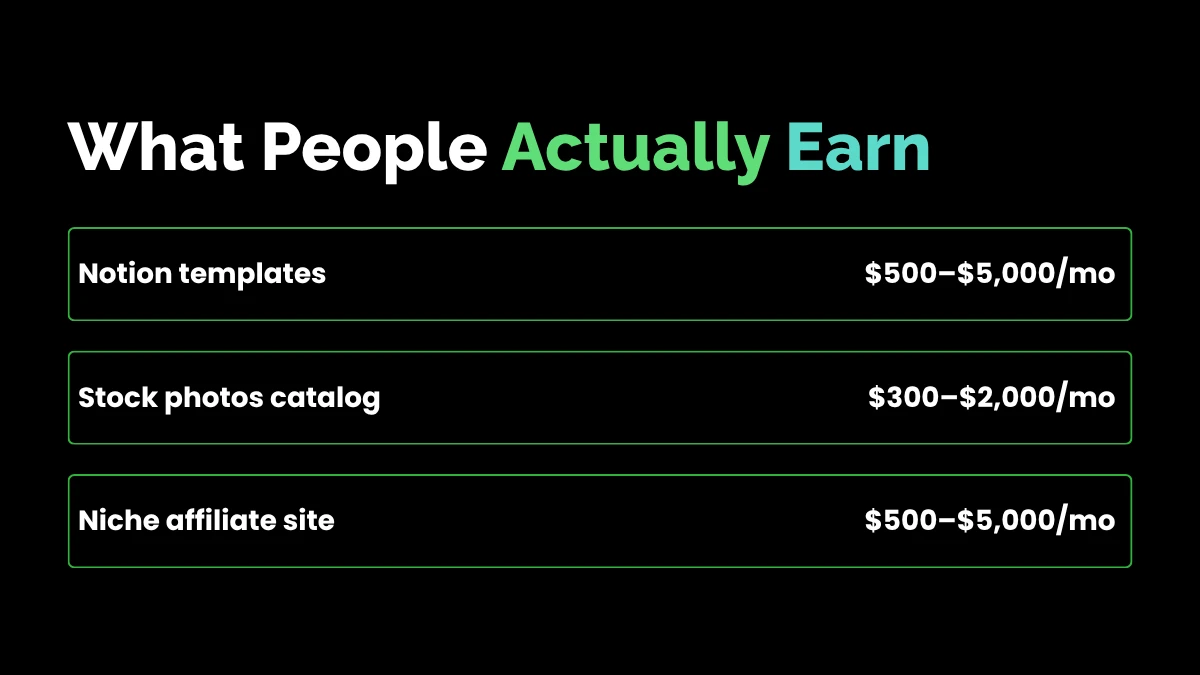
After that, every sale is automatic. Platforms like Gumroad, Etsy, and Payhip handle delivery, payment processing, and refunds. Some creators earn between $500 and $5,000 monthly from a small portfolio of five to ten templates.
- Startup cost: Low (under $50 for platform fees and design tools)
- Time to first sale: 1 to 4 weeks
- Best for: Designers, productivity nerds, and people already using Notion daily
2. License Your Music Through Royalty-Free Platforms
If you produce music, even at a hobbyist level, royalty-free licensing platforms like Musicbed, Artlist, and AudioJungle will pay you every time someone downloads or streams your tracks for commercial use.
YouTubers, videographers, podcast producers, and ad agencies need background music constantly. Most do not want to navigate complex licensing. They pay a flat fee for access to a library. You submit your music once, and the platform distributes royalties when your track gets used.
Musicians on AudioJungle report earning anywhere from $100 to $3,000 per month depending on catalog size and track quality. One well-produced track in a high-demand genre, such as corporate motivational or cinematic underscore, can generate sales for years.
- Startup cost: Minimal if you already produce music
- Time to first sale: 2 to 8 weeks after submission and approval
- Best for: Musicians, beatmakers, and home studio producers
3. Rent Out Your Parking Space
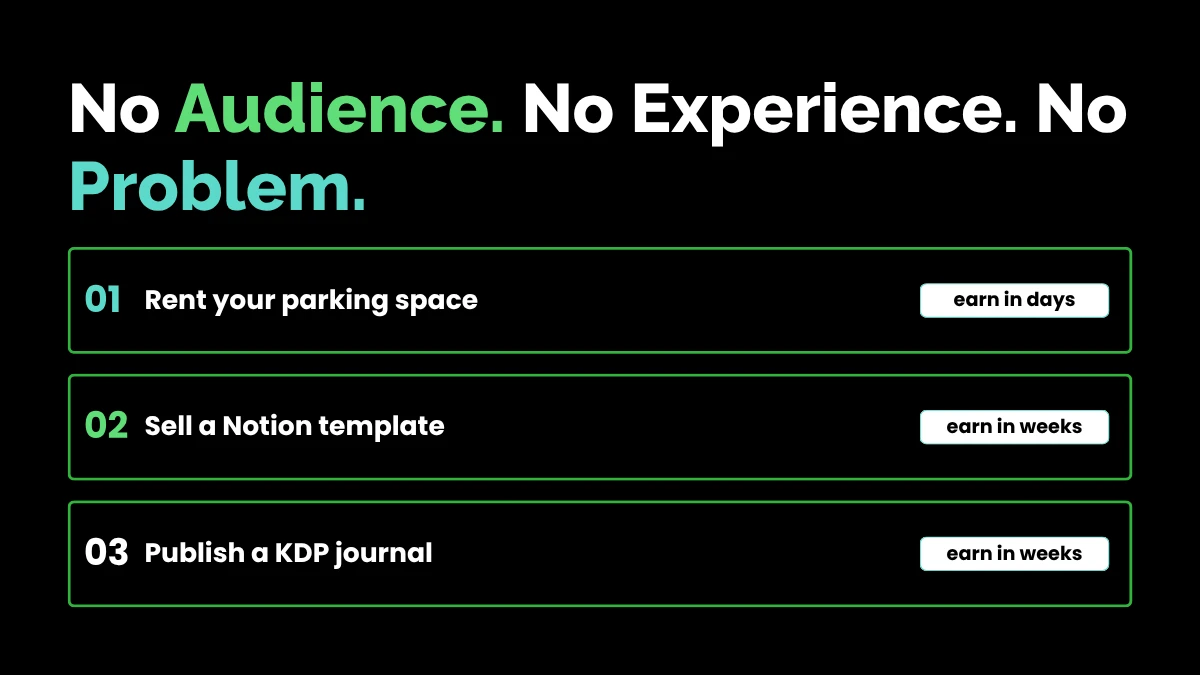
This one feels almost too simple. If you live in an urban area and have a driveway, garage, or reserved parking spot you are not always using, you can rent it out daily, weekly, or monthly through platforms like SpotHero, JustPark, or Neighbor.
Parking in major cities costs $200 to $600 per month for a dedicated spot. Even renting your space part-time can generate $100 to $300 monthly with zero active work after listing. You set the availability, the price, and the rules. Renters book and pay through the app.
This is one of the few ways to make money while you sleep that requires no skills, no online presence, and no ongoing content creation. You just need a parking space.
- Startup cost: Zero
- Time to first booking: Days to weeks depending on location
- Best for: Urban homeowners, apartment dwellers with spare spots
4. Build a Micro-SaaS Tool With a One-Time or Subscription Price
Micro-SaaS is a small software product built to solve one narrow problem for one specific audience. Examples include a Chrome extension that auto-formats LinkedIn posts, a tool that converts spreadsheets into shareable dashboards, or a calculator for freelance pricing.
The barrier to entry has dropped dramatically. No-code platforms like Bubble, Glide, and Softr let non-developers build functioning tools. Developers can launch small tools on platforms like Gumroad or AppSumo. Once live, a micro-SaaS with a subscription model charges users monthly with no additional work per customer.
Many micro-SaaS founders report earning $1,000 to $10,000 monthly from tools with under 200 paying subscribers. The key is solving a real, specific problem that people already pay to solve in a more expensive or inconvenient way.
- Startup cost: $0 to $500 depending on tools used
- Time to revenue: 4 to 12 weeks
- Best for: Developers, product thinkers, people with niche professional expertise
5. Sell Stock Photos, Illustrations, and Video Clips
Stock licensing has been around for decades, but the demand has not slowed. Platforms like Shutterstock, Adobe Stock, Getty Images, and Pond5 pay royalties each time someone downloads your photo, illustration, or video clip.
The odd angle here is what sells. Generic beauty shots and cliche business photos are oversaturated. What sells consistently are authentic-feeling images of underrepresented communities, specific professions, emerging cities, and niche lifestyle moments. Short vertical video clips optimized for social media use have become a high-demand category.
Prolific contributors with catalogs of 500 or more assets report monthly royalties between $300 and $2,000. It compounds over time. Every new submission adds to an existing catalog that keeps earning.
- Startup cost: Low if you already own a camera or shoot with a recent smartphone
- Time to first royalty: 2 to 6 weeks after submission review
- Best for: Photographers, videographers, illustrators, and graphic designers
6. Publish a Low-Content Book on Amazon KDP
Low-content books include journals, planners, notebooks, puzzle books, and activity books. They require little or no written content from the author. The value is in the structure and the niche.
Amazon Kindle Direct Publishing (KDP) lets anyone upload a book interior and cover and sell it as a physical print-on-demand product. When someone orders, Amazon prints it and ships it. You earn a royalty per sale without holding inventory or shipping anything.
Niche journals and planners consistently outperform generic ones. A grief journal, a sobriety tracker, a homeschool planner, or a gratitude journal for new mothers will find buyers year after year. Successful KDP publishers with portfolios of 20 to 50 books report monthly royalties between $500 and $5,000.
- Startup cost: $0 to $100 for design software
- Time to first sale: 1 to 3 weeks after publication
- Best for: Designers, writers, and people who understand niche audiences
7. Create a Paid Email Newsletter or Community
Most people think newsletters require a large audience before they can charge. That is not accurate. A highly targeted newsletter aimed at a specific professional audience can charge premium rates from the start.
Platforms like Substack, Beehiiv, and Ghost let you set a paid subscription tier. Writers covering niche industries, such as independent pharmacy operations, school district administration, or exotic pet care, can charge $10 to $30 per month per subscriber and operate profitably at a few hundred subscribers.
The ongoing work is real. You write the newsletter consistently. But the income arrives automatically on a recurring basis, and subscribers continue paying month after month for value they cannot get elsewhere.
- Startup cost: Free to launch, minimal for premium features
- Time to revenue: Weeks to months depending on niche and promotion strategy
- Best for: Writers, researchers, consultants, and industry insiders
8. License Your Business Name or Brand as a Franchise or White-Label
This one scales beyond most individuals, but it belongs on this list because it is genuinely underused. If you have a business model that works, and someone else wants to operate that model in a different city or territory, you can license your brand, systems, and processes for an ongoing royalty.
Franchising is the formal version. But white-label arrangements, where another business uses your process or product under their own name in exchange for a fee, are increasingly common in service businesses. Cleaning services, tutoring programs, social media agencies, and meal prep operations all license this way.
The licensor earns a percentage of the licensee’s revenue or a flat monthly fee with no direct operational involvement. Structuring these agreements properly requires legal assistance, but the ongoing income is genuinely passive once the contract is signed.
- Startup cost: Legal fees of $500 to $5,000 to structure properly
- Time to revenue: Months, depending on finding the right licensee
- Best for: Established business owners with proven, replicable models
9. Invest in Royalty Income Streams Through Platforms Like Royalty Exchange
Royalty Exchange and similar platforms allow individuals to buy and sell future royalty income from music catalogs, patents, books, and other intellectual property. If you have capital to invest but no creative output of your own, you can purchase royalty streams from creators who prefer a lump sum today over small payments over time.
The buyer receives ongoing royalty checks from streaming, licensing, or sales. Returns vary widely but typically range from 6% to 20% annually depending on the catalog and the asset’s maturity. This is a genuine investment, not a passive side hustle, and it carries risk. But for people who want exposure to creative economy income without creating anything, it is a legitimate path.
- Startup cost: Varies, often $1,000 to $50,000+ depending on the catalog
- Time to first income: Immediate after purchase, typically paid quarterly
- Best for: Investors, music fans with capital, and people interested in alternative assets
10. Build a Niche Comparison or Review Site With Affiliate Monetization
Affiliate marketing is one of the most well-documented ways to make money while you sleep, but most guides skip the part that matters most: niche selection. Broad affiliate sites in competitive categories almost never succeed for new publishers. Narrow, specific comparison and review sites in underserved categories do.
Examples include sites comparing industrial safety equipment for small manufacturers, reviewing accounting software for dental practices, or comparing horse supplement brands. These audiences are small but highly motivated. Conversion rates are high. Affiliate commissions in specialized B2B niches can reach 20% to 40% per sale.
With 30 to 50 well-researched articles targeting long-tail keywords, a niche affiliate site can reach $500 to $5,000 in monthly commissions within 12 to 24 months. After that, updates and occasional new content keep rankings without full-time attention.
- Startup cost: $100 to $500 for hosting, domain, and initial content
- Time to consistent income: 6 to 18 months
- Best for: Writers, researchers, SEO practitioners, and people with deep niche expertise
Quick Comparison: All 10 Methods at a Glance
| Method | Startup Cost | Time to Income | Effort Level |
| Notion Templates | $0-$50 | 1-4 wks | Low |
| Music Licensing | Minimal | 2-8 wks | Med |
| Parking Space Rental | $0 | Days | Very Low |
| Micro-SaaS Tool | $0-$500 | 4-12 wks | Med-High |
| Stock Photos/Video | Low | 2-6 wks | Low-Med |
| KDP Low-Content Books | $0-$100 | 1-3 wks | Low |
| Paid Newsletter | Free | Weeks | Med |
| Brand Licensing | $500-$5K | Months | High |
| Royalty Investing | $1K-$50K+ | Immediate | High |
| Niche Affiliate Site | $100-$500 | 6-18 mos | Med |
How to Choose the Right Method for You
The best approach depends on three factors: what you already have, how much time you can invest upfront, and how long you are willing to wait for returns.
If you have creative skills such as music production, photography, or design, licensing and stock platforms offer the fastest path to income using what you already do. For example, If you have writing skills and domain expertise, a niche affiliate site or paid newsletter gives you the best long-term return.
If you want something with zero skill requirements and immediate setup, renting a parking space is the simplest starting point. If you have capital and want to invest rather than create, royalty investing and brand licensing offer returns without content creation.
Most successful passive income earners stack multiple methods over time rather than relying on just one. Start with the option that requires the fewest resources you do not already have. Prove the model works at a small scale. Then build.
What Actually Works: Honest Expectations
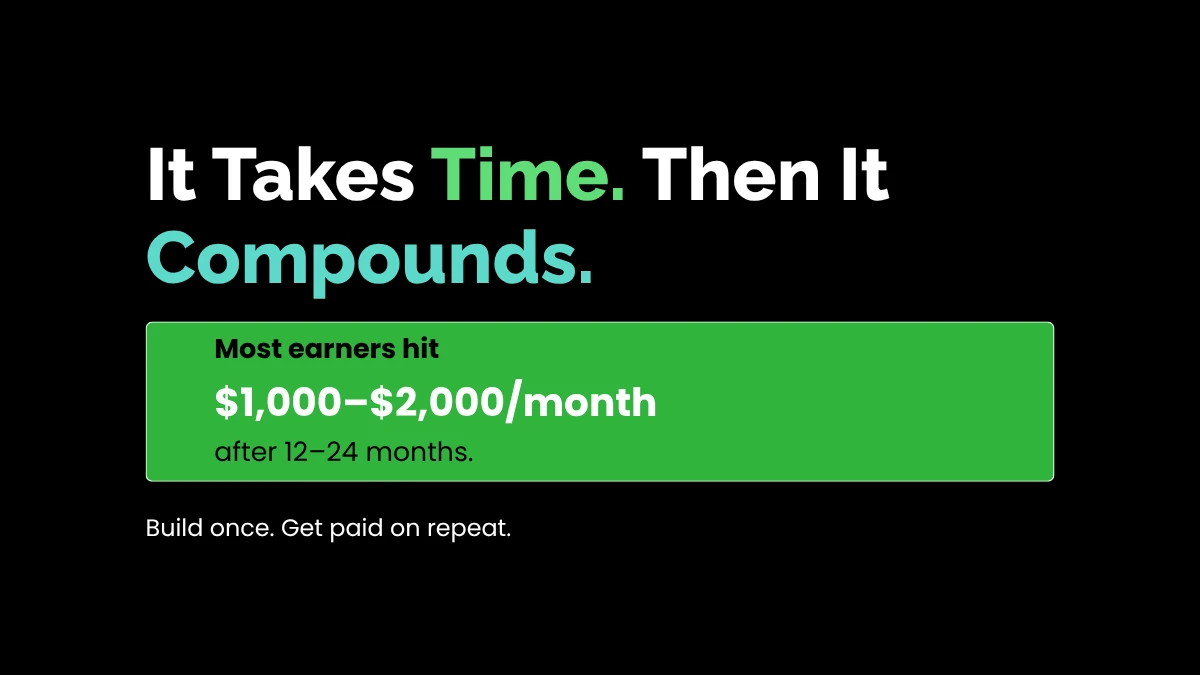
Many of these methods take 6 to 24 months before generating meaningful income. That is not a reason to avoid them. It is important context so you can set a realistic timeline and avoid abandoning a working strategy too early.
A Notion template creator who uploads one template and earns $12 in the first month may feel like it is not working. A creator who uploads 15 templates across several niches over six months and earns $2,400 in month seven is working the same model at the right scale.
The difference between people who succeed at passive income and people who do not is rarely talent or luck. It is volume, patience, and the willingness to treat initial income as proof of concept rather than profit.
| Real Talk: None of these methods replaces a full-time income quickly for most people. Most successful passive income earners reached $1,000 to $2,000 per month after 12 to 24 months of consistent effort. That is worth building toward, but it is not an overnight transformation. |
Frequently Asked Questions
What are the easiest ways to make money while you sleep with no money?
Selling digital products like Notion templates or low-content KDP books requires minimal startup cost. Renting a parking space costs nothing. A paid newsletter on Substack or Beehiiv can also launch for free.
How long does it take to start making money while you sleep?
It depends heavily on the method. Parking space rental can generate income within days of listing. Stock photos and digital products typically take 2 to 8 weeks.
Is passive income actually passive?
Mostly no, at least in the early stages. Most passive income models require significant upfront work to build the asset, whether that is a template, a catalog of photos, a software tool, or a content site.
Can I make money while I sleep without any investment?
Yes, in some cases. Renting a parking space you already own costs nothing to list. Creating and uploading digital products, music, or stock photos has no hard cost if you already have the tools.
How much can I realistically earn from passive income streams?
Most people building passive income alongside a full-time job reach $500 to $2,000 per month within 12 to 24 months, depending on the method and effort. Some people build significantly more. Some build less.
Final Thoughts
Ways to make money while you sleep exist in far more forms than dividend stocks and rental properties. Whether you are a musician, a designer, a writer, a developer, or simply someone with a parking space and a motivated spirit, there is a model here that fits your situation.
The common thread across every method on this list is the same: you build once, and the asset keeps paying. The methods are genuinely odd in places, from royalty investing to low-content book publishing to micro-SaaS tools for niche audiences. But odd does not mean unproven. Every method above has real people earning real income from it right now.
Pick the one that fits your resources and your patience for upfront work. Start small. Prove it works. Then scale. Stay tuned with WeirdWealth for more info