Key Takeways
- Rising demand for remote prompt creators
- No advanced coding degrees required
- Diverse roles across multiple industries
- Practical tips to build your portfolio
If you’ve spent any time playing around with ChatGPT, Claude, or Midjourney, you’ve already done a basic version of prompt engineering. You type a question, tweak your wording when the output isn’t quite right, and try again.
But did you know companies are paying real money for that exact skill?
It’s true. Finding AI prompt engineering jobs remote based options is one of the fastest-growing trends in the modern workforce.
The best part? You don’t need a master’s degree in computer science to get started. If you have an analytical mind, strong language skills, and a knack for problem-solving, you can do this work right from your living room couch.
Let’s dive into ten incredible roles you can land today.
AI Overview
Looking for flexibility? AI prompt engineering jobs remote options allow you to build, test, and refine inputs for artificial intelligence models from anywhere. These remote roles generally bridge the gap between human language and machine logic. Based on available data, companies across tech, marketing, and healthcare are hiring remote prompt engineers to make their AI tools smarter, safer, and more efficient.
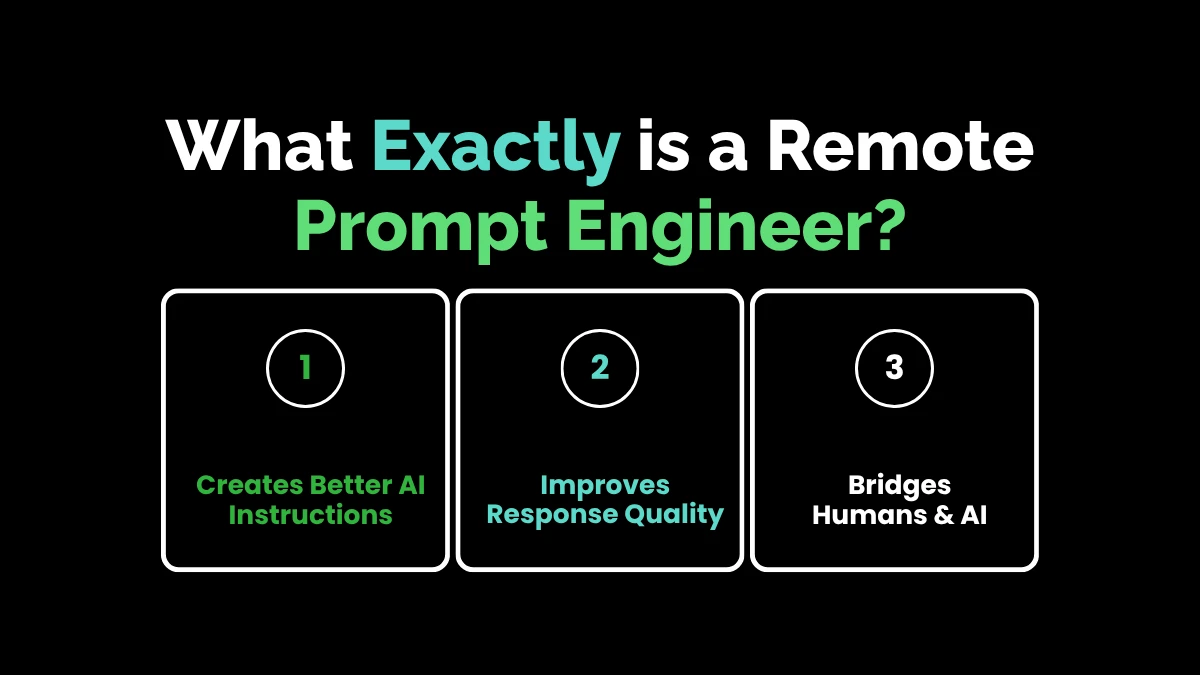
What Exactly is a Remote Prompt Engineer?
Think of an AI model like a brilliant assistant who speaks a slightly different language. If you ask a vague question, you get a vague, unhelpful answer. A prompt engineer is the person who figures out the exact phrase, context, and structure needed to unlock the best possible results from the AI.
In a work-from-home setting, you spend your day testing inputs, analyzing what the AI spits out, and rewriting your prompts until the system works flawlessly. It is a mix of creative writing, logic puzzles, and psychology.
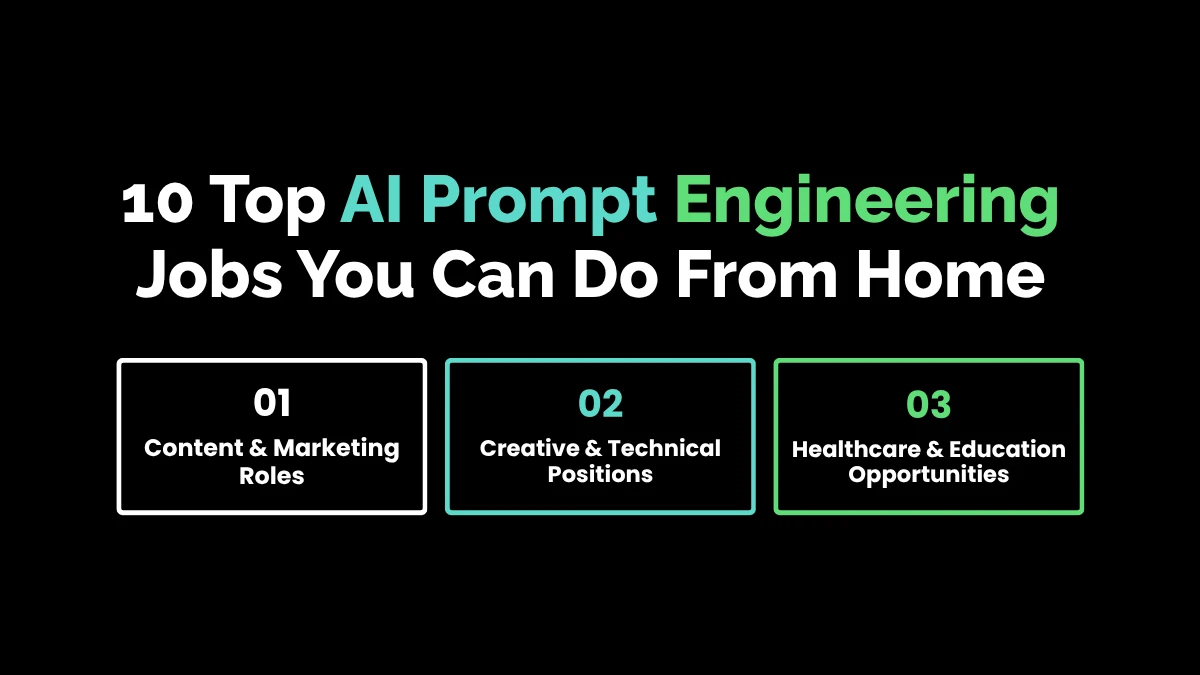
10 Top AI Prompt Engineering Jobs You Can Do From Home
The remote job market is bursting with different flavors of prompt engineering. Here are ten roles you can apply for right now.
1. AI Content Prompt Specialist
In this role, you work closely with marketing teams. Your job is to build prompts that help AI generate high-quality blog posts, social media captions, and email newsletters that actually sound human. You teach the AI to match a brand’s unique voice and tone perfectly.
2. Conversational AI Architect
Ever chatted with a customer service bot that actually solved your problem? A conversational architect built the prompt sequences behind it. You will design the logical flow and underlying prompts that help customer support bots handle complex user issues without losing their cool.
3. Generative Art Prompt Engineer
If you love working with visual tools like Midjourney or Stable Diffusion, this is for you. Companies need experts who can write precise prompts to generate commercial graphics, ad creatives, and product designs. It requires a great eye for detail and a solid understanding of art styles.
4. AI Bias and Safety Evaluator
AI models can sometimes output biased, incorrect, or harmful information. Safety evaluators write “adversarial prompts” to intentionally trick or stress-test the AI. By finding these weak points, you help developers build safer, more trustworthy systems before they launch to the public.
5. Legal and Compliance Prompt Writer
Law firms and corporate legal departments are using AI to sift through massive piles of contracts. Because legal language requires absolute precision, these remote roles involve creating highly structured prompts that extract data without missing critical legal nuances.
6. Medical AI Prompt Consultant
Healthcare companies use machine learning to analyze patient data and research papers. As a remote consultant, you design prompts that help medical AI summarize complex clinical notes accurately. Don’t worry, these roles generally operate under strict human supervision to ensure safety.
7. EdTech Prompt Designer
Education technology companies are building AI tutors for students. In this position, you create prompts that guide the AI to explain math, science, or history concepts at different grade levels. You ensure the bot teaches the student rather than just giving away the answers.
8. AI Code Generation Tester
Tools like GitHub Copilot help software engineers write code faster. If you have a basic understanding of programming languages, you can work as a tester. You will write prompts to generate code snippets, check them for bugs, and refine the prompts to improve accuracy.
9. Prompt Engineering Instructor
As the field grows, thousands of people want to learn the ropes. If you have a knack for teaching, you can work remotely for online academies or corporate training programs. You’ll create lesson plans, record tutorials, and teach others how to master AI inputs.
10. E-Commerce Prompt Optimization Manager
Online retail brands use AI to generate thousands of product descriptions and personalized shopping recommendations. You will manage the backend prompts that keep these descriptions accurate, engaging, and optimized for search engines.
Quick Comparison of Remote Prompt Engineering Roles
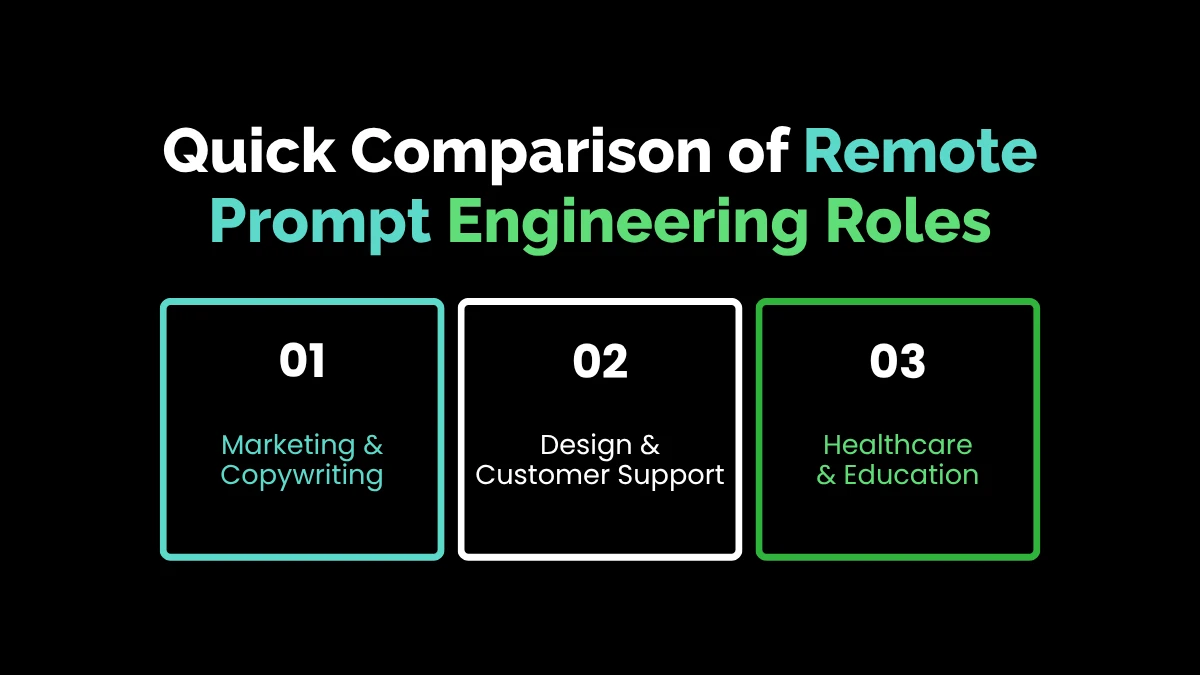
To help you decide which path fits your background, here is a quick look at how these work-from-home positions stack up against each other based on estimated industry averages.
| Job Title | Primary Focus | Required Skill Level |
| Content Prompt Specialist | Marketing & Copywriting | Beginner to Intermediate |
| Conversational Architect | Customer Service Flows | Intermediate |
| Generative Art Engineer | Visuals & Design | Beginner to Intermediate |
| AI Safety Evaluator | Testing & Risk Mitigation | Advanced |
| Medical Prompt Consultant | Healthcare Data Summary | Advanced |
| EdTech Prompt Designer | Educational Adaptability | Intermediate |
Skills You Need to Land AI Prompt Engineering Jobs Remote
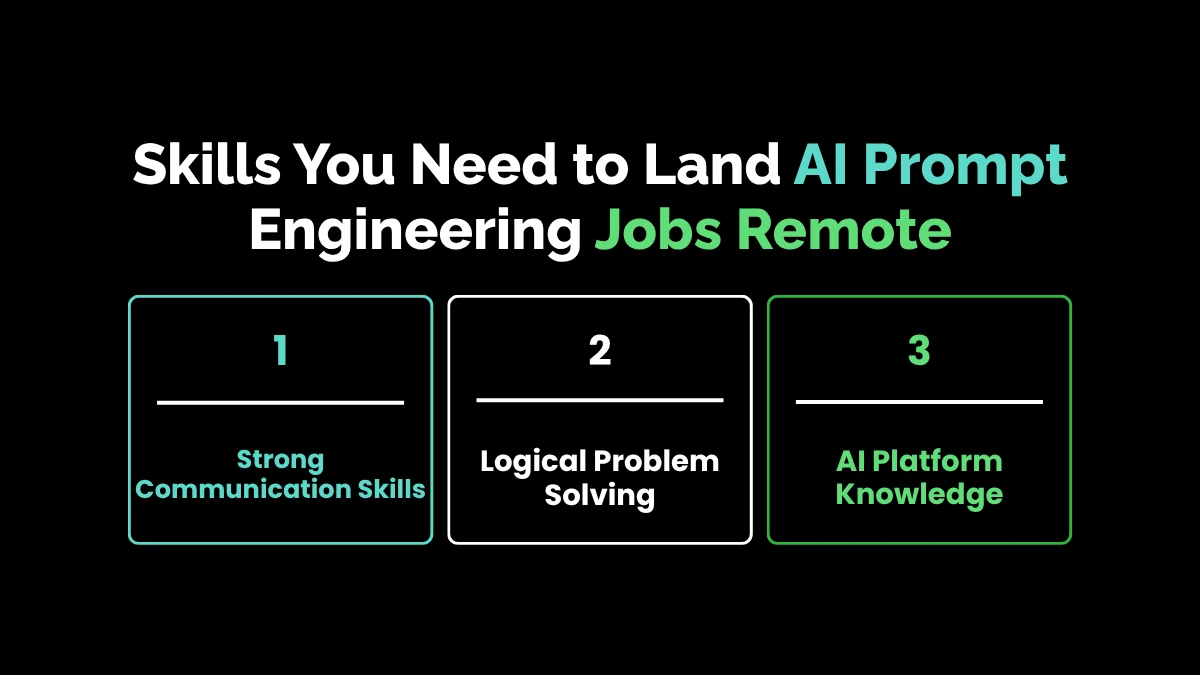
You don’t need to be a coding wizard to land these roles, but you do need a specific toolkit. The beauty of this career path is that many of these skills can be self-taught from home.
Here is what hiring managers generally look for on a resume:
- Flawless Communication: You must understand the subtle differences in language, syntax, and vocabulary to guide the AI effectively.
- Logical Reasoning: Prompting is a lot like coding in plain English. You need to break big problems down into small, step-by-step instructions.
- Platform Familiarity: You should know your way around major models like OpenAI’s ChatGPT, Anthropic’s Claude, and Google’s Gemini.
- Data Analysis: You need the patience to look at hundreds of AI responses, spot patterns, and figure out why a prompt is failing.
If you are looking for a great place to start learning, platforms like Weird Wealth offer fantastic, practical insights on navigating the digital economy and finding legitimate online income streams.
How to Find and Apply for Work-From-Home AI Roles
Finding these jobs requires looking in the right corners of the internet. Because the field is so new, traditional job boards might not always have a dedicated category for it yet.
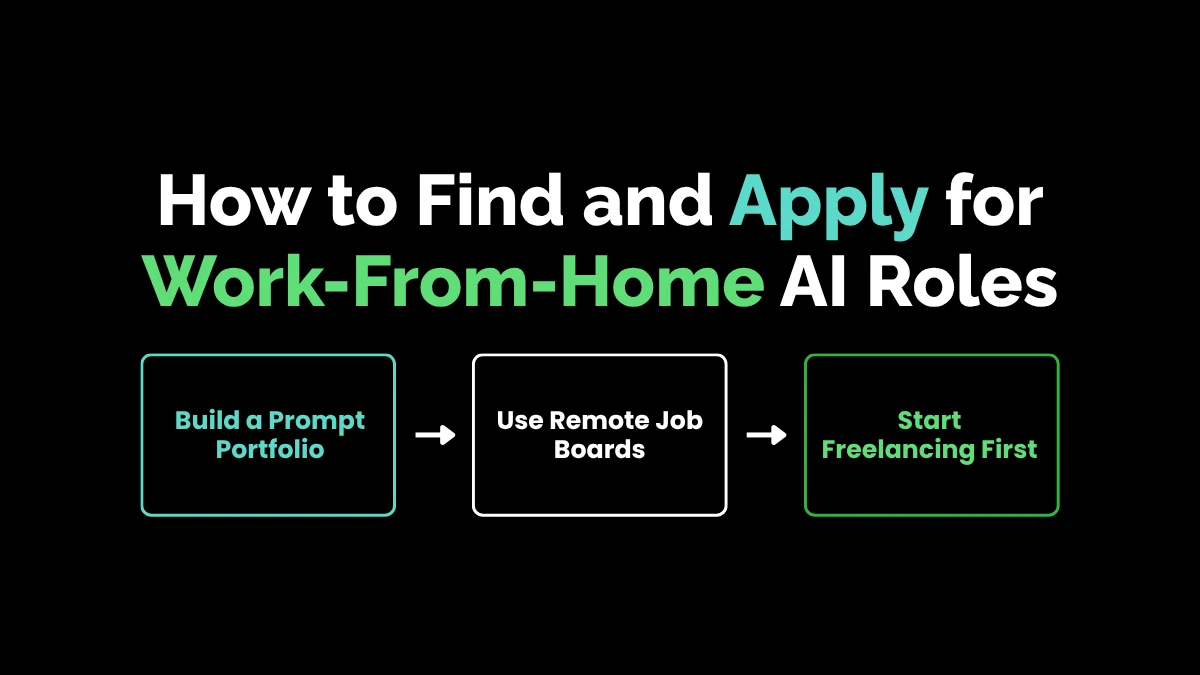
To jumpstart your search, check out this recommended approach:
- Use Specialized Job Platforms: Look at niche remote job platforms like We Work Remotely, FlexJobs, and Remote.co. Use search terms like “prompt engineer,” “AI content specialist,” or “AI evaluator.”
- Build a Portfolio: Don’t just say you can write prompts; prove it. Create a free GitHub repository or a simple website showcasing your best prompts, the inputs you used, and the impressive outputs the AI generated.
- Freelance First: Platforms like Upwork and Fiverr are packed with business owners looking for quick help setting up AI workflows. This is a brilliant way to gain real-world experience.
We highly recommend checking out dedicated job platforms that focus entirely on AI and tech roles, as they tend to have the highest concentration of vetted openings.
Is Prompt Engineering a Sustainable Career?
A common question people ask a friend when discussing this industry is: “Will this job disappear when AI gets smarter?” It is a valid concern. AI models are getting better at understanding messy human inputs every single day.
However, as the technology evolves, the role of the prompt engineer shifts from simple keyword tweaking to high-level AI management. Companies will always need human overseers who understand how to align machine outputs with specific business goals. According to data from industry researchers, the demand for human-in-the-loop validation is actually increasing, not decreasing.
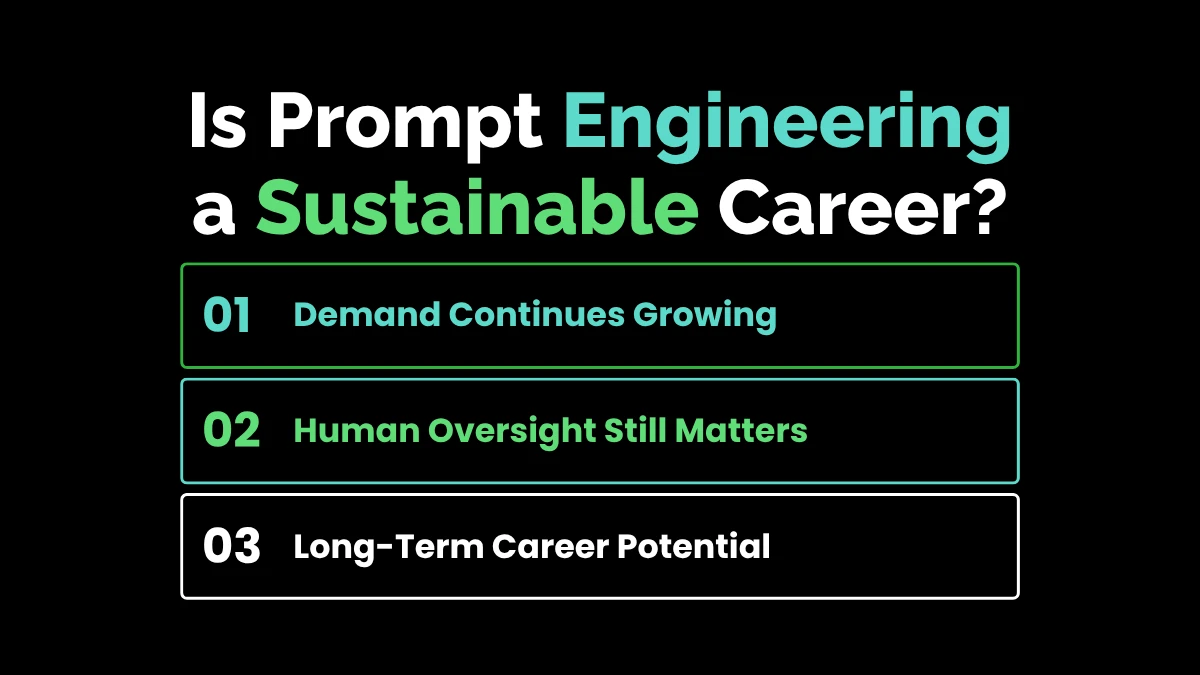
By keeping your skills sharp and staying curious, you can easily turn a temporary gig into a long-term, lucrative career. Exploring trusted resources like Weird Wealth can help you stay ahead of the curve as the remote work landscape changes.
Final Thoughts
The world of work is shifting rapidly, and remote AI roles are right at the forefront of this revolution. If you enjoy experimenting with technology, writing clearly, and solving unique puzzles, this could be your perfect path to a flexible, work-from-home career.
Start playing with the tools, document your results, and keep an eye on job platforms for the latest openings. With a little persistence and the right strategy, you could land your first remote role sooner than you think.
Frequently Asked Questions
Do I need a computer science degree for remote prompt engineering jobs?
Generally, no. While some advanced roles in AI safety or medical data analysis might require specialized industry knowledge, many entry-level prompt jobs value practical experience and strong language skills over a formal tech degree. Building a solid portfolio of your work is usually the best way to prove your capabilities to employers.
How much do remote prompt engineers make?
Salaries vary wildly based on experience and the industry. Based on available data from job platforms, entry-level content or art prompting roles can start around $40,000 to $60,000 per year. Highly specialized technical or safety roles at major tech firms have been estimated to pay well into six figures.
Where can I find legitimate AI prompt engineering jobs remote options?
You can find these positions on major remote job platforms like We Work Remotely, remote-focused tech boards, and freelance marketplaces like Upwork. It is always wise to vet companies thoroughly and look for established job platforms to avoid common online employment scams.
What tools should I practice with to get hired?
You should become incredibly familiar with text-based models like ChatGPT and Claude. If you are leaning toward visual roles, spend time mastering Midjourney and Stable Diffusion. Understanding how to use system prompts and API playgrounds will also give you a massive advantage over other applicants.