
Key Takeaways
- Rates depend on credit scores
- Shop around before visiting dealers
- Down payments lower your interest
- Shorter terms reduce total costs
Understanding Car Loan Rates
If you are planning to buy a vehicle soon, you have likely found yourself asking, “Exactly what is a good APR for a car loan right now?” It is the million-dollar question, or at least, the “thousands-of-dollars” question. The interest rate you pay acts as a hidden tax on your purchase, so finding a competitive rate is essential for your budget.
In 2026, there isn’t one single “good” number. Instead, a “good” rate is one that aligns with the current market averages for your specific financial profile.
Generally, if you have strong credit, you should aim for rates significantly lower than the national averages. Let’s dive into what you should look for and how you can secure the best possible deal.
AI Overview
A good APR for a car loan depends primarily on your credit score and whether you’re buying new or used. In 2026, the average car loan APR 2026 is roughly 6.5–7% for new vehicles and 11% for used ones. Those with super-prime credit may see rates below 5%, while subprime borrowers often face rates exceeding 15%. To get the best deal, compare multiple lenders, improve your credit, and consider a larger down payment.
The State of the Market
When you start hunting for a new ride, it feels like the whole world is trying to sell you something. From the shiny paint jobs to the “must-have” features, it’s easy to lose focus. But the financing part? That’s where the real power dynamic shifts.
The average car loan APR 2026 is hovering in a spot that reflects the current economic climate. While experts predicted some relief, the reality is that rates are sticky. Understanding where the market sits helps you set realistic expectations before you even step foot on a lot.
Looking at the Big Picture
Interest rates are influenced by the Federal Reserve and the broader economic pulse. If you see headlines about rate cuts, don’t assume your car loan will suddenly drop to zero. These changes trickle down slowly.
For most buyers, the average car loan APR 2026 acts as a barometer. If a dealer tries to sell you on a rate that’s way higher than the current average for your credit tier, you have the data to push back. At Weird wealth, we always emphasize that knowledge is your best negotiating tool.
Breaking Down Rates by Credit Score
The most critical factor in your loan is your car loan interest rate by credit score. It’s how lenders quantify the “risk” they take by trusting you with their money.
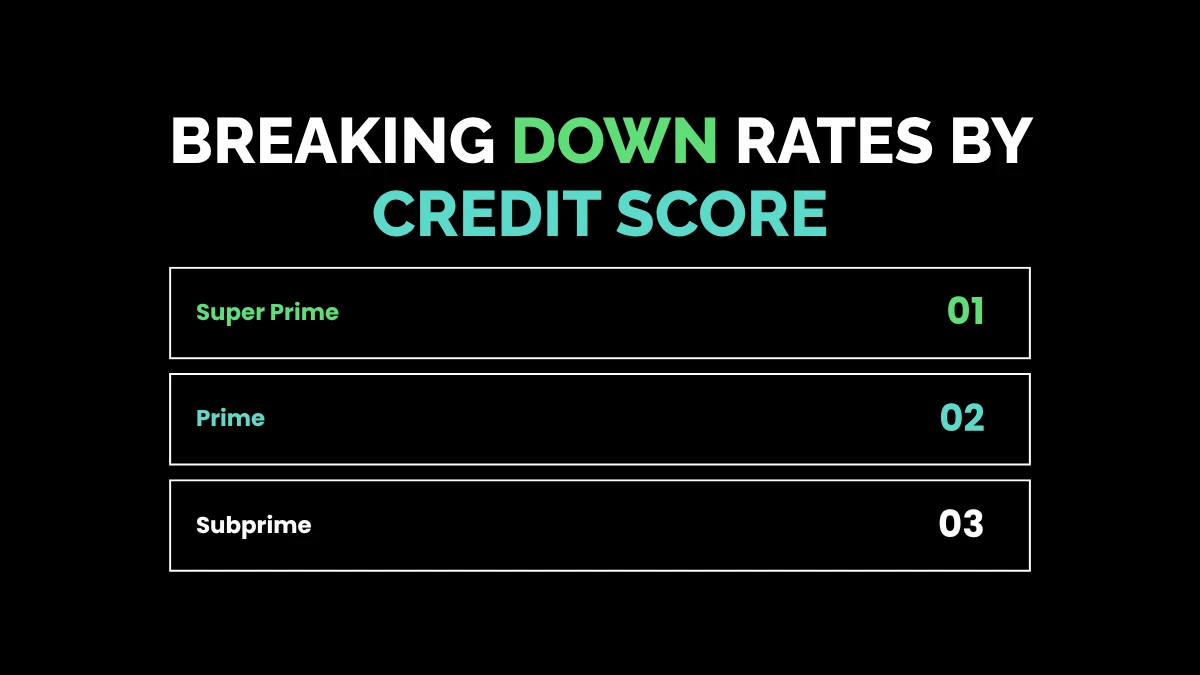
If you have a high credit score, you’re the “low risk” borrower. Lenders want your business, so they offer their best rates to keep you happy.
If your score is lower, they see you as a gamble, and they hike the rate to cover their potential losses. It might not feel fair, but that’s the reality of the lending game.
The Impact of Your Financial History
Think of your credit score as a reputation score. Every on-time payment you’ve made on your credit card or student loan adds a little “trust” points to your profile. When you approach a lender for an auto loan, they look at those points to decide your car loan interest rate by credit score.
| Credit Score Range | New Car Avg. APR | Used Car Avg. APR |
| 781–850 (Super Prime) | ~4.66% | ~7.70% |
| 661–780 (Prime) | ~6.27% | ~9.98% |
| 601–660 (Near Prime) | ~9.57% | ~14.49% |
| 501–600 (Subprime) | ~13.17% | ~19.42% |
| 300–500 (Deep Subprime) | ~16.01% | ~21.85% |
How to Win at Financing
So, you know your score, and you’ve seen the averages. Now, you’re likely wondering how to get low APR on car loans when the market feels stacked against you. The good news is that you have more control than you think.
The secret isn’t magic; it’s preparation. Most people walk into a dealership and just sign whatever paper is put in front of them. That is the quickest way to end up with a high rate. Instead, take a proactive approach and treat this like a business transaction.
Actionable Strategies for Borrowers
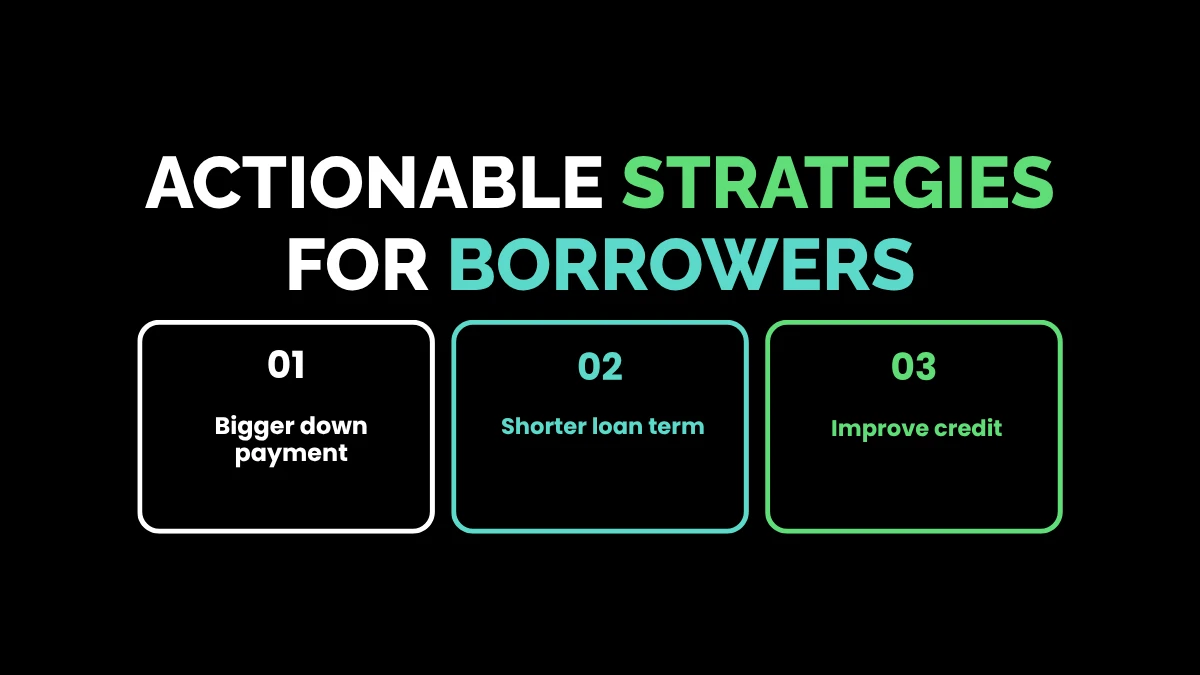
- Prequalify Elsewhere: Before you even look at cars, visit your local credit union or an online bank. Getting preapproved for a loan is like walking into the dealership with cash in your hand. It sets a baseline rate that the dealer has to beat if they want to earn your business.
- Clean Up Your Report: If you know your score is just a few points away from a better tier, wait a month. A small boost can sometimes drop your APR by a full percentage point or more, saving you hundreds of dollars.
- The Down Payment Move: If you have the savings, put more money down. A larger down payment changes the “loan-to-value” ratio. Lenders see you have skin in the game, which lowers their risk and often lowers your interest rate.
- Term Length Matters: We love a low monthly payment, but don’t fall for the 84-month loan trap. Shorter terms (like 36 or 48 months) usually come with lower interest rates and keep you from being “upside down” on your car.
- Refinance Down the Road: If you’re forced to take a higher rate now, don’t despair. If your credit improves or interest rates drop, you can look into refinancing. You aren’t stuck with that high rate forever.
The “Weird wealth” Philosophy on Debt
At Weird wealth, we talk a lot about “good debt” vs. “bad debt.” A car is a depreciating asset, its value goes down, not up. That makes the interest you pay on it extra painful because you’re losing value on two fronts: the car’s depreciation and the money you lose to interest.
This is why knowing what is a good APR for a car is so vital. If you can shave 2% off your interest rate, that’s not just a small win; that’s thousands of dollars that could have gone into your retirement fund, your savings, or even your next vacation.
Why Dealers Might Try to Increase Your Rate
It’s important to understand the dealership’s perspective. When they help you find a loan, they act as an intermediary between you and the lender. In some cases, they receive a “reserve” payment for setting up the loan.
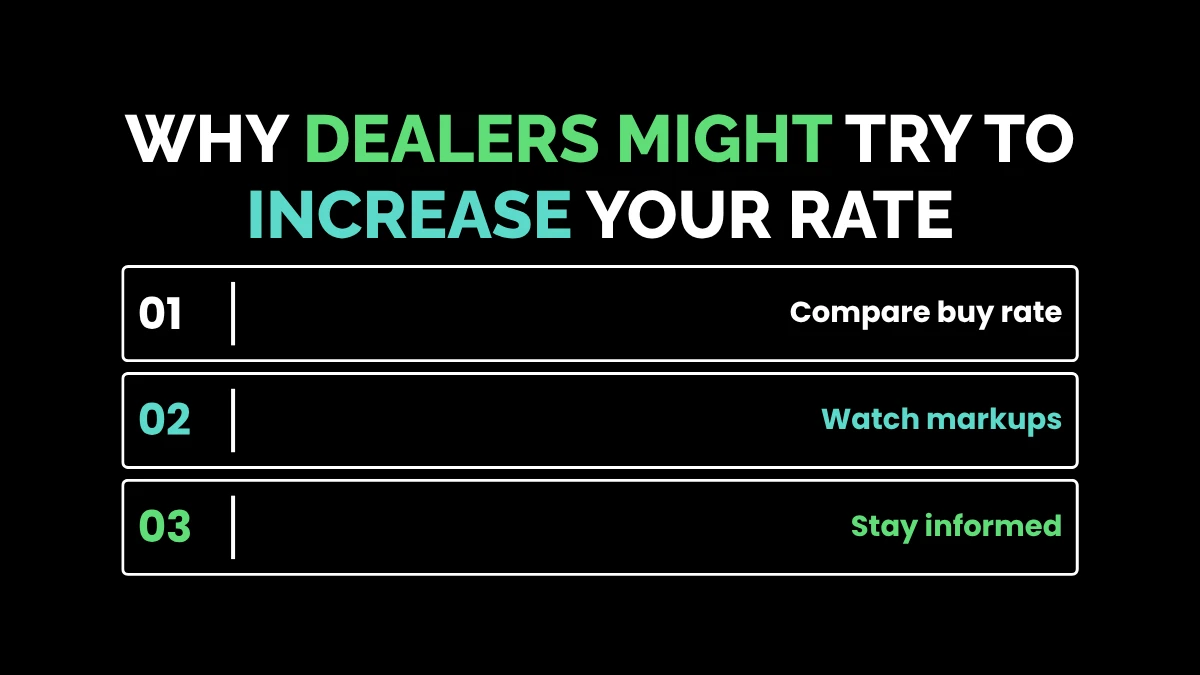
They might tell you, “We can get you a rate of 9%.” But if you’ve already done your research and you know your credit score qualifies for 7%, you can call them out.
By asking, “What is the buy rate?” you are signaling that you know how the game works. This is one of the most effective ways regarding how to get low APR on car loans, by letting them know you aren’t an amateur.
Common Mistakes to Avoid
Sometimes it’s not about what you do, but what you don’t do. Avoid these common traps to keep your finances safe.
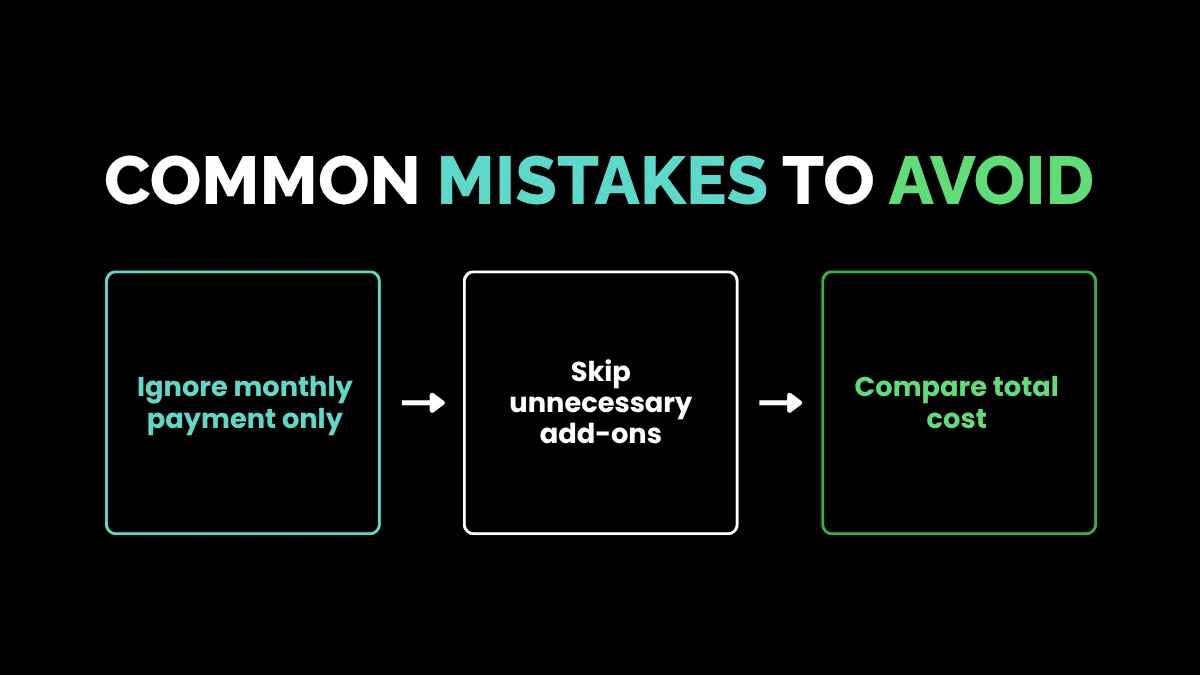
- Focusing Only on Monthly Payments: If a dealer says, “I can get your payment down to $300,” ask them, “At what interest rate and for how many months?” They might stretch the loan to 90 months just to hit that payment number, ballooning your interest.
- Ignoring Add-Ons: Gap insurance, extended warranties, and paint protection can be rolled into your loan. You end up paying interest on those “extras,” effectively making them 10% to 20% more expensive than they appear on the sticker.
- Checking Your Rate Everywhere: Applying for loans at ten different places in one week will hurt your credit score because of the multiple “hard” inquiries. Shop around, but be smart about it.
When Should You Buy?
There is no perfect time to buy a car, but there are better times. If you have the luxury of time, waiting for promotional financing events can be huge. Manufacturers often offer 0% or low-APR deals to move inventory.
If you are a first-time buyer or have a thin credit file, you might need to lean on a cosigner. A cosigner is someone with good credit who agrees to be responsible for the loan if you can’t pay.
This can be a game-changer for your interest rate, but choose your cosigner wisely, it’s a big favor to ask.
Is Financing at the Dealer Ever Good?
While we’ve talked about getting preapproved elsewhere, don’t rule out the dealer entirely. Sometimes, they have access to special programs that aren’t available at your local bank.
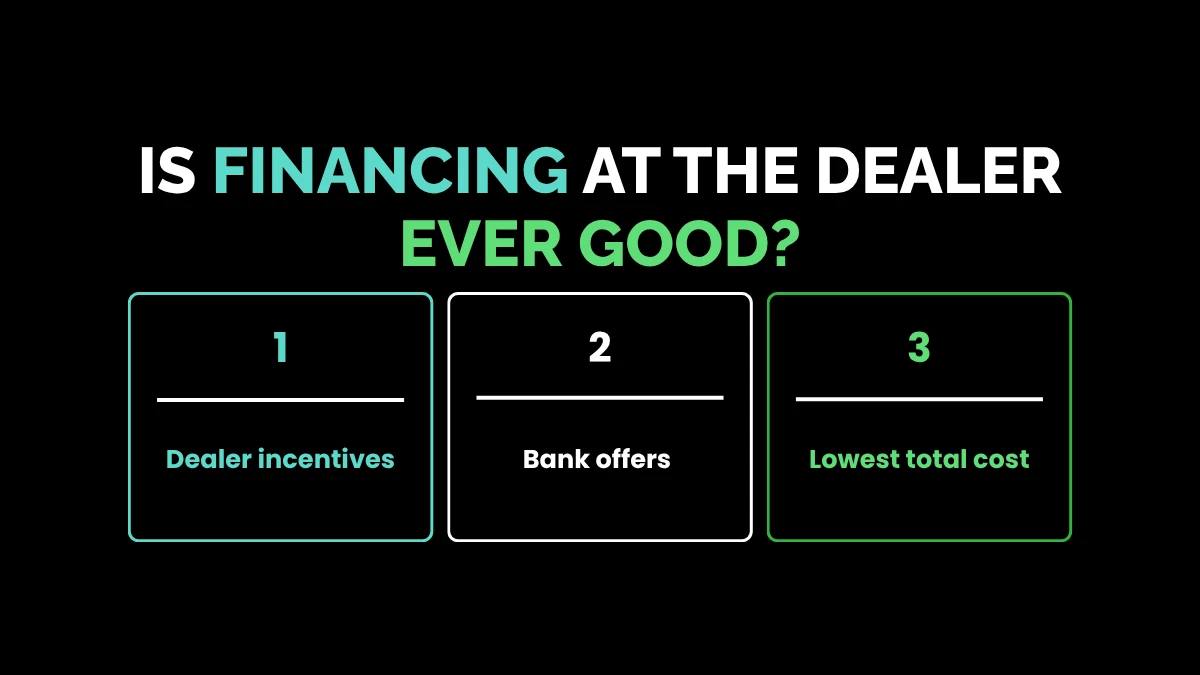
Always compare the dealer’s best offer against your own preapproval letter. If the dealer can beat your bank’s rate, take it! Just make sure the “out-the-door” price of the car doesn’t go up to compensate for the lower interest rate.
Sometimes, dealers play a shell game where they give you a great interest rate but charge you an extra $2,000 in fees. Always watch the total cost.
Conclusion
Finding the answer to “what is a good APR for a car” is about knowing your own financial power. By understanding how your credit score dictates your car loan interest rate by credit score, you can move from a position of confusion to a position of control.
Whether you’re hunting for the average car loan APR 2026 to use as a baseline or researching exactly how to get low APR on car loans through smart negotiation, remember that every percentage point matters. Take your time, shop around, and don’t be afraid to walk away if the numbers don’t add up. Your future self, and your bank account, will thank you for the diligence today.
At the end of the day, you are the one signing the contract, and you are the one who has to live with the monthly bill for years to come. Do the math, stay firm in your budget, and you’ll drive away not just with a new car, but with a deal you can be proud of.
Frequently Asked Questions
What is the best way to find a low car loan APR?
The best way is to prequalify with at least three different lenders like credit unions and banks before visiting a dealership, then use those offers to negotiate a lower rate with the dealer.
Does a shorter loan term actually help with my APR?
Yes, choosing a shorter term often secures a lower interest rate, and more importantly, it drastically reduces the total amount of interest you pay over the life of the loan.
Can I refinance my car loan later to get a better rate?
Absolutely. If your credit score improves or if market interest rates drop, you can apply for a refinance loan to replace your current, higher-interest contract with a more affordable one.
Is dealer financing always more expensive than a bank loan?
Not always. Sometimes dealerships run promotional financing offers, such as low-interest or even 0% APR incentives, which can be far better than what you would get from a traditional bank.
How does my credit score change the interest I pay?
Your credit score is the primary metric for risk. A higher score earns you a “prime” rate, which can save you thousands in interest compared to a “subprime” rate, which is reserved for lower credit scores.