
Key Takeaways
-
No credit is not bad credit: Lenders see you as a blank slate, which opens doors to special beginner programs.
-
Co-signers and down payments work best: These two simple tools drastically lower lender risk and slash your interest rates.
-
First-time buyer programs exist: Major auto manufacturers offer dedicated loan options tailored for people with zero credit history.
-
Build credit while driving: Paying off your auto loan on time establishes a strong credit profile for your future.
Have you ever walked into a car dealership, picked out your favorite ride, and then felt that sudden pit in your stomach when the dealer asked about your credit score?
If you have never taken out a loan or owned a credit card, you might worry that you are completely locked out of buying a car.
So, can you finance a car with no credit?
Yes, you absolutely can finance a car with no credit!
While having no credit history makes traditional banks a little cautious, it is far from a dealbreaker.
In fact, having no credit is very different from having bad credit.
Lenders treat you like a blank canvas rather than a risky painter.
With the right strategy, you can get approved for a auto loan and start building your financial score today.
AI Overview
Can you finance a car with no credit? Yes, first-time buyers can easily secure auto financing without a credit score. While traditional lenders prefer credit history, options like credit union loans, co-signers, first-time buyer programs, and down payments make approval fast. Having no credit simply means you are a blank slate. By choosing the right loan path, you can secure reliable transportation while building a strong credit profile from scratch.
Understanding No Credit vs. Bad Credit
Before diving into your loan choices, let us clear up a common myth.
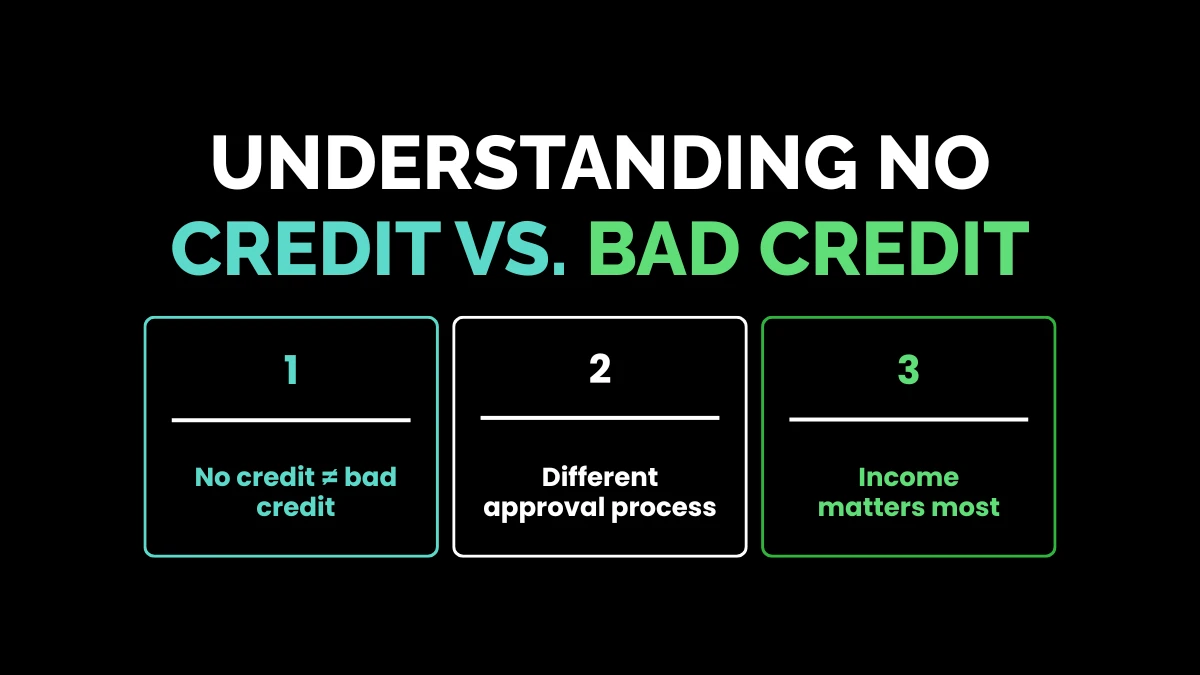
Many people think having no credit score is the same as having a low credit score.
That is simply not true!
| Feature | No Credit (Thin File) | Bad Credit (Poor History) |
| Meaning | You have no record of borrowing. | You missed payments or defaulted. |
| Lender View | An unwritten story (Unknown). | A history of missed obligations. |
| Approval Odds | High with proof of income. | Moderate with high interest rates. |
| Typical Solution | First-time buyer programs. | Subprime auto lenders. |
When you have no credit, you are what lenders call a “thin file.”
You have not proven whether you are good or bad at paying back money yet.
Because of this, lenders rely on other proof, like your job, income, and living situation to grant no credit car financing.
Top 15+ Options to Finance a Car With No Credit
If you are ready to buy your first set of wheels, here are 15+ proven paths to help you finance a car with no credit.
1. Apply Through Local Credit Unions
Credit unions are non-profit organizations owned by their members.
Because they do not answer to corporate shareholders, they are generally far more flexible than big national banks.
They often evaluate your whole story, not just a score.
2. Tap Into First-Time Buyer Programs
Many major car manufacturers offer specific first time buyer car loans through their dealership networks.
Companies like Honda, Toyota, and Ford frequently run special financing incentives for young adults, recent graduates, or first-time buyers.
3. Bring On a Trustworthy Co-Signer
Asking a parent, close family member, or trusted friend with great credit to co-sign your loan is one of the fastest ways to get approved.
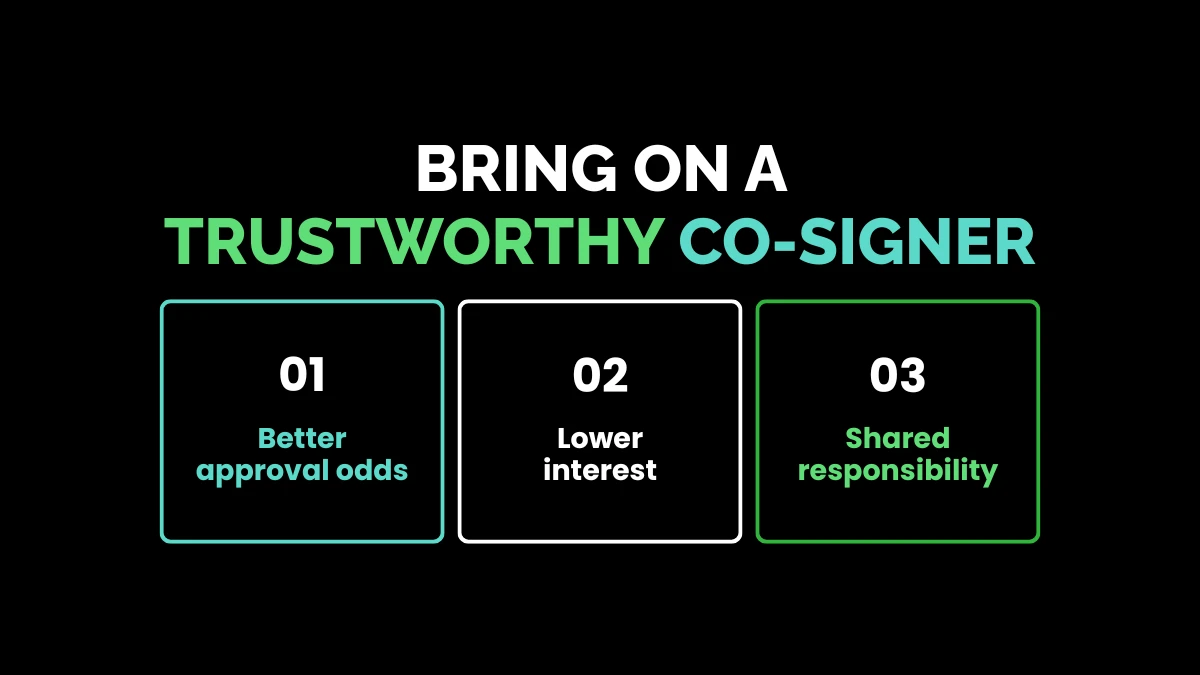
A co-signer promises to cover payments if you default.
This gives lenders instant confidence and significantly lowers your interest rate.
4. Save Up a Larger Down Payment
Putting down real money upfront reduces the total amount you need to borrow.
If you put 15% to 20% down, the lender takes on much less risk.
In most cases, a solid down payment turns a “no” from a lender into a quick “yes.”
5. Utilize Manufacturer Capital Financing
When you buy from a franchise dealership, ask about their captive finance companies (like Hyundai Motor Finance or Nissan Finance).
These institutions want to move cars off the lot, so they tend to offer more lenient approval standards for new buyers.
6. Explore Online Peer-to-Peer Lenders
Modern fintech platforms connect individual borrowers directly with investors.
Many online loan providers assess non-traditional data, such as your education level, job stability, and career track, rather than just pulling a standard credit bureau report.
7. Try Special Subprime Lenders
Subprime lenders specialize in approving buyers who fall outside traditional lending criteria.
While these lenders provide reliable approvals, keep in mind that they usually charge higher interest rates to offset their risk.
8. Opt for “Buy Here, Pay Here” Dealerships
Buy Here, Pay Here (BHPH) lots manage their own in-house financing.
They rarely check credit scores because they base approvals entirely on your employment status.
Friendly Advice from Weird Wealth: Treat BHPH lots as a last resort. They often charge top-tier interest rates and may install tracking devices on your vehicle.
9. Prove Income With Strong Pay Stubs
If you cannot show a credit score, show cash flow!
Lenders love consistency.
Providing 3 to 6 months of steady pay stubs demonstrates that you can comfortably manage monthly car payments.
10. Use Bank Statements to Show Financial Health
Are you self-employed or gig-working?
Showing 6 to 12 months of clean bank statements with consistent deposits proves your purchasing power just as well as a standard W-2.
11. Secure Your Auto Loan With a Savings Account
Some financial institutions allow you to take out a “share-secured” loan.
You deposit cash into a savings account, and the bank holds those funds as collateral while lending you money for your car.
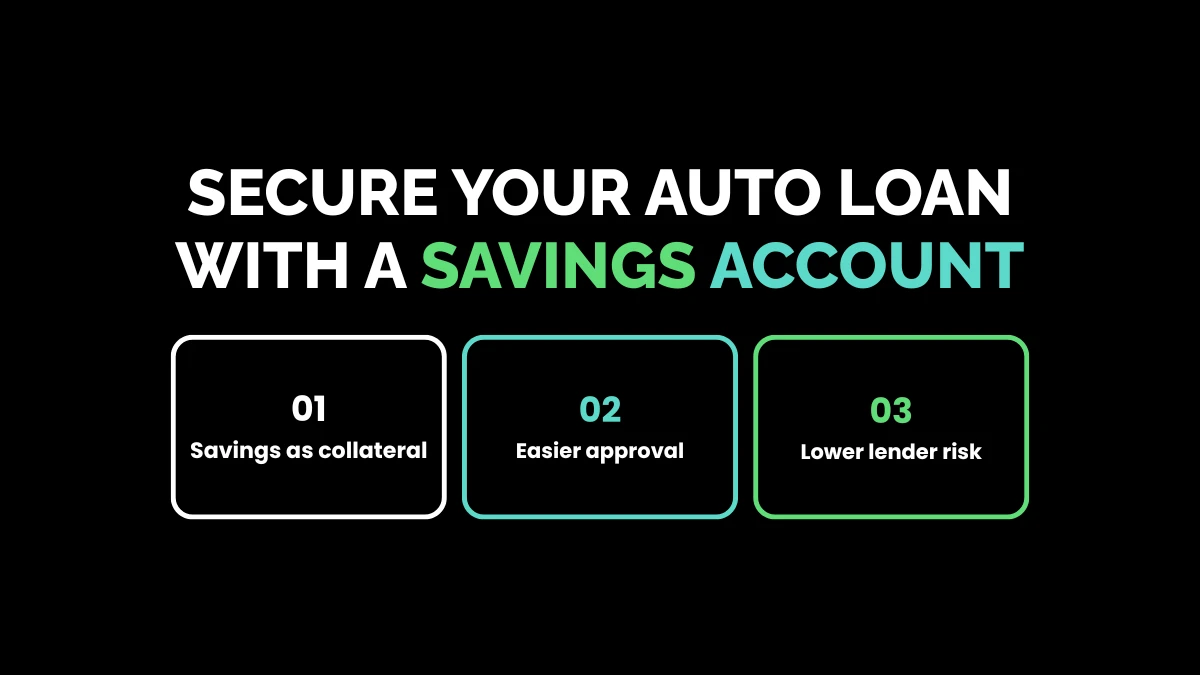
It is virtually risk-free for them and guarantees approval for you.
12. Take Advantage of Recent Graduate Programs
Have you finished college or trade school within the last two years?
Automakers offer graduate rebate programs that waive credit history requirements if you can show a diploma and a job offer letter.
13. Leverage Job Stability Proof
If you have worked at the same company for more than a year or two, highlight it!
Lenders view long-term employment as a strong indicator of financial stability.
14. Provide Proof of Consistent Utility Payments
Some modern lending algorithms review alternative data sources.
Showing a multi-year track record of paying rent, electric bills, and phone plans on time builds a compelling case for your financial responsibility.
15. Consider Lease-to-Own Options
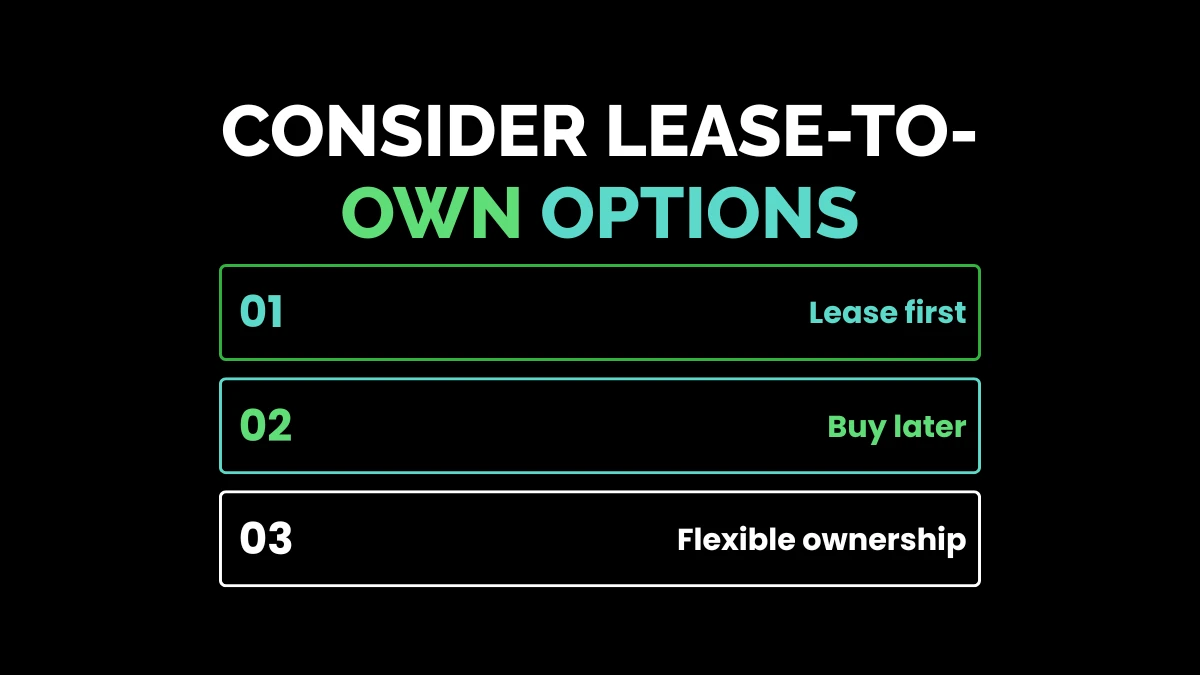
If taking out a full purchase loan feels out of reach, look into lease-to-own programs.
You lease the vehicle with a portion of your monthly payment going toward the ultimate purchase price of the car.
16. Lease a Vehicle First
Leasing requires smaller commitments than full vehicle purchases.
Some dealerships offer specialized lease arrangements for first-timers that help you build driving history and credit at the exact same time.
Comparing Your Best Financing Routes
Choosing the right path depends on your current situation, budget, and access to support.
| Loan Option | Approval Difficulty | Typical Rates | Best For |
| Credit Union | Moderate | Low to Moderate | Members |
| Co-Signer Loan | Easy | Lowest Available | Students / Young Adults |
| First-Time Buyer Program | Moderate | Fair | New Workers |
| Subprime / Bad Credit | Easy | High | Urgent Needs |
| Buy Here Pay Here | Very Easy | Very High | No Job Proof |
At Weird Wealth, we generally advise starting with credit unions or manufacturer programs before looking at higher-interest options.
4 Essential Steps to Prepare Before Applying
Do not run to the lot just yet!
Taking these four smart steps will save you thousands over the life of your loan.
Step 1: Calculate Your Real Budget
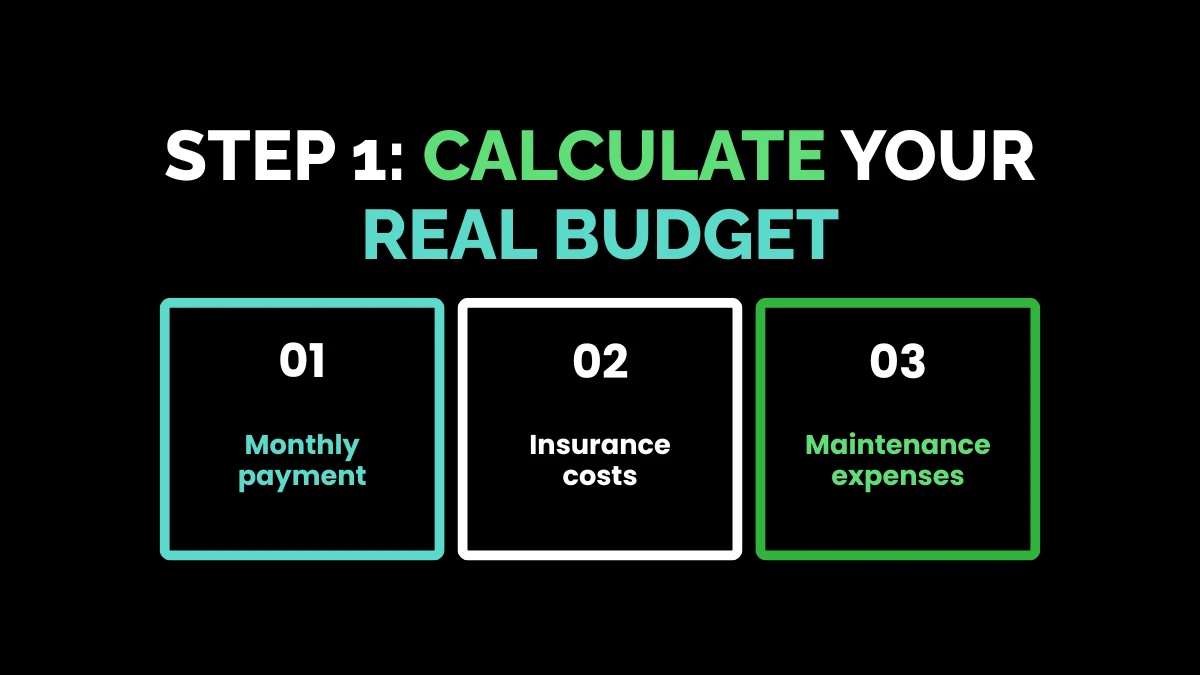
Your monthly payment is only part of the story.
Remember to account for:
-
Car insurance (which can be higher for first-time buyers)
-
Fuel costs
-
Routine maintenance and oil changes
-
Registration and state taxes
Step 2: Gather Your Paperwork
Speed up the approval process by bringing these documents along:
-
Government-issued ID or driver’s license
-
Your two most recent pay stubs
-
Proof of residence (like an electric or gas bill)
-
Personal references (names and phone numbers of friends or family)
Step 3: Get Pre-Approved Online
Never rely solely on dealership financing.
Apply for pre-approval through an online portal or local credit union first.
This gives you an exact budget and real bargaining leverage on the lot.
Step 4: Pick a Practical, Reliable Vehicle
Your first financed car does not need to be your dream vehicle.
Focus on reliable commuter cars with strong resale value, low insurance brackets, and reasonable price tags.
Avoid Common Pitfalls for First-Time Borrowers
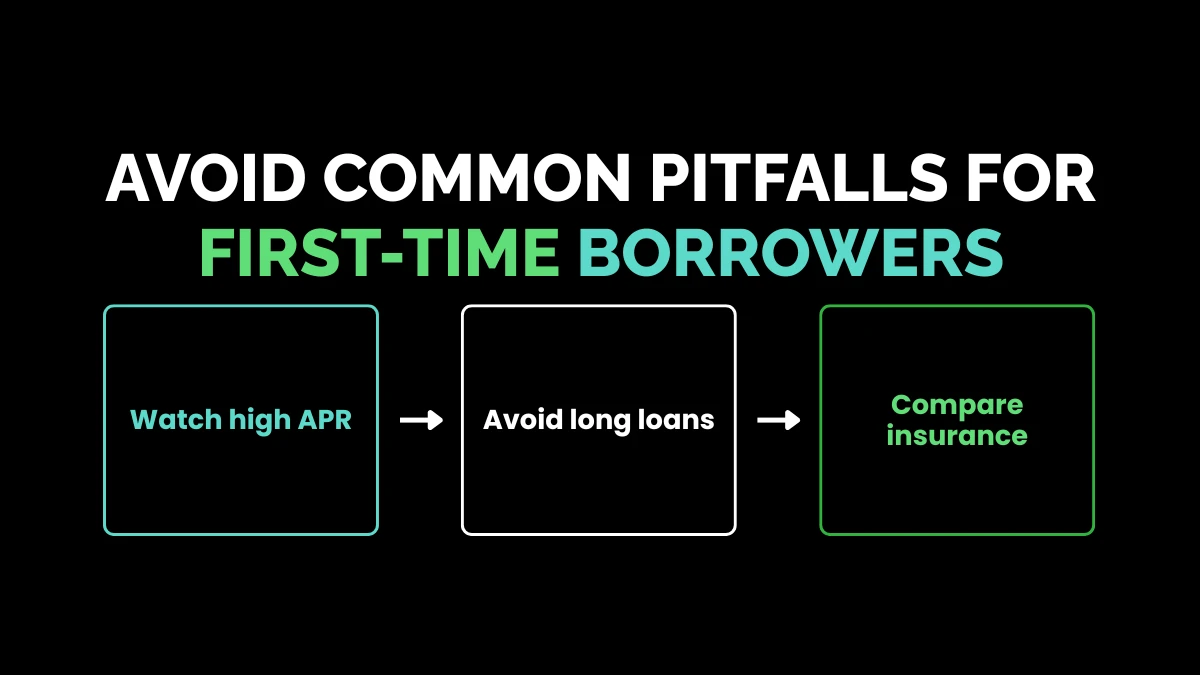
When you are eager to buy, it is easy to make quick mistakes.
Watch out for these common traps:
-
Focusing only on monthly payments: Long loan terms (like 84 months) lower your monthly bill, but they make you pay significantly more in total interest.
-
Falling for predatory bad credit auto loans: Always check the Annual Percentage Rate (APR). Anything over 18% should raise red flags.
-
Skipping insurance quotes: Get auto insurance quotes before signing loan papers so you aren’t surprised by total monthly costs.
How Your Auto Loan Builds Credit for the Future
Here is the silver lining of financing a car with zero credit history: it is one of the absolute best ways to build an elite credit score!
An auto loan is an installment loan.
When you make 100% of your payments on time, your lender reports that positive activity to major credit bureaus.
Within 6 to 12 months, your “thin file” transforms into a healthy credit profile.
This opens the door for low-interest credit cards, lower insurance premiums, and future mortgage approvals!
Conclusion
Can you finance a car with no credit?
As you have seen, having a blank credit history is simply a starting line, not a barrier!
By exploring options like credit union loans, co-signers, manufacturer offers, and smart down payments, you can drive off the lot with complete confidence.
At Weird Wealth, we believe financial literacy empowers you to make smart money moves—even if you are starting from scratch.
Take your time, shop around for competitive rates, and use your first auto loan as a launchpad toward lifelong financial health!
Frequently Asked Questions
Can I get a car loan with no credit and no co-signer?
Yes, you can! You can secure approval by making a larger down payment, providing strong proof of income, or utilizing dedicated first-time buyer programs offered by manufacturers and credit unions.
How much down payment do I need with no credit?
In most cases, lenders prefer a down payment of at least 10% to 20% of the vehicle’s purchase price to minimize risk and grant quick approval.
Does having no credit mean I will pay high interest?
Not necessarily. While interest rates may be slightly higher than those for prime borrowers, having a co-signer or joining a credit union helps you secure fair, competitive rates.
What is the minimum income required for a first-time car loan?
Most lenders typically look for a minimum gross monthly income of $1,500 to $2,000, along with proof of steady, long-term employment.