
Key Takeaways
- Skipping genuine market research early
- Ignoring core financial cash flow
- Targeting everyone instead of niches
- Poor marketing and consistency choices
- Neglecting customer trust and feedback
Ever wondered why so many eager entrepreneurs crash and burn right out of the gate? Starting a new digital store or service is super exciting, but simple mistakes kill online businesses 90 days into the launch. Most founders fall into predictable traps like bad cash management, zero audience research, or launching without a clear plan.
If you want your brand to survive past three months, focusing on real value, steady cash flow, and precise targeting is essential. When you start an online venture, every decision you make in those initial weeks creates a compounding effect. Small missteps early on quickly snowball into major financial disasters if they aren’t caught early.
Building a business isn’t just about having a great idea or a slick logo. It’s about executing a repeatable process that brings in revenue consistently while keeping expenses low. Too many new business owners focus on vanity projects like customized merchandise or flashy promotional videos long before they have even made their first sale.
By understanding the most common early-stage pitfalls, you can protect your capital, save hundreds of hours of wasted effort, and set your enterprise on a firm foundation. Let’s take a deep dive into the twelve critical mistakes that send new online businesses off the rails in their first quarter.
Quick AI Overview
Starting a digital storefront requires more than a cool product. Critical mistakes kill online businesses 90 days after launch when founders ignore cash management, market validation, and clear messaging. To build a lasting company, focus on serving a specific audience, managing your daily budget, and delivering genuine value from day one. At Weird Wealth, we focus on straightforward strategies that keep your company growing smoothly over time.
Why the First 90 Days Matter So Much
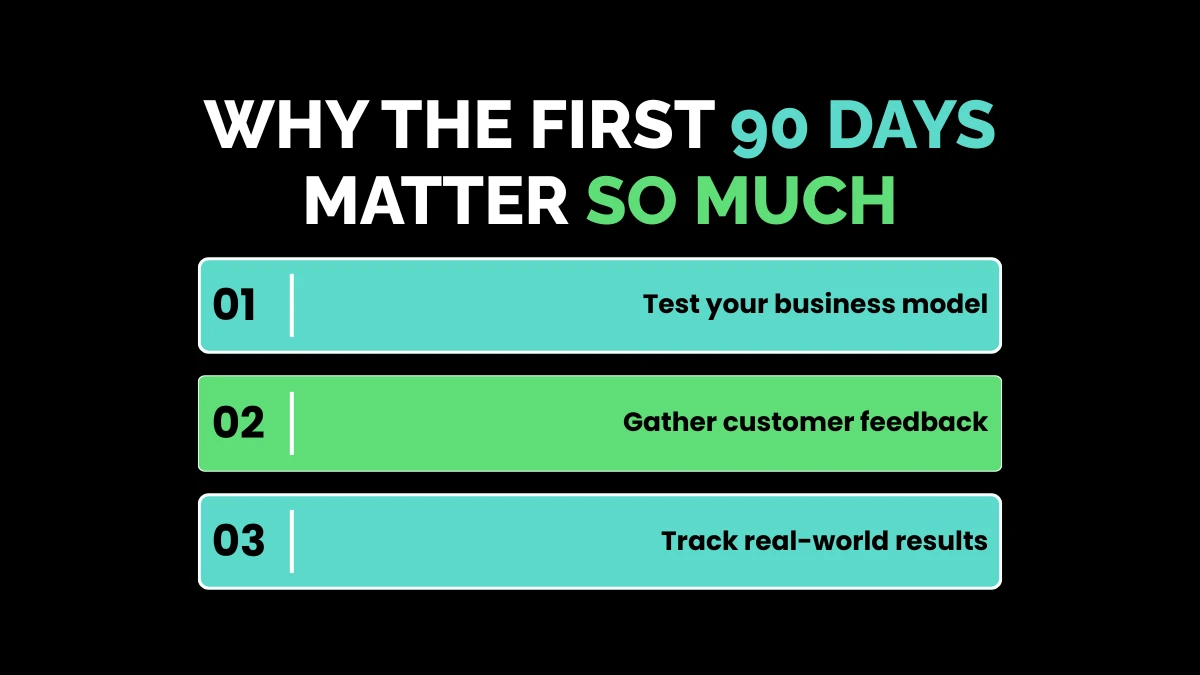
The first three months set the trajectory for your entire company journey. During this window, you test assumptions, gather customer feedback, and learn if your business model actually holds up.
If you waste this time chasing vanity metrics, you will run out of capital quickly. In most cases, early failure stems from a lack of direction rather than a bad product.
The first 90 days represent your operational trial period. It is the time when reality hits your theoretical business plan. You will quickly discover whether your price point is realistic, whether your marketing messaging converts, and whether your operations can handle daily demand.
If you navigate this timeframe successfully, you gain something far more valuable than initial revenue: real-world business data. Armed with actual customer insights, you can refine your sales funnel, optimize your margins, and scale up with confidence.
Strategic and Planning Pitfalls
Mistake 1: Skipping Real Market Validation
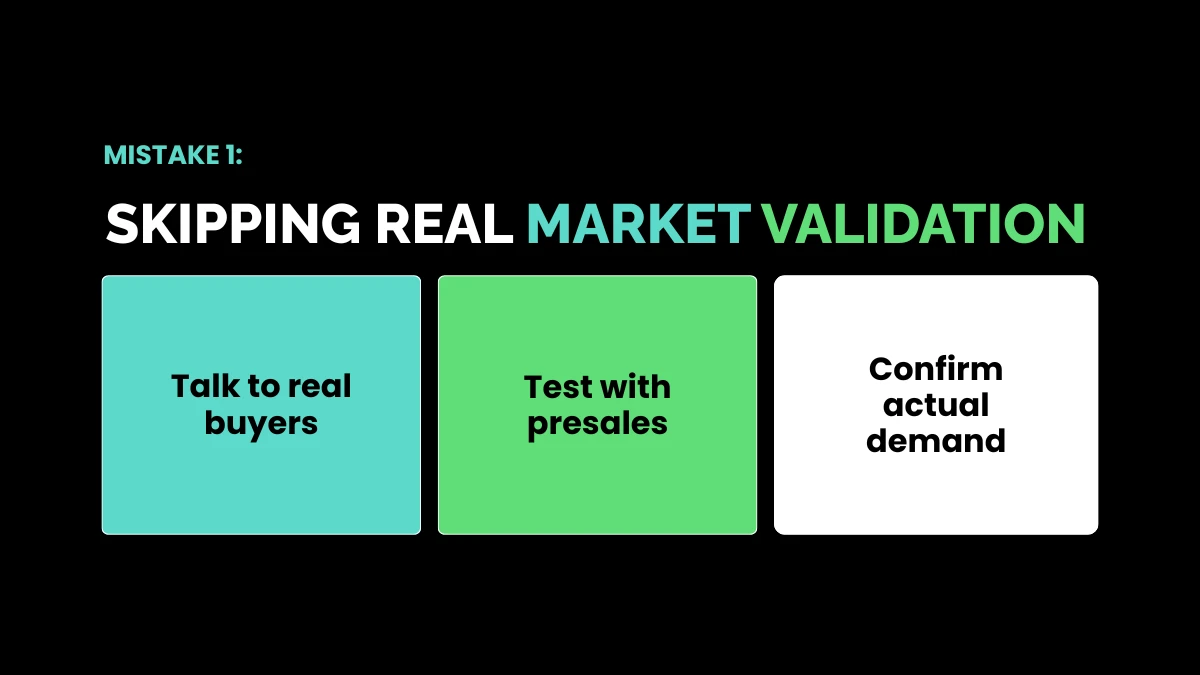
Are you building something people actually want to buy today? Too many founders spend weeks creating a product without talking to real buyers first.
Assuming everyone loves your idea is dangerous. Based on available data, validating your offer through presales or surveys saves immense time and money.
Market validation isn’t about asking your family and friends if they think your idea is cool. People who love you will almost always tell you what you want to hear. True market validation happens when strangers give you their hard-earned money or email addresses in exchange for a solution to their problem.
Before you invest thousands of dollars into inventory or custom software development, set up a simple landing page. Run a small presale campaign or collect pre-orders to verify that actual demand exists. If nobody buys when you present a clear solution, you need to pivot your concept before committing heavy resources.
Mistake 2: Trying to Target Everyone
When you try to speak to everybody, you end up appealing to nobody. Defining a specific target audience makes your marketing messaging sharper and far cheaper.
Broad Niche: “Fitness Products for Everyone”
Focused Niche: “Home Workout Gear for Busy Remote Workers”
Result: Higher Conversion Rates & Lower Ad Spend
Focusing on a micro-niche builds immediate trust. It allows a small startup like Weird Wealth to connect deeply with specific buyers.
When your targeting is overly broad, your marketing copy becomes bland and generic. Modern consumers are bombarded with thousands of ads daily, so they quickly ignore general offers that don’t speak directly to their personal pain points.
By narrowing your focus to a precise demographic or audience segment, your messaging becomes magnetically relevant. You can write ad copy, emails, and product descriptions that make prospective buyers think, “This was made specifically for me.” That emotional connection drives significantly higher conversion rates.
Mistake 3: Operating Without a Clear Execution Roadmap
Hope is not a business strategy. Launching without weekly goals leads to messy execution and wasted energy.
| Phase | Core Goal | Primary Focus Metric |
| Month 1 | Validation & Setup | Customer Conversations / Pre-orders |
| Month 2 | Traffic & Launch | Conversion Rate & Acquisition Cost |
| Month 3 | Optimization & Retention | Repeat Purchases & Direct Feedback |
Having a clean framework keeps your daily actions aligned with actual business growth.
Without a structured roadmap, daily business operations turn into reactive chaos. You spend your morning responding to random emails, your afternoon tweaking site graphics, and your evening browsing social media for inspiration, all without moving the needle on revenue.
A detailed 90-day plan breaks large goals into bite-sized weekly priorities. Each week should have one singular focus, whether that is setting up tracking tools, launching cold outreach campaigns, or optimizing checkout conversion rates. This clarity prevents overwhelm and keeps you moving forward.
Financial and Operational Blunders
Mistake 4: Mismanaging Cash Flow and Operating Expenses
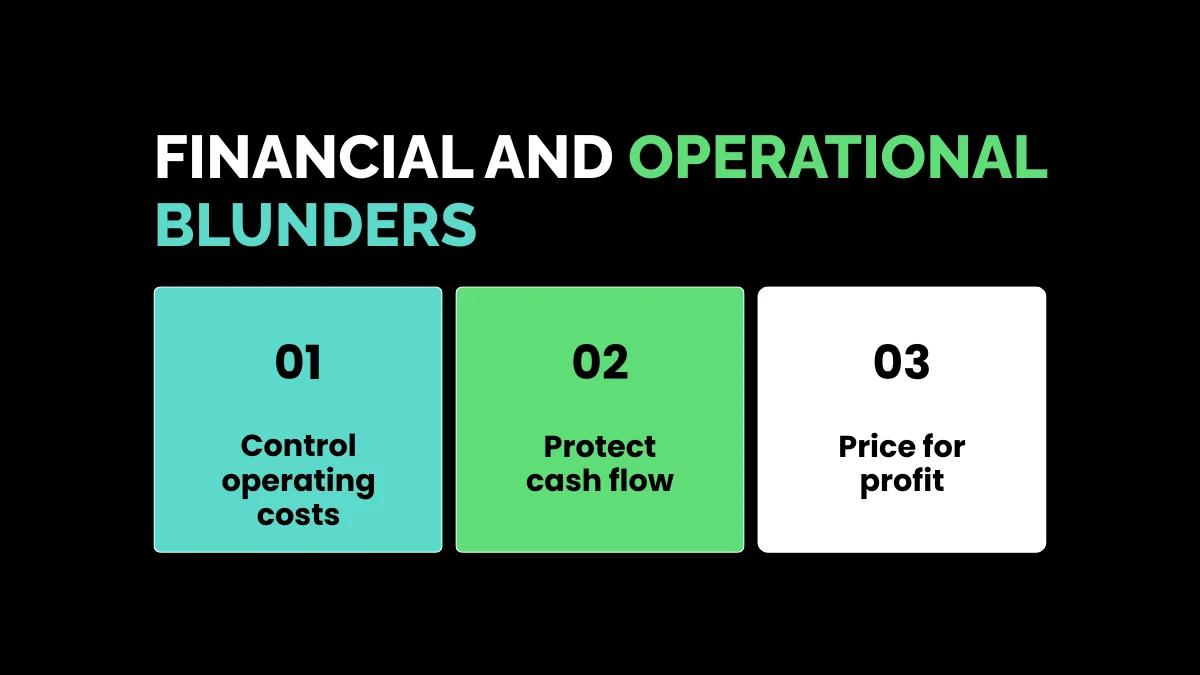
Running out of money is the ultimate reason startups close down. Unnecessary software subscriptions and over-designed branding drain funds fast.
Keep your overhead extremely lean during your first quarter. Generally, keeping fixed costs minimal buys you the runway needed to pivot when necessary.
New entrepreneurs often suffer from tool overload. They sign up for premium email marketing suites, expensive CRM software, project management dashboards, and high-end analytics trackers before earning their first dollar in profit. These monthly recurring expenses silently erode your startup capital.
Instead of subscribing to every tool recommended by online influencers, adopt a bootstrapped mentality. Use free tiers, basic spreadsheets, and open-source software until your actual operational output strictly demands an upgrade. Guard your cash buffer like your business’s life depends on it—because it does.
Mistake 5: Setting the Wrong Pricing Strategy
Pricing your products too low destroys your profit margins completely. Conversely, pricing way too high without established trust frightens buyers away.
Calculate your customer acquisition costs carefully before picking prices. Avoid competing purely on price, as it creates a race to the bottom that small shops lose.
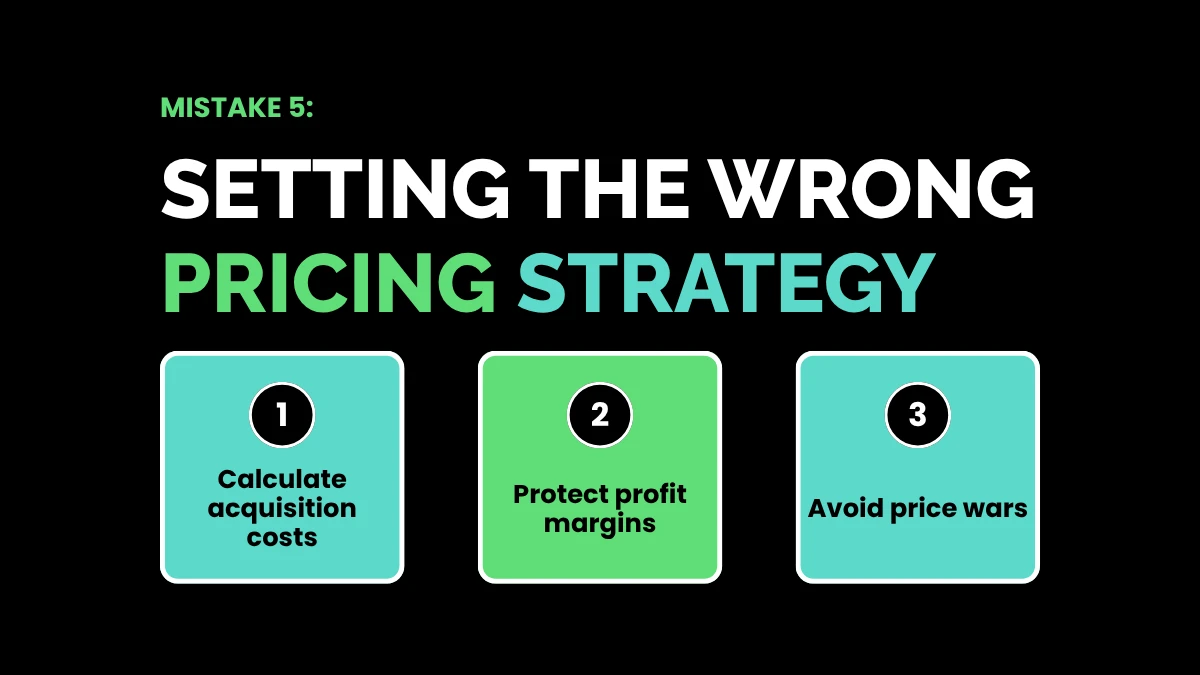
Underpricing is a common trap for new founders who lack confidence in their brand. They assume that lowering prices is the fastest way to undercut established competitors and win customers. However, razor-thin profit margins leave zero room for error, paid marketing, or order fulfillment glitches.
Overpricing without building brand authority creates a massive barrier to entry. If you charge top-tier prices, your website experience, social proof, packaging, and support must all reflect elite quality. Balance your pricing by factoring in ad costs, cost of goods, payment processing fees, and desired profit.
Marketing and Visibility Errors
Mistake 6: Relying Solely on Paid Ads for Traffic
Throwing money at ads right after launch is a fast way to go broke. Paid ads require testing, optimization, and money you might not have.
- Building an email list from day one with useful lead magnets.
- Creating long-term organic content to draw steady, high-intent traffic.
- Engaging directly in online communities where your ideal customers hang out.
- Partnering with micro-influencers for authentic social proof and trust.
- Optimizing your site structure so search engines understand your store.
Combining organic efforts with small ad budgets builds a resilient marketing engine.
Relying entirely on paid acquisition means your traffic stream turns off the moment you stop paying. In the early days, ad platforms like Meta and Google need time and conversion data to optimize their algorithms for your product. Expecting instant, highly profitable sales on day one is unrealistic.
Diversifying your customer acquisition strategy creates stability. Organic content marketing, search engine optimization, direct networking, and email nurture campaigns take time to build, but they generate high-margin compound traffic that sustains your brand long term.
Mistake 7: Ignoring Search Intent and SEO Basics
If your target audience cannot find you, your shop effectively does not exist. Ignoring content structure hurts your organic visibility severely.
Publishing helpful, high-quality content builds long-term traffic that paid ads simply cannot match. Search optimization pays off massively over time.
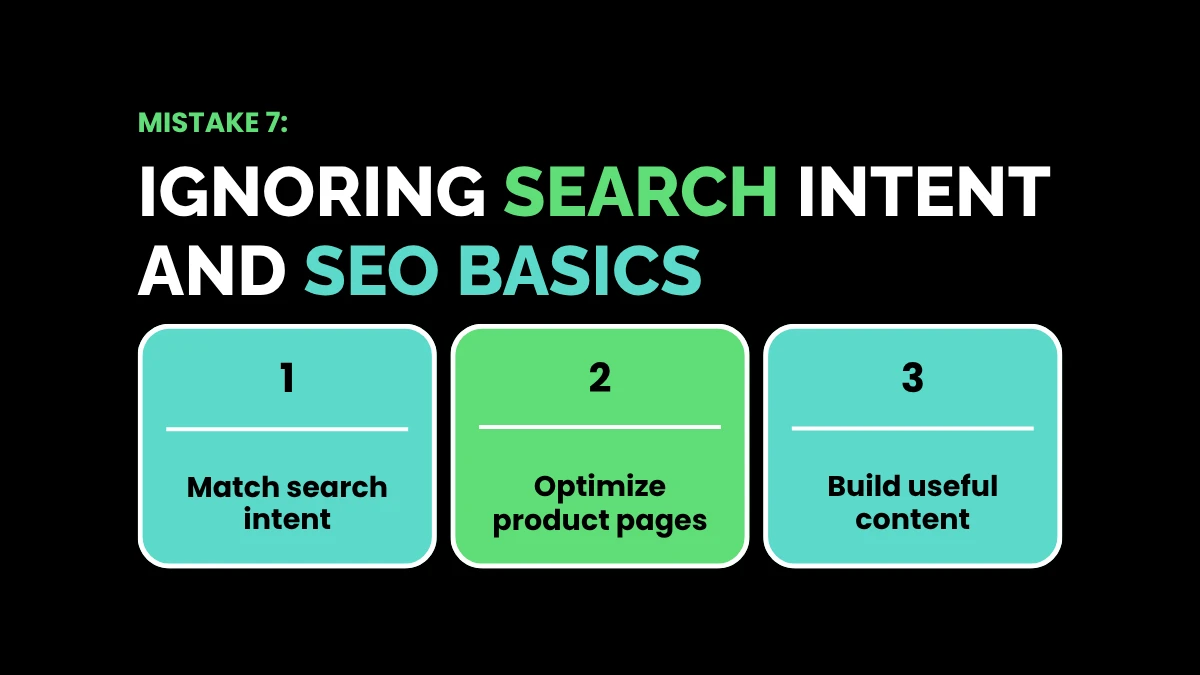
Many founders treat search engine optimization as an afterthought to be addressed months or years after launch. They create thin product pages, publish zero articles, and ignore basic metadata structure, missing out on warm, search-driven traffic.
Search engine optimization is about matching search intent. When prospective buyers search for solutions online, your website should offer clear, direct, and authoritative answers. Structuring your content cleanly ensures search engine crawlers understand your offerings and display them prominently.
Product and Customer Experience Flaws
Mistake 8: Launching a Clunky Website User Experience
Slow loading speeds and complicated checkout pages kill conversions instantly. Online shoppers have zero patience for non-functional websites.
Test your site on mobile devices repeatedly before opening to the public. Make purchasing as frictionless as humanly possible.
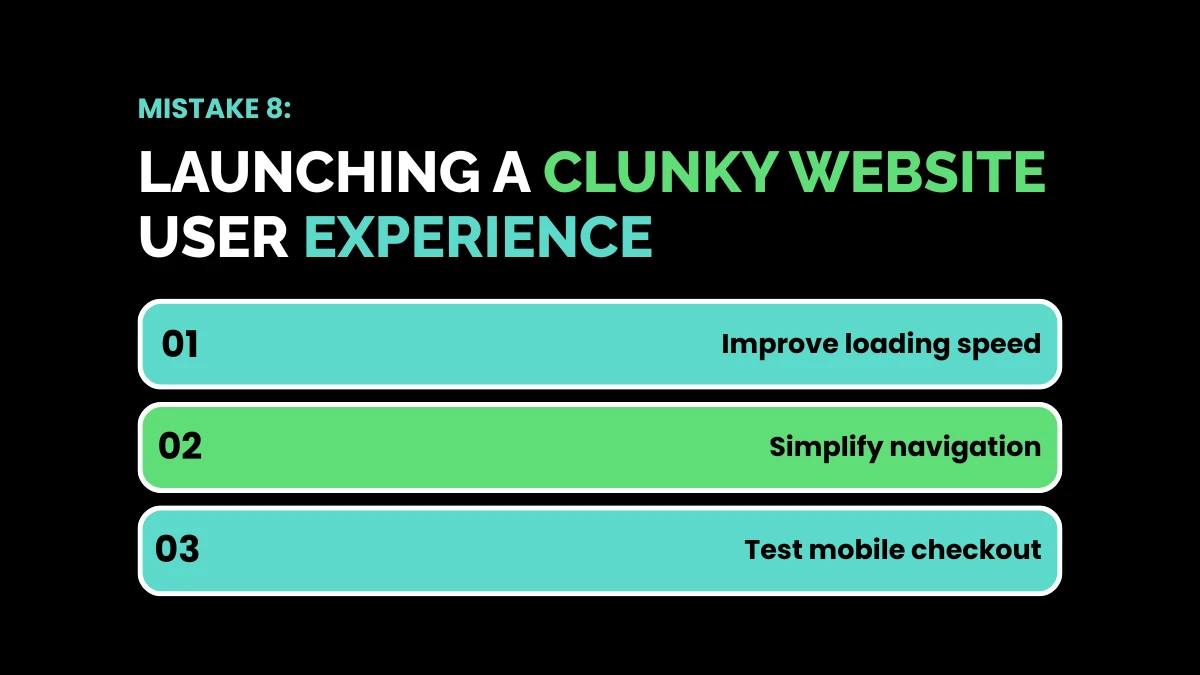
If your website takes more than three seconds to load, a massive chunk of your incoming traffic bounces before even seeing your offer. Confusing menu navigation, intrusive popups, broken links, and complicated multi-step checkout procedures destroy buyer trust immediately.
Your website user experience must be streamlined and intuitive. Prioritize clean layout design, fast imagery, clear navigation headings, and single-click payment methods like Apple Pay or Google Pay. The fewer steps between a customer discovering your item and completing checkout, the higher your sales revenue will be.
Mistake 9: Neglecting Customer Support and Feedback
Your early buyers are your absolute greatest asset for long-term growth. Ignoring their questions or complaints guarantees negative reviews.
Respond quickly and treat early shoppers like royalty. In most cases, great support turns angry buyers into loyal brand advocates.
In the initial 90 days, customer support is far more than an operational chore—it is your best market research tool. Every ticket, inquiry, or complaint highlights a flaw in your product details, checkout flow, or delivery expectations.
When you address customer concerns swiftly and generously, you turn routine transactions into memorable customer experiences. These happy buyers write stellar reviews, refer friends, and provide detailed feedback that helps you refine your business operations for future growth.
Mindset and Management Missteps
Mistake 10: Giving Up Too Early When Sales Are Slow
Building a genuine enterprise takes patience and constant iteration. Many founders quit right before their strategies start showing real results.
Consistent execution often matters far more than instant success. Stay adaptable and keep tweaking your approach every single week.
The initial excitement of launching a new store can fade quickly when order notifications don’t pour in right away. Many founders interpret quiet launch weeks as total failure and give up entirely, abandoning their store within thirty to sixty days.
Success in online business is rarely overnight; it is an iterative process. When initial results fall short, view it as a puzzle to solve rather than a sign to quit. Adjust your headlines, experiment with new offer bundles, test different traffic channels, and continuously refine your store until sales begin to roll in.
Mistake 11: Ignoring Systems and Business Automation
Doing every single task manually creates severe operational bottlenecks. You end up working in your business instead of building it.
- Automating welcome email sequences for new store subscribers.
- Scheduling social media content weeks in advance using tools.
- Using clean inventory tracking software to prevent stockouts.
- Setting up automated receipts and order tracking for customers.
- Creating standardized templates for common customer support queries.
Leveraging modern tools frees up your bandwidth so you can focus entirely on high-level growth strategies.
When you run an online business, your time is your most precious resource. Spending hours every day sending individual tracking emails, posting social media updates manually, or processing recurring orders by hand burns up time that should be spent on strategic marketing and business development.
Building lightweight systems and automated workflows early allows your operation to run smoothly without requiring your physical presence for every routine task. Smart automation lets a solo founder perform with the output and efficiency of a full team.
Mistake 12: Losing Focus by Chasing Shiny Objects
Switching tactics every few days prevents any single channel from working properly. Pick one strategy, test it thoroughly, and stick with it.
Brands like Weird Wealth grow by remaining disciplined and focused on core principles rather than jumping on every new trend.
Shiny object syndrome is a huge threat to early business growth. One day a founder is dedicated to building an organic blog, the next day they drop everything to pivot to short-form video ads, and the following week they are trying to redesign their entire product catalog based on a podcast episode.
This constant switching means no single marketing strategy gets enough time, data, or iteration to work. Choose one traffic acquisition channel and one main offer, and dedicate yourself to mastering them over a full ninety-day cycle before introducing extra complexity.
How to Protect Your Brand in the First 90 Days
Avoiding critical failure comes down to staying lean, listening to your customers, and tracking cash daily. When you minimize unnecessary risk, your chances of long-term success skyrocket.
Keep your focus sharp, measure what matters, and continuously refine your offer based on real market data.
To safeguard your fledgling online store, construct a simple operational framework focused on lean testing and direct customer validation. Begin by setting up basic financial metrics to monitor your burn rate and unit economics on a weekly basis. Knowing your exact numbers eliminates nasty surprises and ensures you remain solvent during slower sales periods.
Additionally, make customer engagement your primary daily focus. Spend time reading industry discussion forums, engaging on social channels where your ideal audience hangs out, and collecting qualitative data from early site visitors. This proactive feedback loop keeps your business centered on solving genuine problems while building long-term audience trust.
Frequently Asked Questions
Why do simple mistakes kill online businesses 90 days after launch?
Early errors drain limited capital and momentum before the owner can establish consistent sales channels, leading to premature shutdown.
How much budget do I need for my first 90 days?
It depends on your business model, but keeping low fixed overhead and setting aside 3–6 months of operating expenses is ideal.
What is the single biggest cause of initial startup failure?
Building a product or service without validating actual market demand is generally the leading cause of early online company failures.
How do I build an audience without paid advertising?
Focus on organic content creation, search engine optimization, participating in targeted niche communities, and cultivating an active email subscriber list.
When should I start implementing business automation?
Set up fundamental automations like welcome email sequences, order notifications, and social post scheduling right from day one to maintain efficiency.
Building a sustainable brand takes time, discipline, and constant adjustment. By learning from these common traps, you can protect your capital, serve your audience authentically, and build a flourishing enterprise that lasts well beyond the initial 90-day mark.