

Most people looking for a new income stream start by asking, “What can I sell?” A better question is often: “What do I already own that someone else might pay to use?”
A spare room, unused equipment, a domain name, specialized knowledge, photographs, a vehicle, storage space, or even a collection sitting in a closet can have economic value. The trick is turning an overlooked asset into something another person actually needs.
That is a very Weird Wealth idea: you don’t always need another job to create another income stream. Sometimes you need to look differently at what is already sitting around you.
Key Takeaways
- An asset doesn’t have to be expensive to generate income; usefulness matters more than appearance.
- The easiest assets to monetize are usually things that solve a specific problem for someone else.
- Renting, licensing, reselling, and packaging are four different ways to turn ownership into income.
- “Passive” doesn’t mean effortless—maintenance, fees, taxes, damage, and customer management still matter.
- Before buying anything specifically to rent or resell, test whether people actually want it.
What Can You Make Money From That You Already Own?
Almost anything with use, scarcity, access, information, or resale value can potentially become an income-producing asset.
Here are some common categories:
| What you own | Possible income model | What creates the value |
| Spare space | Rent or storage | Access |
| Vehicle | Rental or commercial use | Convenience |
| Camera or equipment | Rental | Temporary access |
| Domain name | Sale or lease | Digital identity |
| Photography | Licensing | Intellectual property |
| Templates or documents | Digital sales | Reusable knowledge |
| Specialized knowledge | Consulting or guides | Expertise |
| Collectibles | Resale | Scarcity and demand |
| Tools | Local rental | Solves an occasional need |
| Audience | Advertising or products | Attention and distribution |
The important word is potential. Owning something doesn’t automatically make it profitable. There has to be someone willing to pay for access to it.
How Do You Know If Something You Own Is Actually Valuable?
Here’s a question most people skip:
Would someone pay to use this if they couldn’t buy it themselves? That question separates an asset from clutter.
A professional camera may be valuable to a photographer who needs it for one weekend but doesn’t want to purchase one.
A parking space may be valuable to someone working nearby.
A specialized spreadsheet may be valuable to a small business owner who would rather pay $20 than spend three hours building it. The asset doesn’t need to be impressive. It needs to solve a problem.
Four Ways to Monetize Something You Already Own

1. Rent access to it
This is the most obvious model. If you own something people need occasionally but don’t want to purchase permanently, renting can make sense.
Examples include:
- Equipment
- Tools
- Storage space
- Parking
- Vehicles
- Event equipment
- Specialized electronics
The business logic is simple: one asset can serve multiple customers over time. The risk is that ownership comes with responsibility. Damage, maintenance, insurance, cleaning, transportation, and downtime can quickly change the economics.
2. Sell the knowledge inside it
Sometimes the valuable thing you own isn’t physical. It might be years of experience. A person who has spent years building websites, managing inventory, designing advertisements, repairing machinery, or running a particular type of business may possess knowledge that other people would happily pay to access.
That knowledge can be packaged into:
- Templates
- Checklists
- Guides
- Courses
- Consultations
- Workshops
- Paid newsletters
- Digital products
The key is packaging. People rarely pay simply because you “know a lot.” They pay because your knowledge helps them save time, avoid mistakes, or achieve a specific result.
3. License something you’ve created
If you own intellectual property, you may not need to sell the underlying asset. You can sometimes license the right to use it.
- A designer might license artwork.
- A photographer might license images.
- A software developer might license software.
- A creator might license a format, design, or other intellectual property under an appropriate agreement.
This model can be powerful because ownership and usage become separate things. You’re not necessarily selling the asset. You’re selling permission to use it under defined terms.
4. Sell something you underestimated
The simplest strategy can sometimes be the most profitable: sell the asset instead of letting it sit unused. People routinely accumulate things they no longer need.
- Old electronics.
- Unused furniture.
- Collectibles.
- Equipment.
- Domain names.
- Books.
- Tools.
- Clothing.
- Business inventory.
The mistake is assuming that because something has no use to you, it has no value. The opposite can be true. Your unused item might be exactly what another person has been searching for.
What Is the Difference Between Renting, Selling, and Licensing?
These models can look similar from the outside, but the economics are different.
| Model | What you give up | What you keep | Best suited to |
| Sell | Ownership | Cash | Assets you don’t need |
| Rent | Temporary access | Ownership | Reusable physical assets |
| License | Permission to use | Ownership | Intellectual property |
| Package | A version of your knowledge/work | Underlying expertise | Skills and information |
This is one of the most useful decisions to make before monetizing an asset. Don’t automatically sell something that could generate repeated income.
But don’t automatically rent something either. Sometimes the immediate sale is worth more than years of dealing with maintenance and customers.
The Weird Wealth Asset Test

Before trying to monetize something, run it through this five-question framework.
The USE Test
U — Usefulness:
What problem does this solve?
S — Scarcity:
Is it difficult, expensive, or inconvenient for someone to obtain elsewhere?
E — Economics:
After fees, maintenance, taxes, shipping, repairs, and your time, is there actually money left? Then ask two more questions:
Repeatability: Can it produce income more than once?
Exit: If this doesn’t work, can you easily sell, stop, or repurpose it?
If an asset scores poorly across these questions, don’t force it into a business.
What Should You Not Try to Monetize?
This is where experienced business owners tend to think differently from “side hustle” influencers. Not everything needs to become a revenue stream.
If an asset requires constant attention, creates significant liability, has expensive maintenance, or produces tiny amounts of income, monetizing it may be a terrible trade.
For example, earning a small amount from an item isn’t automatically worthwhile if every transaction requires an hour of messaging, arranging delivery, collecting payment, and resolving problems. Revenue is not profit, and profit is not necessarily worth your time.
What If You Don’t Own Anything Valuable?
You may own more than you think. Look beyond obvious possessions.
You might own:
- A useful skill
- A professional process
- A collection of research
- A niche audience
- A domain name
- Original photographs
- Designs
- Software
- Templates
- A business contact network
- Access to specialized equipment
Some of the most valuable assets aren’t things you can put on a shelf. Knowledge, relationships, intellectual property, and distribution can be assets too.
Can a Small Asset Really Become a Business?
Yes, but don’t confuse monetization with a business. Selling one unused camera isn’t a business.
Renting equipment repeatedly, developing a customer base, managing inventory, handling maintenance, and reinvesting the profits starts to look much more like one.
That’s an important distinction because the first transaction proves only that someone bought something once. A repeatable process proves much more.
What Is the Best Asset to Monetize First?
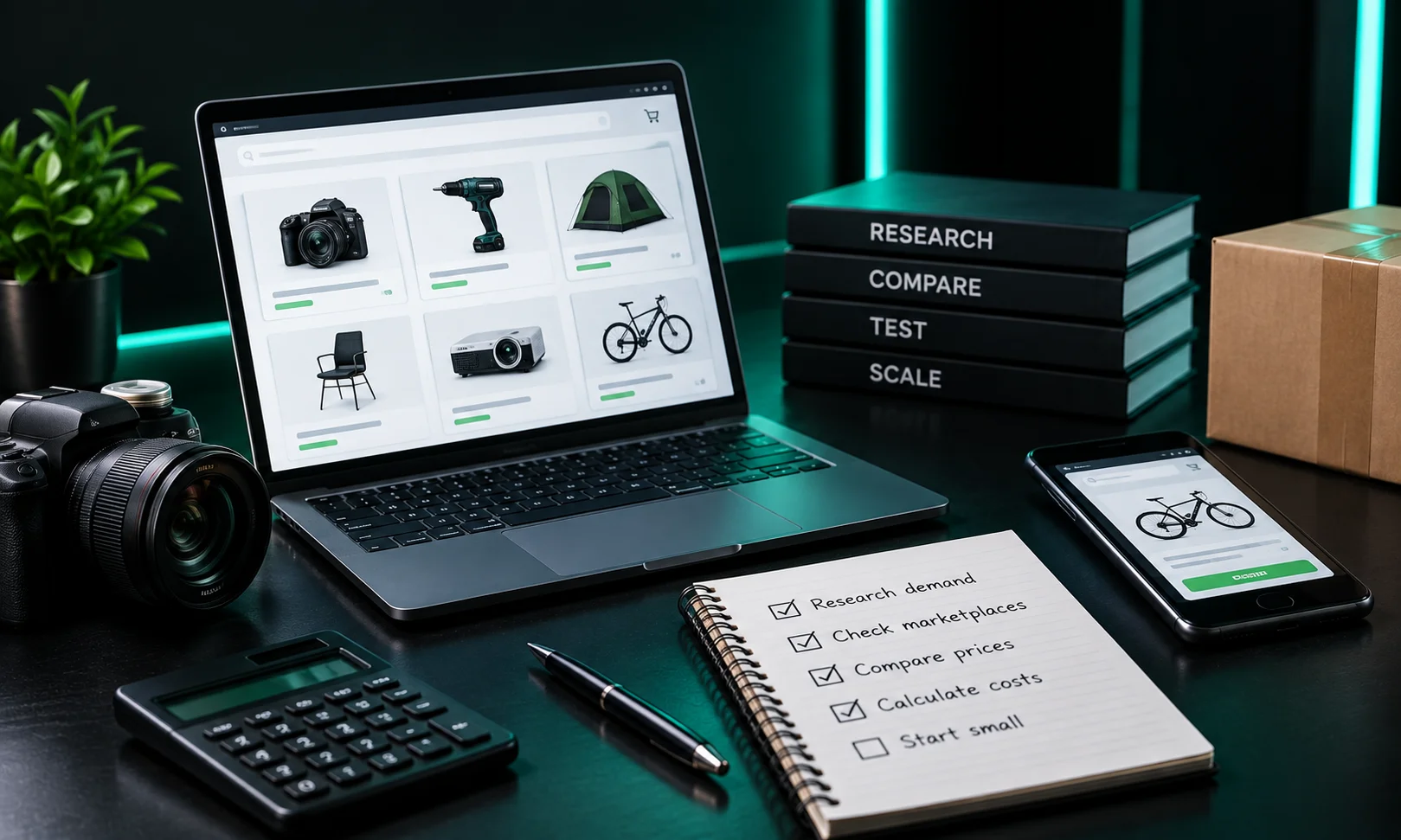
Start with the asset that requires the least additional investment to test. Don’t buy $5,000 worth of equipment because a creator told you equipment rental is profitable. Test demand first.
Ask potential customers what they need. Search existing marketplaces. Check what comparable items actually sell or rent for. Calculate your costs.
Then make a small experiment. A $50 experiment that teaches you something is often more valuable than a $5,000 purchase based on a guess.
Frequently Asked Questions
Can I make money from things I already own without selling them?
Yes. Renting an asset, licensing intellectual property, or selling temporary access can allow you to generate income while retaining ownership. The economics depend on demand, maintenance, fees, risk, and how frequently the asset can realistically be used.
What household items can make money?
Tools, equipment, electronics, storage space, parking spaces, cameras, specialty gear, and other useful items can sometimes be rented or sold. The strongest candidates are usually things that people occasionally need but don’t want to purchase themselves.
Is renting out your belongings worth it?
It depends on the numbers. Compare expected rental income with maintenance, depreciation, insurance, platform fees, transportation, damage risk, and the time required to manage customers. A high rental price doesn’t necessarily mean a good return.
Can knowledge be considered an asset?
Yes. Specialized knowledge can have economic value when it helps another person save time, reduce mistakes, make money, or solve a difficult problem. Turning knowledge into a guide, template, service, course, or licensing arrangement can make it easier to monetize.
What is the biggest mistake when monetizing unused assets?
The biggest mistake is focusing on what the asset is worth to you instead of what it is worth to a customer. An expensive object nobody needs can be less useful economically than a cheap tool that solves a recurring problem.
The Editorial Read
There’s a quiet wealth-building lesson hiding in all of this:
Before looking for another asset, look at the assets you already control.
A lot of people immediately search for the next investment, side hustle, course, or business idea while valuable resources are sitting unused around them.
The better approach is to inventory what you already have, identify where someone else has a problem, and test whether your asset can solve it profitably.
Don’t start by asking, “How much can I make?”
Start with: “Who needs this badly enough to pay for access to it?” That question is where an unused possession can stop being cluttered and start becoming an asset.