
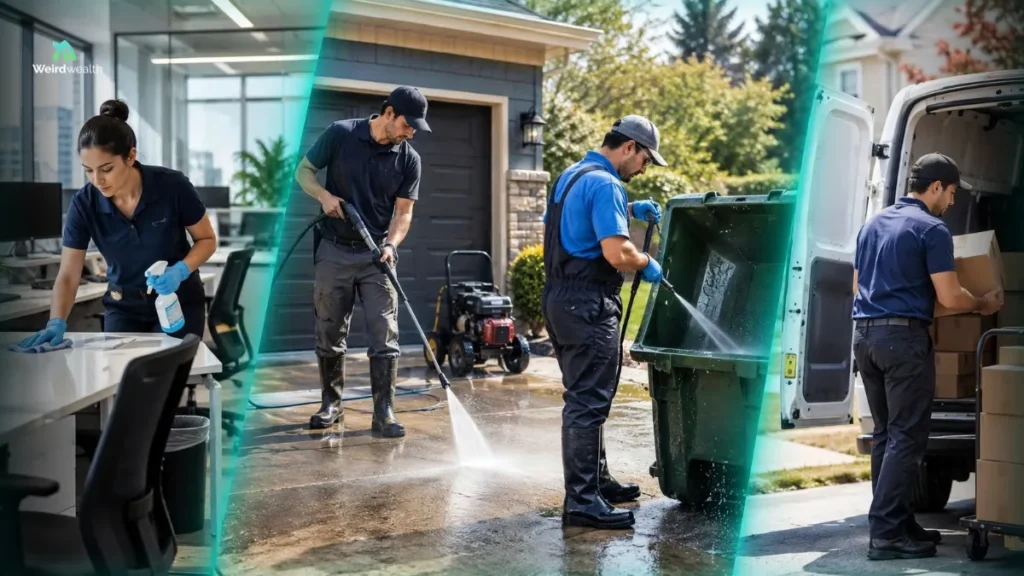
Nobody dreams about starting a trash-bin cleaning company when they’re a kid. Nobody puts “commercial window washing” on a vision board. And yet, some of the most interesting small businesses are hiding inside work people simply don’t want to do themselves.
That is the appeal of boring businesses. They don’t need a glamorous product, a huge social following, or a revolutionary idea. They need customers with a recurring problem and an owner willing to solve it reliably.
For someone looking beyond crowded online side hustles, that can be a surprisingly powerful combination.
Key Takeaways
- Boring businesses often solve recurring problems rather than chasing trends.
- Simple services can become valuable when customers need them repeatedly.
- Local businesses can compete through reliability, convenience, and specialization.
- Many can start as one-person operations before adding employees or equipment.
- The real opportunity is not how exciting the business looks; it is how consistently customers pay for it.
1. Commercial Cleaning
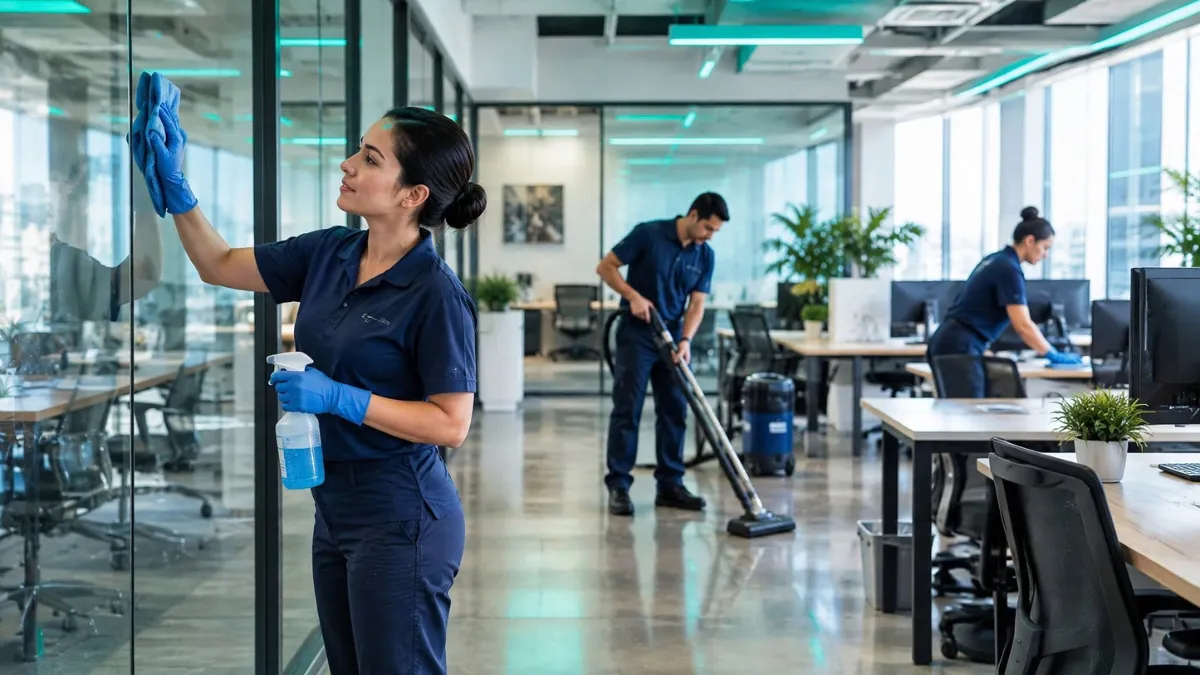
Offices, shops, clinics, restaurants, and other workplaces need cleaning whether the economy is exciting or boring.
The business becomes particularly interesting when you focus on recurring contracts instead of one-off jobs.
You are not really selling cleaning. You’re selling a place that stays clean without the owner having to think about it.
2. Window Cleaning
Windows are one of those things people notice when they’re dirty but rarely enjoy cleaning themselves. A small operator can start with residential jobs and eventually target storefronts, offices, apartment buildings, and other commercial properties.
Recurring routes can make the business much more predictable than constantly hunting for individual customers.
3. Mobile Car Detailing
Car detailing looks ordinary until you notice the convenience angle. Instead of asking customers to drive somewhere and wait, a mobile operator brings the service to the vehicle.
That turns a basic cleaning service into a time-saving service, which can support higher-value packages and repeat customers.
4. Junk Removal
People accumulate things they don’t want anymore. Furniture, appliances, boxes, old equipment, renovation debris, and general clutter eventually have to go somewhere.
The business isn’t particularly glamorous, but the customer is paying for something valuable: the problem disappearing.
Before starting, check local disposal, transportation, and environmental requirements.
5. Laundry Pickup and Delivery
Washing clothes is necessary. Doing laundry is also something many busy people would happily outsource. A pickup-and-delivery model creates convenience around an existing need.
You don’t necessarily need to build a laundromat. You can begin by coordinating collection, cleaning, folding, and delivery, depending on the equipment and partnerships available to you.
6. Pressure Washing
Dirty driveways, patios, walls, sidewalks, fences, and commercial surfaces create a visual problem that customers can understand immediately.
That makes pressure washing unusually easy to demonstrate. A before-and-after photograph can communicate the value of the service faster than a paragraph of advertising.
7. Pest Control
Nobody gets excited about discovering ants, termites, rodents, or other pests. That is precisely why pest control can be a strong service business.
Customers aren’t buying something they desperately want. They’re paying to make something they desperately don’t want disappear.
Because pest control can involve regulated chemicals and licensing requirements, local rules matter before starting.
8. Property Inspection Check-Ins
A vacant property can sit quietly for weeks while a small problem becomes a major one. Owners of second homes, vacant properties, rental units, or properties between occupants may value someone who can visit, look around, document the condition, and report obvious issues. This is another boring service where trust is the product.
9. Pool Maintenance
Swimming pools require regular maintenance regardless of whether the owner feels like doing it. That creates a natural recurring-service model.
Instead of selling one cleaning, a business can build scheduled maintenance routes around neighborhoods or property clusters. The boring part is actually the advantage: the work keeps coming back.
10. Gutter Cleaning
Gutters are easy to ignore until they become a problem. Homeowners may pay someone else to clean them because the job is unpleasant, inconvenient, or physically awkward.
A business can combine gutter cleaning with related exterior services, creating opportunities to increase the value of each customer relationship.
Safety and appropriate equipment are essential for this type of work.
11. Appliance Cleaning
People clean their kitchens. They don’t always clean the machines inside them.
Ovens, refrigerators, washing machines, dryers, and other appliances can require deep cleaning that homeowners would rather outsource.
A specialized appliance-cleaning service can therefore occupy a niche between ordinary house cleaning and appliance repair.
12. Mattress and Upholstery Cleaning
Mattresses, sofas, carpets, and upholstered furniture can be expensive to replace. Specialized cleaning offers customers a way to maintain what they already own.
It also creates an opportunity to sell packages rather than a single service—for example, combining mattresses, sofas, rugs, and other fabric surfaces.
13. Document Shredding
Businesses generate paperwork. Old invoices, records, forms, customer information, and internal documents eventually need to be disposed of securely.
A specialized shredding service solves a problem that ordinary recycling does not.
For businesses handling sensitive information, trust, secure processes, and appropriate compliance practices are more important than having a clever brand name.
14. Parking Lot Maintenance
Parking lots are rarely anyone’s favorite subject. But businesses notice when their parking areas become dirty, damaged, poorly maintained, or covered in debris.
Depending on the market, opportunities can include sweeping, cleaning, marking, minor maintenance coordination, and other exterior services.
The best opportunities will vary significantly by location and regulations.
15. Trash-Bin Cleaning
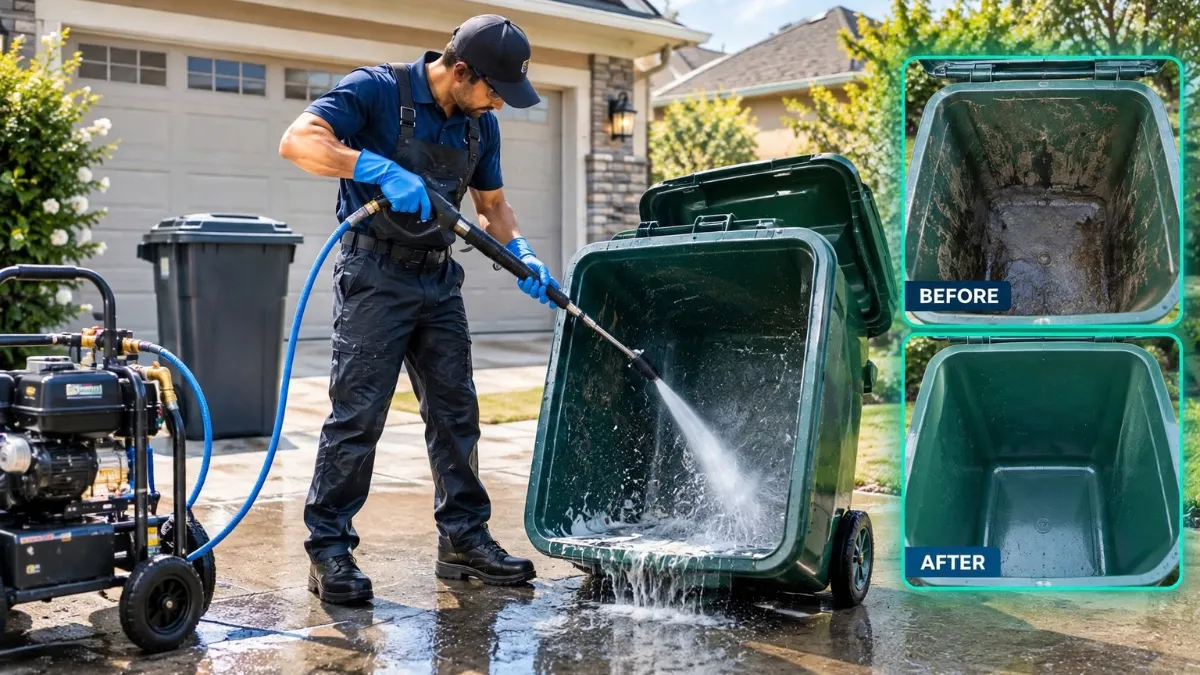
This might be one of the least glamorous businesses imaginable. And that’s the point. Trash bins get dirty. They smell. Someone eventually has to clean them.
A specialized service can visit homes or businesses on a recurring schedule rather than relying entirely on one-off customers. The business case is simple: people pay to avoid dealing with disgusting things.
16. Office Restocking
Small offices constantly run out of things nobody thinks about until they’re gone. Paper products. Cleaning supplies. Pantry items. Basic office supplies.
A restocking service can handle inventory checks and replenishment for businesses that don’t want employees spending time on it.
The opportunity gets more interesting when customers move onto scheduled service.
17. Sign and Exterior Cleaning
Storefront signs, awnings, exterior walls, entryways, and other visible surfaces collect dirt. Businesses have a reason to keep them looking presentable because customers see them before they enter.
A specialized exterior-cleaning service can target commercial clients rather than competing with general residential cleaners.
18. Move-In and Move-Out Cleaning
Moving creates predictable cleaning demand. Tenants leave. New tenants arrive. Properties need to be prepared.
Rather than marketing yourself as a generic cleaner, specialize around a specific event: property turnover. That makes the customer and the reason for buying immediately clear.
Property managers, landlords, real estate professionals, and homeowners can all become potential customers, depending on the market.
19. Small Equipment Maintenance
Businesses often own equipment that isn’t important enough to justify hiring a full-time technician but important enough that downtime costs money.
That can create opportunities for specialized maintenance services. The key is specialization. A person who understands one category of equipment extremely well may be more valuable than someone who claims to fix everything.
Where repair work is regulated or technically specialized, appropriate qualifications and safety requirements matter.
20. Local Delivery for Businesses
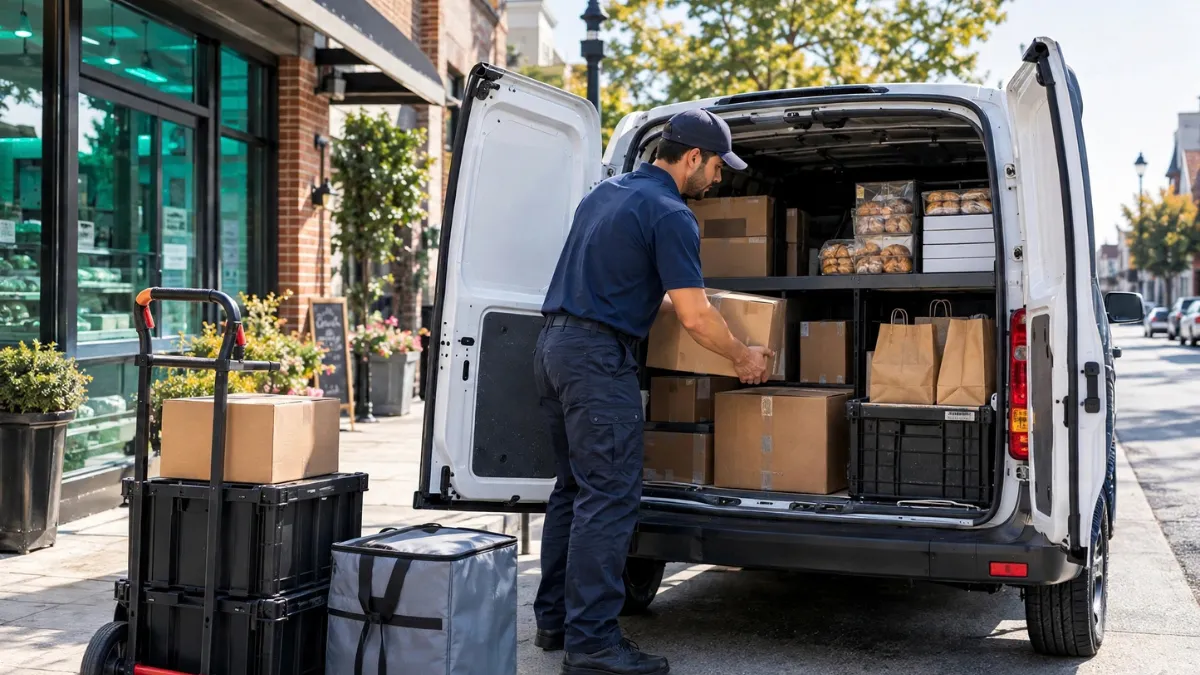
Not every business needs a giant logistics operation. A local bakery may need deliveries. A florist may need transportation. A print shop may need documents delivered. A small retailer may need local orders moved between locations.
A specialized local delivery service can solve these small logistical problems without trying to compete with national courier networks.
The opportunity becomes stronger when you build recurring routes rather than chasing individual deliveries.
Why Do Boring Businesses Make Money?
The answer is surprisingly simple. They often operate around necessity instead of novelty.
A trendy product may attract attention for six months. A dirty office still needs cleaning six months later. That doesn’t guarantee profitability. A boring business can fail just like any other business.
But recurring demand, local customers, relatively simple services, and repeat purchasing can create a useful foundation.
Boring Business vs. Trendy Side Hustle
| Factor | Boring business | Trendy side hustle |
| Customer need | Often recurring | Can be trend-driven |
| Competition | Usually local or specialized | Often global |
| Marketing | Local reputation can matter | Often content-heavy |
| Revenue | Can be recurring | May be inconsistent |
| Startup complexity | Often manageable | Varies widely |
| Scalability | Employees, routes, equipment | Often depends on platform |
| Main advantage | Reliability | Speed and novelty |
The point isn’t that boring businesses are automatically better. It’s that they can play a completely different game.
The “Boring but Valuable” Test
Before starting one, run the idea through this checklist:
Problem: Does the customer genuinely need the service?
Frequency: Will they need it again?
Pain: Is the job unpleasant, inconvenient, risky, or time-consuming?
Price: Is the problem valuable enough for someone to pay to remove it?
Repeatability: Can you create a predictable process?
Expansion: Could you eventually add another worker, vehicle, route, machine, or service?
If an idea scores well across those categories, it deserves more attention.
The Real Business Is Often the System
A person cleaning one house is self-employment. A company with a schedule, trained cleaners, recurring customers, quality control, and standardized pricing is a business. That distinction matters.
The same pattern applies to window cleaning, detailing, property checks, lawn care, commercial cleaning, maintenance, and delivery. You can start by doing the work yourself.
The long-term opportunity is figuring out how to make the work happen without requiring you to personally do every job.
The Weird Wealth Read
There is a strange psychological trap in entrepreneurship. We tend to think a good business should look impressive.
A sleek app sounds impressive. A trendy clothing brand sounds impressive. A viral startup sounds impressive. A company that cleans 300 commercial windows every week?
Not nearly as exciting at dinner. But customers don’t pay businesses because they look cool. They pay because something needs to get done.
That is the lesson behind boring businesses: boring is not the opposite of valuable. Sometimes boring is exactly what makes a business durable.
FAQ
What are boring businesses?
Boring businesses provide ordinary, practical services that customers repeatedly need, such as cleaning, maintenance, delivery, property services, and other everyday operations.
Are boring businesses profitable?
They can be, but profitability depends on pricing, demand, operating costs, competition, customer retention, and execution. The category itself does not guarantee success.
Can I start a boring business with little money?
Some service businesses can be started relatively lean by using skills and equipment you already have. Equipment-heavy businesses may require more capital.
Why are recurring customers important?
Recurring customers can reduce the need to constantly find new buyers. A service that customers need monthly, weekly, or seasonally can provide a more predictable revenue base.
What makes a boring business scalable?
Standardized processes, recurring customers, efficient routes, employees, equipment, technology, and repeatable sales systems can help turn a one-person service into a larger operation.
Disclaimer:
This article is for informational purposes only and is not financial, legal, tax, or professional advice. Business licensing, insurance, permits, employment rules, and tax obligations vary by location and industry. Verify the requirements that apply to your business before starting.