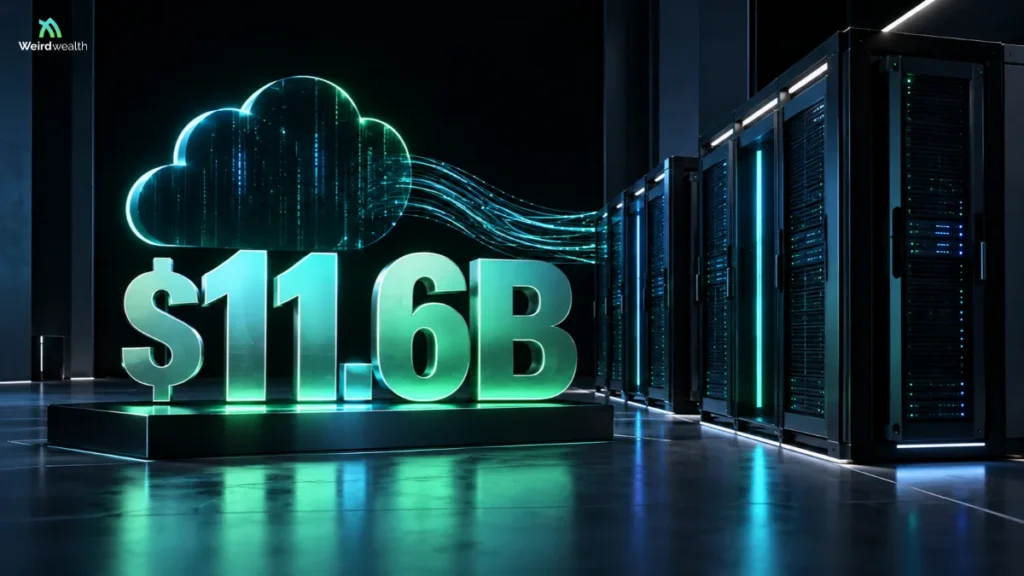
A $11.6 billion AI infrastructure deal is easy to read as another giant bet on artificial intelligence. The more revealing detail is what Anthropic is buying: CPU capacity.
Anthropic has agreed to a seven-year, $11.6 billion cloud services commitment with Akamai to support its growing CPU workload requirements. The arrangement can expand by another $9 billion, potentially taking the relationship to about $20 billion.
That matters because the AI infrastructure story is no longer just about who gets the most powerful GPUs. As AI systems become more capable and handle increasingly complex workloads, the infrastructure underneath them is becoming a much larger business.
For Weird Wealth, that’s where this story gets interesting. The money being created by AI isn’t necessarily limited to the companies building the models. It is spreading across the hardware, cloud, networking, data-center and energy infrastructure required to make those models work.
Key Takeaways
- Anthropic has committed $11.6 billion to Akamai over seven years for cloud services supporting CPU workloads.
- The agreement can expand by another $9 billion, potentially bringing the total commitment to about $20 billion.
- Akamai expects approximately $5.5 billion in capital expenditures tied to the initial commitment.
- Anthropic will receive a warrant that could represent approximately 5% of Akamai’s outstanding common stock under the announced structure.
- The deal shows why AI infrastructure extends far beyond GPUs and model developers.
Why Did Anthropic Sign an $11.6 Billion Deal With Akamai?
Anthropic needs substantial computing infrastructure to develop and operate its AI systems. The Akamai agreement specifically addresses CPU workloads through Akamai Cloud’s distributed infrastructure.
Akamai says its cloud platform can provide compute across core and edge locations, using a distributed infrastructure model rather than relying entirely on centralized facilities.
The important point is that AI infrastructure isn’t one giant machine.
A modern AI workload can involve accelerators, CPUs, memory, storage, networking, software and data-center capacity. Different parts of the workload place different demands on those systems. That creates a much larger economic chain than simply buying an AI chip.
What Does a CPU Have to Do With AI?
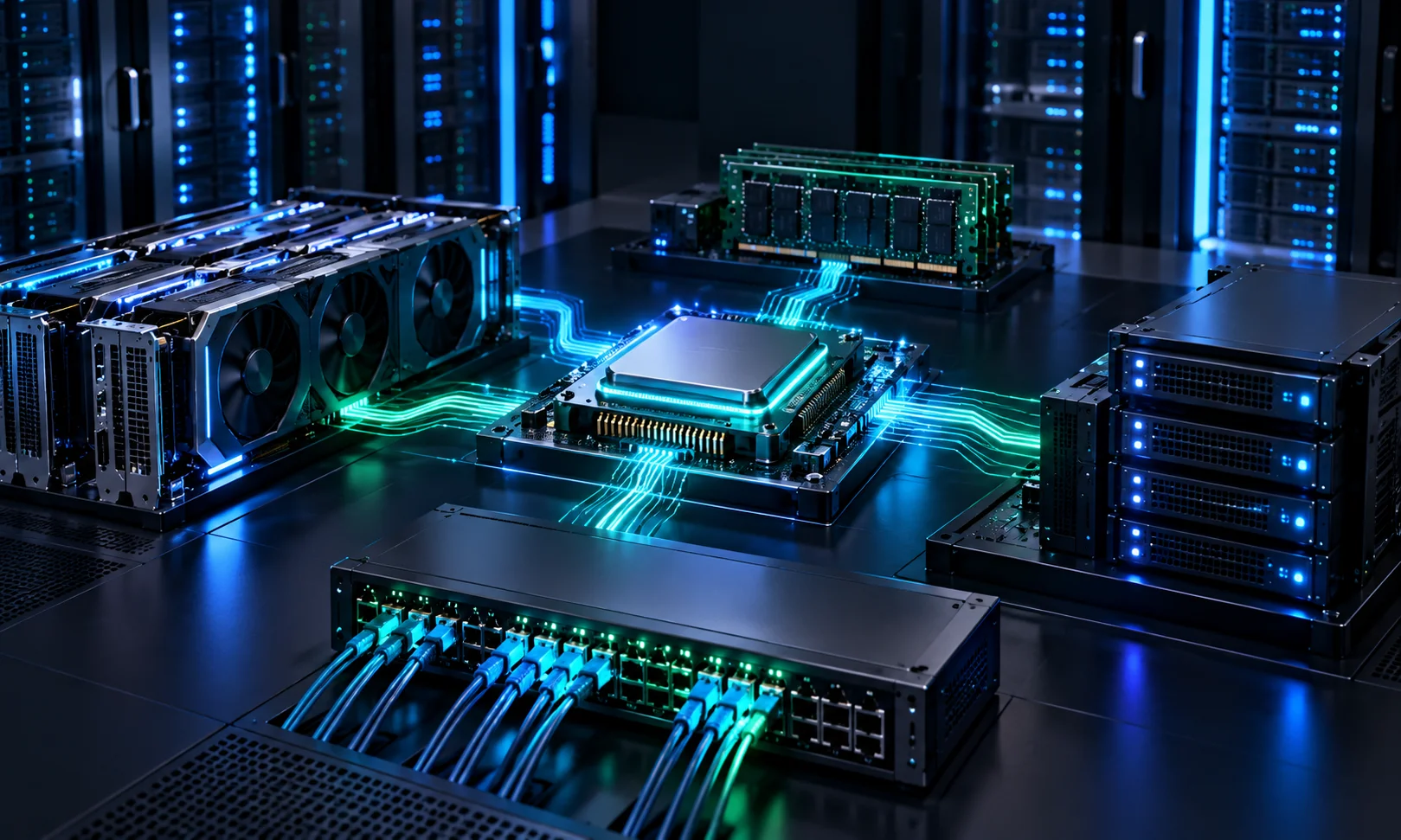
GPUs receive much of the attention because they are well suited to the parallel mathematical workloads involved in many AI applications. CPUs perform more general-purpose computing tasks.
In an AI infrastructure environment, CPUs can work alongside accelerators and other hardware to handle general computing, orchestration, data movement, system processes and other workloads surrounding accelerated computation.
That’s why the CPU detail in the Anthropic-Akamai agreement matters. It doesn’t mean CPUs are replacing GPUs. It shows something simpler: large-scale AI requires more than GPUs.
How Much Will Akamai Spend to Fulfill the Contract?
Akamai estimates that the initial $11.6 billion commitment will require approximately $5.5 billion in capital expenditures.
The company also expects to increase its 2026 capital spending by about $1.7 billion to secure and pre-purchase critical supply-chain components, including memory. The spending and revenue don’t arrive at the same time.
Akamai’s investor materials indicate that significant capital spending will occur as the infrastructure is developed, while the contracted revenue is expected to ramp through 2027 and reach a full run rate by the end of 2028.
That distinction matters whenever a technology company announces a multibillion-dollar contract.
A contract value is not the same thing as immediate profit.
The Deal at a Glance
| Detail | What was announced |
| Customer | Anthropic |
| Infrastructure provider | Akamai |
| Initial commitment | $11.6 billion |
| Contract length | 7 years |
| Potential expansion | Up to $9 billion |
| Potential total commitment | About $20 billion |
| Primary workload highlighted | CPU workloads |
| Estimated related capital expenditure | About $5.5 billion |
| Potential Akamai ownership for Anthropic | Approximately 5% |
| Initial expected warrant vesting | Approximately 2% |
Why Is Anthropic Receiving an Akamai Stock Warrant?
The agreement isn’t simply a conventional cloud contract. Akamai issued Anthropic a warrant connected to its common stock. Under the announced structure, the warrant covers preferred stock representing approximately 7.7 million shares on an as-converted basis, or roughly 5% of Akamai’s outstanding common stock. Approximately 2% is expected to vest in connection with the initial $11.6 billion commitment.
The remaining portion is linked to further expansion of the relationship. Under the announced terms, additional vesting is tied to additional cloud-service purchases.
The structure creates an unusual connection between a major AI customer and its infrastructure provider.
Anthropic gets potential equity exposure to Akamai, while Akamai gains a major long-term customer whose additional infrastructure needs could expand the relationship.
The AI Money Doesn’t Stop With Anthropic and Akamai
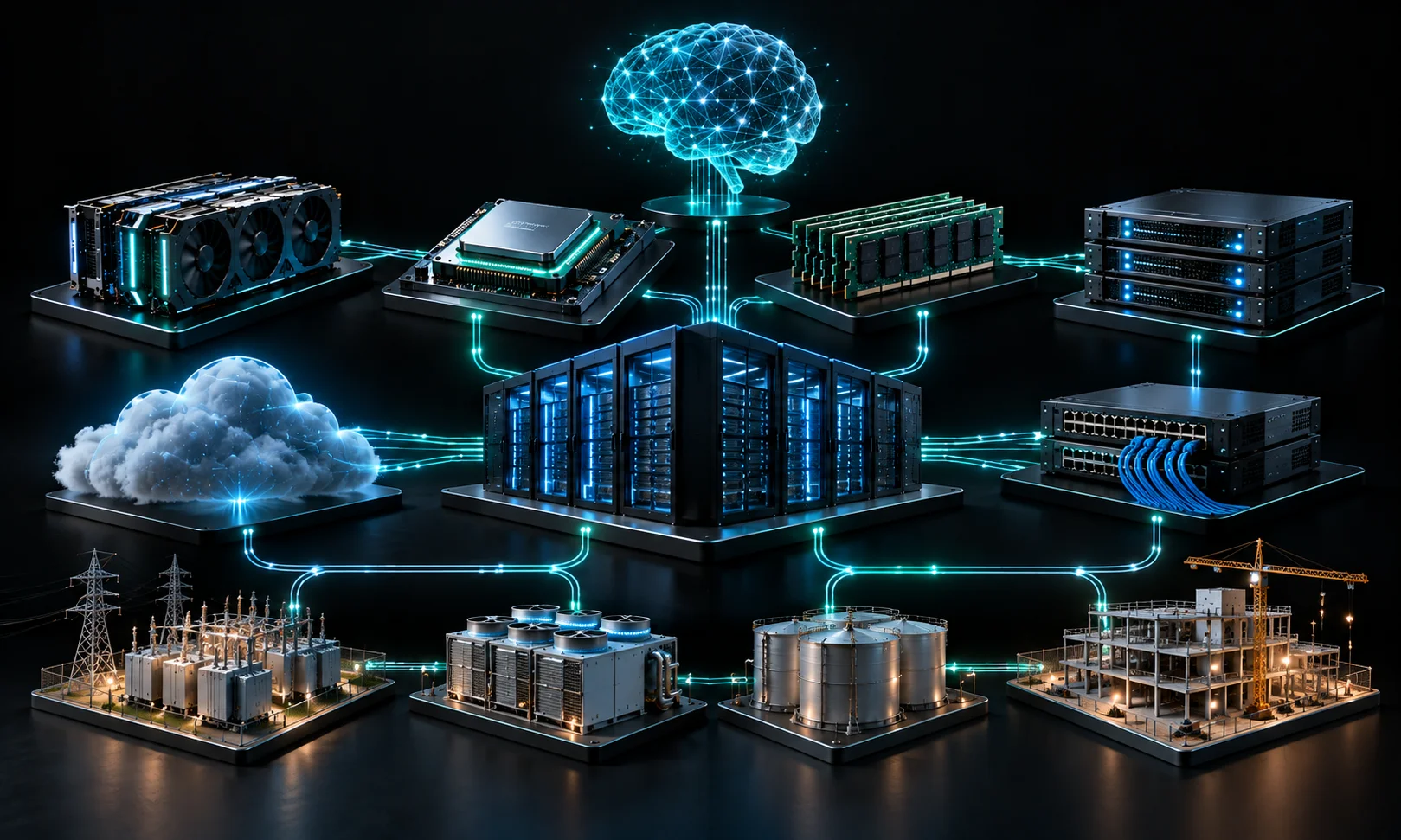
This is where the story becomes more interesting for anyone studying the business side of AI.
A large infrastructure build can involve:
- CPUs
- GPUs and other accelerators
- Memory
- Servers
- Networking equipment
- Data centers
- Power infrastructure
- Cooling systems
- Storage
- Construction
- Cloud software
- Security
- Maintenance
Akamai’s own announcement highlights additional spending to secure critical supply-chain components, including memory.
The result is an AI economy that is considerably broader than the model companies dominating headlines. Anthropic may be the recognizable AI company in this transaction. But behind Anthropic sits a much larger infrastructure ecosystem.
Is AI Becoming a CPU Story Too?
It would be wrong to interpret the deal as evidence that CPUs are replacing GPUs. The announcement doesn’t support that conclusion. What it does show is that AI workloads require a combination of computing resources.
As AI systems perform more complicated operations, the surrounding infrastructure becomes increasingly important. Anthropic’s commitment to Akamai is one example of a major AI company locking in substantial CPU-oriented cloud capacity. The distinction is important. AI infrastructure is not one market. It is an interconnected ecosystem.
What Could Go Wrong With a Deal This Large?
A huge contract can create substantial opportunity, but it also creates execution risk. Akamai is committing significant capital before receiving the full economic benefit of the agreement. Its infrastructure has to be built, deployed and supported before the relationship reaches its expected full run rate.
Several things therefore have to work:
- The infrastructure must be delivered as planned.
- Anthropic must continue requiring the contracted capacity.
- The economics of the infrastructure must remain attractive.
- Supply-chain commitments must be managed effectively.
- AI demand must continue supporting the underlying workloads.
None of this means the deal is necessarily problematic. It simply illustrates why a multibillion-dollar contract should not automatically be interpreted as equivalent to multibillion-dollar profit.
What Does This Mean for the AI Investment Story?
The obvious takeaway is that AI infrastructure spending continues to expand. The less obvious takeaway is that companies benefiting from AI growth don’t necessarily have to build an AI model.
Cloud providers, semiconductor companies, memory suppliers, networking businesses, data-center operators, power providers, construction companies and infrastructure specialists can all participate in the buildout.
The Akamai agreement is a useful example. Anthropic represents the AI layer. Akamai represents part of the infrastructure layer beneath it.
Behind Akamai sits another network of suppliers. That’s how a single AI contract can create economic activity across an entire supply chain.
A Better Way to Think About AI Infrastructure
At Weird Wealth, we think about this as the AI Money Stack.
Layer 1 — Models
Companies developing foundation and specialized AI systems.
Layer 2 — Compute
GPUs, CPUs, accelerators, servers, memory and storage.
Layer 3 — Infrastructure
Cloud platforms, data centers, networking, cooling and power.
Layer 4 — Applications
Products and services built using AI capabilities.
Layer 5 — Businesses
Companies using those applications to change how they operate and serve customers. The interesting money isn’t necessarily concentrated at the top. Sometimes the infrastructure underneath the trend can be just as important.
What Should Investors Take From the Akamai Deal?
The biggest lesson isn’t simply that Anthropic has committed $11.6 billion. It’s that AI demand is becoming an infrastructure problem at extraordinary scale.
Akamai expects approximately $5.5 billion in capital expenditures related to the initial commitment, while the contract is expected to generate revenue over several years rather than immediately.
That creates an important distinction for anyone researching AI-related investments. Don’t stop at the company with the most recognizable AI brand.
Ask:
- Who supplies its computing power?
- Who builds the facilities?
- Who provides memory?
- Who connects the systems?
- Who supplies the electricity?
- Who provides the cloud infrastructure?
- Who finances the expansion?
Sometimes the less obvious part of the opportunity is sitting underneath the headline.
The Weird Wealth Checklist: How to Read a Billion-Dollar AI Deal

Before treating a major AI infrastructure announcement as an investment signal, ask these eight questions:
- Who is actually paying?
- What exactly is being purchased?
- When does the revenue begin?
- How much capital must the supplier spend first?
- Is the headline figure guaranteed or expandable?
- How concentrated is the customer relationship?
- What happens if AI demand slows?
- Which suppliers benefit indirectly?
Those questions turn a headline into something more useful: an economic map.
Frequently Asked Questions
How much is Anthropic spending with Akamai?
Anthropic has committed $11.6 billion to Akamai over seven years for cloud services supporting its CPU workload requirements. The agreement can expand by another $9 billion under the announced terms, potentially bringing the total commitment to approximately $20 billion.
Is the Anthropic-Akamai deal for GPUs?
The announced agreement specifically highlights Anthropic’s CPU workload requirements. That does not mean GPUs are irrelevant to Anthropic’s infrastructure. Instead, the deal illustrates that large AI systems require substantial general-purpose computing infrastructure alongside specialized AI hardware.
How much will Akamai invest in the deal?
Akamai estimates approximately $5.5 billion in capital expenditures related to the initial $11.6 billion commitment. The company expects significant infrastructure spending to occur before the agreement reaches its full revenue run rate.
Could the Anthropic-Akamai deal reach $20 billion?
Yes. The initial commitment is $11.6 billion, with provisions allowing the relationship to expand by up to another $9 billion. If the additional capacity is purchased, the potential total commitment would be approximately $20 billion.
Why does Anthropic receive an Akamai stock warrant?
The warrant connects part of Anthropic’s potential equity participation in Akamai to the expansion of their commercial relationship. Under the announced structure, the warrant can represent approximately 5% of Akamai’s outstanding common stock, with additional vesting connected to further cloud-service purchases.
The Editorial Read
The most interesting number in this story may not be $11.6 billion. It’s $5.5 billion. That’s the approximate capital expenditure Akamai expects to commit to support the initial agreement.
That difference tells us something important about the AI economy. Behind every impressive model is a physical and financial machine involving processors, memory, servers, networks, buildings, electricity and capital.
AI may look like software from the outside. Increasingly, it is also becoming one of the world’s largest infrastructure stories.
The practical takeaway: when the next multibillion-dollar AI deal appears in your feed, don’t only ask which AI company signed it. Ask who has to build everything underneath it.