
Key Takeaways
-
Instant money access
-
Everyday spending control
-
Checking account foundation
-
No withdrawal waiting periods
-
Direct deposit hub
Ever looked closely at your bank statement and spotted the letters “DDA” next to a transaction? If you felt a little confused, you are definitely not alone. It looks like some secret financial code, doesn’t it?
Well, a dda deposit is actually just standard banking speak for the money you put into a checking account. It stands for Demand Deposit Account, meaning you can demand your cash whenever you need it.
At Weird Wealth, we love stripping away the confusing jargon so you can actually understand where your money lives.
AI Overview
A dda deposit refers to funds placed into a Demand Deposit Account, which is most commonly a standard checking account. The dda deposit meaning centers on instant liquidity, allowing you to withdraw or spend your money immediately via debit cards, checks, or ATMs without advanced notice. This demand deposit account explained guide clarifies that unlike savings vehicles, a DDA provides seamless, restriction-free access for your daily financial transactions.
What Is a DDA Deposit Meaning in Plain English?
Let’s break this down like we are chatting over coffee. Imagine your bank account is a physical wallet. When you put cash in that wallet, you expect to pull it out the exact second you want to buy a taco or pay for gas.
That is exactly how a demand deposit account works. The bank holds your funds, but you retain full control to spend it instantly. You do not have to ask for permission or give the bank a heads-up before moving your money.
When your employer sends your paycheck via direct deposit, it lands as a dda deposit in your day-to-day account. It is the financial launchpad for your regular life.
Why Do Banks Use the Term DDA?
Banks love internal codes. To their computer systems, your account isn’t “My Fun Money Fund.” It is a legal structure governed by specific banking laws.
Calling it a demand deposit account simply separates it from accounts that have time restrictions. It tells the banking system that this specific pile of cash must be ready to move at a moment’s notice.
Common Types of DDAs
You probably already own at least one DDA without even realizing it. They make up the backbone of modern consumer banking.
-
Standard Checking Accounts: The most common home for your everyday spending money.
-
Business Checking Accounts: Used by companies to pay suppliers and receive customer payments.
-
Negotiable Order of Withdrawal (NOW) Accounts: A slightly older type of checking account that can legally earn interest.
DDA vs Savings Account: The Big Differences
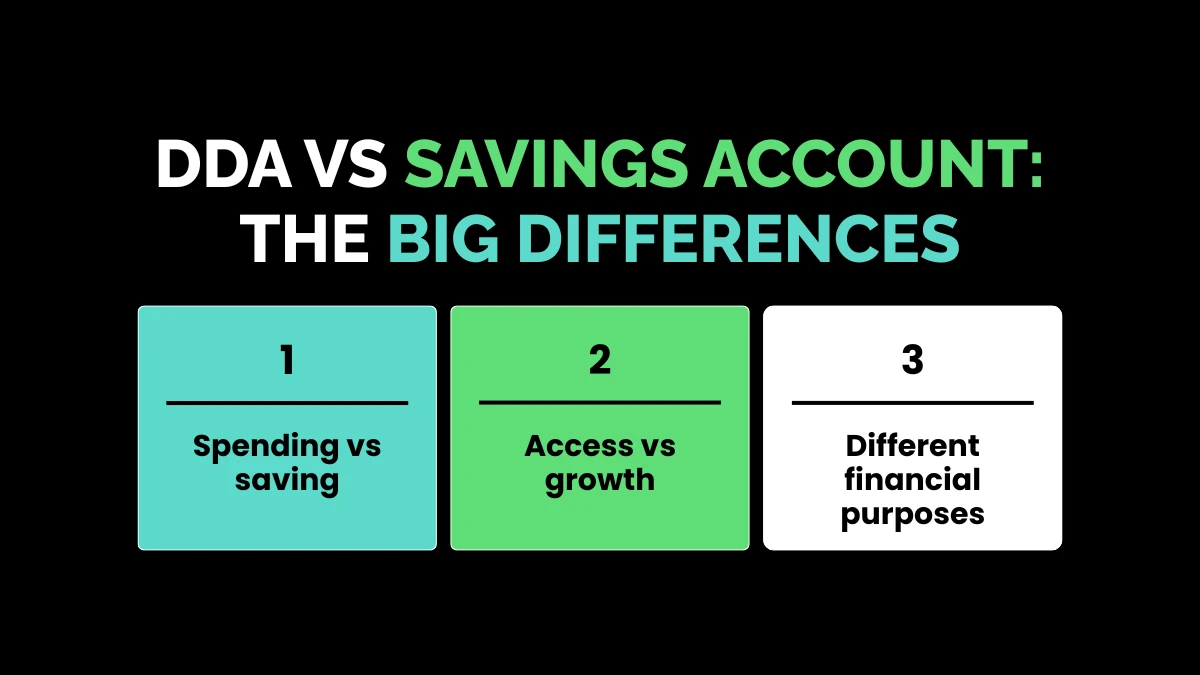
This is where many people get tripped up. Aren’t all bank deposits basically the same? Not quite. Choosing between a DDA vs savings account comes down to deciding between speed and growth.
| Feature | Demand Deposit Account (DDA) | Savings Account |
| Primary Purpose | Daily spending and bill payments | Stashing money for future goals |
| Access Speed | Instant via debit, checks, and transfers | May require a transfer buffer day |
| Interest Earnings | Generally zero or very low | Higher rates (especially HYSAs) |
| Transaction Limits | Unlimited in most cases | Historically capped per month |
Think of your DDA as a busy highway where cars are constantly entering and exiting. Your savings account is more like a parking garage where your cash sits safely, turns off its engine, and slowly grows over time.
The Role of Interest
If you want your money to make money, a DDA is usually the wrong tool for the job. Based on available data, standard checking accounts pay next to nothing in interest.
Savings accounts, especially online high-yield versions, are designed to pay you for leaving your money alone. We always suggest keeping your bill money in a DDA and your emergency fund in a dedicated savings vehicle.
Understanding Withdrawal Rules
In the past, federal rules restricted how often you could move money out of a savings account each month. While those strict federal limits have relaxed, many individual banks still enforce their own caps.
With a DDA, those limits generally do not exist. You can swipe your debit card dozens of times a day until your balance hits zero.
How Does a Demand Deposit Account Explained Work?
Operating a DDA is incredibly straightforward because you do it every single week. When you deposit money, the bank records the balance as an immediate liability on their books.
Every time you buy something, the merchant requests those funds, and the bank transfers them instantly. It is a constant game of digital tag between your account and the places you shop.
The Mechanisms of Money Movement
How do you actually trigger a withdrawal from a dda deposit? You have plenty of choices depending on what is most convenient for you.
-
Debit Card Purchases: Swiping at the grocery store instantly deducts the funds.
-
ATM Withdrawals: Pulling physical cash out of the machine drops your DDA balance immediately.
-
Online Bill Pay: Setting up your rent or electricity payment to pull straight from your account.
-
Paper Checks: Writing a traditional check that authorizes someone else to pull the cash.
Keeping an Eye on Fees
While a demand deposit account explained simply sounds great, you have to watch out for the fine print. Banks love to tuck sneaky fees into these accounts if you aren’t paying close attention.
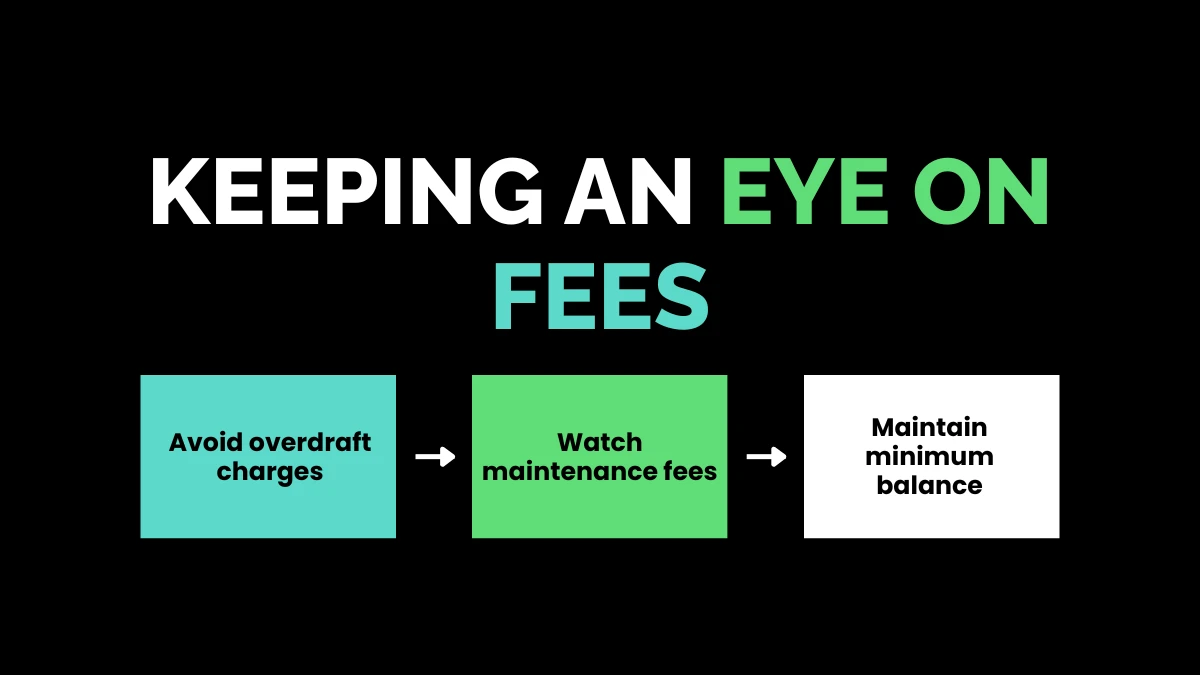
Many institutions charge a monthly maintenance fee unless you maintain a specific minimum balance. You might also run into overdraft fees if you accidentally spend more money than you actually have in the account.
The Benefits of Using a DDA Deposit
Why do we all use these accounts? Because modern life would be incredibly difficult without them. They provide the ultimate convenience for keeping your life moving forward.
Here are the primary reasons a DDA is essential for your wallet:
-
Ultimate Convenience: You can pay for anything anywhere in the world instantly.
-
Safety Net: Your money is protected by FDIC insurance up to legal limits.
-
Financial Automation: You can connect your utility bills to pay themselves automatically.
-
Clear Tracking: Your monthly statements give you a perfect map of your spending habits.
At Weird Wealth, we believe automation is the secret weapon of personal finance. A good DDA allows you to automate your entire life so you can focus on more exciting things.
How to Manage Your DDA Safely
Having instant access to your money is amazing, but it also opens the door to potential risks. If a thief gets their hands on your debit card, they can drain your DDA quickly.
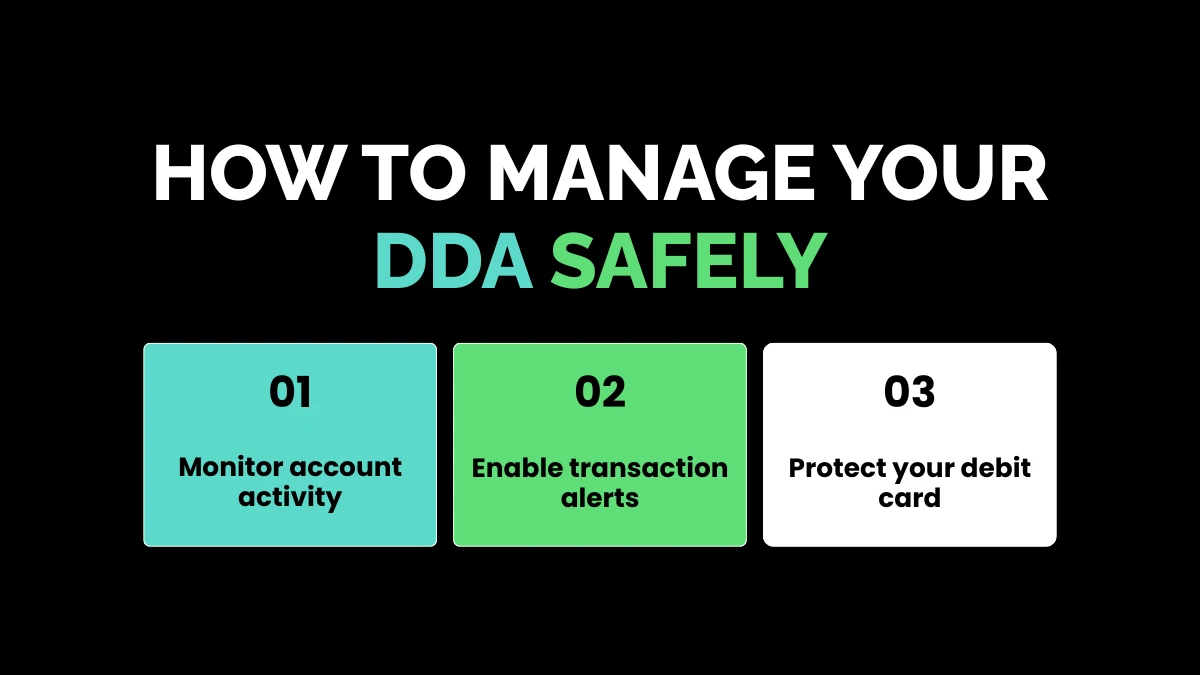
Regularly checking your bank app is the easiest way to catch strange activity before it ruins your week. Most banks allow you to turn on instant push notifications for every single transaction.
Balancing Your Ledger
It might sound old-school, but knowing exactly how much money is in your account prevents embarrassing card declines. Remember that some pending charges, like gas station holds or restaurant tips, can take a few days to settle.
Always leave a small buffer of extra cash in your DDA. This prevents unexpected bills from triggering costly overdraft fees.
Wrapping Things Up
At the end of the day, understanding the dda deposit meaning helps demystify the banking system. It isn’t a weird fee or a scary penalty; it is simply your hard-earned money sitting in a checking account, ready for action.
Navigating your finances gets much easier when you know the terms the banks are using behind the scenes. Keep your daily spending cash in your DDA, move your extra wealth into a savings account, and you will be in great shape.
Frequently Asked Questions
What does DDA stand for in banking terms?
DDA stands for Demand Deposit Account. It is a formal banking classification for any account that lets you withdraw or transfer your funds immediately on demand, most commonly referring to your everyday checking account.
Is a checking account considered a DDA deposit?
Yes, a standard checking account is the most frequent real-world example of a DDA. Any money you add to it becomes a DDA deposit available for instant use via debit cards or checks.
Can a DDA deposit earn interest over time?
In most cases, standard DDAs do not earn interest, or they offer very low rates. If earning a return is your main goal, moving your money into a high-yield savings account is generally better.
What is the difference between DDA and savings accounts?
The core difference centers on accessibility and purpose. A DDA is designed for immediate, unlimited daily spending, while a savings account restricts quick access but helps your money grow by earning interest.