

Key Takeaways
- Helps buy homes for parents or dependent children with better loan terms.
- Qualifies for lower down payments and primary residence rates.
- Avoids costly investment property mortgage requirements.
- Requires eligible family relationships and financial dependency.
- Builds family security while creating long-term real estate equity.
Providing a safe, stable home for the people you love is one of life’s greatest achievements. However, soaring real estate prices and strict lending standards in 2026 make it incredibly difficult for retired parents or young adults to qualify for a home loan on their own.
If you want to assist your relatives, buying a house usually means taking out an investment property loan or a second home loan, both of which require high interest rates and massive down payments.
Fortunately, a specialized lending loophole solves this exact problem. The family opportunity mortgage is a strategic financing option that allows you to buy a primary residence for an aging parent or a disabled adult child, even if you never intend to live in the home yourself.
By utilizing specific Fannie Mae guidelines, you can secure the low interest rates and small down payment requirements normally reserved for owner-occupants.
At WeirdWealth, we focus on helping you leverage creative real estate solutions to build a secure future for your household. This comprehensive guide breaks down how the family opportunity mortgage works, the exact eligibility rules for 2026, and how you can qualify to protect your family’s well-being without draining your savings.
AI Overview
What Is a Family Opportunity Mortgage?
The family opportunity mortgage is not a standalone government program, but rather a specific exception tucked inside the family opportunity mortgage fannie mae lending guidelines.
Under normal banking rules, if you buy a house that you do not plan to live in, the bank classifies it as either a second home or an investment property. These classifications are viewed as high-risk by financial institutions, resulting in strict underwriting rules, higher interest rates, and down payments ranging from 15% to 30%.
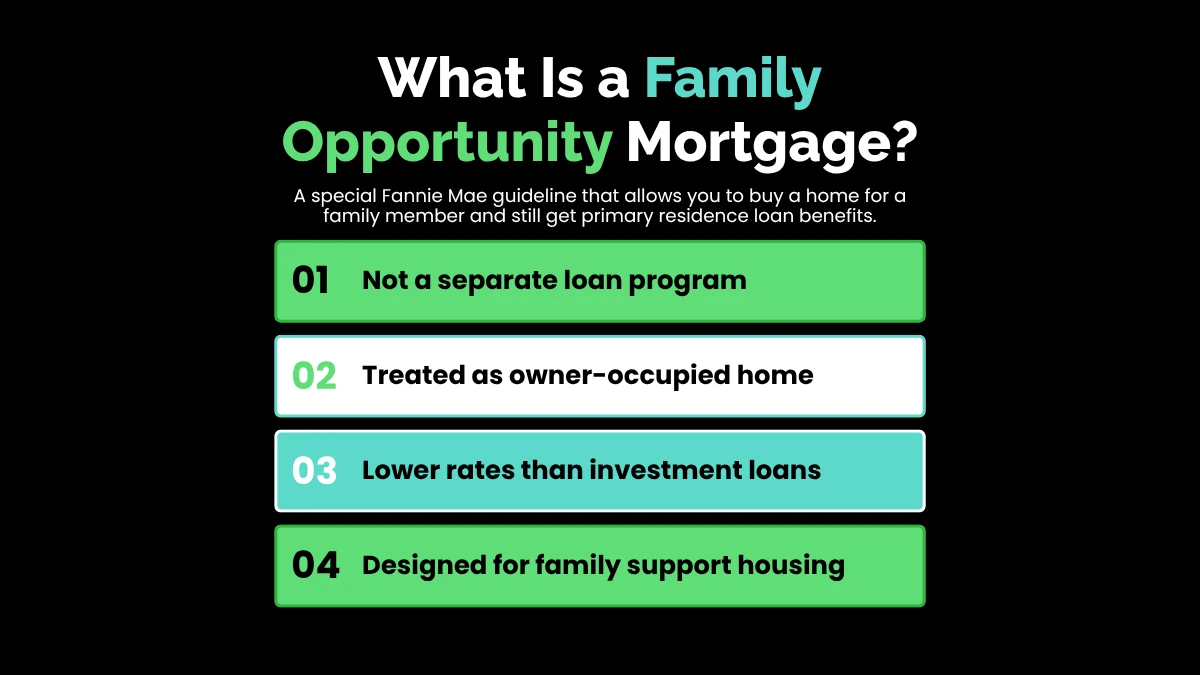
The family opportunity mortgage fannie mae exception completely flips this script. It allows a qualified borrower to purchase a home for an eligible relative and treat the transaction as a principal residence. Because the bank views it as a primary home, you unlock the most affordable financing terms available in the mortgage market.
The Core Purpose of the Loan
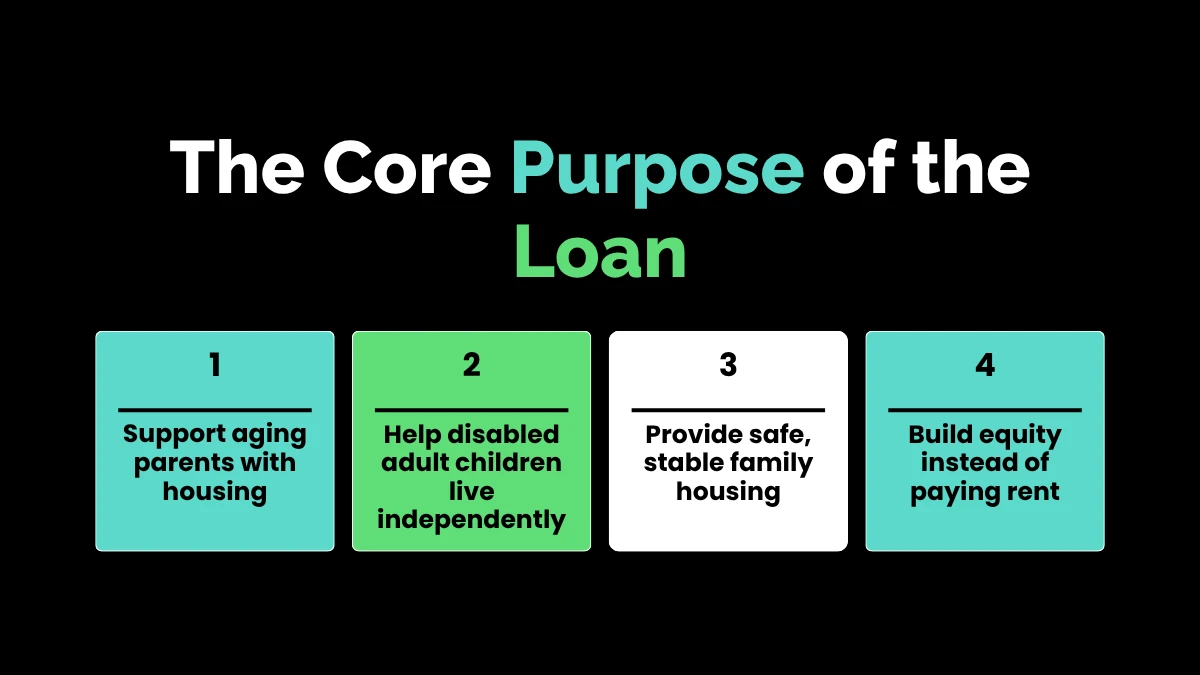
This lending option is designed for two specific, real-world family scenarios:
-
Buying home for aging parents: Adult children can purchase a home for elderly parents who are retired, living on a fixed income, or otherwise unable to qualify for a mortgage independently.
-
Mortgage for disabled child: Parents or legal guardians can buy a home for an adult child who has a physical or developmental disability and lacks the independent income required to secure housing.
By structuring the transaction this way, your loved ones get to live independently in a safe environment, while you build long-term real estate equity instead of writing monthly rent checks to a landlord or paying exorbitant fees to an assisted living facility.
The Benefits of This Unique Mortgage Program
Choosing a family opportunity loan over traditional financing routes offers major financial advantages. Let’s look at how this strategy stacks up against the alternative options.
Low Down Payment Requirements
For a standard non-owner occupied mortgage, lenders almost always demand a 20% down payment to avoid private mortgage insurance (PMI).
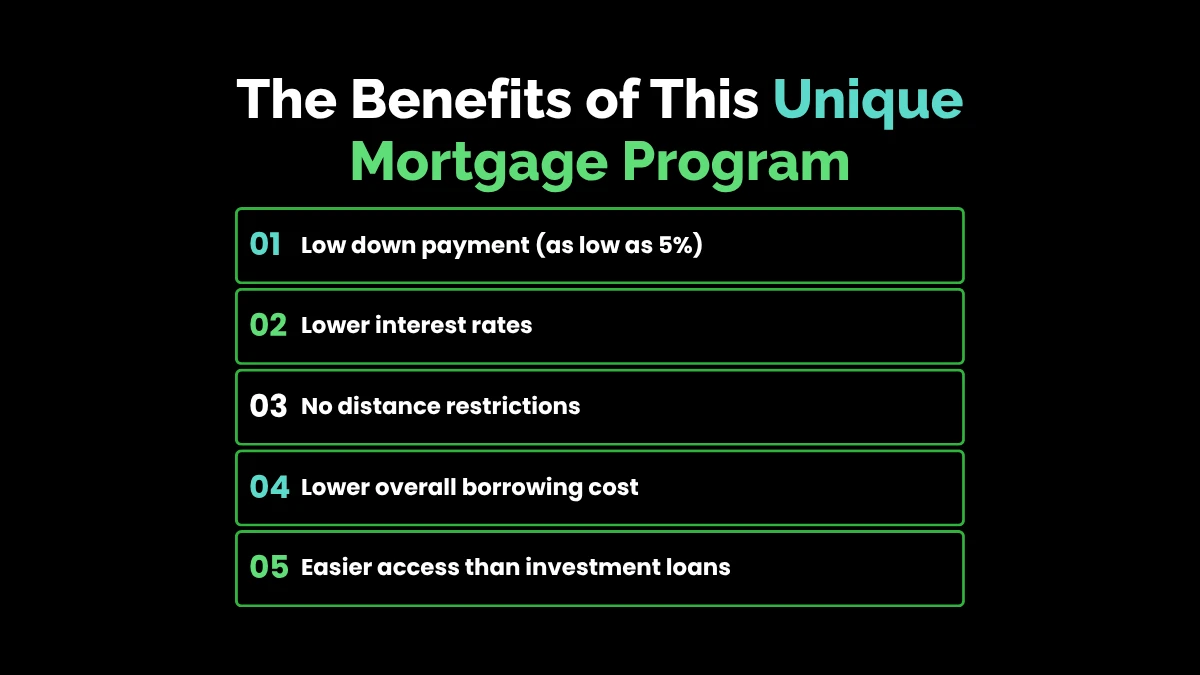
With a family opportunity loan, the minimum down payment drops to just 5%. On a $400,000 home, that is the difference between coming up with $80,000 cash versus a much more manageable $20,000.
Primary Residence Interest Rates
Investment property mortgage rates are typically 0.50% to 1.25% higher than primary home rates. By qualifying under these special guidelines, you secure the lowest possible market rates.
Over a 30-year loan term, this small percentage difference saves you tens of thousands of dollars in interest.
No Distance Restrictions
Standard second home mortgage rules state that the new property must be a significant distance away from your primary residence, usually at least 50 to 100 miles. This makes it impossible to buy a neighborhood home for your parents.
The family opportunity framework completely eliminates this rule. The home can be located right down the street, in the same zip code, or across the country.
Family Opportunity Mortgage Guidelines for 2026
To prevent real estate investors from abusing this system to buy cheap rental properties, Fannie Mae maintains strict family opportunity mortgage guidelines. To successfully close on the loan, your transaction must meet specific criteria regarding the property type, the occupant, and the borrower.
1. Eligible Property Criteria
The property you purchase must be a one-unit dwelling. This includes traditional detached single-family homes, townhomes, approved condominiums, and planned unit developments (PUDs). Multi-unit properties, such as duplexes or triplexes, do not qualify for this program.
2. The Occupant’s Financial Status
The relative moving into the home must be unable to work or lack the sufficient independent income required to qualify for a home loan on their own. You must prove to the underwriter that your parent or child is financially dependent on you for housing.
If your parents have a high income and excellent credit, the underwriter will reject the loan and require them to apply on their own or force you to use standard investment channels.
3. Clear Family Relationships
The guidelines only extend to immediate family members. Lenders accept applications for parents, step-parents, legal guardians, and biological, adopted, or step-children. You cannot use this program to purchase a home for siblings, aunts, uncles, cousins, or friends.
Financial and Credit Requirements to Qualify
Because you are holding the financial responsibility for the new loan alongside your own current housing costs, the underwriting process is thorough.
Knowing how to qualify family opportunity mortgage approval requires meeting the baseline conventional loan requirements.
Credit Score Thresholds
Most lenders require a minimum FICO credit score of 620 for a conventional loan. However, because you are balancing multiple properties, aiming for a credit score of 720 or higher helps you secure the absolute best interest rates and smoother underwriter approval.
Debt-to-Income (DTI) Ratios
Your debt-to-income ratio is the most critical factor. The lender will add up your current housing payment (rent or mortgage), your personal debts (car loans, credit cards, student loans), and the full projected monthly payment of the new property.
Under standard family opportunity loan requirements, your total monthly debt payments should generally not exceed 45% of your gross monthly income. In strong cases with significant financial reserves, some automated underwriting systems may allow a DTI up to 50%.
Documentation You Will Need
To streamline your approval process, you need to collect several pieces of financial evidence for the underwriting team:
-
Income Verification: Two years of tax returns, W-2 statements, and your most recent 30 days of pay stubs.
-
Asset Statements: Two months of bank statements showing you have the funds for the down payment and closing costs, plus extra financial reserves.
-
Proof of Need: A copy of your parent’s Social Security award letter, retirement statements, or your child’s medical disability documentation to prove they cannot qualify alone.
-
Letter of Intent: A signed statement from your relative confirming they intend to occupy the property as their primary residence full-time.
Financial Comparison Table
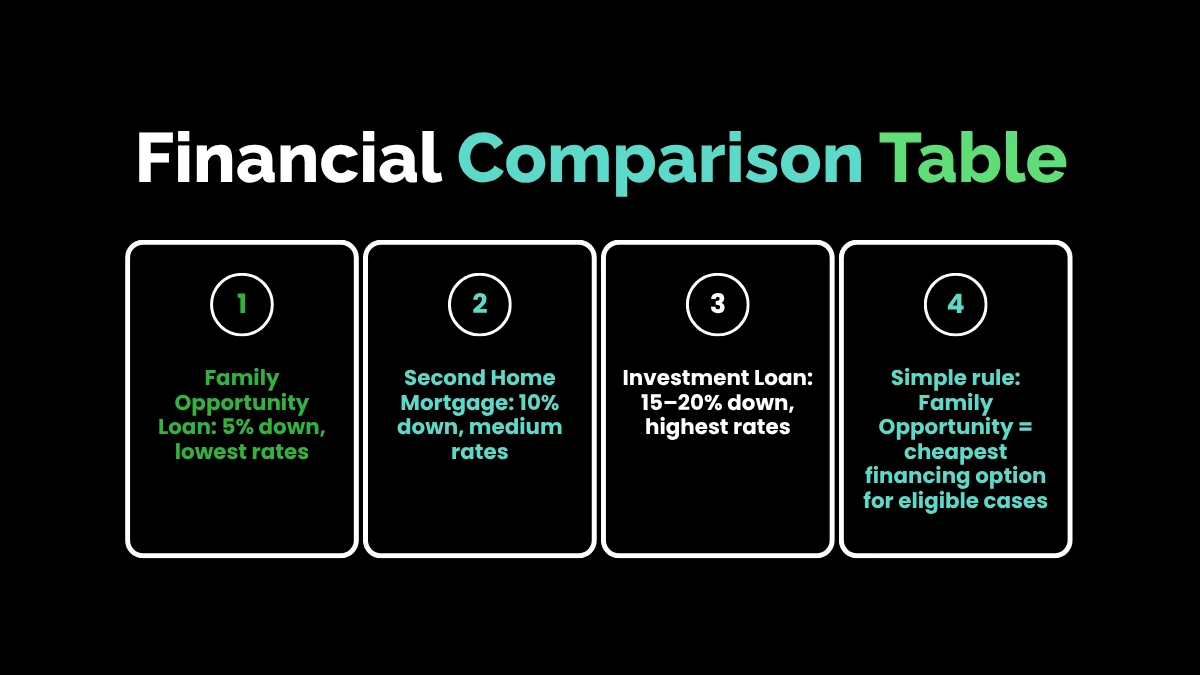
To visualize these benefits, here is an estimated comparison of purchasing a $400,000 single-family home using different mortgage types in 2026:
| Feature | Family Opportunity Loan | Second Home Mortgage | Investment Property Loan |
| Minimum Down Payment | 5% ($20,000) | 10% ($40,000) | 15% – 20% ($60,000+) |
| Interest Rate Pricing | Primary Residence Rates | Mid-Tier Rates | Highest Rates |
| Distance Restrictions | None (Can be next door) | 50 to 100 miles away | None |
| Required Occupant | Eligible Parent or Child | None (Vacation home) | Paying Tenant |
Step-by-Step Guide to Securing the Loan
If you are ready to take action, following an organized approach ensures you do not hit unexpected roadblocks with your lender.
Step 1: Speak with an Informed Loan Officer
Not all mortgage brokers understand the nuances of the family opportunity mortgage fannie mae exceptions. Many inexperienced loan officers will mistakenly tell you that you have to apply for an investment loan.
Interview lenders and specifically ask if they routinely underwrite primary residence loans for non-occupant family members based on Fannie Mae guidelines.
Step 2: Get Pre-Approved
Before looking at homes, get a formal pre-approval letter. This process confirms your credit score, verifies your income, and calculates your maximum purchase budget while accounting for your existing housing costs.
Step 3: Find the Right Property
Work with a real estate agent to locate a property that matches your relative’s physical needs. For buying home for aging parents, focus on single-story homes, minimal stairs, and accessible bathrooms.
If you are securing a mortgage for disabled child, look for layouts that accommodate any necessary mobility equipment or proximity to medical care.
Step 4: Complete Underwriting and Close
Once your purchase offer is accepted, your lender will order a property appraisal and submit your full paperwork to underwriting.
Ensure you quickly provide any requested documentation regarding your relative’s financial status to prevent delays. Once approved, you sign the closing paperwork, pay the down payment, and receive the keys to your family’s new home.
Important Financial and Tax Considerations
Before moving forward, it is vital to look at how this real estate purchase impacts your overall financial landscape. At Weird Wealth, we believe true wealth comes from understanding the long-term responsibilities of your investments.
You Bear Total Financial Liability
Even though your relative lives in the house, your name is on the mortgage note. If your parents plan to chip in money for the monthly payment but miss a month, you are fully responsible. Any late or missed payments will directly damage your personal credit score.
Future Borrowing Constraints
Taking on an additional mortgage increases your personal debt load. If you plan to buy a different home for yourself, upgrade your car, or open a business loan in the next few years, remember that this mortgage payment will count against your debt-to-income ratio for future financing applications.
Tax Implications
Because the property is officially classified as a primary residence for lending purposes, you may enjoy favorable tax treatment. The mortgage interest and local property taxes may be deductible on your annual tax returns.
However, because you do not personally live there, capital gains tax rules can get complicated if you decide to sell the home down the road. Always consult a certified public accountant (CPA) to analyze your specific tax situation.
Conclusion
Navigating the real estate market can feel overwhelming, but the family opportunity mortgage offers an incredible financial bridge. It eliminates the strict second home mortgage rules and the expensive hurdles of a non-owner occupied mortgage, allowing you to protect your family under affordable primary residence terms.
By meeting the family opportunity loan requirements and working with a knowledgeable lender, you can secure independent, dignified housing for your loved ones while keeping your upfront costs low. If you want to explore more creative ways to manage your money, protect your family, and build legacy equity, stay connected with WeirdWealth for practical, real-world financial strategies.
Frequently Asked Questions
Can my parents or child be listed as co-borrowers on the loan?
No. Under the family opportunity mortgage fannie mae guidelines, the occupying family member does not need to be on the loan. The primary borrower must qualify for the mortgage entirely on their own using their personal income, assets, and credit history.
What happens if my relative passes away or moves out?
If the primary occupant passes away or needs to move into a full-time nursing facility, the terms of your existing mortgage do not change. You keep your low interest rate. At that point, you can choose to sell the property, move into it yourself, or convert it into a standard rental property.
Can I use this loan type to buy a home for my college student?
While the program is highly popular for buying home for aging parents or a mortgage for disabled child, Fannie Mae guidelines also allow you to buy a home for a child who is enrolled in college or university. The child must occupy the home as their primary residence while attending school, and you must provide proof of their current enrollment.
Are there limits on how much I can borrow?
Yes. Because these are conventional loans, they are subject to standard conforming loan limits. For 2026, the baseline conventional loan limit for a one-unit property in most of the United States is $832,750. If you buy a home in a designated high-cost housing market, the limit may be higher.
Yes. Because these are conventional loans, they are subject to standard conforming loan limits. For 2026, the baseline conventional loan limit for a one-unit property in most of the United States is $832,750. If you buy a home in a designated high-cost housing market, the limit may be higher.