You have a great product. You believe in it. But your guerrilla marketing budget looks like a college student’s lunch money. Meanwhile, big brands are spending millions on TV ads and sponsored posts, and somehow you are expected to compete.
It feels unfair. And honestly, it is. But here is the thing nobody tells you: money is not what makes a brand go viral. Attention is. And attention can be earned with a $500 idea faster than a $500,000 ad campaign.
That is where guerrilla marketing examples come in. These are the stories of brands that threw out the rulebook, did something unexpected, and watched the internet do the rest. Some used chalk on a sidewalk. Others hijacked a city block. A few just sent one bold email.
This article breaks down the tactics that actually worked, why they worked, and how you can adapt them without needing a massive team or budget.
What Is Guerrilla Marketing and Why Does It Work So Well?
Guerrilla marketing is any unconventional marketing tactic that creates a big impact with a small budget. The term was coined by Jay Conrad Levinson in his 1984 book of the same name. The idea was simple: small businesses could not outspend large corporations, but they could outsmart them.
Guerrilla marketing works because it interrupts people’s normal patterns. When someone walks past a bus stop every day for three years and one morning sees a stunt that makes them laugh or gasp, they pull out their phone. They take a photo. They post it. Your brand travels to thousands of feeds at zero extra cost.
The psychology behind it is solid. Surprise triggers memory formation. Humor builds brand affinity. Participation creates ownership. When people feel like they discovered your brand through something cool rather than being sold to, they become fans instead of customers.
Most importantly, viral marketing strategies built on guerrilla principles keep working long after the stunt ends. The content lives online. People share it months later. It shows up in roundup articles. That is compounding ROI that no paid ad can replicate.
Real Guerrilla Marketing Examples That Put Small Brands on the Map
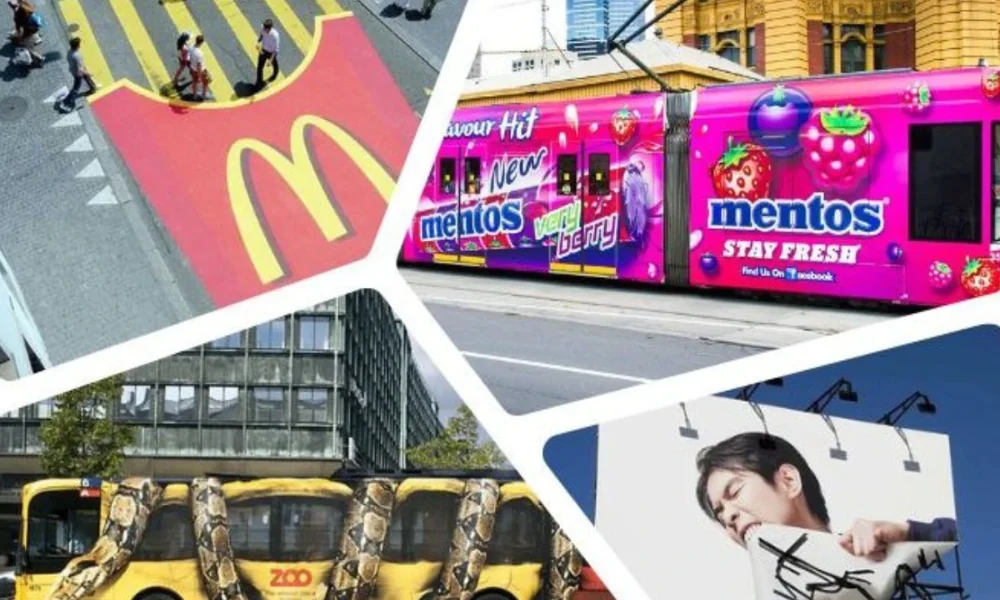
Let us look at specific guerrilla marketing examples from brands that had limited budgets but unlimited creativity.
1. Blendtec: Will It Blend?
In 2006, Blendtec was a solid but unknown blender company. Their marketing budget was nearly zero. So their marketing director George Wright spent $50 on supplies and filmed the CEO blending things that had no business being in a blender: marbles, rakes, and eventually an iPhone.
The YouTube videos went viral before viral was even a word people used casually. The series generated over 200 million views. Blendtec’s retail sales jumped 700% in three years. The total spend for the original five videos was $50.
The lesson here is that Blendtec did not sell blenders. They demonstrated a problem worth talking about. People shared the videos because they were genuinely entertaining. The product just happened to be the star.
2. Dollar Shave Club: One Video, One Million Customers
When Dollar Shave Club launched in 2012, they could not afford traditional advertising. So founder Michael Dubin wrote a bold, funny script, spent $4,500 on a video, and uploaded it to YouTube. Within 48 hours, they had 12,000 new subscribers and the site crashed twice.
The video worked because it spoke directly to the frustration of overpriced razors. It did not use stock footage or corporate language. It felt like a person talking to another person. That authenticity is the core of unconventional marketing tactics that actually convert.
3. The Blair Witch Project: Fake Reality as a Marketing Tool
Before the film even released, the makers of The Blair Witch Project created a website presenting the events as real. They posted fake police reports, missing persons flyers, and documentary-style clips online. People genuinely debated whether the footage was real.
The film was made on a $60,000 budget and grossed $248 million. The guerrilla marketing campaign cost almost nothing. The mystery did all the work. This is one of the earliest and most powerful examples of viral marketing strategies built entirely on intrigue.
4. Airbnb and the Cereal Box Stunt
When Airbnb was just a startup struggling to raise money, the founders designed and sold custom election-themed cereal boxes called Obama O’s and Cap’n McCain’s during the 2008 presidential race. Each box sold for $40. They raised $30,000 and got massive press coverage.
This stunt did two things at once: it solved a cash problem and proved to investors that the founders were resourceful. Paul Graham of Y Combinator said the cereal boxes were proof that the team could do anything to make a business work. That kind of creative problem-solving is the heart of guerrilla marketing examples that change company trajectories.
Unconventional Marketing Tactics You Can Actually Use Today
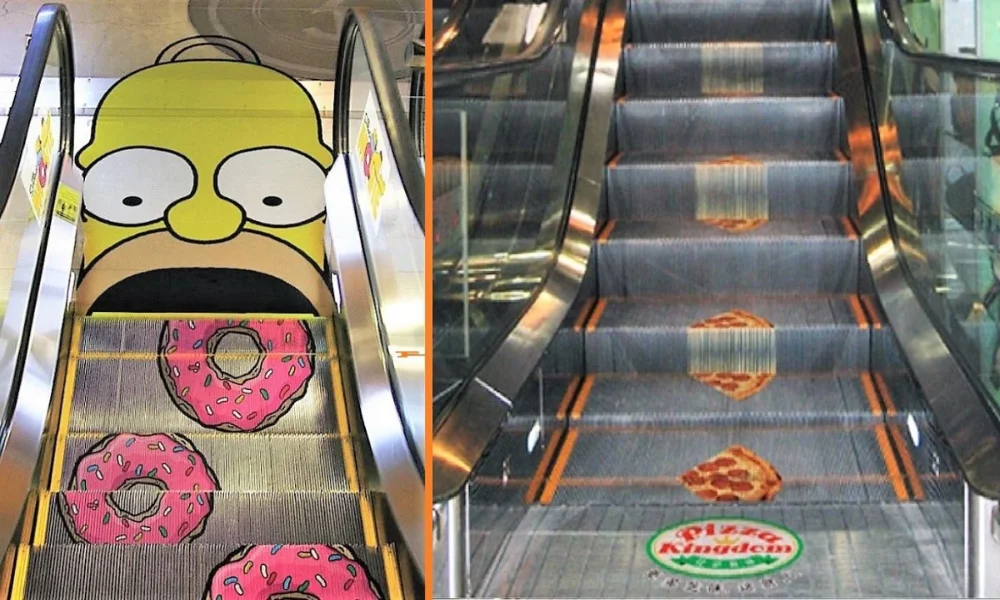
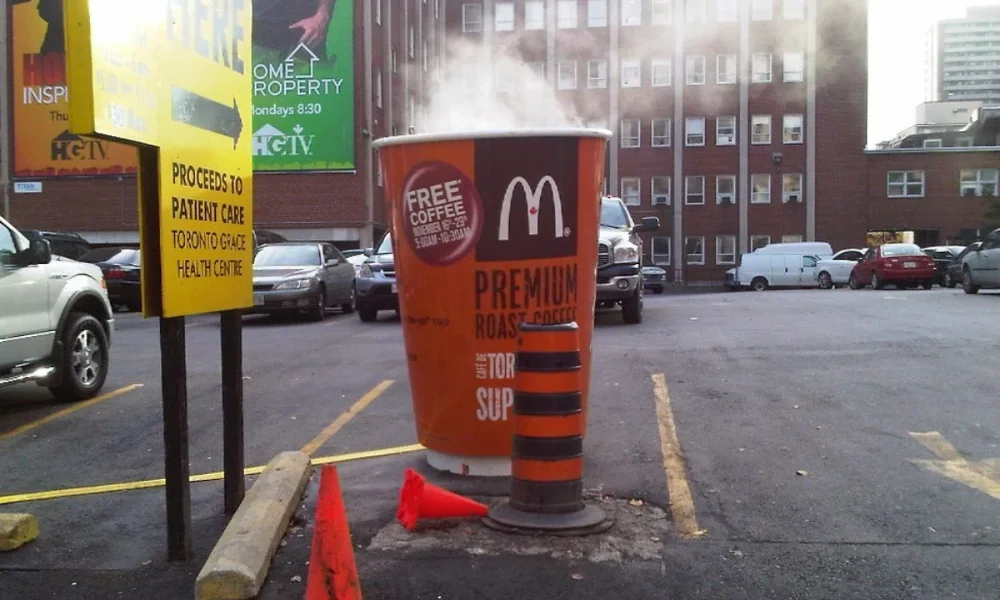
You do not need to be a startup genius or have a lucky break. These unconventional marketing tactics are accessible right now regardless of your budget.
Ambient and Street Marketing
Ambient marketing places your brand inside an environment where your audience already exists. This could be:
- Chalk art in a high-foot-traffic area near your target customer’s daily route
- Creative window clings or stickers that play off the architecture of a building
- Leaving branded items in places your audience visits regularly (coffee shops, gyms, co-working spaces)
- Partnering with a local business to create a limited in-store installation
The key is that the placement itself becomes part of the message. When your brand shows up somewhere surprising, people pay attention and share it.
Low-Budget Publicity Stunts
A publicity stunt does not have to involve closing down a city block. Some of the most effective ones are surprisingly simple. A fitness brand once announced they were placing a scale outside their store but instead of showing weight, it displayed a random compliment. The photos circulated widely without any paid amplification.
The formula for a good publicity stunt includes these elements:
- It connects directly to your brand’s core message or value
- It creates a strong visual that is easy to photograph
- It triggers an emotion: surprise, laughter, warmth, or curiosity
- It gives bystanders a reason to share it (humor, novelty, or a strong opinion)
Community Takeovers and Local Domination
One of the most underrated viral marketing strategies is owning a hyper-local area so completely that everyone who lives or works there knows your brand. This works especially well for service businesses, local e-commerce brands, or any business tied to a geographic region.
A landscaping company in Denver once printed 1,000 door hangers but instead of using the generic design every competitor used, they printed before-and-after photos of a neighbor’s yard directly on the card with a message that said: your neighbor trusted us last spring. A small landscaping brand in one neighborhood became the dominant name in the city within one season.
Social proof plus hyper-relevance is an unconventional marketing tactic that costs almost nothing and converts better than most digital ads.
Digital Guerrilla Marketing: When Unconventional Goes Online
Guerrilla marketing has evolved well beyond physical spaces. Some of the sharpest viral marketing strategies today happen entirely online. The principles are the same: surprise, creativity, and emotional resonance, but the canvas is digital.
Bold Brand Interactions and Comment Hijacking
Wendy’s became famous for roasting competitors and customers on Twitter. MoonPie built a massive following just by posting strange, off-brand one-liners. What both brands figured out was that personality beats polish online. When a brand comment gets 10,000 likes in a thread about something unrelated to food, that is guerrilla marketing in digital form.
Small brands can do this too. Find conversations your target audience is already having. Join them in a way that is interesting, funny, or genuinely helpful. Do not just drop a link. Add something. People will click your profile, and if your brand story is compelling, they will follow.
Meme Marketing and Cultural Hijacking
Memes are the modern equivalent of street art. They travel fast, cost nothing to make, and carry genuine cultural currency. Brands that learn to speak fluently in meme language can reach audiences that actively block traditional ads.
The trick is to use cultural moments as they happen. Slow meme responses are painful. If your brand can respond to a trending topic with something clever and on-brand within an hour or two, that is a guerrilla marketing example that costs $0 and can reach millions.
How to Build Your Own Guerrilla Marketing Campaign in 5 Steps
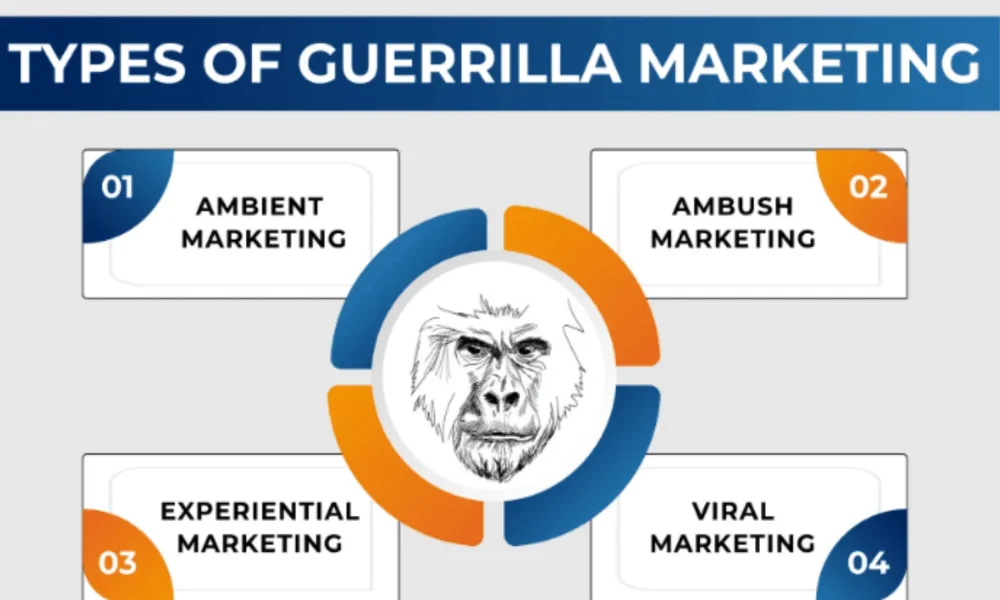
You do not need a creative agency to run a guerrilla marketing campaign. Here is a simple framework:
- Identify where your audience is when they are not being marketed to. What do they do on Tuesday morning? Where do they eat lunch? What communities are they part of online?
- Define the one emotion you want to trigger. Surprise? Laughter? Nostalgia? Relief? Every good guerrilla campaign produces a feeling before it produces a sale.
- Design the simplest version of your stunt. What is the minimum you need to create that emotional response? Cut everything else.
- Make it shareable by design. Think about what the photo will look like. Where will people post it? Give them a reason to tag you.
- Amplify what works. When something gets organic traction, put a small paid budget behind it to widen the reach. Viral marketing strategies almost always have a seed of paid amplification at the right moment.
Common Guerrilla Marketing Mistakes That Kill Campaigns
Not every guerrilla campaign becomes a success story. Some brands have tried unconventional marketing tactics and ended up with a PR crisis instead of a viral moment. The most common mistakes include:
- Doing something controversial without having a clear connection to the brand’s values. Shock for shock’s sake feels desperate and often offends without converting.
- Executing the stunt but ignoring the follow-up. If your stunt goes viral and there is nothing interesting on your profile or website, people click away and forget you instantly.
- Ignoring local laws and permits. Some outdoor stunts require permission and brands that skip this step end up in the news for the wrong reasons.
- Copying a competitor’s stunt. Guerrilla marketing only works when it feels original. If people have seen it before, the emotional response disappears.
- Targeting the wrong audience. A stunt in the wrong neighborhood or on the wrong platform wastes resources and creates no business impact.
The Bottom Line
Small brands go viral every single day. It is not luck. Neither is it a massive budget. Instead, success comes from the willingness to do something different when everyone else is doing the same thing.
The guerrilla marketing examples in this article share a common thread: the brand understood its audience deeply enough to know what would stop them in their tracks. From a $50 YouTube video to a fictional missing persons campaign, the formula never changes. Find the unexpected angle. Make it feel real. Give people a reason to share it.
You do not need permission from a big agency or a boardroom full of approvals. You need one good idea, the courage to execute it, and the patience to let your audience do the rest.
Want more unconventional marketing tactics and viral marketing strategies? Explore more at weirdwealth.io/category/guerrilla-marketing/.
Frequently Asked Questions About Guerrilla Marketing
What are the best guerrilla marketing examples for small businesses?
The best guerrilla marketing examples for small businesses are those that use local knowledge and personal connection as leverage. Things like hyper-local flyer campaigns with real neighbor stories, branded chalk art near your storefront, creative window displays that stop people mid-walk, or a simple one-video social campaign shot on a smartphone with a bold and honest hook. Blendtec, Dollar Shave Club, and Airbnb all started with tactics any small brand could replicate with under $500.
How much does guerrilla marketing cost?
Guerrilla marketing campaigns can cost anywhere from $0 to a few thousand dollars depending on the execution. Some of the most famous guerrilla marketing examples in history cost under $100 to produce. The real investment is time and creative thinking. If you spend two hours brainstorming and come up with one genuinely surprising idea, that is usually worth more than spending $5,000 on another Facebook ad.
What is the difference between guerrilla marketing and viral marketing?
Guerrilla marketing refers to the unconventional tactics used to reach people, usually in unexpected places or ways. Viral marketing refers to the outcome where content spreads rapidly through sharing. Guerrilla campaigns often become viral but not always. And viral content does not always come from guerrilla campaigns. The best viral marketing strategies are often built on guerrilla principles: low budget, high emotion, strong shareability.
Is guerrilla marketing legal?
Most guerrilla marketing tactics are completely legal. However, some outdoor advertising requires permits depending on your city. Installing anything on public property, projecting images onto buildings, or blocking foot traffic may need approval. Always check local regulations before launching a public stunt. The good news is that most effective guerrilla marketing examples do not involve anything that breaks the law and the biggest risk is usually just embarrassment if the idea flops.
Can B2B brands use guerrilla marketing?
Absolutely. B2B guerrilla marketing tends to work best at industry events, in online professional communities like LinkedIn, or through bold direct outreach campaigns. Think personalized video messages instead of cold emails, live demonstrations at trade shows that nobody expects, or a creative piece of direct mail that is so unusual it gets photographed and shared. Unconventional marketing tactics work in B2B because most competitors are painfully predictable, which means the bar for standing out is actually lower.
How do I measure the success of a guerrilla marketing campaign?
You can measure guerrilla marketing success through social media mentions and shares, website traffic spikes, branded search volume increases, direct sales or sign-up numbers during and after the campaign, and earned media coverage. Set a baseline before your campaign launches and track changes in each metric for 30 days after. Many guerrilla campaigns have a delayed effect since content keeps being shared long after the initial stunt.