AI Overview
To flip trading cards for profit in 2026, buyers source cards below market value from estate sales, retail drops, and bulk lots, then resell them on TCG player, eBay, Fanatics Collect, or Whatnot. The most profitable niches include Pokémon vintage and Evolving Skies alt arts, sports rookies of breakout MLB and NBA stars, and Magic Reserved List staples. Grading raw cards through PSA, BGS, or CGC often boosts resale value by 3 to 10 times. Smart flippers track price data on Card Ladder and PriceCharting, focus on scarcity, and avoid overpaying for hyped modern releases.
The trading card boom is far from dead. If you want to flip trading cards for profit in 2026, the market is wider, weirder, and more cash-friendly than it has ever been. Pokémon prices climbed 116% in the past year. Sports cards still mint millionaires at auction. Magic singles quietly pay rent for hundreds of flippers worldwide. This guide walks through how to source, grade, and sell cards across all three niches without burning your wallet.
Why Card Flipping Is Booming in 2026
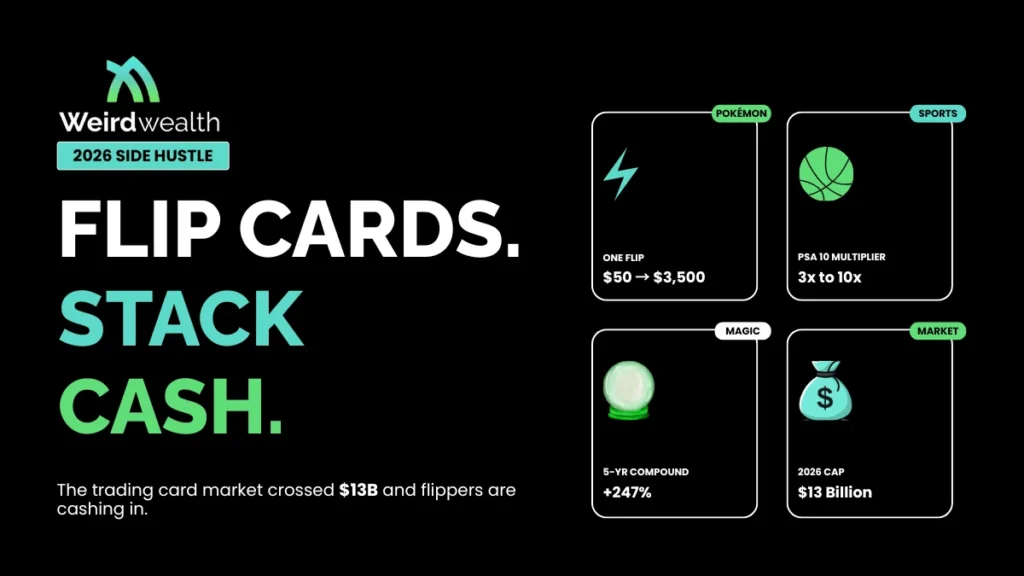
The trading card industry crossed $13 billion in value and is projected to double by 2034. December 2025 alone saw $381 million in online card sales across nearly six million transactions. That kind of liquidity means you can buy a card today and sell it next week without waiting months for a buyer.
Three things power this boom. First, adults who grew up with Pokémon and sports cards now have disposable income. Second, grading companies like PSA, BGS, and CGC made condition a measurable asset class. Third, platforms like TCGplayer, eBay, Fanatics Collect, and Whatnot turned card resale into a 24-hour global market.
Flipping works because price information is uneven. A card listed for $30 at a yard sale might pull $180 on eBay. Closing that gap is where your profit lives.
What Does It Mean to Flip Trading Cards?
Flipping means buying a card for less than its true market value, then reselling it for more. The flip can happen in a few hours or a few months. Some flippers focus on raw cards. Others buy raw, send them off for grading, and sell the slab for triple. A third group flips sealed product like booster boxes and Elite Trainer Boxes that gain value after a set goes out of print.
Successful flippers treat cards as inventory, not collectibles. They track cost basis, fees, and turnover speed. Emotion is a tax on your margin.
How to Flip Trading Cards for Profit: The 6-Step Framework
To flip trading cards for profit, follow a repeatable pipeline. Random buying loses money. A system makes it.
- Pick one niche first. Pokémon, sports, or Magic. Splitting attention across all three is a beginner mistake.
- Learn the price floors. Use Card Ladder, PriceCharting, and 130point.com to study recent sold comps.
- Source below market. Estate sales, Facebook Marketplace, retail restocks, and Whatnot auctions are gold mines.
- Inspect and protect. Penny sleeves and top loaders the moment a card enters your inventory.
- Grade selectively. Only submit cards where the PSA 10 price minus grading cost beats the raw sale by 50% or more.
- List on the right platform. Match the card to the audience that pays the most for it.
This loop is the entire business. The rest of this article goes deeper into each stage.
Pokémon: The Easiest Niche for Beginners
Pokémon is where most new flippers start, and for good reason. The brand sits at the intersection of nostalgia, gaming, and pop culture, so the buyer pool never dries up.
What Pokémon Cards Actually Move in 2026
Vintage Base Set cards still dominate the high end. PSA 10 Base Set Charizard 1st Edition copies trade between $168,000 and $170,000. A shadowless PSA 10 Charizard cleared $954,800 at Goldin in February 2026. Logan Paul’s Pikachu Illustrator PSA 10 sold for around $16.4 million at Goldin Auctions, the most expensive trading card ever recorded.
You will not flip those. What you can flip lives in the $50 to $2,000 range:
- Evolving Skies Umbreon VMAX Alt Art, with PSA 10 copies averaging around $3,520
- Prismatic Evolutions chase cards like Umbreon ex #161, which trades above $1,000
- 151 set Charizard ex variants and Special Illustration Rares
- Japanese exclusive promos that arrive in the West weeks later at higher prices
Where to Source Pokémon Cards
Big box retail restocks are still the holy grail. Walmart, Target, and Costco occasionally stock Elite Trainer Boxes and special collections at MSRP. Many of these double or triple within 12 months of going out of print. Estate sales and Facebook Marketplace listings often contain childhood collections that owners price by weight, not by card.
A pro move is checking thrift stores in suburbs near former Pokémon League play locations. Parents donate old binders all the time.
Sports Cards: Bigger Margins, Bigger Risk
Sports cards swing harder than Pokémon. A rookie can triple in a month after a breakout game and crash 60% after an injury. Because of this, sports flipping rewards speed and information.
The 2026 Sports Card Hotlist
MLB rookies are where the action is heading. Roman Anthony of the Red Sox finished third in AL Rookie of the Year voting in 2025 and posted a .292 average. His 2026 Topps Series 1 rookie cards dominate early chase lists. Jac Caglianone of the Royals brings elite power and similar upside. Tre Johnson in the NBA remains undervalued. NFL rookies and WNBA breakthroughs round out the watchlist.
Card Ladder data shows soccer cards rose 91% over the past year, fueled by the upcoming World Cup cycle. F1 trading cards are a sleeper category worth watching as Topps Chrome F1 releases continue.
Grading Is the Profit Lever in Sports
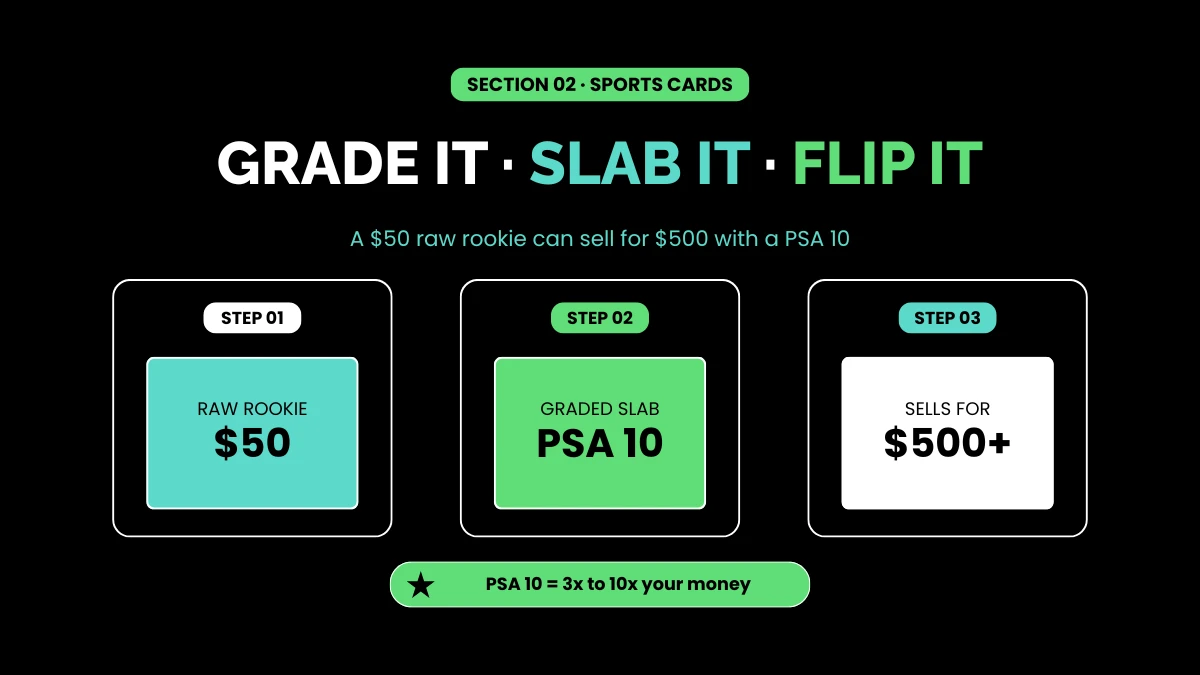
A raw rookie card bought for $50 can sell for $200 to $500 if it grades a PSA 10. This is where most sports flipping profit comes from. The trick is learning to spot 10-quality candidates before you submit. Centering, corners, edges, and surface all matter. Look for cards with perfectly aligned borders, sharp white corners, and zero print lines.
PSA grading fees vary by service level, so calculate net profit before submitting. A $25 grade on a card that only gains $40 in value is a bad trade.
Magic: The Gathering: The Most Stable Long Game
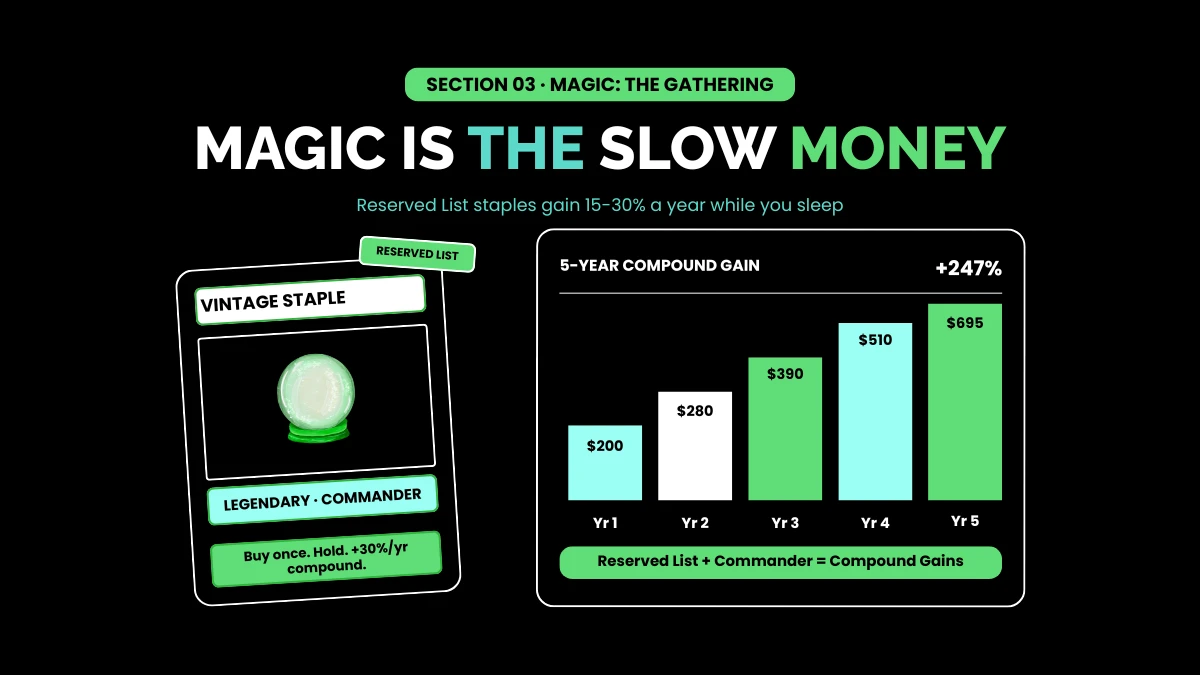
Magic flipping is different. The player base is older, the formats are more complex, and prices move slower than Pokémon or sports. That stability is the feature, not the bug.
Where Magic Profit Lives
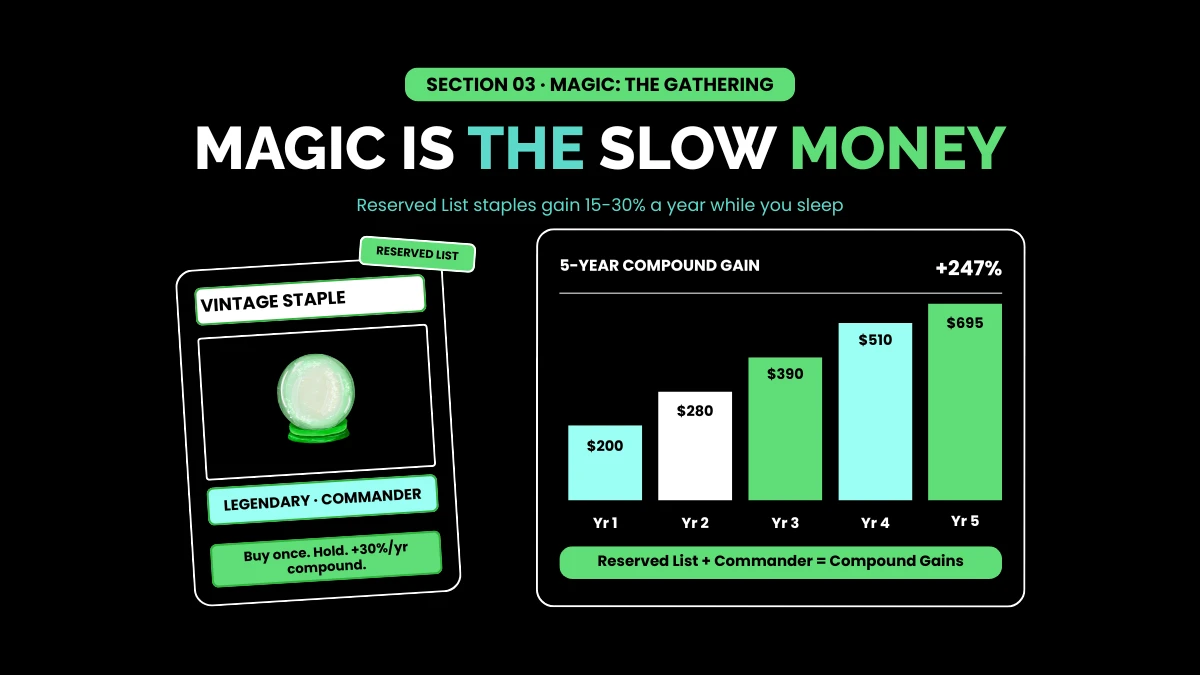
Reserved List cards remain the safest long-term hold in any TCG. These cards will never be reprinted, which locks in scarcity forever. Black Lotus Alpha sits around $3 million for pristine copies. You will not flip a Lotus, but Reserved List staples like Mox Diamond, Gaea’s Cradle, and dual lands frequently appreciate 15 to 30% per year with low downside.
Commander format drives massive casual demand. When a new Commander deck releases featuring an old card, prices on key staples can spike 200% within a week. Tracking which legendary creatures get spoiled in upcoming sets is a real edge.
Modern ultra-rares like the One Ring serialized 001/001, which fetched over $2 million, prove that even new MTG product can hit seven figures. Sealed Modern Horizons boxes from older waves continue climbing.
Best Platforms to Sell Trading Cards in 2026
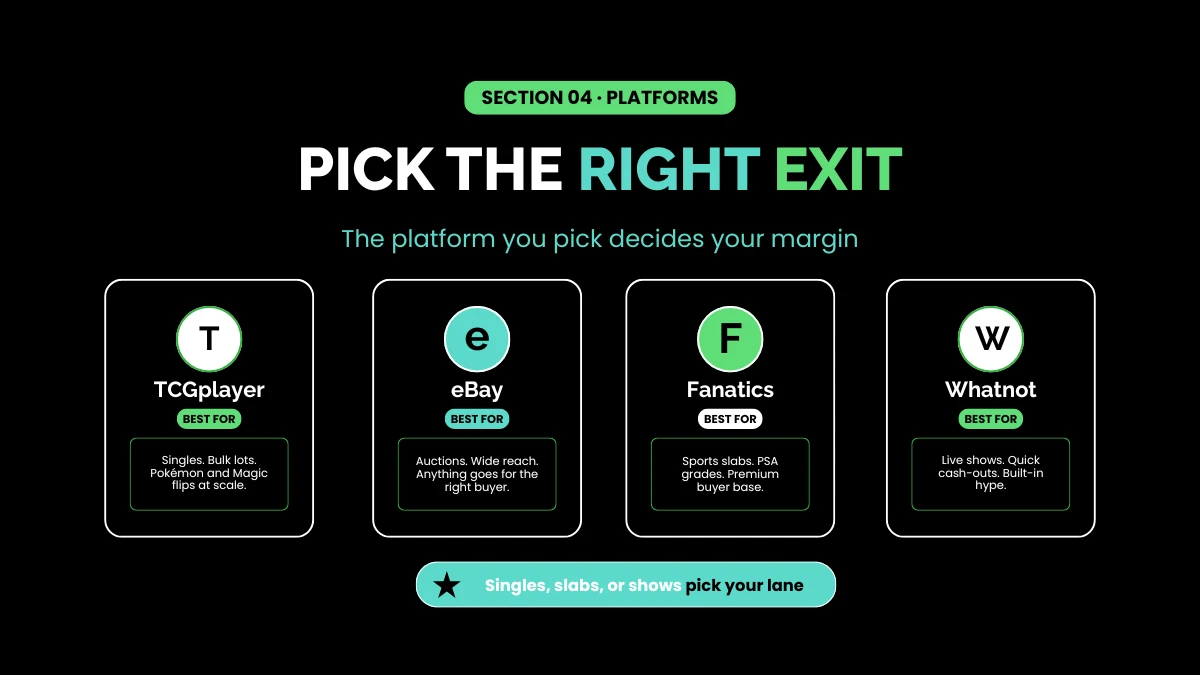
Picking the right platform decides your margin. Each one trades off fees, audience, and effort.
TCGplayer generates the most volume for serious TCG flippers. It charges 10.25% commission plus a $0.50 per order processing fee. The traffic is unmatched for Magic, Pokémon, and Yu-Gi-Oh singles. Automated pricing rules save hours of manual repricing work.
eBay is best for graded cards, sports cards, and one-off high-value items. Always check completed sold listings from the last 30 days before pricing. eBay fees run around 13.25% on most card categories.
Fanatics Collect is the leader for high-end sports auctions. Submit graded cards worth $300 or more here for the strongest comp prices.
Whatnot is the live auction app that exploded in 2025 and kept growing into 2026. Live breaks and timed auctions work well for medium-tier cards and bulk lots.
Local card shops offer instant liquidity at 50 to 70% of retail. Useful for moving volume fast. Ask about trade-in credit deals because many stores offer 20 to 30% more value if you take store credit instead of cash.
How to Grade Cards for Maximum Profit
Grading turns a fragile asset into a sealed, certified product that buyers trust. A graded PSA 10 typically sells for three to ten times the raw price.
The three main grading companies are PSA, BGS, and CGC. PSA is the gold standard for sports cards and most Pokémon. BGS is preferred for modern Pokémon and Magic. CGC has the fastest turnaround and is gaining market share with younger flippers.
Before submitting, ask three questions:
- Is the raw card already worth at least $40?
- Will a PSA 10 grade clearly outsell the raw price minus fees?
- Is the card in genuine gem mint condition under good lighting?
If the answer to any is no, sell the card raw.
Common Mistakes That Kill Card Flipping Profits
New flippers leak money in predictable ways. Knowing these in advance saves you hundreds.
- Overpaying for modern hyped cards that crash within 90 days
- Skipping condition checks and getting stuck with bent corners
- Listing on the wrong platform for the card type
- Forgetting to factor shipping, fees, and grading costs into break-even math
- Holding cards emotionally instead of treating them as inventory
Treat every purchase as a transaction. Write down your buy price, your target sell price, and your max hold time. If a card misses two of three, sell it and move on.
How Much Money Do You Need to Start?
You can start flipping trading cards for profit with as little as $100. A small budget forces discipline. Buy 5 to 10 cards in the $10 to $20 range, flip them, and reinvest profits. Once you hit $1,000 in working capital, you can start buying graded cards and sealed product that move in larger increments.
The best flippers in 2026 do not have the biggest bankrolls. They have the best sourcing networks and the fastest turn times.
Final Word: Flipping Cards Is a Real Business
Card flipping is no longer a hobby with a side of profit. It is a legitimate small business with real inventory, real margins, and a global customer base. The same principles that drive any reseller business apply here: source low, protect your inventory, price with data, and sell on the platform that pays the most.
If you commit to one niche, follow the six-step framework, and treat every card as inventory rather than treasure, you will flip trading cards for profit consistently in 2026 and beyond.
Frequently Asked Questions
Is flipping trading cards still profitable in 2026?
Yes, the trading card market crossed $13 billion in 2026 and is on track to double by 2034. Pokémon cards rose 116% in the past year, and soccer cards climbed 91%.
Which trading cards make the most money to flip?
Pokémon vintage Base Set cards, Evolving Skies and Prismatic Evolutions alt arts, sports rookie cards of breakout MLB and NBA players, and Magic Reserved List staples deliver the most consistent profit.
Do I need to grade cards before selling them?
Not always. Grade a card only if it is in genuine gem mint condition, worth at least $40 raw, and clearly sells for more as a PSA 10 after grading fees. Cards in average condition almost always sell better raw.
Where is the best place to sell trading cards for the highest price?
TCGplayer is best for Pokémon, Magic, and Yu-Gi-Oh singles. eBay works for graded cards and one-off high-value sports cards. Fanatics Collect leads for premium sports auctions, and Whatnot is the top choice for live auctions and bulk lots.