
Key Takeaways
-
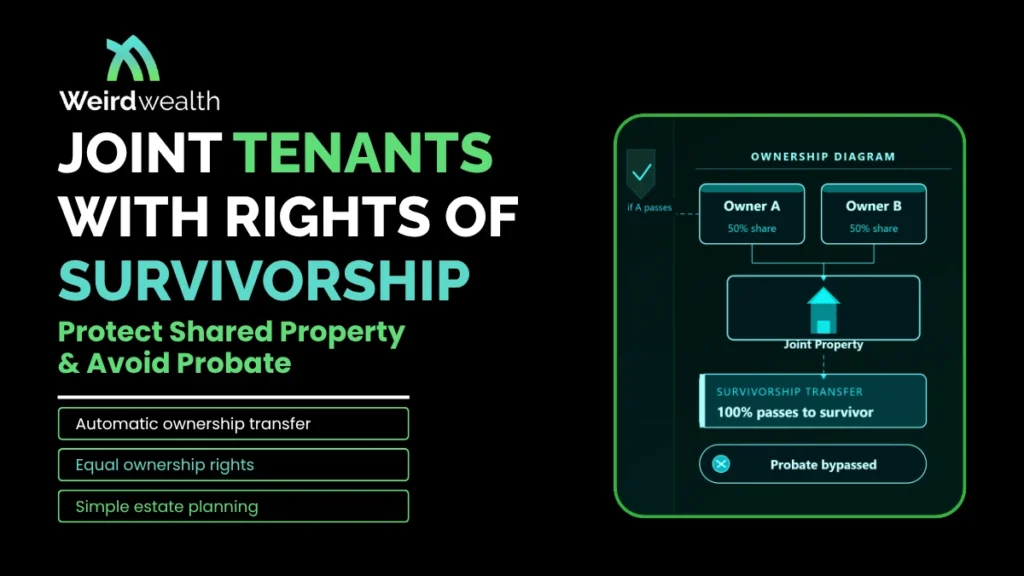
Instant property transfer to co-owners
-
Complete bypass of costly probate court
-
Equal ownership shares required for everyone
-
Simple deed updates add survivorship rights
-
Automatic process overrides standard wills completely
The Smart Way to Own Property Together
Have you ever wondered what happens to a shared house when one owner passes away?
It sounds heavy, but it is a major financial puzzle. If you own property with a spouse, partner, or family member, you need a bulletproof setup. That is where joint tenants with rights of survivorship comes into play.
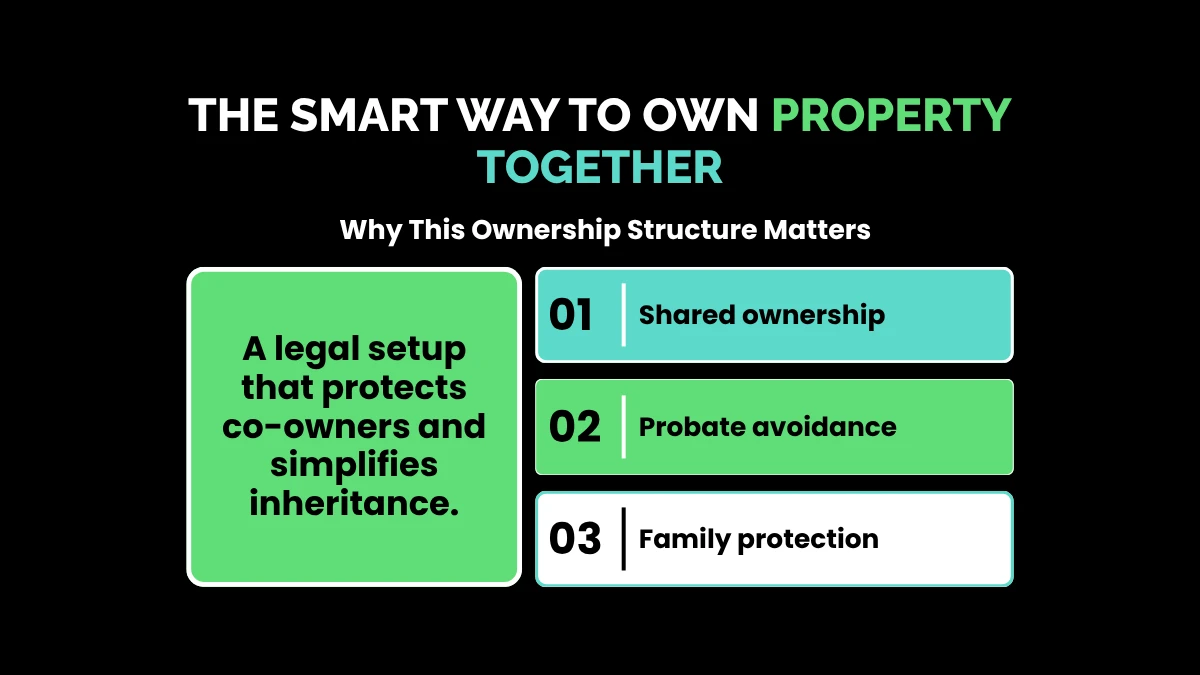
Essentially, this is a special legal setup where two or more people own a property together with equal shares. The magic happens if one owner dies. Their share automatically goes to the surviving owners. No probate court, no massive paperwork storm, and no multi-month legal delays.
At Weird Wealth, we love strategies that protect your hard-earned assets while keeping things simple. This specific type of co-ownership is one of the most reliable ways to secure your real estate future. It acts like a built-in safety net for your home, ensuring your co-owners are never left scrambling during a difficult time.
AI Overview
Joint tenants with rights of survivorship is a legal property ownership structure where two or more individuals hold equal shares of an asset. Under this arrangement, when one owner passes away, their share automatically transfers to the surviving co-owners. This process bypasses probate court entirely. It requires equal interest, time, title, and possession to be legally valid for owners.
What Exactly is JTWROS?
Let’s break this down like we are chatting over coffee. The legal world loves long acronyms, so you will often see this titled JTWROS. It sounds complex, but the core concept is incredibly straightforward.
When you purchase a home or land under this title, you and your co-owners are viewed as a single legal entity. You do not own 50% of the left side of the house while your partner owns the right side. You both own the entire thing together.
The standout feature here is the survivorship rights on property. This means the living owners inherit the deceased owner’s share instantly. It happens automatically by operation of law, which is just a fancy way of saying the legal system handles it behind the scenes without a judge.
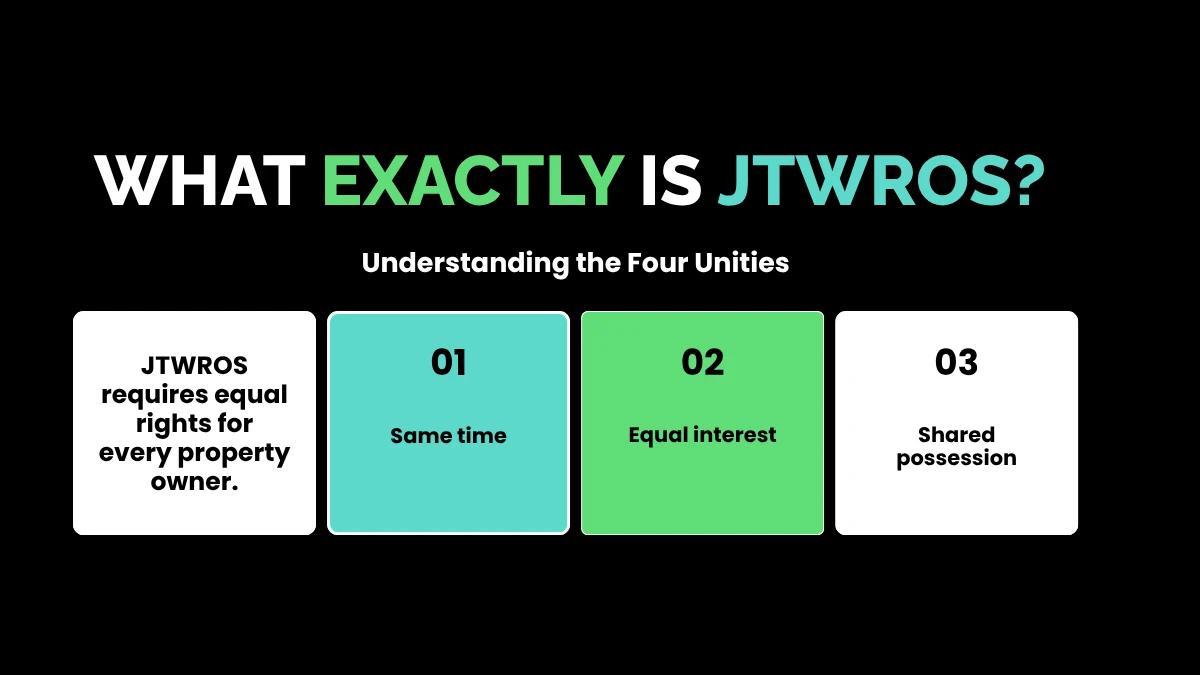
To make this structure work, the legal system generally looks for four specific rules, often called “unities.” If you miss one, the whole structure can fall apart.
-
Time: Every owner must sign the deed at the exact same moment.
-
Title: Everyone’s name must be listed on the exact same deed document.
-
Interest: You must share equal ownership percentages; a 60/40 split will not work here.
-
Possession: Every owner has an equal right to enjoy and use the entire property.
JTWROS vs WROS: Clearing Up the Confusion
It is incredibly easy to get tangled up in real estate jargon. You might be browsing deed options and notice the terms jtwros vs wros pop up. Are they different? Do they offer different protections?
The short answer is no. In most cases, WROS stands for “With Rights of Survivorship.” It is simply a shorthand abbreviation of the full title.
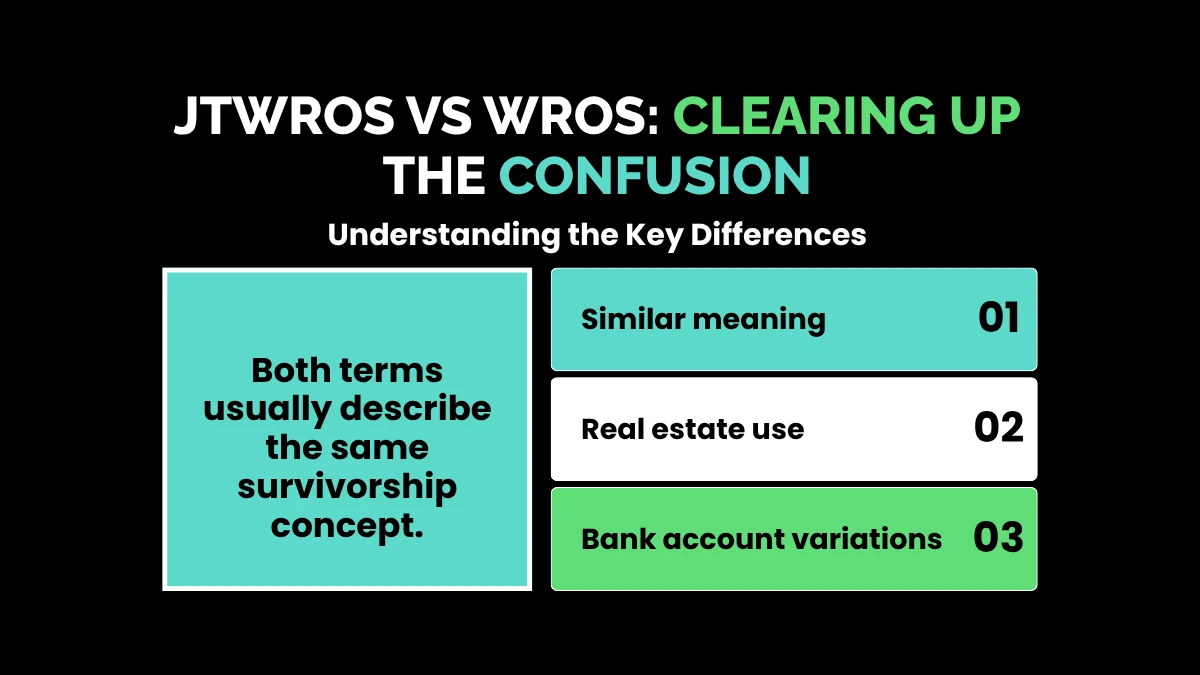
However, some financial institutions use WROS as a broader umbrella category. For example, you can have a bank account designated as WROS without it being a formal joint tenancy. But when it comes to real estate deeds, analyzing jtwros vs wros usually leads to the same destination.
To help visualize how this compares to other common ways people hold property, let’s look at a quick comparison table.
| Ownership Type | Ownership Shares | Bypasses Probate? | Will-Dependent? |
| JTWROS | Must be perfectly equal | Yes, completely automatic | No, overrides any will |
| Tenancy in Common | Can be unequal (e.g., 70/30) | No, goes to probate | Yes, follows the will |
| Sole Ownership | 100% held by one person | No, requires court review | Yes, requires a valid will |
How Survivorship Rights Protect Your Assets
Imagine a scenario where two business partners buy an investment property. If they do not have specific survivorship rights on property, things can get messy fast. If one partner passes away, their share might go to their distant cousin or an ex-spouse, forcing the remaining partner into an unexpected business alliance.
With a joint tenancy setup, that risk vanishes. The surviving owner gains full control immediately. This is why many married couples and long-term partners choose this path. It provides immense peace of mind.
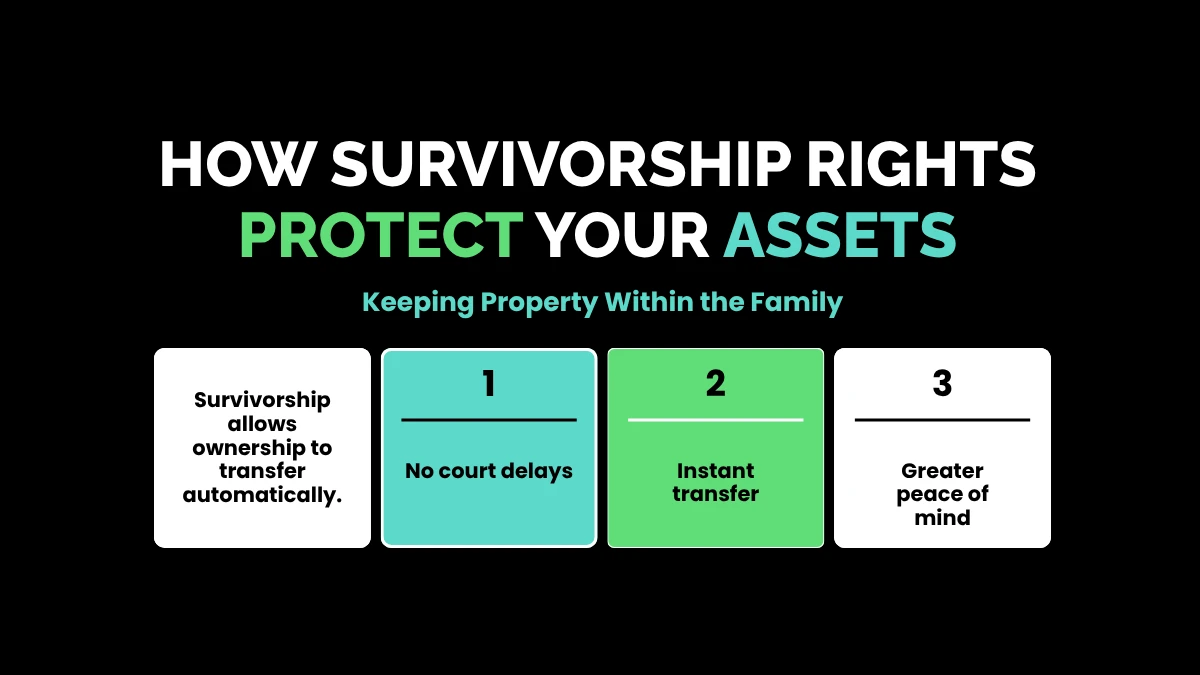
At WeirdWealth, we always stress the importance of understanding the fine print. While this structure is fantastic for keeping property inside your inner circle, it does mean you cannot pass your share to your children in a will if a co-owner is still alive. The survivorship feature takes absolute priority over whatever your will says.
Step-by-Step: How to Add Survivorship to a Property Deed
If you already own a piece of land or a home, you might be wondering how to upgrade your current deed. Transitioning to this setup is not overly complicated, but it does require precision.
You cannot just cross out names on your old paperwork and write in new rules. You have to file fresh documentation with your local county government. Here is the general process most people follow to get it done.
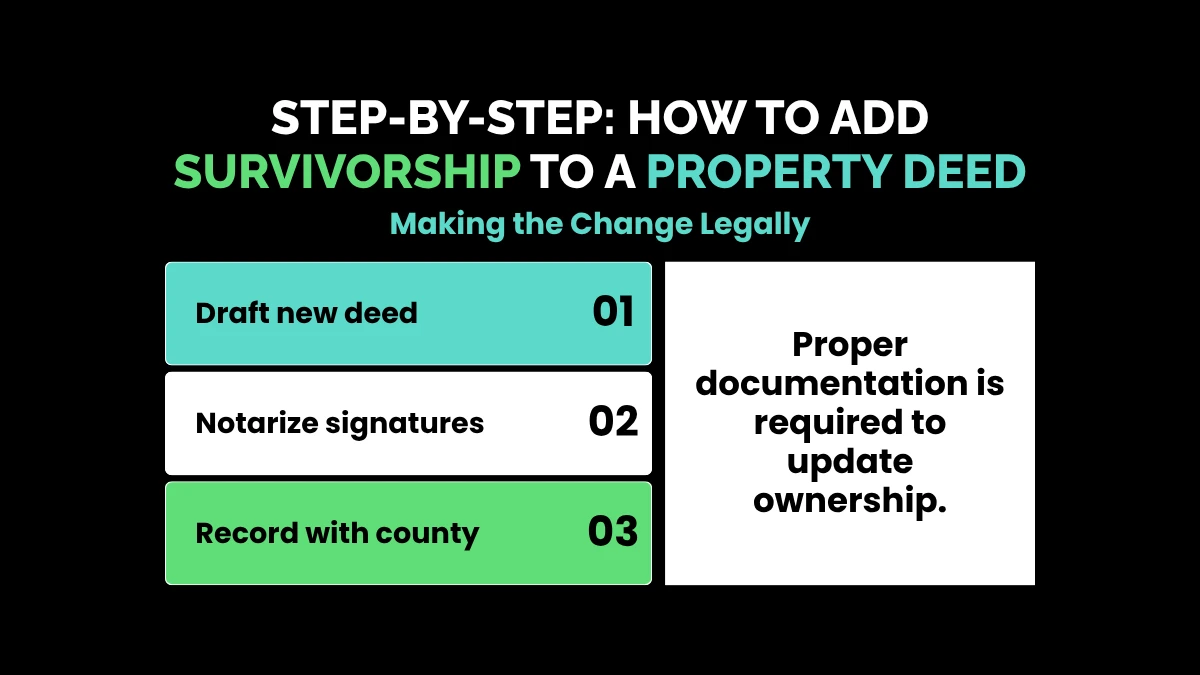
1. Draft a New Deed
You need to create a new quitclaim or warranty deed. This document must explicitly state that the owners are holding the property as joint tenants with rights of survivorship. Using that exact legal phrase is crucial.
2. Get All Signatures Notarized
Every current owner and every new owner being added must sign this new deed in front of a certified notary public. This proves the change is intentional and consensual.
3. File with the County Recorder
Take the notarized deed to your local county recorder’s office or land registry. You will need to pay a small recording fee, which varies depending on your location. Once stamped and filed, the new ownership rules are officially active.
The Pros and Cons You Need to Weigh
No financial strategy is absolutely perfect for every single situation. While avoiding probate court is a massive benefit, you have to look at the full picture before changing your property title.
Let’s look at the major advantages first. It prevents your family from spending thousands of dollars on court fees. It also ensures the property can be sold or managed instantly if an emergency happens, without waiting for a judge to grant permission.
On the flip side, there are risks. Because everyone owns the property equally, all owners are exposed to each other’s financial mistakes. If your co-owner faces a massive lawsuit or files for bankruptcy, creditors could potentially place a lien on your shared property.
Additionally, selling the property requires total agreement. You cannot sell your half or take out a new mortgage without the other person signing off on the paperwork. It binds your financial future closely to your co-owner.
Real-Life Scenarios: When to Use This Tool
Let’s look at a couple of examples to see how this plays out in the real world. Meet Sarah and Mike. They are a married couple buying their first suburban home.
They choose to register as joint tenants with rights of survivorship. Ten years later, Mike unexpectedly passes away. Because of their deed structure, Sarah does not have to hire an expensive lawyer or wait for a court to approve her home ownership. She simply files Mike’s death certificate with the county, and the home is 100% hers.
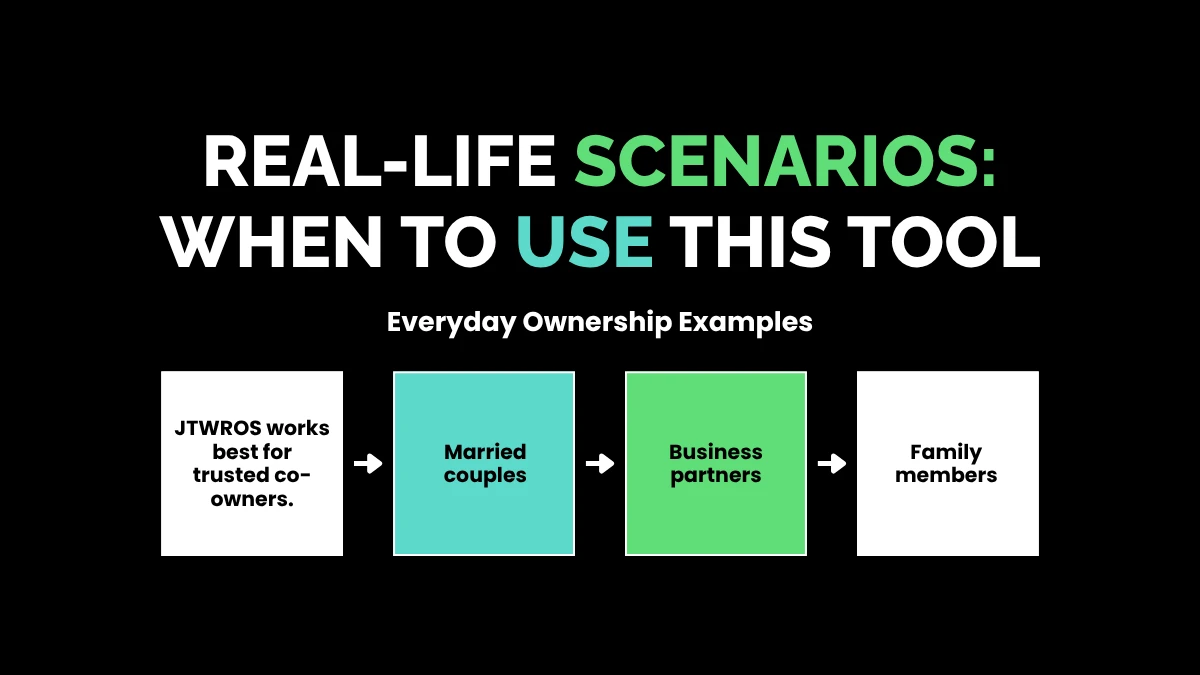
Now, let’s look at a different situation. An aging parent wants to pass their home to their adult child. They decide to look up how to add survivorship to property deed documents and add the child’s name.
While this avoids probate later, it creates an immediate issue: the child now legally owns half the house today. If the child gets into financial trouble, the parent’s home could be at risk. In cases like that, alternative tools like a living trust might be safer.
Key Tax Implications to Keep in Mind
Before you rush out to change your deeds, we need to chat about taxes. The IRS views property changes carefully, and you do not want an unexpected tax bill.
When you add someone to a deed as an equal joint tenant, you might technically be making a taxable gift. If the value of that share is higher than the annual gift tax exclusion limit, you will need to file a gift tax return.
Furthermore, there is the concept of a “stepped-up basis.” When an owner dies, the surviving owner generally gets a tax break on the inherited portion’s value. Understanding how these rules apply to your specific state is essential for avoiding costly surprises.
Is This the Right Choice for Your Wealth Journey?
Protecting your assets is all about choosing the right tool for your specific goals. For many families, holding real estate as joint tenants with rights of survivorship is the easiest, most affordable way to secure a seamless transition of property.
It eliminates stress, keeps the court system out of your private life, and keeps your real estate assets right where they belong. Just remember to communicate openly with your co-owners about the responsibilities involved.
If you want more unconventional, practical tips on managing your estate and building security, stick around with Weird Wealth. We are here to make complex financial concepts feel like a walk in the park.
Conclusion
Choosing how to hold your property title is a foundational step in your wealth journey. By selecting a setup with built-in survivorship rights, you create an instant pathway for your property to pass to the people you care about most, completely bypassing court delays.
Take the time to review your current deeds, talk with your co-owners, and ensure your real estate is structured to protect your family’s future.
Frequently Asked Questions
What happens if all joint tenants die at the same time?
Based on available data, if all co-owners pass away simultaneously, the property is generally split equally among their respective estates. Each share will then go through the standard probate court process based on each individual owner’s will.
Can a joint tenant sell their share without permission?
An owner can transfer their interest to a new person without permission, but doing so instantly breaks the joint tenancy. The ownership structure generally converts into a Tenancy in Common, erasing the automatic survivorship rights for everyone involved.
Does a will override joint tenancy survivorship rights?
In most cases, no. The survivorship feature is automatic and takes absolute legal priority over a will. Even if an owner writes in their will that their share goes to a child, it will still go to the surviving co-owner.
How do you remove a deceased owner from the deed?
To clear the title, the surviving owner usually needs to file an Affidavit of Survivorship with the local county records office. You will generally need to attach an official copy of the deceased owner’s death certificate to finish the update.