

Most strange side hustles sound the same: drive somewhere, sell something, freelance online, or start a store.
But money doesn’t always come from obvious work. Sometimes it comes from doing something oddly specific that solves a small problem for a specific group of people. That is where strange side hustles get interesting.
If you already know the usual options, these ideas are worth exploring because several require more creativity than capital.
Key Takeaways
- Strange side hustles work when they solve a real problem people will pay to remove.
- The best unusual ideas usually target a narrow audience rather than everyone.
- Some can start with skills or assets you already have.
- A weird idea becomes a good business when customers return or refer others.
- Test demand before spending heavily on equipment, software, or inventory.
What makes a side hustle “strange”?
A strange side hustle isn’t necessarily ridiculous. It is usually a service, product, or income stream that most people simply don’t think about. That can be an advantage.
A crowded market gives you competitors before you even begin. A narrow market can give you something else: fewer competitors and customers who already understand why the service is useful.
Here are 21 ideas worth investigating.
1. Get paid to test products

Companies need ordinary people to use products and explain what works, what doesn’t, and what feels confusing.
Product testing can involve websites, apps, physical products, packaging, or customer experiences. It isn’t usually a replacement for a full-time income, but it can become a useful supplementary stream.
If you like giving detailed opinions, start by exploring product testing opportunities.
2. Get paid to listen
Some businesses, researchers, creators, and consumers value attentive feedback.
That creates opportunities around interviews, research studies, customer feedback, transcription-related work, and opinion-based services.
The skill isn’t necessarily talking. Sometimes it is being a very good listener.
3. Become a niche virtual assistant
“Virtual assistant” sounds ordinary until you stop trying to serve everyone. A better approach is to become the assistant for one unusual type of customer: a property investor, collector, newsletter owner, coach, researcher, creator, or small agency.
The narrower the problem, the easier it can become to explain what you actually do.
4. House-sit unusual properties
House sitting doesn’t have to mean checking the mail and watering two plants. Some owners need someone trustworthy to stay at a property while they travel. Luxury homes, rural properties, vacation houses, and unusual residences can create very different opportunities.
Explore the economics behind house-sitting gigs before assuming this is simply “free accommodation.”
5. Sell strange services on Fiverr
The internet has created a market for incredibly specific services. Instead of offering “graphic design,” think about a tiny problem someone repeatedly wants solved. Instead of “writing,” consider a narrow research, editing, formatting, or personalization service.
The opportunity is often hiding inside the specificity. Strange Fiverr services are a good place to study how unusual offers can become products.
6. Get paid to give your opinion
Companies spend money trying to understand what customers think before launching products, campaigns, websites, and services.
That creates opportunities for surveys, interviews, focus groups, testing, and research panels.
The trick is not treating every survey site as a business. Treat your opinion as a small asset and look for higher-value opportunities.
7. Turn an unusual hobby into income
A hobby can become valuable when another person wants the result but doesn’t want to learn the skill.
That could mean restoring collectibles, creating custom artwork, repairing niche equipment, teaching a specialized skill, or producing something difficult to find.
The transition from hobby to income is often easier when you sell the outcome rather than the hours.
For inspiration, look at hobbies that became million-dollar businesses.
8. Get paid to walk
Walking sounds like something people do for free. But combine it with a service and the economics change.
Pet walking, local errands, neighborhood observation, delivery, or specialized walking-related services can turn something ordinary into paid activity. The bigger lesson is simple: don’t assume an ordinary activity has no commercial value.
9. Create digital templates for tiny problems
People don’t always want another course. Sometimes they just want the spreadsheet, checklist, planner, calculator, tracker, script, or template that saves them an hour.
A good digital template solves one annoying problem extremely well and can be sold repeatedly without recreating it for every customer. See how digital templates fit into a broader digital-income strategy.
10. Sell print-on-demand products for strange niches
Print-on-demand becomes more interesting when you stop designing generic shirts. Think about specific communities, professions, hobbies, inside jokes, events, or interests where people already identify strongly with the subject.
You don’t need millions of customers. You need the right customers.
11. Offer language services nobody thinks about
Fluent speakers often underestimate the value of language skills. Translation is only one possibility. Localization, subtitles, pronunciation help, bilingual customer support, proofreading, cultural adaptation, and niche language services can all solve different problems.
If you speak two languages, investigate unusual language services people pay for.
12. Build a hyperlocal newsletter
National news is crowded. A tiny geographic area can be much less competitive. A neighborhood newsletter can cover local events, businesses, openings, deals, community news, jobs, property activity, or things residents actually need to know.
The business model can eventually include sponsorships, local advertising, partnerships, and paid listings. Hyperlocal newsletters show why small audiences can sometimes have commercial value.
13. Create AI-assisted services
AI doesn’t automatically create a business. The opportunity appears when you use it to deliver something customers already want faster or cheaper.
That might mean research assistance, content production, document organization, image workflows, data cleanup, or customized business services.
Explore AI content-creation side hustles rather than selling “AI” as the product itself.
14. Get paid to review products
People want opinions before spending money. Businesses want feedback and visibility. That creates several potential models around product reviews, testing, comparison content, creator partnerships, and research.
The important distinction is trust. If you review everything positively, your audience eventually stops believing you.
15. Rent out something you already own

One of the strangest realizations about side hustles is that your income-producing asset may already be sitting in your house.
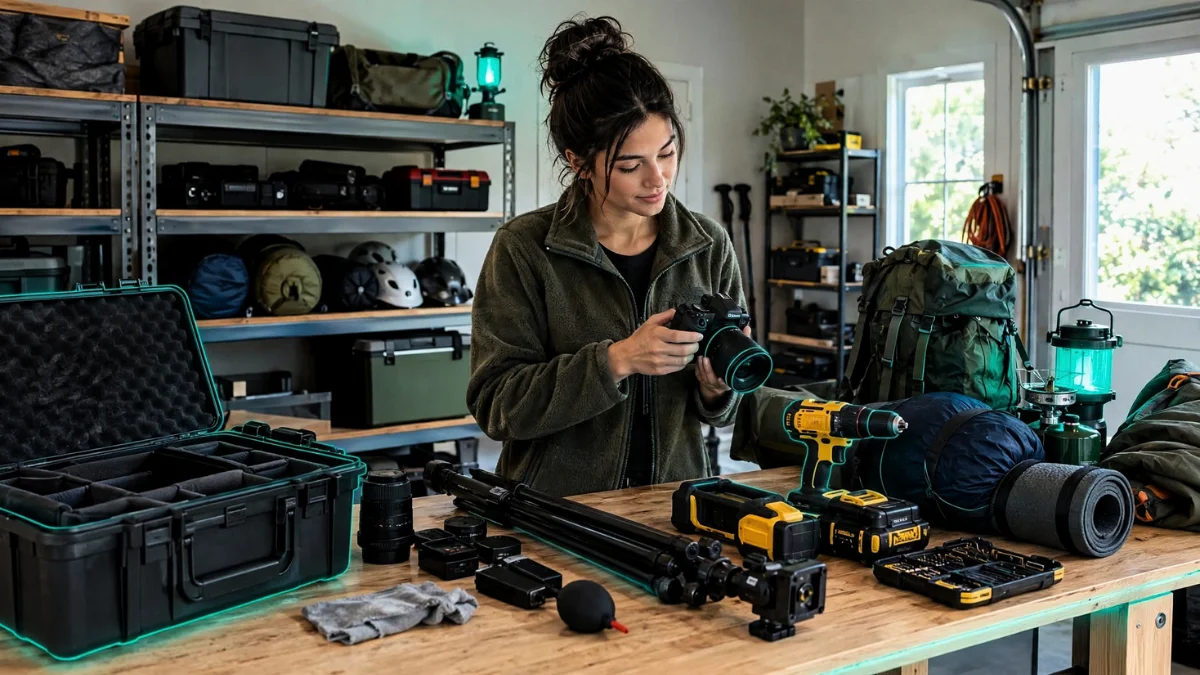
Tools, equipment, storage space, vehicles, photography gear, event items, outdoor equipment, and other useful possessions can potentially generate income when you’re not using them.
Before buying something specifically to rent, see whether things you already own could be your first inventory.
16. Become an unusual online researcher
Research sounds boring until you realize how many businesses need someone to find obscure information.
Competitor research, product research, historical research, market research, lead research, genealogy, supplier discovery, and niche information gathering can all become specialized services.
If you’re naturally curious and patient, online research jobs are worth investigating.
17. Get paid to play video games
Gaming has moved far beyond simply playing for entertainment. Testing, streaming, coaching, content creation, community management, game-related research, and competitive activities can all create different income paths.
The important question isn’t “Can I get paid to play?” It’s “What valuable service exists around gaming that I can provide?”
18. Turn an ordinary object into a business
An ordinary thing becomes interesting when someone has an unusual reason to need it. That could be storage, transportation, photography, events, repairs, decoration, content creation, or access.
The opportunity is often not in the object itself but in the problem surrounding it. That’s the thinking behind turning ordinary things into income.
19. Offer a service for people who hate doing one tiny task
This is one of my favorite ways to think about strange side hustles.
Don’t ask, “What business can I start?”
Ask, “What tiny task do people constantly complain about?”
Maybe it’s organizing digital files, creating listings, formatting documents, researching purchases, cleaning up spreadsheets, scheduling appointments, or managing repetitive admin.
A tiny annoyance can become a surprisingly clear service.
20. Sell access to a specialized audience
You don’t always need to manufacture something. Sometimes the valuable asset is an audience.
A niche newsletter, community, social account, podcast, or website can become commercially useful when it attracts people around a specific interest.
Revenue can eventually come from sponsorships, advertising, affiliate relationships, memberships, or products. The audience has to come first.
21. Start with a “weird” skill and make it boringly useful
This is the biggest lesson behind strange side hustles. The weirdness gets attention. The usefulness gets paid.
A strange skill becomes a real business when you can explain three things clearly:
- Who needs it?
- What problem does it solve?
- Why would they pay you instead of doing it themselves?
That is the point where a curiosity becomes an income stream.
The Strange Side Hustle Test
Before spending money on any unusual idea, run it through this five-part test:
| Question | What you’re looking for |
| Is there a real problem? | Someone already wants the problem solved |
| Is the customer specific? | You know exactly who might buy |
| Can I start cheaply? | You can test demand without a large investment |
| Can I explain the offer? | A customer understands it quickly |
| Can it repeat? | Customers can return, refer, or buy again |
If an idea fails all five, it probably belongs in the “interesting hobby” category rather than the “side hustle” category.
Which strange side hustle should you try first?
Start with the idea closest to something you already have: a skill, possession, audience, hobby, professional experience, or unusual knowledge.
That reduces the biggest risk in side hustles—spending money before discovering whether anyone cares. If you want something even more unconventional, explore weird side hustles that actually pay or start with unusual freelance jobs.
The goal isn’t to find the weirdest way possible to make money. It’s to find a problem other people overlook—and become the person willing to solve it.
Weird Wealth Read:
The best side hustle may look strange from the outside. From the customer’s perspective, it simply solves a problem they don’t want to deal with.
Side-hustle income varies by demand, skill, location, platform, and effort. Treat earnings claims as examples rather than guarantees, and check local tax and legal requirements before starting a business.
Add a practical first-week launch planMake each idea more specific and actionable