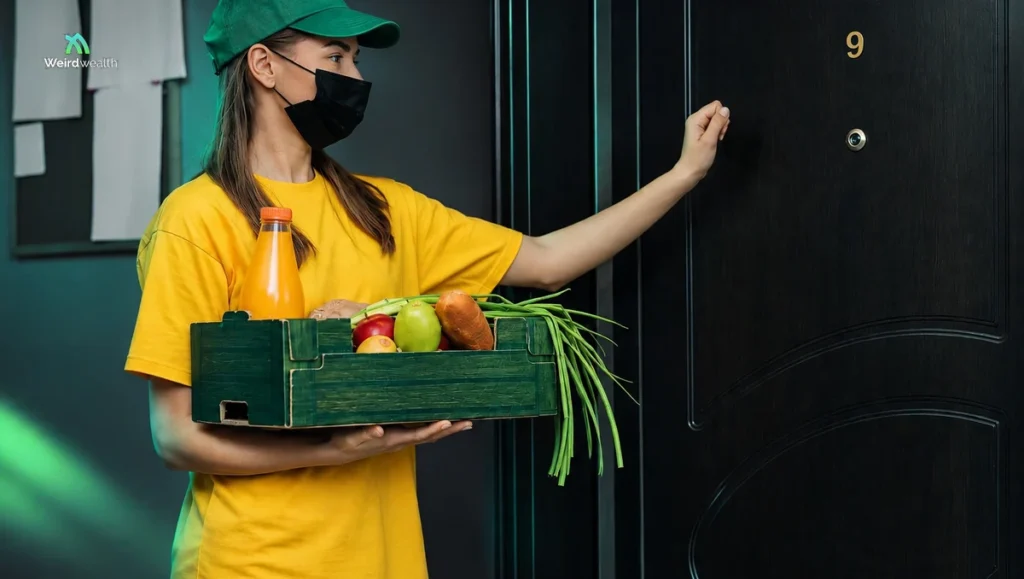
Surplus Food Pickup: You can turn surplus food pickup into a local service by helping restaurants, bakeries, grocery stores, and other food businesses move eligible unsold food to authorized recipients.
The business opportunity isn’t simply collecting leftovers and selling them. It’s providing a reliable service that coordinates pickups, maintains food safety, documents deliveries, and reduces unnecessary waste.
Imagine walking past a neighborhood bakery at 8:30 in the evening. The lights are still on, an employee is wiping down the counter, and behind the glass are several trays of bread and pastries.
Everything looks delicious. But the shop is closing, and some products may not be suitable for another day’s display, even though they remain safe when properly handled.
Now imagine another business a few streets away. It operates a community meal program and could use suitable food donations.
The bakery has extra food. The meal program could use it. But someone needs to arrange collection, check whether the food meets acceptance requirements, maintain safe transport conditions, and deliver it at the right time.
That coordination can have real value. For someone interested in unusual local service businesses, it presents an opportunity worth exploring.
At Weird Wealth, we love the idea of earning differently. But this particular opportunity deserves more care than an ordinary delivery side hustle.
When you’re moving food, your responsibility isn’t just getting something from Point A to Point B. It’s protecting the people who will eventually eat it.
Let’s explore how surplus food pickup works, what services can legitimately charge for, and how to build a small operation without compromising safety.
Key Takeaways
- Surplus Food Pickup connects businesses with excess usable food to approved recipients, food rescue organizations, or lawful resale channels.
- A beginner-friendly model is providing contracted transportation and coordination rather than independently taking ownership of food for resale.
- Restaurants, bakeries, grocery stores, caterers, and event venues can generate different types of surplus.
- Food safety, temperature control, traceability, insurance, and local regulatory requirements are essential.
- The U.S. Good Samaritan Food Donation Act provides certain liability protections for qualifying donations, but it does not create blanket protection for every commercial operator.
- Revenue can come from agreed pickup fees, recurring logistics contracts, or other lawful services not necessarily selling donated food.
- Route density and predictable pickup windows can determine whether a small operation makes financial sense.
- An appropriate first step is partnering with established food rescue organizations and local businesses to understand their actual needs.
What Is a Surplus Food Pickup Service?
A surplus food pickup service helps coordinate and transport food that a business cannot use or sell through its normal channels but that remains eligible for another lawful purpose.
For example, a bakery might have properly stored unsold bread. A grocery store might have suitable packaged products approaching their labeled quality dates.
Surplus Food Pickup: A caterer might have surplus prepared food that was never served and has been handled under suitable food safety controls.
Instead of automatically discarding eligible products, a business may arrange for them to be donated or otherwise handled through an approved channel.
Your service could help with scheduling, collection, transportation, recordkeeping, and delivery. But it matters who owns the food, who accepts responsibility for safety, and who receives it.
A logistics contractor transporting food for a nonprofit isn’t necessarily operating the same business as a retailer buying surplus food and reselling it. Those models can have different legal and operational requirements.
Why Would Businesses Pay for Surplus Food Pickup?
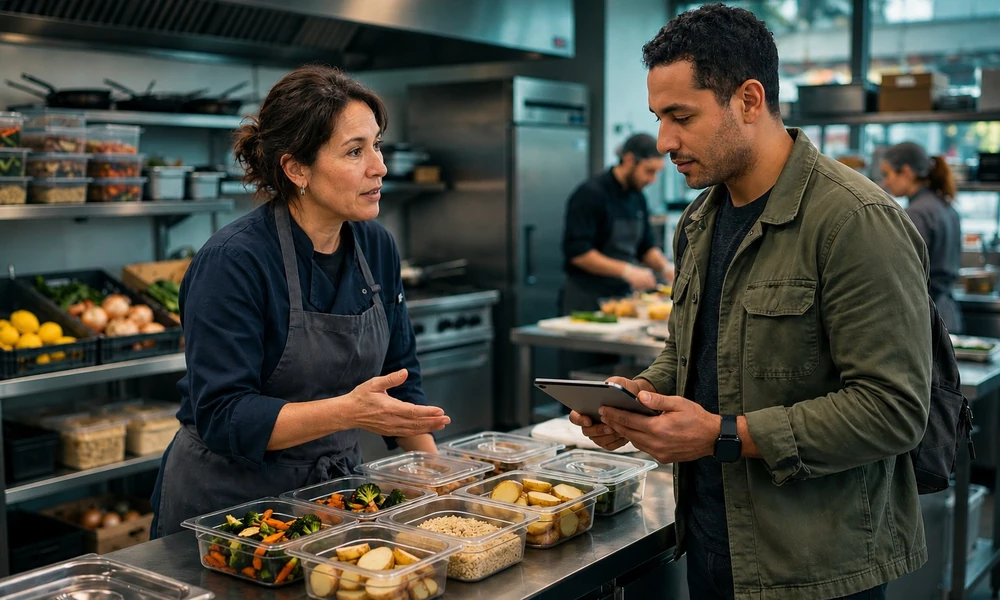
At first, paying someone to collect unwanted products might sound strange. Why would a business spend money getting rid of food?
Surplus Food Pickup: Because managing surplus can involve real costs. Employees may need to sort items, prepare records, contact recipients, arrange transportation, and coordinate collection times.
A business could value a reliable service that reduces that administrative burden.
Consider a hypothetical bakery. Its employees spend 30 minutes after closing sorting suitable donations and contacting a local organization.
If a delivery service has already established a reliable pickup schedule, the bakery might prefer that arrangement.
But willingness to pay shouldn’t be assumed. Some businesses already work with volunteers or established food rescue networks at little or no cost.
Others may have waste management contracts or limited surplus. A viable service must solve a specific problem that somebody is genuinely willing and legally able to pay you to handle.
The Three Main Surplus Food Business Models
Before starting, choose the type of work you intend to provide.
| Business model | How it works | Possible revenue | Main challenge |
|---|---|---|---|
| Donation logistics | Transport eligible donated food to authorized recipients | Contracted collection or delivery fees | Safety, approvals, and coordination |
| Surplus resale support | Support a business selling eligible discounted products through an approved channel | Agreed service or fulfillment fees | Retail and food business rules |
| Food recovery coordination | Arrange donors, recipients, collection windows, and reporting | Administrative or logistics contracts | Reliable partners and documentation |
For many beginners, the first option is the simplest to understand. It allows you to focus on a clearly defined service: properly transporting suitable food between organizations under an agreed process.
That doesn’t mean it’s automatically easy or exempt from licensing. Even a transport-focused operation may have regulatory and insurance obligations.
If you’re unfamiliar with the financial side of starting a service business, our guide to what business finance means can help you understand costs, revenue, and basic financial planning.
What Types of Surplus Food Can Be Collected?
The answer depends on the product, how it was handled, its condition, the receiving organization’s requirements, and local food safety rules.
Here are some broad categories.
Unopened Shelf-Stable Products
Certain unopened, properly labeled, shelf-stable foods may be suitable for donation or recovery.
Examples could include sealed packaged goods and products with appropriate remaining shelf life.
But packaging integrity, recalls, labeling, and the receiving organization’s requirements still matter.
Unserved Bakery Products
Some bakeries may have unsold bread and baked goods that remain suitable for safe redistribution.
The exact requirements depend on ingredients, handling, packaging, and whether refrigeration is necessary.
A plain bread roll and a pastry containing a perishable cream filling cannot automatically be handled the same way.
Properly Stored Fresh Produce
Some produce may remain edible despite cosmetic imperfections or reduced retail appeal.
However, damaged, contaminated, spoiled, or recalled produce must not be redistributed.
Eligible Prepared Meals
Prepared food requires particular caution. Some unserved meals may qualify for donation if they have been safely prepared, stored, cooled, held, and transported according to applicable requirements.
But food safety cannot be determined by appearance or smell alone.
What Should You Not Collect?
Do not accept food when safe handling cannot be established.
This may include food with unknown temperature history, products exposed to contamination, recalled items, damaged packages that compromise safety, or foods rejected under the applicable donation protocol.
Previously served food and food exposed to customers may be subject to restrictions that make redistribution inappropriate.
If you’re uncertain whether a product is suitable, don’t take responsibility for distributing it.
Food Safety Comes Before Profit

This is the most important section of the guide. Transporting prepared or perishable food is not the same as delivering books or office supplies.
Foodborne pathogens can grow when food is stored or transported under unsafe conditions.
In the United States, the FDA Food Code provides a model framework for retail and food service safety.
The commonly referenced holding temperatures for foods requiring time and temperature control are:
- Cold holding: 41°F (5°C) or below.
- Hot holding: 135°F (57°C) or above.
However, different rules, exceptions, cooling procedures, and time-based controls can apply.
The FDA Food Code is a model, and the legally applicable requirements depend on the relevant jurisdiction. You can review the FDA Food Code for its guidance and provisions.
A driver should not improvise these procedures. For example, putting warm prepared food into an ordinary insulated bag doesn’t automatically establish that the food will remain safe.
You need a suitable handling plan, equipment, and any necessary training or permits.
Basic Transport Controls
A properly designed operation may need clean food-safe containers, suitable insulated or temperature-controlled transport equipment, calibrated thermometers, documented collection times, and procedures for rejecting unsuitable food.
The precise requirements must be established with local health authorities and the participating food organizations.
The FDA also provides key steps for donating food at retail food establishments, including guidance on packaging, safe storage, temperatures, and hygiene.
When in doubt, reject an unsafe or undocumented load rather than attempt to rescue it.
Can You Legally Sell Donated Food?
This question deserves a clear answer. You should never assume that food given for charitable donation can simply be collected and resold for personal profit.
In the United States, the Bill Emerson Good Samaritan Food Donation Act provides certain protections for qualifying food donations.
The law includes provisions covering donations made in good faith through nonprofit organizations and certain direct donations from qualified donors.
It also recognizes a defined Good Samaritan reduced price under specified conditions.
But the law is not blanket permission for an individual to collect donated food and operate an unrestricted resale business.
It doesn’t override state or local health regulations. Its protections also do not apply to gross negligence or intentional misconduct.
A commercial operator intending to purchase and resell surplus food may need to comply with requirements for food handling, retail licensing, labeling, tax collection, insurance, and other applicable obligations.
Those rules vary significantly. The safest starting approach is to establish exactly what role you’re performing and obtain appropriate professional and regulatory guidance before operating.
For the legal wording, consult the official U.S. Code section covering the Bill Emerson Good Samaritan Food Donation Act.
How Can You Make Money Without Selling the Food?
This is where the business model becomes interesting. You might provide a service to organizations that need help moving qualifying food.
For example, a nonprofit could engage a properly qualified local delivery contractor. Or a bakery might agree to pay a recurring fee for approved collection and delivery services.
The money pays for your transportation, scheduling, documentation, and operational work. It doesn’t necessarily come from charging people who need food.
But those arrangements must be clearly documented, permitted under applicable rules and funding agreements, and commercially realistic.
Four Possible Revenue Arrangements
1. Per-pickup fee: A participating organization pays an agreed amount for each completed collection.
2. Recurring route contract: Several scheduled pickups are covered by a weekly or monthly service agreement.
3. Special event recovery: An organizer pays for suitable collection and transportation after an event, subject to a prearranged safety plan.
4. Administrative coordination: An organization pays for scheduling, recordkeeping, and logistics support without requiring you to take custody of food.
These are business model examples, not guaranteed available contracts.
How Much Can a Surplus Food Pickup Service Earn?

Let’s build a hypothetical example. Suppose you arrange three approved pickups during a weekday route.
Each pickup generates a $25 service fee. Your daily revenue would be:
3 pickups × $25 = $75.
Over 20 operating days, that would produce $1,500 in gross revenue.
But it wouldn’t be $1,500 in profit. You still have to pay for transportation, insurance, equipment, administration, and your time.
Example Monthly Economics
| Item | Hypothetical amount |
|---|---|
| 60 pickups at $25 | $1,500 |
| Fuel and transportation | −$250 |
| Equipment and cleaning allocation | −$90 |
| Insurance and compliance allocation | −$180 |
| Phone and administration | −$50 |
| Contribution before labor, tax, and other costs | $930 |
If those 60 pickups require 60 hours of total work, the remaining contribution would be equivalent to $15.50 per working hour before taxes and any additional expenses.
These are fictional assumptions for illustrating unit economics.
Actual operating costs may be substantially higher, especially if refrigeration, commercial vehicle insurance, permits, employees, or specialized equipment are required.
The numbers show why route planning matters.
The Biggest Profit Factor: Route Density
Imagine receiving two pickup requests. The first is three minutes from your existing route, while the second is 45 minutes away in another town.
Both pay $25. Which is more attractive?
Probably the first, assuming the work and handling requirements are otherwise comparable.
Driving time consumes fuel, vehicle capacity, and working hours. That’s why a surplus food pickup service becomes more financially interesting when collection points and approved destinations are relatively close together.
But efficiency must never override food safety. You cannot delay a temperature-sensitive delivery simply to squeeze another pickup into the route.
Example Route Comparison
| Factor | Route A | Route B |
|---|---|---|
| Total pickups | 4 | 4 |
| Fee per pickup | $25 | $25 |
| Gross revenue | $100 | $100 |
| Total route duration | 2 hours | 4 hours |
| Direct vehicle costs | $15 | $35 |
| Return per hour before other expenses | $42.50 | $16.25 |
Again, these are illustrative numbers rather than verified market rates.
The lesson is that two routes generating identical revenue can produce very different financial outcomes.
The Weird Wealth Safe Surplus Route Framework
Here’s an original method for evaluating whether a local food recovery route is operationally and financially viable.
We call it the SAFE Route Framework. SAFE stands for Suitability, Authorization, Fulfillment, and Economics.
S: Suitability
Is the food eligible for collection? Does it satisfy the donor’s and receiver’s food safety acceptance requirements?
Can you maintain required conditions throughout transportation? If not, stop here.
A: Authorization
Do you have the appropriate agreement with the donor and receiving organization?
Are required permits, insurance, and operational approvals in place? Who owns the food during transportation, and who is responsible if a delivery is rejected?
Clarify these matters before accepting the job.
F: Fulfillment
Can the pickup and delivery happen within suitable time windows? Is the route practical?
Does the destination have staff available to receive the products? Can you document the transfer accurately?
E: Economics
Does the agreed payment cover the real work?
Include travel, loading, unloading, equipment, cleaning, insurance, administration, and potential rejected pickups.
The framework is deliberately ordered. A profitable-looking route that fails the safety or authorization tests isn’t a viable opportunity.
How to Find Businesses With Surplus Food
Start with research rather than immediately offering to collect food.
Potential partners may include bakeries, grocery stores, caterers, restaurants, and food service operators.
But don’t assume that every unsold product is available for donation. Businesses may already use inventory management systems, discount programs, supplier returns, animal feed arrangements, or established donation partners.
A better conversation might begin with:
“What happens to suitable unsold food after closing, and is there a logistics problem we could help solve?”
That question is more useful than announcing, “I’ll take whatever you’re throwing away.”
It also communicates that you understand the difference between eligible food recovery and unsafe leftovers.
Partner With Existing Food Rescue Organizations
Before building a new network, examine established food rescue systems.
Organizations such as food banks and regional food recovery groups may already coordinate donors, recipients, volunteers, and transportation.
Some may not need paid transportation contractors. Others might have occasional operational gaps.
The useful question is whether your service could help without duplicating existing work or introducing additional safety risks.
You might begin by learning how approved volunteer collection operates. That experience can reveal whether a paid service is necessary.
But volunteering should not be presented as guaranteed access to future paid contracts.
What Equipment Would You Need?
The answer depends on the food categories and legal requirements.
A service limited to eligible shelf-stable packaged products may require a very different setup from a business transporting refrigerated prepared meals.
Possible equipment includes appropriate transport containers, cleaning supplies, recordkeeping tools, calibrated temperature instruments, and suitable vehicles.
Some operations may require active refrigeration or other specialized equipment.
The important point is to choose equipment based on a validated operating plan.
Don’t purchase expensive refrigeration equipment before confirming that there is real demand, suitable financing, and permission to operate.
At the same time, don’t begin moving temperature-sensitive food without the equipment and controls required to handle it safely.
How to Handle Food Donation Records
Good recordkeeping protects the people and organizations involved.
For example, a collection record may include:
- Donor business and authorized contact.
- Recipient organization and authorized contact.
- Date and collection time.
- Description and quantity of food.
- Relevant batch or lot information.
- Required temperature records.
- Condition at pickup and delivery.
- Driver or handler identification.
- Acceptance or rejection confirmation.
The exact information required varies. Some products may also require allergen, ingredient, date marking, or traceability information.
A spreadsheet can help organize suitable records, but it doesn’t replace regulatory compliance.
What Happens if the Recipient Rejects the Food?
This needs to be addressed before the first pickup.
Imagine transporting a collection of refrigerated meals to a recipient that discovers the delivery is outside its acceptance criteria.
You cannot assume that the food can be delivered somewhere else or sold. The correct response depends on the reason for rejection and the agreed handling procedure.
Your operating agreement should explain who makes safety decisions, what documentation is required, and how rejected food must be handled.
Never try to hide a problem because rejecting a load would make the day’s route unprofitable.
That is precisely the kind of financial pressure a good operating system must prevent.
A Practical 30-Day Launch Plan
Here’s a responsible way to explore the opportunity without rushing into commercial food handling.
Week One: Understand the Local System
Contact your local health department and research the requirements for food transportation, donation handling, business licensing, and insurance.
Learn which food categories you may lawfully handle.
Week Two: Research Potential Partners
Speak with existing food rescue organizations and businesses that may have qualifying surplus.
Understand their current collection processes and actual logistics problems.
Do not begin collecting food merely because someone offers it.
Week Three: Build the Operating Plan
Define authorized pickup categories, suitable equipment, temperature controls, recordkeeping procedures, route windows, and responsibilities.
Obtain required professional guidance, approvals, and insurance.
Week Four: Evaluate a Small Approved Pilot
If all legal and operational prerequisites are satisfied, consider a limited trial with established partners.
Measure travel time, handling requirements, delivery reliability, and actual costs.
Review the results before expanding.
The goal isn’t necessarily to complete 30 days and immediately launch. It’s to determine whether a safe, legally compliant, financially sustainable service is possible.
Five Mistakes That Could Ruin This Business
1. Collecting Food Without Permission
Food remaining at a business isn’t automatically yours to take. You need authorization from the relevant owner or operator.
2. Assuming “Looks Fine” Means “Safe”
Foodborne hazards aren’t always visible or detectable through smell. Follow appropriate safety requirements and reject food when suitability cannot be established.
3. Reselling Products Intended for Charity
Donation arrangements have legal and ethical conditions. Don’t treat donated food as unrestricted commercial inventory.
4. Ignoring Actual Operating Costs
A route may produce revenue while losing money after accounting for fuel, labor, insurance, equipment, and compliance.
5. Trying to Grow Before Establishing Reliability
Food recovery depends on predictable collection, safe handling, and recipient trust.
Increasing pickups without the necessary capacity can create serious problems.
Frequently Asked Questions
Can you make money collecting surplus food?
Potentially, yes. A properly authorized service may earn fees for transporting, coordinating, or handling eligible surplus food.
Earnings depend on contracts, demand, expenses, and compliance requirements.
Can I collect leftover restaurant food and sell it?
Not automatically. Food ownership, suitability, retail laws, food handling permits, labeling, and local regulations may restrict or prohibit the arrangement.
Donated food cannot simply be assumed available for unrestricted resale.
Is a food rescue business legal?
Food rescue and donation services can operate lawfully, but requirements depend on the location, handling activities, recipient, and operating structure.
Do you need a refrigerated vehicle?
It depends on the foods being transported, transport duration, required temperature controls, and applicable regulations.
Some operations may require specialized temperature-controlled equipment.
Can bakeries donate unsold bread?
Eligible unsold bread may be suitable for donation when it meets relevant food safety, handling, and receiving requirements.
Not every bakery item has the same storage needs.
Can you charge a fee for collecting donated food?
Certain logistics and service-fee arrangements may be lawful, but federal donation protections and local requirements must be evaluated carefully.
Charging for transportation is not the same as obtaining unrestricted rights to sell the donated food.
Does the Good Samaritan Food Donation Act protect everyone?
No. The law provides specific protections for qualifying parties and arrangements, subject to conditions and exceptions.
It does not override state or local health regulations.
What is the easiest surplus food service to start?
A limited logistics or administrative coordination service for approved partners may be simpler than independently purchasing, storing, and reselling perishable food.
However, even transport-only activities can involve regulatory and insurance obligations.
Can you start with just a car?
Only if the planned operation, food categories, equipment, and applicable requirements permit it.
A personal vehicle does not automatically meet commercial food transport standards.
Final Thoughts
There’s something genuinely appealing about turning a local problem into a useful service.
One business has food it cannot use. Another organization could put suitable food to good use. And somebody needs to make that connection reliable.
It’s a simple idea. But simplicity should never be confused with a lack of responsibility.
Surplus food pickup involves real people, real businesses, and food that must be handled properly. A poorly planned operation can create more problems than it solves.
A carefully organized service, on the other hand, may support participating businesses, help established recovery organizations, and reduce unnecessary disposal.
At Weird Wealth, we’re always interested in unusual ways to earn money. But the opportunities we find most compelling are those where a person can build income by solving a genuine problem.
Don’t begin by asking how much money you can make from somebody else’s leftover food. Begin by asking whether you can help move suitable food safely, reliably, and responsibly.
If you can solve that problem and someone is willing to pay for the service you may have the foundation of a worthwhile local business.