
Vending machine investment has quietly become one of the most reliable side hustles in 2026. People want passive income that does not need a degree, a fancy office, or constant attention. A few machines placed in the right spots can pay you while you sleep. The model is simple, the cash flow is real, and the entry cost stays lower than most small business ideas. This guide breaks down everything you need to know before putting your money into vending.
Quick Answer
Vending machines can earn between $300 and $800 per unit each month after expenses. A new machine costs around $3,000 to $10,000, while used ones start near $1,500. Most investors recover their money in 12 to 24 months. Location, product mix, and machine reliability decide your real return.
Why Vending Machines Still Work in 2026
Cashless payments changed the game. Card readers now sit on almost every modern machine, and sales jump nearly 30% when buyers can tap a card. Foot traffic also shifted after the pandemic, with offices, gyms, and apartment lobbies pulling steady crowds again. A vending machine investment gives you something rare in 2026, a tangible asset that prints small profits daily without needing constant labor.
People also snack more between meals. Healthy options, energy drinks, and protein bars sell faster than old-school chips and soda. Smart operators stock what their location actually wants, and they win on repeat sales.
How Much Does It Cost to Start?
Startup costs depend on the type of machine and how you source it. Here is a clean breakdown of typical expenses.
- New combo machine: $3,500 to $7,000
- Used refurbished unit: $1,500 to $3,000
- Smart vending machine with touchscreen: $6,000 to $10,000
- Initial inventory: $200 to $500 per machine
- Card reader setup: $150 to $400
Your first machine usually costs between $2,500 and $5,000 all-in if you buy used and stock it yourself. Some operators start with two machines at once to spread location risk. Others test a single placement first, see the numbers, then scale.
Real ROI Numbers You Can Expect
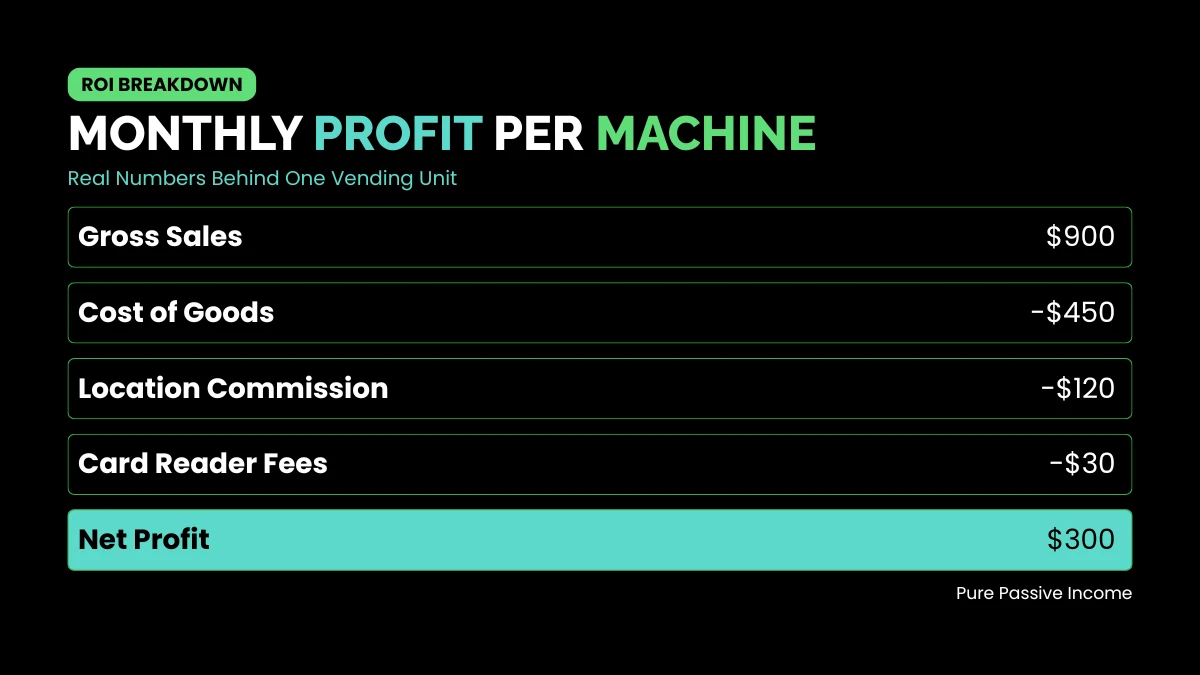
Return on investment in vending depends on three things: location quality, product margin, and your time. A solid placement in a busy office or factory can bring $500 to $1,200 in monthly gross revenue per machine.
Here is a typical breakdown for one healthy machine in a decent spot:
- Monthly gross sales: $900
- Cost of goods sold (around 50%): $450
- Location commission (10 to 20%): $120
- Card reader fees: $30
- Net profit: around $300 per month
Stack five of these machines and you are looking at $1,500 a month in mostly hands-off income. Push to ten machines, and the numbers start looking like a small business salary. The
vending machine investment payback period sits between 12 and 24 months for most beginners. Faster if you negotiate hard on machine prices, slower if you pick a weak location.
Best Locations That Actually Pay
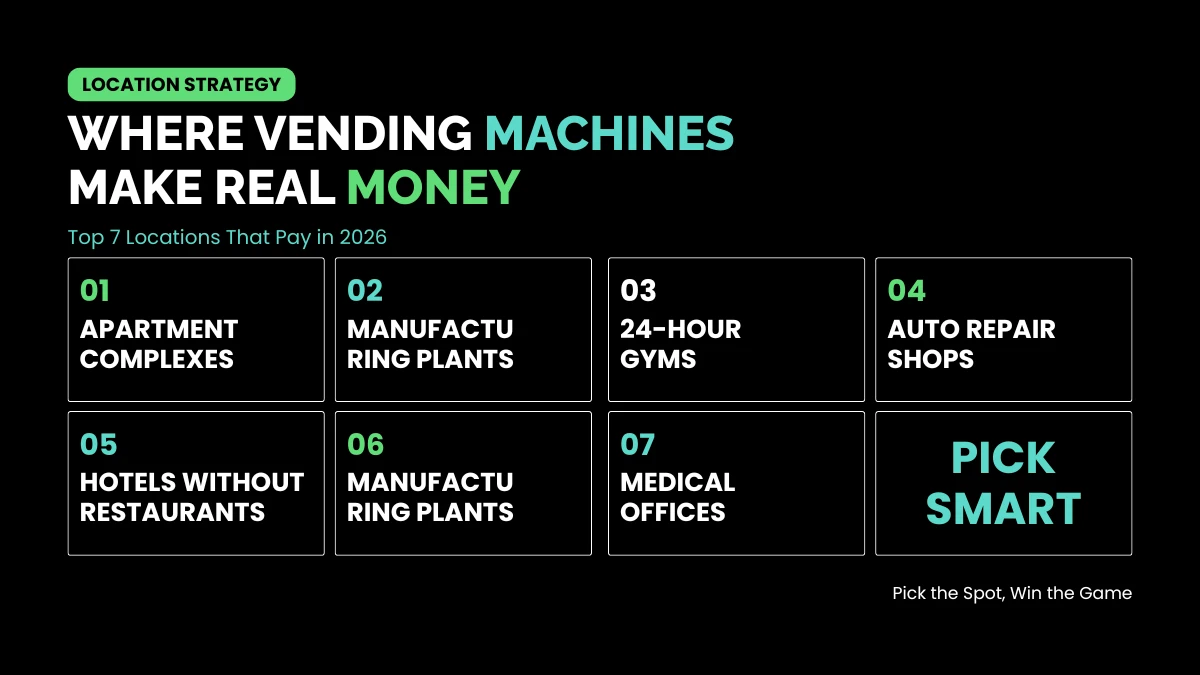
Location is the single biggest factor in your success. A great machine in a dead spot loses money. A basic machine in a busy hallway can print cash for years.
These spots consistently perform well in 2026:
- Apartment complexes with 100+ units
- Manufacturing plants and warehouses
- 24-hour gyms and fitness centers
- Auto repair shops and dealerships
- Hotels without on-site restaurants
- Medical office buildings
- Co-working spaces and tech offices
Avoid schools unless you have approval, and skip locations with existing vending unless yours offers something different. Healthy snacks in a gym beat candy in a gym every single time.
New vs Used Machines: Which One Wins?
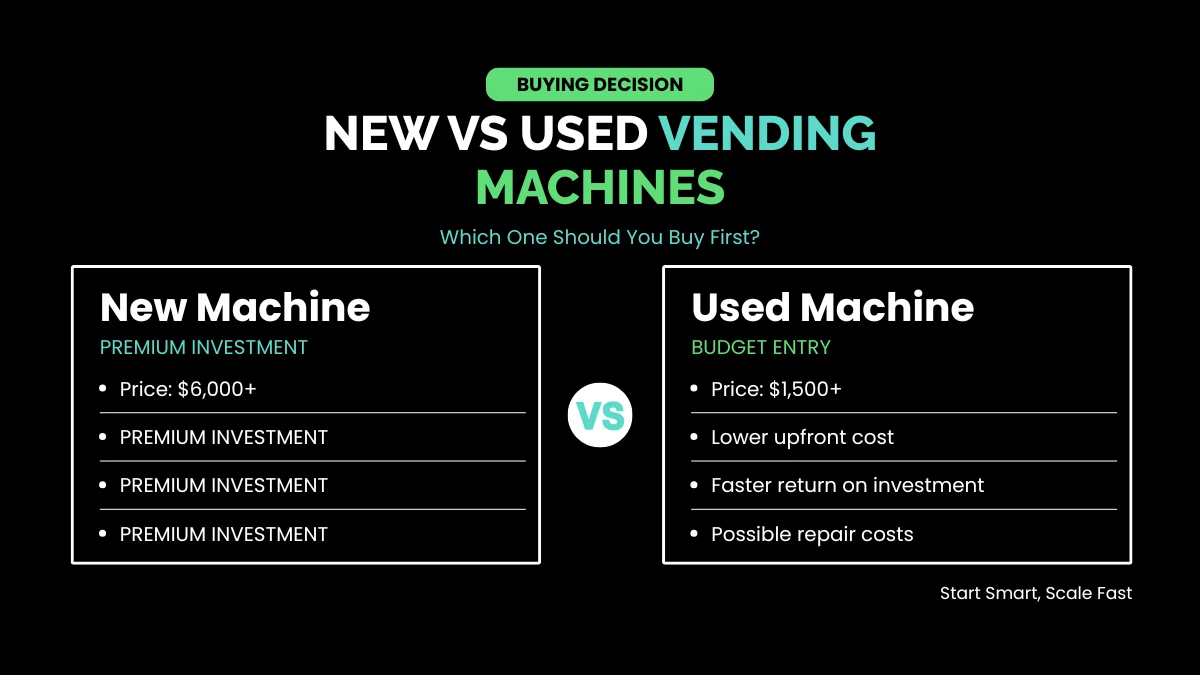
New machines come with warranties, modern card readers, and remote inventory tracking. You pay more, but you skip the headaches. Used machines save cash, but you might face coin jams, refrigeration issues, or outdated payment systems.
For a first-time buyer, a refurbished machine from a reputable supplier hits the sweet spot. You get most of the features at half the price, and you learn the business without burning your savings. After your first machine pays for itself, then you can scale with newer units.
Daily Operations and Time Commitment
Vending is called passive income for a reason, but it is not zero work. Plan to visit each machine once a week for restocking, cash collection, and basic cleaning. Smart machines with remote monitoring cut this down further because you only show up when inventory drops.
Expect about 2 to 4 hours per week for a fleet of three to five machines. Once you cross ten units, hiring a part-time helper makes sense. Many operators stay solo until they reach 15 machines, then bring in support.
Hidden Costs Beginners Miss
Some expenses sneak up on new operators. Knowing them early saves your margins.
- Repairs: $200 to $500 per machine yearly
- Gas and mileage: $50 to $150 monthly
- Spoiled or expired inventory: around 3% of sales
- Business insurance: $300 to $600 annually
- Sales tax permits and LLC fees: $100 to $500 setup
Account for these in your projections. Investors who skip the math often blame the model when the real issue is poor planning.
Smart Tips to Boost Profit Fast
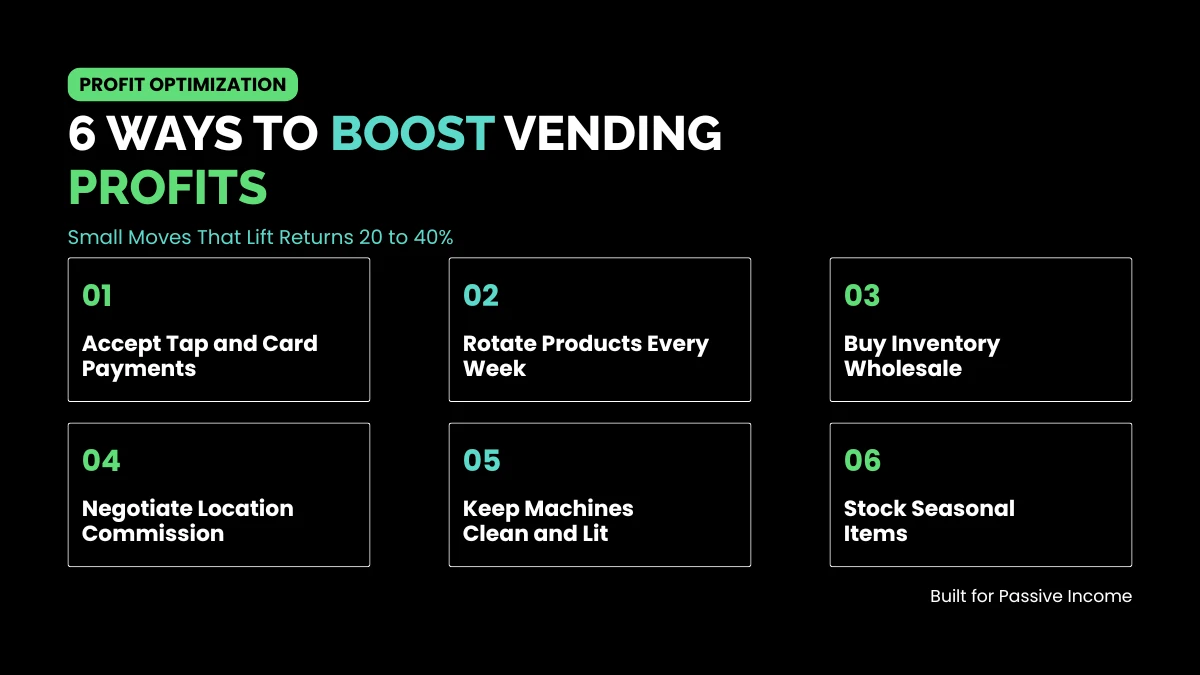
A few small moves can lift your monthly returns by 20 to 40%.
- Always accept card and tap payments
- Rotate products based on weekly data
- Buy inventory from wholesale clubs or restaurant suppliers
- Negotiate location commissions before signing
- Keep machines clean and well-lit
- Add seasonal items like cold drinks in summer and warm snacks in winter
Operators who treat vending like a real business consistently outperform those who treat it like a side hobby. Track every machine separately. Drop the losers, double down on the winners.
Risks You Should Know
No investment is risk-free. Vending has its own quirks. Machines can get vandalized, locations can close, and product trends shift. Some operators lose money because they signed bad location contracts that gave away too much commission.
Theft is another concern in low-traffic outdoor spots. Stick to indoor, supervised locations until you are comfortable. Also, never park all your machines in one building. If that location closes, your income disappears overnight.
Is It Truly Passive Income?
Compared to a 9-to-5 job, yes. Compared to dividend stocks or REITs, not quite. Vending sits in the middle. You handle physical tasks, but the income flows even when you are not actively working. A well-built vending route in 2026 can replace a part-time salary with just 5 to 8 hours of weekly effort.
Some operators eventually sell their routes for 12 to 24 months of annual profit. A route generating $50,000 yearly can sell for $75,000 to $100,000. That makes the business an asset you build, not just a job you work.
Final Thoughts
A vending machine investment rewards people who treat it seriously and stay patient. The path is not glamorous, but it is steady. Pick smart locations, watch your numbers, and reinvest profits into more machines. Most operators who quit do so within the first six months because they expected overnight returns. Those who stick around build real passive income that lasts for years.
For more insights on smart side hustles, passive income models, and investment strategies that actually work in 2026, visit WeirdWealth, your trusted source for unconventional wealth-building ideas.
Frequently Asked Questions
How much money do I need to start a vending machine business?
Most beginners start with $2,500 to $5,000 for one machine, inventory, and basic setup. Used machines and self-stocking lower the entry cost significantly.
How long does it take to recover my vending machine investment?
A vending machine investment usually pays back within 12 to 24 months. Strong locations and healthy product margins shorten this window. Weak placements stretch it past 30 months.
Do I need a business license for vending machines?
Yes, in most US states. You will need a general business license, a sales tax permit, and sometimes a vending-specific permit. Costs range from $50 to $500 depending on your state.
What products sell best in vending machines today?
Energy drinks, protein bars, healthy snacks, bottled water, and cold brew coffee perform well in 2026. Sugar-heavy items still sell, but margins are tighter and demand keeps shrinking.
Can vending machines really replace a full-time income?
With 15 to 25 well-placed machines, many operators clear $4,000 to $8,000 in monthly net profit. Scaling that far takes 2 to 4 years of steady work, but it is realistic for committed investors.