
Every job listing wants experience. That’s genuinely the most frustrating part about trying to build a career from home when you’re starting from zero. But remote jobs for people with no experience do exist; they’re just not always obvious. You mostly need to figure out which roles are actually beginner-friendly, what employers are really checking for, and how to spot the offers that sound too good to be true before you waste a week chasing one.
For beginners, remote work usually has less to do with an impressive resume and more to do with proving something simpler. Can you communicate clearly? Can you follow instructions? Can you manage your own time without someone checking in every hour? Can you actually finish what you started? Entry-level remote work shows up in customer service, admin support, sales, content, and a handful of other places too.
This guide from WeirdWealth walks through realistic options, the skills actually worth having as a beginner, some practical application tips, and the warning signs you need before accepting any remote offer.
Key Takeaways
- Worth targeting as a beginner: customer service, virtual assistance, data entry, chat support, content writing, sales, tutoring.
- “No experience” doesn’t mean “no skills.” Communication, organization, basic computer knowledge, reliability- none of that stops mattering.
- A small portfolio makes you look a lot more prepared than you probably actually feel.
- Search for specific job titles instead of typing something broad and generic.
- Look into unfamiliar employers before you hand over any personal info.
- Never, ever pay an employer just to get hired.
- Get suspicious of unexpected messages promising fast, easy money.
- Never deposit a check and send part of it back to someone, no matter what they say.
- Pick one useful skill and get good at it, instead of trying to be qualified for everything at once.
What Actually Counts as a No-Experience Remote Job?
These are remote roles where the employer isn’t asking for previous professional experience in that exact job. You’ll still probably need basic computer skills, decent communication, reliability, and honestly, just a real willingness to learn something new on the fly.
That doesn’t mean skills don’t matter, though. Employers still expect clear emails, basic software knowledge, actually showing up for video calls, and organizing your own workload without someone walking you through every step.
Here’s the good news: if you actually stop and think about it. A lot of everyday stuff quietly translates into workplace skills. Ever managed a school project? Helped a customer figure something out? Organized documents, used spreadsheets, written social media posts, talked to people online on a regular basis? You’ve probably already got something worth putting on a resume, whether you realized it or not.
7 Work From Home Jobs You Can Start Without Experience

1. Customer Service Representative
Probably the most recognizable entry point into remote work. Answering questions over the phone, email, or chat. Helping people sort out account or product issues.
Employers want patience, clear communication, problem-solving, and someone who actually shows up. Training’s usually provided after you’re hired, though that varies company to company. Comfortable talking to people, even the frustrated ones? This could genuinely be a solid place to start.
2. Virtual Assistant
Helps with everyday admin work, remotely. Depending on the employer, that’s calendars, emails, documents, research, or other basic online tasks.
You don’t need years of office experience here. Being organized and comfortable with email, Google Workspace, Microsoft Office, or spreadsheets is usually enough to strengthen an application.
Good move as a beginner: put together a simple sample showing how you’d organize a calendar or a task list. Something real an employer can actually look at.
3. Data Entry
Sounds simple. Accuracy actually matters a lot, though. Typical work involves entering info into spreadsheets, databases, or company systems.
The problem is, data entry attracts scammers constantly, mostly because people assume it’s easy money. A real employer explains the company, the actual role, your responsibilities, and the hiring process clearly, no vague hand-waving.
A polished-looking job ad with a nice logo means nothing on its own. Don’t assume legitimacy just because something looks professional.
4. Online Chat Support
Good option if typing beats talking on the phone for you. Answering questions, basic troubleshooting, routing people to the right department.
Written communication matters more here than formal experience does. Before applying, practice writing short, polite responses that actually solve the problem without sounding like a script being read aloud.
5. Content Writing
Genuinely accessible if you already enjoy writing. Entry-level work covers blog posts, product descriptions, website copy, social content, simple articles.
A small portfolio beats just claiming you’re a good writer. Put together two or three original samples on different topics, present them cleanly somewhere online. Gives an employer something real to judge, instead of just your word for it.
6. Sales Development or Appointment Setting
Some remote sales roles are about contacting potential customers, qualifying leads, answering initial questions, or booking appointments someone else closes later.
Previous sales experience isn’t always required. Confidence, communication, persistence, and following a script matter more.
Pay structures vary a lot in sales though. Read the job description carefully. Fixed salary? Commission? Some mix? Know that before you accept anything.
7. Online Tutoring
Genuinely strong in a subject, a language, some software? Worth looking into tutoring. Requirements shift depending on subject and platform. Some want formal qualifications, others just care whether you actually know the material and can explain it.
Skip trying to teach everything. Start with one subject you know well, build out from there once you’ve got footing.
What Skills Do You Actually Need for a First Remote Job?
You don’t need to know everything walking in. Just a decent foundation and a real willingness to learn on the job.
Basic Computer Skills
Most remote work needs you to be comfortable with a computer, period. Managing files, using email, browsing, downloading and uploading documents, basic office software- nothing fancy but nothing you can skip either.
Communication
Can’t walk over to someone’s desk remotely. Clear communication matters more when everything’s happening through email, chat, or video.
Practice explaining problems clearly. Practice responding like an actual professional, not a text to a friend.
Time Management
Working from home means real flexibility, sure, but it demands real discipline too. Employers need people who finish work without constant reminders chasing them down.
A simple daily task list or basic time-blocking helps more than people expect.
Reliability
For a beginner, this might be your best card to play. Show up on time. Hit deadlines. Follow instructions. Respond when someone actually needs you. That compensates for missing experience more than you’d think.
How to Actually Land a Remote Job Without Experience

Build a Resume Around Real Skills
Don’t leave it nearly blank just because you’ve never technically had a remote job. Highlight transferable stuff instead. School projects, volunteer work, freelance gigs, personal projects, internships, relevant coursework, all of it counts for something.
Applying for admin work? Highlight organization, spreadsheet skills, scheduling, research, document management, even if none of that came from an actual paycheck.
Create a Small Portfolio
Doesn’t need to be polished or complicated. Beginner writer: put together a few sample articles. Into design, show some original work. Aspiring virtual assistant, demonstrate a sample spreadsheet or organizational system you built yourself.
The point is simple. Show what you can actually do, not what you claim you can do.
Search With Specific Job Titles
Just searching “work from home jobs” buries you under an overwhelming pile of results, most of it useless.
Get specific instead. “Remote customer service representative.” “Entry-level virtual assistant.” “Remote chat support.” “Junior content writer.” “Remote appointment setter.”
Specific titles make comparing responsibilities and requirements a lot easier.
Research the Employer First
Visit their actual website before applying. Check whether the position seems real. Look at business info, careers page, job description, contact details. Recruiter reaches out unexpectedly? Verify the company yourself before sharing anything sensitive.
The FTC actually recommends this exact move: researching the company or recruiter, searching terms like “scam,” “review,” or “complaint” alongside their name before trusting anything.
How to Spot a Fake Work From Home Job
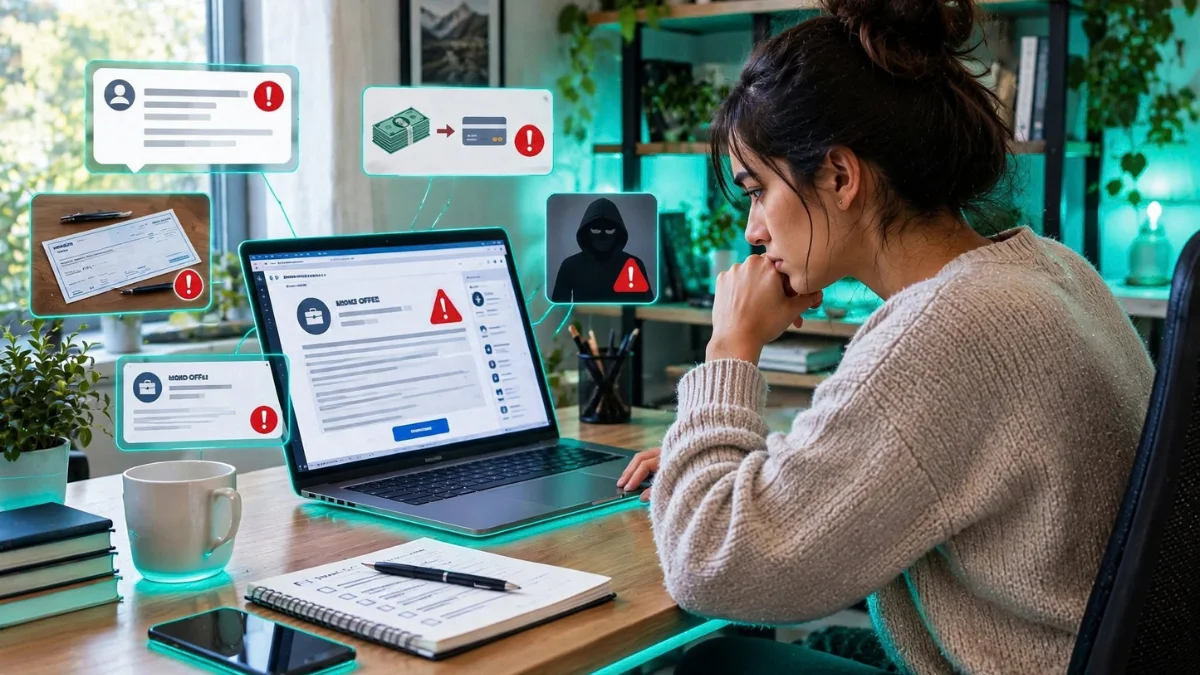
Plenty of real opportunities exist in remote work. Plenty of scammers too, unfortunately.
Get suspicious fast if an offer promises unusually high pay for barely any work. The FTC’s been direct about this, fake work from home offers often exist to steal money or personal info, not to actually employ anyone.
Never Pay to Get Hired
A company asking for an upfront fee should set off alarms immediately, no exceptions here.
Might get dressed up as a registration fee, mandatory training cost, equipment charge, certification fee, starter package, whatever. Legitimate employers don’t charge you to receive a job. That’s just not how real hiring works, ever.
Be Careful With Unexpected Job Messages
Recent FTC warnings flagged fake recruiters texting people out of nowhere, offering remote positions or online tasks. Some of these eventually push victims to deposit money or use their own funds somehow.
Random WhatsApp, Telegram, text, or social media message promising quick remote income? Treat it with real suspicion before engaging at all.
Never Deposit a Check and Send Money Back
About as clear a red flag as it gets. Scammer sends a fake check, tells you to buy equipment, transfer part of it, or send gift cards. Bank later figures out the check’s fraudulent. You’re stuck covering whatever you already spent or transferred. Every time.
What Beginners Should Actually Look For
A trustworthy job search guide needs real experience, expertise, authority, and honesty behind it, because readers here are making decisions that affect their income and personal information directly.
Google says E-E-A-T helps its systems spot content showing genuinely useful qualities, trust being especially important in that mix. Clear authorship, reliable sourcing, accurate info, content built to actually help people rather than game rankings- that’s the standard.
For job seekers, honestly, it works the same way in reverse. Trust an employer only after checking the evidence yourself. A professional-looking post alone proves nothing.
FAQs
Can I really get a work-from-home job with no experience?
Yes. Some employers offer entry-level remote roles where previous experience in that exact job isn’t required. You’ll still usually need basic skills though: communication, computer literacy, reliability, and the ability to pick things up fast.
What’s the easiest work from home job to start with?
No single easiest option for everyone, honestly. Customer support, chat support, virtual assistance, data entry, some content roles, all can work depending on your skills and what the employer actually wants.
Do work from home jobs require a degree?
Not always. Depends entirely on the position. A lot of entry-level work focuses on practical skills and communication. More specialized roles might need education, certifications, or actual experience.
How can I actually get a remote job without experience?
Pick one type of work. Build a resume around transferable skills. Put together a few relevant samples. Apply to specific entry-level roles. A targeted application beats blasting the same generic resume everywhere, every time.
How do I know if a work-from-home job is a scam?
Be cautious if the employer’s promising unusually high income for barely any effort, pressuring you to act right now, asking for money upfront, wanting sensitive info way too early in the process, or sending you a check and asking you to send part of it back. All of these are warning signs the FTC’s flagged again and again.
Can I start a remote career with skills I taught myself?
Absolutely. Self-taught skills become genuinely valuable once you can actually demonstrate them. A few strong samples, a clear resume, proof you can finish real tasks, that tells an employer a lot more than a vague list of skills ever could.
Finding your first remote job takes patience. That’s just true. But it gets a lot easier once you stop chasing some perfect “no experience required” listing and start actually showing employers what you can already do. WeirdWealth’s advice here is simple: treat remote work as a career-building process. Pick one practical skill. Build real proof you have it. Apply carefully. Verify every single employer before handing over money or sensitive information to anyone.