
Key Takeways
- $26/hour equals about $54,080 annual gross income (based on 40 hours/week).
- Monthly income averages around $4,507 before taxes and deductions.
- Biweekly pay is approximately $2,080 per paycheck (26 pay periods/year).
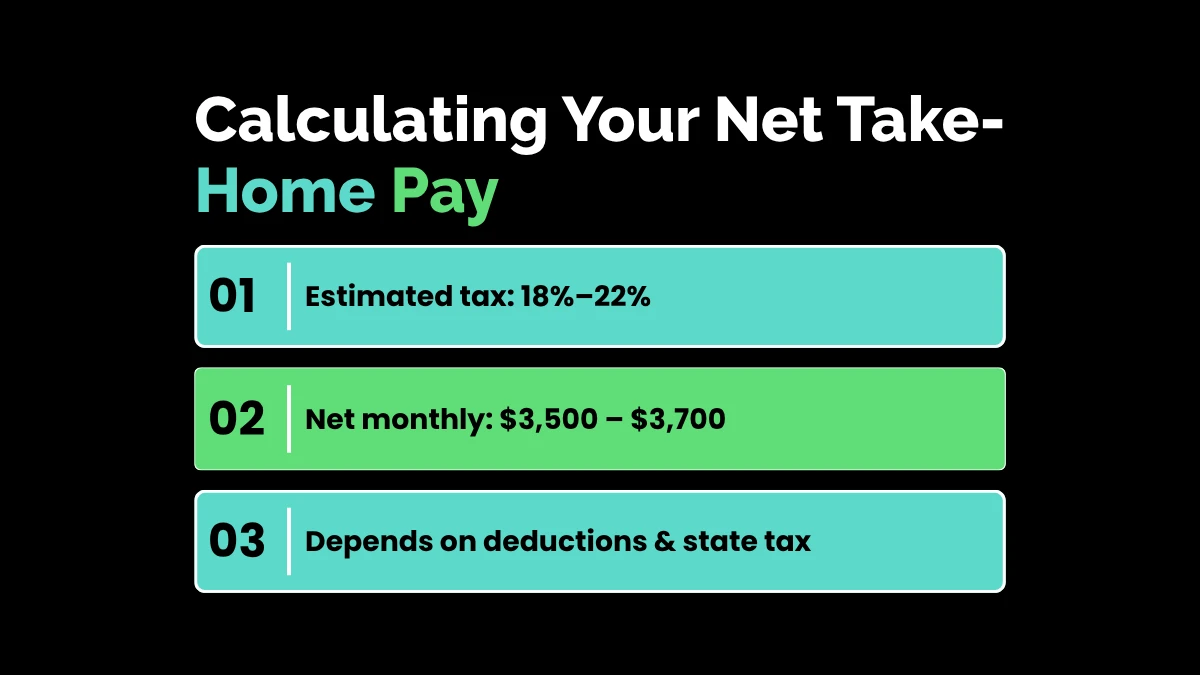
- Estimated take-home pay is about $3,500–$3,700 per month after taxes.
- Overtime, bonuses, and benefits can significantly increase total yearly earnings.
If you are currently negotiating a new job offer or evaluating your current compensation, understanding exactly what your hourly rate means for your annual finances is a critical step.
Many workers find themselves asking, 26 a year is how much an hour? While the phrasing often gets flipped in conversation, the math remains consistent: working a standard full-time schedule at $26 per hour results in a gross annual income of $54,080.
Knowing this baseline is the foundation of effective personal finance. However, your gross salary is not the amount that hits your bank account. Taxes, benefit deductions, and pay frequency all play a massive role in your actual lifestyle.
At Weird Wealth, we believe that financial freedom starts with radical transparency regarding your cash flow. This guide provides a comprehensive 26 dollars per hour annual income breakdown for the 2026 fiscal year, helping you plan your budget with confidence.
AI Overview
$26/hour equals about $54,080/year (40 hrs/week), ~$4,507 monthly, and ~$2,080 biweekly before taxes. After deductions (≈18–22%), take-home pay is around $3,500–$3,700 per month. Overtime, bonuses, and benefits can increase earnings. Budgeting with the 50/30/20 rule helps manage essentials, lifestyle spending, and savings for long-term financial stability.
The Standard Full-Time Salary Calculation
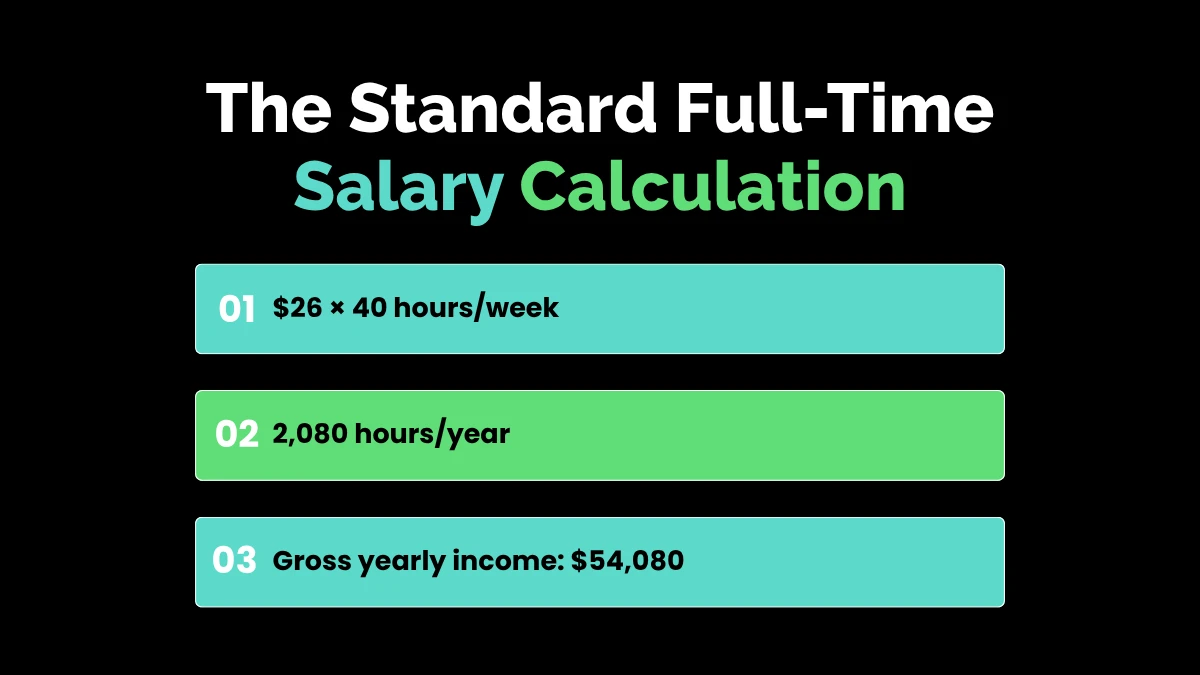
To determine your total earnings, financial experts use the standard model of 40 hours per week for 52 weeks. This standardizes the 26 hour to yearly conversion regardless of company-specific pay cycles. By multiplying your hourly rate by the standard 2,080 working hours in a year, you reach your gross annual compensation.
The math is straightforward:
- Hourly Rate: $26.00
- Weekly Earnings: $26 × 40 hours = $1,040
- Annual Salary: $1,040 × 52 weeks = $54,080
This $54,080 figure represents your “headline” salary, the number you see on your offer letter before any government withholdings or voluntary deductions. If your employer provides paid vacation time, this total holds steady. If you work in a role without paid leave, your actual take-home pay will fluctuate based on the specific number of days you clock in during the year.
Comprehensive Paycheck Breakdown
Viewing your income on an annual basis is helpful for long-term planning, but it is rarely useful for day-to-day budgeting. To manage your expenses effectively, you need to see your 26 an hour salary breakdown across different time intervals.
26 an Hour Monthly Pay
Your gross 26 an hour monthly pay averages to approximately $4,506.67. A common error people make is dividing their annual salary by four weeks, which ignores the extra days in a month.
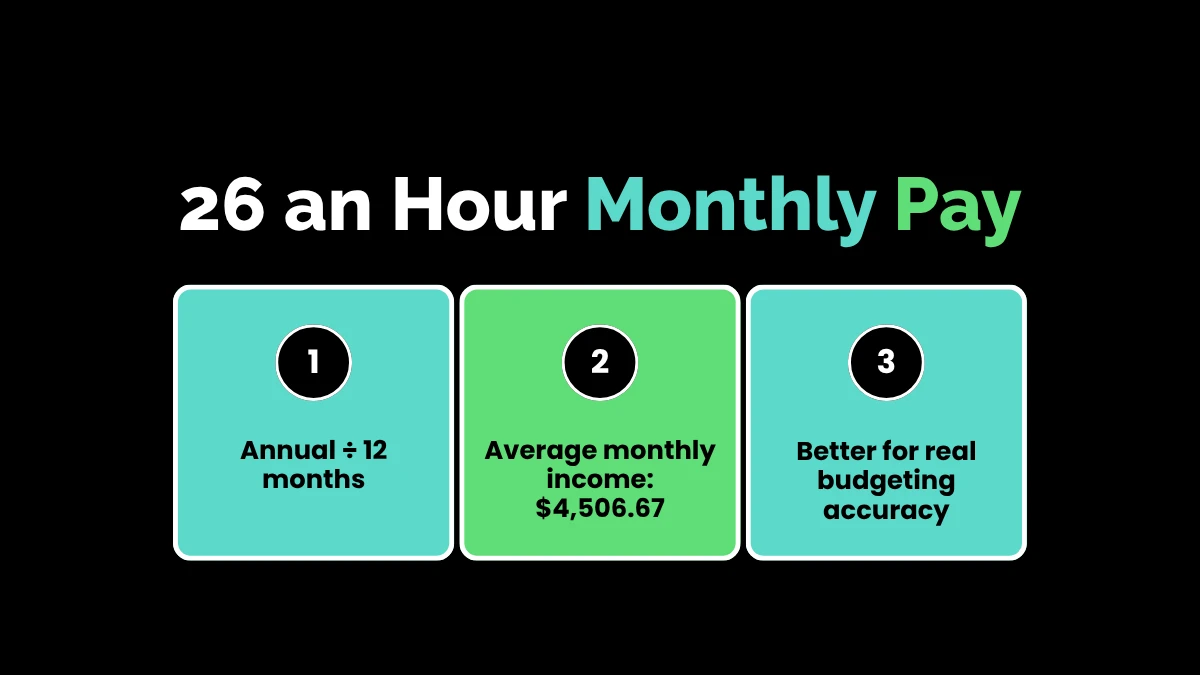
By dividing your gross annual income of $54,080 by 12 months, you get a much more accurate figure that accounts for the fact that most months contain slightly more than four weeks.
Biweekly and Weekly Cycles
Most employers in the United States operate on a biweekly pay schedule, issuing 26 checks per year. On this system, your gross biweekly income is $2,080. Because there are 52 weeks in a year, you will experience two months where you receive three paychecks instead of two.
Savvy earners at Weirdwealth often refer to these “third-paycheck months” as an automatic opportunity to boost their emergency fund or make a lump-sum debt payment.
| Pay Frequency | Gross Income Calculation | Total Amount |
| Hourly | Base Rate | $26.00 |
| Daily (8 Hours) | $26.00 × 8 | $208.00 |
| Weekly | $208.00 × 5 | $1,040.00 |
| Biweekly | $1,040.00 × 2 | $2,080.00 |
| Monthly | $54,080 ÷ 12 | $4,506.67 |
| Annual | $1,040.00 × 52 | $54,080.00 |
Calculating Your Net Take-Home Pay
The most important number for your budget is not the gross figure, but the 26 per hour take home pay. After the government and benefit providers take their share, your actual spending power will be significantly lower than $54,080.
For a single filer in 2026, standard payroll deductions typically include:
- Federal Income Tax: Based on progressive tax brackets, your taxable income after the standard deduction will largely fall into the 10% and 12% brackets.
- FICA Taxes: A mandatory 7.65% is withheld for Social Security (6.2%) and Medicare (1.45%).
- State and Local Taxes: Depending on your state, you may pay an additional 0% to 9% in income tax.
- Benefits: Health insurance premiums, 401(k) contributions, and HSA deposits are deducted before you receive your check.
Assuming a combined tax burden of roughly 18% to 22%, which is standard for this income leve, your estimated net take-home pay typically ranges between $3,500 and $3,700 per month.
Always check your specific pay stub to see exactly what is being withheld, as these figures are estimates based on available data for an average single taxpayer.
Factors That Influence Your Annual Income
While an hourly to annual calculator provides a clean number, real-world employment is rarely static. Your actual yearly intake may vary based on how your company handles the following variables.
Overtime and Premium Pay
If your position is non-exempt, you are entitled to overtime pay for any hours worked beyond 40 in a single workweek. By federal law, this is calculated at “time-and-a-half.” At a base rate of $26, your overtime rate is $39 per hour.
Picking up just a few extra hours a month can drastically change your annual earnings. For example, working an extra five hours of overtime each week adds roughly $10,140 to your gross annual income over a year.
Performance Bonuses and Commissions
Many roles offer variable compensation that isn’t captured by a base hourly rate. If your company offers quarterly bonuses or sales commissions, your 26 hourly rate annual salary should be viewed as a floor, not a ceiling.
When calculating your total compensation, always include these “at-risk” earnings separately from your guaranteed hourly wages to ensure your budget remains sustainable even during slower financial periods.
Smart Budgeting for a $54k Salary
Earning $54,080 per year places you in a solid position to maintain a comfortable standard of living if you manage your fixed costs carefully. To build long-term wealth, we recommend following the 50/30/20 rule using your net monthly income of roughly $3,600.
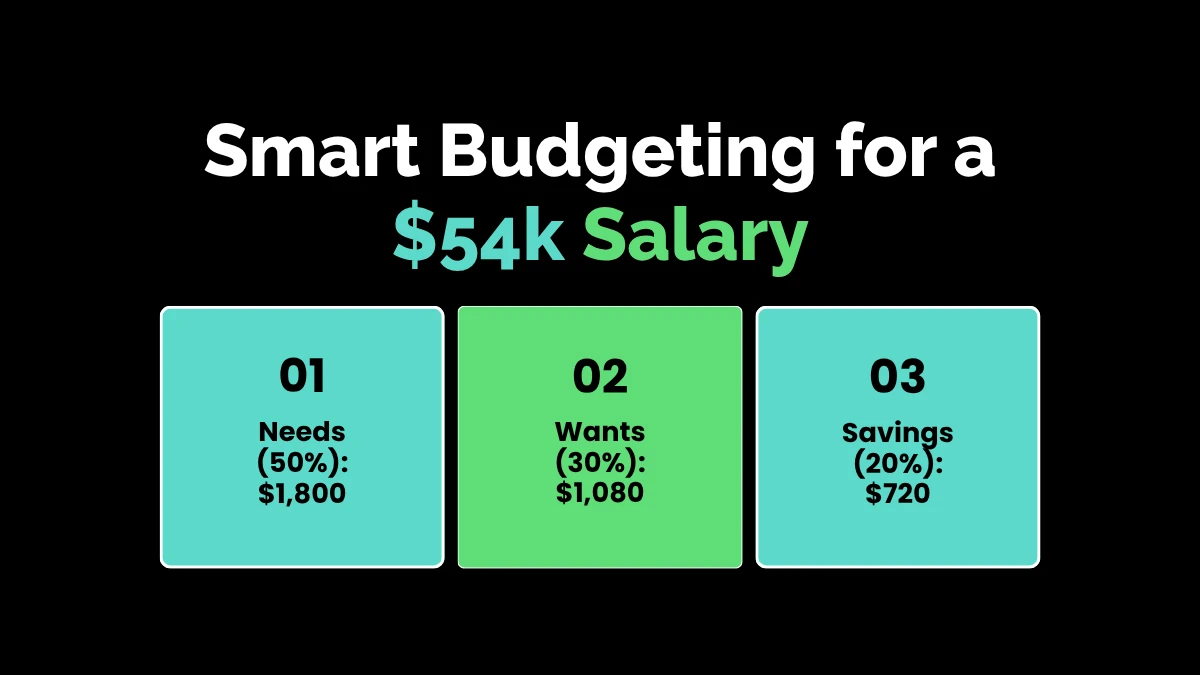
- Essential Expenses (50% – $1,800): This covers your “needs,” including rent or mortgage payments, groceries, utilities, transportation costs, and basic insurance. Keeping this category at or below 50% provides the necessary margin to survive unexpected life events without going into debt.
- Lifestyle Choices (30% – $1,080): This covers your “wants,” such as dining out, streaming subscriptions, hobbies, and travel. By capping this at 30%, you ensure that you are enjoying your current life without sacrificing your ability to save for the future.
- Wealth Building (20% – $720): This is your foundation. Use these funds to pay off high-interest debt, contribute to a Roth IRA, or build a six-month emergency fund. Automating this 20% slice of your income is the most effective wealth-building habit you can develop.
Conclusion
When people ask, “26 a year is how much an hour,” they are really looking for clarity on their financial power. At a gross annual salary of $54,080, you have a stable foundation for a comfortable lifestyle. However, by understanding your 26 per hour take-home pay, typically around $3,500 to $3,700 per month, you gain the ability to make smarter decisions about housing, saving, and investing.
Remember that your income is a tool. Whether you are using an hourly to annual calculator to negotiate a raise or simply trying to balance your monthly budget, the goal at Weird Wealth, is always the same: to help you make every dollar work harder for your future.
Frequently Asked Questions
What is the annual salary for $26 an hour working full-time?
Working 40 hours per week for 52 weeks results in 2,080 total work hours. Multiplying this by $26 yields a gross 26 dollars per hour annual income of $54,080.
How much do I make monthly if I earn $26 an hour?
Your gross 26 an hour monthly pay is approximately $4,507. This is calculated by taking your annual salary ($54,080) and dividing it by 12 months, which provides a more accurate average than multiplying by four weeks.
Is $54,000 a year a good salary?
Whether this is a “good” salary depends heavily on your cost of living and location. In many parts of the U.S., this income comfortably covers basic needs and allows for consistent saving if fixed expenses like housing are kept moderate.
How do I calculate my net pay from my hourly rate?
To find your net pay, start with your gross weekly check ($1,040) and subtract your estimated federal, state, and FICA tax withholdings, plus any voluntary deductions for benefits like 401(k) or health insurance.
Does the 26 an hour salary breakdown include overtime?
No, the standard calculation assumes a strict 40-hour work week. Any overtime hours worked are paid at 1.5x your hourly rate ($39/hr) and are considered additional income on top of your base annual salary.