

Key Takeaways
-
Automatic property transfer to surviving owners
-
Bypasses costly and lengthy probate court
-
Requires equal ownership shares among all parties
-
Differs completely from tenancy in common
Buying a home or investing in real estate with someone else is a massive milestone. But have you ever paused to think about what happens to the property if one owner passes away? It sounds a bit gloomy, but understanding legal ownership structures can save your loved ones a massive headache down the road.
If you are looking for a seamless way to pass property to a co-owner, you need to understand joint tenants with right of survivorship. In simple terms, this is a legal arrangement where two or more people own a property together with equal shares. The defining feature is that when one owner dies, their share automatically transfers to the surviving owners, bypassing probate court entirely.
At Weird Wealth, we love breaking down complex financial concepts into everyday language so you can build secure, unconventional wealth. Let’s dive into exactly how this ownership style works and whether it is right for you.
AI Overview
Choosing joint tenants with right of survivorship means co-owners share equal property rights. The core feature is survivorship rights property, which ensures that if one owner passes away, their share automatically transfers to the remaining owners. This setup bypasses probate court entirely, making it a popular choice for couples and family members seeking a smooth, hassle-free property transfer.
What Does JTWROS Meaning Actually Balance Out To?
When you see the acronym JTWROS on a property deed, it stands for Joint Tenancy with Right of Survivorship. But what is the actual jtwros meaning in daily life? It means you and your co-owner are legally viewed as a single entity owning the whole property.
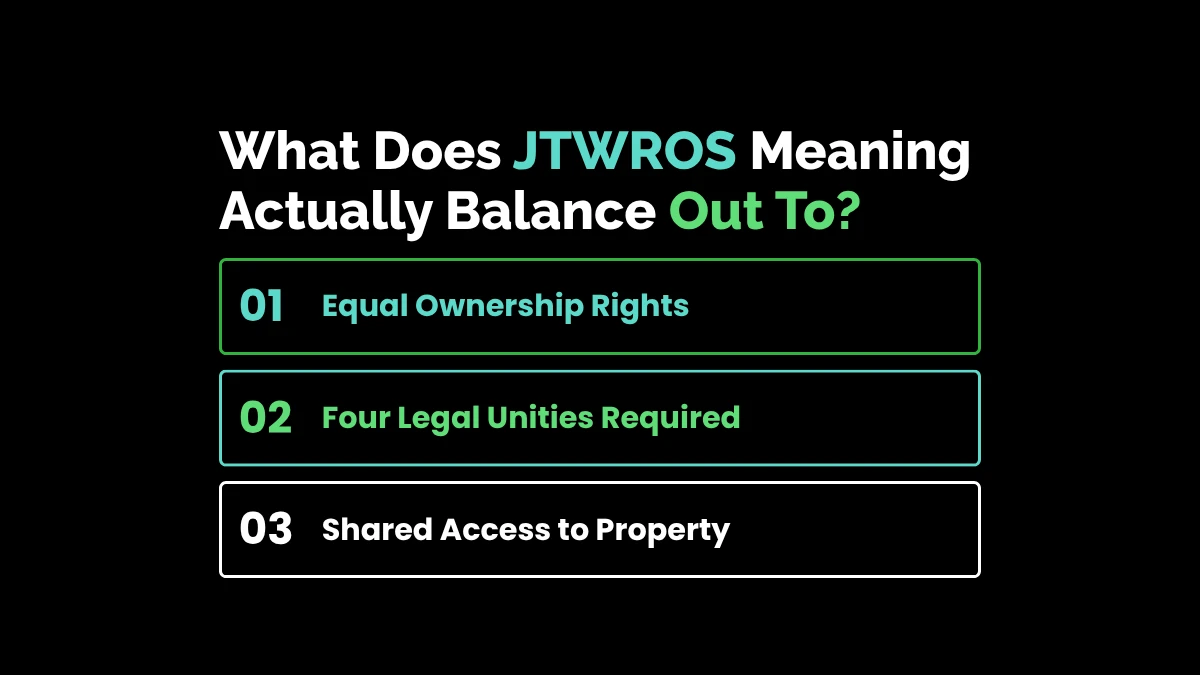
Generally, this structure requires four strict legal conditions to be met at the time of purchase. Legal experts call these the “four unities.”
-
Time: All owners must acquire their interest in the property at the exact same time.
-
Title: All owners must gain their title through the same legal document or deed.
-
Interest: Every single person must hold an equal financial stake in the asset.
-
Possession: All owners have an undivided right to possess and enjoy the entire property.
Because of these rules, you cannot have a JTWROS agreement where you own 70% and your partner owns 30%. It must be a clean, equal split. If there are two of you, it is 50/50. If there are three, everyone owns exactly one-third.
This equal split creates a powerful legal bond. At Weird Wealth, we often see people choose this option because it offers immense peace of mind. You know that no matter what happens, the property remains secure with the surviving partner.
Joint Tenancy vs Tenancy in Common: The Big Showdown
When sharing a deed, people often confuse their options. The most common debate is joint tenancy vs tenancy in common. While they sound similar, they operate very differently when it comes to everyday control and inheritance.
With a tenancy in common, owners can have unequal shares. For example, you could own 80% of a vacation home while your friend owns 20%. More importantly, there are no survivorship rights. If you pass away, your share goes to whoever is named in your will, not automatically to your co-owner.
Let’s look at a quick comparison table to see how these two options stack up against each other in most cases:
| Feature | Joint Tenants with Right of Survivorship | Tenancy in Common |
| Ownership Shares | Must be perfectly equal (e.g., 50/50) | Can be unequal (e.g., 70/30 or 60/40) |
| Probate Process | Bypasses probate completely | Must go through probate court |
| Selling Your Share | Breaks the joint tenancy into a tenancy in common | Can sell or transfer independently anytime |
| Inheritance | Automatically goes to surviving owners | Goes to heirs designated in a will |
As you can see, the joint tenancy vs tenancy in common debate really comes down to how much control you want over the future of your share. If you want your co-owner to get the property immediately without court intervention, JTWROS is usually the way to go.
How Survivorship Rights Property Works in Real Life
To truly understand how survivorship rights property functions, let’s look at a simple everyday scenario. Imagine two close siblings, Sarah and Mike, buy a rental property together as joint tenants with right of survivorship. They each own a 50% share of the building.
A few years later, Mike tragically passes away. Because their deed specified survivorship rights property, Sarah instantly becomes the 100% sole owner of the rental property. Mike’s will cannot change this outcome. Even if Mike wrote a will leaving all his worldly possessions to his best friend, the JTWROS deed overrides the will.
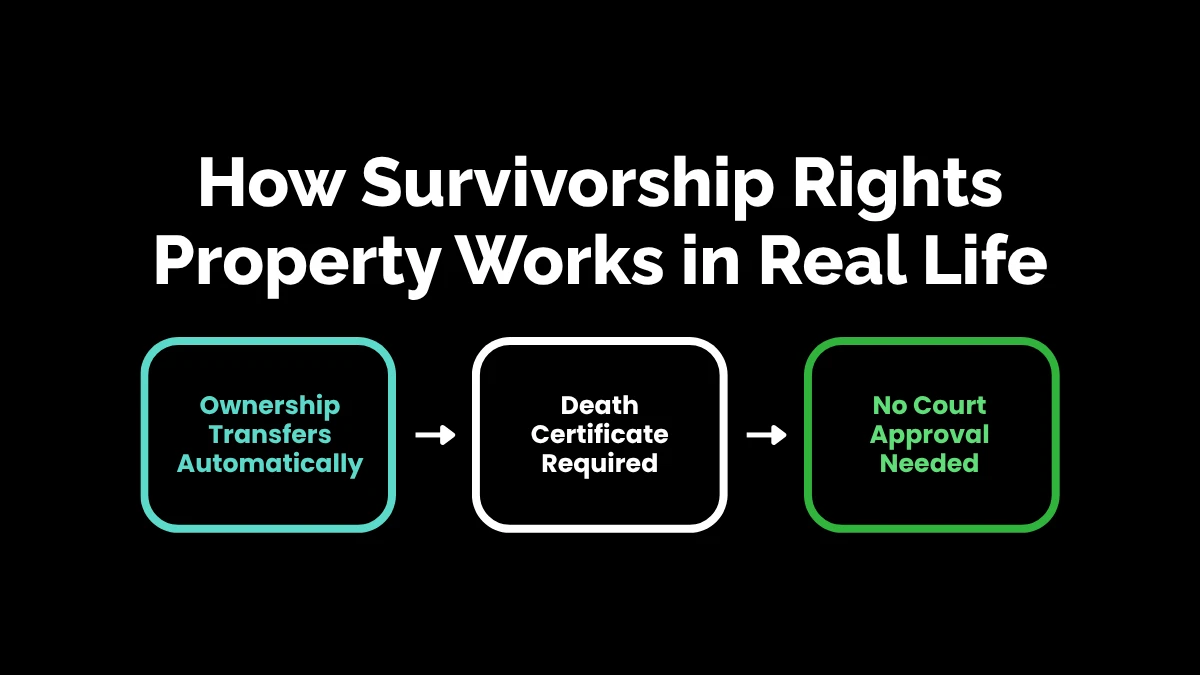
Sarah does not need to wait for a judge to sign off on the transfer. She simply needs to file a certified copy of Mike’s death certificate and an affidavit of survivorship with the local land records office. In most cases, this updates the public record, and the property is officially hers.
This automatic transfer is the primary reason couples choose this structure. It keeps the surviving partner from dealing with courts during an already stressful time of grief.
The Bright Side: Advantages of JTWROS
There are plenty of reasons why people flock to this ownership type. It simplifies estate planning dramatically. Here are the biggest benefits you can expect:
-
Avoids Probate: This is the massive selling point. Probate can take months and cost thousands in legal fees. JTWROS cuts through that red tape instantly.
-
Equal Responsibility: Both parties are equally responsible for mortgage payments, taxes, and maintenance, keeping things fair.
-
Clear Intentions: There is no guessing game about who gets the asset next, reducing family arguments.
The Risks You Need to Keep in Mind
While the benefits are great, it is not all sunshine and rainbows. Entering a JTWROS agreement is a major commitment that carries real financial risks.
First, you lose total control over who inherits your share. If you want your children from a previous marriage to inherit your half of the house, this structure will prevent that. The surviving co-owner gets everything, and they can do whatever they want with it.

Second, you are tied to the other person’s financial health. Based on available data, if your co-owner faces a lawsuit or files for bankruptcy, creditors can place a lien on the property. Your home could potentially be sold to pay off their debts, even though you did absolutely nothing wrong.
Finally, selling the property requires total cooperation. You cannot sell the entire home without your partner’s signature. If you disagree on when to sell, you might end up in a costly legal battle to force a partition sale.
Breaking a Joint Tenancy: Is It Possible?
What happens if a relationship sours and you want out? The good news is that you are not permanently trapped. Any owner can break, or “sever,” a joint tenancy at any time without the other person’s permission.
To do this, you simply sell or transfer your interest to another party, or even to yourself as a tenant in common. Once you do this, the jtwros meaning vanishes for your share. The ownership structure automatically converts into a tenancy in common.
If Sarah decides she wants to leave her half of the property to her children instead of Mike, she can execute a new deed transferring her share to herself as a tenant in common. Mike’s permission is not required for this change. However, once the joint tenancy is broken, the automatic survivorship rights disappear for good.
Is JTWROS Right for Your Financial Journey?
Deciding on your property deed structure requires looking at your long-term wealth goals. If you are married or in a deeply committed life partnership, using joint tenants with right of survivorship offers an incredible safety net. It keeps your primary asset out of the legal system and ensures your partner is taken care of.
However, if you are buying an investment property with business partners or friends, a tenancy in common might be the safer bet. It allows everyone to protect their individual heirs and maintain flexibility over their financial stakes.

We always recommend chatting with an estate attorney or a trusted financial advisor before signing on the dotted line. Property law varies by state, and a professional can ensure your deed aligns perfectly with your overall estate plan.
Building wealth is all about making smart, informed decisions today that protect your tomorrow. Take your time, weigh the pros and cons, and choose the path that gives you the ultimate peace of mind.
Frequently Asked Questions
What is the true jtwros meaning in estate planning?
In estate planning, the jtwros meaning refers to a strategy used to bypass probate court. It creates an automatic inheritance mechanism between co-owners. Because the property transfers immediately upon death, it never becomes part of the deceased person’s probate estate, saving time and money for the survivor.
How does joint tenancy vs tenancy in common affect taxes?
When looking at joint tenancy vs tenancy in common, tax impacts can vary. In a joint tenancy, the surviving owner generally receives a stepped-up tax basis on the inherited portion of the property, which can lower future capital gains taxes. With tenancy in common, the basis step-up applies directly to the specific share passed down through a will.
Can creditors seize a survivorship rights property?
Yes, creditors can target a survivorship rights property if one of the owners owes money. If a creditor wins a judgment against your co-owner, they may place a lien on the property or force a sale to collect the debt, putting your ownership stake at serious risk.
Does a will override joint tenants with right of survivorship?
No, a will does not override joint tenants with right of survivorship. Property law dictates that the right of survivorship takes legal precedence over instructions left in a will. Even if an owner explicitly leaves their share to someone else in a will, the surviving co-owner will automatically inherit it.