Introduction
Not long ago, camping meant sleeping bags, uncomfortable tents, and sacrificing comfort in exchange for outdoor adventure.
That version of travel is rapidly disappearing.
A new segment of hospitality known as glamping has quietly evolved into one of the fastest-growing business opportunities in the travel industry. Combining luxury accommodations with outdoor experiences, the glamping economy has transformed traditional camping into a premium, high-margin business attracting both travelers and investors.
What began as a niche travel trend has now become a multi-billion-dollar global industry.
And for entrepreneurs paying attention, it represents something even more interesting.
A surprisingly profitable business model most people still underestimate.
What Is the Glamping Economy?
The glamping economy refers to the business ecosystem built around luxury outdoor accommodations that combine nature-focused experiences with hotel-like comfort.
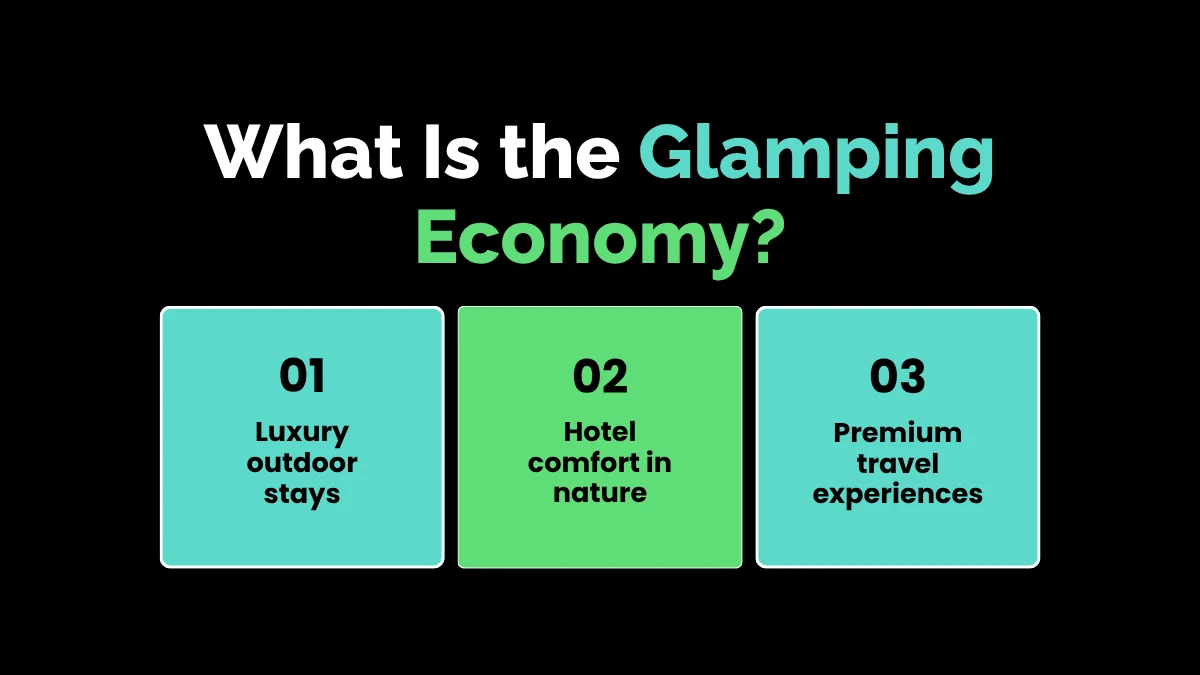
The word itself combines two ideas.
Glamorous + Camping
Unlike traditional camping, glamping offers upgraded experiences such as:
- Luxury safari tents
- Private cabins
- Eco-domes
- Treehouse resorts
- Premium RV experiences
- Outdoor spa accommodations
Instead of sacrificing comfort, travelers pay premium prices for immersive outdoor experiences with luxury amenities.
The result is an entirely new hospitality category.
Why the Glamping Industry Is Growing So Fast
The industry has expanded rapidly because consumer behavior has changed dramatically.
Modern travelers increasingly value experiences over traditional vacations.
Several major trends are driving this growth.
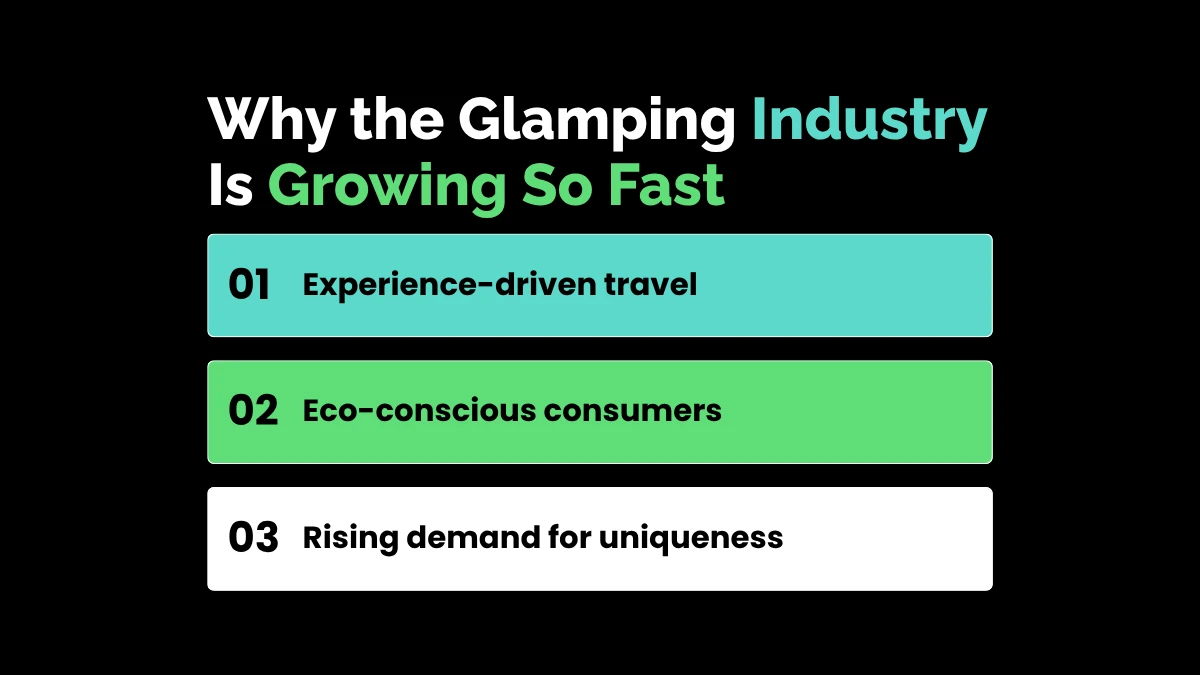
Experience Economy Growth
Travelers today often prioritize memorable experiences rather than simply booking standard hotels.
Consumers increasingly pay more for:
- Unique accommodations
- Nature immersion
- Instagram-worthy destinations
- Private outdoor experiences
- Personalized travel experiences
This shift has created strong demand for premium outdoor hospitality.
Eco-Conscious Travel Demand
Many travelers actively seek sustainable tourism experiences.
Glamping businesses often appeal to environmentally conscious consumers because many properties use:
- Solar power systems
- Sustainable construction materials
- Minimal land disruption
- Eco-friendly waste management systems
- Off-grid infrastructure
Modern consumers increasingly reward sustainability.
This trend continues strengthening globally.
Millennials Are Driving Demand
One demographic has heavily accelerated glamping growth.
Millennial travelers.
Younger consumers often prioritize experiences over ownership and frequently spend more on travel experiences that feel distinctive.
Luxury camping delivers exactly that.
This demand pattern continues pushing occupancy rates higher for premium operators.
The Size of the Glamping Market
The numbers behind the glamping economy explain why investors are paying attention.
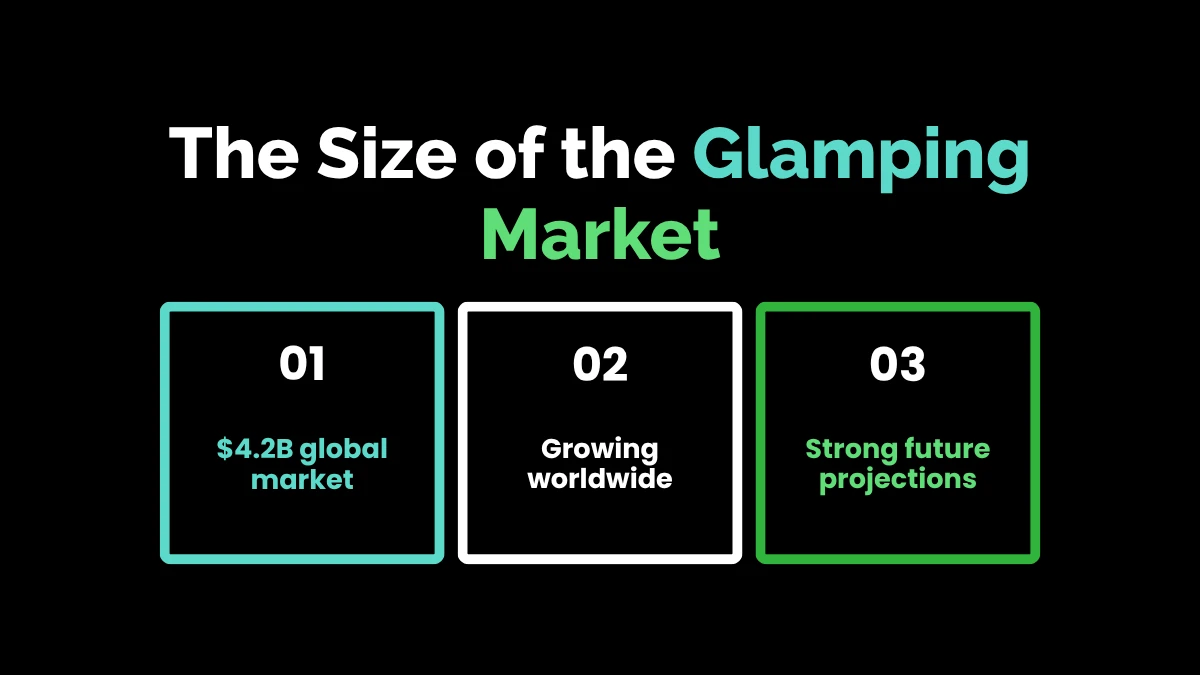
Industry estimates place the global glamping market around $4.2 billion, with projections showing growth beyond $7 billion by the early 2030s.
Some research firms expect even higher long-term expansion.
Several factors support this growth.
Demand remains global rather than region-specific.
Outdoor hospitality is becoming mainstream.
Luxury travelers increasingly seek non-traditional accommodations.
This combination creates unusually strong long-term growth potential.
Startup Costs for a Glamping Business
Like many hospitality businesses, startup costs vary significantly.
A small entry-level operation may cost around $15,000 to $25,000 per unit.
Higher-end luxury units often cost substantially more.
Premium glamping structures can exceed $90,000 per unit before land costs.
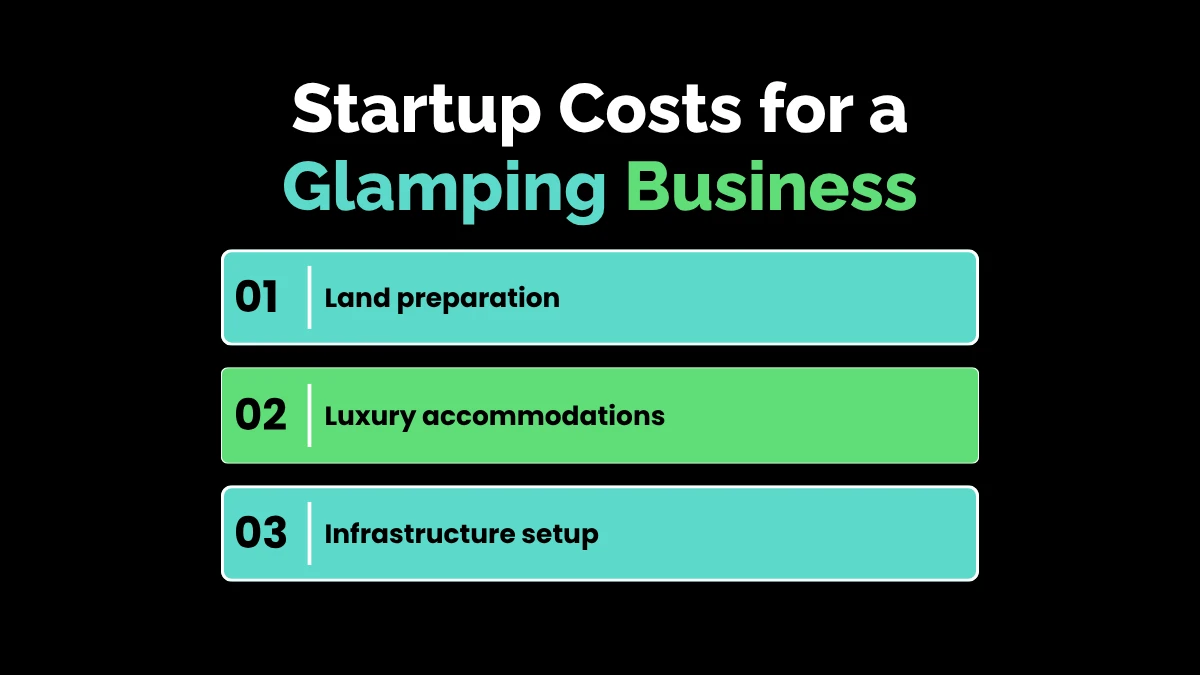
Typical expenses include:
- Land preparation
- Luxury tents or pods
- Utility installation
- Plumbing systems
- Bathrooms and showers
- Solar infrastructure
- Booking software
- Interior design and furnishing
Luxury experiences require significant upfront investment.
How Much Revenue Can Glamping Sites Generate?
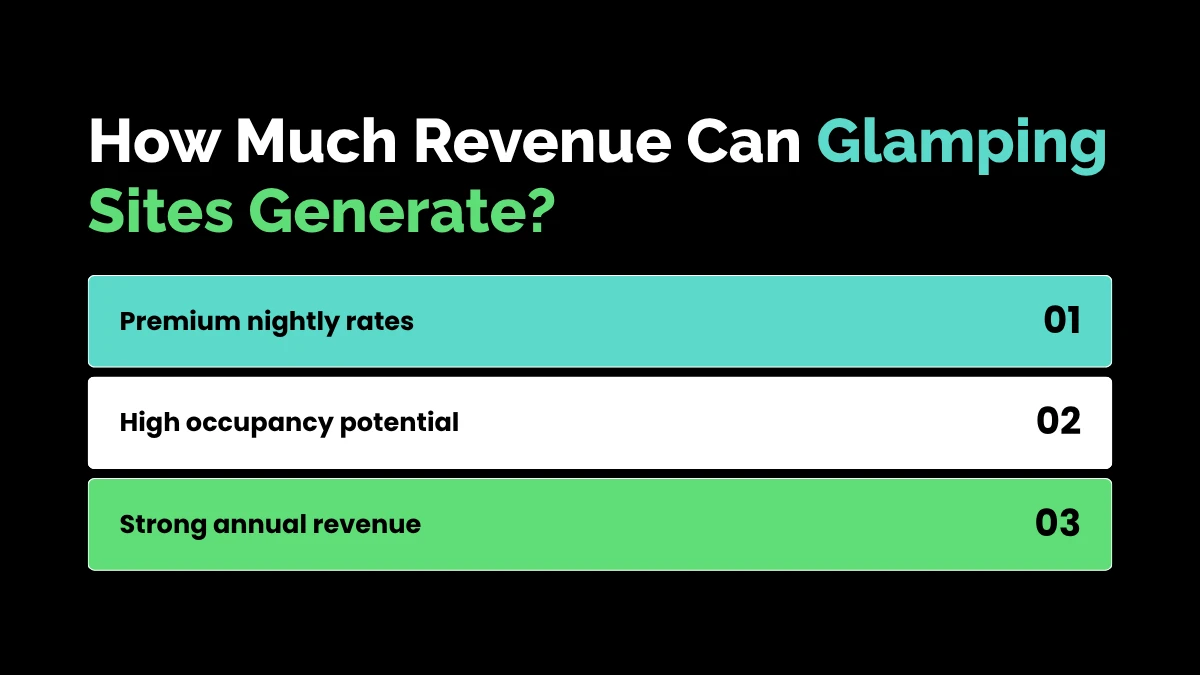
Revenue potential is one reason entrepreneurs are entering the industry.
Nightly pricing often ranges between:
Budget Units
$80 to $150 per night
Premium Luxury Units
$300 to $600+ per night
Well-positioned operators often generate between $50,000 and $150,000 annually per unit depending on occupancy rates and location.
This creates surprisingly strong revenue potential.
Why Profit Margins Are Attractive
The hospitality sector traditionally has tight margins.
Glamping operates differently.
Many operators report profit margins ranging between 30% and 50% after expenses.
This happens because pricing remains premium while staffing requirements often stay relatively low compared with hotels.
Smaller operational teams improve profitability significantly.
High demand combined with lean operations creates strong economics.
Challenges Most Investors Ignore
The opportunity is attractive.
But the business model has risks.
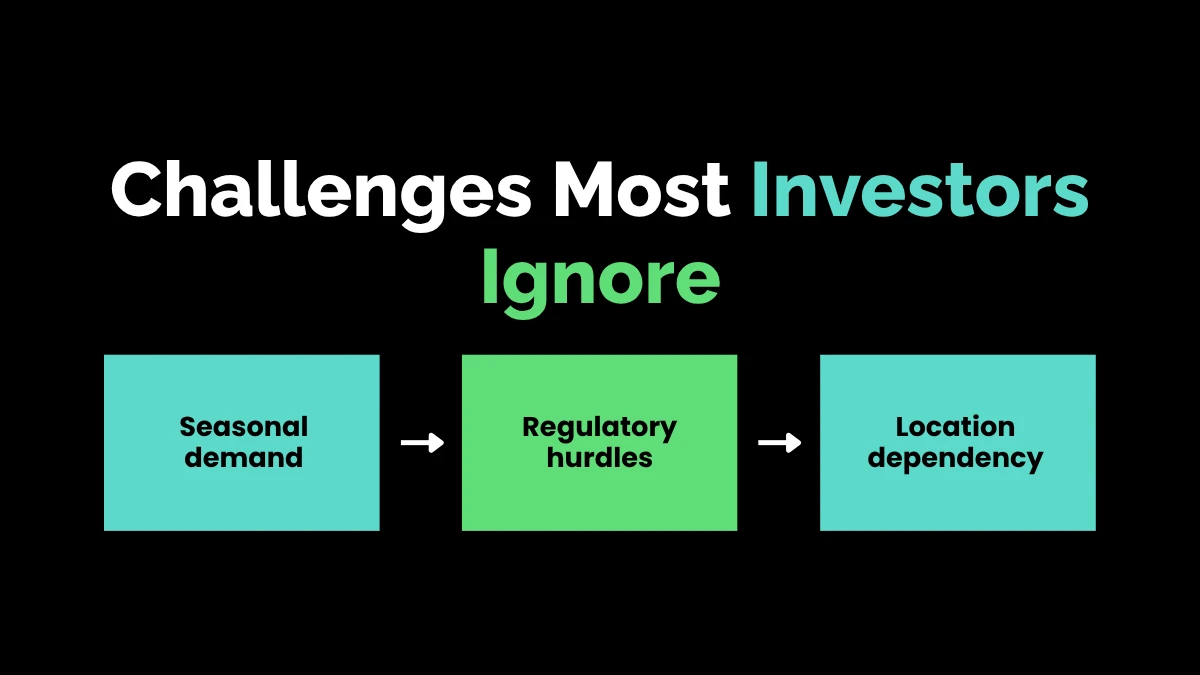
Seasonality Problems
Cold weather can reduce occupancy significantly.
Canvas structures often cannot operate year-round in certain climates.
This creates seasonal revenue instability.
Operators increasingly solve this problem using insulated hard-wall pods.
Regulatory Issues
Outdoor hospitality businesses face complex permit requirements.
Common challenges include:
- Land zoning restrictions
- Environmental regulations
- Building permits
- Utility compliance requirements
- Local hospitality licensing
Ignoring regulations can destroy projects before launch.
Why Investors Are Watching Closely
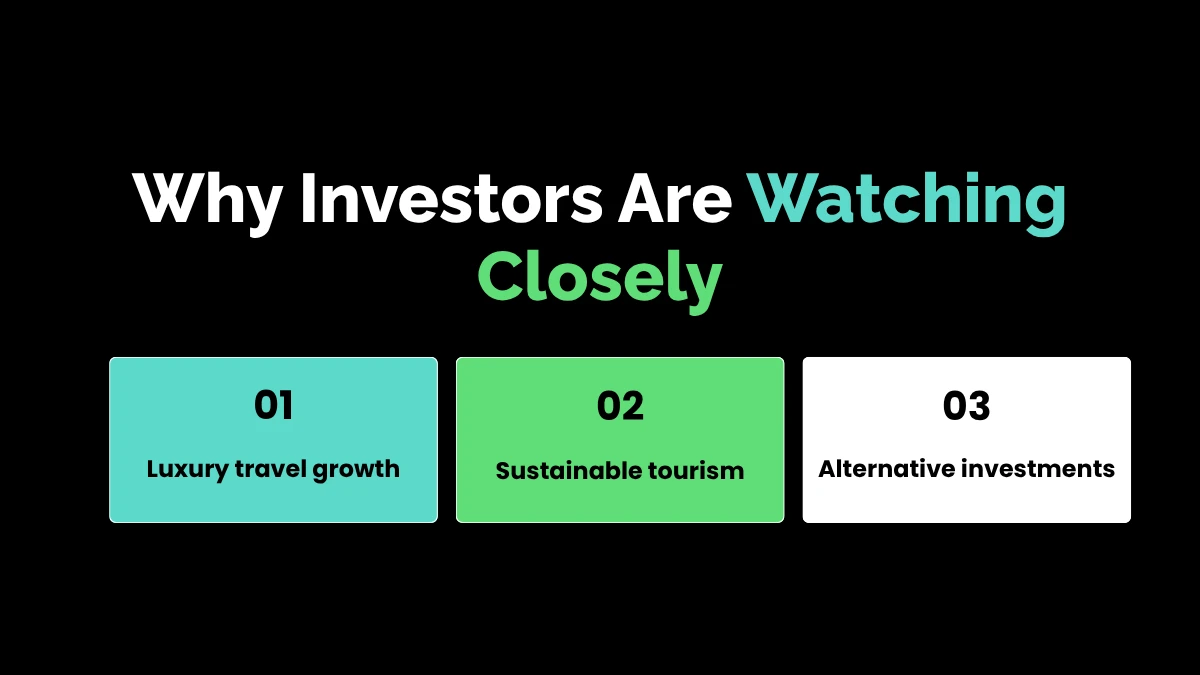
The most interesting part of the glamping economy is that it sits at the intersection of multiple long-term trends.
It benefits from:
- Luxury travel growth
- Sustainable tourism demand
- Experience-focused spending
- Alternative real estate investment
- Rising consumer interest in unique accommodations
Very few industries combine all five simultaneously.
This explains why investors increasingly pay attention.
Final Thoughts
The glamping economy proves that profitable business opportunities often emerge when consumer behavior changes faster than traditional industries can adapt.
Luxury camping is no longer a niche concept.
It has become a legitimate hospitality sector generating billions in annual value.
For entrepreneurs, investors, and unconventional business thinkers, glamping represents something powerful.
A growing market built around experience, sustainability, and premium pricing.
Sometimes the best opportunities do not come from inventing something new.
They come from reinventing something old.
And the glamping industry is doing exactly that.
Frequently Asked Questions
Q: What is the glamping economy?
The glamping economy refers to the global business ecosystem built around high-end, luxury outdoor accommodations that combine nature experiences with premium hotel-like comfort.
Q: How much does it cost to start a glamping business?
Startup costs vary from $15,000 to $25,000 for a basic entry-level unit, while high-end premium luxury structures can easily exceed $90,000 per unit before land development.
Q: What are the typical profit margins for glamping operators?
Glamping sites enjoy highly attractive profit margins, typically ranging between 30% and 50% due to premium nightly rates and relatively low staffing requirements compared to traditional hotels.
Q: What are the biggest challenges in the glamping industry?
The two major hurdles are extreme seasonality (revenue drops during cold weather) and complex local regulatory issues, such as land zoning, building permits, and environmental compliance.
Q: Why is glamping market demand growing so fast?
Growth is heavily driven by millennial and eco-conscious travelers who prefer unique, sustainable, and “Instagram-worthy” outdoor experiences over traditional, standard hotel stays.