

Key Takeaways
-
Hourly rate: $23.08 (standard 40-hour week)
-
Weekly gross pay: $923.08
-
Estimated monthly income: $4,000 before taxes
-
Take-home pay varies significantly by state lines
Have you ever stared at a job offer or your current salary and wondered how it translates to your actual day-to-day life? If you are making or eyeing a salary of $48,000, the very first question that probably pops into your head is: 48000 a year is how much an hour?
Let us dive straight into the numbers so you can stop guessing. If you work a standard 40-hour work week for all 52 weeks of the year, a $48,000 annual salary breaks down to exactly $23.08 per hour.
It sounds simple enough, right? But as we all know, your hourly rate is just the tip of the iceberg when it comes to managing your wallet.
AI Overview
If you are looking for a quick breakdown, making $48,000 a year means your hourly rate sits at $23.08 based on a traditional 2,080-hour work year. This translates to roughly $923 per week or a gross 48k monthly income of $4,000 before Uncle Sam takes his share. Your actual 48k take home pay will look a bit lower depending on your local state taxes, healthcare deductions, and retirement contributions.
The Raw Math: Breaking Down a $48,000 Salary
To understand how a 48000 annual salary per hour is calculated, we look at standard working hours. Most full-time jobs assume you work 40 hours a week for 52 weeks.
Multiplying those weekly hours by the weeks in a year gives us a grand total of 2,080 working hours. When you divide your total salary by those hours, you get the exact baseline for your time.
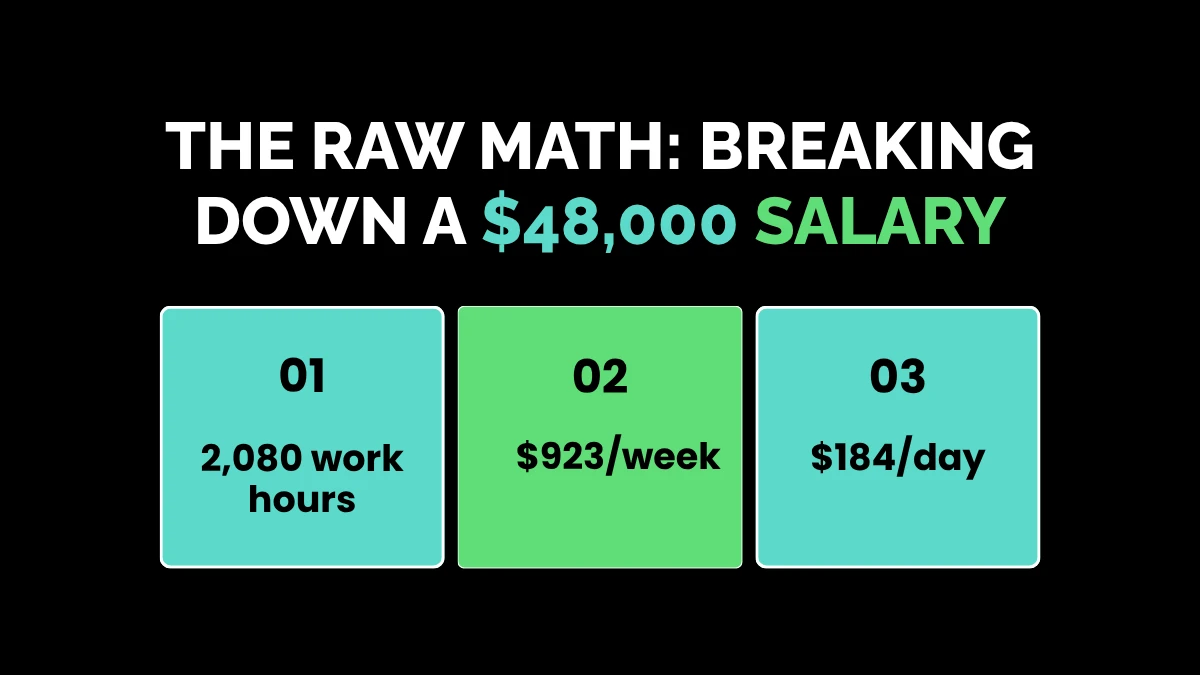
Rounding that final number to the nearest cent gives us the official answer to our primary question: 48000 a year is how much an hour? It is $23.08. Here at Weird Wealth, we love making sense of these numbers so they actually fit into your daily budget.
| Pay Period | Gross Earnings |
| Hourly | $23.08 |
| Daily (8 Hours) | $184.64 |
| Weekly | $923.08 |
| Bi-Weekly (Every 2 Weeks) | $1,846.15 |
| Monthly | $4,000.00 |
| Annual | $48,000.00 |
What if You Get Paid Holidays?
If your job offers paid time off, your hourly rate stays exactly the same. You are essentially getting paid for those standard yearly hours whether you are sitting at your desk or enjoying a summer barbecue.
But what happens if your employer does not offer paid leave? If you take two weeks of unpaid vacation, your actual working weeks drop to 50, bringing your total annual earnings down to $46,160.
In that specific scenario, your total yearly earnings dip because of those unpaid days off. It is always a good idea to check your employment contract to see how your time off impacts your final numbers.
How Much Is $48,000 a Year Monthly?
When you start planning for rent, groceries, or car payments, looking at things from a monthly perspective is usually the most helpful approach. On paper, calculating a 48k monthly income is pretty straightforward.
Dividing the full salary across the 12 months of the year yields an even $4,000 every month.
Seeing a clean $4,000 hit your screen sounds amazing, but remember that this is your gross income. This is the total amount before any deductions are pulled out.
The Reality of Your Paycheck
In most cases, nobody actually sees the full gross amount land in their checking account. Your employer has to legally withhold certain amounts before they hand over your cash.
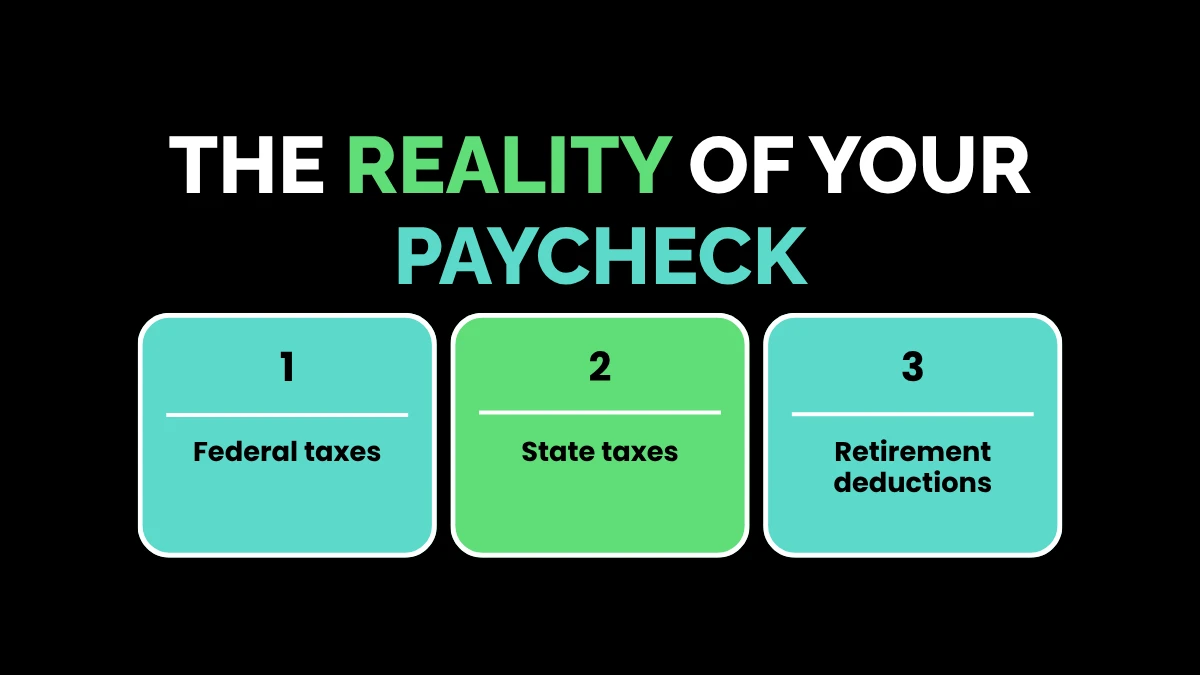
Your actual cash flow depends heavily on your lifestyle choices, insurance selections, and savings goals. A few common factors that alter your monthly take-home include federal income taxes, state taxes, and retirement plan contributions.
Real Talk: The 48k Take Home Pay Reality
Let us talk about the number that actually matters: your 48k take home pay. This is the cold, hard cash you can actually spend on bills, fun, and savings.
Because tax brackets vary wildly depending on where you live, your net pay might look totally different from someone else making the exact same wage. Someone living in Texas or Florida with no state income tax keeps a larger slice of the pie than someone living in California or New York.
An Estimated Tax Scenario
Let us run a general estimate for a single filer with standard deductions to see how taxes chip away at that $23.08 hourly rate.
| Tax Category | Estimated Annual Deduction |
| Gross Income | $48,000 |
| Federal Income Tax | Subtract about $4,080 |
| FICA Taxes (Social Security & Medicare) | Subtract about $3,672 |
| State Income Tax (Average 3.5%) | Subtract an average of $1,680 |
| Total Estimated Net Pay | $38,568 |
When you break down this estimated net total, your actual monthly spending power drops from a gross $4,000 down to roughly $3,214 per month. That means your real-world hourly value feels closer to $18.54 after taxes.
Can You Live Comfortably on a 48000 Annual Salary Per Hour?
The honest answer is that it completely depends on where you live and what your lifestyle looks like. A 48000 annual salary per hour gives you a solid, workable foundation in many parts of the country.
If you are living in a major metropolitan hub where studio apartments cost a fortune, things are going to feel incredibly tight. On the flip side, if you live in a mid-sized city or a rural area with a lower cost of living, this wage can provide a comfortable, stable life.
Budgeting with the 50/30/20 Rule
A great way to see if $23.08 an hour works for you is by applying a classic budgeting framework to your estimated net monthly income of $3,214.
| Budget Category | Percentage | Estimated Monthly Allocation |
| Needs (Rent, Bills, Food) | 50% | $1,607 |
| Wants (Dining, Hobbies) | 30% | $964 |
| Savings & Debt Paydown | 20% | $643 |
If your local rent prices are higher than $1,000 a month, you will likely need to shrink your “wants” category to keep your budget balanced.
Smart Strategies to Stretch a $48,000 Salary
If you want to maximize your income, you have to be intentional with how your money moves. Small tweaks to your daily habits can make a $23.08 hourly rate feel significantly larger.
1. Optimize Your Fixed Costs
Your fixed expenses are the bills that stay the same every single month. Shaving even a small percentage off these can free up a lot of breathing room in your budget.
-
Insurance Audits: Shop around for car insurance quotes once a year to ensure you get the lowest rate.
-
Shared Subscriptions: Split internet or streaming costs with roommates if possible.
-
Meal Prep Magic: Prep your lunches on Sundays to avoid the temptation of expensive workday meals.
-
Utility Awareness: Track your utility usage and unplug vampire electronics when leaving the house.
2. Side Hustles and Income Boosts
Sometimes the best way to live better on your current salary is to add a secondary stream of revenue. Even a few extra hours of flexible work can change your financial outlook.
-
Freelance Work: Look into freelance writing, graphic design, or virtual assistance during your off-hours.
-
Gig Economy: Use weekend hours to drive for rideshare platforms or deliver groceries.
-
Declutter for Cash: Sell unused clothes, electronics, or furniture online for quick cash injections.
-
Local Services: Monetize a hobby, like dog walking or tutoring local students.
Comparing $48,000 to Other Popular Salaries
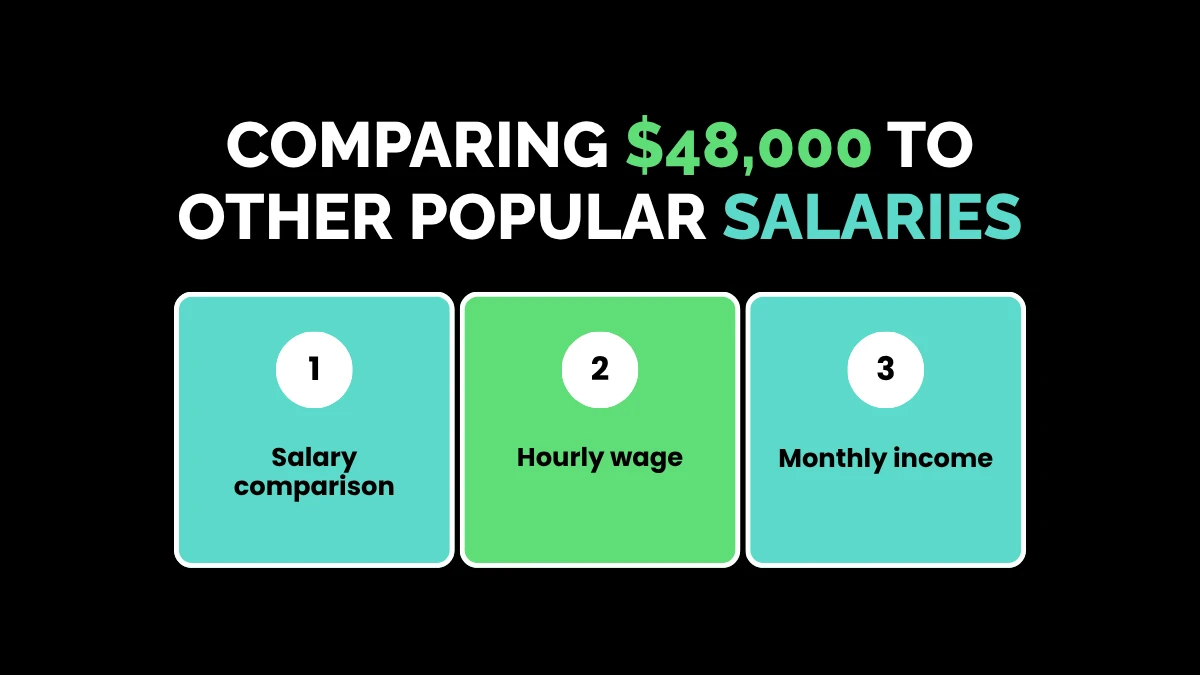
It is always helpful to see where your earnings sit compared to other common benchmarks. Seeing these numbers side-by-side helps you plan your next career move or negotiate your next raise.
| Annual Salary | Hourly Wage (40 Hrs/Week) | Gross Monthly Income |
| $40,000 | $19.23 | $3,333 |
| $45,000 | $21.63 | $3,750 |
| $48,000 | $23.08 | $4,000 |
| $50,000 | $24.04 | $4,166 |
| $55,000 | $26.44 | $4,583 |
Moving from $45,000 up to $48,000 gives you an extra $250 a month gross, which can easily cover a car insurance payment or a grocery trip. If you can jump from your current rate up to $50,000, your 48000 annual salary per hour grows by roughly a dollar more every single hour you work.
Understanding Your Regional Purchasing Power
Your purchasing power changes dramatically based on your geographic location. The exact same paycheck behaves completely differently depending on the local real estate market and regional commodity pricing.
Let us look at a practical example of how a 48k monthly income functions across different types of American environments. This helps illustrate why location is often the single most critical variable in your personal economy.
High Cost of Living Areas
In cities like San Francisco, Seattle, Boston, or New York, a gross income of $4,000 monthly faces immediate headwinds. Rent for a typical one-bedroom apartment in these regions can easily consume more than half of your total earnings.
When housing costs absorb that much of your check, your remaining 48k take home pay has to stretch incredibly thin to cover utilities, transportation, and healthcare. Residents in these areas often rely heavily on public transportation and shared housing arrangements to maintain financial balance.
Medium Cost of Living Areas
In places like Atlanta, Phoenix, Dallas, or Columbus, this wage structure begins to open up significantly. Housing is generally much more attainable, allowing you to find decent accommodations without compromising your entire financial plan.
You will likely still need to track your discretionary spending, but you will have more options for individual living arrangements. It allows for a more traditional lifestyle where saving money does not feel like an absolute sacrifice.
Low Cost of Living Areas
In smaller towns, rural communities, or midwestern regions, this salary can stretch remarkably far. Housing expenses are often low enough that you might even consider saving for a down payment on a home.
Your monthly utilities, groceries, and services generally cost less, which maximizes the value of your hourly earnings. For many people, living in these regions turns this baseline salary into an opportunity for true financial peace.
How to Negotiate for a Higher Pay Rate
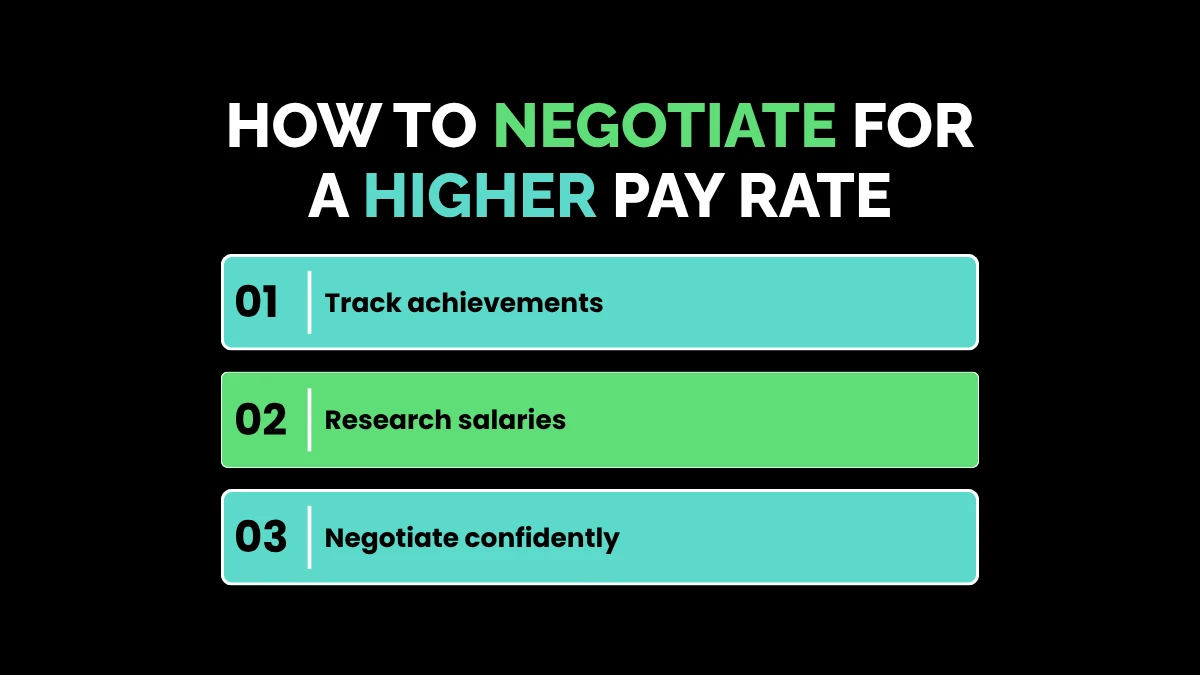
If you are currently earning around $23.08 an hour, you might be looking for ways to advance to the next financial level. Negotiating a raise or seeking a higher starting salary is one of the fastest ways to improve your situation.
Preparation is everything when you step into a performance review or a job interview. You want to focus heavily on the measurable value you bring to your team.
Track Your Professional Achievements
Do not just wait for your annual review to start thinking about your contributions. Keep a running log of everything you do that helps your employer succeed.
Document times when you saved the company money, improved a process, or took on extra responsibilities outside your job description. Having concrete data makes it much easier for a manager to say yes to your request.
Research the Local Job Market
Salaries change over time, and it is vital to know what other employers are paying for your exact skill set. Look at regional job postings and industry reports to see where your current pay sits relative to the market.
If you find that the average rate for your position is higher than what you make, you can use that information as leverage. Frame the conversation around industry standards and your commitment to delivering top-tier results.
Long-Term Wealth Building Strategies
Earning a solid wage is a great start, but true security comes from what you do with the money you keep. Building wealth on this salary requires consistency and automated habits.
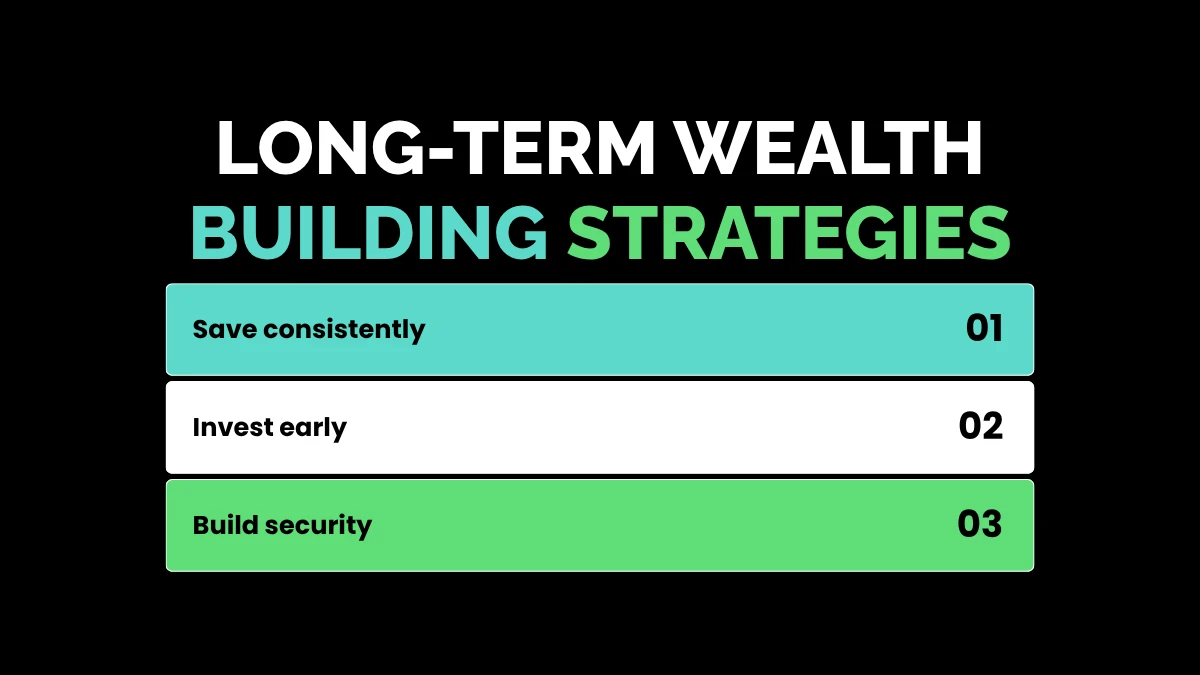
Even if you can only save a small amount each month, time and compound growth are incredibly powerful tools. The sooner you start putting your money to work, the less heavy lifting you have to do down the road.
Maximize Employer Retirement Matches
If your company offers a 48000 annual salary per hour and provides a retirement match, you should try to take full advantage of it. This is essentially free money that goes directly into your future nest egg.
Setting up automatic deductions from your paycheck ensures that you save before you ever have a chance to spend the money. Over several years, these steady contributions can grow into a substantial financial cushion.
Establish a Solid Emergency Fund
Life is full of unexpected surprises, from car repairs to sudden medical bills. Having a dedicated pool of cash prevents you from relying on high-interest credit cards when things go wrong.
Aim to save three to six months’ worth of essential living expenses in a separate account. Knowing you have that safety net in place brings an incredible sense of mental and financial freedom to your everyday life.
Final Thoughts on Your Earning Power
When you look at the core numbers, knowing that 48000 a year is how much an hour gives you a clear target to build around. Earning $23.08 an hour provides a steady baseline that can absolutely support a healthy, balanced life if you manage it with care.
Your 48k monthly income of $4,000 before taxes gives you plenty of space to cover your basic needs, build an emergency fund, and enjoy your life. The real key is understanding your local tax landscape so your actual 48k take home pay never catches you by surprise.
Keep tracking your spending, look for ways to grow your skill set, and stay intentional with every dollar that comes your way. Here at Weird Wealth, we believe that true financial freedom is not just about making more, it is about making what you have work for you.
Frequently Asked Questions
Is $48,000 a year a good salary for a single person?
In most cases, yes. Based on available data, it is a solid living wage in low to mid-cost areas, though it may feel tight in major cities.
How much is $48k a year biweekly?
Your gross biweekly paycheck is generally estimated at $1,846.15 before deductions are taken out.
What is the hourly wage for a $48,000 salary with 2 weeks unpaid?
If you take two weeks of unpaid leave, your hourly wage remains $23.08, but your annual total drops.
How much tax do you pay on a $48,000 salary?
Generally, you can expect to pay roughly 15% to 22% in total taxes depending on your state.