

Key Takeaways
-
Easy probate avoidance
-
Complete estate privacy
-
Seamless property transfer
-
Clear step-by-step process
-
Peace of mind for loved ones
Have you ever wondered what happens to your home after you are gone? Most of us do not like thinking about it, but leaving your property to loved ones can turn into a headache if you rely on a standard will.
If you want to protect your family from months of court delays and expensive legal fees, learning how to put your house in a trust is one of the smartest moves you can make today.
Putting your real estate into a revocable living trust moves the ownership from your personal name to the trust. You still keep full control over your home while you are alive, but when you pass away, the property transfers directly to your beneficiaries without going through probate court.
At Weird Wealth, we believe managing your money and assets should feel straightforward, not overwhelming. So let’s break down the exact steps to get this done without the confusing legal jargon.
AI Overview
Learning how to put your house in a trust allows you to transfer real estate ownership to a living trust while retaining full daily control. This process helps your family avoid length probate court procedures, keeps your financial affairs private, and ensures your home passes smoothly to your heirs. It involves drafting a trust agreement and executing a quitclaim deed to trust with your local county office.
Why Putting Your Property in a Trust Matters
Transferring your residence into a trust is not just for the ultra-rich. It is a practical tool for everyday homeowners who want to save their families time, stress, and money down the road.
When you pass away with just a will, your estate enters a public legal proceeding called probate. Probate takes months, costs thousands of dollars, and makes your private financial business part of the public record.
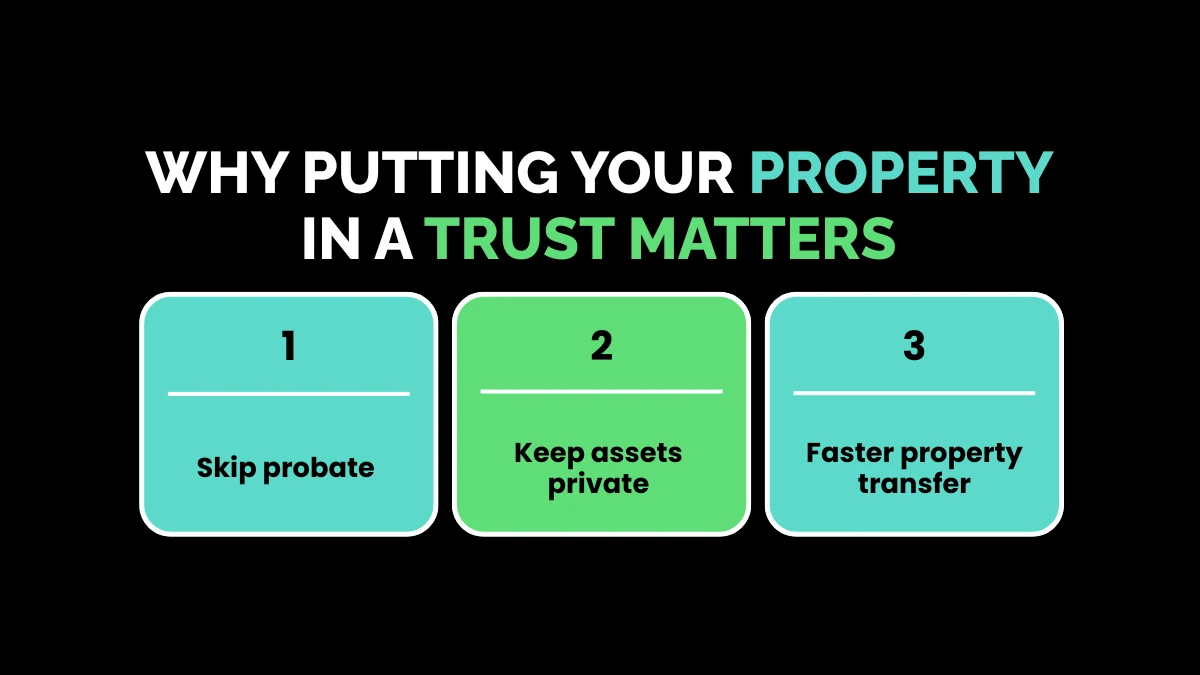
By transferring home to living trust arrangements, you bypass this court process entirely. The trust owns the property, so ownership passes smoothly according to the rules you wrote down.
| Feature | Owning Home via Trust | Owning Home via Will / Personal |
| Avoids Probate? | Yes, completely. | No, requires court review. |
| Privacy Level | High (Kept private). | Low (Public record). |
| Speed of Asset Transfer | Immediate or within days. | Months to over a year. |
| Incapacity Protection | Yes, successor trustee takes over. | Requires court-ordered guardianship. |
The Big Benefits of Putting House in Trust
Why do so many homeowners make this change? The benefits of putting house in trust go way beyond just avoiding court.
First, you get complete privacy. Wills are published in court filings, meaning anyone can see what your home is worth and who gets it. Trust documents stay completely private between you, your legal team, and your chosen heirs.
Second, it protects you while you are still alive. If you ever become sick or unable to make decisions, your designated successor trustee steps in to manage the property seamlessly. You do not need a court-appointed guardian to handle your real estate matters.
The Ultimate Step-by-Step Guide to Putting Your House in a Trust
Ready to get started? The process is far easier than most people assume. Here is the step-by-step path to secure your real estate.
Step 1: Choose the Right Type of Trust
First, you need to decide which trust structure fits your personal situation best. Most homeowners choose a revocable living trust.
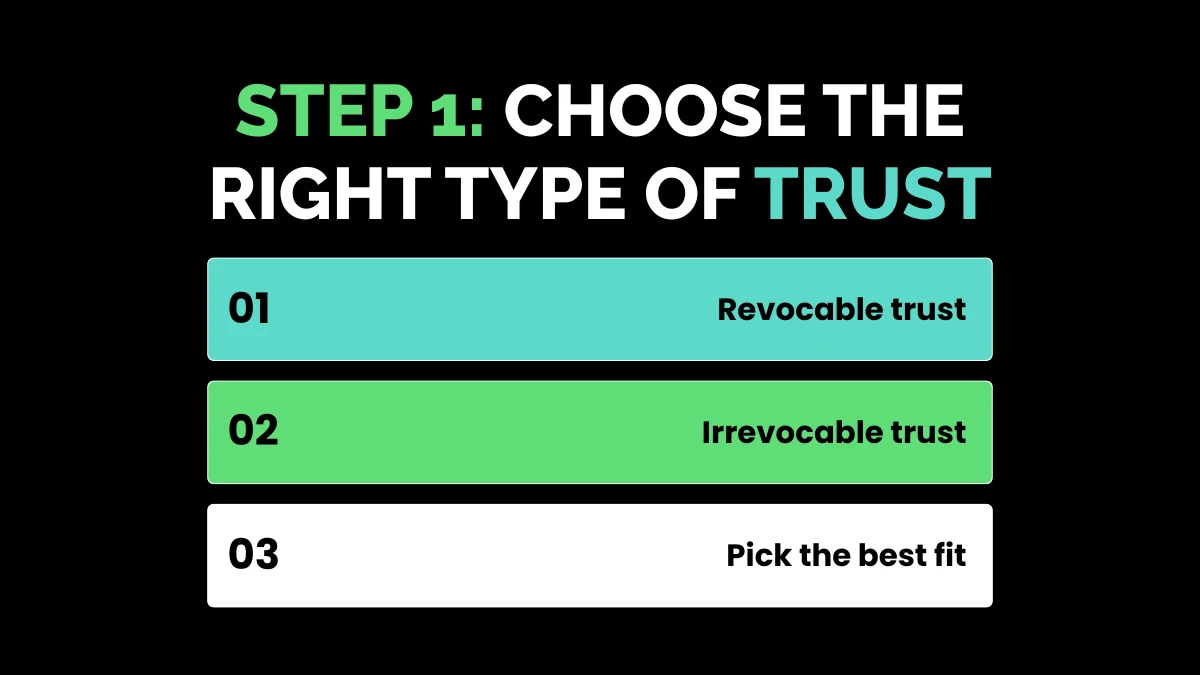
A revocable living trust lets you change the rules, add or remove property, or cancel the trust entirely whenever you want. You remain the trustee during your lifetime, so nothing about your day-to-day life changes.
An irrevocable trust, on the other hand, cannot easily be altered once created. It offers stronger asset protection and potential tax relief, but you give up direct control over the property.
Step 2: Create the Trust Document
Once you pick the trust type, you must write the formal trust document. You can work with an estate planning attorney or use verified online legal platforms.
This document names three key parties:
-
The Grantor (you, the person creating the trust)
-
The Trustee (usually you while alive, plus a successor trustee to manage things later)
-
The Beneficiaries (the people or charities who receive the home after you pass)
At Weird Wealth, we always suggest consulting a qualified local attorney to make sure your trust document meets your state’s exact legal guidelines.
Step 3: Prepare a Quitclaim Deed to Trust
Creating the trust agreement is only half the battle. The trust exists on paper, but it currently owns nothing. You must actually transfer the legal title of your real estate into the trust.
To do this, you will usually draw up a deed. Most homeowners use a quitclaim deed to trust or a grant deed depending on local state laws.
This deed transfers the property title from your individual name (e.g., “John Doe”) to your trust’s legal name (e.g., “John Doe, Trustee of the Doe Family Trust”).
Step 4: Sign and Notarize the Deed
Do not sign the deed at home at your kitchen table! You must sign the deed in front of a notary public to make it legally binding.
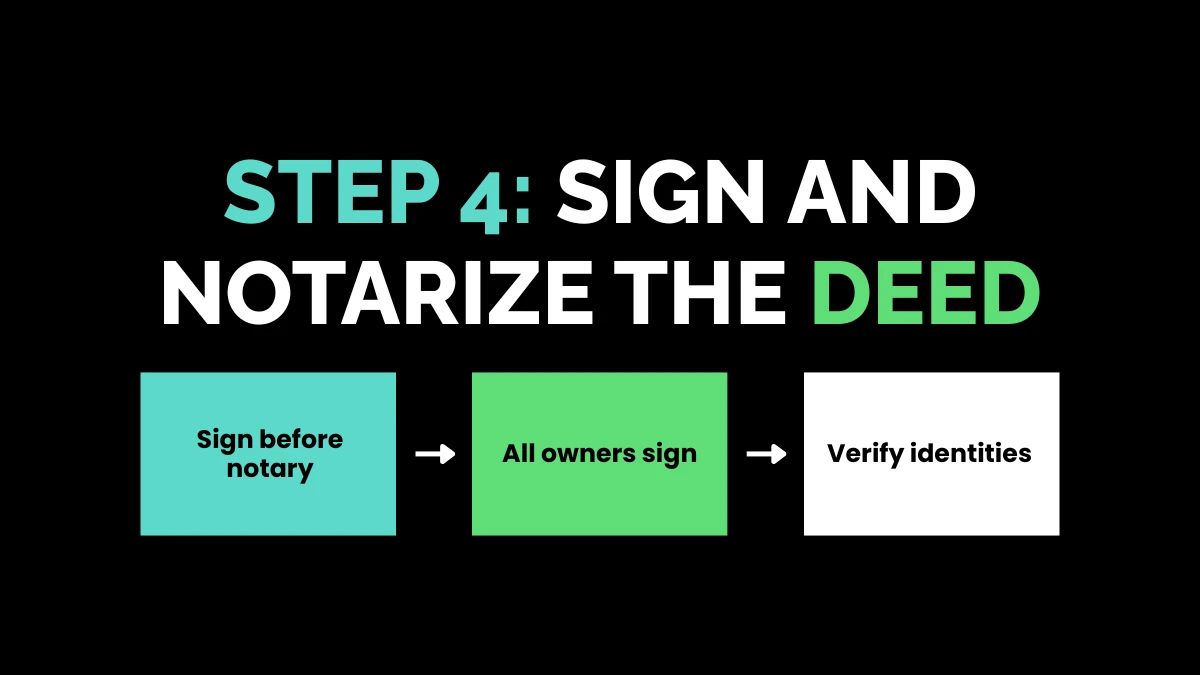
Make sure all owners listed on the current property title are present with valid government identification. If you own the home jointly with a spouse, both of you must sign the deed transfer document together.
Step 5: Record the Deed with Your County
A signed deed is not fully complete until it becomes part of official public land records. Take or mail the notarized deed to your local county recorder or land registry office.
You will pay a small recording fee, usually ranging from $20 to $100 depending on your county. Once processed, the county updates its records to show that your living trust now owns the real estate.
Step 6: Notify Your Mortgage Company and Insurance Provider
Do you still have a mortgage on your property? Don’t worry, you can still put a mortgaged home into a revocable trust.
Federal law (the Garn-St. Germain Act) prevents lenders from demanding full payment of your loan just because you are transferring home to living trust structures. However, it is good practice to notify your lender in writing.
You must also update your homeowners insurance provider. Ask them to list your trust as an “additional insured” party on your policy so coverage remains fully intact.
Important Things to Check Before Transferring Your Home
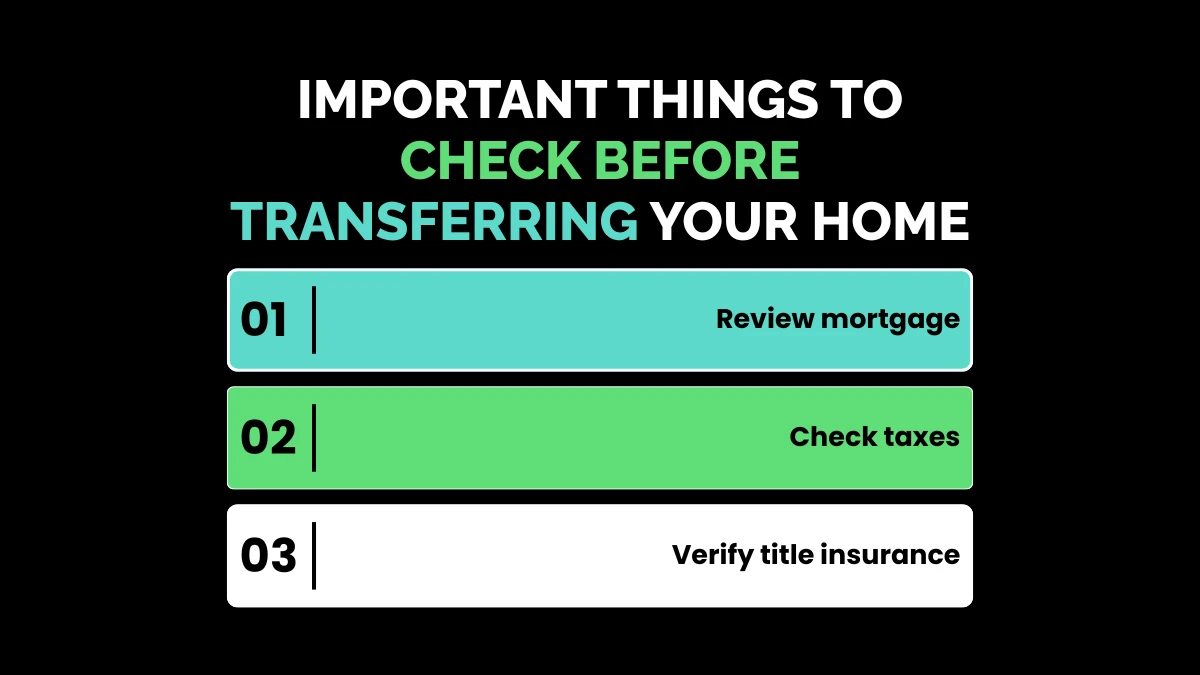
While transferring home to living trust assets is standard, missing a few minor details can cause unnecessary headaches later. Here are critical factors to evaluate before filing your paperwork.
Check Your Mortgage Terms
In almost all cases, transferring your primary residence to a revocable trust will not trigger the “due-on-sale” clause of your mortgage.
However, if you are transferring investment property or putting a home into an irrevocable trust, check with your lender first. Get written confirmation that the transfer will not alter your current mortgage terms.
Review Tax Implications
Will putting your property into a trust raise your property taxes or ruin your tax benefits? Generally, no.
When you use a standard revocable living trust, your tax status does not change at all:
-
You keep your primary residence capital gains tax exemption ($250,000 for single filers, $500,000 for married couples).
-
Your local property tax rate remains unchanged.
-
You do not need to file a separate income tax return for a revocable trust; everything reports on your personal tax return.
What About Title Insurance?
When you bought your home, you likely purchased a title insurance policy. That policy protects against hidden ownership claims on the land.

Contact your title insurance company before recording your quitclaim deed to trust. Ask them to add an endorsement extending coverage to your new trust so your policy remains active.
Common Mistakes to Avoid
Even smart homeowners occasionally slip up during this process. Keep these common traps in mind so your estate plan works seamlessly when your family needs it most.
Here are the key points to remember:
-
Forgetting to record the deed: Drafting a trust agreement without recording the deed with your county leaves your home outside the trust, forcing it right back into probate.
-
Naming the wrong trust name on the deed: The property owner listed on the deed must exactly match the official legal name written inside your trust paperwork.
-
Ignoring homeowners insurance: Forgetting to inform your insurer can lead to claim delays or coverage denials if damage occurs to the property.
-
Skipping successor trustee choices: Always name at least one backup successor trustee in case your primary choice is unable or unwilling to serve.
-
Not updating the trust after major life events: Review your trust every few years, especially after marriages, divorces, or major property purchases.
Is Putting Your House in a Trust Right for You?
Putting real estate into a trust offers incredible benefits, but is it necessary for every single person? Let’s take an honest look at who gains the most from this legal setup.
If you own real estate in multiple states, a trust is practically essential. Without one, your heirs might have to go through separate probate court procedures in every single state where you own property!
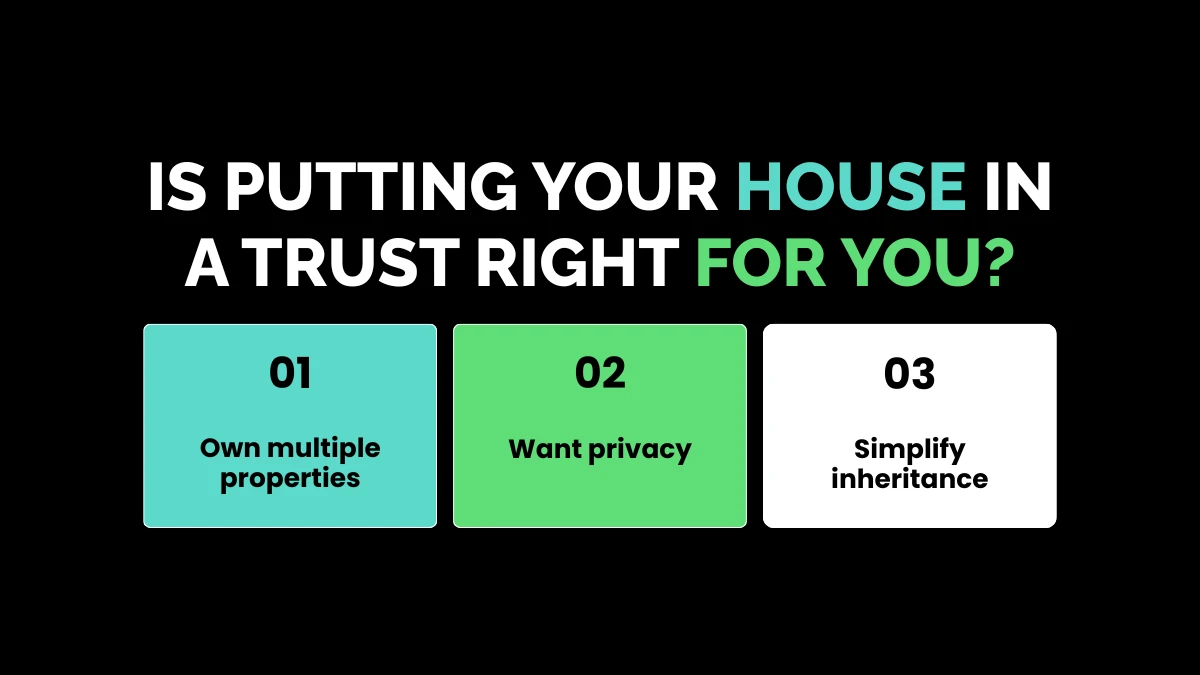
If you have a blended family, minor children, or specific wishes about how your home should be handled, a trust gives you complete control over those conditions.
Here is a summary of who benefits most:
-
Homeowners who want to keep their financial details and asset values private.
-
Property owners who want to avoid high probate legal fees and long court delays.
-
People who own secondary homes, vacation rentals, or land in different states.
-
Individuals who want clear rules for who manages their home if they become incapacitated.
-
Families who want to ensure smooth property transfers without family disputes.
Costs Involved in Putting Your House in a Trust
How much does this whole process actually cost? It depends on whether you do it yourself or hire a professional legal team.
| Expense Category | DIY / Online Service | Hiring an Attorney |
| Trust Creation | $150 – $500 | $1,000 – $3,000+ |
| Deed Preparation | $50 – $150 | Included in estate legal fees |
| County Recording Fee | $20 – $100 | $20 – $100 |
| Total Estimated Cost | $220 – $750 | $1,020 – $3,100+ |
While hiring an estate planning attorney costs more upfront, it guarantees that your paperwork strictly obeys all state laws. Considering that probate court fees often cost 3% to 7% of an entire estate’s value, spending a little money upfront to set up a trust saves your family thousands later.
At Weird Wealth, we view setting up a trust as an investment in your family’s future financial peace of mind.
Conclusion
Understanding how to put your house in a trust is one of the most powerful steps you can take to protect your assets and simplify life for your loved ones.
By setting up your trust, drafting a quitclaim deed to trust, and recording it with your county, you lock in the full benefits of putting house in trust, from avoiding probate court to maintaining total family privacy.
Taking a few simple steps today gives you complete peace of mind tomorrow, knowing your home and your legacy are fully protected.
Frequently Asked Questions
Can I put a house with a mortgage into a trust?
Yes, generally you can put a mortgaged house into a revocable trust without triggering loan repayment penalties.
Does putting a house in a trust avoid property taxes?
No, transferring home to living trust options generally does not lower or raise your standard property tax rates.
What is the difference between a deed and a trust?
A trust is the legal agreement defining rules, while a deed is the document transferring physical property ownership.
Do I lose control of my home in a trust?
Generally no, with a revocable living trust you keep full management control over your property during your lifetime.