

Key Takeaways
- Unexpected home buying costs far beyond purchase price
- Closing costs when buying a home and lender fees
- Recurring maintenance, tax hikes, and insurance surges
- Essential budgeting strategies for first time homebuyer costs
Introduction
Have you ever found your dream home online, checked the price tag, and thought, “Hey, I can totally afford this!”?
Only to realize later that the listing price is really just the opening bid in a much bigger financial story?
Trust me, you are definitely not alone in feeling this way.
When most people start hunting for real estate, they assume saving for a down payment is the hardest hurdle.
However, the true hidden costs of buying a house can easily add thousands of dollars to your overall bill.
From lender processing fees to unexpected immediate repairs, these extra expenses catch millions of home buyers off guard every single year.
If you want to protect your savings and keep your peace of mind, you need a full picture of what buying real estate actually requires.
At Weird Wealth, our primary goal is to bring complete financial transparency to your personal wealth journey so you never face a surprise bill.
Let’s walk through all 20 hidden costs of buying a house together so you can start shopping with total clarity and peace of mind.
AI Overview
Buying property involves significantly more than saving for a sticker price and standard down payment. Buyers must prepare thoroughly for closing costs when buying a home, which usually range between 2% and 5% of the total loan amount. Further unexpected home buying costs include home inspections, appraisals, private mortgage insurance, property tax adjustments, HOA dues, and immediate home maintenance. Understanding these additional costs of buying a house helps manage first time homebuyer costs and prevents sudden financial strain.
1. Upfront Lender & Administrative Fees
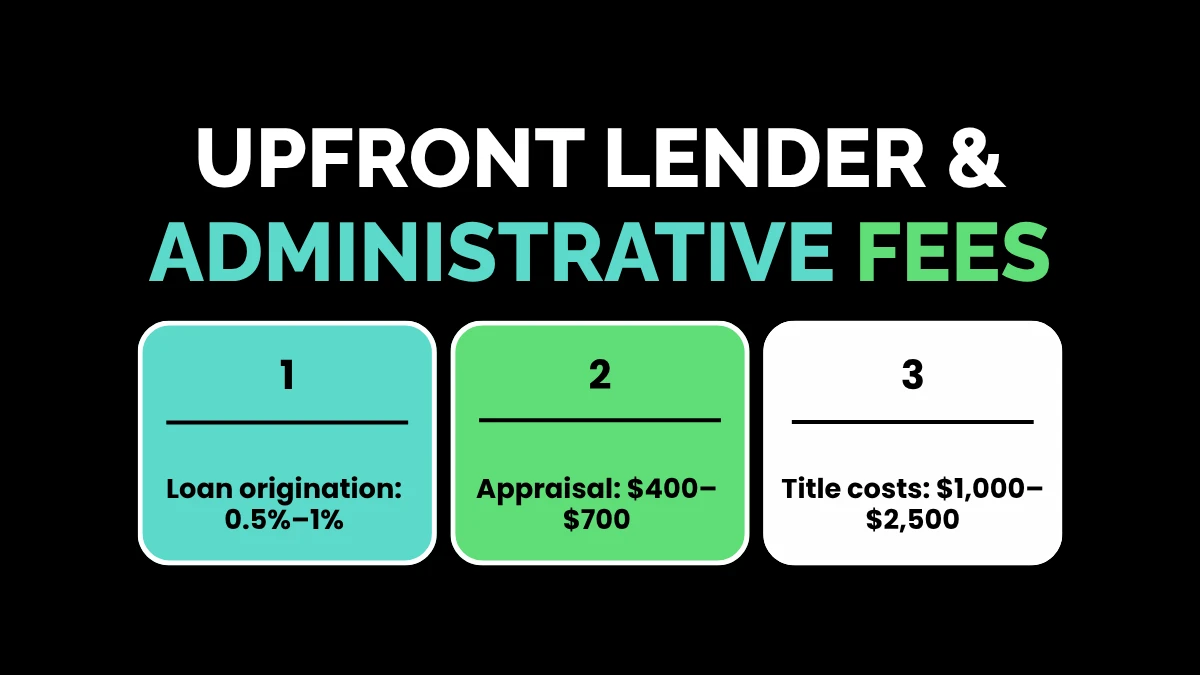
When you finally approach the closing table, you quickly realize that processing a mortgage involves endless administrative fees.
These home buying costs hit your bank balance well before you ever unlock your new front door.
Loan Origination & Processing Fees
Lenders do not review or issue your loan purely out of goodwill.
They charge loan origination fees to cover the administrative labor of processing your application.
In most cases, this administrative charge runs anywhere from 0.5% to 1% of your entire mortgage total.
Credit Report & Underwriting Charges
Before approving your loan, lenders run comprehensive checks on your credit history.
They pass the cost of pulling these formal credit reports directly on to you.
Underwriting fees also apply to cover the formal risk assessment conducted by the lender’s internal team.
Property Appraisal Costs
Your mortgage lender must confirm that the home is actually worth the agreed purchase price.
They will hire an independent professional appraiser to evaluate the property’s real market value.
As the buyer, you are expected to pay this fee prior to final mortgage approval.
Title Search & Title Insurance Policies
A thorough title search ensures the seller truly owns the home without legal dispute.
It checks for unpaid tax debts, legal judgments, or external ownership claims against the property.
Title insurance protects both you and your lender against any future ownership disputes that might arise later.
Real Estate Attorney Fees
In many states, hiring an attorney to review contracts and manage property transfer is mandatory by law.
Even where optional, having a legal expert protects you against predatory terms or hidden contract traps.
Legal fees generally vary based on local real estate complexity and attorney rates.
| Upfront Expense | Average Estimated Cost | Who Pay’s This? |
| Loan Origination | 0.5% – 1.0% of loan | Buyer |
| Home Appraisal | $400 – $700 | Buyer |
| Credit Report Fee | $30 – $100 | Buyer |
| Title Search & Insurance | $1,000 – $2,500 | Buyer / Negotiable |
| Real Estate Attorney | $500 – $1,500 | Buyer |
2. Insurance, Tax & Escrow Add-Ons
Securing your loan triggers ongoing financial obligations aimed at protecting your lender’s core investment.
These additional costs of buying a house increase your total monthly payment considerably over time.
Private Mortgage Insurance (PMI)
If you put down less than 20% upfront on a conventional loan, PMI becomes mandatory.
This monthly fee protects the financial institution if you happen to default on your payments.
While it allows you to buy sooner, it adds to your home buying costs without adding equity.
Rising Homeowners Insurance Rates
Having comprehensive property insurance is non-negotiable whenever you secure a mortgage loan.
However, standard insurance premiums have climbed dramatically based on available industry data in recent years.
Regions subject to extreme weather or changing climate risks see particularly steep annual increases.
Specialized Flood & Hazard Insurance
Standard home insurance policies almost never cover water damage from natural floods or earth movement.
If your target property rests inside a designated flood zone, separate coverage is legally required.
This single policy can add several thousand dollars to your total yearly living costs.
Post-Sale Property Tax Adjustments
Property taxes are rarely set in stone for the long term.
Once a sale completes, the local tax assessor often reassesses the home based on its new valuation.
This purchase price spike means your future tax bill could rise significantly beyond historic records.
Escrow Reserve Account Cushions
Lenders usually demand that you prepay several months of property taxes and insurance upfront.
This money sits inside an escrow account to ensure upcoming bills are always paid on time.
It acts as a necessary cushion, but requires substantial extra cash upfront at closing.
3. Pre-Purchase Inspection Costs
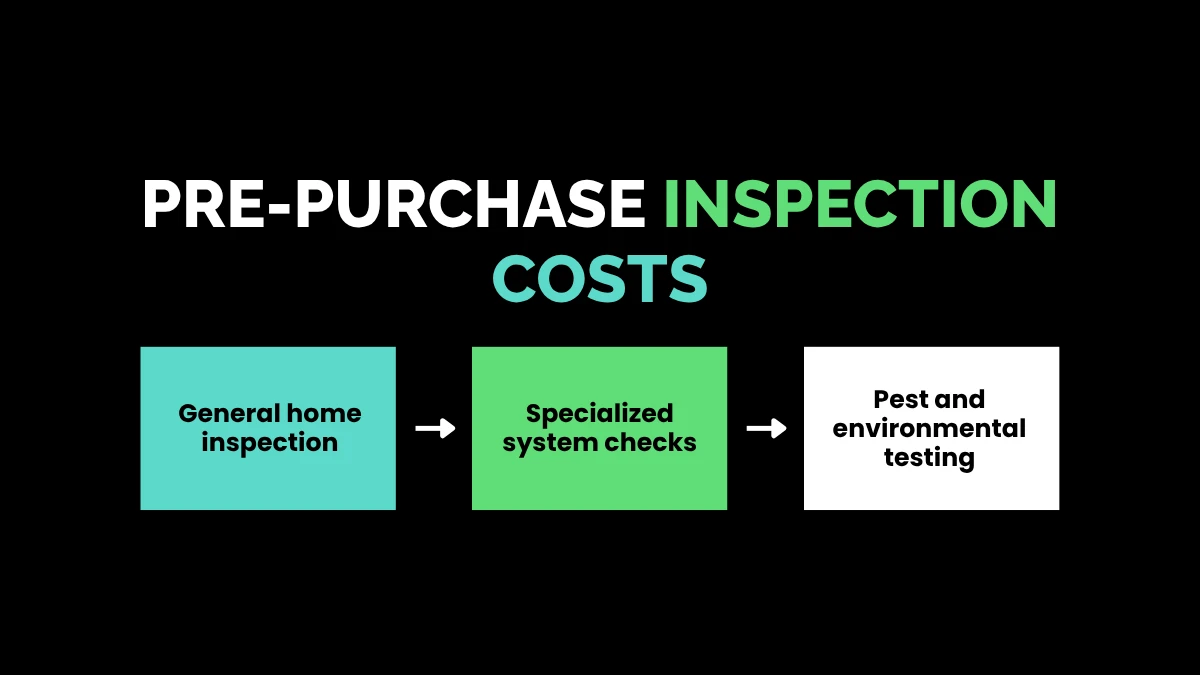
Skipping initial property checks is one of the riskiest moves any buyer can make.
Investing cash in inspections upfront protects your future finances from massive unexpected structural disasters.
General Home Inspection
A certified home inspector examines the home’s roof, foundation, plumbing, and electrical setup thoroughly.
They identify hidden safety hazards, active leaks, or deferred maintenance issues before you buy.
Paying a few hundred dollars now protects you from inheriting ruined systems later.
Specialized System Inspections
Standard home inspections do not cover deep specialized systems like sewer lines or chimneys.
Sewer scope inspections, chimney checks, and HVAC thermal scans require separate dedicated professionals.
Uncovering cracked main sewer pipes before closing gives you immense bargaining power during negotiation.
Pest, Termite, and Environmental Testing
Wood-destroying insects like termites can quietly compromise a home’s wooden frame over time.
Environmental hazards such as radon gas, mold, or lead paint also demand specialized testing equipment.
Discovering these problems early allows you to request full repair credits from the current owner.
4. Move-In & Settlement Expenses
Congratulations on reaching closing day and receiving your keys!
However, transitioning your life into a new space triggers immediate out-of-pocket expenses you must budget for.
Professional Moving Services & Supplies
Transporting your possessions across town or across state lines is rarely cheap.
Hiring professional movers, renting moving trucks, and purchasing boxes quickly adds up.
Even DIY moves involve hidden costs like fuel, equipment rentals, and meal expenses for friends.
Utility Activation Fees and Deposits
Transferring or opening new accounts for electricity, gas, water, internet, and trash requires upfront setup cash.
Utility companies often require security deposits if you are establishing brand-new regional accounts.
These combined activation fees can surprise buyers handling first time homebuyer costs during their move week.
Immediate Security & Lock Rekeying
For proper safety, you must rekey every exterior lock the moment you move in.
You never know how many spare keys previous owners, contractors, or neighbors still hold.
Adding modern smart locks or full home security systems introduces additional initial expenses.
Essential Window Coverings & Basic Fixtures
It is shockingly easy to forget that seller staging usually excludes practical privacy items.
Moving into a home without blinds, window curtains, or shower curtains creates an instant purchasing emergency.
Outfitting every window in a medium-sized house can cost hundreds or even thousands of dollars.
5. Ongoing Ownership & Property Maintenance
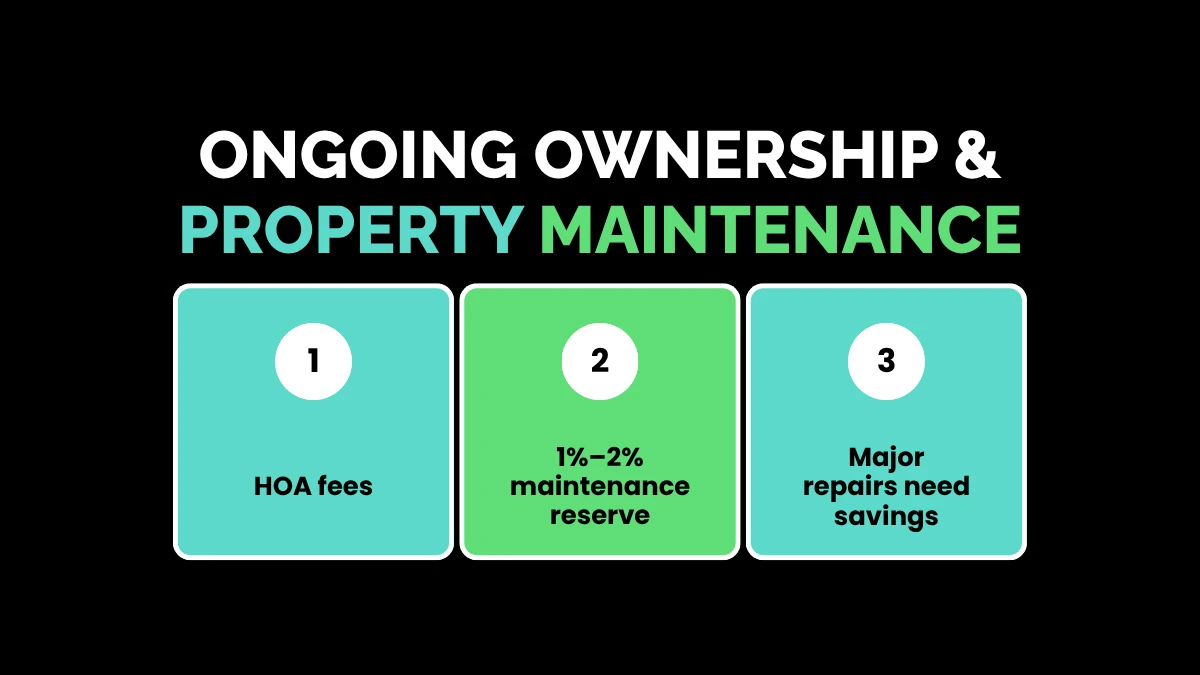
Owning property means you are officially the landlord, repairs manager, and groundskeeper wrapped into one.
When systems break down, there is no building manager to call, you must cover repairs yourself.
Homeowners Association (HOA) Dues
Properties located within managed communities typically require mandatory monthly or annual HOA fees.
These funds pay for shared amenities like pools, local road maintenance, and neighborhood landscaping.
Beware of unexpected HOA special assessments levied to fund major community repairs suddenly.
Annual Routine Maintenance Reserves
A practical rule of thumb suggests setting aside 1% to 2% of property value annually for repairs.
Routine tasks include furnace servicing, gutter cleaning, power washing, and minor plumbing adjustments.
Neglecting routine upkeep always leads to far more expensive emergency replacements down the road.
Landscaping & Exterior Maintenance
Maintaining curb appeal requires functional lawn mowers, trimmers, fertilizers, and seasonal cleanup supplies.
If you choose to outsource exterior care, hiring lawn teams adds a recurring monthly expense.
Tree trimming, sprinkler system winterization, and driveway sealing add further long-term care costs.
Major Capital Expenditure (CapEx) Replacements
Every major home system has a finite operational lifespan that inevitably comes to an end.
Replacing an aging roof, central HVAC unit, or water heater demands serious capital reserves.
Having an emergency fund prevents these inevitable home structural failures from destroying your finances.
| Maintenance Item | Estimated Annual Cost | Service Frequency |
| Routine Upkeep Reserve | 1% – 2% of home market value | Continuous / Ongoing |
| HOA Dues & Assessments | $100 – $500+ per month | Monthly / Annually |
| Lawn & Exterior Care | $500 – $2,000 per year | Seasonal |
| CapEx Replacement Fund | $1,000 – $3,000 per year | Long-Term Emergency Reserve |
6. Smart Strategies to Manage Hidden Costs
Navigating the hidden costs of buying a house successfully comes down to proactive financial preparation.
At Weird Wealth, we advise setting up clear financial buffers so you never feel cash-strapped after closing.
- Establish a dedicated post-closing buffer: Save an extra 3% to 5% beyond your down payment specifically for initial repairs and unexpected home buying costs.
- Shop aggressively for major providers: Compare quotes across multiple lenders, title companies, and home insurance agencies to lock in competitive pricing.
- Analyze your official Loan Estimate form: Scrutinize page 2 of your initial Loan Estimate document carefully to catch junk lender fees early.
- Negotiate explicit seller concessions: Request that the seller pays a percentage of your closing costs when buying a home to minimize out-of-pocket settlement cash.
7. How to Estimate Your Total Home Purchase Budget
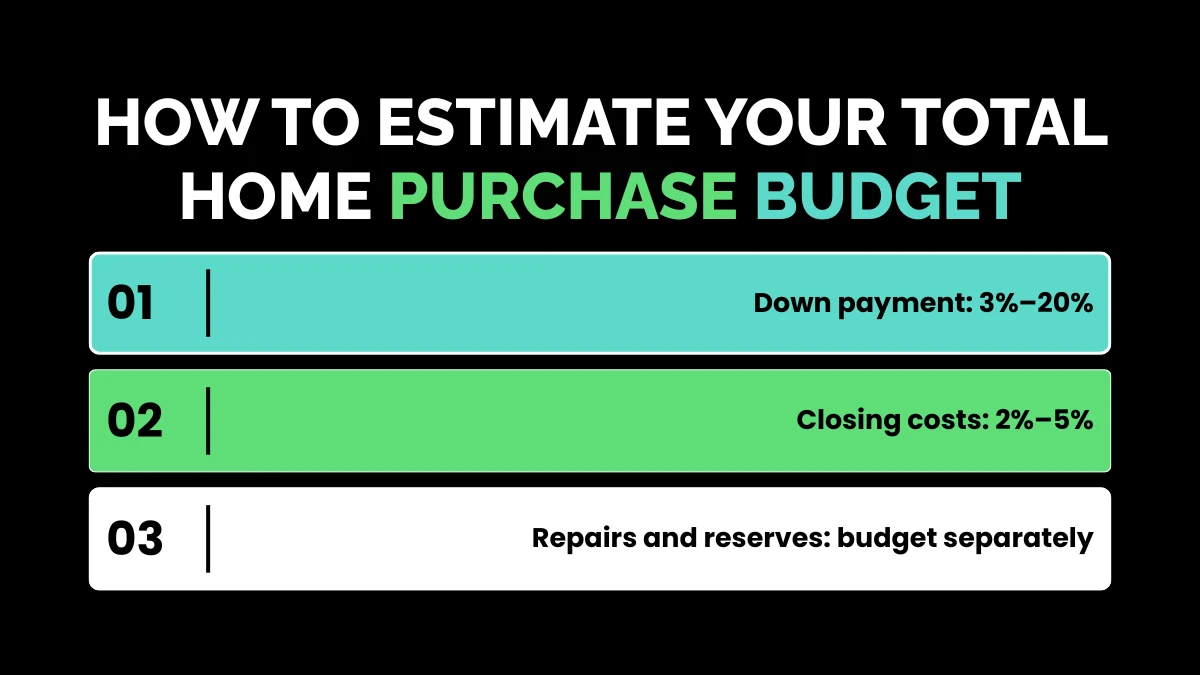
Calculating your real financial outlay prevents painful unexpected surprises when you finally sign mortgage paperwork.
Use this clear structural formula to figure out your complete cash requirement accurately before writing offers:
| Expense Category | Typical Financial Range | Payment Timing |
| Down Payment | 3% – 20% of sale price | Paid at Closing Table |
| Closing Costs | 2% – 5% of mortgage total | Paid at Closing Table |
| Move-in & Repairs | $2,000 – $6,000+ total | First Month of Ownership |
| Emergency Repair Buffer | 1% – 2% of house value | Ongoing Reserve Account |
Taking time to map out these figures ensures first time homebuyer costs remain totally controlled and manageable.
Conclusion
Purchasing real estate is undoubtedly one of the most exciting wealth-building moves you will ever make.
However, jumping into a contract without analyzing hidden expenses can cause extreme financial stress down the road.
By factoring in closing costs when buying a home, insurance changes, utility deposits, and ongoing maintenance, you protect your long-term wealth.
Take time to review your budget carefully, account for all additional costs of buying a house, and build a healthy cash buffer.
Proper financial preparation transforms homeownership from a stressful burden into a secure foundation for your financial future.
Frequently Asked Questions
What are closing costs when buying a home?
Closing costs are administrative, legal, and lender processing fees paid at settlement, usually totaling 2% to 5% of the mortgage.
How much extra money should I save for unexpected home buying costs?
You should generally save an extra 3% to 5% of the total purchase price to cover closing fees, moving, and emergency repairs.
What is the biggest hidden cost for first time homebuyer costs?
The largest surprise for first time homebuyer costs is often ongoing property maintenance, reassessed property taxes, and monthly private mortgage insurance.
Can hidden costs of buying a house be negotiated with sellers?
Yes, buyers can often negotiate seller concessions to cover closing costs or request price reductions based on thorough home inspection reports.
Why do property taxes often increase after buying a house?
Local tax authorities frequently reassess property value after a sale, adjusting property taxes upward to match the property’s new purchase price.