
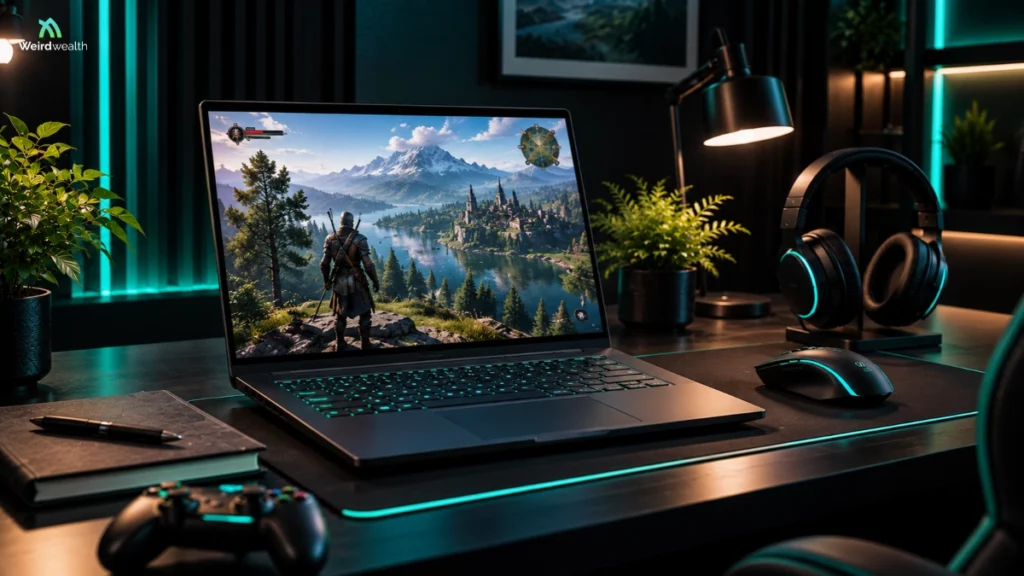
A gaming laptop can cost thousands of dollars, but the laptop itself is only one part of the transaction. The interesting business opportunity begins before the purchase and continues long after it. Someone searching for best gaming laptop is trying to make a decision: what should they buy, what should they avoid, and where will their money deliver the most performance?
For a publisher, entrepreneur, or niche-media operator, that decision-making process can be more valuable than the product sitting in the shopping cart.
Key Takeaways
- Best gaming laptop is a high-intent search that can reveal a customer’s immediate buying problem.
- Gaming hardware creates opportunities beyond selling laptops, including accessories, upgrades, content, tools, newsletters, and services.
- Buyers increasingly have to balance GPU performance, display quality, portability, thermals, storage, and price.
- The most interesting business may be owning the customer’s research journey rather than owning the inventory.
- A focused gaming audience can become a long-term commercial asset.
The search is more valuable than the laptop
Here’s the part I would pay attention to. Someone doesn’t usually search for the best gaming laptop because they want to learn the history of portable computers.
They’re probably considering spending money.
And before that money changes hands, they have questions.
Should they spend $1,000 or $2,000?
Is the more expensive GPU actually worth it?
Would a smaller machine make more sense?
Should they buy an older model at a discount?
Will the laptop also work for school, business, editing, or other demanding tasks?
Those questions create an information market around the physical product.
Current 2026 buying guides show just how many variables buyers are balancing, including GPU, CPU, display, storage, size, refresh rate and upgradeability.
That’s where I’d look for the opportunity.
What does the customer buy after the laptop?
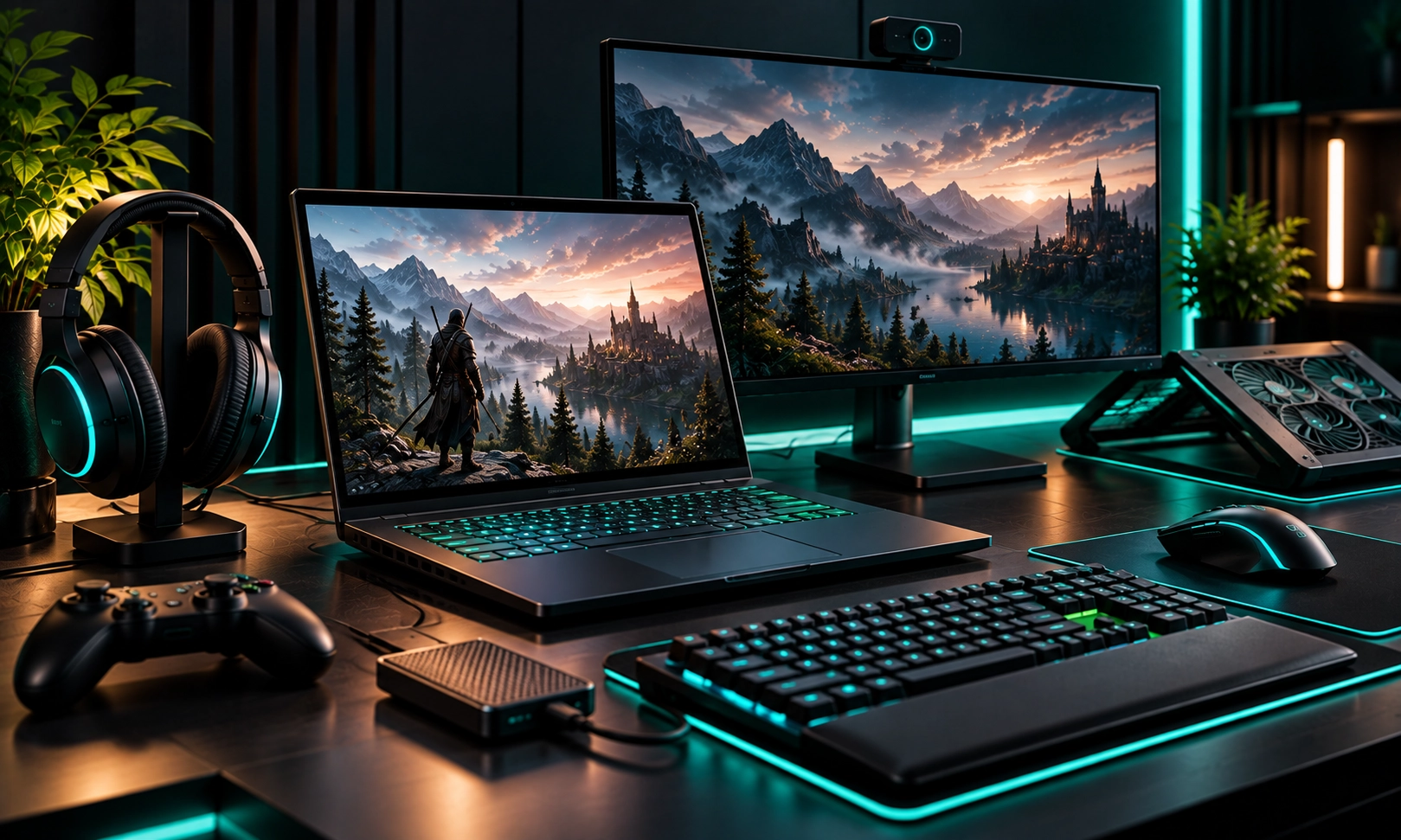
This is where a simple product search becomes an ecosystem.
A gaming laptop buyer may eventually need:
- Gaming headphones
- A mouse
- A keyboard
- An external monitor
- A controller
- Additional storage
- RAM
- A laptop stand
- A cooling solution
- A webcam
- Streaming equipment
The purchase doesn’t necessarily end when the laptop arrives. It can become the first transaction in a much longer customer relationship. And that changes how an entrepreneur should think about the keyword. Instead of asking:
“How do I make money from gaming laptops?”
Ask: “What else will this customer need before, during, and after buying one?” That is a much bigger question.
Could you build a business without selling a single laptop?
Yes. In fact, that’s where I’d start. Building an inventory-heavy electronics business requires capital, logistics, returns, warranties and customer support.
A media or information business has a different starting point. You could build a publication that helps buyers make better hardware decisions.
Instead of publishing endless product lists, you could explain:
- Which specifications actually matter
- When paying more makes sense
- Which upgrades can wait
- How to compare GPUs
- What display specifications mean
- When buying older hardware makes financial sense
- How to build a complete gaming setup
The product becomes the subject. The decision becomes the business.
What would you monetize?
There isn’t just one route.
| Business model | What you’re selling | Where the value comes from |
| Hardware publication | Research and buying guidance | Advertising and commercial partnerships |
| Affiliate content | Product recommendations | Purchase commissions |
| Comparison tools | Easier buying decisions | Referrals, advertising or partnerships |
| Newsletter | Curated hardware intelligence | Sponsorships and subscriptions |
| Upgrade guides | Advice around existing hardware | Commerce and partnerships |
| Gaming marketplace | Access to buyers and sellers | Listings or transaction fees |
| Setup consultancy | Personalized equipment guidance | Service revenue |
The exact economics vary by market and business model. But the common thread is simple: You don’t necessarily need to own the product to own the audience around the product.
Why would someone trust your recommendation?
This is where most content businesses get lazy. If every article tells readers to buy something, eventually readers notice. Imagine a publication that occasionally says:
Don’t upgrade yet.
That sentence can be more powerful than another affiliate button. If a laptop still does what the reader needs, telling them to keep their money can demonstrate editorial independence.
Then, when the reader genuinely needs a new machine six months later, your recommendation carries more weight. Trust isn’t decoration. Trust is part of the monetization model.
What happens to the old laptop?
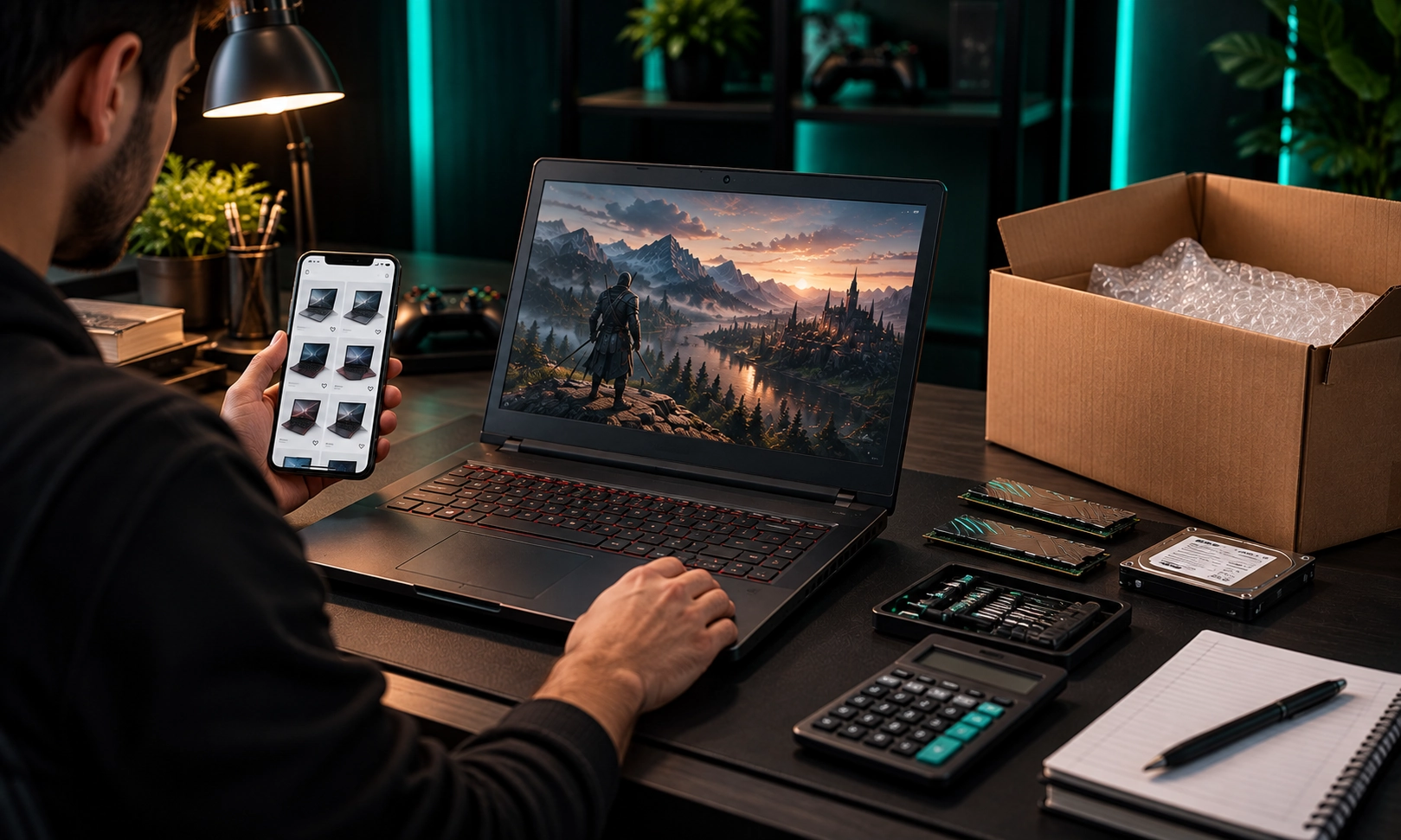
Here’s an opportunity many product publishers ignore. The buyer doesn’t magically stop owning their previous machine. They now have another problem:
What do I do with the old one?
Sell it?
Upgrade it?
Give it to someone?
Use it as a media server?
Keep it as a backup?
Trade it in?
That creates another content and commerce layer.
A specialized publication could build resources around used gaming laptops, upgrade economics, resale values, hardware testing, and buying second-hand equipment. The original search brought the reader in. The next problem keeps them there.
Could the used gaming laptop market become the real opportunity?
Potentially. And this is where I would think like a business owner rather than an affiliate marketer. You don’t have to start by buying used laptops yourself. First build an audience interested in buying and selling them.
Teach readers how to inspect:
- GPU performance
- Battery condition
- SSD health
- Screen quality
- Thermals
- RAM
- Warranty status
- Upgradeability
Then you have the foundation for something bigger: a marketplace, listing service, inspection service, or referral business, depending on the market. The order matters. Audience first. Infrastructure second. Inventory last.
What if the buyer is a creator, not just a gamer?
Now the audience becomes even more interesting. A gaming laptop can also be a workstation.
Current reviews note that gaming laptops can handle demanding workloads such as video editing, photo editing and rendering, although performance and portability vary substantially between models.
That creates another niche: gaming laptops for creators.
The audience might include streamers, video editors, developers, designers and entrepreneurs who want one machine capable of handling both work and entertainment.
Now you’re no longer competing only for gamers. You’re competing for people making larger technology purchases for multiple reasons.
What question would I ask that most laptop websites don’t?
I’d ask: “What happens if the laptop you buy is actually good enough for the next three years?”
That’s an uncomfortable question for a product publisher. But it’s useful for the reader. If the answer is yes, then constantly upgrading isn’t necessarily the smartest financial decision.
A business built around intelligent purchasing can actually benefit from telling customers when not to spend.
That’s how you stop being another shopping website. You become a financial filter for technology purchases.
The Gaming Laptop Money Map
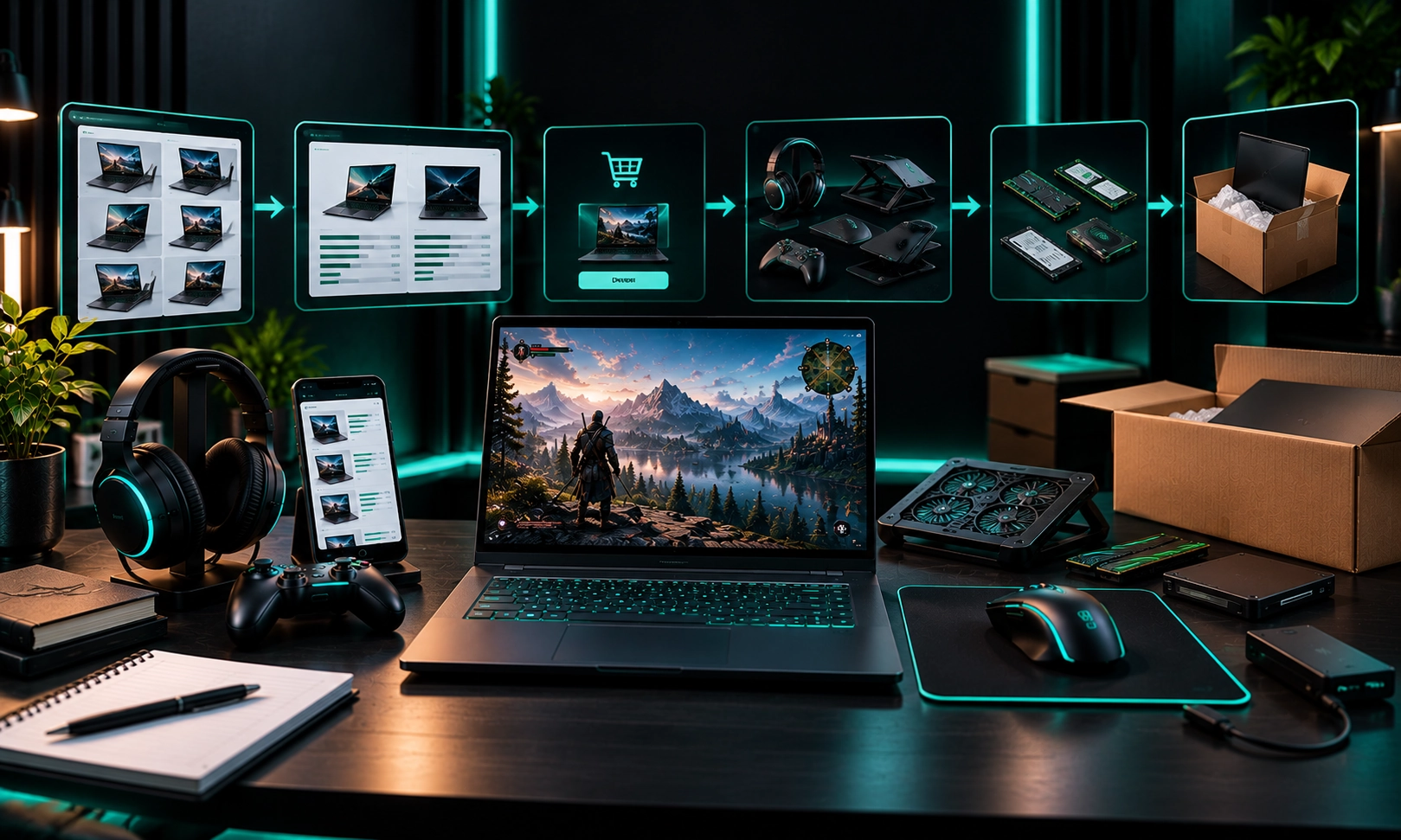
I’d think about the customer journey like this:
Search → Research → Compare → Purchase → Accessorize → Upgrade → Resell → Replace
Most websites fight over the first three stages. That’s crowded territory.
The bigger opportunity can be owning more of the journey. Help the customer decide. Help them build the setup.
Help them upgrade. Help them sell the old machine. Then help them choose the next one. One customer can potentially create value repeatedly without you having to manufacture the laptop.
The WEIRD Wealth Framework
Before turning any commercial keyword into a business, I use five questions.
W — Who is spending?
Don’t target “gamers.” Find the specific customer.
E — What are they worried about?
Price? Performance? Longevity? Portability?
I — What information are they missing?
Find the decision they cannot confidently make.
R — Where is the revenue?
Advertising, commerce, software, partnerships, services or referrals.
D — Can you keep the relationship?
A single click is traffic. A returning reader is an asset.
What would I build from zero?
I wouldn’t build another website publishing “10 Best Gaming Laptops.” I’d build something closer to: A smarter buying publication for people who don’t want to waste money on gaming hardware.
That positioning gives you room to talk about laptops, accessories, used hardware, upgrades, deals, setup economics and technology decisions.
You can still target commercial searches. But you’re giving the audience a reason to remember the brand. And that’s the difference between a website that collects clicks and a business that builds an audience.
Frequently Asked Questions
Can a gaming laptop website make money without selling laptops?
Yes. A gaming hardware publication can potentially monetize through advertising, affiliate relationships, sponsorships, comparison tools, newsletters, software, marketplaces and services. The strongest model depends on audience quality, traffic sources, commercial relationships and the costs involved in acquiring customers.
Is “best gaming laptop” a valuable commercial keyword?
It can be because the search often occurs during product research. However, the keyword itself isn’t the business. Its value comes from understanding the person behind the search and helping that person make a significant purchasing decision.
What can you sell around a gaming laptop?
The surrounding ecosystem includes headphones, mice, keyboards, monitors, storage, RAM, controllers, cooling products and other gaming equipment. Used-hardware services, upgrade guidance and setup-related products can create additional opportunities.
Is it smarter to sell gaming laptops or build content about them?
There isn’t one universal answer. Selling hardware can create direct revenue but also introduces inventory, logistics, warranty and support considerations. A content-first business can begin with information and audience-building, then expand into commerce or other services once demand is better understood.
The Weird Wealth Read
This is the lesson hidden inside best gaming laptop. Don’t stare at the laptop. Follow the customer.
They search because they have a problem. They compare because they’re uncertain. They buy because they finally trust a decision. Then they discover another problem: accessories, upgrades, resale, repairs or eventually replacement.
That’s an entire commercial journey hiding behind one search. If I were building the business, I wouldn’t try to own the warehouse.
I’d try to own the moment before the purchase and every useful moment after it. Because the laptop is a product. The customer relationship is the asset.