
A good pair of headphones can disappear into someone’s daily routine. They travel to work, sit beside a laptop, follow gamers into long sessions, and become part of a creator’s recording setup. But behind that simple product is a surprisingly large ecosystem of buyers, sellers, reviewers, repair specialists, accessory makers and niche businesses.
That makes headphones interesting from a Weird Wealth perspective. The opportunity isn’t necessarily in manufacturing the next pair of headphones. It can be in understanding what people need before, during and after the purchase.
Key Takeaways
- The headphone economy extends far beyond selling hardware.
- Specialized audiences can create opportunities for small businesses and publishers.
- Resale and repair require careful margin calculations rather than impulse buying.
- Accessories, education and specialized services can sit around the main product.
- The most useful business question is often: What problem exists around the product?
Why are headphones such a big business opportunity?
The answer isn’t simply that people like music. Headphones serve completely different purposes. A commuter may prioritize noise cancellation, a gamer may care about latency and microphone quality, a musician may need accurate monitoring, and a remote worker may care more about comfort and call quality. Those different priorities create different customer problems. And customer problems create markets.
A headphone buyer might need:
- Help choosing between models
- A replacement case
- New ear pads
- Repair services
- A microphone solution
- A comparison between generations
- Advice about compatibility
- A place to resell an old pair
The product may be the transaction, but the surrounding problems are where additional businesses can emerge.
What are the different ways to make money around headphones?
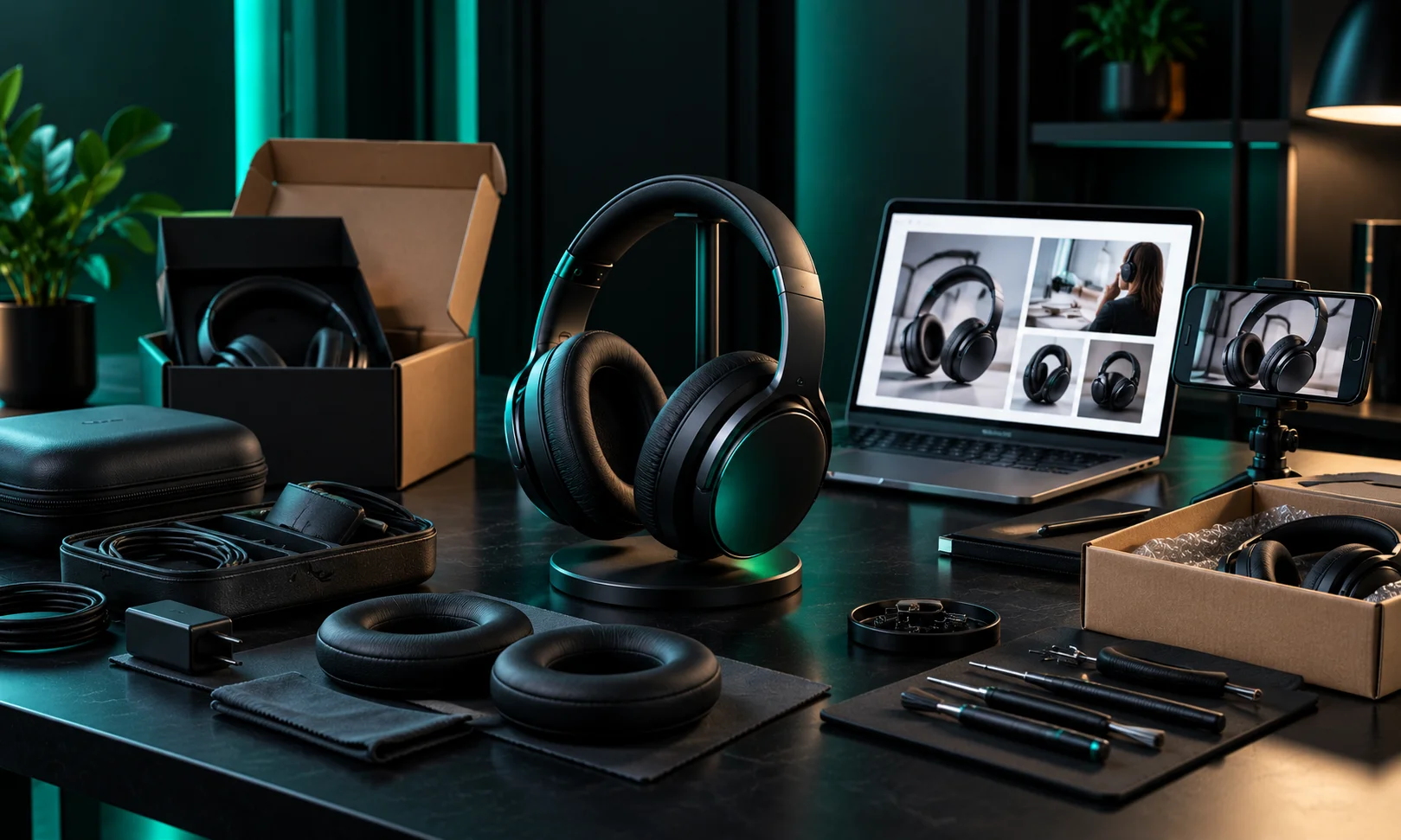
The obvious model is retail, but it is only one part of the ecosystem.
| Opportunity | What the customer needs | Potential business model |
| Product sales | A suitable pair of headphones | Retail or ecommerce |
| Reviews | Reliable buying information | Publishing, advertising |
| Accessories | Protection and upgrades | Ecommerce |
| Repairs | Longer product life | Local or online service |
| Resale | Recovering value from used equipment | Marketplace or flipping |
| Rentals | Temporary access | Rental service |
| Education | Help understanding technical choices | Guides, courses, consulting |
| Community | Advice from other enthusiasts | Membership or newsletter |
The important distinction is that these models solve different problems.
A business doesn’t have to compete directly with Sony, Apple, Bose or other major manufacturers to participate in the category.
Can headphone knowledge become a business asset?
Yes, and this is one of the more interesting opportunities. Someone who spends years understanding headphones can develop useful knowledge about brands, generations, sound profiles, comfort, connectivity, microphones, accessories, repairability and resale demand.
That knowledge can become content. A specialist could build a publication focused on headphones for remote workers. Another could create a newsletter for audiophiles. Someone else could concentrate on gaming headsets or affordable equipment for students.
The physical products change. Useful knowledge can keep producing value.
Could you make money buying and reselling headphones?
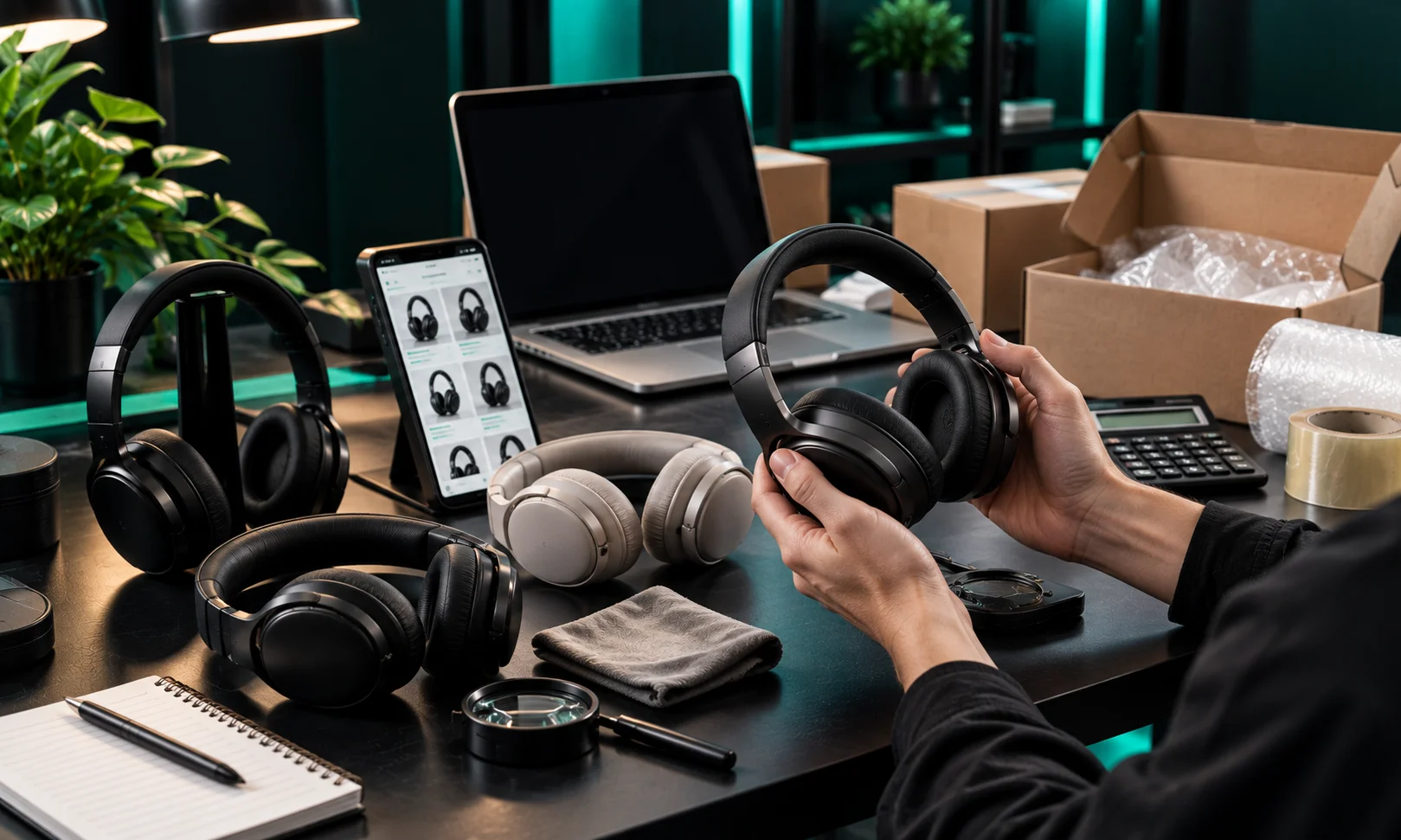
Potentially, but successful resale is more complicated than finding something cheap and listing it at a higher price.
A reseller needs to account for:
- Purchase price
- Marketplace fees
- Shipping
- Packaging
- Repairs
- Authentication
- Returns
- Time spent sourcing inventory
- Expected selling price
The basic calculation is:
Potential profit = Selling price − total acquisition and selling costs
A $200 pair purchased for $120 isn’t automatically a $80 profit.
If it requires $25 in repairs, $15 in shipping and $20 in platform and transaction costs, the economics look very different.
This is why experienced resellers focus on margin after costs, not the difference between two headline prices.
Is repairing headphones a better opportunity than selling them?
For some entrepreneurs, it can be. Headphones can develop practical problems such as worn ear pads, damaged cables, broken hinges, battery issues or other hardware failures. A product that still has useful components may be worth repairing rather than replacing.
The business opportunity comes from the gap between two numbers:
Cost to repair < value customers place on the repaired product
That doesn’t work for every model. Replacement parts, labor time and product construction can make some repairs uneconomical.
But where repair costs remain reasonable, extending a product’s useful life can create value for both the customer and the business.
What about selling headphone accessories?
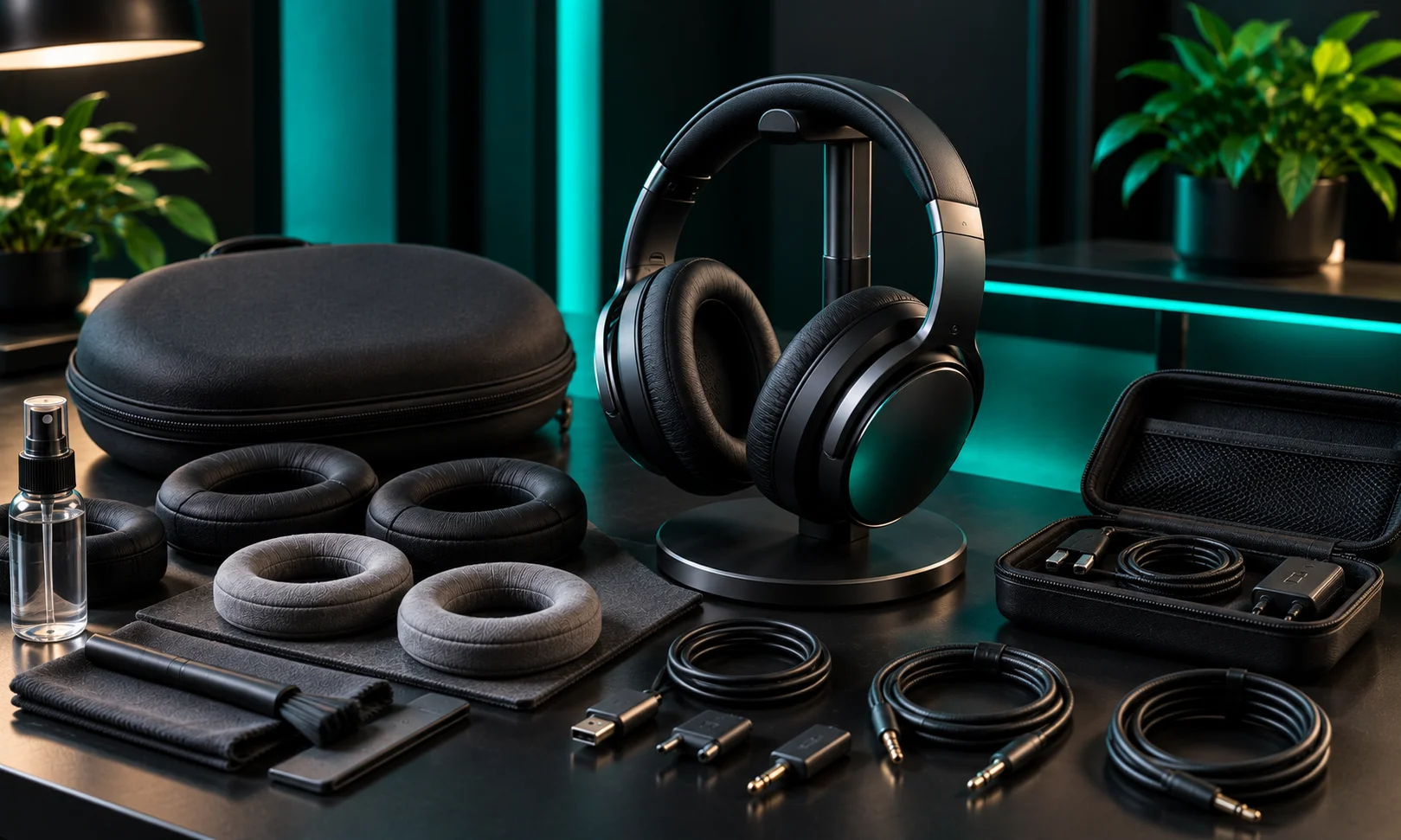
Accessories can be an interesting part of the ecosystem because customers often need more than the original product.
Depending on the type of headphones, buyers may look for cases, stands, replacement pads, cables, adapters, cleaning equipment or travel solutions. This creates an important business principle:
You don’t always need to sell the main product. Sometimes the better opportunity is selling what helps people use it.
The same concept applies across many categories, from cameras and cars to gaming equipment and smartphones.
Why can a smaller headphone website compete with bigger publishers?
It doesn’t need to cover everything. A large technology publication might review hundreds of products across dozens of categories. A smaller publisher can become highly specific.
For example, instead of trying to rank for every headphone-related topic, a site could focus on:
Headphones for remote workers
That creates a much narrower editorial mission.
The content could answer questions about:
- Long-session comfort
- Microphone performance
- Background noise
- Multi-device connectivity
- Video-call reliability
- Battery life
- Office environments
Specific audiences often have specific questions. And specific questions are where specialist publishers can become useful.
What makes a headphone niche worth pursuing?
Use the VALUE Framework before putting money into an idea.
1. Verify demand
Are people actively searching for the problem?
2. Analyze the economics
Can you make money after all real costs?
3. Locate the customer
Who specifically has this problem?
4. Understand competition
What would make your solution meaningfully different?
5. Examine repeatability
Can you solve the same type of problem repeatedly?
That last point is critical.
One successful sale is not necessarily a business.
A repeatable process is.
Could content about headphones become more valuable than the headphones?
In some cases, yes. Think about the decision a customer makes before spending money.
Someone considering a $300 pair may spend hours comparing models, reading reviews, watching demonstrations and searching for alternatives.
The customer isn’t only buying a product. They’re trying to reduce the risk of making the wrong decision.
That’s an information problem. A publisher that consistently solves that problem can build an audience without manufacturing a single pair of headphones.
That audience can eventually support advertising, partnerships, affiliate commerce, newsletters and other legitimate publishing models. The value comes first. The monetization follows.
What is the weirdest opportunity around headphones?
It may be the market created by people who already own them.
Instead of asking:
“How can I sell more headphones?”
ask:
“What problems does someone encounter six months after buying headphones?”
- Maybe the pads are uncomfortable.
- Maybe the case is terrible.
- Maybe the microphone isn’t good enough.
- Maybe the customer wants to sell the headphones.
- Maybe they want to repair them.
- Maybe they discover that another model would have been better.
Those are separate commercial problems hiding behind one purchase.
Frequently Asked Questions
Are headphones a good niche for an online business?
They can be, particularly when the business targets a specific audience or problem rather than trying to compete with major electronics retailers on price. Publishing, accessories, repair, resale and specialized services are examples of businesses that can exist around the broader headphone market.
Can you make money reviewing headphones?
A review website can potentially generate revenue through advertising, affiliate relationships, sponsorships and other publishing models—however, credibility matters. Reviews should clearly distinguish editorial opinions from commercial relationships and should not claim hands-on testing that didn’t happen.
Is headphone flipping profitable?
It can be, but profitability depends on acquisition prices, resale demand, condition, fees, shipping, repairs and selling time. A product’s original retail price does not determine its secondhand profit. Resellers need to calculate their complete cost before buying inventory.
What is the easiest headphone-related business to start?
A service or content business can require less upfront capital than buying large amounts of inventory. Examples include specialized publishing, buying guides, repair services, consulting or creating useful educational resources for a clearly defined audience.
The Weird Wealth Read
The interesting part of best headphones isn’t actually the word “best.” It’s the enormous ecosystem surrounding that decision.
Millions of people don’t simply buy headphones. They research them, compare them, maintain them, replace them, resell them and ask other people whether they made the right choice.
That’s the opportunity. A Weird Wealth approach isn’t to chase the biggest product on the shelf. It’s to look one step sideways and identify the problem everyone else is overlooking.
Find the product. Then find the friction around it.
That friction is often where the business starts.