You have been working the same job for years. The money is fine. But it is never enough. There is no raise coming, no extra hours you can squeeze in, and no one is handing you a shortcut. You scroll through social media and see people talking about passive income like AI digital products. It sounds too good to be true, so you keep scrolling.
But here is the part nobody tells you. The people actually building real income online are not lucky. They figured out something specific: how to use AI digital products to do the heavy lifting while they sleep. And the tools available right now have changed everything.
This is not a get-rich-quick pitch. This is a real look at what is working, who is doing it, and how you can start your own AI side hustle without quitting your day job.
What Are AI Digital Products?
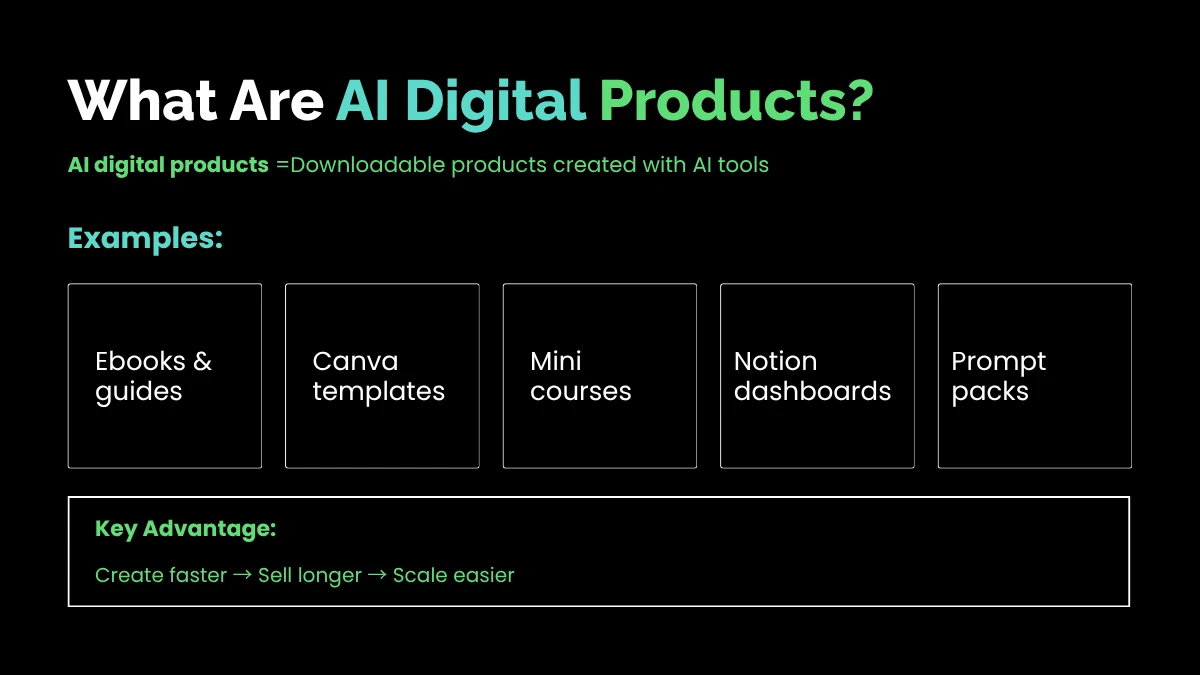
An AI digital product is any downloadable or deliverable product that was built, designed, or enhanced using artificial intelligence tools. That covers a massive range of things: ebooks, guides, Notion templates, Canva designs, online courses, spreadsheet tools, prompt packs, and more.
The key difference from traditional digital products is speed and scale. What used to take weeks now takes days. What used to require a graphic designer, a copywriter, and an editor can now be done by one person with the right AI tools and a clear plan.
You do not need to be technical. You do not need to write code. What you need is an idea, a real audience problem to solve, and the willingness to put in the work upfront so that work pays you later.
The Real Reason Passive Income Digital Products Work Now
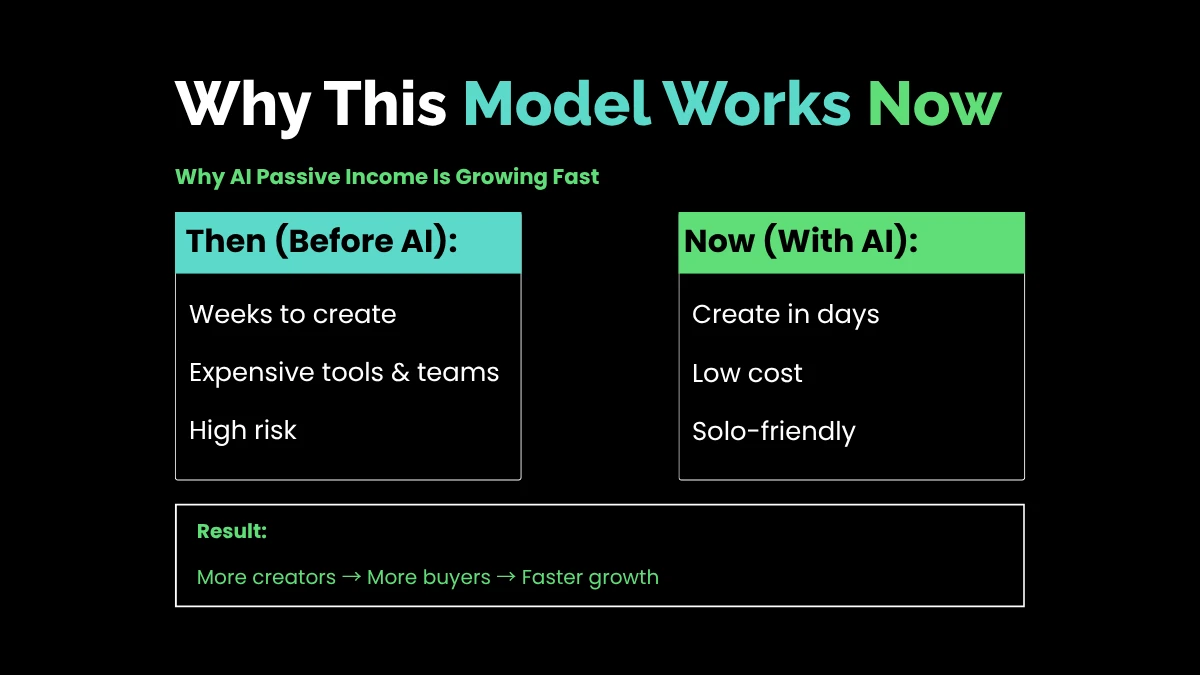
Five years ago, creating a digital product meant spending months researching, writing, and formatting. You hired a designer for the cover. You paid an editor to clean up your writing. By the time the product was ready, you were exhausted and had spent money you were hoping to earn back.
Now that same process takes a weekend. AI tools can help you outline a 40-page ebook in minutes. Design tools with AI assistance can produce professional covers and layouts without a creative background. The friction is gone.
And the market has grown alongside the tools. More people shop digitally than ever before. Platforms like Gumroad, Etsy, Payhip, and Lemon Squeezy have made it simple for anyone to sell a PDF, a template, or a course without building a complex website.
The combination of low production cost and high buyer demand is what makes passive income digital products so compelling right now. You create once and sell forever.
The Most Popular AI Digital Products People Are Selling
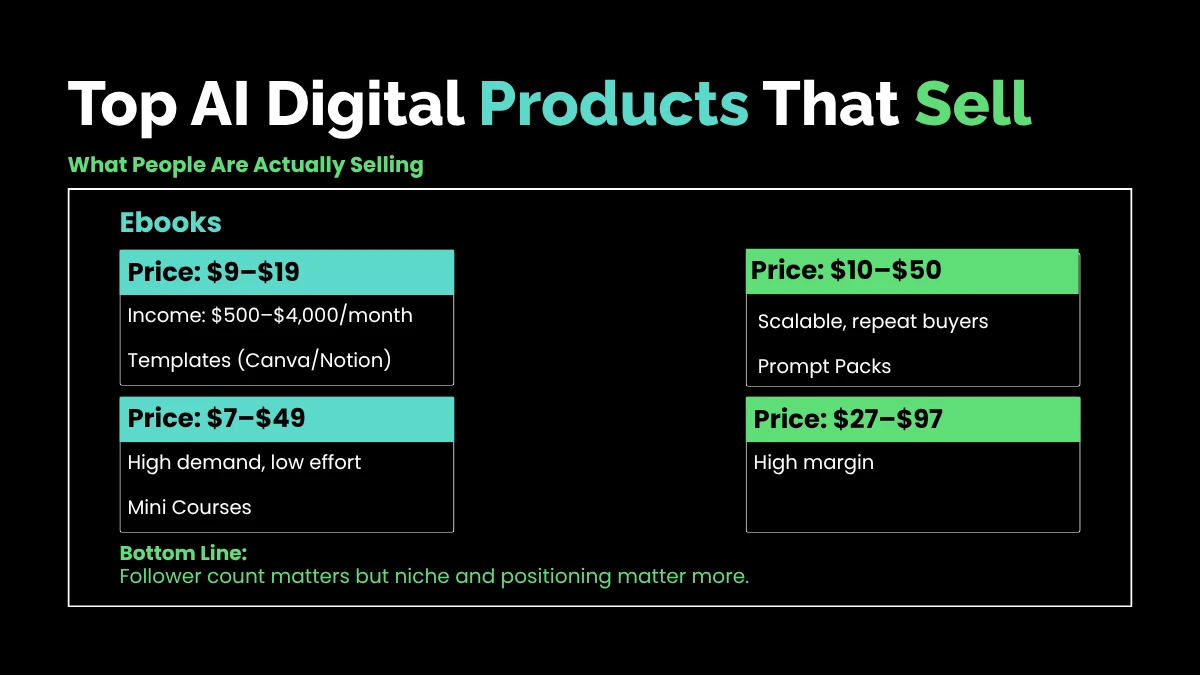
1. Ebooks and Digital Guides
Learning how to sell ebooks online has become one of the fastest entry points into passive income. AI writing tools help creators draft content quickly, but the real value comes from the specific niche you choose.
A personal finance creator making $4,000 per month reported that she used AI to outline 12 ebooks in three months. She focused on very specific topics: budgeting for freelancers, saving on a variable income, first apartment finances. Each ebook sells for $9 to $19, and together they bring in consistent revenue each month with no ongoing effort.
The secret is specificity. A guide called “How to Budget” will struggle. A guide called “Budgeting for Hairstylists Who Work Commission” will sell.
2. Canva and Notion Templates
Templates are one of the most underrated AI digital products you can create. They solve a specific, recurring problem for the buyer and take almost no material cost to produce.
A Notion template for content creators sold over 800 copies at $27 each in its first year. That is $21,600 from a product the creator built over two weekends. AI tools helped with the copy, the structure, and the marketing description.
Canva social media templates are another category blowing up on Etsy. Sellers report making anywhere from $300 to $3,000 per month from template bundles, often using AI image generation and text prompts to speed up the design process.
3. AI Prompt Packs
This one surprised a lot of people. Selling curated prompt packs for tools like ChatGPT, Midjourney, and Claude has turned into a legitimate income stream. Buyers pay $7 to $49 for a well-organized collection of prompts built around their specific industry or goal.
A marketing consultant built a prompt pack for real estate agents, charging $29. Within six months, she had sold over 400 copies through a simple landing page and a handful of LinkedIn posts. No ads. No complicated funnel.
4. Mini Online Courses
Full-length video courses still take serious time. But mini courses, running 60 to 90 minutes, have carved out a strong market. AI helps with the script, the slide design, and even voiceover in some cases.
Priced between $27 and $97, these shorter formats often convert better than expensive flagship courses because the buyer commitment feels lower. For creators focused on an AI side hustle, this is one of the highest-margin options available.
How to Start Your Own AI Side Hustle Selling Digital Products
Getting started is simpler than most people think. Here is a straightforward path that works:
- Pick one audience with a specific, painful problem. Not a broad topic. A real, felt frustration.
- Choose the simplest product format that solves it. A checklist, a guide, a template, or a swipe file.
- Use AI tools to build a first draft quickly. ChatGPT, Claude, Canva AI, and Jasper are all solid starting points.
- Edit and humanize the output. Your voice, your examples, your insights. The AI sets the foundation; you make it real.
- List it on a platform where your audience already shops. Etsy, Gumroad, and Payhip all have built-in traffic.
- Promote it consistently for 60 to 90 days before evaluating results. Most people quit at day 14.
Common Mistakes People Make With AI Digital Products
Most people who fail with digital products make the same set of mistakes. Understanding them upfront saves months of wasted effort.
Going Too Broad
A product for everyone is a product for no one. The more specific your niche, the easier it is to find buyers, write compelling copy, and stand out in a crowded market.
Skipping the Research Phase
You can sell ebooks online all day if you build them around what buyers are already searching for. Skipping keyword and market research is one of the top reasons digital products never find their audience.
Publishing AI Output Without Editing
Raw AI content is easy to spot and easy to ignore. Buyers can tell the difference between a product with real insight and one that was pasted from a chatbot with no editing. Add your stories, your examples, and your perspective. That is what people are actually paying for.
Where to Sell Your AI Digital Products
Choosing the right platform matters. Here is a quick breakdown of where each product type tends to perform best:
- Etsy: Great for Canva templates, planners, and design assets. Built-in buyer traffic. Competitive but scalable.
- Gumroad: Best for creators with an existing audience. Simple setup, flexible pricing, supports subscriptions.
- Payhip: Good all-rounder with low fees. Works well for ebooks, courses, and templates.
- Lemon Squeezy: Strong for SaaS-adjacent digital products, prompt packs, and developer tools.
- Your own website: Highest margin, full control, but requires traffic-building effort.
For more tools and strategies that real people are using to build unconventional income online, check out Weird Wealth at weird wealth for a curated deep-dive into digital income models that actually work.
How Much Can You Realistically Earn?
Honest answer: it depends on your niche, your marketing, and how long you stick with it.
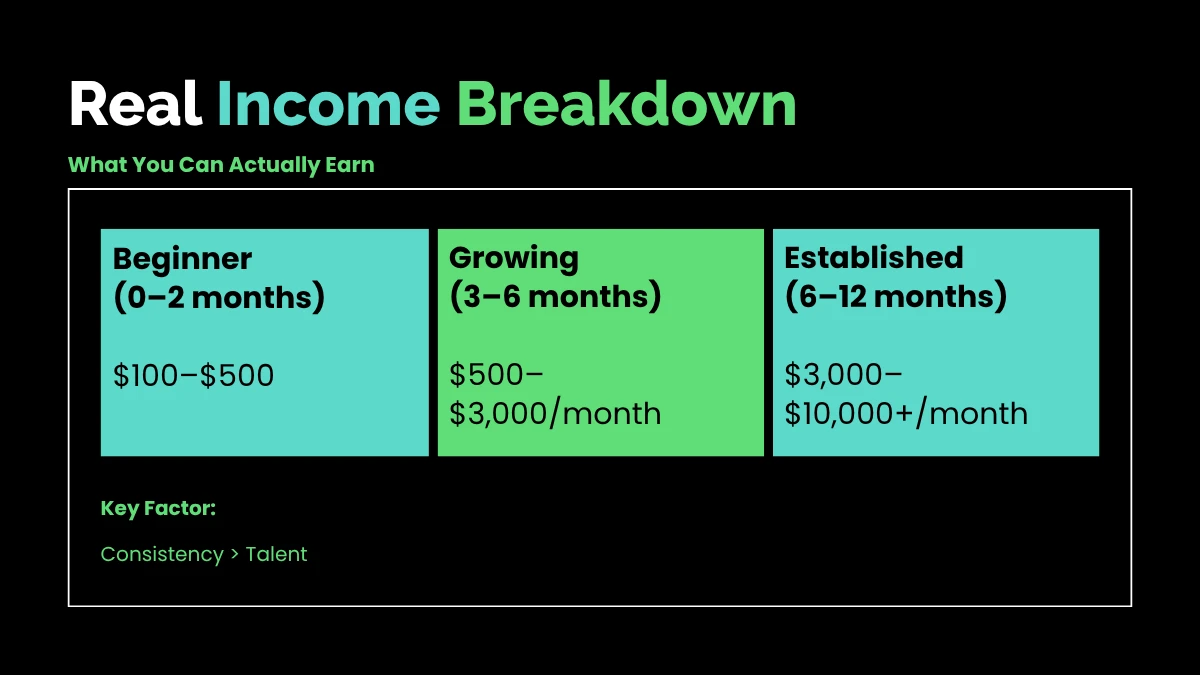
Many beginners make their first $100 to $500 within 60 days of listing a well-positioned product. Sellers who build a small library of two to five complementary products often hit $1,000 to $3,000 per month within six to twelve months.
The ceiling is much higher. Creators with an email list, a strong social media presence, or an active blog report $5,000 to $15,000 per month from passive income digital products alone. These are not outliers. They are people who started exactly where you are, kept going when results were slow, and eventually built something that runs without them.
The Role of SEO and Content in Selling Digital Products
Getting found matters more than having the perfect product. Most digital product creators who scale successfully combine their product listings with content: blog posts, YouTube videos, or social content that attracts buyers through search.
If you know how to sell ebooks online, think of SEO as your silent sales team. A blog post answering a question your buyer is already Googling, pointing to your product as the solution, can bring in consistent daily traffic without any ad spend.
AI tools have also changed content creation at scale. What once required a dedicated writer can now be handled by a single creator producing three to five optimized posts per week, each one designed to rank and convert. This is why the AI side hustle model has legs. It compounds over time.
The Window Is Open. Most People Will Not Walk Through It
The honest truth about AI digital products is that the opportunity is wide open right now. The tools are here. The platforms are ready. The buyers exist. What is missing, for most people, is the decision to actually start.
You do not need a massive following. You do not need to be the best writer. You need one good idea, one underserved audience, and the willingness to put something real out into the world.
The people building $2,000 or $10,000 months from passive income digital products are not smarter than you. They just started six months ago. The best time to start your own AI side hustle is right now.
Frequently Asked Questions
Can I sell AI-generated products legally?
Yes, in most cases. AI-generated content is generally legal to sell, particularly when you add substantial editing, original insights, or unique formatting. You should always review the terms of service of the AI tool you use to confirm commercial use is permitted. Most major platforms, including ChatGPT and Claude, allow commercial use of outputs.
What is the best digital product for beginners?
Templates and short ebooks are the easiest entry points. They require the least upfront time, have low production cost, and sell well at accessible price points. A niche-specific Canva template or a focused ebook in the $9 to $19 range is a great first product.
How do I sell ebooks online without a website?
You can sell ebooks directly through platforms like Gumroad, Payhip, or Etsy without building your own site. These platforms handle payments, delivery, and even basic marketing. A simple product listing with a clear title, compelling description, and strong cover image is enough to start making sales.
How long does it take to make passive income from digital products?
Most creators see their first sales within 30 to 60 days when they price correctly and promote consistently. Building meaningful passive income, where money comes in without active daily work, typically takes three to six months of sustained effort. The products that perform best are the ones solving a real, specific problem for a clearly defined audience.
What AI tools are best for creating digital products?
The most used tools among digital product creators currently include ChatGPT and Claude for writing and outlining, Canva with its AI features for design, Midjourney or DALL-E for imagery, and Notion AI for building structured templates. The best tool is the one that fits your workflow and lets you produce quality output quickly.
Is selling digital products still worth it in 2025?
Yes, and more so than ever. The digital product market has continued growing year over year. More buyers shop online for solutions to their problems, and the barrier to creating quality products has dropped significantly with AI tools. The market is not saturated for creators who choose specific niches and actually solve real problems.