
Key Takeaways
-
Air pressure imbalance inside plumbing or living spaces
-
Main culprit behind gurgling drains and sewer odors
-
Caused by blocked roof vents or heavy exhaust fan usage
-
Fixable via vent clearing, air admittance valves, or balancing airflow
Have you ever flushed your toilet and heard your bathroom sink gurgle like a thirsty monster? Or maybe you opened your front door on a windy afternoon and felt like you were pulling against a massive invisible magnet?
If so, you are definitely not alone. Every single week, thousands of homeowners run into this exact same confusing issue without realizing what is actually happening behind their walls.
House suction happens when negative pressure builds up inside your plumbing pipes or overall living space, pulling air inward instead of letting it flow freely.
In simple terms, your home acts like a giant vacuum cleaner. It desperately pulls air through your drains, doors, or windows to equalize the air pressure inside. When water flows down a drain line without proper airflow behind it, or when heavy exhaust fans pull air out of a sealed building, a vacuum lock forms. This vacuum creates suction that can pull water right out of your sink traps or make your exterior doors stick fast to their frames.
At Weird Wealth, we love helping homeowners spot these hidden household quirks before they turn into expensive emergency repairs or ruin your daily peace of mind. Let us break down everything you need to know about house suction, why it happens in everyday homes, and how you can fix it quickly without breaking the bank.
AI Overview
House suction refers to negative pressure inside a home’s plumbing pipes or living rooms, pulling air inward like a vacuum. It usually occurs when plumbing vents get clogged or exhaust fans pull out more air than enters. This imbalance causes gurgling sinks, slow drainage, backdrafting fumes, or hard-to-open doors. Understanding house suction helps you troubleshoot plumbing airflow and HVAC pressure issues safely.
What Causes House Suction in Your Home?
Air always moves from high-pressure zones to low-pressure zones to maintain balance. It is a fundamental law of physics that applies directly to the building you live in every day.
When your house seals up tight for energy efficiency, running heavy ventilation fans or draining large amounts of water forces air out without letting fresh replacement air back in.
Understanding how this balance breaks down helps you spot problems early before they cause permanent damage to your home’s systems.
Plumbing System Vacuum Traps
Every single time water rushes down a drain pipe, it needs air right behind it to push it along smoothly. Think of it like taking your finger off the top of a drinking straw, without that open air path, the liquid gets trapped or moves in jerky gulps.
Your plumbing system uses vent stacks, pipes that extend up through your roof, to introduce fresh air into the lines and maintain constant atmospheric pressure.
If your roof vent stack gets blocked by autumn leaves, snow, bird nests, or debris, water creates a powerful vacuum as it travels down the waste pipes.
That sudden vacuum creates house suction plumbing issues across your entire bathroom or kitchen. The suction gets so strong that it sucks water right out of your sink P-traps, leaving empty pipes that allow terrible sewer gas smells to leak right into your home.
HVAC and Exhaust Fan Imbalance
Plumbing is not the only culprit behind pressure problems in modern houses. Powerful range hoods, clothes dryers, and bathroom exhaust fans pull huge volumes of air out of your living space every minute.
In tightly insulated or newly constructed modern homes, this heavy air removal creates general negative pressure in house environments.
Your home gets so starved for replacement air that it starts pulling outdoor air through any tiny crack or opening it can find.
It can draw air backward through your chimney flues, pull drafty air through window seals, or even pull air directly through your drainage lines, making your entire indoor environment feel completely out of balance.
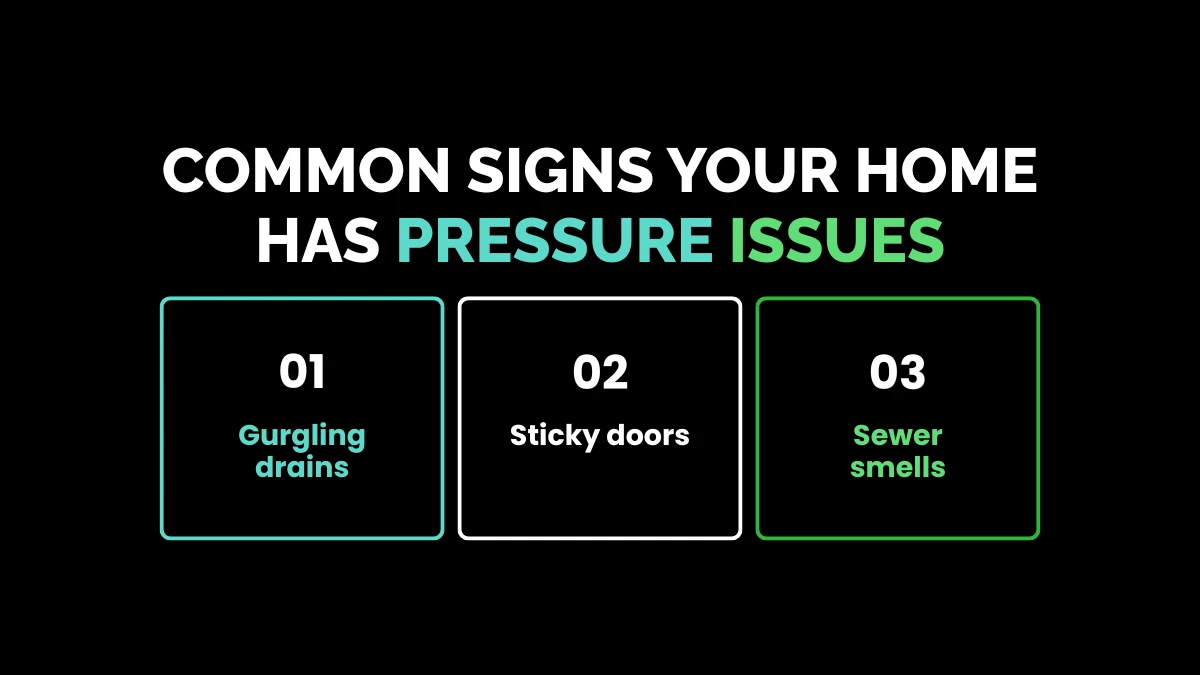
Common Signs Your Home Has Pressure Issues
You do not need fancy electronic gadgets or professional diagnostic tools to tell if your home is struggling with vacuum force.
Usually, your house gives you very clear visual and audible warnings that something is wrong with its airflow balance.
| Common Symptom | What It Feels/Sounds Like | Underlying Cause |
| Gurgling Drains | Sinks or tubs making bubbling noises during toilet flushes | House suction plumbing vacuum pulling air through P-traps |
| Sewer Odors | Foul smells near sinks or showers after heavy water use | Dry P-traps caused by suction pulling water seals away |
| Sticky Exterior Doors | Front door feels extremely heavy or slams shut violently | Negative pressure in house pulling against outer walls |
| Drafty Fireplaces | Ash smells or cold air rushing down the chimney flue | Exhaust fans pulling outdoor air in through flues |
Understanding the Hidden Risks of Unbalanced Pressure
Leaving air pressure problems unchecked is about much more than just dealing with annoying noises or sticking doors.
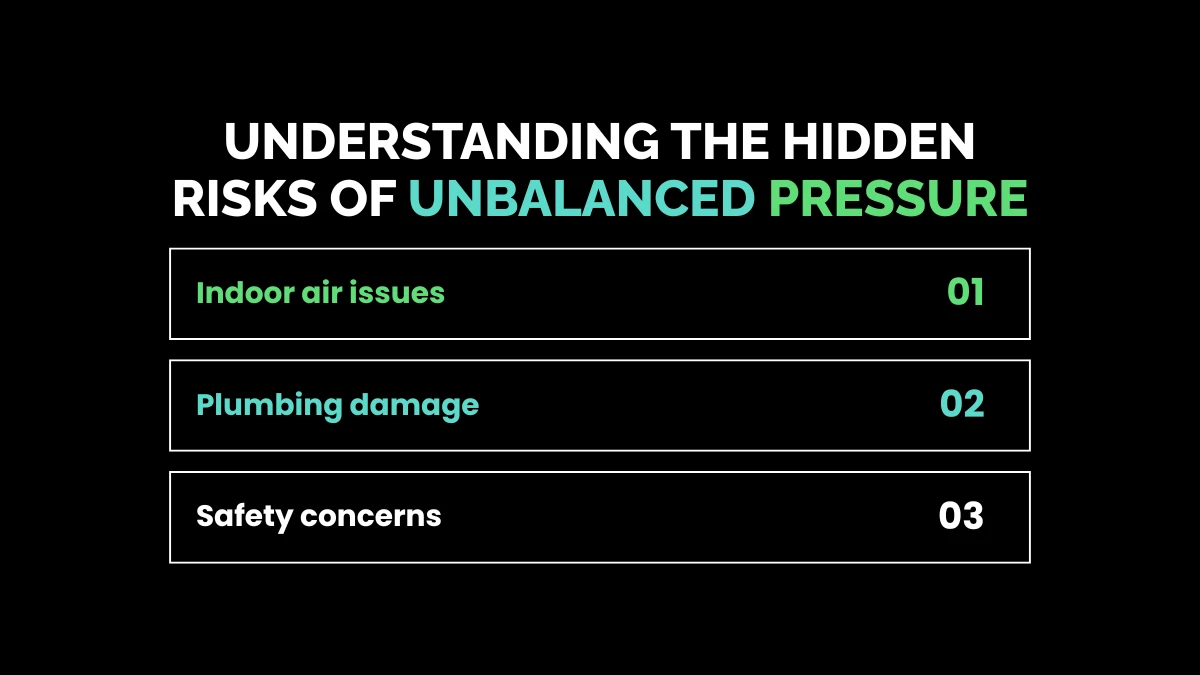
Over time, chronic pressure imbalances cause real damage to your indoor air quality and home efficiency.
Sewer Gas Intrusion
The P-trap, that curved U-shaped pipe under your sink, holds a small cup of water designed specifically to act as a barrier against sewer fumes.
When severe suction drains that water away, methane, hydrogen sulfide, and foul sewer smells flow directly into your kitchen or bathroom.
Breathing sewer gas is unpleasant and can cause headaches, nausea, or dizziness if left unresolved over long periods.
Carbon Monoxide Backdrafting
This is by far the most serious health danger associated with severe household vacuum pressure.
When your home develops strong internal suction, fuel-burning appliances like water heaters, gas furnaces, or wood fireplaces cannot vent smoke out properly.
Instead of hot gas escaping up the chimney or flue pipe, the house pulls toxic fumes back down into your living areas, a dangerous process known as backdrafting.
How to Fix House Suction Problem: Step-by-Step
When you notice these warning signs, taking action quickly keeps your living space fresh, comfortable, and completely safe.

Here is how to fix house suction problem situations step by step using straightforward practical solutions.
-
Inspect Your Roof Vent Stack: Carefully examine the PVC pipe sticking out through your roof to ensure leaves, ice, or animal nests are not blocking vital airflow into your drain lines.
-
Install Air Admittance Valves (AAVs): Mount a simple one-way breather valve under isolated sinks or island counters to let fresh air into the drain pipe without letting sewer smells escape.
-
Balance Your HVAC Airflow: Open closed supply registers, clear blocked return vents, and ensure interior doors have enough clearance at the bottom to allow smooth air circulation across rooms.
-
Provide Make-Up Air for Exhausts: Crack a nearby window slightly whenever running high-powered kitchen range hoods or whole-house fans to supply instant replacement air.
Deep Dive: Fixing Plumbing Vacuum Issues
Because plumbing is the most frequent place homeowners experience suction problems, it helps to understand exactly how to handle pipe-related pressure fixes.
Clearing Roof Vents Safely
If you feel comfortable climbing onto your roof, clearing your vent stack is often the fastest cure for gurgling drains.
First, visually inspect the top of the vent pipe using a flashlight to look for leaves, twigs, or debris jammed inside.
Next, use a standard plumber’s snake or garden hose to gently break up and flush out any stubborn blockages located deeper down the line.
If ice buildup is clogging the pipe opening during freezing winter months, carefully pour hot water down the stack to melt the blockage completely.
Installing an Air Admittance Valve (AAV)
If extending pipes up to your roof is difficult or impossible, an Air Admittance Valve offers an amazing alternative fix.
These mechanical valves stay tightly closed by default, keeping all sewer smells safely trapped inside your plumbing pipes.
When you flush a toilet or drain a full sink, the water flow creates negative pressure that pulls the valve open for a split second.
Fresh room air rushes directly into the pipe to equalize the pressure, and gravity snaps the valve shut again before any odor escapes.
Fitting an AAV under a problematic sink usually takes less than thirty minutes and requires only basic plumbing tools and thread tape.
Deep Dive: Resolving Whole-House Negative Pressure
If your main issue involves sticking exterior doors, whistling window frames, or drafty fireplaces, your house needs help balancing its total air volume.
Understanding Make-Up Air Systems
Modern high-CFM kitchen range hoods pull air out of your house at incredible speeds, sometimes moving over 400 to 1,000 cubic feet of air per minute.
To prevent your home from turning into a giant vacuum chamber, modern building codes require dedicated make-up air dampers.
A make-up air damper automatically opens an intake vent whenever your range hood turns on, delivering clean, filtered outdoor air right into your home.
This simple addition prevents your hood fan from fighting against your house walls and keeps your indoor air pressure perfectly neutral.
Checking Your HVAC Ductwork Balance
Central heating and cooling systems must pull in as much air as they push out to maintain comfortable indoor conditions.
If bedroom doors are closed all day and return vents are blocked by furniture or heavy drapes, rooms become pressurized while central hallways develop strong suction.
Keeping return vents clear, leaving interior doors cracked open, or installing transfer grilles above doorways helps air circulate freely between living spaces.
Comparing Quick DIY Fixes vs. Professional Solutions
Deciding whether to tackle a pressure issue yourself or call in an expert depends on where the problem originates.
| Problem Type | Best DIY Action | When to Call a Professional |
| Gurgling Sink Drain | Install an under-sink Air Admittance Valve | When multiple drains across different floors gurgle at the same time |
| Sewer Odor Near Shower | Refill dry P-traps with fresh water | When odors persist after clearing visible pipe traps and roof vents |
| Heavy Exterior Doors | Crack a window open during kitchen fan use | When installing an automatic motorized make-up air damper system |
| Fireplace Backdrafting | Turn off heavy exhaust fans while burning wood | When gas water heater or furnace flues spill combustion gases indoors |
Preventing Negative Air Pressure for the Long Run
Fixing an immediate blockage helps today, but preventing future pressure traps keeps your home running smoothly for years to come.
At Weird Wealth, we always advocate for quick annual checkups on both your plumbing and ventilation setups to stay ahead of trouble.
Clear out roof vent openings every autumn before winter weather sets in, and service your central furnace filters every three months.
If you plan to remodel your kitchen or add heavy ventilation appliances, make sure to factor make-up air dampers into your budget from the very beginning.
Taking these proactive steps protects your home’s structural comfort, keeps your plumbing quiet, and ensures your indoor air remains fresh and safe.
Wrapping Up
House suction might sound like a strange technical term, but it really comes down to basic air pressure balance.
When your plumbing vents or air vents get blocked, your home acts like a giant drinking straw struggling for air.
By clearing roof stacks, adding breather valves under sinks, and keeping your overall HVAC airflow balanced, you can eliminate gurgling sinks, nasty sewer smells, and heavy sticking doors for good.
Frequently Asked Questions
What is house suction?
House suction is negative air pressure inside plumbing or rooms pulling air inward to balance pressure.
Why do my drains gurgle when flushing?
Blocked roof vents create a vacuum, pulling air through nearby sink drains and causing gurgling.
Is negative air pressure dangerous in a home?
Yes, severe negative pressure can pull deadly carbon monoxide back down chimney flues into rooms.
How do I fix house suction in plumbing fast?
Clear roof vent obstructions or install a simple air admittance valve under affected sink drains.