
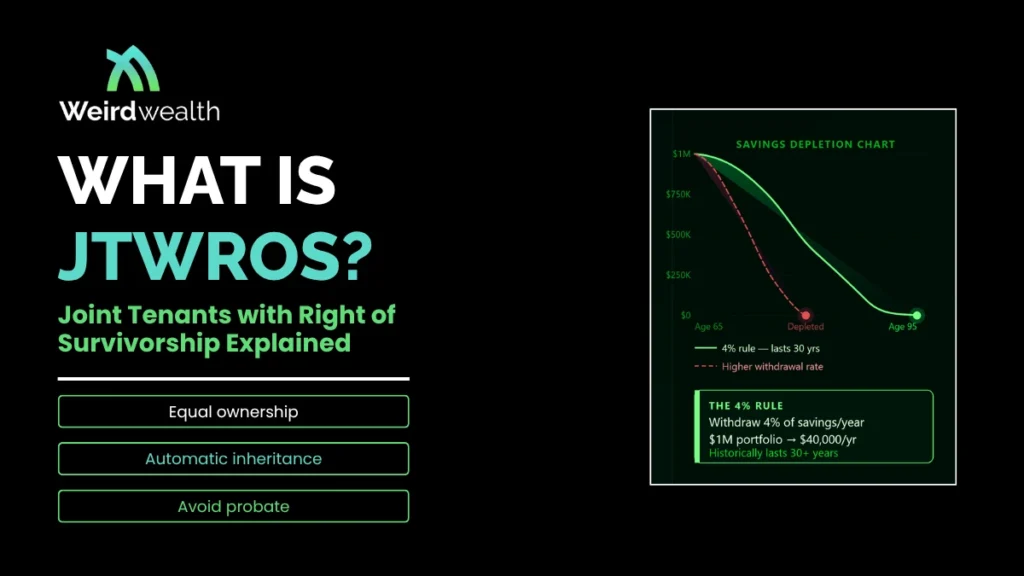
Key Takeaways
-
Automatic asset transfer to survivors
-
Bypasses costly probate court
-
Equal 50/50 ownership splits
-
Potential shared tax liabilities
Ever looked at a piece of financial paperwork and felt like you needed a law degree just to sign your name? You are definitely not alone.
Managing money gets complicated fast, especially when you decide to share accounts or property with someone you care about. If you have ever filled out an application for a shared bank or investment account, you have likely run into the acronym JTWROS.
But what does jtwros actually stand for, and why should you care?
Simply put, JTWROS stands for Joint Tenants with Right of Survivorship. It is a legal way for two or more people to own an asset together with equal rights. The big selling point here is the “survivorship” part. If one owner passes away, the surviving owner automatically gets full ownership of everything in that account or property, completely bypassing probate court.
Here at WeirdWealth, we love breaking down these stuffy financial rules into plain English so you can protect your hard-earned cash without the headache.
AI Overview
JTWROS (Joint Tenants with Right of Survivorship) is a co-ownership structure where all members hold an equal share of an asset. A core feature of this setup is that when one owner dies, their share automatically passes directly to the surviving owners. This process bypasses probate court entirely, saving time and legal fees for families managing a shared home or a jtwros brokerage account.
What is the Actual JTWROS Meaning in Finance?
Let’s pull back the curtain on the jtwros meaning finance terms often hide behind. In the financial world, co-owning an asset can take a few different paths. JTWROS is arguably the most common path for married couples, but it is also used by business partners, siblings, or parents and adult children.
When you enter a JTWROS agreement, you are creating a financial bond where everyone is an equal partner. You cannot own 70% of the account while your partner owns 30%. It is always a clean, equal split.
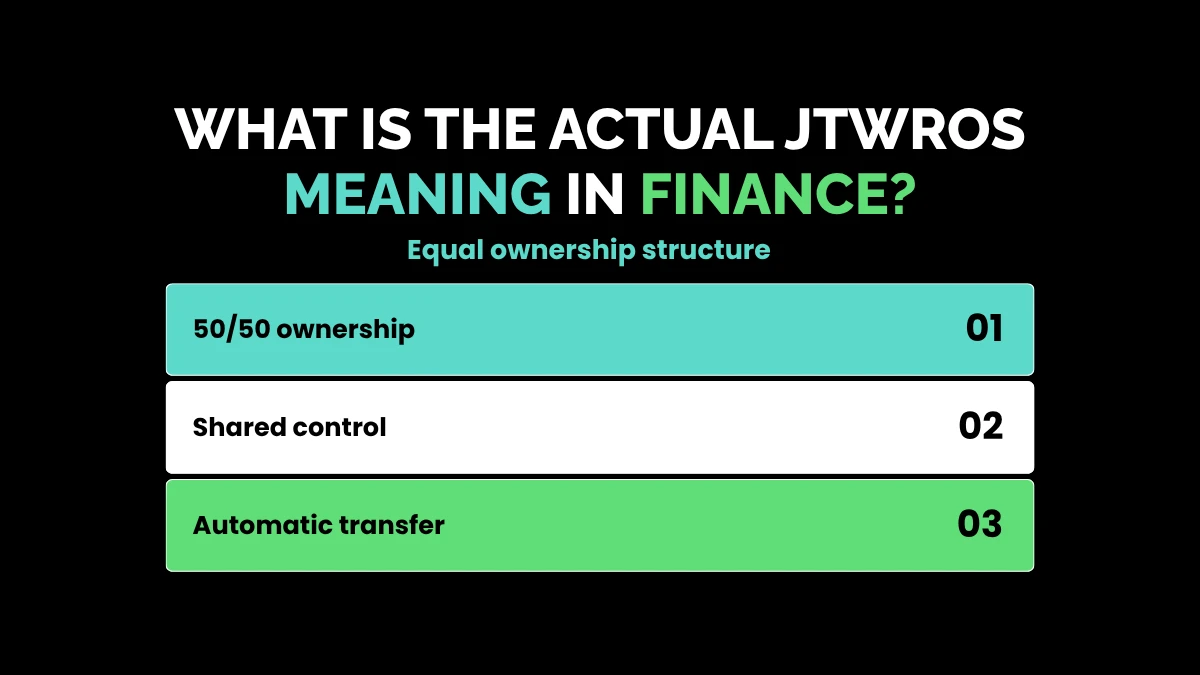
The magic happens due to a concept called the “right of survivorship.” Think of it as an automatic passing of the torch. The moment one owner leaves the picture, the remaining survivor becomes the sole legal owner of the entire asset.
Because this transfer happens instantly by law, the asset does not have to sit in legal limbo. It bypasses the dreaded probate process, which is the lengthy, public court system that sorts through a deceased person’s estate.
How a JTWROS Brokerage Account Operates
If you are opening an investment account with a spouse or partner, you will frequently see the option to establish a jtwros brokerage account. But how does it actually function on a daily basis?
In a standard jtwros brokerage account, both of you have total, unrestricted access to the investments. This means either person can log into the platform, buy shares of stock, sell mutual funds, or withdraw cash without needing a signature or explicit permission from the other co-owner.
Important Reminder: Total access requires immense trust. Since either party can legally empty the account, ensure you are fully aligned with your co-owner before depositing funds.
Because both parties possess equal power over the assets, financial institutions treat you as a single unit regarding the account’s maintenance. If the account values fluctuate, or if trades are made, both names remain tied to those actions.
For many families, this setup offers incredible convenience for daily wealth building. It allows couples to pool their investment capital together, look at their net worth in one single dashboard, and manage their future retirement plans side by side.
The Core Four Requirements of JTWROS
To make a JTWROS agreement legally valid, the law generally requires four specific conditions to be met at the exact same time. Lawyers often refer to these as the “four unities.”
| The Four Unities | What It Actually Means for You |
| Unity of Interest | Every owner must hold an identical, equal share of the asset. |
| Unity of Title | All owners must gain ownership through the exact same legal document. |
| Unity of Time | Everyone must sign the paperwork and acquire their stake at the same moment. |
| Unity of Possession | Each person has an equal right to enjoy and use the entire property or account. |
If any of these four pieces are missing, the account cannot legally be classified under the jtwros framework. Instead, it might default to a different type of joint ownership, like Tenants in Common, which lacks the automatic survivorship benefit.
Understanding the JTWROS Tax Implications
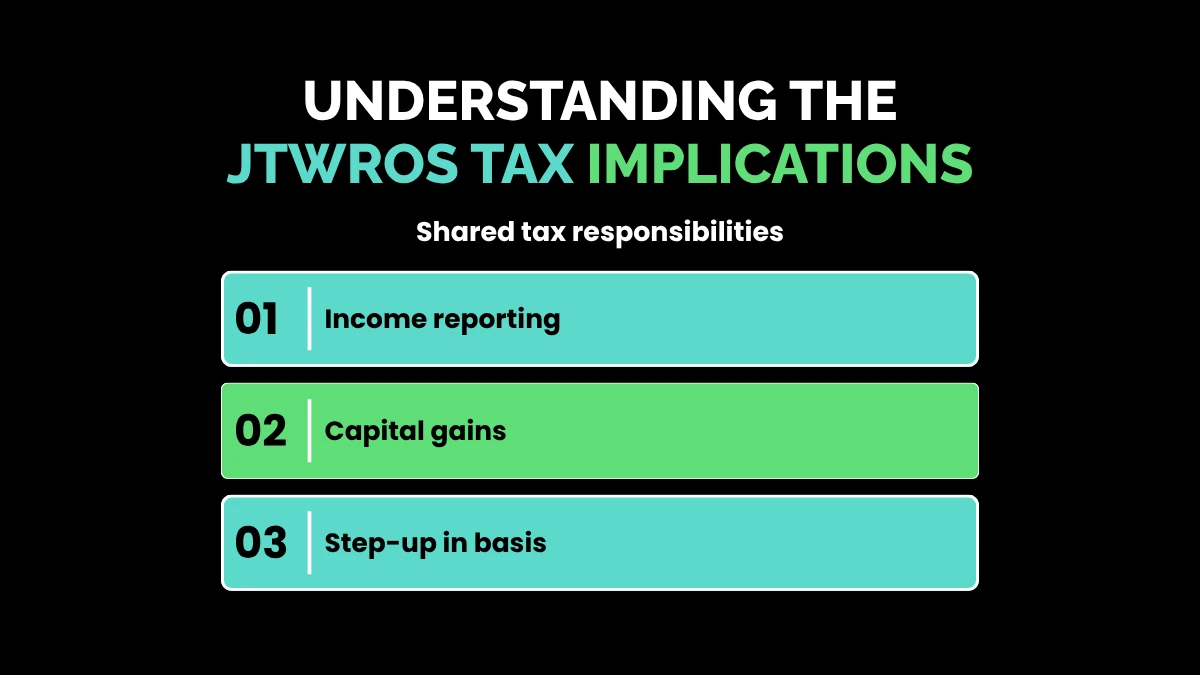
Shifting assets around always catches the eye of the IRS, so we have to talk about the jtwros tax implications associated with this ownership structure. Sharing an account does not mean you get a free pass on taxes.
First, let’s look at income and capital gains taxes. When your jtwros brokerage account earns dividends or realizes a profit from a stock sale, that income must be reported to the government. Typically, the brokerage firm sends out a single tax form under the Social Security number of the primary account holder.
-
Income Splitting: In most cases, joint owners split the tax burden evenly on their personal returns, though married couples filing jointly will just combine it all anyway.
-
Gift Tax Triggers: Simply adding someone else’s name to an account can sometimes trigger a gift tax review by the IRS if the new co-owner withdraws money for personal use without contributing funds.
Another crucial piece of the puzzle is the estate tax and the concept of a “step-up in basis.” When a co-owner passes away and the survivor inherits the other half of the account, the tax basis (the original purchase price) of the deceased owner’s half is generally adjusted to the current market value.
This means if you buy a stock together for $10, and it is worth $50 when your partner passes, your inherited half gets a “stepped-up” basis of $50. This can drastically reduce the capital gains taxes you owe if you decide to sell the asset later down the line.
JTWROS vs. Tenants in Common (TIC)
It is easy to confuse JTWROS with another common joint ownership type called Tenants in Common (TIC). While both let you share an asset, they handle the future very differently.
| Feature | JTWROS | Tenants in Common (TIC) |
| Ownership Split | Must be strictly equal (50/50). | Can be unequal (e.g., 70/30 or 80/20). |
| Fate of Asset Upon Death | Bypasses probate; goes straight to the surviving owner. | Passes to the deceased owner’s heirs via a will or court. |
| Control of Shares | Neither owner can leave their share to someone else. | Owners can independently sell or pass on their share. |
As the table shows, the jtwros meaning finance professionals emphasize relies on that seamless, automatic transfer. TIC accounts are better suited for business partners or friends investing together who want their specific percentage of the investment to go to their own kids or heirs rather than their co-investor.
The Bright Side: Advantages of JTWROS
There is a reason why so many people select this option on their financial applications. It simplifies life during some of our most stressful moments.
The primary benefit is avoiding the time, stress, and expense of probate court. When a loved one passes, dealing with frozen bank accounts and legal paperwork is exhausting. With a jtwros account, the surviving owner simply provides a death certificate to the bank or broker, and the account transitions smoothly into their sole name.
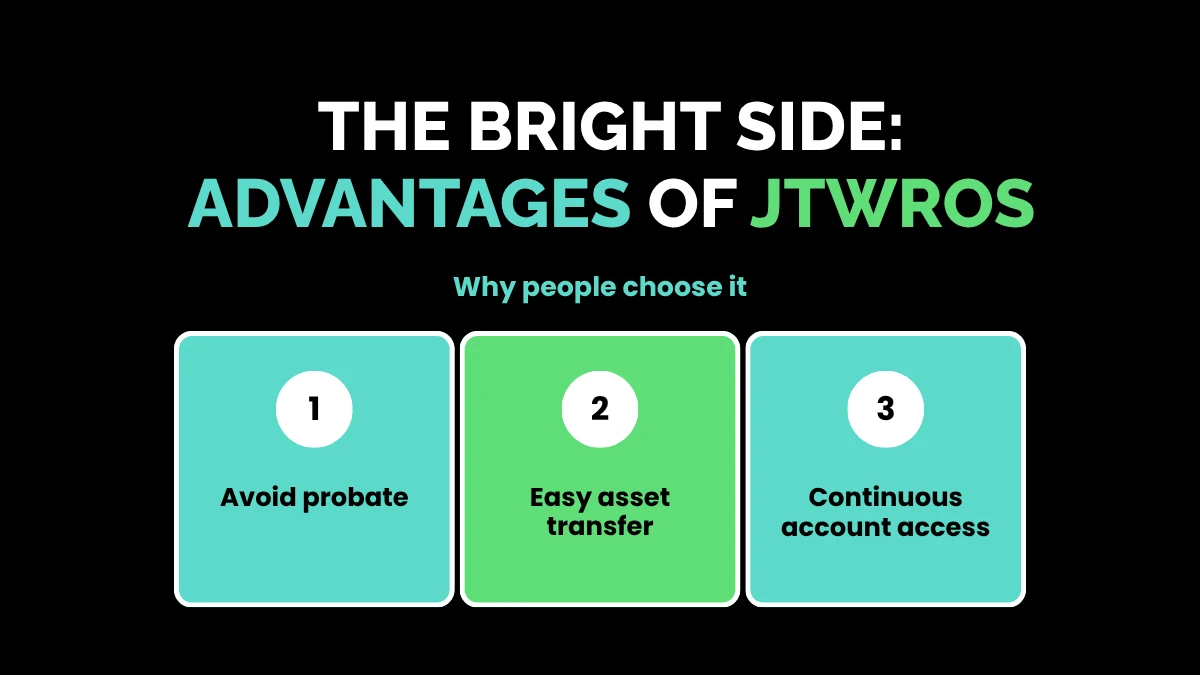
Additionally, it ensures continuous management of the assets. If one partner becomes incapacitated or is unable to make financial decisions due to an illness, the other joint owner can step in immediately to pay bills, manage investments, or withdraw funds without needing a power of attorney.
We always tell our readers at Weird Wealth that financial peace of mind is about removing unnecessary friction. This ownership structure removes a massive amount of friction when life throws a curveball your way.
The Risks: Potential Downsides to Consider
While it sounds great on paper, this setup carries real risks that you should weigh carefully before signing on the dotted line.
First, you expose your assets to the other person’s financial mistakes. Because both of you own the account equally, creditors can come after the funds. If your co-owner gets sued, files for bankruptcy, or owes back taxes, the entire jtwros brokerage account could potentially be frozen or seized to pay off their individual debts.
Second, you lose ultimate control over who inherits your wealth. Imagine you remarry and place your assets into a joint account with your new spouse under this framework. If you pass away first, your spouse gets everything automatically. Your children from your first marriage could be left out completely, as your spouse now has total control over who gets those funds next.
Finally, removing a co-owner from the title or account is not a simple task. You cannot just erase their name because you had an argument. Removing an owner usually requires the explicit written consent and signature of both parties involved, which can lead to messy standoffs if a relationship sours.
Real-Life Example: How JTWROS Protects a Family
Let’s look at an estimated scenario to see how this plays out in real life. Meet Sarah and David. They have been married for a decade and decide to open a online investment account to build up their nest egg.
They choose to open a jtwros brokerage account and deposit $100,000. Over the next few years, they manage the account together, buying stocks and growing their wealth.
Sadly, David passes away unexpectedly in an accident. Because they selected JTWROS on day one, Sarah does not have to wait for a judge to review David’s will, nor does she have to hire an estate attorney to unlock the funds.
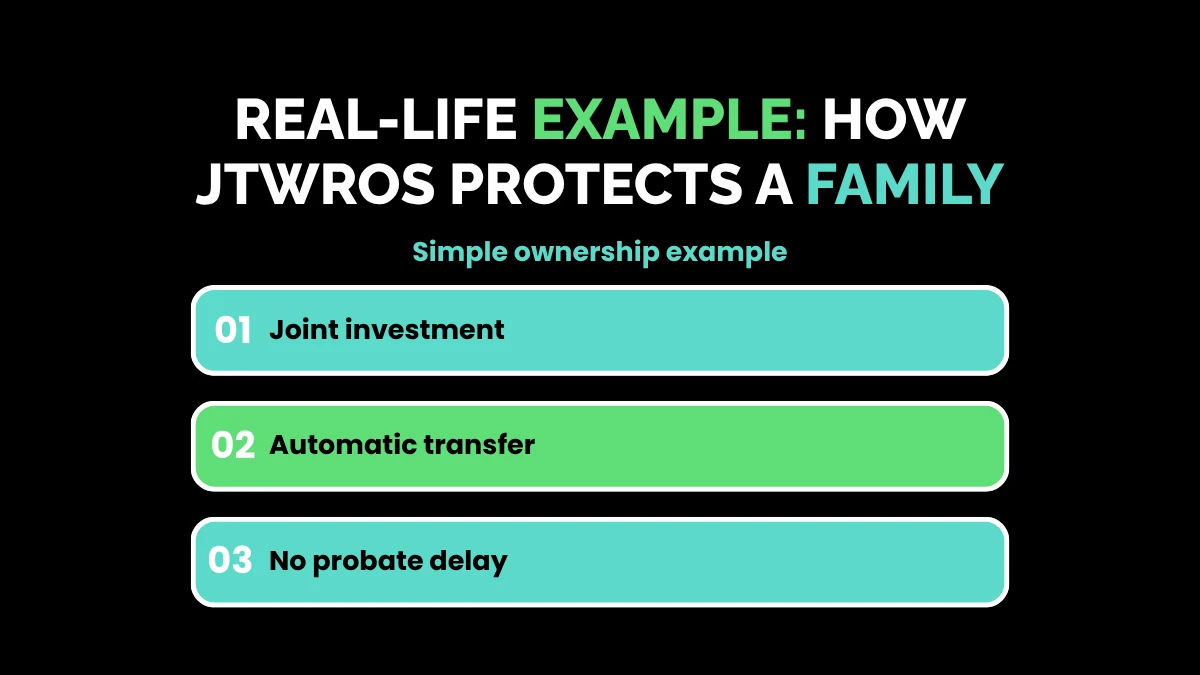
She takes a copy of the death certificate to their brokerage firm. The firm processes the paperwork, removes David’s name, and Sarah retains full, uninterrupted access to the entire account value. This allows her to cover immediate family expenses without any added financial panic.
How to Set Up a JTWROS Account
Setting up this type of account is generally a straightforward process that you can do online or at a local branch office.
Most traditional banks and modern brokerage apps ask you right at the start if the account will be individual or joint. Once you select joint, they will present you with options like Tenants in Common or Joint Tenants with Right of Survivorship. You simply select the survivorship option.
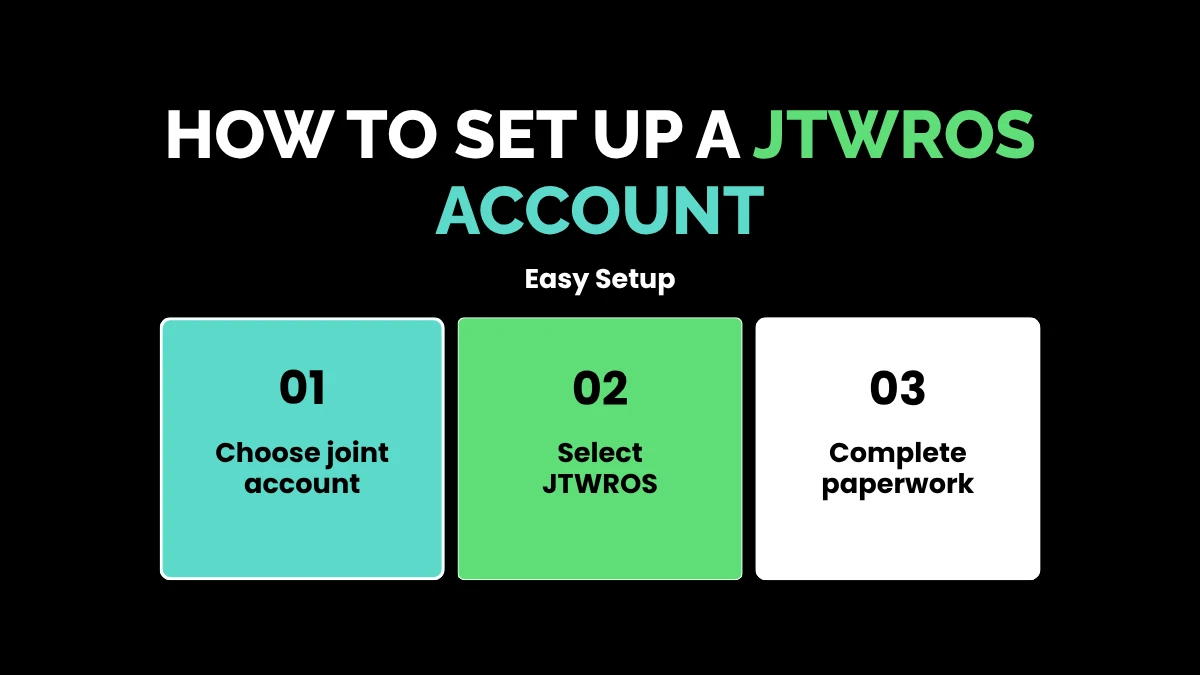
You will need to gather personal information for both applicants before you begin the paperwork. This usually includes full legal names, dates of birth, contact details, and Social Security numbers for everyone joining the account.
Before finalizing the application, double-check that the exact phrasing mentions “Right of Survivorship” or the explicit jtwros acronym. Once the document is processed and funded, the four unities are established, and your joint financial journey officially begins.
Final Thoughts
Navigating the world of personal finance is all about making intentional choices that protect your future and your loved ones. Understanding the jtwros meaning finance platforms display on their legal forms gives you the power to structure your wealth correctly from the very start.
While a jtwros brokerage account offers unparalleled convenience and an easy way to avoid the headache of probate court, it also demands absolute trust between co-owners due to the shared legal risks and unique jtwros tax implications.
Take the time to look at your long-term estate planning goals, talk openly with your co-owner, and choose the ownership path that keeps your money secure. If you ever feel stuck, leaning on a trusted certified financial planner or estate attorney can help ensure your wealth stays exactly where it belongs.
Frequently Asked Questions
What does JTWROS mean in simple financial terms?
It means two or more people own an asset completely equally, and if one owner dies, the survivors automatically inherit their share without going through probate court.
Can a JTWROS account be held by non-spouses?
Yes, anyone can open this type of account together, including business partners, siblings, parents, or unmarried romantic partners, provided all owners maintain equal shares.
Does a JTWROS account bypass a person’s will?
Yes, the right of survivorship takes legal priority over instructions written in a will, passing the asset directly to the co-owner regardless of what the will says.
What are the main tax implications of JTWROS?
Joint owners share annual income tax liabilities equally, and surviving owners usually receive a step-up in basis on the inherited portion of the asset upon death.
Can one owner clear out a JTWROS brokerage account?
Yes, legally either owner has full, independent access to write checks, sell assets, or withdraw the entire balance without the other person’s signature.