

Key Takeaways
- Check credit early
- Save extra for closing
- Shop multiple lenders
- Keep bank balances steady
- Get pre-approved first
Buying a house feels amazing. Finding the right neighborhood, planning your home decor, and dreaming about your future is genuinely exciting.
However, navigating complex home loan mistakes and mortgage options can quickly feel totally confusing for most home buyers.
Making simple mortgage mistakes to avoid can cost you thousands of dollars, cause huge closing delays, or even ruin your dream home deal.
At Weird Wealth, we want to help you sidestep these common traps so you can buy your next home with complete peace of mind.
Here is the quick truth: avoiding common mortgage mistakes comes down to early financial planning, smart budgeting, and comparison shopping.
By taking a few extra steps before you start touring houses, you protect your bank account and make the buying process smooth.
AI Overview
Avoiding critical mortgage mistakes to avoid is essential when buying a home. Many first time homebuyer mistakes stem from poor credit preparation, ignoring extra closing costs, or rushing into the very first loan offer. By comparing rates, keeping your bank balances stable, and securing a formal pre-approval, you obtain better terms and avoid major financial stress. Weird Wealth helps you navigate home loan decisions with total confidence.
1. Credit and Income Preparation Errors
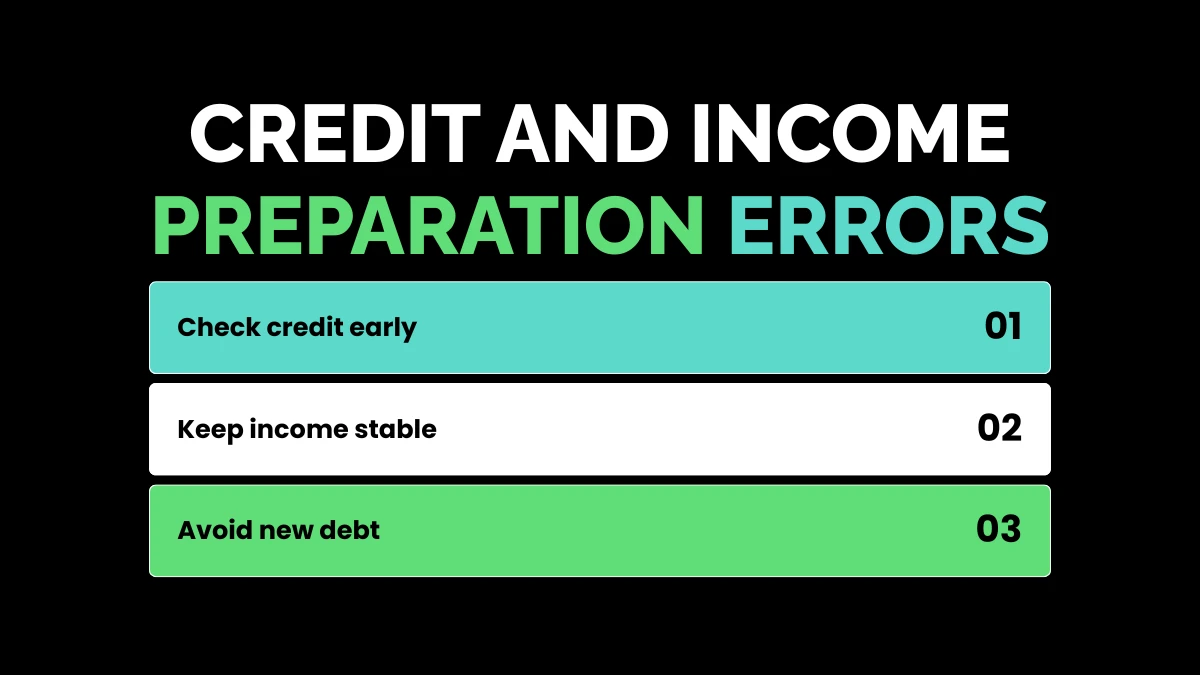
Checking Your Credit Report Too Late
Your credit score directly dictates your mortgage interest rate and total loan costs over thirty years.
Checking your credit score a week before applying for a loan is a massive mistake that hurts your wallet.
Errors on credit reports are surprisingly common, and removing inaccurate items takes several months of back-and-forth phone calls.
Check your official credit reports at least six months before applying to ensure every detail is completely accurate.
Changing Jobs or Careers Right Before Applying
Lenders absolutely love financial stability above almost everything else during the loan approval process.
Switching careers, quitting your job, or going freelance right before applying raises huge red flags for mortgage underwriters.
Even if your new job pays significantly more money, new employment setups look risky without a long track record.
Try your absolute best to stay in your current position until your loan completely closes and keys are handed over.
Opening New Credit Accounts During Approval
Do not buy a new car, finance furniture, or apply for new credit cards while getting a mortgage.
Taking on new credit cards or loan obligations alters your debt-to-income ratio immediately.
This simple misstep causes mortgage approvals to stall or collapse at the absolute last minute every single day.
Keep your credit card usage extremely low and wait until after closing to make any large credit purchases.
Ignoring Your Debt-to-Income (DTI) Ratio
Lenders look closely at how much debt you owe compared to your total monthly gross income.
If your monthly debt payments take up too much of your income, lenders view you as a high-risk borrower.
Paying down high-interest credit cards before applying lowers your DTI ratio and boosts your borrowing power significantly.
Aim to keep your overall DTI ratio below 36% to qualify for the best interest rates and loan options.
2. Financial and Budgeting Blunders
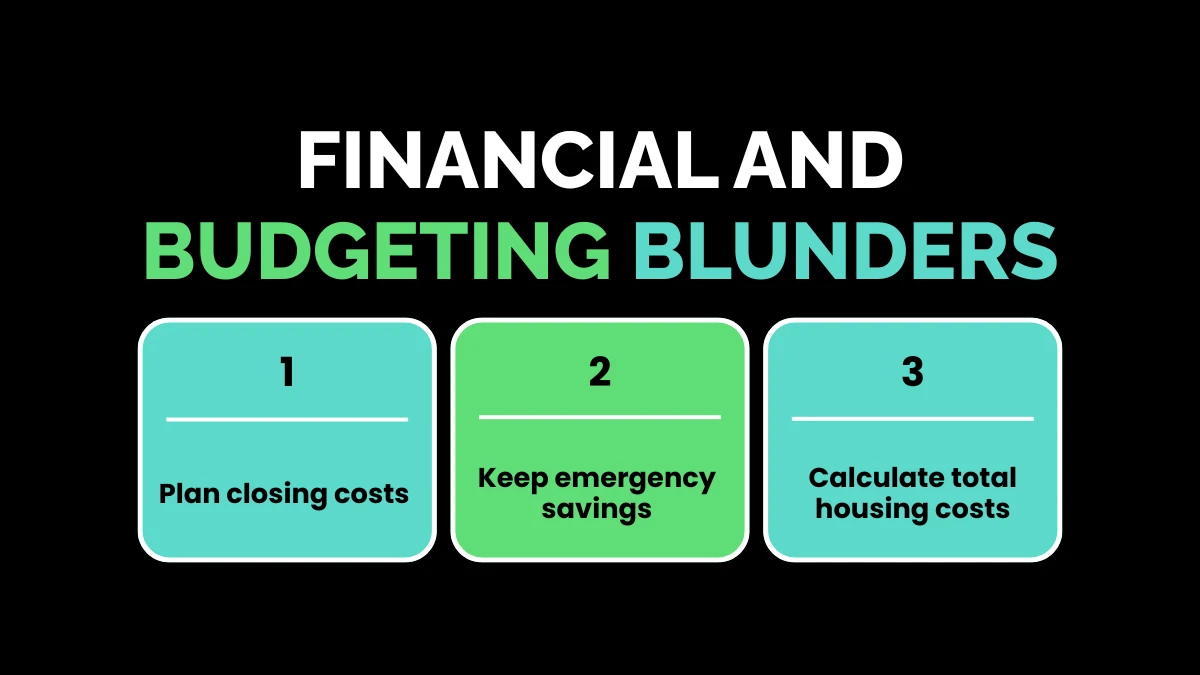
Forgetting About Out-of-Pocket Closing Costs
Saving money for a down payment is a massive accomplishment, but down payments are only part of the equation.
Many buyers completely forget that closing costs require extra liquid cash at the settlement table.
Closing costs generally run between 2% and 5% of the total purchase price of the property.
| Expense Category | Average Cost Percentage | What It Covers |
| Down Payment | 3% to 20% | Initial equity built directly into the property |
| Closing Costs | 2% to 5% | Lender processing fees, taxes, title insurance |
| Cash Reserves | 2 to 3 months of payments | Essential emergency savings after purchase |
Completely Draining Your Emergency Savings
Emptying your savings account to squeeze out a slightly bigger down payment leaves you incredibly vulnerable.
Houses require constant upkeep, and unexpected repairs like leaky roofs or broken heaters happen without warning.
Always leave two to three months of living expenses sitting safely in your bank account after paying closing costs.
This financial cushion keeps you comfortable and prevents you from relying on high-interest credit cards after moving in.
Miscalculating the Real Monthly Housing Cost
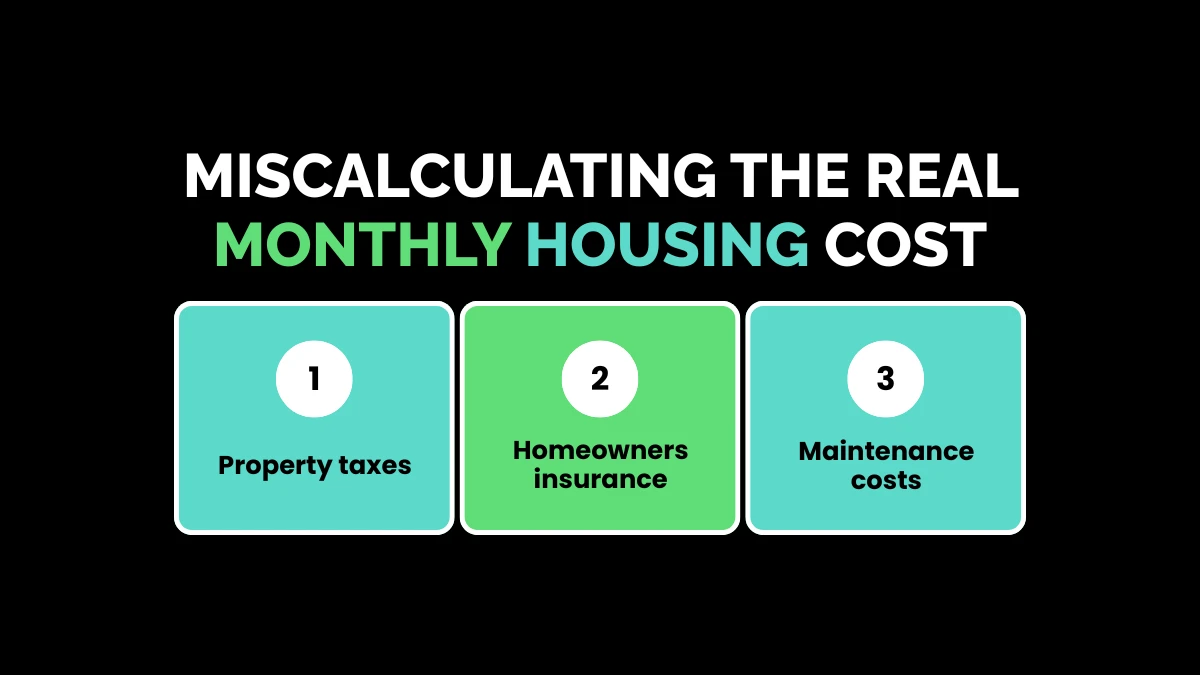
Your total monthly home payment involves far more than just basic principal and interest amounts.
You must budget for annual property taxes, homeowners insurance premiums, HOA dues, and general home maintenance expenses.
Failing to budget for these ongoing ownership costs leads to severe stress and financial strain down the road.
Use an online calculator to total all housing costs before deciding how much home you can actually afford.
Relying on Oral Promises from Sellers
Never assume a seller will fix an issue or leave behind appliances based on a verbal conversation.
If an agreement is not written clearly into the purchase contract, it is legally non-existent and unenforceable.
Ensure every single credit, repair, or inclusion is documented in writing by your real estate agent.
3. Shopping and Lender Missteps
Accepting the First Rate Offer You Receive
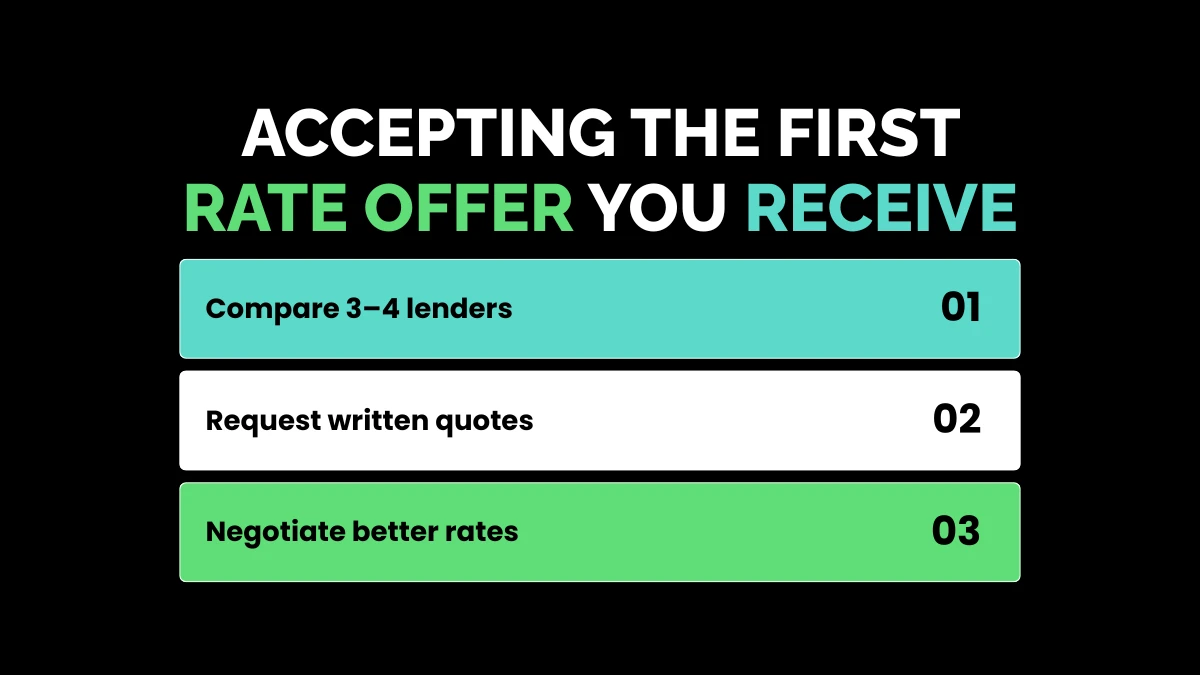
Shopping around for a home loan saves you huge amounts of money over the life of your mortgage.
Yet, a staggering number of buyers simply accept the first loan offer from their current primary bank.
Getting written quotes from three or four different lenders allows you to compare costs and negotiate lower interest rates.
Even a tiny quarter-point drop in your interest rate saves tens of thousands of dollars over thirty years.
Ignoring Alternative Loan Programs
Conventional loans are popular, but FHA, VA, and USDA loans offer unique advantages for different buyer profiles.
Assuming you only qualify for a standard conventional loan is one of those common mistakes when getting a mortgage.
Government-backed programs often allow lower down payments, flexible credit requirements, or lower monthly mortgage insurance rates.
Talk with an experienced broker to explore every loan program available for your specific location and income level.
Focusing Only on the Advertised Interest Rate
A low advertised interest rate looks super attractive on paper, but high lender fees can make it pricey overall.
Always look closely at the Annual Percentage Rate (APR), which reflects the true annual cost of borrowing.
The APR includes the baseline interest rate plus lender origination fees, discount points, and closing charges combined.
| Loan Metric | What It Measures | Why It Matters for Buyers |
| Interest Rate | Cost to borrow the principal amount | Determines your base monthly payment |
| APR | Interest rate plus mandatory fees | Reveals the true full cost of the loan |
Choosing an Online Lender Based Only on Speed
Fast online approvals sound convenient, but mortgage transactions require constant communication between agents, appraisers, and title companies.
Working with a lender who is hard to reach can cause missed contract deadlines and lost earnest money deposits.
Choose a responsive lender with great reviews who communicates clearly throughout every single step of the timeline.
At Weird Wealth, we recommend prioritizing lender reliability and customer service right alongside low interest rates.
4. Application and Underwriting Pitfalls
Confusing Pre-Qualification with Full Pre-Approval
A pre-qualification is just a rough estimate calculated from quick, unverified numbers you tell a lender over the phone.
A formal pre-approval means an actual underwriter verified your tax returns, bank statements, and pay stubs directly.
Sellers in competitive real estate markets will not take your offer seriously without a genuine pre-approval letter attached.
Get fully pre-approved before you start spending weekends visiting open houses and falling in love with properties.
Making Large Unverified Cash Deposits
Mortgage lenders track every single dollar moving into your bank accounts during the underwriting process.
Unusual or large cash deposits trigger money laundering concerns and raise major red flags for underwriters.
If family members give you money toward your purchase, document those funds properly with an official gift letter.
Keep all paper trails intact so you can easily prove where every dollar came from without creating delays.
Shuffling Money Between Bank Accounts
Moving large sums of money between different accounts right before applying creates a messy audit trail.
Underwriters will require bank statements and explanation letters for every single transfer between your personal accounts.
Keep your financial transactions completely simple, predictable, and quiet starting three months before submitting your application.
5. First-Time Buyer Hazards
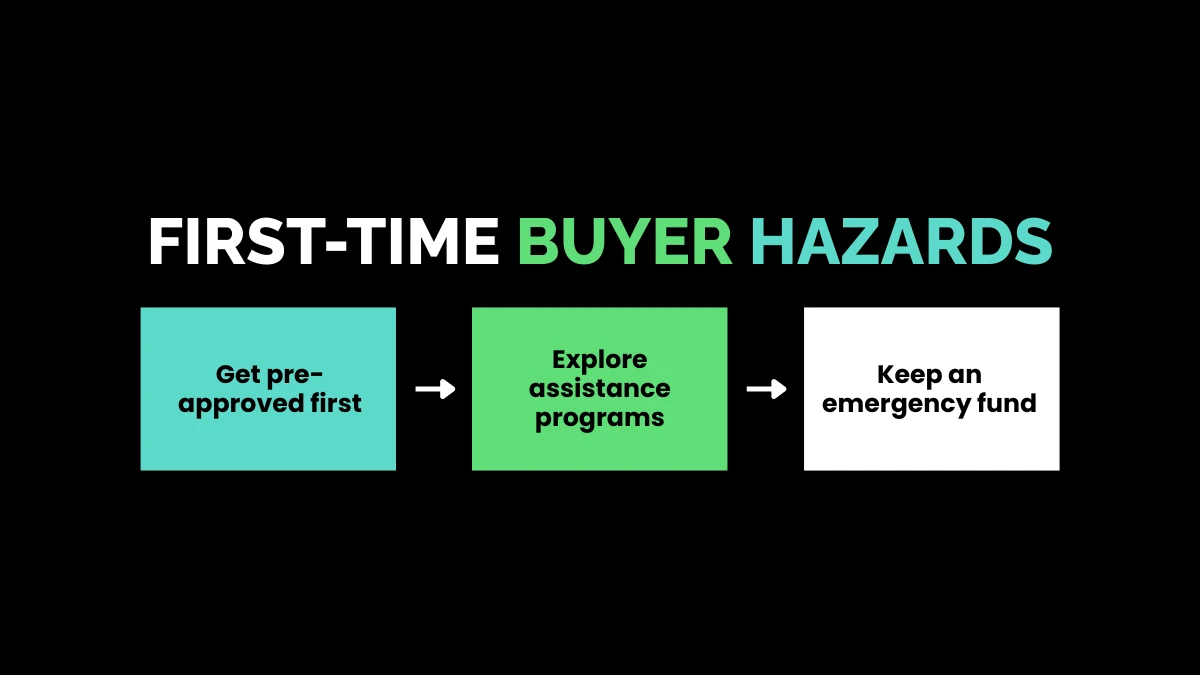
Here are major mortgage mistakes first time buyers make during their initial search:
- Hunting for properties long before speaking with a professional lender to establish a realistic budget
- Assuming you strictly need a 20% down payment to purchase a home in today’s housing market
- Ignoring state, county, or local down payment assistance programs designed specifically for first-time buyers
- Borrowing the absolute maximum amount the bank approves rather than what fits comfortably in your budget
- Skimping on independent home inspections just to save a few hundred dollars during the escrow period
6. Long-Term Financial Oversight
Choosing the Wrong Loan Term Length
A 15-year fixed loan saves huge amounts of interest, but the required monthly payments are significantly higher.
A standard 30-year loan offers monthly flexibility, allowing you to invest extra cash or make extra principal payments voluntarily.
Carefully evaluate your career goals and monthly budget before locking yourself into a rigid payment schedule.
Pick the loan term length that supports your overall wealth strategy without squeezing your family’s lifestyle too tight.
Waiving Important Contract Contingencies
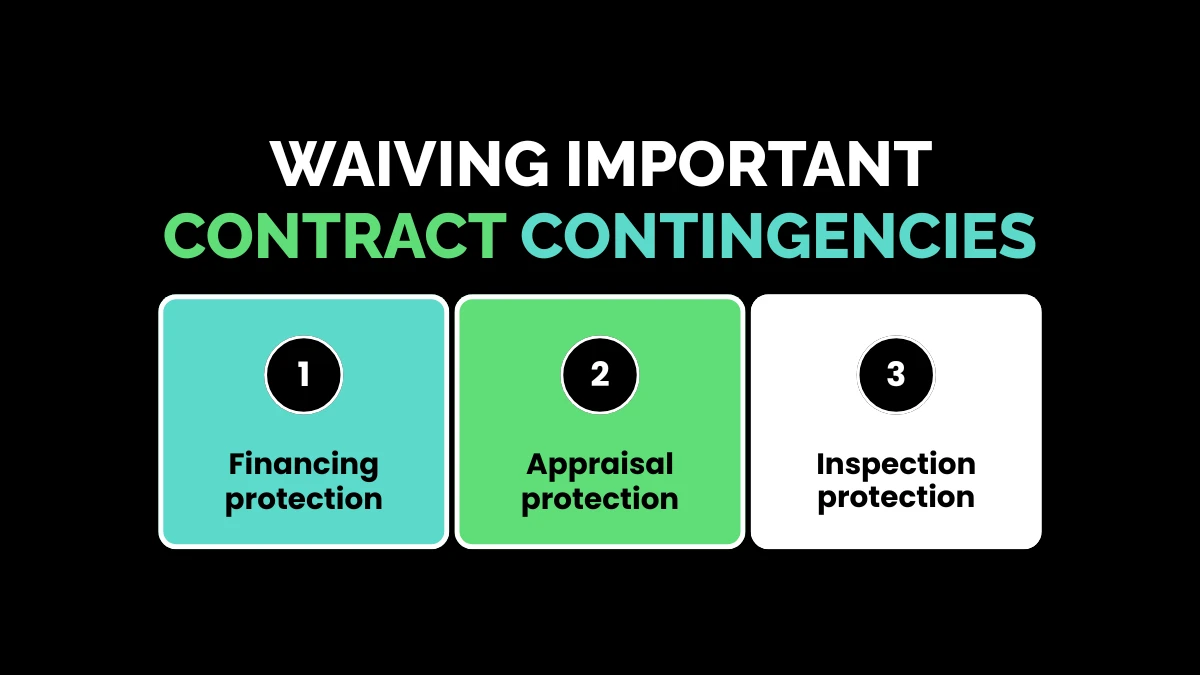
In competitive seller markets, buyers are often tempted to waive financing, appraisal, or inspection contingencies to win bids.
Waiving contingencies exposes you to massive financial loss if your loan falls through or the home appraises low.
If the house appraises for less than your offer price, you must cover the cash gap out of pocket.
Protect your hard-earned money by keeping standard protective contingencies in your purchase contracts whenever possible.
Overlooking Long-Term Private Mortgage Insurance (PMI)
Putting down less than 20% down payment requires paying private mortgage insurance (PMI) to protect the lender.
Factor monthly PMI costs into your initial budget calculations so there are no surprises on your first statement.
Ask your lender early on what specific conditions must be met to remove PMI once your equity reaches 20%.
7. Post-Approval Mistakes Before Settlement
Avoid these risky financial moves after receiving your initial loan approval:
- Co-signing any auto loan, student loan, or credit line for friends or family members
- Missing or submitting late payments on existing utility bills or store credit cards
- Making sudden career shifts, quitting your job, or taking unpaid leaves of absence
- Buying expensive furniture, electronics, or appliances on store credit plans before closing
- Closing old, long-established credit card accounts that build up your credit history depth
Practical Breakdown of Costly Mistakes
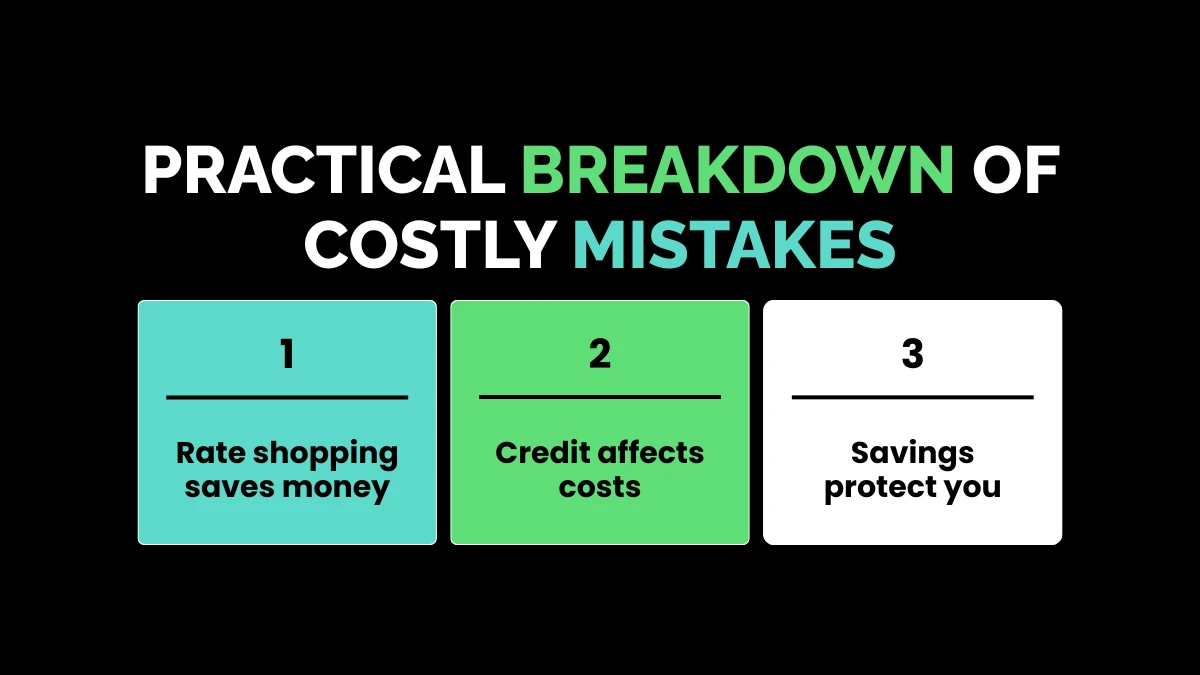
Understanding how simple errors impact your finances helps you avoid making them yourself.
Rate Shopping Savings
Skipping rate comparisons usually results in taking a higher interest rate than necessary. On a typical loan, paying an extra 0.5% in interest adds over $30,000 in unnecessary costs over thirty years.
Credit Preparation Benefits
Ignoring credit report errors keeps your score in a lower tier. A lower score leads to higher monthly PMI rates and elevated interest charges every single month.
Financial Cushion Security
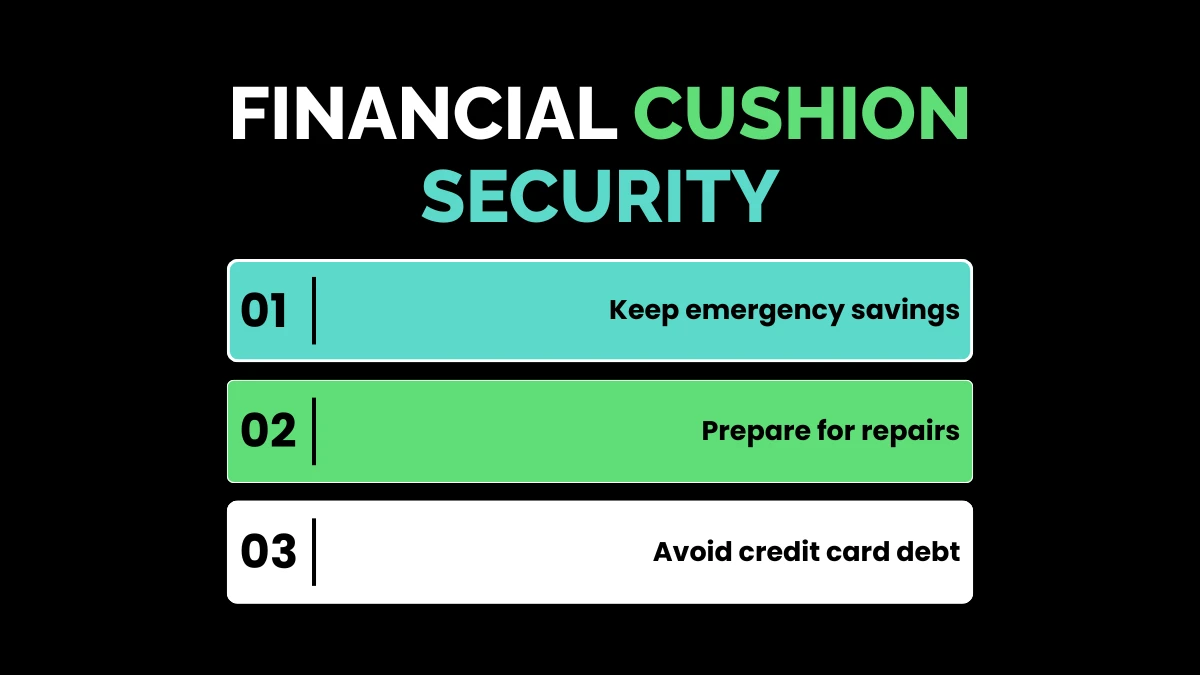
Draining your savings account leaves you unprepared for immediate home repairs. Fixing a broken water heater right after moving in often means accumulating high-interest credit card debt.
Taking the time to fix these first time homebuyer mistakes early saves stress, protects your savings, and keeps your deal moving smoothly.
At Weird Wealth, we firmly believe smart money choices made today build lasting financial independence for your future.
Conclusion
Buying a home is an incredible milestone. Avoiding these common home loan mistakes puts you miles ahead of other buyers in the market.
Take things step by step. Prepare your credit early, budget for unexpected costs, and compare multiple lenders to get the best deal.
By staying cautious, organized, and informed, you will secure a great home loan and protect your long-term financial health for years to come.
Frequently Asked Questions
What are the biggest mortgage mistakes to avoid?
Skipping rate comparison, changing jobs during underwriting, and ignoring closing costs are top mortgage mistakes to avoid.
How many lenders should I compare for home loan options?
Generally, compare at least three to four lenders to find competitive interest rates and lower overall origination fees.
What are common first time homebuyer mistakes?
Common first time homebuyer mistakes include searching for homes before getting pre-approved and draining all emergency savings for down payments.
Why do lenders dislike job changes during loan processing?
Lenders prefer steady income data. Switching jobs introduces perceived risk to underwriters reviewing your application stability.
Can I buy a car while getting a mortgage?
No. Taking on new debt alters your debt-to-income ratio and can easily jeopardize your final home loan approval.