
Key Takeaways
-
Prices vary drastically depending on which tooth needs the work.
-
Out-of-pocket costs remain high without active dental insurance.
-
Modern dental plans usually cover around half of the total fee.
-
Added procedures like dental crowns will increase your final bill.
Have you ever woken up with a throbbing toothache that just refuses to go away?
It is a miserable feeling that usually leads to one terrifying thought: do I need a root canal?
If that thought has crossed your mind, you are probably stressing over the actual root canal price right now.
Let’s face it, dental work can feel like a major financial blow to your personal savings account.
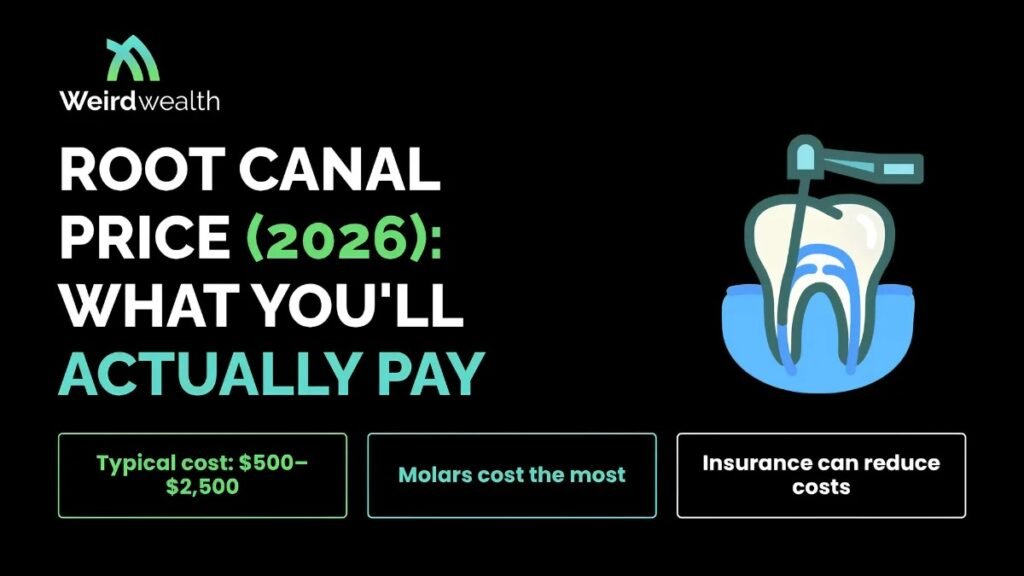
Based on available data, a standard root canal price generally ranges anywhere from $500 to $2,500 in 2026.
The exact amount you will pay depends on which tooth is hurting and whether you have dental insurance.
At Weird Wealth, we love breaking down these everyday expenses so your wallet does not take an unexpected beating.
So, grab a warm mug of tea, take a deep breath, and let’s talk about what this dental visit will actually cost you.
AI Overview
The average root canal price in 2026 generally ranges from $500 to $2,500 depending on the tooth location and complexity. A front tooth root canal cost is typically the lowest, while a molar root canal cost is the highest due to extra nerve canals. Your total root canal cost without insurance will be much higher, though standard insurance plans frequently cover up to 50% of the procedure.
Why Does a Root Canal Price Vary So Much?
You might wonder why a dentist cannot just give you one flat rate for fixing a bad tooth.
It turns out that your mouth is divided into different zones, and every tooth has its own unique anatomy.
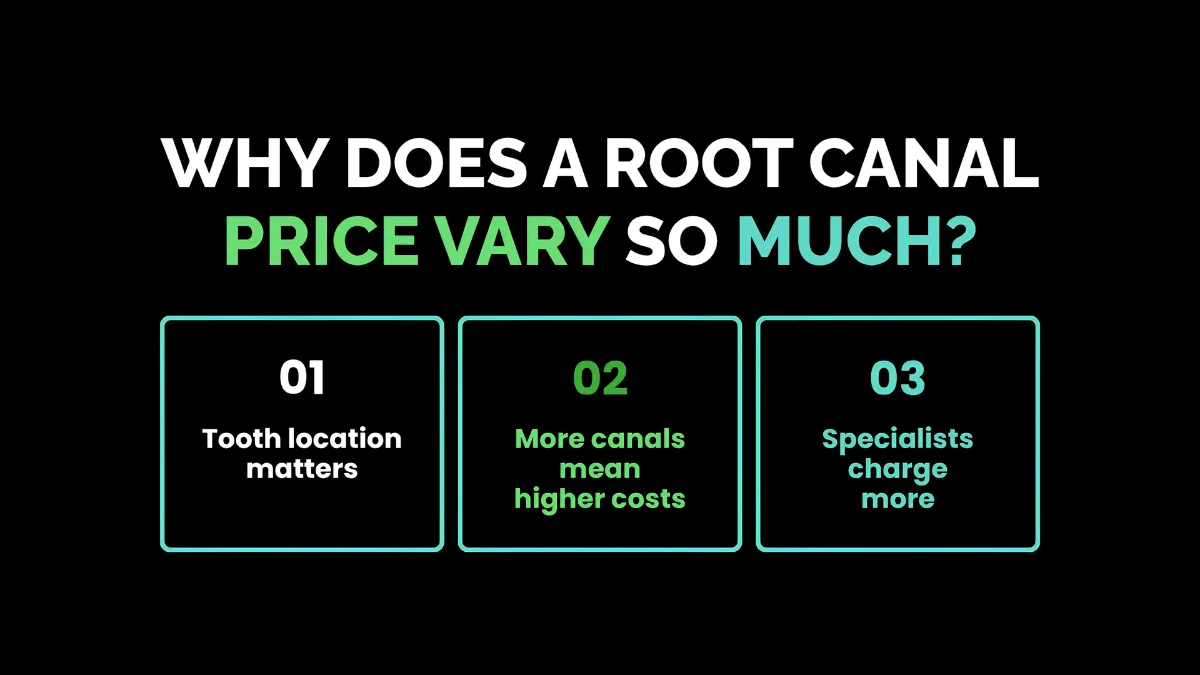
Front teeth are generally much simpler to treat because they only have a single root canal inside them.
Back teeth, known as molars, are a completely different story because they have multiple twisted nerve pathways.
More roots mean more time in the chair, more specialized tools, and a higher bill at the end.
The type of professional you see will also play a massive role in the final number you see on your invoice.
A general dentist might charge less, but a specialist called an endodontist will always cost a bit more.
Endodontists have years of extra training and use advanced microscopes to handle highly complex dental infections.
Where you live can also shift the price because offices in major metropolitan areas face much higher overhead costs.
Front Tooth Root Canal Cost Breakdown
If your injury or decay is right in the front of your mouth, there is a small bit of financial silver lining.
A front tooth root canal cost is estimated to be the least expensive type of endodontic therapy you can get.
Because these teeth have a single root, the professional can usually finish the job much faster.
In most cases, a front tooth root canal cost will sit somewhere between $500 and $1,100 if you do not have insurance.
However, you have to remember that this estimate is just for the cleaning and filling of the root itself.
Front teeth are critical for your smile, so you might need a aesthetic composite filling afterward to make it look natural.
If the tooth structural integrity is badly compromised, a post and a full crown might still be required.
When budgeting for a front tooth root canal cost, always ask your local clinic if the structural filling is included.
No one wants to celebrate a done procedure only to find out the surface restoration costs an extra few hundred dollars.
Bicuspid and Premolar Costs
Moving slightly further back into your mouth, we find the premolars or bicuspids.
These are the transitional teeth that sit right between your sharp front teeth and your flat back grinding molars.
Bicuspids generally have one or two roots, which makes them moderately complex for a dental professional to clear out.
Because they require more precision than a front tooth, the general root canal price for a premolar is slightly higher.
You can typically expect to pay between $700 and $1,300 for this specific region of your mouth.
It takes a bit longer to navigate these mid-mouth canals, which reflects directly in the operational fees.
Additionally, these teeth handle a fair amount of chewing pressure when you eat your daily meals.
Because of that pressure, your dentist will almost always talk to you about getting a protective overlay or crown.
Molar Root Canal Cost Exploded
Now let’s tackle the biggest dental expense in the mouth: your rear chewing teeth.
A molar root canal cost is notoriously high because these teeth are an absolute maze of nerve pathways.
Molars can have three, four, or sometimes even more distinct root canals that must be fully sanitized.
They are also stowed way in the back of your jaw, making them incredibly difficult for the dentist to reach.
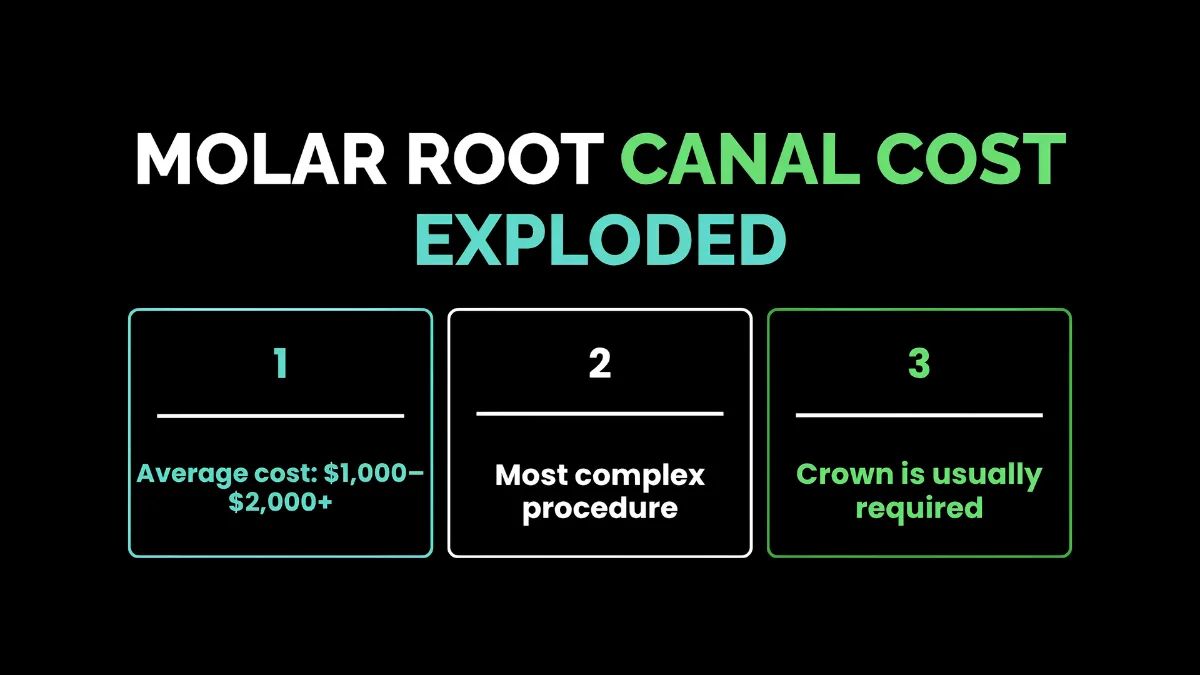
An estimated molar root canal cost without insurance usually runs from $1,000 to $1,600 or more.
If a specialist endodontist has to perform the procedure, that molar root canal cost could easily push past $2,000.
The process requires multiple tiny manual files, advanced digital imaging, and often multiple applications of disinfectant.
Furthermore, because molars take the absolute brunt of your chewing force, a dental crown is non-negotiable here.
When you stack a high molar root canal cost on top of a premium crown, the total investment gets massive.
That is why keeping an eye on your dental health at Weird Wealth is so vital for your personal finance journey.
Average Costs in 2026 by Tooth Type
To make it easy to see the numbers side by side, let’s look at the national ranges.
The following data reflects average estimated prices across standard dental offices before any insurance adjustments.
| Tooth Classification | Common Number of Canals | Estimated Price Range (No Insurance) |
| Front Tooth (Incisor/Canine) | 1 Canal | $500 – $1,100 |
| Premolar (Bicuspid) | 1 – 2 Canals | $700 – $1,300 |
| Molar (Back Chewing Tooth) | 3 – 4+ Canals | $1,000 – $1,600+ |
As you can tell, the root canal price escalates quickly as you move deeper into the mouth.
The True Root Canal Cost Without Insurance
Going to the dentist without a safety net can feel like walking a financial tightrope over a very rocky canyon.
If you are facing a root canal cost without insurance, you have to prepare for the entire baseline fee out of pocket.
The base root canal price is just the beginning of the monetary journey you will take at the clinic.
Before the dentist even picks up a tool, you have to pay for the initial emergency exam and diagnostic X-rays.
Those initial digital images can easily add another $50 to $250 to your total bill before treatment begins.
If you need an emergency or after-hours appointment, the office might tack on an extra convenience fee.
Paying a high root canal cost without insurance means you are also responsible for the cost of all local anesthetics.
You will also have to pay out of pocket for any prescribed antibiotics or pain management pills after you leave.
When you total every single one of these line items up, a single bad tooth can drain your emergency cash fast.
That is why knowing your options for payment plans, dental cards, or local clinic discounts is incredibly important.
How Insurance Shifts the Math
If you are fortunate enough to have a functional dental insurance plan, your wallet can finally take a sigh of relief.
Most standard dental policies categorize root canals as a “Basic” or “Major” restorative procedure.
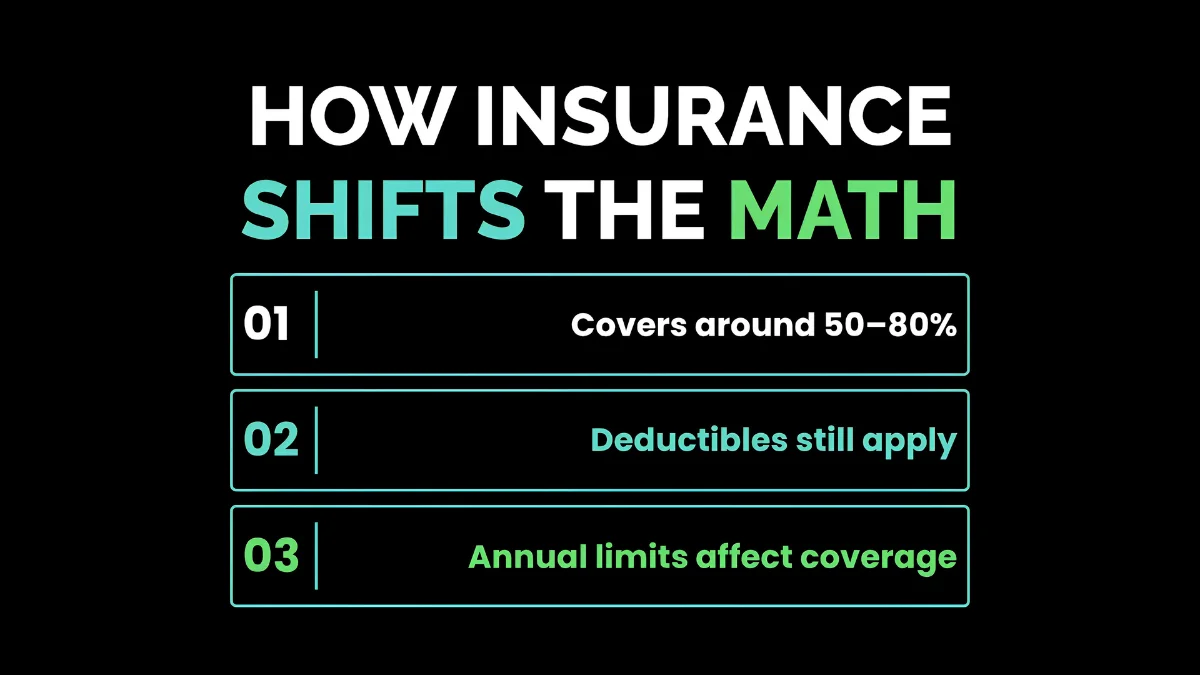
In most cases, your provider will cover anywhere from 50% to 80% of the negotiated root canal price.
However, you cannot forget about your annual deductible, which must be paid before benefits kick in.
Dental insurance plans also have a hard annual maximum cap, which is usually between $1,000 and $2,000 per year.
If your molar root canal cost eats up your entire annual cap, you will have to pay for the remaining work yourself.
Let’s look at how insurance alters your real out-of-pocket expenses for various teeth.
| Procedure Type | Average Base Fee | Insurance Coverage (50% Example) | Your Estimated Out-of-Pocket |
| Front Tooth Service | $800 | $400 | $400 |
| Premolar Service | $1,000 | $500 | $500 |
| Molar Service | $1,300 | $650 | $650 |
With insurance, managing a high molar root canal cost becomes far more feasible for an ordinary household budget.
Hidden and Additional Costs to Keep in Mind
When people look up a root canal price online, they often forget about the mandatory follow-up steps.
A root canal essentially hollows out the inside of your tooth, leaving the remaining outer shell brittle.
If you leave a treated tooth open or just place a soft temporary filling, it can crack completely in half.
To prevent this, a permanent core buildup using strong dental materials is almost always required.
A core buildup generally adds an extra $150 to $350 to your final structural restoration bill.
After the buildup, you will likely need a custom porcelain, zirconia, or metal-fused crown.
A dental crown can easily cost anywhere from $800 to $2,500 depending on the quality of materials used.
So, if you are calculating your total root canal cost without insurance, you must add the crown price too.
Suddenly, a simple $1,000 nerve cleaning turns into a comprehensive $2,500 tooth saving project.
At Weird Wealth, we always advocate for asking your dental office for a comprehensive printout of all future steps.
Getting an itemized breakdown ensures you will not be completely blindsided when it is time to swipe your card.
Critical Factors That Influence the Invoice
1. The Specific Location of Your Tooth
As we established, a front tooth root canal cost is lower because it has fewer root pathways to navigate. Back molars demand significantly more hours and structural precision.
2. General Practitioner vs. Endodontist Specialist
Seeing a specialized endodontist will generally increase your baseline root canal price by 30% to 50%. However, their advanced tools give complex teeth a much higher long-term survival rate.
3. Geographical Region and Local Market Rates
Dental offices located in high-cost-of-living metropolitan cities will naturally charge more than small-town rural clinics.
4. Severity of the Underlying Infection
If an abscess has severely damaged your jawbone, you might need extra diagnostic imaging or multiple sterilization visits.
Is it Cheaper to Just Pull the Tooth?
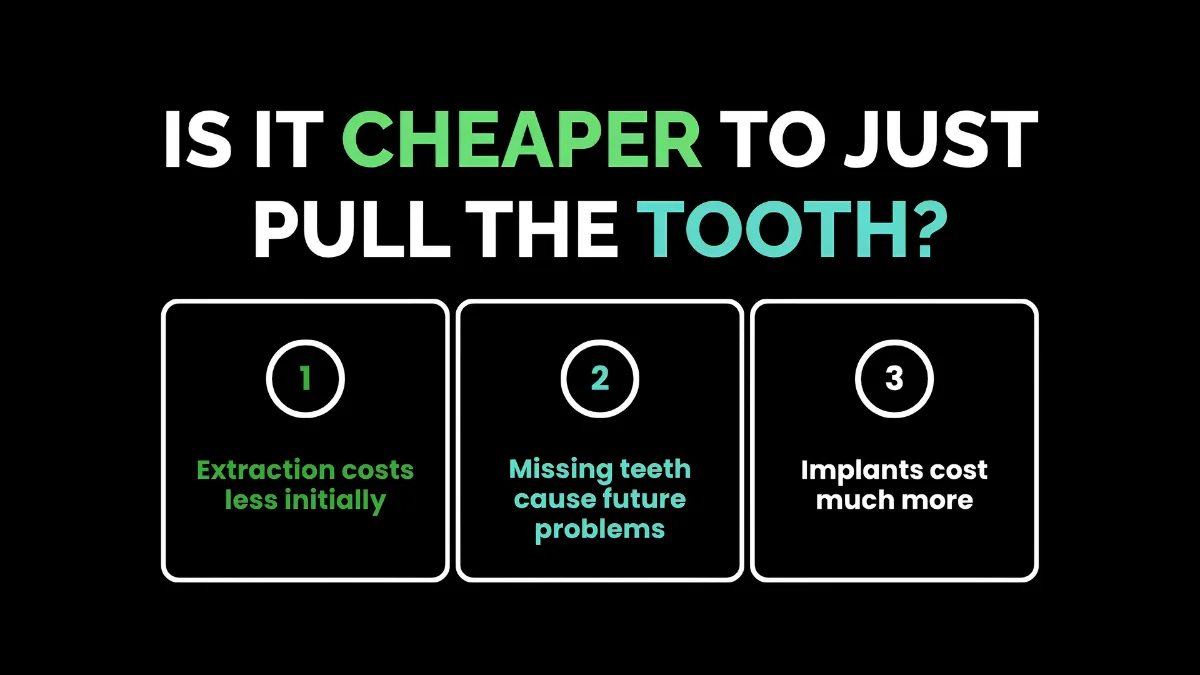
When faced with a steep molar root canal cost, it is incredibly tempting to just ask for an extraction.
A simple tooth extraction sounds like an easy way out, usually costing just $100 to $300 out of pocket.
While pulling the tooth might save you cash today, it can trigger a total avalanche of future financial problems.
When you leave an empty space in your jaw, your surrounding teeth will slowly start to shift out of alignment.
This shifting can ruin your bite, make it hard to chew, and eventually cause your jawbone to deteriorate.
To fix those issues later, you would need to buy a dental bridge or a surgical dental implant.
A single dental implant in 2026 can easily cost between $3,000 and $5,000 out of your own pocket.
Suddenly, trying to avoid a root canal cost without insurance leaves you stuck with a bill that is twice as high.
Saving your natural tooth via endodontic therapy is almost always the most cost-effective solution over the long haul.
Smart Ways to Save Money on Your Dental Care
If you are looking at a high root canal price and panicking about your bank balance, do not lose hope just yet.
There are several completely legitimate ways to bring these medical bills down to a manageable level.
First, always ask your dental office if they offer a cash discount if you pay the full amount upfront.
Many medical offices will gladly slash 5% to 10% off your bill if they do not have to process insurance paperwork.
Second, consider looking into a dedicated dental discount plan to help manage your out-of-pocket expenses.
These are monthly membership clubs that give you access to lower, pre-negotiated rates at local participating dentists.
Another fantastic option is to visit a local university dental school clinic for your major operations.
Dental students perform these procedures under the direct, watchful eye of highly experienced faculty instructors.
Because it is a learning environment, the overall root canal price can be up to 50% cheaper than a private practice.
Finally, you can look into low-interest healthcare financing cards like CareCredit to break the cost into monthly chunks.
Spreading a high molar root canal cost over twelve months can keep your regular checking account from hitting zero.
What Happens During the Procedure?
Understanding the physical process can help eliminate a lot of the fear and anxiety surrounding the chair time.
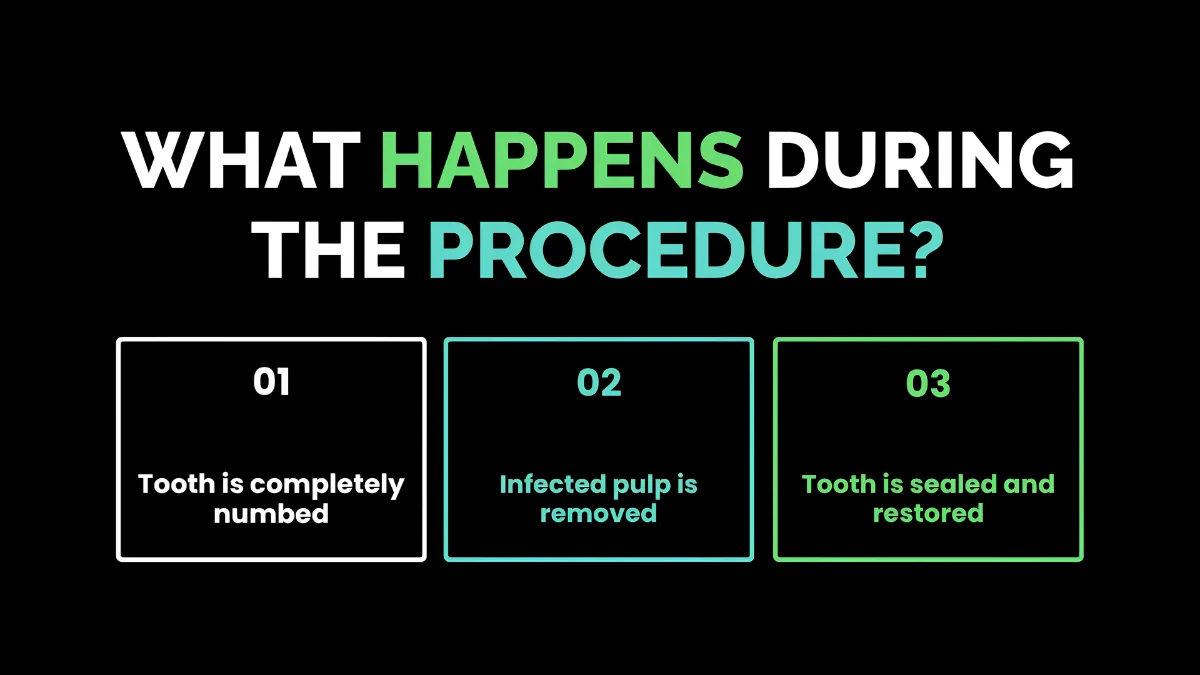
Your dentist will start by completely numbing the area around the bad tooth with a local anesthetic injection.
Once you are totally comfortable, they will make a tiny access opening in the top crown of your tooth.
Using specialized micro-instruments, they will carefully extract the diseased, inflamed nerve pulp from inside the channels.
After the channels are fully empty, they thoroughly flush them with medical disinfectants to kill any remaining bacteria.
Next, the empty chambers are packed tightly with a rubbery, biocompatible compound called gutta-percha.
This rubber material seals the pathways completely so new bacteria cannot crawl inside and restart an infection.
Finally, the temporary opening is closed up, preparing the structure for its final filling or protective crown.
The entire process is remarkably smooth and feels very similar to getting a standard deep filling done.
Long-Term Financial Value of Saving Your Tooth
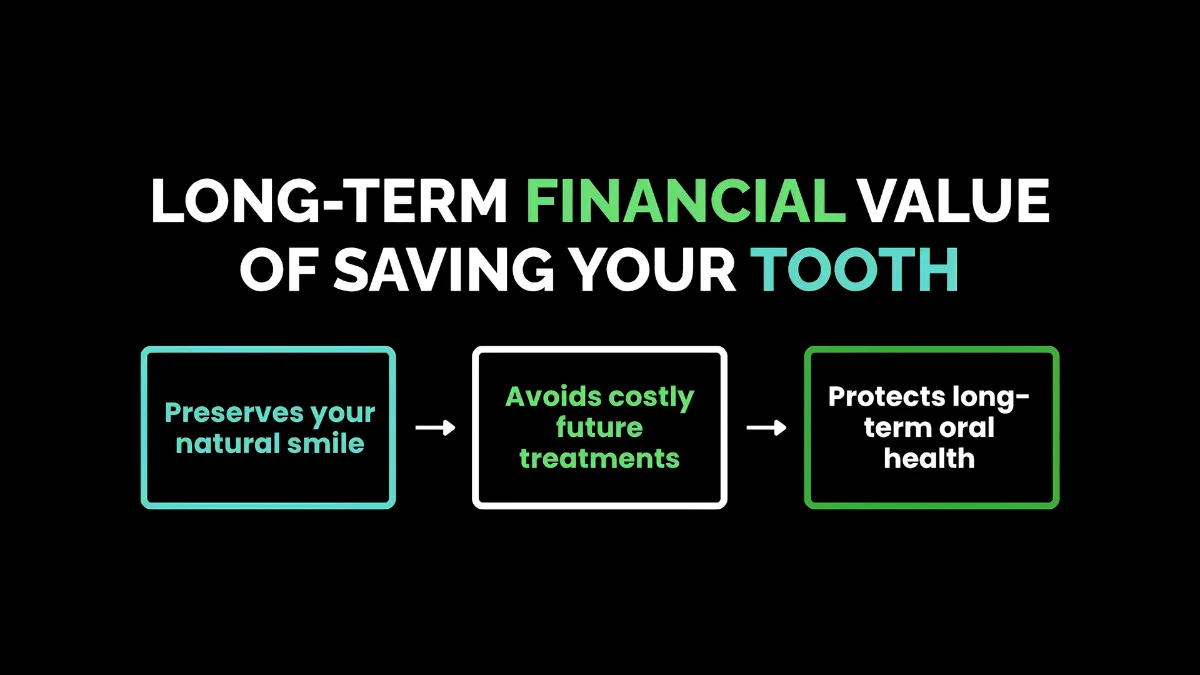
Think of endodontic therapy as a long-term investment in your bodily health and structural peace of mind.
Spending money on a front tooth root canal cost ensures you can continue to smile confidently during work meetings.
Investing in your rear teeth ensures you can chew your food properly and avoid painful digestive complications later.
At Weird Wealth, we always encourage looking at the big picture when it comes to managing your personal capital.
Paying a fair root canal price today keeps your natural smile intact for decades to come if you brush regularly.
Do not let the initial sticker shock scare you into making a decision that hurts your body down the line.
Call a few local offices, compare their baseline estimates, and choose a path that protects both your smile and your funds.
Conclusion
Navigating a sudden root canal price does not have to ruin your financial sanity if you know what to expect.
While a front tooth root canal cost is easier on the wallet, handling a complex molar root canal cost is still highly necessary.
Taking care of your teeth today protects your health and guards your hard-earned wealth from far bigger bills tomorrow.
FAQs
Why is a molar root canal cost so much higher than a front tooth?
A: Molars are located in the very back of the mouth and contain up to four separate, complex nerve canals. Cleaning them requires extra time, precision instruments, and advanced expertise compared to a single-rooted front tooth.
What is the average root canal price in 2026 without dental insurance?
A: Based on available data, the average baseline price generally ranges between $500 and $1,600 per tooth. This fee depends heavily on the tooth location, geographic region, and whether you see an endodontist.
Will my regular dental insurance cover a molar root canal cost completely?
A: No, standard dental insurance policies rarely cover the full price of major restorative treatments. They generally pay roughly 50% to 80% of the cost after you successfully meet your yearly deductible.
Is a dental crown always required after getting a root canal?
A: In most cases, yes, especially for back molars that endure heavy chewing pressure every single day. A crown prevents the now-brittle tooth from fracturing, though front teeth can occasionally use standard fillings.
How can I manage a steep root canal cost without insurance coverage?
You can look into local dental school clinics, ask for an upfront cash discount, or utilize medical credit cards. Many practices also offer monthly in-house installment plans to help ease the immediate burden on your savings.