

If you’ve ever scrolled through headlines about billionaires buying private islands or gold-plated bathrooms, you’ve probably wondered where luxury ends and pure extravagance begins.
Curiosity like that is exactly why the topic of weird luxury purchases rich people make continues to fascinate readers around the world.
The more I researched this subject, the more I realized these purchases aren’t simply about spending enormous amounts of money. They reveal how wealth changes priorities. Once convenience, privacy, and security become more valuable than owning another luxury car or designer watch, buying habits begin to look completely different from those of the average consumer.
Many of these purchases aren’t even visible to the public. Instead of showing off expensive logos, today’s ultra-wealthy increasingly spend their fortunes on eliminating everyday inconveniences, protecting their privacy, and creating experiences that almost nobody else can access.
In this article, you’ll discover 12 of the strangest luxury purchases made by the world’s wealthiest people, why they buy them, how this trend has evolved over time, and what these unusual decisions reveal about modern wealth.
AI Overview: Weird Luxury Purchases Rich People Actually Buy
The weird luxury purchases rich people make have evolved far beyond traditional luxury goods like sports cars and designer fashion. Today’s ultra-high-net-worth individuals often spend money on extreme convenience, complete privacy, personalized services, and one-of-a-kind experiences rather than recognizable status symbols.
From smart bathrooms worth more than many homes to buying neighboring properties simply to demolish them, these purchases represent a shift toward exclusivity instead of visibility. They also reflect changing rich people spending habits, where time, comfort, and personal freedom are valued more than public recognition.
Understanding these buying patterns offers a fascinating look into how wealth influences lifestyle, consumer behavior, and the future of the global luxury market.
Key Takeaways
- Today’s ultra-rich increasingly prioritize privacy, convenience, and exclusivity over traditional luxury brands.
- Many unusual luxury purchases are designed to remove everyday inconveniences rather than display wealth.
- Concierge firms, auction houses, and specialist companies make these extraordinary purchases possible.
- Several modern luxury trends focus on personalized experiences instead of physical possessions.
- Some purchases function as long-term investments, while others exist purely for convenience or personal enjoyment.
- Modern billionaire spending is increasingly driven by scarcity and customization rather than recognizable luxury logos.
What are weird luxury purchases rich people make?
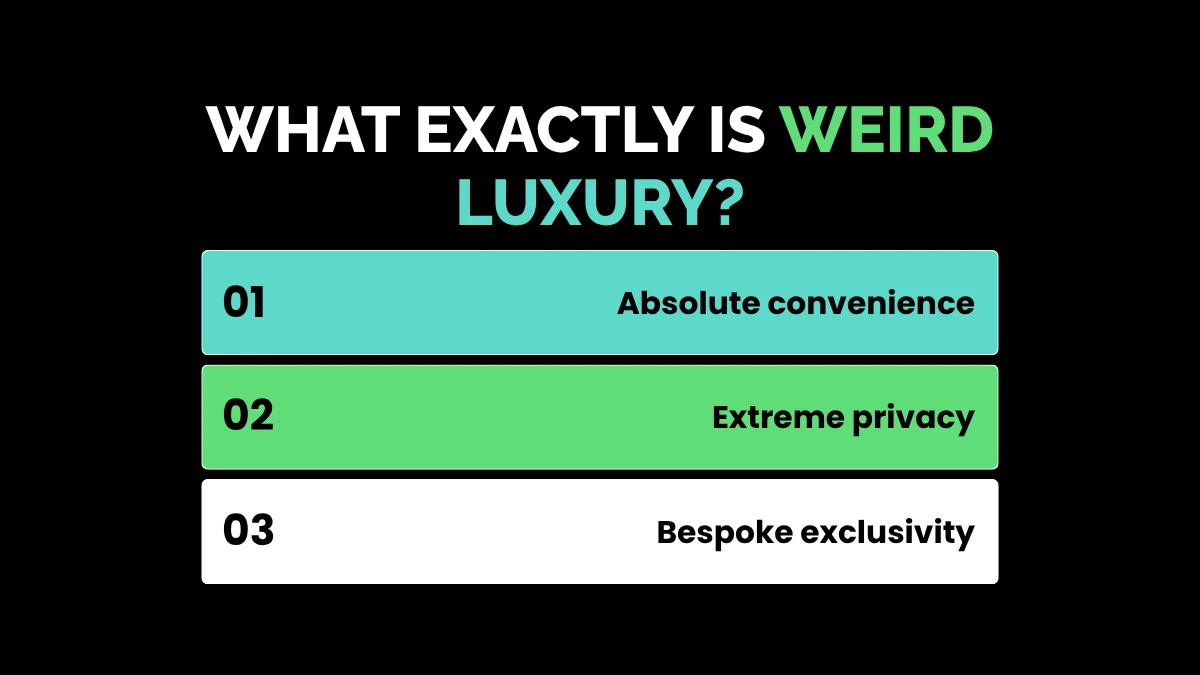
Weird luxury purchases rich people make are highly exclusive products, services, or experiences that prioritize privacy, convenience, personalization, or rarity over everyday practicality. Unlike traditional luxury goods, these purchases often solve unique lifestyle needs or demonstrate exclusivity rather than simply showcasing wealth.
Why Do Rich People Buy Weird Luxury Purchases?
At first glance, many of these purchases seem impossible to justify. Spending millions to remove a neighboring house or paying someone to organize thousands of decorative books doesn’t appear logical to most people.
The reality is that wealth changes how people measure value.
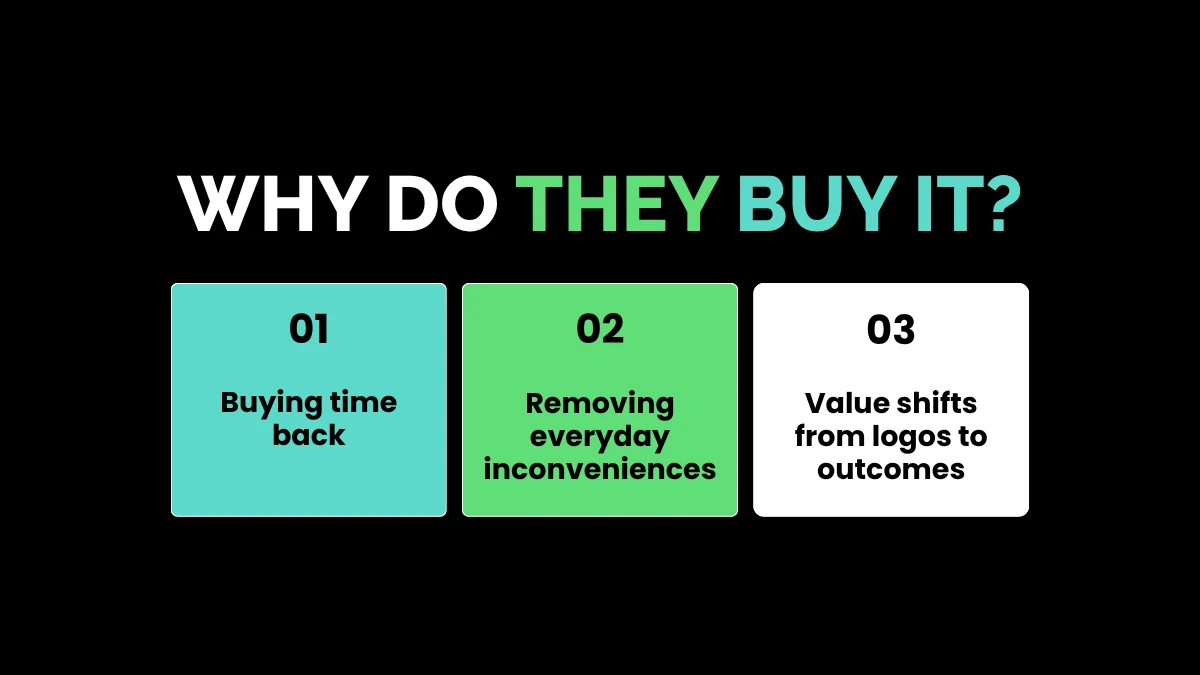
For most households, price is usually the biggest factor when making a purchase. For ultra-high-net-worth individuals, however, time, convenience, security, and exclusivity often become far more valuable than saving money.
This shift explains why so many bizarre luxury items appear irrational from the outside while making perfect sense within the lifestyle of someone managing multiple companies, international travel schedules, or extensive investment portfolios.
The Psychology Behind Extreme Luxury
The roots of unusual luxury spending can be traced back more than a century.
Economist Thorstein Veblen, in The Theory of the Leisure Class, introduced the concept of conspicuous consumption. His theory suggested that wealthy individuals often purchase expensive goods not because they need them but because those purchases communicate status and financial freedom.
While that idea still applies today, luxury has evolved.
Modern billionaires increasingly avoid obvious displays of wealth. Instead, they spend money on things that improve everyday life in subtle but meaningful ways, such as greater privacy, fewer interruptions, or personalized services unavailable to the general public.
Rather than buying another luxury handbag or sports car, they may choose something almost invisible to everyone else, but incredibly valuable to them.
Luxury Is No Longer About Logos
One of the biggest shifts in 2026 is the move away from highly recognizable luxury brands.
According to the research provided, many ultra-wealthy individuals now prefer purchases that offer complete personalization instead of public recognition. A custom-built wellness room or an automated smart bathroom can provide far more personal value than another luxury watch that thousands of other people can also buy.
This transition reflects a growing preference for exclusivity rather than popularity.
Owning something nobody else can access has become a stronger status symbol than owning something everyone immediately recognizes.
Convenience Has Become the Ultimate Luxury
Another major trend is buying freedom from everyday tasks.
Instead of spending time packing luggage, organizing appointments, waiting in lines, or coordinating travel, wealthy individuals increasingly hire specialists or subscribe to concierge services that remove those responsibilities entirely.
The purchase itself is often less important than the time it saves.
That is why services such as professional wardrobe storage, elite concierge agencies, and full-time household specialists have become valuable parts of the modern luxury economy.
Privacy Is More Valuable Than Possessions
For many wealthy families, privacy has become one of the world’s rarest luxuries.
Rather than purchasing larger homes simply for prestige, some buyers acquire neighboring properties to create physical distance from public attention. Others invest in support vessels, private security, or specialized storage facilities that keep valuable assets away from public view.
These decisions may appear excessive, but they often serve practical purposes within the lifestyles of globally recognized entrepreneurs, investors, and celebrities.
How Weird Luxury Has Changed Over Time
Extreme luxury spending is not a new phenomenon.
Centuries ago, rulers displayed their wealth through exotic animal collections, oversized monuments, and magnificent palaces. During the Gilded Age, industrial leaders invested heavily in elaborate estates and luxurious private railcars.
Today’s version of luxury is different.
Instead of focusing entirely on visible displays of wealth, many affluent buyers invest in hidden convenience, advanced technology, biometric wellness systems, and highly personalized environments.
The goal has shifted from impressing everyone else to making everyday life as effortless as possible.
The Four Categories of Modern Weird Luxury
Most strange things rich people buy today fall into four major categories identified in the research.
1. Structural and Environmental Insulation
These purchases reshape the owner’s surroundings to improve privacy, security, or quality of life.
Examples include buying neighboring properties for demolition, constructing private parks, and storing valuable collections in highly secure facilities.
2. Experiential and Concierge Extremes
Some wealthy individuals prefer extraordinary experiences over physical possessions.
Elite concierge firms can arrange private movie premieres, exclusive polar dining experiences, or highly customized global travel that would be impossible through ordinary booking services.
3. Anonymous and Disposable Materialism
Certain purchases are designed purely to eliminate daily effort.
Examples include hiring full-time pet nannies, rotating entire household furniture collections every season, or outsourcing time-consuming errands that most people would normally complete themselves.
4. Eccentric Nostalgia Materialism
Some collectors spend extraordinary amounts acquiring historical artifacts or rare cultural memorabilia.
These purchases often have little practical use, yet their rarity and uniqueness make them highly desirable among specialized collectors.
These four categories demonstrate that luxury items millionaires own are no longer limited to expensive products. Increasingly, luxury is about controlling time, space, privacy, and personal experiences in ways that ordinary consumer markets simply cannot provide.
1. Fully Integrated Smart Bathrooms Worth Over $500,000
For most people, a luxury bathroom means marble countertops, heated floors, or a premium shower system. Among the ultra-rich, that definition has changed dramatically.
Modern smart bathrooms have become complete wellness environments rather than ordinary household spaces.
Due Financial Analysis (2026), some fully integrated systems now cost more than $500,000, replacing earlier trends like simple gold-plated fixtures.
These installations include voice-controlled lighting, automated climate settings, personalized bidet functions, heated seating, and health-monitoring technology capable of tracking biometric data during daily use.
Rather than purchasing these systems for decoration alone, wealthy buyers see them as investments in convenience and preventative health. As luxury shifts toward personalization, this represents one of the fastest-growing examples of unusual luxury purchases.
Who Should Use This?
Ultra-high-net-worth individuals who value privacy, wellness monitoring, and seamless home automation.
Who Should Avoid This?
Anyone looking for practical home upgrades. Most homeowners would gain far greater value from conventional smart home technology at a fraction of the cost.
2. Buying Neighboring Homes Just to Demolish Them
Imagine purchasing a multi-million-dollar house only to bulldoze it within weeks.
It sounds unbelievable, yet this practice has become increasingly common in some of the world’s wealthiest neighborhoods.
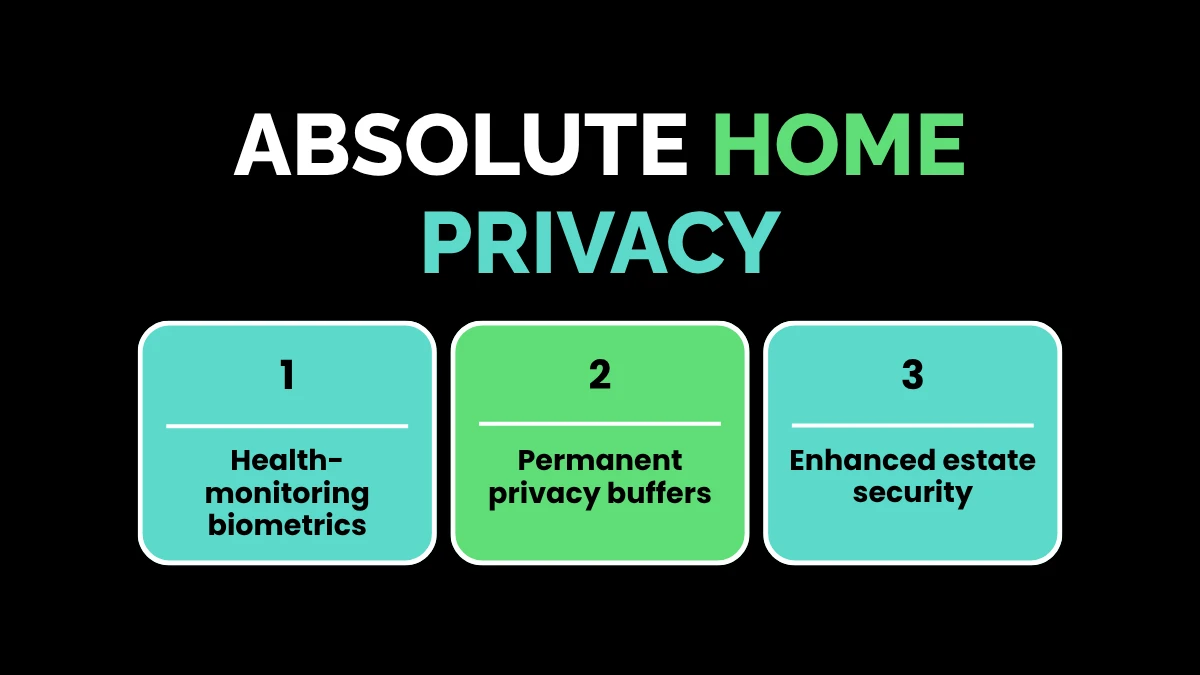
According to the Coldwell Banker Global Luxury 2026 Mid-Year Report, affluent buyers are increasingly participating in a trend known as “landmaxxing” spending millions to acquire neighboring properties solely for land assemblage, view preservation, and complete privacy.
The objective isn’t another investment property.
Instead, buyers eliminate blocked ocean views, create larger private gardens, improve estate security, or establish permanent privacy buffers around their primary residence.
This perfectly illustrates how rich people’s spending habits often prioritize peace, space, and long-term privacy over conventional financial logic.
Who Should Use This?
Individuals managing extremely high-profile lifestyles where security and privacy are constant concerns.
Who Should Avoid This?
Traditional real estate investors seeking rental income or property appreciation rather than lifestyle benefits.
3. Shadow Yachts: The Superyacht Behind the Superyacht
Owning a superyacht already places someone among the world’s wealthiest people.
Some owners, however, purchase a second vessel whose only purpose is supporting the first.
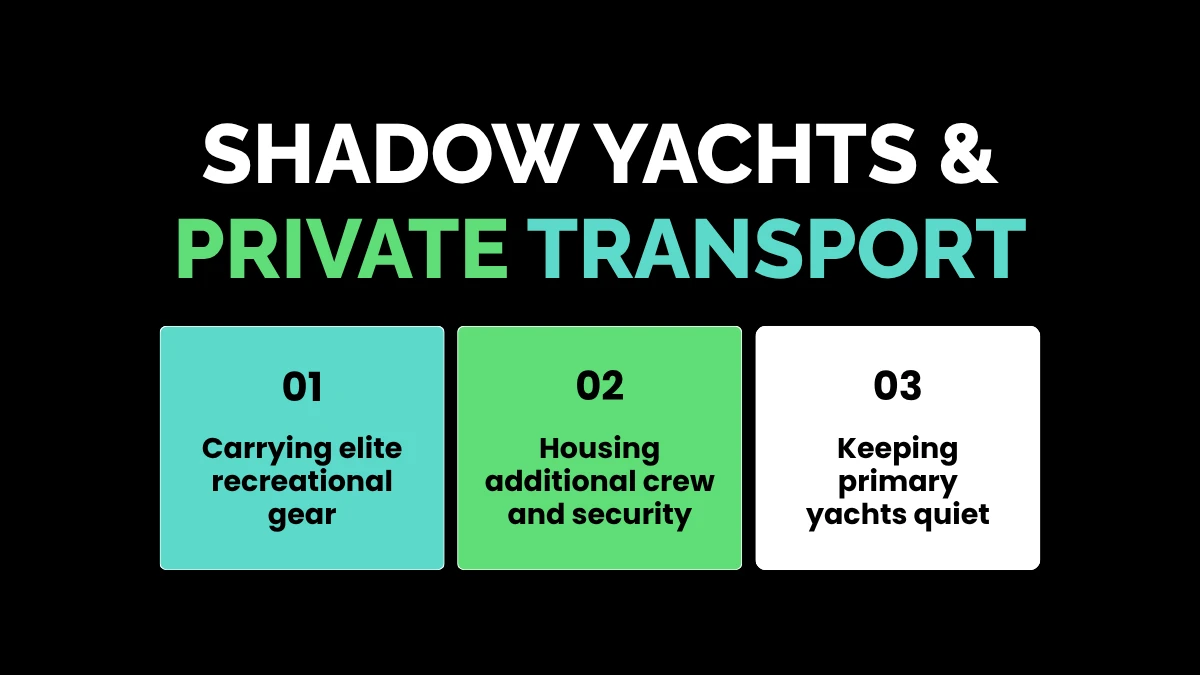
Known as shadow yachts, these ships transport helicopters, jet skis, diving equipment, speedboats, maintenance crews, fuel reserves, and additional security personnel.
Companies such as Lürssen and Feadship have become leaders in building these highly customized support vessels for elite clients.
Keeping recreational equipment away from the primary yacht creates a quieter, cleaner, and more luxurious onboard experience.
Instead of cluttering valuable guest space, everything operates behind the scenes without interrupting daily life.
It’s an excellent example of how today’s bizarre luxury items often revolve around eliminating inconvenience instead of displaying wealth.
4. Professional Book Curators for Empty Libraries
Walking into a grand estate with floor-to-ceiling bookshelves creates an immediate impression of sophistication.
Building that collection naturally could take decades.
Some wealthy homeowners simply hire professional book curators instead.
These specialists purchase books by the foot, selecting editions that perfectly match shelf dimensions, room colors, and architectural style.
According to the research data, books may even be lightly aged or scuffed so the finished library appears authentic rather than newly assembled.
The books are chosen less for reading and more for creating an intellectual atmosphere.
While unusual, this purchase reflects another growing trend: buying expertise and convenience instead of investing personal time.
5. Private Movie Premieres at Home
For most audiences, watching a blockbuster means visiting a cinema or waiting for a streaming release.
Some ultra-wealthy families choose neither option.
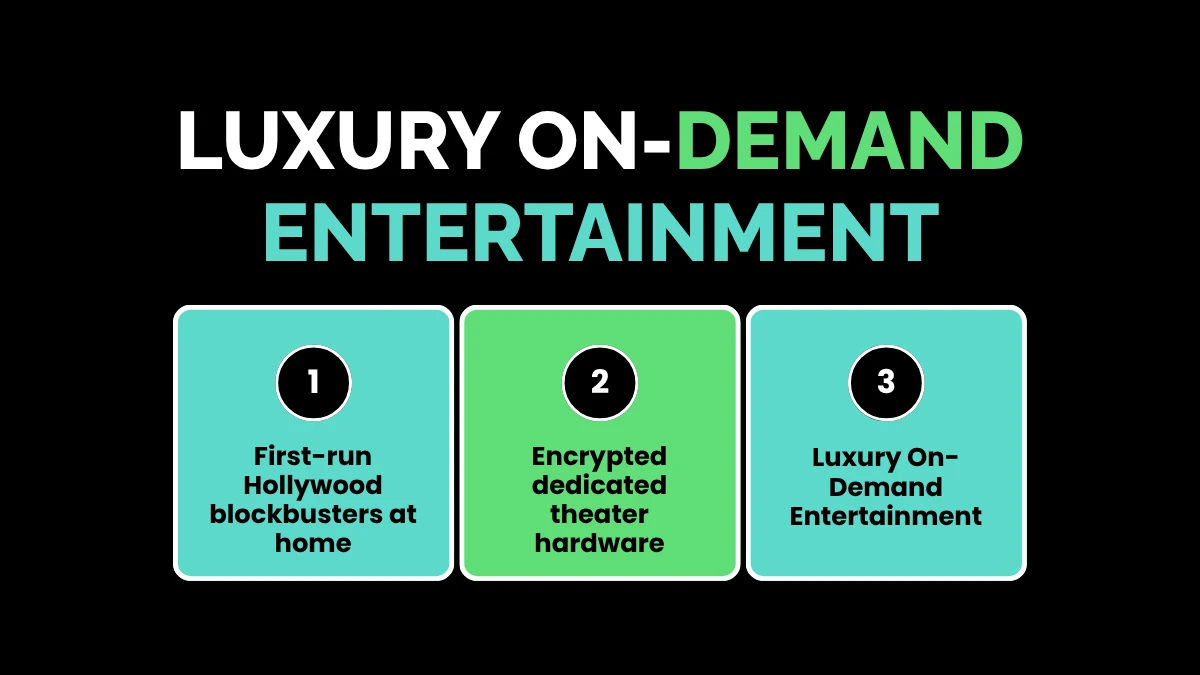
Using specialized encrypted theater systems, major Hollywood releases can be delivered directly to private home cinemas on the same day they premiere publicly.
Access requires dedicated hardware and annual subscription fees that reach five figures.
Instead of attending crowded theaters, owners enjoy first-run films with complete privacy and personalized comfort.
This type of service falls within the broader category of concierge-driven luxury experiences, where exclusivity matters more than ownership.
It also highlights how modern luxury items millionaires own increasingly include premium services rather than physical possessions.
6. Digital Wardrobe Storage That Travels Before You Do
Packing luggage for international travel can become surprisingly complicated when someone owns thousands of designer garments.
That challenge inspired one of the most practical luxury services available today.
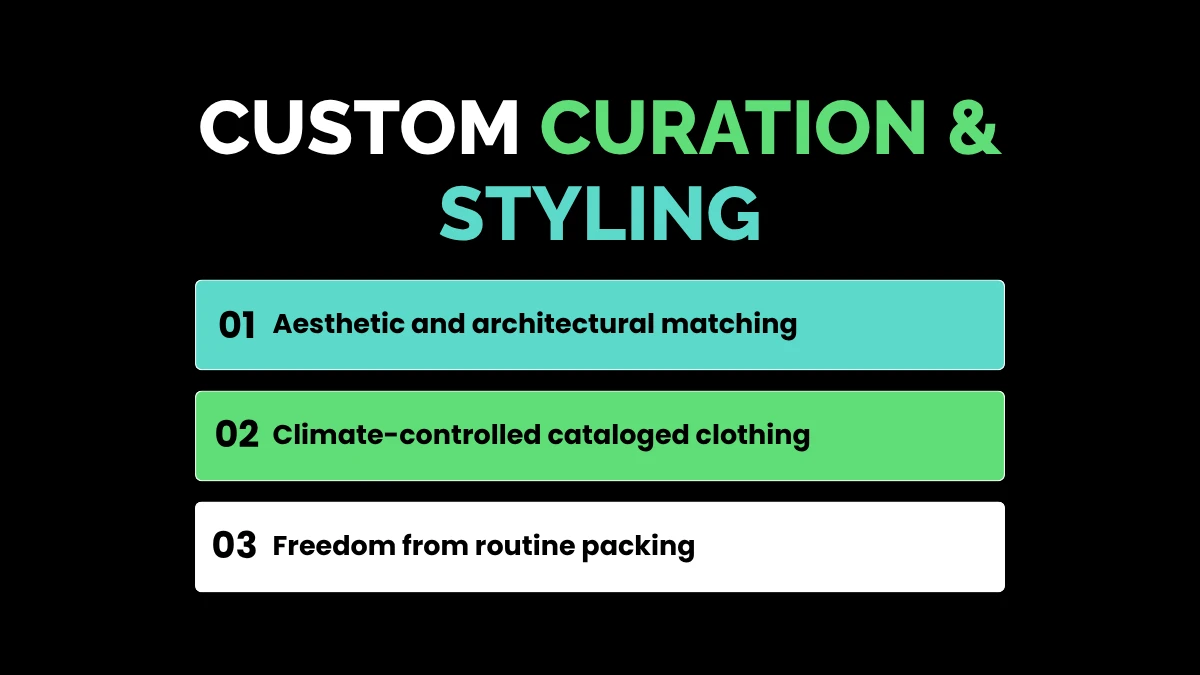
Companies like Uovo, formerly known as Garde Robe, store clothing collections inside climate-controlled facilities where every item is photographed, cataloged, and digitally organized.
Before traveling, clients simply select outfits through an app.
Their clothing is professionally packed and delivered directly to the destination before they arrive.
Instead of managing dozens of suitcases, travelers arrive to find their wardrobe already waiting.
This “cloud storage for clothing” has become a perfect example of how the wealthiest consumers purchase freedom from routine tasks rather than additional material possessions.
What These Six Purchases Have in Common
Although these examples seem completely different, they all follow the same underlying principle.
None were created because ordinary luxury wasn’t expensive enough.
They exist because traditional luxury no longer solves the problems that accompany extreme wealth.
Whether it’s monitoring health through a $500,000 bathroom, removing an entire neighboring property for privacy, operating a shadow yacht, filling an estate library overnight, enjoying private movie premieres, or outsourcing wardrobe management, each purchase is designed to eliminate friction from everyday life.
That represents one of the biggest shifts in modern luxury.
The focus is no longer on owning the most recognizable products.
Instead, it is on creating a lifestyle where time, privacy, personalization, and convenience become the ultimate status symbols.
Before moving to the remaining six examples, it’s worth looking at the numbers behind this growing industry.
According to investigative reporting by The New York Times, more than $10 billion worth of privately owned fine art is currently stored inside secure, climate-controlled freeports around the world instead of being displayed publicly.
Similarly, industry tracking shows that elite concierge requests managed by firms like Quintessentially, such as arranging private jet travel for pets or organizing extraordinary destination experiences, regularly cost between $50,000 and $250,000 per request.
These figures show that many of the most expensive weird items aren’t purchased for attention.
They’re purchased because, at the highest levels of wealth, convenience itself has become one of the rarest luxuries money can buy.
7. Live-In Pet Nannies With Corporate-Level Salaries
For many families, hiring a dog walker or pet sitter is enough.
Some ultra-wealthy households take pet care to an entirely different level by employing full-time, live-in pet nannies who manage every aspect of an animal’s daily life.
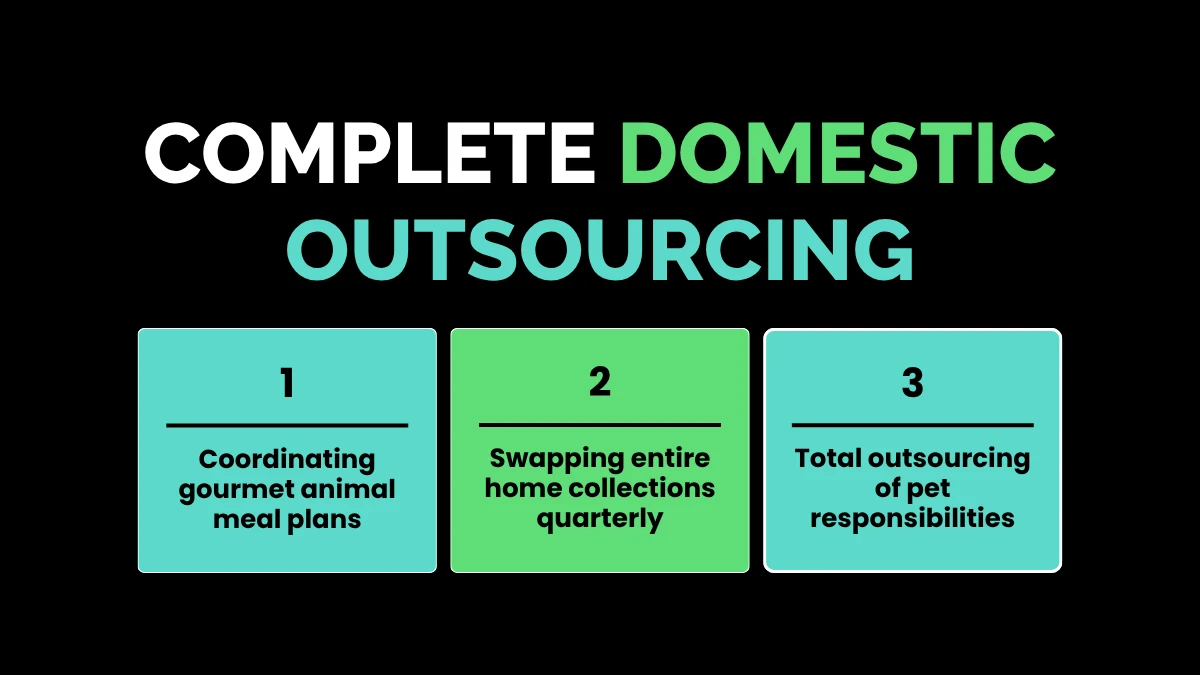
Their responsibilities extend far beyond feeding and walking pets. They coordinate gourmet meal plans, veterinary appointments, exercise schedules, grooming, and even private jet travel logistics.
This may seem excessive, but it reflects a broader trend in rich people spending habits. As wealth increases, owners often outsource every possible responsibility, allowing them to focus entirely on business, travel, or personal priorities.
Who Should Use This?
Families with multiple residences, frequent international travel, or valuable animals requiring constant professional care.
Who Should Avoid This?
Most pet owners. A trusted local pet care service provides excellent support without the extraordinary cost of a full-time household employee.
8. Seasonal Furniture Rotations
Many homeowners enjoy changing decorations during the holidays.
Some wealthy estate owners replace virtually everything.
Instead of swapping cushions or artwork, specialized interior design teams remove and store an entire home’s furniture several times a year before installing a completely different collection suited to the season.
Living rooms, bedrooms, dining areas, and even outdoor spaces receive entirely new designs, creating the feeling of moving into a freshly styled home every few months.
This practice belongs to the category of anonymous and disposable materialism, where convenience and aesthetics take priority over maximizing the lifespan of household items.
It also demonstrates that luxury isn’t always about buying more. Sometimes it’s about continuously reinventing an environment without investing personal time or effort.
Common Mistake to Avoid
It’s easy to assume this trend is about waste alone.
In reality, the service includes professional storage, transportation, maintenance, and interior planning that make large estates easier to manage for owners who spend significant time traveling.
9. Collecting Historical Oddities and Celebrity Artifacts
Luxury collectors don’t always chase diamonds or rare watches.
Some pursue objects that most people would never think of buying.
According to auction records, collectors have spent thousands of dollars on unusual historical artifacts, including John Lennon’s tooth, which sold for more than $31,000 at a UK auction house.
Meanwhile, others have paid hundreds of thousands of dollars at specialized science and natural history auctions for rare fragments of lunar meteorites.
The value comes from rarity rather than utility.
These items cannot improve daily life, but they provide something wealthy collectors often seek, ownership of a unique piece of cultural or historical significance.
Auction houses such as Sotheby’s and Christie’s continue to play a major role in facilitating these highly specialized acquisitions.
10. Multi-Million-Dollar Freeport Art Storage
Many people assume expensive artwork hangs inside luxurious mansions.
In reality, a surprising amount never reaches a living room wall.
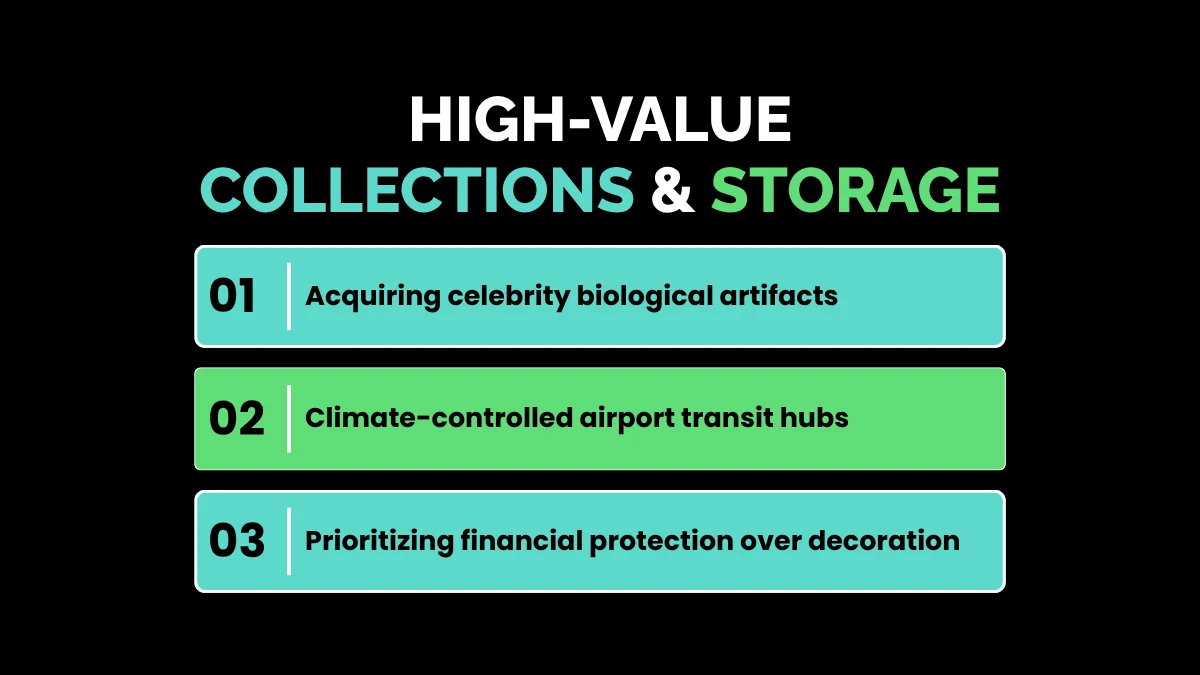
According to market reporting by Artnet News, more than $10 billion worth of privately owned fine art remains stored inside secure, climate-controlled freeports located near international airports.
These highly secure facilities help preserve artwork while allowing collectors to defer certain taxes and customs duties under applicable regulations.
Instead of displaying priceless paintings publicly, owners often prioritize preservation, security, and long-term asset management.
This example shows that some luxury items millionaires own are valued less for decoration and more for financial protection.
Who Should Use This?
Collectors managing museum-quality artwork or investment-grade collections.
Who Should Avoid This?
Casual collectors purchasing art primarily for home enjoyment rather than long-term preservation.
11. Hiring People to Wait in Line
Time becomes increasingly valuable as wealth grows.
Rather than spending hours waiting for government appointments, exclusive product launches, or specialty purchases, affluent clients often pay professionals to stand in line on their behalf.
These specialists also handle errands such as collecting rare ingredients, managing paperwork, or completing other time-consuming tasks.
Although this sounds unusual, it perfectly reflects the modern luxury philosophy of eliminating everyday friction.
According to the research, many concierge services now treat time itself as the ultimate luxury product.
Instead of buying another expensive object, clients purchase hours of their day back.
12. Private Iceberg Dinners and Impossible Experiences
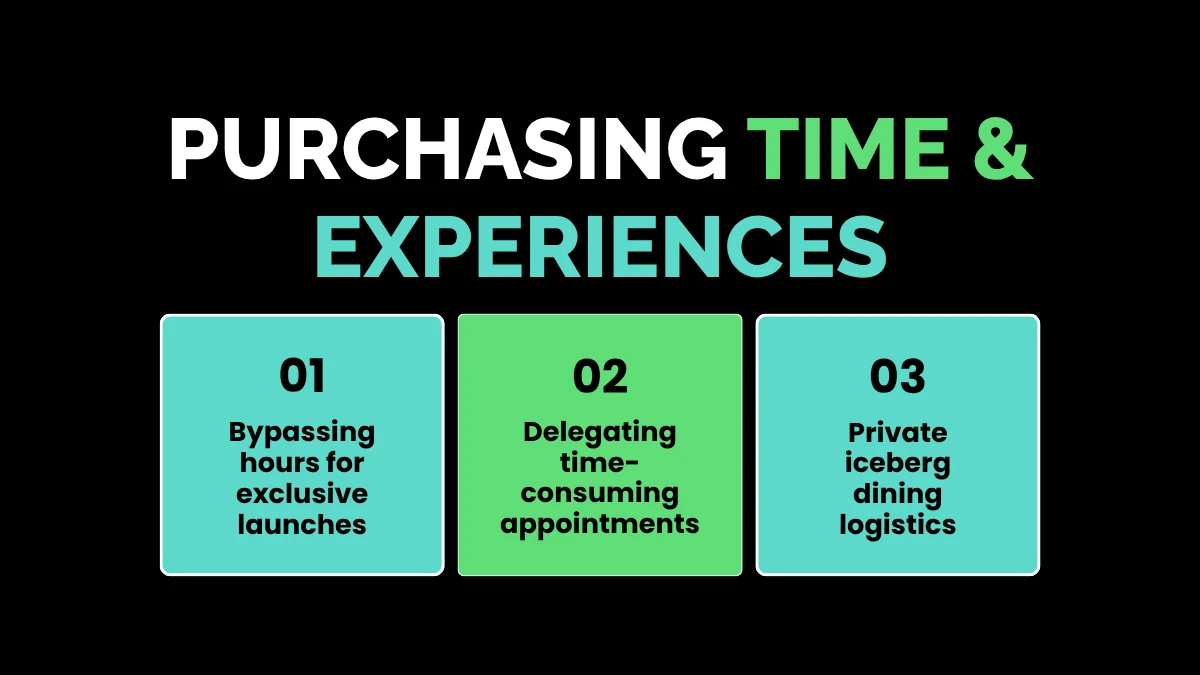
Perhaps the most extraordinary purchases aren’t physical objects at all.
They’re experiences that almost nobody else could arrange.
Elite concierge companies such as Quintessentially and Bluefish specialize in designing highly personalized events that push the boundaries of traditional travel.
Examples from the research include flying private chefs to remote icebergs for gourmet dinners, organizing family celebrations in locations inaccessible to ordinary tourists, and coordinating logistical operations involving private aircraft, helicopters, and specialist crews.
Luxury lifestyle trackers note that these high-end concierge requests regularly cost between $50,000 and $250,000 for a single, custom-tailored experience.
Example:
Many high-end concierge requests cost between $50,000 and $250,000 for a single experience, highlighting the growing trend of extreme billionaire travel habits.”
These aren’t vacations in the traditional sense.
They’re carefully orchestrated events designed to create memories that cannot simply be purchased through a travel website.
What Makes These Purchases Different?
After looking at all twelve examples, one pattern becomes impossible to ignore.
Most aren’t purchased because they’re expensive.
They’re expensive because they remove obstacles that money can solve.
Whether it’s outsourcing pet care, redesigning an estate every season, preserving priceless artwork, or arranging an impossible dining experience, the objective remains remarkably consistent.
The ultra-rich increasingly use wealth to eliminate inconvenience rather than accumulate possessions.
This shift also explains why recognizable luxury brands no longer dominate conversations about extreme wealth.
Instead, highly personalized services, private infrastructure, and bespoke experiences have become the new status symbols.
Weird Luxury Purchases vs. Everyday Luxury
| Factor | Everyday Luxury | Weird Luxury Purchases |
| Primary Goal | Comfort and quality | Absolute convenience, privacy, or exclusivity |
| Buying Process | Retail stores or online shopping | Private concierge firms, wealth managers, and NDA-backed networks |
| Value | Practical use | Personalization, rarity, or eliminating friction |
| Visibility | Often displayed publicly | Frequently hidden from public view |
| Ownership | Individual products | Complete services, environments, or experiences |
| Motivation | Enjoyment and quality | Time savings, privacy, uniqueness, and status |
This comparison highlights why weird luxury purchases rich people make differ so dramatically from traditional consumer spending. The purchase itself is often secondary to the lifestyle advantage it provides.
Statistics That Explain the Trend
The numbers behind this market reveal just how quickly luxury priorities are changing.
-
Smart Bathrooms: Custom home automation tracking reports that fully integrated luxury smart bathroom systems now regularly exceed $500,000, far shifting from earlier gold-plated hardware trends.
-
Concierge Services: Luxury lifestyle managers note that elite concierge requests—such as specialized travel logistics for pets or remote destination curation—regularly cost between $50,000 and $250,000 for a single experience.
-
Landmaxxing Real Estate: The Coldwell Banker Global Luxury Mid-Year Report documents affluent buyers dedicating $2 million to $10 million toward acquiring neighboring properties strictly to demolish them for privacy or view preservation.
-
Freeport Art Collections: Investigative tracking by The New York Times highlights that more than $10 billion worth of museum-grade fine art sits securely inside climate-controlled international freeports instead of being displayed publicly.
-
Digital Wardrobe Management: Specialty wardrobe services like Uovo allow wealthy travelers to digitally catalog and sync global clothing collections so their luggage arrives at destinations before they do.
-
Shadow Yachts: Premier custom shipbuilders such as Lürssen and Feadship continue to lead the growing support-vessel market by engineering specialized shadow yachts designed to carry elite recreational gear
Together, these figures demonstrate that the modern luxury economy increasingly revolves around convenience, personalization, and privacy rather than visible displays of wealth.
An Overlooked Truth Competitors Often Miss
One misconception is that these purchases are simply irrational.
The research suggests something more nuanced.
Many of these decisions reflect changing priorities rather than careless spending. Wealthy individuals often view time, security, health monitoring, and privacy as assets worth protecting.
That doesn’t mean every purchase is sensible.
Seasonal furniture rotations, property demolitions, and extravagant concierge experiences frequently attract criticism because of their environmental impact and perceived excess.
The weird luxury economy therefore exists at the intersection of innovation, convenience, prestige, and ethical debate.
Understanding that balance provides a much clearer picture than simply labeling every purchase as extravagant.
Comparison:
Traditional Luxury vs. Weird Luxury Purchases
Understanding these weird luxury purchases rich people make becomes much easier when you compare them with conventional luxury spending.
Traditional luxury is usually about owning premium products.
Weird luxury, on the other hand, is about removing inconvenience, protecting privacy, and creating experiences that almost nobody else can replicate.
| Factor | Traditional Luxury Purchase | Weird Luxury Purchase |
| Primary Goal | Quality and prestige | Eliminate friction and maximize exclusivity |
| Purchase Method | Retail stores or luxury boutiques | Private concierge firms and NDA-backed networks |
| Value Driver | Brand reputation | Personalization, privacy, and convenience |
| Visibility | Publicly recognizable | Often completely private |
| Asset Lifetime | Used regularly | Sometimes used once or stored indefinitely |
| Examples | Designer handbags, luxury cars | Shadow yachts, digital wardrobes, iceberg dinners |
One clear pattern emerges from this comparison.
The ultra-rich increasingly purchase outcomes instead of objects. Saving time, protecting privacy, or avoiding inconvenience often matters more than buying another recognizable luxury brand.
Trends Shaping Weird Luxury Purchases
Luxury spending has changed significantly over the past decade.
The research suggests several clear trends are driving this transformation.
1. Invisible Luxury Is Replacing Visible Luxury
Large logos and instantly recognizable products no longer define ultimate wealth.
Instead, affluent buyers increasingly invest in private infrastructure, concierge services, and personalized environments that remain invisible to everyone else.
Privacy itself has become a luxury.
2. Convenience Has Become More Valuable Than Ownership
Many purchases no longer involve acquiring physical products.
Instead, wealthy buyers purchase systems that eliminate repetitive tasks.
Digital wardrobe management, live-in pet nannies, line-standing services, and concierge firms all exist for one reason:
They give time back.
3. Wellness Is Becoming a Luxury Category
The rise of half-million-dollar smart bathrooms demonstrates that health has become another status symbol.
Current luxury concierge trends also show growing interest in longevity, preventative healthcare, and personalized wellness experiences among ultra-high-net-worth individuals.
4. Experiences Now Compete With Possessions
Private iceberg dinners, exclusive movie premieres, and impossible travel experiences illustrate an important shift.
Many wealthy buyers now remember experiences longer than physical purchases.
Recent luxury industry research also shows continued growth in experiential spending and highly personalized travel.
Practical Framework:
How to Understand These Purchases
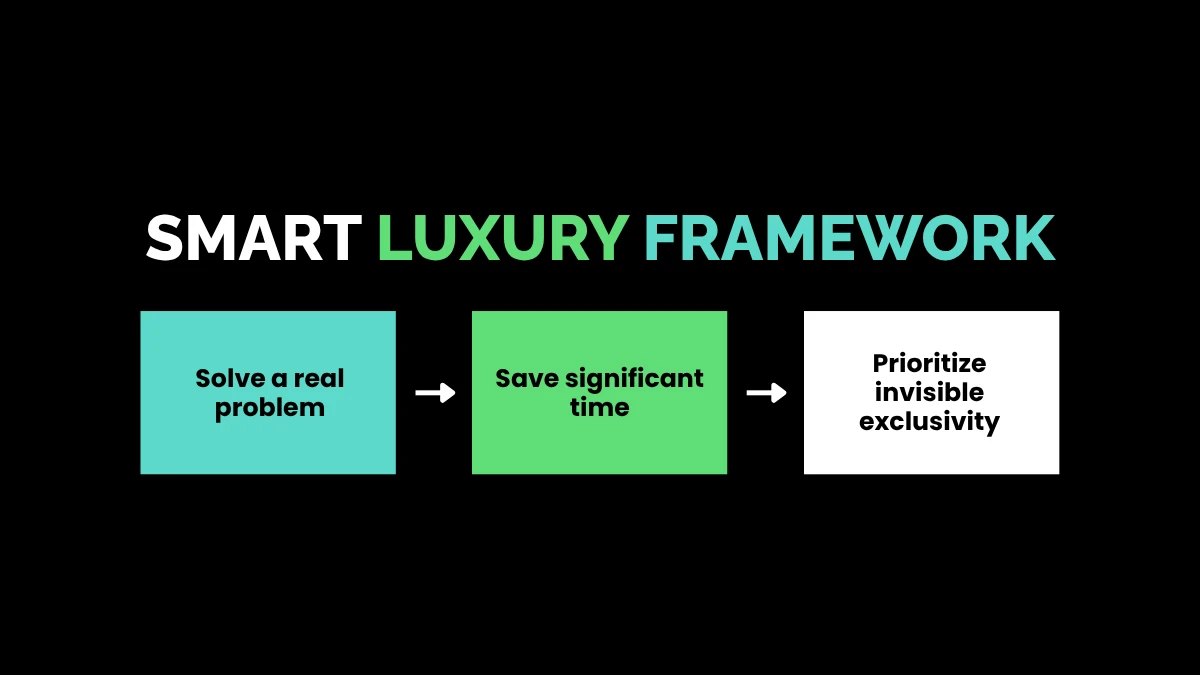
When reading about extraordinary luxury spending, it’s easy to dismiss every purchase as wasteful.
A better approach is to evaluate each purchase using four simple questions.
Is It Solving a Real Problem?
Some purchases genuinely improve privacy, security, logistics, or health.
Others exist primarily for novelty.
Understanding that difference changes how you interpret them.
Does It Save Significant Time?
For billionaires managing multiple companies, even small time savings can carry enormous value.
Hiring specialists to manage logistics allows them to focus on higher-priority decisions.
Is It an Investment or an Expense?
A rare historical artifact or carefully preserved artwork may retain, or even increase, its value.
A seasonal furniture rotation or iceberg dinner creates memories but is unlikely to generate financial returns.
Is It About Exclusivity?
Many purchases exist simply because very few people can access them.
Scarcity remains one of luxury’s strongest drivers.
Common Mistakes Readers Make
Many articles oversimplify wealthy spending.
Avoid these assumptions.
Mistake 1: Thinking Every Purchase Is Irrational
Several purchases serve practical purposes such as protecting valuable assets, increasing privacy, or improving operational efficiency.
Mistake 2: Assuming Luxury Always Means Showing Off
Many of today’s wealthiest individuals deliberately avoid public displays of wealth.
Quiet convenience often replaces visible extravagance.
Mistake 3: Ignoring the Psychology Behind Spending
The biggest purchase isn’t always the most meaningful.
Sometimes removing daily inconvenience delivers greater value than acquiring another expensive possession.
Conclusion
Think back to the moment we began this article, when a headline about a billionaire buying something unbelievable sparked a simple question: Why would anyone spend money like that? After exploring these examples, the answer becomes much clearer.
Most of these purchases are not driven by a desire to own more things but by a desire to remove obstacles, protect privacy, and gain complete control over time and personal space.
The world of weird luxury purchases rich people make is changing rapidly. Traditional symbols of wealth, such as flashy logos and expensive accessories, are giving way to personalized services, advanced technology, and experiences that very few people can access. From smart bathrooms and shadow yachts to digital wardrobes and private iceberg dinners, these purchases reveal that the highest level of luxury is often invisible.
You may never spend millions on a neighboring property or hire a concierge to arrange dinner on an iceberg, but the mindset behind these decisions offers an interesting lesson. As resources grow, convenience, privacy, and time often become more valuable than collecting more possessions.
Perhaps that’s the biggest surprise of all: true luxury isn’t always about owning the rarest object, it’s about creating a life where everyday friction almost disappears.
Frequently Asked Questions
1. What are weird luxury purchases rich people actually buy?
Weird luxury purchases rich people buy are exclusive products or services focused on privacy, convenience, or rarity rather than everyday use. Examples include shadow yachts, smart bathrooms, digital wardrobe storage, and private movie premiere systems. These purchases reflect a lifestyle where time and exclusivity matter more than traditional luxury goods.
2. Why do rich people buy unusual luxury items?
Wealthy people often value time, privacy, and convenience more than money itself. Many unusual purchases remove daily hassles or provide experiences that very few people can access. They also serve as a way to enjoy a highly personalized lifestyle.
3. What is a shadow yacht?
A shadow yacht is a support vessel that follows a superyacht. It carries helicopters, water toys, fuel, crew, and other equipment, leaving the main yacht spacious and uncluttered. This improves both convenience and the guest experience.
4. Why do wealthy collectors store art in freeports?
Freeports are secure, climate-controlled storage facilities designed to protect valuable artwork. They also allow collectors to legally defer certain taxes and customs duties, depending on local regulations. This makes them ideal for preserving high-value collections.
5. Are these luxury purchases good investments?
Some purchases, such as rare artwork or historical artifacts, may increase in value over time. Others, like concierge experiences or seasonal furniture rotations, are made for comfort and convenience rather than financial returns. Their value depends on the owner’s goals.