A hoodie can just be a hoodie. Or it can say something about you before you’ve said a word. That’s the whole appeal of going custom — you can build one around a brand, a team, an event, an inside joke, some original artwork, or just an idea you’re tired of seeing on a thousand identical sweatshirts.
The good news: you don’t have to be a designer to nail this. The hard part is getting a handful of small decisions to line up — fabric, fit, artwork, color, printing method, placement. Get those working together and the hoodie feels right the second someone puts it on. Get them fighting each other and even a great design falls flat.
This guide from WeirdWealth walks through the whole process, whether you’re ordering one hoodie for yourself or a few hundred for a team.
Why Custom Hoodies Hit Differently
There’s something about wearing a design made specifically for you or your crew that a store-bought hoodie just can’t match. A regular hoodie gives you style. A custom one gives you meaning.
That could be a name, a logo, a quote, some original artwork, or team identity stitched on or printed on, whatever fits. But it doesn’t have to shout to mean something. A small embroidered logo on the chest can carry just as much weight as a huge graphic covering the whole back. Sometimes personalizing something isn’t about piling more on it’s about knowing exactly when to stop.
For businesses, schools, or clubs, there’s a practical side to this too. Custom hoodies give a group a consistent, recognizable look, while still leaving room for people to pick their own fit or color.
Key Takeaways
- Sort the hoodie out first fit, fabric, weight, color, what you’ll actually be using it for.
- Let the design have one clear focal point instead of throwing in everything you thought of.
- Figure out the decoration method based on the artwork and order size not the other way around.
- Simple logo? Go embroidery. Detailed or colorful design? Printing’s the better bet.
- Keep placement in mind pockets, seams, zippers, and how the fabric actually folds when worn.
- Double-check dimensions and quality before it ever goes into production.
- Never skip the proof, and if it’s a big order, get a physical sample first.
- At the end of the day, pick something you’d genuinely wear yourself not just something that looked good in a mockup.
Pick the Hoodie Before You Pick the Design
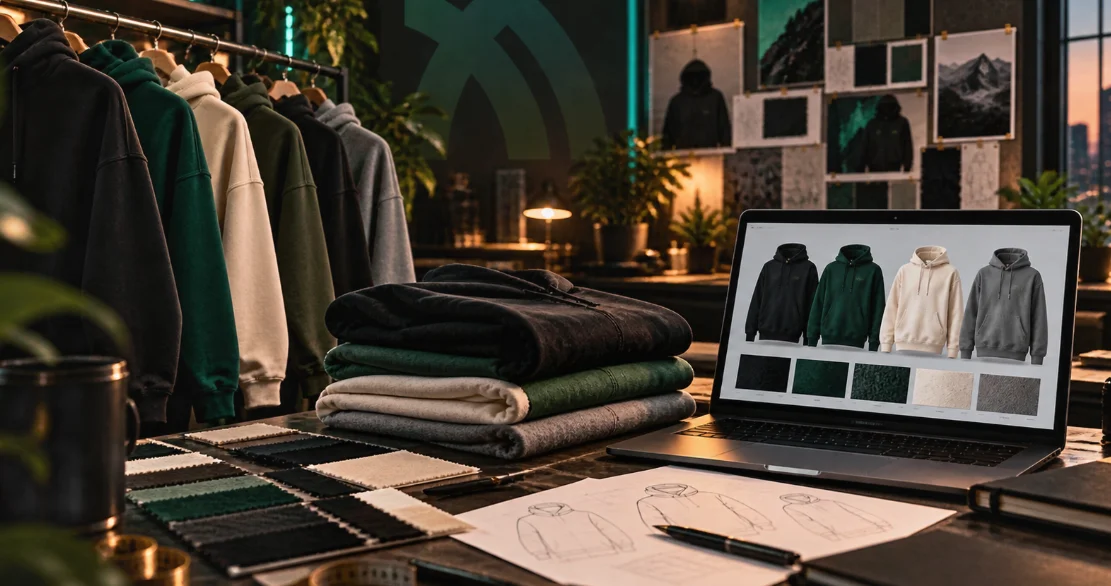
Here’s a mistake people make constantly: designing the artwork first and treating the actual garment like an afterthought.
Flip that order. Think about where and how the hoodie will actually be worn. Lightweight fabric for warmer climates, heavier fleece for cold. Pullover or zip-up. Fit, sizing, color — all of it should get decided before you finalize a single graphic.
Most current apparel guidance says the same thing: lock in fabric weight, construction, fit, and use case first. A design that looks sharp on a monitor can look completely different once it’s sitting on thick fleece. Start with the garment, and the artwork ends up looking like it belongs there instead of just sitting on top.
Fit Changes Everything
Fit does more work than people give it credit for. Oversized hoodies read as relaxed, streetwear-leaning. A more structured fit suits team or business apparel better. Zip-ups tend to be the most versatile since they double as a layering piece.
There’s no universal “correct” fit just the one that matches who’s wearing it and what it’s for.
A Design You Get Without Even Trying
Nobody should have to squint at your hoodie to figure out what it’s supposed to be. If it works, you glance at it and you just know maybe it’s a wordmark, maybe a symbol, maybe some illustration, or text and graphic doing their thing together.
Here’s usually what goes wrong: too much crammed in at once, all of it pulling for attention, and none of it actually winning. End result it just looks messy. So instead, pick one thing to be the hero and let everything else back it up instead of competing with it. Small logo on the chest, bigger illustration on the back? Works fine. Or go the other way and strip it down to one embroidered wordmark, nothing else.
Talk to enough designers and you’ll hear the same advice over and over: don’t overdo it, be intentional about where things sit, and give the eye one clear spot to land on. That’s really what separates a hoodie that feels thought-through from one that just feels overloaded.
Colors That Don’t Fight Each Other
Bad color choices can wreck an otherwise solid hoodie fast, and good ones can make a simple design look way more expensive than it is. Pick the hoodie color first, then work your artwork colors around it — you want contrast, not colors that vanish into the background or clash with it. Black, gray, cream, navy, white — these are your safe bets if you’re not sure. But bold colors are fair game too, as long as they actually fit what you’re going for.
Choose Your Printing Method Based on the Artwork, Not the Other Way Around
DTG (direct-to-garment) — good for detailed, multicolor artwork printed straight onto the fabric.
DTF (direct-to-film) — also handles detailed graphics well, and tends to work across different garment colors and materials depending on the provider.
Screen printing — best for bold designs with fewer colors, and it gets more cost-effective the bigger your order gets.
Embroidery — a stitched finish instead of printed, best suited to logos, initials, names, and simpler artwork without much fine detail.
None of these is objectively “better.” The right call depends on your artwork, the garment, your quantity, and your budget.
When embroidery makes sense
Picture a heavyweight hoodie with a small logo stitched over the chest it doesn’t need a huge graphic to look deliberate. Embroidery adds real texture and shines when the design stays simple. Very fine lines and small details don’t always stitch well, so artwork sometimes needs simplifying first.
When printing makes sense
Large illustrations, photos, gradients, and color-heavy artwork usually need printing rather than embroidery it gives you room for complexity that stitching can’t match. Before you order, double-check the printer’s requirements: resolution, dimensions, background transparency, accepted file formats.
Where You Put the Design Matters
Placement changes the entire feel of a hoodie.
- Left chest — clean and understated, works well for logos and simple wordmarks.
- Large front graphic — makes the artwork the centerpiece of the whole hoodie.
- Back design — gives you the most room for detail, slogans, or event graphics while keeping the front minimal.
- Sleeve placement — adds detail, but has to account for how fabric folds when actually worn, not just how it looks flat.
Avoid putting important artwork near pockets, zippers, or seams. Current production guidance is pretty consistent on this: design around the garment’s structure, not like it’s a flat canvas.
Get Your Artwork Actually Ready Before You Hit Order
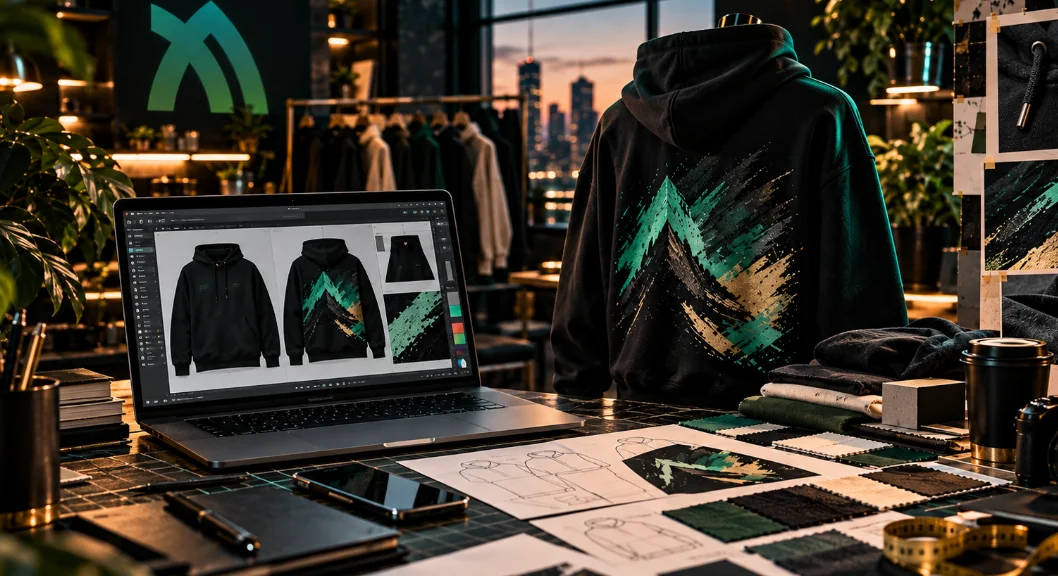
This is the step that decides whether a great idea turns into a great hoodie or a slightly disappointing one.
Stick to clean, high-res files. For logos specifically, vector formats like SVG, AI, EPS, or a proper PDF are the way to go since they scale up or down without going blurry. Before you approve anything, check the real dimensions — don’t just eyeball it on your phone. Pull up the mockup at close to actual size and really look: can you read the text, is the graphic positioned right, does everything have enough contrast to stand out? And whatever you do, go through the proof carefully before it ever hits production.
Get a Sample Before You Commit to a Big Order
Ordering dozens — or hundreds — of these? Get one sample made first. A digital mockup only tells you so much. A physical sample lets you actually feel the fabric, try the fit, look at the stitching up close, and see how the print really looks and feels on fabric.
Sometimes the hoodie turns out thinner than you pictured. Sometimes the artwork prints bigger than it looked on your screen. Either way, it’s a lot cheaper to find that out on one hoodie than on the full batch. This matters even more for businesses once you’re producing the same design over and over, staying consistent stops being optional.
Common Mistakes to Avoid
- Picking a cheap garment because the mockup looks good. The hoodie is still the product — fabric and construction matter as much as the design.
- Overcrowding the design. Too many logos, fonts, and colors turn even a strong concept into visual noise.
- Ignoring placement. A graphic near a pocket or zipper can look nothing like it did in the design file once it’s on the actual garment.
- Skipping the sample on a big order. Especially risky when real money is on the line.
- Using artwork you don’t have rights to. Keep it personal, not a copyright problem waiting to happen.
Final Thoughts
Honestly, the best custom hoodies aren’t the ones screaming for attention. They’re the ones where everything the garment, the design, the color, where it’s placed, and how it’s printed just clicks together. Even a tiny embroidered logo can hit harder than a giant back print, as long as there’s a real idea behind it.
So before you actually place that order, take a second and really look at the whole thing. Does the design suit the hoodie it’s on? Can you tell what it is at a glance, without staring? And be honest with yourself: would you actually wear this? Just like choosing the right hoodie, making smart decisions about everyday expenses, such as car insurance options, can help you get better value for your money. If you’re planning future trips, comparing travel credit cards can also help you make informed choices, while learning about Bitcoin wallets can introduce you to another part of personal finance.
That one gut-check is usually the difference between “just another printed sweatshirt” and something that genuinely feels like yours.
FAQ
Are custom hoodies actually worth the money?
Most of the time, yeah, as long as the design has a point to it and the hoodie itself is comfortable and holds up. It’s really the combo of garment quality and overall cost that makes it worth it, not the customization by itself.
What material should I go with?
There isn’t one “best” answer here. Cotton, polyester, blends each brings something different in terms of comfort, how long it lasts, and how well it takes print. Pick based on your climate, what it’s for, and how you’re decorating it.
Printing vs. embroidery which one’s better?
Totally depends on the artwork you’re working with. Simple logos or wordmarks? Embroidery’s great. Bigger, more detailed, colorful graphics? Printing gives you way more room to work with.
How many designs is too many for one hoodie?
No strict rule, but sticking to one main focal point usually just looks cleaner. You can add extra touches just make sure they support the main design instead of pulling focus away from it.
Is a sample order actually necessary?
If you’re placing a big or pricier order, yes do it. It’s basically insurance against wasting money on a full batch that doesn’t turn out right.
Can small brands even do custom hoodies?
For sure. Keep it simple at first, order a small batch, see how people actually react, then scale up once you know it works.
Disclaimer
This article is for informational and educational purposes only. Custom hoodie costs, materials, printing methods, and production quality may vary by supplier. Always review product specifications, artwork requirements, pricing, and sample quality before placing an order. Ensure you have the appropriate rights or permissions to use any logos, images, or other copyrighted designs. WeirdWealth does not guarantee specific results from custom apparel purchases or business ventures.