
A faceless channels is not a magic ATM run by stock footage and a robot voice. It is a media business where the brand, research, editing, and distribution do the heavy lifting instead of your personality. Learning how to launch faceless channels can be a weirdly profitable move if you treat it like a system, not a shortcut.
That distinction matters. A channel can earn through ads, affiliate offers, sponsors, digital products, or leads for a service. But none of those revenue streams appear because you posted five videos and chose a trending niche. They show up when viewers repeatedly get something useful, entertaining, or surprising from your content.
No face required. No celebrity access. But yes, you need a point of view.
Pick a niche with repeatable demand
The biggest beginner mistake is picking a niche because it sounds high-paying. Finance, AI tools, luxury, health, and business can all monetize well, but they are also crowded and often require accuracy that a rushed content mill cannot provide. A better first question is: can I make 50 useful videos on this subject without copying everyone else?
Look for an intersection of three things: a topic people actively search for or watch regularly, a format you can produce repeatedly, and an audience that eventually buys something. A channel about “personal finance” is broad. A channel about low-cost side hustles for college students, unusual remote jobs, or software that helps solo freelancers save time is more focused and easier to package.
Evergreen niches give you a longer shelf life. Tutorials, explainers, product comparisons, historical stories, practical money topics, and software walkthroughs can collect views long after publication. Trend-based content can grow faster, but it demands speed and has a shorter useful life. Neither model is wrong. A beginner with limited time usually benefits from a mostly evergreen catalog with a few timely experiments.
Before naming the channel, study the first page of results and recent videos in your niche. Notice titles, thumbnails, video length, comment sections, and recurring viewer questions. You are not there to clone the winners. You are there to find the gap they leave behind: clearer beginner advice, a sharper audience, better stories, fresher research, or less annoying editing.
How to launch faceless channels with a lean setup
Start with one platform and one repeatable video format. YouTube is usually the best home for long-term search traffic and multiple revenue options, while TikTok, Instagram Reels, and YouTube Shorts can help test hooks quickly. Trying to feed every platform on day one often creates a pile of half-finished drafts and zero useful data.
Choose a format that matches your actual resources. Screen-recorded tutorials work well for software, apps, and online income topics. Narrated explainers can use licensed stock clips, original graphics, public-domain material, or simple motion design. List-style videos are efficient, but they need real research and a strong organizing idea or they become generic noise.
You do not need an expensive setup. You need clean audio, readable visuals, and a consistent production process. A basic microphone, a screen recorder, an editing app, a thumbnail tool, and a spreadsheet are enough to begin. If your budget is zero, use free tools and invest your first dollars in better audio before fancy visual effects.
Build a simple channel identity: a clear name, a sentence explaining who the channel helps, and a visual style you can recreate. Do not spend two weeks picking a logo. Viewers will forgive a plain logo. They will not forgive confusing videos.
Build the content engine before you publish
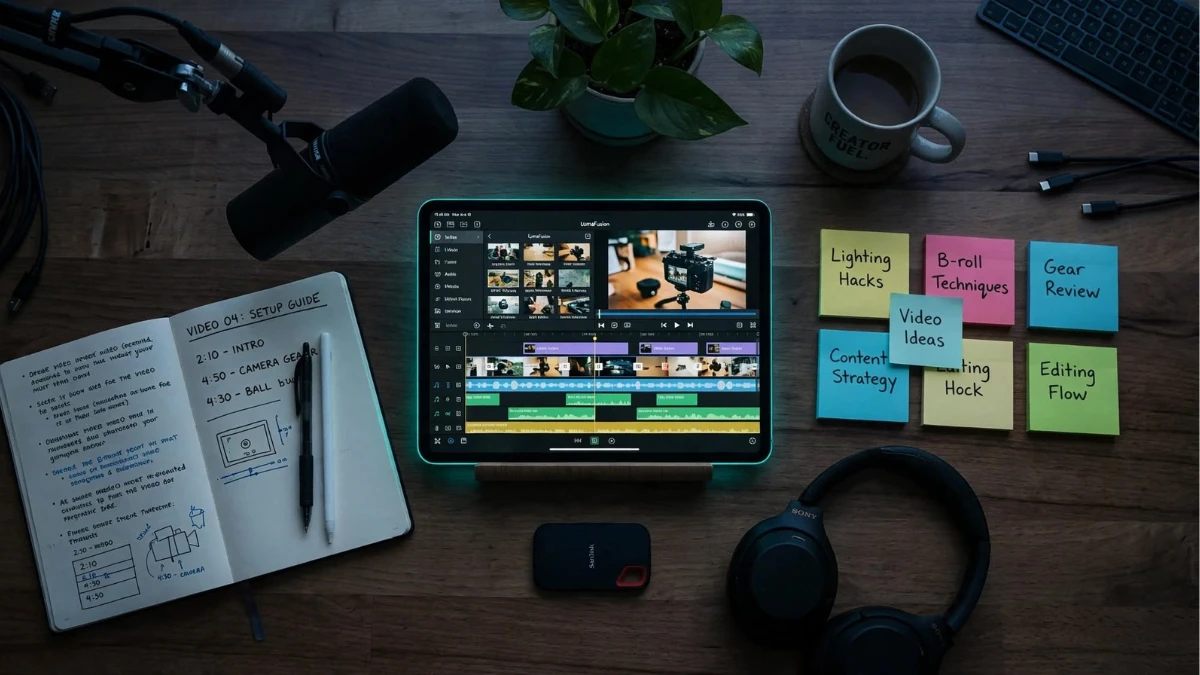
Faceless channels fail when every upload starts from a blank page. The goal is to build a lightweight production line that still leaves room for quality. Keep a running idea bank with the working title, viewer problem, source material, format, and call to action for each video.
For each topic, write the title and thumbnail concept before the script. That forces you to answer a tough question: why would someone click this instead of the ten similar videos beside it? A promising title makes a specific promise, such as “7 Remote Jobs That Do Not Require Phone Calls,” rather than “Best Remote Jobs.” The thumbnail should support that promise, not repeat every word.
Your script needs a fast opening. State the payoff, raise a relevant tension, or show the result viewers want. Then move through the information with momentum. Cut throat-clearing lines, recycled motivational fluff, and long disclaimers that belong in the description or a brief spoken note.
For an income-related channel, credibility is your competitive advantage. Clearly separate proven facts, your analysis, and personal estimates. Do not imply guaranteed earnings. Do not present old screenshots as current results. If a side hustle has startup costs, platform fees, location restrictions, or a steep learning curve, say so. Realistic content builds the kind of audience that comes back.
Batching helps, but avoid batching bad ideas. Research several topics in one sitting, then script two or three videos at a time. Record narration in batches and create editing templates for captions, transitions, and end screens. This reduces friction without turning your channel into automated sludge.
Use AI as an assistant, not a disguise
AI can speed up outlines, title variations, transcript cleanup, rough visuals, and repetitive editing tasks. That is useful. It can also produce confident nonsense, stale wording, and videos that look exactly like thousands of other channels.
The rule is simple: use AI to compress busywork, then apply human judgment where it counts. Verify claims. Rewrite the hook in your own voice. Add examples, opinions, and context that a generic prompt would miss. If you use an AI voice, pick one that is clear and natural, but understand the trade-off: some viewers will leave if the narration feels synthetic or emotionally flat.
Also protect yourself from copyright trouble. Do not grab clips, music, screenshots, or other creators’ scripts because they are easy to find. Use assets you have permission to use, create original visuals when possible, and transform source material with genuine commentary and analysis. A channel built on borrowed content may grow briefly, then hit claims, demonetization, or a reputation problem.
Publish for feedback, not validation
Your first 10 videos are research. Their job is to show you what the market responds to, not to prove whether you are talented enough. Watch for patterns in click-through rate, audience retention, comments, and the topics that bring in subscribers. One viral video can be luck. Three videos that attract the same type of viewer are a signal.
If people click but leave early, your opening may overpromise or your pacing may drag. If nobody clicks, improve the topic, title, and thumbnail before assuming the algorithm hates you. If viewers watch but do not subscribe, make the channel’s promise clearer and create connected content they want next.
Set a sustainable publishing target. One solid long-form video each week is better than daily uploads that burn you out. If short-form content fits your niche, repurpose your strongest ideas into short clips, but do not let Shorts become an excuse to avoid making deeper content. Short-form can bring attention. Long-form often builds trust.
Faceless channel: Monetize in the right order
Ads are appealing because they are simple, but ad revenue is usually slow at the beginning and varies wildly by niche, audience location, season, and watch time. Do not build your entire plan around a future payout threshold.
Start by asking what a satisfied viewer may need next. A channel about freelance design might eventually recommend relevant software, sell a template pack, or collect leads for portfolio reviews. A channel about unusual income ideas could earn through carefully chosen affiliate relationships, a paid research database, or sponsorships after it earns trust. The offer must fit the viewer’s problem. Random links make a channel feel like a vending machine with a microphone.
Disclose affiliate relationships clearly and never recommend a tool you have not properly evaluated. Fast commissions are not worth burning audience trust. Weird Wealth is built on the idea that unconventional income can be legitimate, but legitimate does not mean effortless.
Give the Channel a 90-Day Runway
Choose One Audience and Content Format
For the next 90 days pick one audience one main format and a realistic posting schedule. Publish enough videos to learn what works and review your performance every week.
Pay attention to what your audience responds to. Maybe your new thumbnails get more clicks. Maybe question-based titles perform better than listicles. Your viewers might prefer five-minute practical videos instead of 15-minute explainers.
Know When to Improve or Pivot
Do not quit just because your first uploads get few views. Every new channel needs time to find its audience.
At the same time do not keep forcing a format that shows no signs of growth after genuine testing. Learn when to improve your thumbnails narrow your niche or try a different content angle.
Focus on Value Instead of Showing Your Face
Your face was never the real asset. Your ability to find useful topics explain them clearly and publish consistently is what matters.
Start a faceless channel that solves a real problem. Make your first videos even if they are not perfect. Then use audience feedback and performance data to decide what to create next.
What Makes a Faceless Channel Trustworthy?
A successful faceless channel needs more than automated narration and attractive visuals. It needs accurate research original ideas and a clear purpose. Creators should verify claims use reliable sources and explain complicated topics in language their audience understands.
For money-related content, be transparent about costs and earning estimates. Avoid promising guaranteed results or presenting exceptional success stories as typical outcomes. Use original scripts and properly licensed media whenever possible.
A trustworthy channel also improves through real audience feedback. Review viewer questions and performance data to identify gaps in your content. Consistency helps, but accuracy and genuine value give people a reason to return.
Frequently Asked Questions
1. How much money do you need to start a faceless channel?
You can start with little or no money by using free editing software and recording tools. Your main investment will be time spent on research scripting editing and improving your videos.
2. How long does it take for a faceless channel to make money?
Some channels gain traction within a few months while others take much longer. Earnings depend on your niche content quality audience demand and monetization method. There is no guaranteed timeline.
3. Can AI-generated videos earn money on YouTube?
Yes. AI can help with scripts narration and editing. However the content should offer original value and follow YouTube’s monetization policies. Mass-produced repetitive or low-value videos may not qualify for monetization.
4. Which niches work best for faceless channels?
Popular options include software tutorials personal finance educational explainers history and practical side hustle ideas. Choose a niche based on audience demand your knowledge and opportunities to create useful content consistently.
5. Can a faceless channel earn without YouTube ads?
Yes. You can explore affiliate marketing sponsorships digital products and service leads. Choose revenue streams that match your audience and disclose paid relationships where required.
Disclaimer
This article is for informational and educational purposes only. Launching a faceless channel does not guarantee views or income. Results vary depending on your niche, content quality, audience demand, production costs, and monetization strategy. Platform policies and eligibility requirements may change, so check the latest official guidelines before making business or financial decisions.