
By the WeirdWealth editorial team. Rate details checked against published rate lists and news reports on October 29, 2026.
Key Takeaways
- A good CD rate beats what a high-yield savings account pays, and the term is one you can actually stick with.
- Online banks and credit unions usually pay more than the big banks with branches on every corner.
- Don’t just look at the rate. Check the APY, the term, the minimum deposit, and the penalty for taking your money out early.
- Make sure the bank is FDIC insured (or the credit union is NCUA insured) before you put any money in.
- CD rates move with the Fed, so the number you see today might not be there next week.
What Are the Best CD Rates Right Now?
Short answer: the top CDs are paying somewhere between about 4% and a bit over 5% APY, depending on the term and the bank. That comes from rate lists Fortune (working with the data firm Curinos) and The Motley Fool published in October 2026. The two lists don’t match exactly, because each one tracks different banks and terms. So treat any “best rate” headline as a starting point, not the final answer.
APY stands for annual percentage yield. It’s what you’d earn over a year once interest compounds, so it’s the number to compare, not the plain “interest rate.”
Big branch banks often pay far less than top online banks and credit unions. Lots of people still take the lower offer just because it’s the bank they already use. That convenience can quietly cost you real money.
How We Researched This
We pulled current numbers from published rate lists and news reports, then checked the basics (insurance limits, penalties, how CDs work) against what the FDIC, NCUA, and CFPB say. We don’t crown one “best” bank here, because the leader changes by term and almost by the week. Rates in this article are ranges, not offers, so always confirm the live number with the bank itself too.
How Does a CD Actually Work?
A certificate of deposit (CD) is a deposit account where you give a bank a lump sum for a set time, like 6 months, 1 year, or 5 years. The bank pays you a fixed rate for that whole stretch. When the term ends, that’s called maturity, and you get your money back plus the interest.
Think of it like a prepaid ticket. The price is locked in, nobody can change it on you, but you can’t easily return it. The CFPB describes it the same way: take your money out early and you’ll usually pay a penalty.
The fixed rate is the whole appeal. If rates fall after you open one, you keep your higher rate. If rates rise, you’re stuck with the lower one until maturity.
Why Are CD Rates Moving So Much in 2026?
CD rates follow the Fed, inflation, and how badly banks want deposits. This year hasn’t been simple. NerdWallet’s CD forecast says rates climbed over the summer and that the Fed raised rates in September. Then on October 28, Reuters reported the Fed held rates steady while strong growth and stubborn inflation made the picture messy.
So where do rates go next? Honestly, nobody knows. Forecasts disagree, and some come from companies that sell CDs, so take the confident ones with a pinch of salt. A better plan is to skip the guessing game. Pick a rate that fits your goal and move on.
Inflation matters too. A CD paying 4.5% sounds great, but if prices rise 3.7% (the figure one October 14, 2026 news report cited), your real gain is much smaller. That’s not a reason to skip CDs. It’s a reason to compare them against what else your cash could earn.
What Should You Compare Besides the Rate?
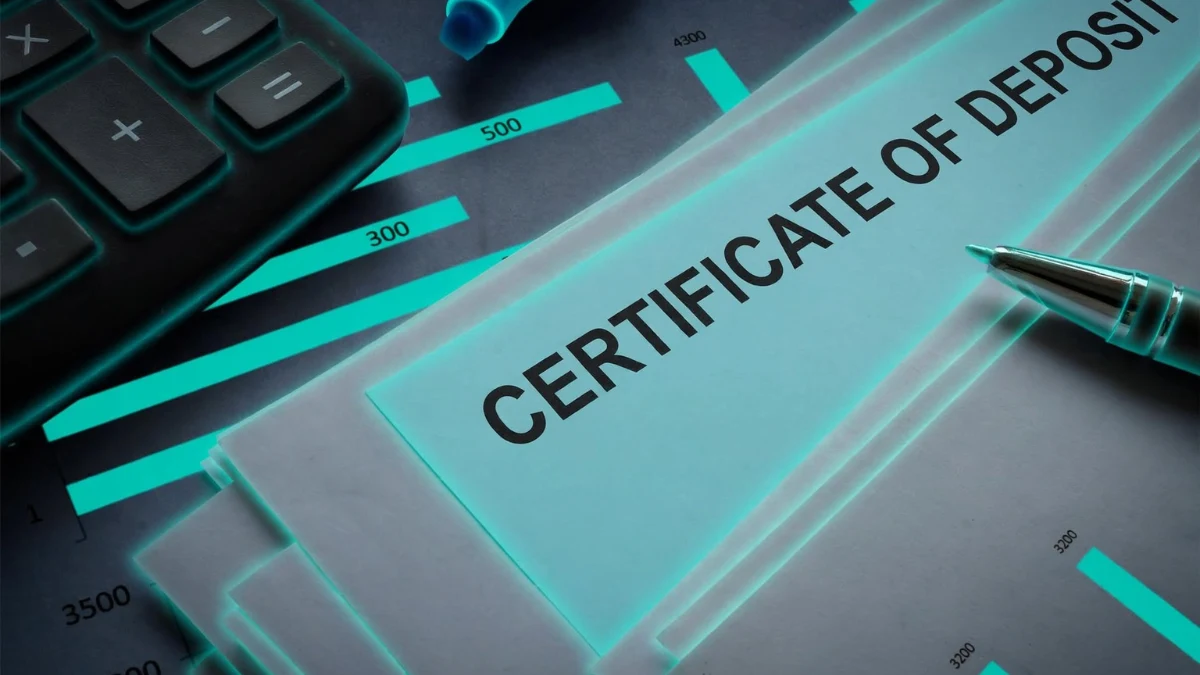
A high APY can look great, but if the penalty for pulling your money out is harsh, you might end up worse off than with a slightly lower rate that gives you some breathing room. So before you pick, look at these:
| What to check | Why it matters |
|---|---|
| APY | This is what you’ll actually earn in a year |
| Term length | How long your money is stuck |
| Minimum deposit | The best rates sometimes ask for $500, $1,000, or more |
| Early withdrawal penalty | Usually a few months of interest, but every bank is different |
| Insurance | FDIC for banks, NCUA for credit unions |
| Renewal rules | A lot of CDs renew on their own at whatever the rate is that day |
The renewal part is the one people forget. When your CD ends, you only get a short window to decide what to do. Miss it, and the bank can roll your money into a new CD at a rate you never picked.
The easy fix is to add the maturity date to your phone calendar the day you open the account. Set a reminder a week before it, so you’ve got time to decide without rushing.
Is Your Money Safe in a CD?

At an insured bank, yes, up to the limit. FDIC insurance covers $250,000 per depositor, per bank, per ownership category. Credit unions offer the same standard coverage through the NCUA. You can look up any bank on the FDIC’s BankFind tool before you open an account. If you have more than that, spreading it across different banks keeps every dollar covered.
Buying a CD through a brokerage works a little differently. It’s usually issued by an insured bank, but selling it before maturity follows different rules, so read the fine print first.
CD or High-Yield Savings Account: Which Is Better?
It comes down to whether you might need the money. A high-yield savings account pays a variable rate that can drop anytime but lets you access your cash when needed. A CD locks in the rate for a set term and usually charges a penalty if you withdraw early. If you’re also managing other financial goals you may find our guides on paying off debt and crypto taxes useful.
Lately some savings accounts have paid close to CD rates. The Motley Fool’s October 10, 2026 list shows savings APYs up to 5.00% for example. When the gap is that small a savings account may be the better choice because you keep access to your money. A CD makes more sense when its rate is clearly higher or when you want protection from future rate drops and know you won’t need the cash. You can also explore earning money online if you’re looking for other ways to build your savings.
Which Types of CDs Are Worth Knowing?
- Traditional CD: Fixed rate, fixed term, penalty for pulling money out early.
- No-penalty CD: You can withdraw early without a fee, usually after a short waiting period. The rate is often a little lower. Kiplinger keeps a list of these.
- Jumbo CD: Needs a big deposit, often $100,000 or more. It doesn’t always pay better than a regular CD.
- Bump-up CD: Lets you raise your rate once if the bank’s rates go up. The starting rate is often lower, though.
What Is CD Laddering, and Should You Try It?

CD laddering means splitting your money across CDs with different terms. Say you have $10,000. You put $2,500 each into a 1-year, 2-year, 3-year, and 4-year CD. After the first year, one matures every year, and you can spend that money or reinvest it at the newest rate.
The upside is steady access to some cash, plus you don’t have to guess where rates are heading. The downside is that the shorter CDs may pay less than the longest ones. For plenty of people, that’s a fair price for flexibility.
How Do You Open a CD Step by Step?
- Figure out how long you can leave the money alone. Don’t put your emergency fund in a CD.
- Compare APYs. Check banks and credit unions on a rate page that updates often, like Fortune’s or NerdWallet’s.
- Make sure it’s insured. Look for FDIC (banks) or NCUA (credit unions) coverage.
- Read the fine print. Know the early withdrawal penalty and what happens when the CD renews.
- Fund the account and save the maturity date. Put it in your phone so it doesn’t sneak up on you.
One more thing people forget: the interest is usually taxable in the year you earn it, even if you leave it sitting in the account. If you earn $10 or more, your bank will usually send you a Form 1099-INT. For your own situation, check the IRS guidance or ask a tax pro.
FAQs
Which CD term has the best rate?
There’s no fixed rule. In 2026, some of the best rates have shown up on shorter terms and others on longer ones, so check a current rate list for the exact term you want.
Are online bank CDs safe?
They can be, as long as the bank is FDIC insured (or the credit union is NCUA insured). Confirm that first, and stay within the $250,000 limit.
What happens if I withdraw early?
You’ll usually pay a penalty, often a set number of months of interest. On very short or very new CDs, the penalty can even dip into your original deposit, so read the terms before you sign.
Do CD rates go up when the Fed raises rates?
They often do, but not instantly or by the same amount. Banks set CD rates based on their own funding needs too.
How much should I put in a CD?
Only money you’re confident you won’t need before maturity. Keep your emergency fund somewhere you can reach it.
Disclaimer
This article is just general info, not financial or tax advice. WeirdWealth isn’t a bank or a licensed financial advisor. Rates and terms change a lot, so check the bank’s current details before you decide. If you’re not sure what’s right for your own money, it’s worth talking to a licensed professional.