Bitcoin is a digital asset that can be transferred between people through a public network. It is not a company, a bank account, or a promise of future income. People buy it, sell it, hold it, use it, and speculate on it, but owning Bitcoin does not guarantee a profit.
For beginners, the most important lesson is simple: learning how Bitcoin works is different from deciding whether you should buy it.
You can understand wallets, transactions, fees, and security without investing anything. That knowledge helps you evaluate claims, recognize risks, and avoid making a decision based only on excitement.
This guide explains the basics in plain English. It does not predict the price or tell you what to buy.
What Is Bitcoin?
Bitcoin is both the name of a digital network and the name commonly used for the asset transferred on that network.
The network maintains a shared record of transactions. Instead of relying on one bank to update every balance, participants use software and agreed rules to verify and record activity.
Bitcoin can be sent directly between wallet addresses. The transaction is broadcast to the network and, when confirmed, becomes part of the public transaction record.
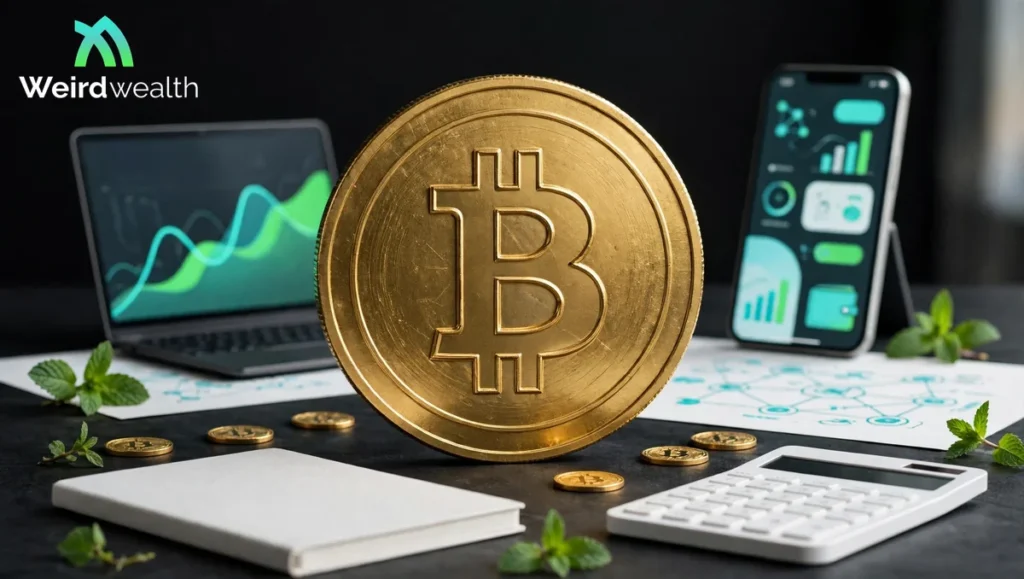
The asset exists digitally. There is no physical coin containing your balance, even though photographs often show Bitcoin as a gold colored token. Those images are symbols, not representations of how the network stores value.
What Bitcoin Is Not
Bitcoin is not a share in a company. Holding it does not give you ownership of a business, rights to company profits, or a conventional claim on corporate assets.
It is not a savings account. There is no standard interest rate for simply holding Bitcoin, and its price can rise or fall sharply.
It is not a guaranteed payment method. A seller may accept it, refuse it, or use a service that converts it immediately. Availability and legal treatment vary by place and provider.
It is also not free money. Buying Bitcoin means exchanging something of value for an asset with an uncertain future price. Mining requires resources and does not guarantee a reward.
What Is the Blockchain?
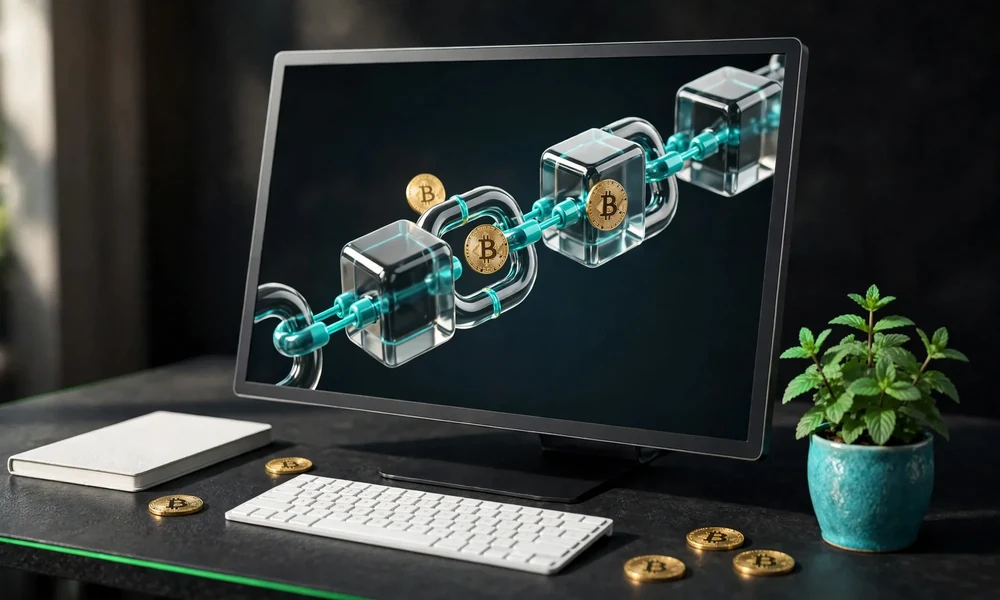
The blockchain is Bitcoin’s public transaction record. Confirmed transactions are grouped into blocks, and those blocks are connected in chronological order.
This structure makes the history available for participants to inspect. Wallet addresses and transaction details can be visible even when the real world identity behind an address is not immediately known.
The blockchain records transactions. It does not tell you whether a purchase was wise, whether a seller was honest, or whether the person controlling an address can be trusted.
A public record is useful for verification, but it does not remove fraud or human error.
How Does a Bitcoin Transaction Work?
Imagine that you want to send Bitcoin to another person.
First, the recipient provides a wallet address. You enter that address, choose an amount, and review any applicable fee. Your wallet software creates the transaction and uses your private key to authorize it.
The transaction is then broadcast to the network. Participants check whether it follows the network rules. Once it is included in a confirmed block, the transaction receives a confirmation. Additional blocks can provide further confirmation.
Address accuracy matters. Sending to the wrong address or using an incompatible network can result in loss. Unlike a card payment that may be disputed through a provider, a confirmed Bitcoin transaction may be impossible to reverse.
Before sending a meaningful amount, many users learn the process with a very small test transaction and carefully verify the recipient’s instructions.
What Is a Bitcoin Wallet?

A Bitcoin wallet helps manage addresses and the cryptographic keys needed to control Bitcoin. It does not hold coins in the same way that a physical wallet holds cash.
The wallet interacts with the network record. Your ability to spend depends on control of the relevant private keys.
Wallets can take different forms, including mobile applications, desktop software, hardware devices, and services provided by platforms. Each arrangement involves different responsibilities and risks.
Convenience is not the same as safety. An easy wallet can still expose you to platform failure, account theft, device loss, or your own mistakes.
Custodial and Self Custody Wallets
With a custodial arrangement, a provider controls or helps control the keys on your behalf. You access the account through that provider.
This may feel familiar because it resembles using an online financial account. However, you depend on the provider’s security, solvency, policies, and continued operation. Account access can be restricted, and recovery options vary.
With self custody, you control the keys and assume direct responsibility for protecting them. This can reduce dependence on a platform, but it increases the cost of mistakes.
If you lose the required recovery information and cannot access your wallet, there may be no customer service department capable of restoring your funds, making it essential to understand financial security and protect your investments.
Neither arrangement removes risk. They distribute responsibility differently.
What Is a Recovery Phrase?
A wallet may generate a recovery phrase that can be used to restore access to the wallet. Anyone who obtains that phrase may be able to control the associated assets.
Protect it as carefully as you would protect direct access to your money. Do not share it with strangers, support agents, websites, or people claiming they can validate your wallet.
A legitimate support interaction should not require you to reveal complete wallet recovery credentials to an unknown person.
Avoid storing sensitive recovery information in unsecured notes, casual messages, or publicly accessible files. Consider how device loss, theft, fire, and auto insurance protection could affect your backup.
Most importantly, never enter a recovery phrase because a popup or message says your wallet needs urgent verification.
Why Does the Bitcoin Price Change?
Bitcoin trades in markets where buyers and sellers agree on prices. Those prices can change as supply, demand, liquidity, sentiment, regulation, technology, and broader financial conditions change.
News can influence expectations, but a dramatic headline does not reliably predict what happens next. A rising price can attract attention and speculation, while a falling price can create fear and forced selling.
Short term movements can be difficult to explain even after they happen. Be cautious when anyone presents one simple reason as the complete answer.
Price history also does not guarantee future performance. Previous recoveries do not ensure that every decline will be followed by another rise.
Do You Need to Buy a Whole Bitcoin?
No. Bitcoin can be divided into smaller units, so a purchase does not need to equal one whole coin.
This sometimes creates confusion for beginners who see the price of one Bitcoin and assume participation requires that entire amount. The amount you choose still carries risk. A smaller purchase limits the amount exposed, but it does not protect you from losing a large percentage of that purchase. Understanding how to manage financial risks and explore alternative ways to make money can help beginners make more informed financial decisions.
Do not let divisibility pressure you into buying before you understand the costs, wallet arrangements, and possibility of loss.
What Does Bitcoin Mining Mean?
Mining is part of the process through which Bitcoin transactions are confirmed and new blocks are added. Miners use computing resources in a competitive process governed by the network rules.
Mining is not simply installing an application and receiving free coins. Equipment, electricity, cooling, maintenance, network conditions, and operating costs can affect the outcome.
Beginners should be especially cautious about offers to rent mining power or buy into a remote mining contract. A professional website and projected return do not prove that the operation is real or that the economics will work.
Any offer that guarantees mining profits deserves careful scrutiny.
What Costs Can Apply?
The displayed purchase price is not always the complete cost.
Depending on the service and transaction, costs can include trading fees, deposit charges, withdrawal charges, network fees, currency conversion costs, and the difference between buying and selling prices.
Some costs are obvious. Others appear inside the quoted exchange rate or depend on network conditions.
Before using a platform, review its complete fee information and test whether you understand the final amount you would receive after a purchase, transfer, or sale.
Do not ignore taxes and record keeping. Buying, selling, exchanging, earning, or spending crypto can have different consequences depending on your location and circumstances. Keep accurate records and check guidance from your local tax authority.
Common Bitcoin Scams
Scammers often use urgency, authority, romance, friendship, or promised profits to weaken your judgment.
Be cautious when someone:
- Guarantees returns or claims there is no risk.
- Pressures you to act before you can research.
- Asks for your recovery phrase or account credentials.
- Tells you to move funds to a special wallet for safety.
- Demands additional payment to release supposed profits.
- Offers to trade on your behalf through an unverified platform.
- Contacts you unexpectedly with a special investment opportunity.
A growing balance on a website does not prove that real assets exist. The critical moment may come when you try to withdraw and are told to pay another fee, tax, or deposit.
Do not send more money simply because you have already lost money. Additional payments can deepen the loss.
Security Habits for Beginners
Use unique passwords and enable available account security features. Keep your devices and applications updated, and download wallet software only from sources you have carefully verified.
Treat unexpected links, attachments, QR codes, and support messages with suspicion. A message can display a familiar logo and still be fraudulent.
Verify wallet addresses carefully. Consider the risks of copying addresses on compromised devices and check that the recipient intended to use the selected network.
Keep your financial activity private when appropriate. Publicly announcing holdings can attract unwanted attention.
Finally, decide how you would respond to device loss, account lockout, or a forgotten backup before those problems occur.
Questions to Ask Before Buying Bitcoin
- Why am I considering this purchase?
- Can I afford to lose the entire amount?
- Am I relying on this money for housing, debt payments, emergencies, or another essential need?
- Do I understand where the Bitcoin will be held?
- Do I know who controls the private keys?
- Have I reviewed the complete fee structure?
- Can I explain how I would sell or withdraw?
- Do I understand the possible tax and reporting obligations?
- Am I acting on research or reacting to social pressure?
- Would I still make this decision if nobody knew about it?
These questions do not tell you whether to buy. They help you recognize whether you are prepared to make the decision responsibly.
For more educational money and income resources, visit Weird Wealth.
A Sensible Way to Keep Learning
Start with the network basics before focusing on price charts. Learn what a transaction records, how wallets manage keys, and why confirmed transfers can be difficult to reverse.
Then compare custody arrangements and security responsibilities. Understand what depends on a provider and what depends on you.
After that, review fees, scams, local rules, and tax records. Only then evaluate whether buying any amount would fit your financial circumstances.
You are allowed to stop at education. Choosing not to buy is a valid decision, and you do not miss an educational opportunity by protecting money you cannot afford to lose.
Frequently Asked Questions
Is Bitcoin Anonymous?
Bitcoin activity is associated with addresses on a public transaction record. An address may not display your name directly, but activity can sometimes be connected to identities through platforms, records, or transaction patterns. Do not assume that Bitcoin guarantees privacy.
Can a Bitcoin Transaction Be Reversed?
A confirmed transaction may be extremely difficult or impossible to reverse without the recipient’s cooperation. This makes address verification and scam awareness especially important.
Is Bitcoin a Good Investment for Beginners?
There is no universal answer. Bitcoin involves substantial price, security, platform, and regulatory risk. Whether it is appropriate depends on personal circumstances, objectives, and ability to bear loss. Educational content cannot determine that for you.
Can I Lose More Than I Invest?
A simple purchase using only your own funds can lose its value, but borrowing, leverage, derivatives, unpaid obligations, and certain products can create additional risks. Avoid arrangements you do not fully understand.
Is Holding Bitcoin on a Platform the Same as Self Custody?
No. Platform custody introduces dependence on the provider, while self custody places key management responsibility on you. Both can result in loss, but the risks and recovery options differ.
Should I Mine Bitcoin at Home?
Home mining involves technical and financial considerations, including equipment, electricity, heat, noise, and uncertain returns. Research total costs and local conditions before treating it as an income idea.
Learn the System Before Judging the Opportunity
Bitcoin combines technology, markets, security, and human behavior. A beginner does not need to master every technical detail, but should understand the basic transaction record, wallet control, costs, and potential for loss.
Ignore anyone who says the decision is obvious. Buying is not automatically smart, and avoiding Bitcoin is not automatically foolish.
Good decisions begin with clear information, realistic expectations, and an honest assessment of what you can afford to risk.
Disclaimer: This article is for general education only and does not provide financial, investment, legal, or tax advice. Bitcoin and other crypto assets are highly volatile and can lose some or all of their value. You may also lose access through scams, theft, fraud, platform failure, technical problems, or mistakes. Nothing in this article recommends buying, selling, holding, mining, or using Bitcoin.