
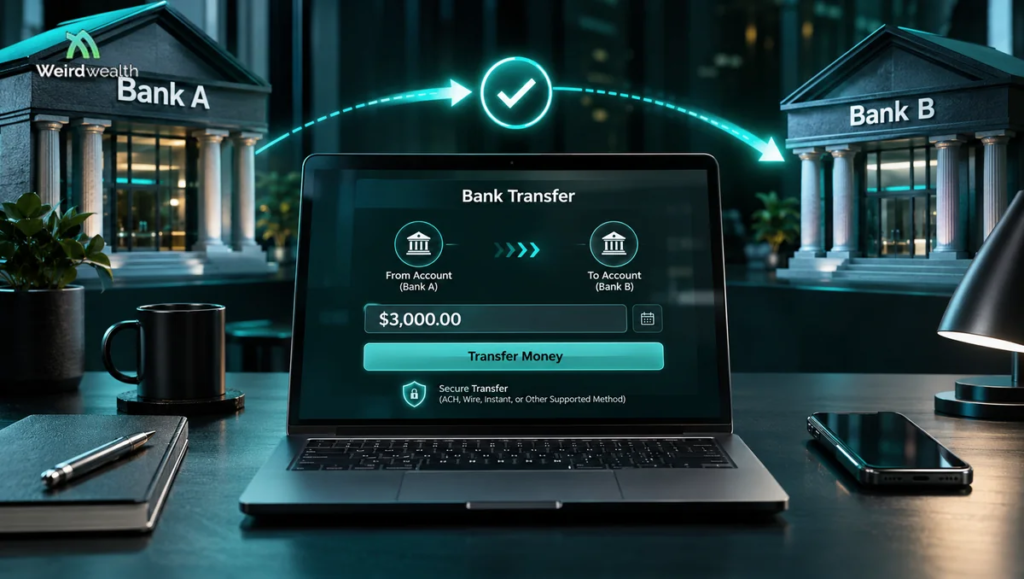
You can transfer money from one bank to another through an external bank transfer, wire transfer, instant payment service, eligible payment app, or by depositing a check. For moving money between your own U.S. bank accounts, an ACH transfer is often a practical starting point because many banks offer it without a transfer fee. For urgent payments, an eligible instant transfer or wire may be more suitable.
Imagine you’ve recently opened a high-yield savings account. Your regular checking account is at one bank, but your new savings account is at another. You want to move $3,000 without withdrawing cash, visiting two branches, or paying unnecessary fees. You open your banking app. There are options for external transfers, wire transfers, and linking accounts.
Which one should you choose? And more importantly, how can you be certain the money arrives in the correct place? The good news is that transferring money between banks has become much easier. But the different methods have their own rules, costs, processing times, and fraud risks.
At Weird Wealth, we believe moving your own money should be straightforward. You shouldn’t need a financial background to understand how a transfer works. Let’s examine five ways to move money between banks, what each method is suitable for, and the steps that can help you avoid expensive mistakes.
Key Takeaways
- ACH transfers are commonly used for moving money between U.S. checking and savings accounts.
- Standard ACH payments can settle within one or two banking days, although customer-facing transfers may take longer.
- Same Day ACH is available through participating financial institutions and eligible services.
- FedNow enables instant payments through participating financial institutions, including during weekends and holidays.
- Wire transfers can be useful for large or time-sensitive payments, but banks may charge significant fees.
- Payment apps sometimes support bank-funded transfers, but their fees, limits, and protections differ.
- Always verify routing numbers, account numbers, recipient details, and transfer instructions.
- Avoid treating a transfer confirmation as proof that the money is already available to the recipient.
What Does It Mean to Transfer Money Between Banks?
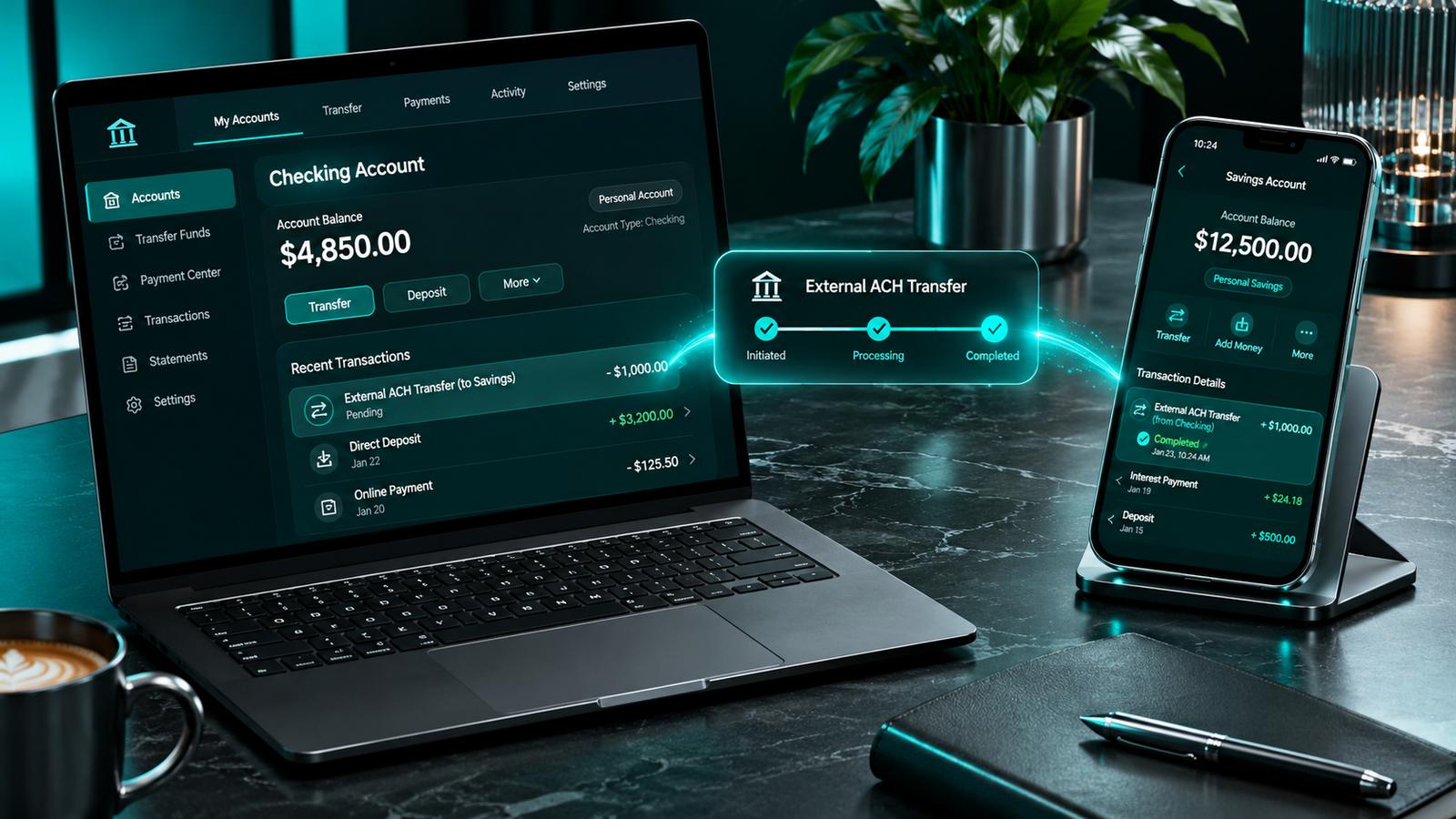
A bank-to-bank transfer moves funds from an account at one financial institution to an account at another. For example, you might have: Bank A: A checking account where your salary arrives. Bank B: A savings account where you keep your emergency fund. You want to move $500 each month from the first account to the second.
Because these are different financial institutions, your bank needs an authorized method to communicate the payment and arrange settlement. The most common approach in the United States is the Automated Clearing House network, usually called ACH.
But other systems are available.
Your choice depends on whether the accounts belong to you, how quickly the money must arrive, how much you’re sending, and which services the banks support.
5 Ways to Transfer Money From One Bank to Another
| Transfer method | Typical availability | Main consideration |
| ACH external transfer | Common at U.S. banks | Processing and possible holds |
| Wire transfer | Offered by many banks | Fees and difficult recovery |
| Instant bank payment | Supported participating institutions | Availability and limits |
| Payment app | Depends on app and banks | Transfer rules and protections |
| Check deposit | Depends on deposit services | Collection and availability delays |
These are general categories. Your bank may offer several of them through one interface.
1. Transfer Money Using ACH
An ACH transfer is an electronic payment processed through the U.S. Automated Clearing House network. According to the Consumer Financial Protection Bureau, ACH transactions are used for direct deposits, bill payments, and transfers between financial institutions. For everyday transfers between your own accounts, this is usually the first option worth checking.
How to Make an ACH Transfer
Open your bank’s official mobile app or online banking website. Find a section labeled Transfers, External Transfers, or Link External Account Enter the required information for the receiving account.
This commonly includes:
- Receiving bank’s routing number
- Receiving account number
- Account type, such as checking or savings
- Any additional verification information required by your bank
Some banks allow secure account linking through an authorized connection. Others verify ownership through small test deposits or a different confirmation procedure. Once the account is linked, select the amount and date. Review the details carefully before authorizing the transfer. How Long Does an ACH Transfer Take?
Nacha, which governs the ACH Network, reports that approximately 80% of ACH payments settle within one banking day or less. However, that statistic describes ACH settlement across the network. It does not guarantee that an individual bank will make every customer transfer available within one day. A bank may require additional time for verification, internal processing, or risk controls.
The CFPB notes that transfers can take several days to complete. If your bank shows an estimated arrival date, use that estimate for planning.
2. Send Money Through a Wire Transfer

A wire transfer moves money through a banking payment system designed for funds transfers. Domestic U.S. wires often use the Federal Reserve’s Fedwire Funds Service. Wires are frequently used for substantial or time-sensitive transactions. Examples include certain real estate payments and large transfers between financial accounts. How to Send a Bank Wire
Sign in through your bank’s official platform or visit a branch if required. Choose the wire transfer service. Provide the requested recipient information, which may include the recipient’s legal name, bank details, account number, and applicable routing information.
Confirm the amount, fee, and intended delivery date. Then authorize the wire through the bank’s required security procedure. Some banks require extra verification for large transfers.
Are Wire Transfers Instant?
Not necessarily. Domestic wires can often be completed on the same business day when submitted before the bank’s cutoff. But the exact processing time depends on the bank, operating hours, verification, and receiving institution. International wires can involve additional institutions and processing. Most importantly, sending a wire can be difficult to reverse after it has been executed. Use this method only when you trust the destination and have independently confirmed the instructions.
3. Use an Instant Bank Transfer
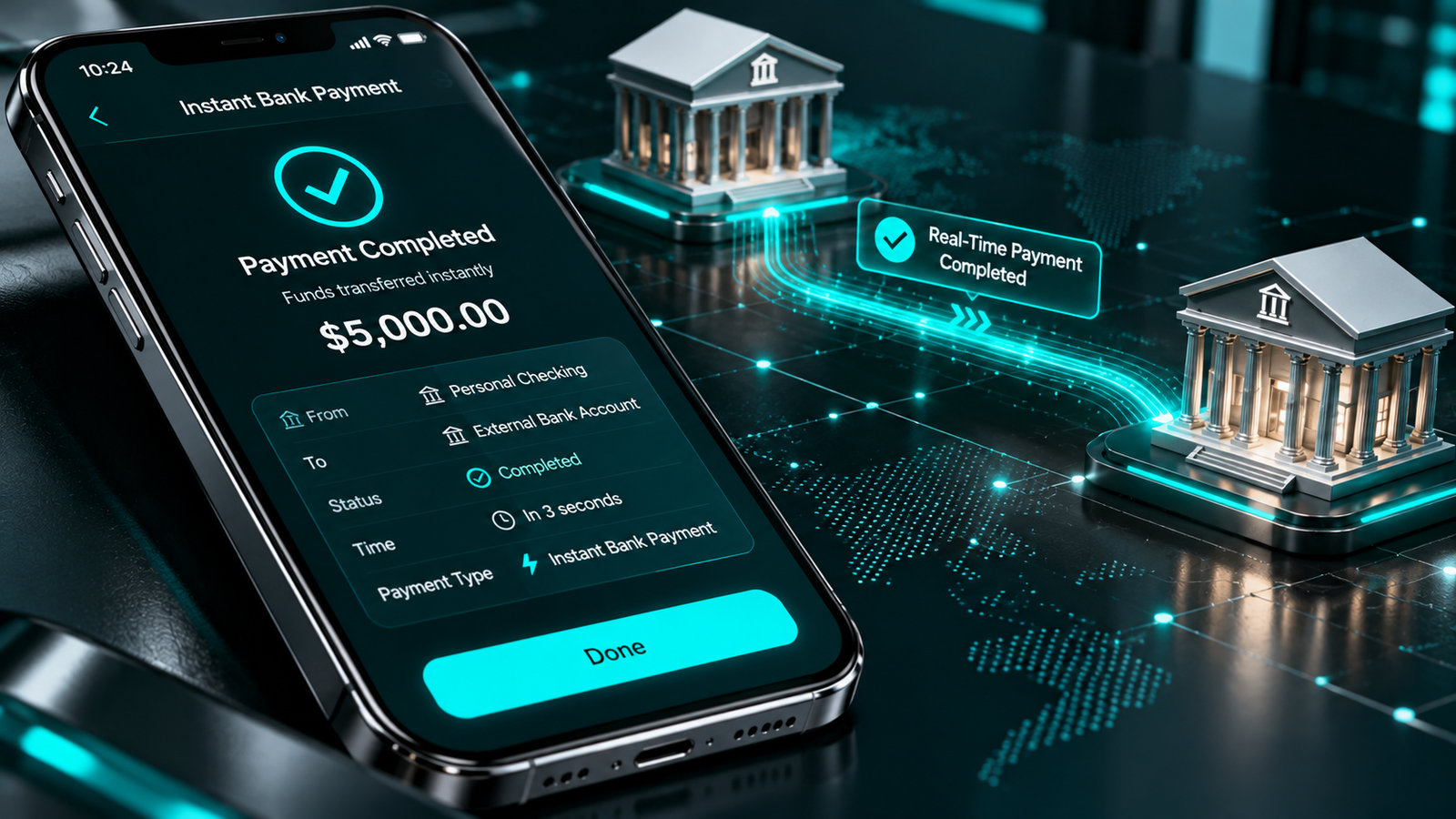
Instant payments are changing how people move money. The Federal Reserve’s FedNow Service allows participating banks and credit unions to send and receive eligible payments within seconds. It operates around the clock, including weekends and holidays. Unlike ordinary ACH settlement, an eligible FedNow payment can move through the instant payment infrastructure without waiting for the next banking day.
However, not every bank offers customer-facing FedNow transfers. Participation by an institution doesn’t necessarily mean every customer has access to every possible payment feature. Some banks also use The Clearing House’s Real-Time Payments network. Ask your financial institution whether instant account-to-account transfers are available for your specific accounts.
When Is an Instant Transfer Useful?
Imagine needing to move money between two accounts on a Sunday evening. A standard ACH transfer might not settle until an eligible banking day. An instant payment service could be more suitable if both the sending and receiving arrangements support it. But speed creates responsibility. Instant transfers may be final very quickly, leaving little opportunity to correct an error. Verify every detail before authorizing a payment.
4. Transfer Money Using a Payment App
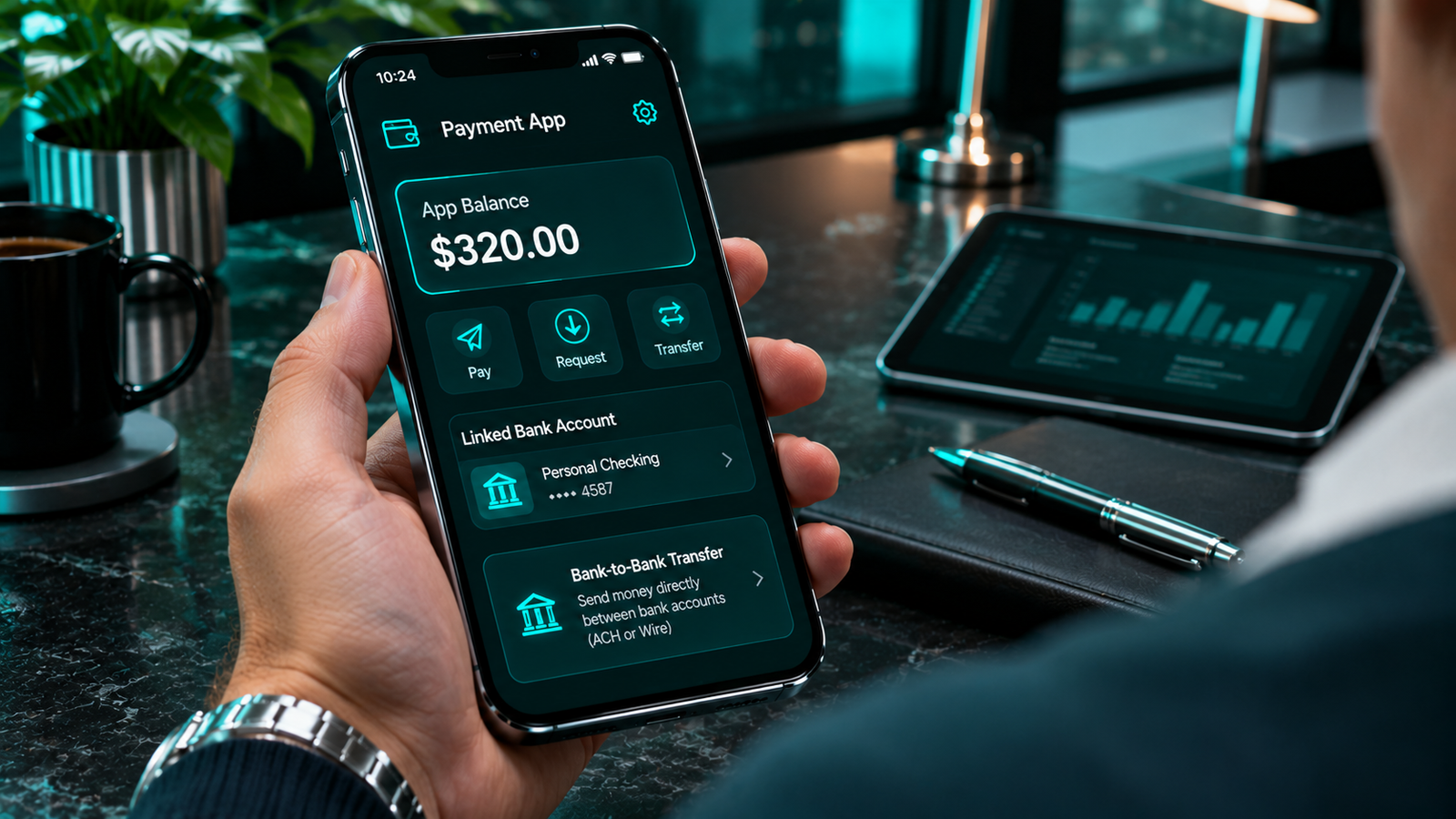
Some payment services allow eligible customers to send or receive money using linked bank accounts. Depending on the platform, you may be able to fund a payment through a bank account and later transfer a balance to another account. However, this isn’t necessarily the same as a direct bank-to-bank transfer.
The service may hold funds temporarily, apply its own limits, or charge for expedited withdrawals. Certain services prohibit or restrict transfers between accounts controlled by the same person. You should also consider whether the app provides the protections you expect. The CFPB warns that payment apps can be used in scams, especially when people send money to unfamiliar recipients. For moving money between your own accounts, a direct bank transfer may offer a simpler process.
5. Move Money Using a Check
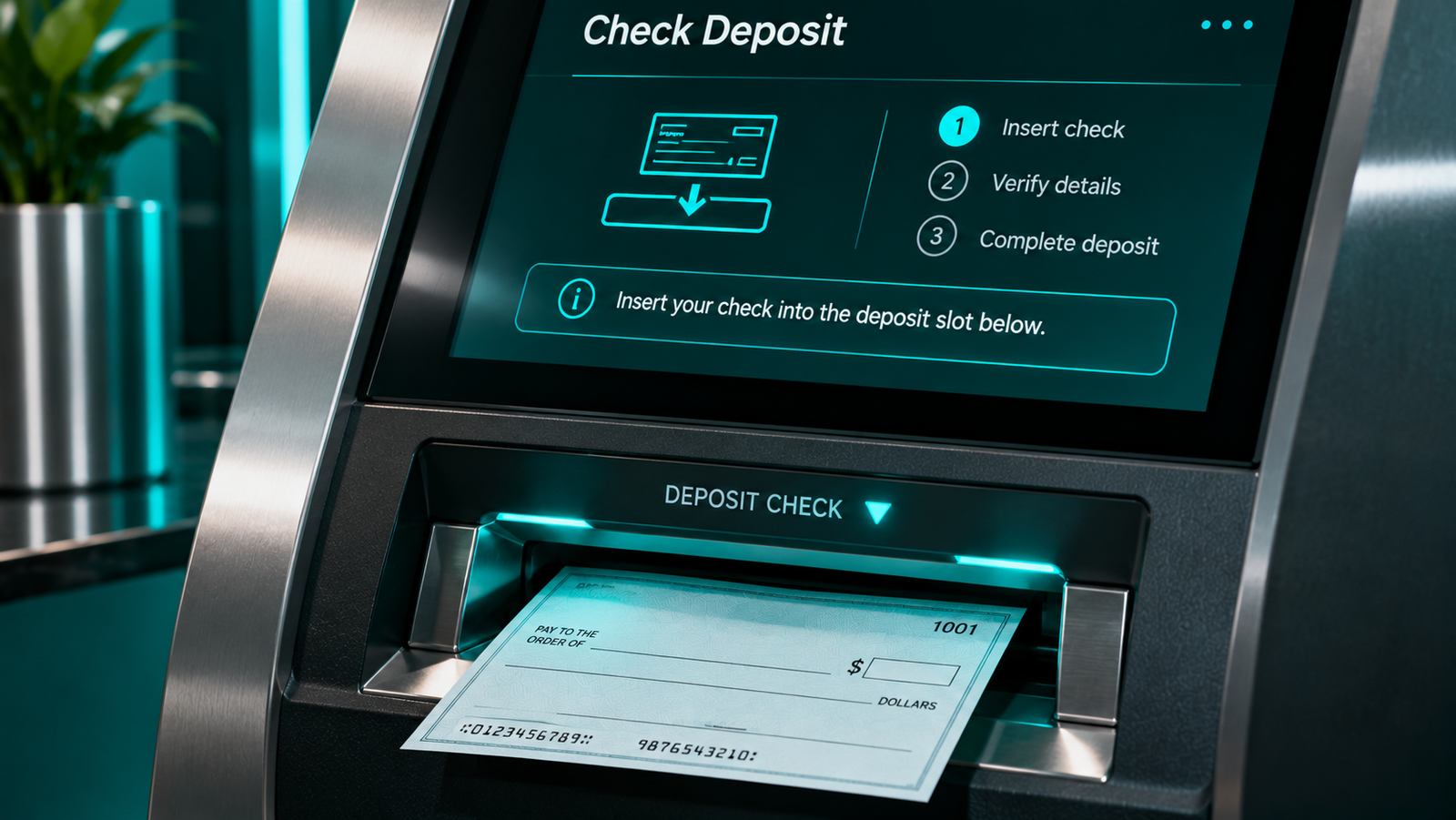
Checks remain an option when electronic transfer methods aren’t suitable. You may be able to write a check from one account and deposit it into another account you own. Many banks support mobile check deposits, subject to account eligibility, deposit limits, and check acceptance rules. But depositing a check doesn’t guarantee immediate access to the funds.
The receiving bank may place an appropriate hold. Checks can also be lost, rejected, or returned unpaid. For routine transfers between linked accounts, ACH is often more convenient. Still, a check may be a useful fallback when the receiving bank doesn’t offer the preferred electronic option.
Which Bank Transfer Method Is Cheapest?
Fees depend on the institution and service. Many banks offer ordinary external ACH transfers without charging consumers a fee. Wire transfers commonly involve a separate charge. Payment apps may offer standard transfers without a fee but charge for instant withdrawals. Instant bank payment pricing varies. Consider this hypothetical comparison for moving $2,000.
| Method | Illustrative fee | Amount available after fee if deducted from transfer |
| Standard ACH | $0 | $2,000 |
| Domestic wire | $25 | $1,975 |
| Instant payment | $0 | $2,000 |
| Expedited app transfer at 1.5% | $30 | $1,970 |
These are fictional fee assumptions, not current quotes from specific banks or apps. Some services charge fees separately rather than deducting them from the transferred amount. If a service charges $30 for convenience, ask whether the faster arrival is genuinely worth $30. For a planned savings transfer, waiting an additional banking day may be an easy way to avoid an unnecessary charge.
How Much Money Can You Transfer Between Banks?
There is no single universal limit. Your bank may set daily, weekly, or per-transaction limits. Limits may differ for incoming and outgoing transfers. A newly linked account may have stricter restrictions. A wire transfer could permit a larger amount than an ordinary online ACH transfer, depending on the bank’s policies.
Nacha currently allows individual Same Day ACH payments up to $1 million through that network service. However, that network limit doesn’t mean your bank will let you send $1 million through its consumer app. Banks can impose their own much lower limits. For a substantial transfer, review your account’s specific limits and contact the institution if necessary.
Should You Push or Pull Money Between Banks?
Here’s a distinction that can affect your experience. A push transfer begins at the bank holding your money. You instruct Bank A to send funds to Bank B. A pull transfer begins at the destination. You instruct Bank B to request funds from your account at Bank A. Both may use ACH. But each bank can apply different limits, verification steps, processing schedules, and availability policies. Imagine moving $5,000 into a savings account.
Bank A might let you send the money with a particular arrival estimate. Bank B might let you request the funds but apply a temporary hold. The better option depends on the actual account terms. Before making a large transfer, compare the estimated availability and any restrictions shown by each bank.
The Weird Wealth MOVE Framework
Here’s our original method for selecting a bank transfer. We call it the MOVE Framework.
M — Money Amount
How much are you sending?
A small routine transfer and a large time-sensitive payment may require different methods.
O — Ownership
Are both accounts yours, or are you paying another person?
Transfers between your own verified accounts often have different risk profiles from payments to strangers.
V — Velocity
How quickly must the recipient have usable funds?
Distinguish submission time, settlement time, and actual customer availability.
E — Expense and Exposure
What are the fees, limits, fraud risks, and consequences if the details are wrong?
The framework helps you make a more thoughtful choice instead of automatically selecting the fastest-looking button.
An Original Example: Moving Your Emergency Fund
Suppose you’ve saved $6,000 in a checking account. You want to move it to a separate savings bank. There is no urgent deadline. Your first instinct might be to send the entire balance immediately. But a careful approach would be to verify the receiving account, understand transfer limits, and check whether the checking account needs funds for upcoming bills.
Perhaps you decide to keep $1,500 available for near-term expenses and transfer $4,500. If the bank permits it, a small initial transfer can help confirm that the linked account information is correct. Then you can move the remaining planned amount. The small test doesn’t eliminate every risk. It simply adds a verification step before a larger movement of money.
How to Avoid Sending Money to the Wrong Account

Routing and account numbers should be checked carefully. The CFPB warns that incorrect bank information can result in a transfer reaching the wrong destination and may make recovery difficult. Never assume a bank will automatically detect every mistake.
Before sending money:
- Verify the recipient’s identity.
- Confirm the receiving bank.
- Check the routing number.
- Check the complete account number.
- Confirm the account type where required.
- Review the amount and any fees.
- Confirm the estimated arrival.
- Save the transaction confirmation.
For a payment to another person, confirm details through a trusted independent communication channel. This is especially important when someone sends changed payment instructions at the last moment.
Bank Transfer Scams to Watch For
Scammers frequently attempt to redirect legitimate payments. Imagine hiring a contractor. You’ve agreed to pay a $3,000 invoice. Then you receive an email that appears to come from the contractor, explaining that their bank account has changed. The message looks professional. But the email account may have been compromised.
If you send the money to the new account without verifying the instructions, the funds may go directly to a criminal. The CFPB recommends confirming suspicious changes using independently trusted contact information. Other warning signs include unexpected demands for urgent transfers, requests to move money to a supposed “safe account,” and pressure to keep a transaction secret.
If you suspect fraud, contact your bank immediately. The chances of recovering funds can depend on the payment method, timing, circumstances, and applicable law.
What Happens if a Bank Transfer Is Delayed?
First, check the transfer status in your bank’s official app. Look for any displayed processing date, verification request, or hold. Remember that weekends and federal holidays may affect ordinary ACH transfers. A payment submitted Friday evening may not follow the same schedule as one initiated Tuesday morning. If the expected arrival date passes, contact the sending institution.
You may need the transaction reference number, amount, and destination information. If the receiving bank also needs to investigate, ask what records it requires. Avoid initiating the same transfer again merely because the first one isn’t immediately visible. You could accidentally create a duplicate payment.
Can You Transfer Money Internationally?
Yes, but the process can be different. International transfers may use bank wires, specialized remittance services, or other permitted payment arrangements. Additional information may be required, such as an IBAN, SWIFT/BIC, beneficiary address, or intermediary bank details. International transfers can involve exchange-rate margins and fees charged by one or more institutions.
Compare the amount the recipient will actually receive in the destination currency, rather than looking only at the upfront fee. The U.S. rules described in this article primarily concern domestic bank transfers. Other countries operate different payment systems, such as Pakistan’s Raast, India’s UPI, and the United Kingdom’s Faster Payments. Availability and rules depend on the banks and jurisdictions involved.
Frequently Asked Questions
How do I transfer money from one bank to another?
Sign in to your bank, find the external transfer option, link and verify the receiving account, enter the amount, and confirm the transfer.
Can I transfer money between two different banks?
Yes. Eligible accounts can generally use ACH, wires, or supported instant payment methods.
How long does a bank-to-bank transfer take?
ACH settlement can occur on the same or following banking day, but the customer-facing process may take several days. Wires and instant transfers have different timing.
Is transferring money between banks free?
Many ordinary ACH transfers are free for consumers, but fees depend on the institution. Wires and expedited services may cost more.
What is the fastest way to transfer money between banks?
Eligible instant payments can complete within seconds. Same-day wires may also be useful, depending on the banks and service availability.
Can I transfer $10,000 between my own bank accounts?
Potentially, yes, but your bank may impose transaction or daily limits and additional verification requirements.
Is an ACH transfer safer than a wire?
Both are established financial payment methods. Their error recovery procedures, processing characteristics, and fraud risks differ. Neither protects you from every scam.
Can I cancel a bank transfer?
Cancellation depends on the payment type, timing, and applicable rules. Contact the bank immediately if you need to stop or correct a transfer.
Why is my transfer taking so long?
Account verification, internal processing, risk reviews, weekends, holidays, or bank-specific holds may affect the timing.
Can I move money from one bank to another on weekends?
An eligible instant payment can operate on weekends. Ordinary ACH settlement generally follows banking-day schedules.
Final Thoughts
Moving money between banks should be a routine financial task.
And most of the time, it is.
You might be building an emergency fund, moving savings to a different institution, paying someone for a legitimate purchase, or organizing your accounts more efficiently.
The method matters because your needs are different in each situation.
Sometimes you want the lowest fee.
Sometimes you need the money delivered quickly.
And sometimes the most important thing is having enough time to verify the destination before sending a significant amount.
At Weird Wealth, we believe convenience is valuable only when it comes with understanding.
For routine transfers between your own U.S. accounts, start by examining your bank’s ACH options. For urgent payments, investigate supported instant transfers or wires. Whatever method you choose, verify the details before you authorize the movement of your money.
A few careful checks can be worth far more than the few seconds they take.