
Best High-Yield Savings Accounts: There is a quiet, expensive mistake sitting in millions of American bank accounts right now. The average savings account in the United States pays roughly 0.37 percent APY, according to the FDIC while a small group of online banks are paying ten times that on the exact same product. If your money sits in a traditional savings account, inflation is quietly eating it while your bank lends it out at a profit.
A high-yield savings account fixes this without adding risk. Your deposits remain FDIC-insured up to $250,000 per depositor, your money stays accessible, and the only real difference is the interest rate.
So which account deserves your money? The short answer: the best high-yield savings accounts of 2026 are offered by online banks and fintechs including Axos, EverBank, Bread Savings, Barclays, and Marcus with top rates currently between roughly 3.5 and 4.3 percent APY, and some promotional offers reaching higher.
Below are the ten accounts worth your attention this year, followed by a simple guide to choosing between them.
The 10 Best High-Yield Savings Accounts of 2026 at a Glance
| Account | Best APY | Min. to Open | Monthly Fee | Best For |
|---|---|---|---|---|
| Axos ONE Savings | 4.21% (promos up to 5%) | $0 | $0 | Highest rates via bundle |
| Peak Bank | 4.27% | $100 | $0 | Top rate, no hoops |
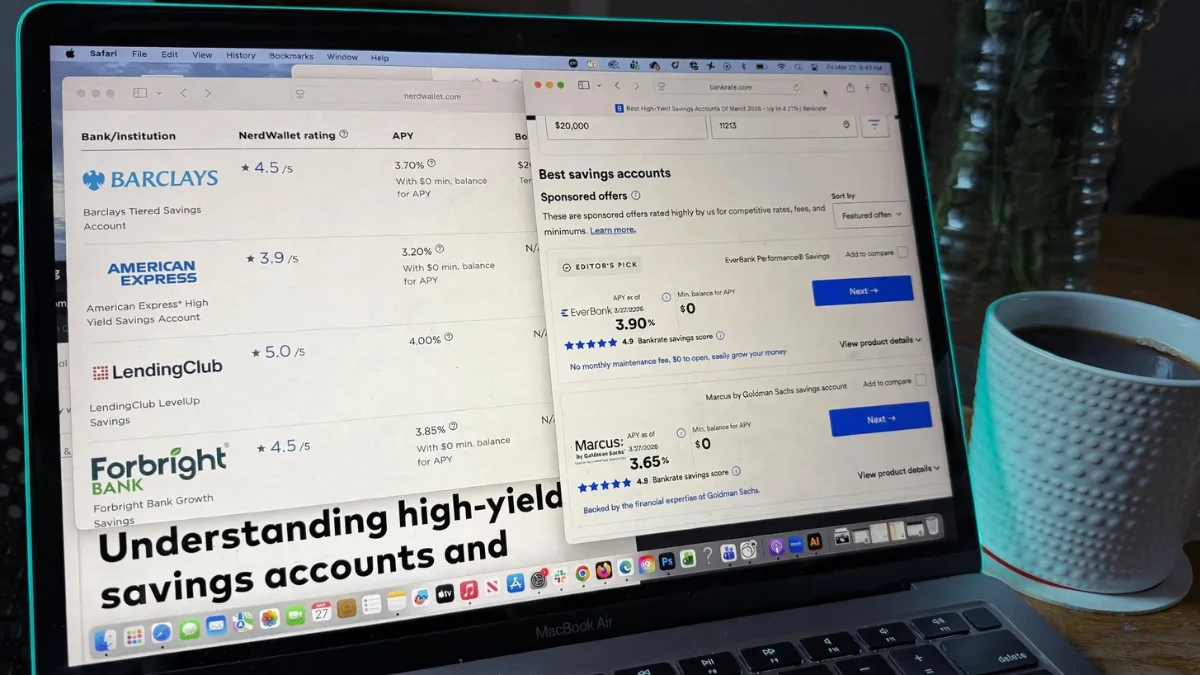
| EverBank Performance Savings | 4.20% | $0 | $0 | Big-bank reliability |
| Happen Bank LevelUp | 4.20% | $0 | $0 | Rate boosts |
| Bread Savings | 4.05% | $100 | $0 | No-frills savers |
| Valley Direct | 4.00% (12-month intro) | $1,000 | $0 | New-customer intro rate |
| Barclays Tiered Savings | 3.50–3.65% | $0 | $0 | Large balances |
| SoFi Savings | Up to 4.20% | $0 | $0 | All-in-one banking |
| Western Alliance | 3.80% | $500 | $0 | Set-it-and-forget-it |
| Marcus by Goldman Sachs | 3.50% | $0 | $0 | Trusted, simple savings |
Rates are variable and current as of October 2026; banks can change APY at any time.
1. Axos ONE Savings Best for Maximizing Yield
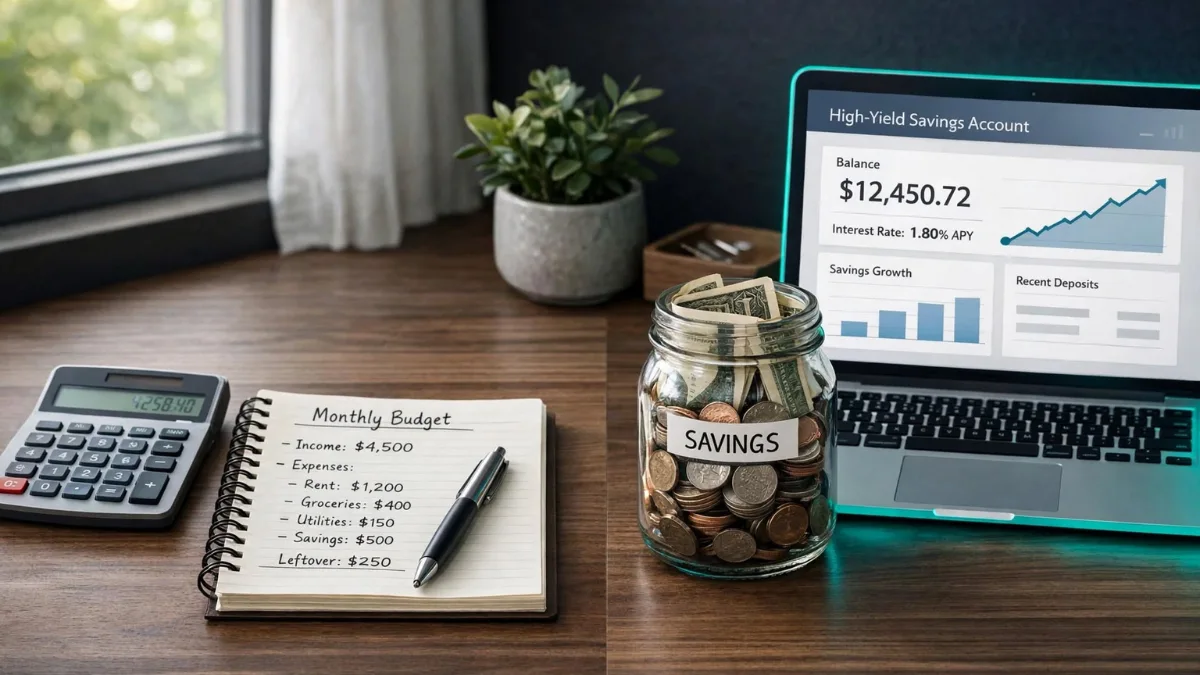
Axos ONE bundles a checking and savings account, and the rewards are generous: roughly 4.21 percent APY on savings with no monthly fee, plus promotional rates that can reach as high as 5 percent for the first six months if you meet direct deposit and balance requirements.
You also get a large fee-free ATM network and an insured cash sweep option that can extend FDIC coverage far beyond the standard limit. The catch is the bundle the best rates require activity in the linked checking account. If you want one bank that does everything and pays you well for it, this is the pick.
2. Peak Bank Best Rate With No Hoops
Peak Bank’s personal high-yield savings offers around 4.27 percent APY among the highest on the market with just a $100 opening deposit, no monthly fee, and no direct-deposit gymnastics required.
It is a straightforward product from a lesser-known name, which is precisely the trade-off: you earn top-tier yield in exchange for a bank most people have never heard of. Your money is FDIC-insured exactly the same as it would be at a national brand.
3. EverBank Performance Savings Best Big-Bank Reliability
EverBank combines a competitive yield near 4.20 percent with the stability of an established institution and zero fees or minimums. For savers who want a strong rate but feel uneasy parking meaningful money with a fintech they have never seen in a Super Bowl ad, EverBank hits the sweet spot between yield and peace of mind.
4. Happen Bank LevelUp Savings Best for Rate Boosts
Happen Bank pays around 4.20 percent APY to customers who deposit at least $250 per month, and about 3.00 percent otherwise, with no fees and no minimum balance. For anyone paid on a regular schedule, meeting the monthly deposit is nearly automatic making this one of the easiest conditional rates to earn on the market.
5. Bread Savings Best No-Frills Option
Bread Savings pays approximately 4.05 percent APY with a $100 opening deposit, no monthly fee, and daily compounding. There are no savings buckets, round-up features, or clever tools here just a strong rate in a clean, simple account. Sometimes that is exactly what you want for money that is meant to sit still.
6. Valley Direct Best Introductory Rate
Valley Direct offers new customers a 12-month introductory rate around 4.00 percent APY on its online high-yield savings account, with no monthly fees. You will need $1,000 to open the account, and the rate steps down for existing customers after the intro period so this one rewards savers who review their accounts annually and move money when better offers appear.
7. Barclays Tiered Savings Best for Large Balances
Barclays Tiered Savings pays about 3.50 percent APY on balances under $250,000 and roughly 3.65 percent above that threshold, with no fees and daily compounding. If your savings have outgrown the promotional-rate fintechs, this is a mature, fee-free home for serious money just know there is no checking account, so you will move funds through a linked external bank.
8. SoFi Savings Best All-in-One Banking
SoFi pairs savings with an interest-earning checking account, automatic round-ups, and goal-based “vaults” that let you earmark money for separate objectives within one account.
The top APY which can reach around 4.20 percent with promotional boosts requires direct deposit or qualifying monthly deposits; otherwise the base rate drops considerably. For people who want their entire financial life in one polished app, SoFi is the strongest package on this list.
9. Western Alliance Best Set-It-and-Forget-It Account
Western Alliance pays roughly 3.80 percent APY with a $500 opening deposit and no ongoing requirements. Notably, the account has no debit card or ATM access, which sounds like a flaw until you realize the benefit: a built-in barrier between your savings and your spending.
If you tend to raid your own savings account, this friction is a feature, not a bug. You can also explore ways to save through a cash rebate credit card or earn extra money by learning how to rent out a parking space.
10. Marcus by Goldman Sachs Best for Simplicity and Trust
Marcus has been a fixture on best-savings lists for years, and for good reason: a solid rate near 3.50 percent, no fees, no minimums, and the backing of one of the most recognized names in finance. It is not the rate leader in 2026, but for savers who value an institution with a long track record of competitive, stable payouts, Marcus remains a very reasonable choice.
Best High-Yield Savings Accounts: How to Choose the Right Account

The best high-yield savings account is not always the one with the highest APY. Before opening anything, check four things:
- Where the rate actually applies. Some accounts advertise a headline APY that only covers the first $5,000 of your balance. If you are saving $50,000, a 4.2 percent rate on $5,000 earns you less than a 4.0 percent rate on everything.
- The conditions. Direct deposits, monthly deposit minimums, and checking-account bundles are common. Make sure the requirements match how your money already moves.
- The fees. A $5 monthly fee erases the interest on the first $1,500 of a 4 percent balance. Most accounts on this list charge nothing keep it that way.
- Access. Can you transfer to your main bank quickly? Is there an app worth using? A great rate at a bank you cannot operate is a bad deal in practice.
One more consideration worth taking seriously: what your savings are for. An emergency fund belongs in a flexible HYSA you can reach in a day or two. Money earmarked for a house down payment in three years might belong in a CD instead, where you lock a rate in exchange for limited access.
Matching the account to the goal is a habit worth copying from the way careful planners approach everything from portfolios to luxury travel. The structure matters as much as the destination. Following a consistent salary saving scheme can also help you build better saving habits and stay focused on your financial goals.
Frequently Asked Questions
Are high-yield savings accounts safe?
Yes. Accounts at FDIC-member banks are insured up to $250,000 per depositor, per bank, per ownership category the same protection a traditional bank provides. The higher rate does not come with higher risk.
Can the bank change my APY after I open the account?
Yes. Savings rates are variable and move with the broader interest-rate environment. Banks adjust them up and down, which is why reviewing your account twice a year is a smart habit.
Is a 4 percent APY really better than my current account?
Almost certainly. At the national average of roughly 0.37 percent, $10,000 earns about $37 a year. At 4 percent, the same deposit earns around $400. That gap roughly $363 annually on every $10,000 is the entire argument for switching.
Do I pay taxes on HYSA interest?
Yes. Interest is taxed as ordinary income in the year it is earned. The bank will send you a 1099-INT if you earn $10 or more.
Should I keep my savings at the same bank as my checking?
Convenience says yes; yield usually says no. The biggest national banks pay close to 0.01 percent on savings. Many people keep checking where it is and park savings at a high-yield online bank linked for transfers the two-minute setup is worth hundreds of dollars a year.
The Bottom Line
The best high-yield savings accounts of 2026 all share the same DNA: an online-first structure, no monthly fees, and yields roughly ten times the national average. Whether you choose the top-rate play at Peak Bank, the all-in-one polish of SoFi, or the friction-that-protects-you design of Western Alliance, the most important step is the one most people never take opening the account. Your money is already working. This year, make sure it is working for you.
Disclaimer:
This article is intended for informational purposes only.