
Running a small business takes time and money. Whether you own a small shop or run an online store or work as an independent contractor you have probably put a lot of effort into building it. But what happens if a customer gets injured or your business property is damaged? Even a small unexpected problem can turn into a costly situation.
This is where business insurance comes in. The best small business insurance helps protect your business from financial losses caused by accidents and unexpected events. It can also help cover legal costs and property damage depending on the policy you choose.
The tricky part is finding the right company. There are several small business insurance providers in the United States and each one offers different coverage options and services. Some are better suited to freelancers while others offer more options for growing companies.
In this guide from WeirdWealth we will look at popular insurance providers and explain what their coverage can do. We will also help you understand what to check before buying a policy so you can make a sensible decision.
Key Takeaways
-
The best small business insurance depends on your work and the risks your business faces.
-
NEXT is a useful starting point for businesses looking for convenient online coverage.
-
The Hartford offers several options for businesses planning to grow.
-
Hiscox is worth considering for professional service businesses.
-
Thimble offers flexible coverage for certain short-term jobs and projects.
-
General liability and professional liability protect against different types of claims.
-
Always compare policy limits and exclusions before choosing a provider.
What Is the Best Small Business Insurance?
There is no single insurance company that works best for every small business. Your ideal choice depends on your industry and location and the type of protection you need.
For this 2026 guide we reviewed publicly available provider information and independent insurance research. We considered coverage choices and business suitability and the convenience of getting a policy.
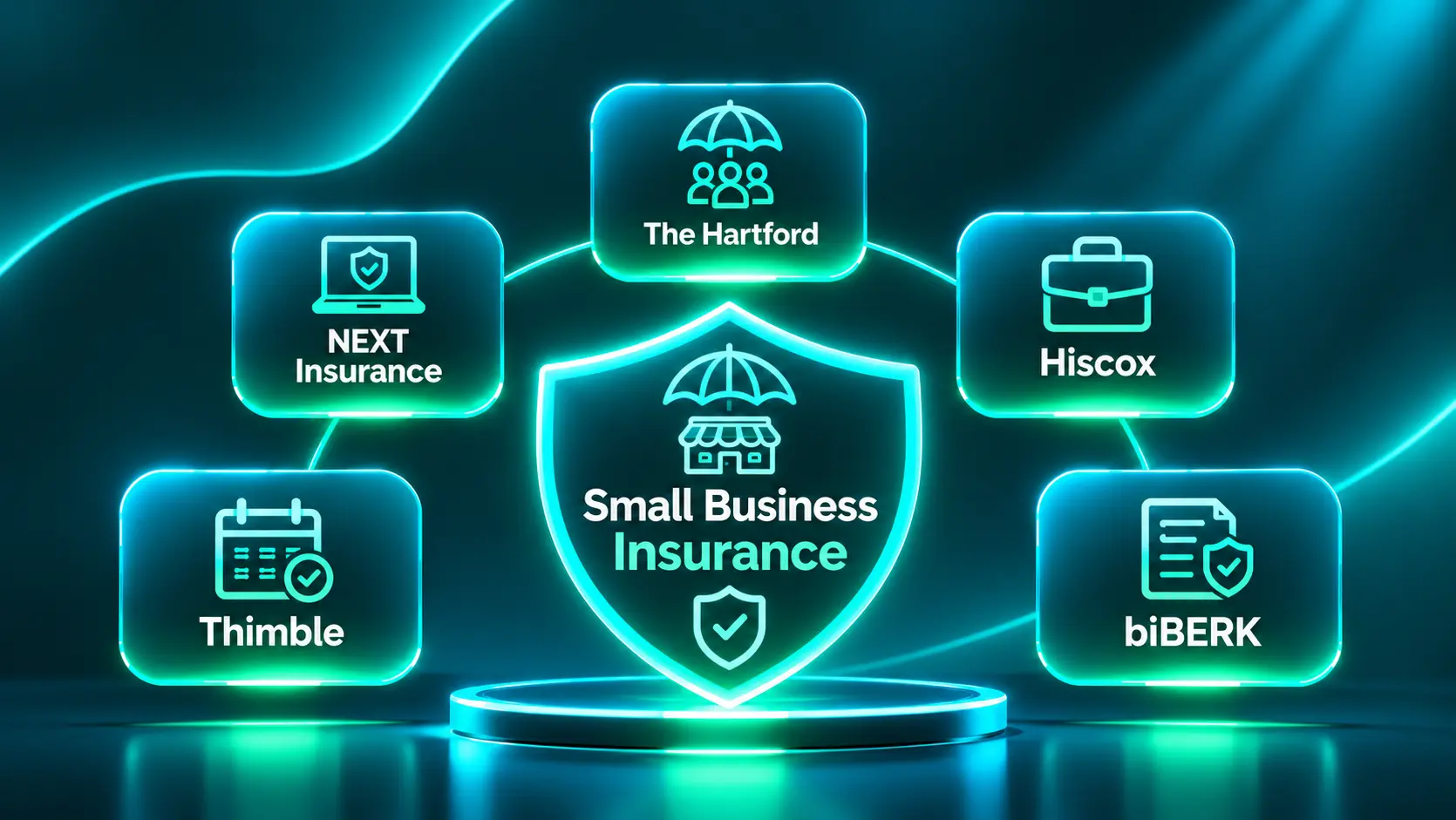
These providers are worth exploring:
1. NEXT Insurance: Best for Convenient Online Coverage
NEXT Insurance is a popular option for small business owners who prefer handling insurance online. Its platform allows eligible businesses to explore coverage and manage policies without relying on a traditional in-person process.
It offers several types of business insurance including general liability and professional liability and workers compensation. Businesses can also explore commercial property coverage depending on their needs and location.
Why consider NEXT Insurance?
-
Online quotes and policy management.
-
Options for different small business industries.
-
Access to certificates of insurance.
-
Several common business coverage types.
One thing to remember is that a convenient online process does not automatically mean the policy is right for your business. Read the exclusions and check whether the available coverage limits match your contracts and business risks.
2. The Hartford: Best for Growing Small Businesses
The Hartford is another established name worth considering. It offers business insurance options for companies that need more than basic liability protection.
A growing business may need workers compensation and commercial property coverage and professional liability as its team and operations expand. The Hartford offers several of these options along with business owners policies.
What makes it worth considering?
-
Different coverage options for small businesses.
-
Business owners policy availability.
-
Workers compensation coverage.
-
Commercial auto and cyber insurance options.
The Hartford may suit businesses that want to review several insurance needs with one established provider. However availability can vary by state and business type. Always confirm the options offered in your area.
3. Hiscox: Best for Professional Service Businesses
If you run a consulting business or provide professional services then Hiscox is worth a closer look. A mistake in your work or advice could lead to a client making a financial claim against your business.
This is where professional liability insurance can help. It is also known as errors and omissions insurance. It may cover eligible claims involving professional mistakes or negligence.
Hiscox offers professional liability options for different types of businesses. This can make it relevant for consultants and freelancers and other service providers.
Reasons to consider Hiscox:
-
Professional liability insurance options.
-
Coverage designed for different service industries.
-
Options for small and independent businesses.
-
Business insurance support for professional risks.
Before purchasing a policy check whether your particular service is covered. Some professions need specialist insurance with specific policy terms.
4. Thimble: Best for Flexible Short-Term Coverage
Not every business operates on a regular schedule. Some freelancers and contractors work on individual projects or temporary assignments.
Thimble is worth considering if you need flexible insurance options. It offers certain general liability policies for short periods and specific jobs.
For example a contractor working on a short project may want to explore temporary coverage rather than purchasing an annual policy without checking other options.
What stands out about Thimble?
-
Flexible coverage options for eligible businesses.
-
Short-term insurance availability.
-
Options for contractors and independent workers.
-
Online policy management.
Remember that short-term coverage may not protect every part of your business. Check the policy dates and covered activities before starting a job.
5. biBERK: Best for Straightforward Business Coverage
biBERK is another provider small business owners can add to their research list. It offers business insurance directly to customers which can make the buying process easier for people who prefer an online approach.
Its coverage options include general liability and workers compensation and professional liability and commercial auto for eligible businesses.
It may be useful for owners who want to explore common business insurance policies without a complicated buying process.
However a simple purchase process should never replace a proper policy review. Check the coverage limits and exclusions and make sure the insurer can protect the specific work you do.
Which Types of Small Business Insurance Do You Actually Need?
Choosing a provider is only one part of the decision. You also need to understand the coverage itself.
Buying insurance without knowing what it protects can leave important gaps. Here are some common policies worth understanding.
General Liability Insurance
General liability insurance protects a business against certain claims involving bodily injury and property damage and personal or advertising injury.
Imagine a customer visits your store and slips on a wet floor. If the business is legally responsible then this coverage may help with eligible medical expenses and legal costs.
It is one of the first policies many business owners explore.
Professional Liability Insurance

This coverage is useful for businesses that provide advice or professional services. It may help with claims involving mistakes or negligence in the work you provide.
For example a consultant may face a claim if a client believes incorrect advice caused financial harm.
Commercial Property Insurance
If you own a shop or office or keep business equipment and inventory then property insurance may be worth considering.
It can help protect covered business property against events such as fire or theft. The exact protection depends on the policy and its exclusions.
Workers Compensation Insurance
Workers compensation helps cover eligible employees who suffer work-related injuries or illnesses.
Requirements vary by state and business circumstances. Employers should check their local rules before assuming they do or do not need this policy.
Cyber Liability Insurance
Small businesses also store customer details and payment information online. This creates risks that go beyond physical property.
Cyber liability insurance may help with eligible costs following certain cyber incidents. These can include data breaches and some forms of cybercrime.
Check carefully because cyber policies can have specific security requirements and exclusions.
Business Owners Policy
A business owners policy is commonly called a BOP. It usually combines general liability and commercial property coverage with business interruption protection.
It can be a convenient starting point for eligible small businesses. However it does not automatically include every type of insurance.
For example professional liability and workers compensation and commercial auto usually need separate coverage.
How Much Does Small Business Insurance Cost?
The cost of small business insurance is different for every company. There is no fixed price that applies to all businesses.
An online store with a small team may have different insurance needs from a construction company with employees and expensive equipment.
Insurance companies usually consider factors such as:
-
Your business industry and location.
-
Number of employees.
-
Annual revenue and payroll.
-
Type and value of business property.
-
Coverage limits and deductibles.
-
Previous insurance claims.
-
The specific policies you purchase.
MoneyGeek’s October 2026 research reported different average monthly rates across its selected insurers. These figures are estimates and not guaranteed prices for every business. Your actual quote can be higher or lower depending on your coverage needs and business expenses.
The best approach is to request quotes from several providers using the same coverage limits. This makes it easier to understand whether a cheaper policy actually offers enough protection. Just like choosing the right household budgeting apps to manage your monthly expenses or finding the best bank for a checking account to handle everyday finances, comparing your options can help you make smarter money decisions. If your business also accepts card payments then exploring the best buy credit card payment options can help you better understand payment choices and related costs.
How Do You Choose the Right Business Insurance?

Before purchasing a policy take a little time to understand what could go wrong in your business. You do not need every insurance product available. You need coverage that makes sense for your actual work.
Here are a few things to check:
1. Understand your risks: Think about customer injuries and property damage and professional mistakes and online security problems.
2. Check legal requirements: Some types of insurance are required by law. Requirements can change depending on your state and employees.
3. Compare more than prices: Look at policy limits and exclusions and deductibles before making a decision.
4. Read the policy carefully: Understand what the insurer will cover and what it will not.
5. Check the insurer: Review its financial strength and complaint information and customer service reputation.
6. Review coverage regularly: Your business may need different protection as you hire staff or purchase equipment or expand services.
The National Association of Insurance Commissioners also recommends reviewing business coverage regularly and checking for gaps in protection.
Why Does Small Business Insurance Matter?
Many owners believe their business is too small to need insurance. But a small business can still face an expensive lawsuit or unexpected property loss.
Think about a freelance designer who accidentally makes an error in a client’s project. Or a small shop where a visitor gets injured. These situations can create financial pressure even when the business has only a few employees.
Insurance can help reduce the financial impact of covered events. It may also help businesses meet contract requirements when clients ask for proof of insurance.
A limited liability company does not replace business insurance either. The legal protection of a business structure has limits and does not cover every business loss. The U.S. Small Business Administration explains that insurance can fill protection gaps that business structures do not cover.
Conclusion
Finding the best small business insurance is really about understanding your business before choosing a provider. NEXT is worth exploring for convenient online coverage while The Hartford offers several options for growing companies. Hiscox is relevant for professional services and Thimble may suit certain short-term projects. biBERK is another provider to include in your research.
Do not make your decision based on price alone. Look at the risks your business faces and compare the actual policy details.
At WeirdWealth we believe that understanding your financial choices is just as important as making them. A little research today can help you choose protection that makes sense for your business tomorrow.
Frequently Asked Questions
1. What is the best small business insurance company in 2026?
There is no universal winner. NEXT is a useful option for online convenience while The Hartford suits businesses looking for broader coverage choices. Hiscox is worth considering for professional services.
2. Is small business insurance required by law?
Some coverage is legally required depending on your location and business activities. Workers compensation requirements are especially important for employers. Check your state rules before buying a policy.
3. How much does small business insurance cost?
The price depends on your industry and location and employees and coverage limits. Request individual quotes because published averages cannot tell you exactly what your business will pay.
4. Can I get business insurance if I work from home?
Yes. Home-based businesses can explore business owners policies and general liability and business property coverage. Personal home insurance may not cover all business-related losses.
5. What is the difference between general liability and professional liability?
General liability generally covers certain third-party injury and property damage claims. Professional liability deals with eligible claims involving professional mistakes or negligence. Businesses may need both depending on their work.
Disclaimer
This article is for general educational purposes only and should not be treated as legal or financial advice. Insurance coverage and requirements vary by state and business type. Policy terms and exclusions also differ between providers.
Always read the full policy documents and speak with a licensed insurance professional before purchasing coverage. WeirdWealth does not guarantee that any provider or policy will meet every business owner’s needs.