
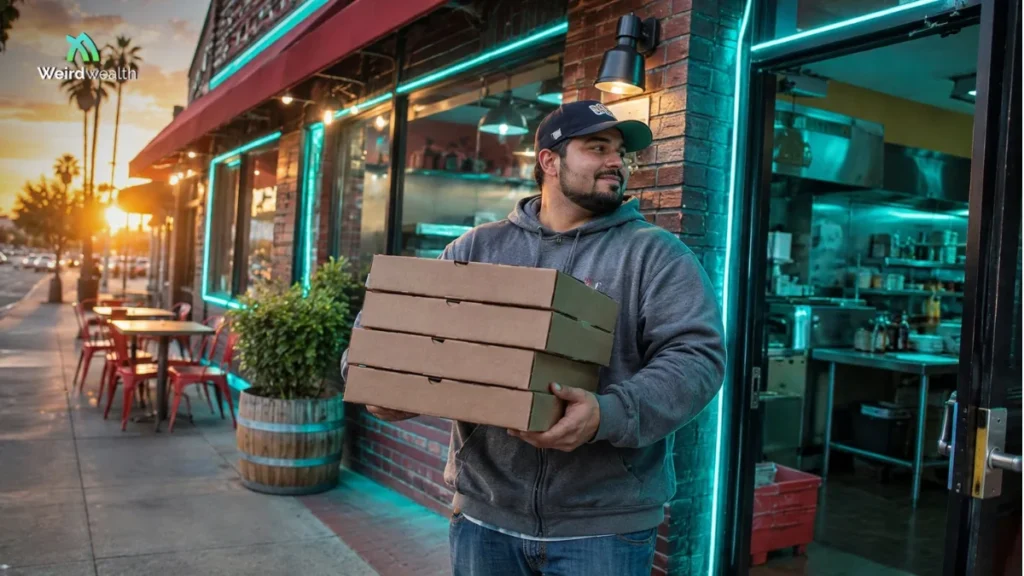
Imagine walking past your neighborhood pizza shop every evening and watching perfectly good food go to waste. Boxes of unsold pizza, slices nobody ordered, and leftovers from the dinner rush all heading toward the trash.
Most people would shake their heads and keep walking. But what if those leftovers could help feed people who need a meal and even create a little extra income?
That’s the idea behind an unusual side hustle in Phoenix, Arizona, where a local resident reportedly began collecting leftover pizza and distributing it to people experiencing homelessness.
What started as a personal effort to reduce food waste eventually became a paid arrangement with a local pizza shop.
The reported earnings were approximately $300 per month, with the restaurant owner offering $25 for food collection and distribution runs. The work involved picking up food after closing and delivering it to people who needed it.
It’s a perfect example of the kinds of unconventional income ideas we love exploring at Weird Wealth. Not every side hustle requires a laptop, expensive equipment, or a complicated business plan. Sometimes, an opportunity begins with noticing something other people overlook.
Key Takeaways
- A Phoenix resident described earning approximately $300 monthly by distributing a pizza shop’s unsold food.
- The restaurant owner reportedly began paying $25 for collection and delivery runs.
- The arrangement started as an unpaid effort to reduce food waste and help people experiencing homelessness.
- The business eventually began setting food aside directly instead of leaving it in the trash.
- A similar opportunity requires the restaurant’s permission, safe food handling, and appropriate donation arrangements.
- The reported earnings are an individual account, not a guaranteed income opportunity.
How Did Leftover Pizza Become a Paid Side Hustle?
The story began near Roosevelt Row, an arts and cultural neighborhood in downtown Phoenix.
A local resident frequently walked past a small pizza restaurant and noticed how much food appeared to be discarded after closing.
Rather than ignoring it, the person started collecting pizza that looked untouched or remained wrapped and sharing it with people experiencing homelessness nearby.
Initially, the effort was entirely voluntary.
There was no payment, formal arrangement, or expectation that helping people would eventually become a source of income.
The person simply disliked seeing food go to waste when people in the same neighborhood were struggling to find meals.
The earliest collections reportedly involved retrieving food from the restaurant’s dumpster. That is not a safe method to imitate: food that has entered a dumpster may be contaminated or may have spent too long at unsafe temperatures, even if it appears untouched.
The important turning point came when the restaurant owner noticed what was happening.
Instead of ignoring the situation, the owner asked about the food collections.
After learning that the leftovers were being distributed to people who needed meals, the owner offered to pay for the work.
That changed everything.
The Restaurant Owner Offered $25 for the Food Deliveries
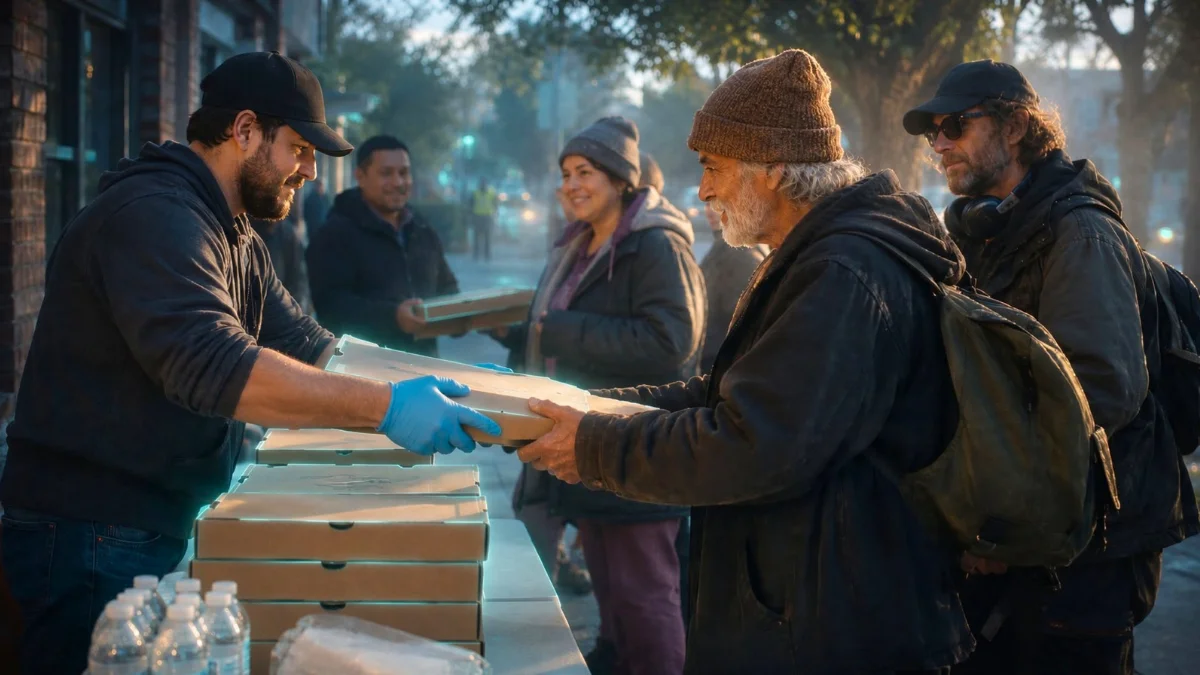
The restaurant owner reportedly offered $25 to continue collecting and distributing the leftover pizza.
If you are exploring unusual ways to earn money, it is also worth understanding how everyday financial decisions fit into the bigger picture. For example, choosing the right Buy credit card payment method can help you manage purchases more effectively. Similarly, comparing the best banks for checking accounts can help you find an account that suits your financial needs.
Any additional income, even if it comes from occasional activities, can also be easier to manage with the right tools. Exploring the best household budgeting apps can help you track earnings, organize expenses, and understand where your money goes.
They would send a message when food was ready, allowing the person to stop by after closing, collect the pizza, and distribute it around the neighborhood.
This created a more organized arrangement.
The restaurant had a way to redirect some surplus food, the delivery person received compensation for their time, and local people could receive meals.
The account reports approximately $300 in monthly earnings.
Although those earnings have not been independently verified, the idea illustrates how a small, recurring service can develop from an existing community need.
How Much Money Can You Make Delivering Leftover Food?
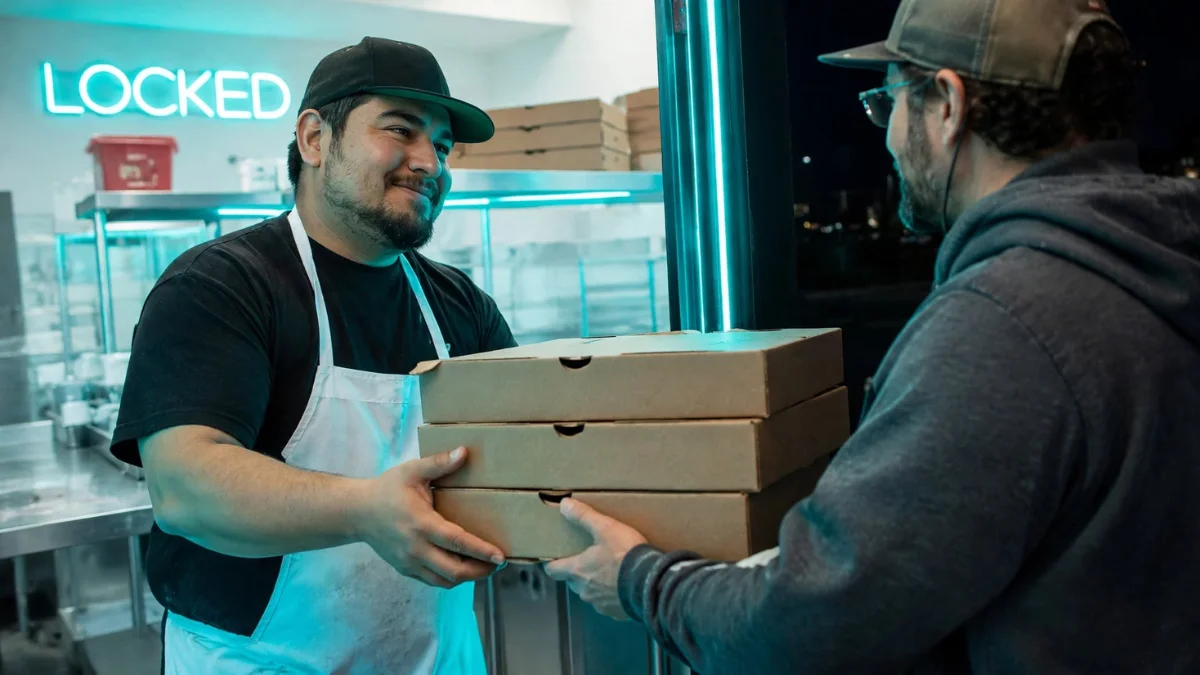
The financial side of this story is surprisingly straightforward.
At $25 per delivery run, completing 12 paid runs in a month would produce $300 in gross earnings.
That does not mean every restaurant will pay the same amount, or that this level of work is consistently available.
Here is what the numbers could look like using the reported $25 payment.
| Paid runs per month | Payment per run | Monthly gross income |
| 4 | $25 | $100 |
| 8 | $25 | $200 |
| 12 | $25 | $300 |
| 16 | $25 | $400 |
| 20 | $25 | $500 |
These figures are illustrative calculations, not verified earnings beyond the original account.
A person doing this work may also need to cover transportation, insulated food carriers, cleaning supplies, and other expenses.
For example, earning $300 in a month while spending $60 on transportation and supplies would leave $240 before any taxes or other costs.
There is also the time commitment. A pickup might take only a few minutes, but distributing food responsibly can require planning, communication, and travel.
It’s better to judge this opportunity by the actual time and expenses involved rather than focusing only on the money received per trip.
Why Would a Restaurant Pay Someone to Give Away Leftover Pizza?
At first, it might sound strange.
Why would a restaurant pay someone to take away food it could simply throw out?
The answer lies in the value of a reliable service.
1. Reducing Unnecessary Food Waste
Restaurants sometimes prepare more food than they sell.
Demand can be unpredictable, particularly during slow evenings or unexpected changes in customer traffic.
When food is still safe to donate, arranging a proper collection can prevent it from becoming waste.
2. Supporting the Local Community
A restaurant may want to support people who need meals without operating its own donation program.
Working with a responsible food recovery organization or trained delivery partner can make community food donations more practical.
3. Creating a Repeatable Pickup Arrangement
A scheduled collector gives restaurant staff someone to contact when appropriate surplus food is available.
Rather than arranging a new pickup every evening, the business can follow an established process.
4. Making Good Use of Staff Time
Restaurant employees have closing responsibilities, from cleaning equipment to preparing for the next business day.
A dependable collection partner may help reduce the logistical effort involved in organizing donations.
However, restaurants must still follow applicable food safety and donation requirements. Paying someone to collect leftovers does not eliminate those responsibilities.
Is This Really a Side Hustle?
Yes, a paid food collection and delivery arrangement can be considered a side hustle.
A side hustle is simply income-generating work performed alongside a person’s other responsibilities.
It doesn’t need to involve online freelancing, content creation, or selling products.
In this case, the work involves a local service: transporting eligible surplus food from a restaurant to people or organizations that can distribute it safely.
The distinctive feature is that the work also serves a social purpose.
But it’s important to separate a compelling story from a dependable business model.
One person’s reported $300 monthly arrangement does not establish that restaurants commonly pay independent individuals to redistribute leftover food.
Many businesses instead donate through nonprofit organizations, established food rescue programs, or volunteer networks.
If you’re exploring this idea, your first goal should be to understand whether local businesses or food recovery organizations have a genuine need for a paid logistics service.
How to Start a Leftover Food Collection Side Hustle
If you enjoy practical local work and want to explore a service that could reduce food waste, there are a few things to investigate before approaching restaurants.
Step 1: Identify Local Food Recovery Programs
Start by checking whether your community already has organizations that collect surplus food from restaurants, bakeries, cafeterias, or grocery stores.
These organizations may have established procedures for safe collection and distribution.
Working with an existing program can be more practical than attempting to organize everything independently.
Step 2: Understand Food Safety Requirements
Prepared food cannot be judged safe simply because it looks or smells fresh.
For perishable foods, time and temperature controls are essential.
The FDA advises that donated food must be wholesome, protected from contamination, and held at safe temperatures. Its retail food donation guidance specifies hot holding at 135°F or above and cold holding at 41°F or below, with transportation arrangements that maintain appropriate temperatures.
In general, perishable leftovers should be refrigerated or otherwise safely temperature-controlled within two hours, or within one hour when ambient temperatures exceed 90°F.
Never redistribute food recovered from dumpsters or food with an unknown storage history.
Only arrange direct collection of food that the business has confirmed is suitable for donation and handled according to applicable safety rules.
Step 3: Speak With Restaurant Owners
A small restaurant may already have a surplus food arrangement, or it may not have enough food to justify regular pickups.
Ask whether the business has recurring surplus, how it currently handles donations, and whether it works with a charitable organization.
Avoid presenting the conversation as an opportunity to earn money from food that would otherwise be discarded. Focus on whether you can provide a useful, reliable, and safe service.
Step 4: Arrange Responsible Distribution
Food distribution should respect the dignity and preferences of the people receiving it.
Where possible, coordinate with established shelters, food pantries, or community outreach organizations.
They may be better equipped to manage food safety, allergens, suitable portions, and delivery schedules.
Step 5: Agree on Payment and Responsibilities
If a restaurant or organization offers paid collection work, confirm the arrangement in writing.
Clarify pickup times, compensation, transportation requirements, handling responsibilities, insurance, and what happens when there is no suitable surplus food.
Step 6: Track Your Real Expenses
Record your transportation costs, working hours, supplies, and payments.
A recurring arrangement is only financially sustainable if the compensation adequately covers your time and expenses.
Other Unusual Side Hustles Built Around Food Waste
The pizza story highlights a broader category of opportunities involving surplus food and waste reduction.
Some possibilities involve paid services, while others are volunteer activities or business models that require significant planning.
| Side hustle idea | How it works | Main challenge |
| Surplus food pickup service | Collect eligible food for approved distribution partners | Safe handling and dependable contracts |
| Bakery surplus delivery | Transport suitable unsold bakery products | Storage, timing, and local demand |
| Food waste data service | Help small businesses track and reduce waste | Demonstrating measurable value |
| Compost collection | Collect permitted food scraps for composting | Equipment, processing, and local regulations |
| Reusable packaging pickup | Collect and return reusable containers for participating businesses | Cleaning, logistics, and customer participation |
These opportunities differ in complexity.
Some may be suitable for a small local operation, while others require permits, specialized equipment, commercial insurance, or partnerships with established organizations.
Why This Story Fits the Weird Wealth Mindset
At Weird Wealth, unconventional earning ideas interest us because they challenge the assumption that every source of income must look like a conventional job.
The pizza delivery story illustrates three principles.
Notice Problems Other People Ignore
The opportunity began with an observation: food was being wasted while people nearby needed meals.
That doesn’t mean every problem can become a profitable business.
But noticing an unmet need is often the first step toward developing a useful service.
Build Relationships Before Chasing Revenue
The person reportedly began helping without expecting compensation.
The paid arrangement emerged after the restaurant owner became aware of the activity.
It is not a strategy that guarantees payment, but it illustrates how demonstrating reliability and creating value can sometimes lead to paid work.
Keep the Business Model Simple
There was no elaborate application, subscription service, or online platform involved.
The reported arrangement came down to communication, food pickup, delivery, and compensation.
A simple service can be valuable when it solves a real logistical problem.
Is Food Redistribution a Good Way to Earn Extra Money?
It could be, but only under the right circumstances.
Unlike some digital side hustles, food redistribution involves physical movement, careful scheduling, and safety responsibilities.
You may need reliable transportation and access to a network of eligible food donors and distribution partners.
Demand is also uncertain. Restaurants cannot guarantee the same amount of surplus food every day.
For someone who wants to help their community, partnering with a reputable food rescue organization may be a worthwhile starting point.
For someone primarily seeking predictable monthly income, a formal paid delivery or logistics arrangement is likely more realistic than hoping a restaurant will pay for occasional pickups.
Frequently Asked Questions
Can you get paid to deliver leftover restaurant food?
Yes, some organizations and businesses pay workers or contractors for food collection and delivery. However, many surplus food programs depend on volunteers, and paid opportunities are not guaranteed.
How much did the trash pizza side hustle make?
The person in the shared account reported earning approximately $300 per month, with the restaurant owner offering $25 for collection and delivery work.
Can restaurants legally donate leftover pizza?
Restaurants may donate suitable surplus food where permitted, provided they follow applicable food safety and local donation requirements. Food that has been contaminated or improperly stored should not be distributed.
Is dumpster pizza safe to eat or donate?
No one should assume food from a dumpster is safe. Its handling and storage history may be unknown, and contamination can occur even when the food looks untouched. The safer approach is direct, authorized collection of properly handled surplus food.
Do I need a car to start a food delivery side hustle?
Not necessarily. Transportation requirements depend on distance, food quantity, and temperature controls. Any method used must be suitable for transporting food safely.
Could this become a full-time business?
A food recovery logistics business is possible, but scaling requires reliable contracts, safe operating procedures, appropriate insurance, sufficient demand, and financial planning. One small paid arrangement is not proof of a scalable business.
Final Thoughts
The idea behind Trash Pizza Paid My Bills is memorable because it turns something many people overlook into a small income opportunity.
A Phoenix resident reportedly began rescuing leftover pizza from waste and distributing it to people who needed meals. When the restaurant owner learned what was happening, the arrangement evolved into a paid service that reportedly brought in about $300 per month.
The most important improvement was moving away from dumpster collection and toward direct coordination with the restaurant. Any similar project must go further by ensuring that food is handled, transported, and distributed safely.
This is what makes unconventional side hustles worth exploring. Sometimes the opportunity isn’t about selling a new product. It’s about providing a service that helps solve an existing problem.
And while $300 a month may not transform someone’s finances, a reliable extra income stream can make a meaningful difference to a household budget.
Disclaimer: This content is for informational purposes only and reflects our personal opinions and experiences. We just love to write and share what we know and research.