

Key Takeaways
- Low 3.5% down payment options available
- Flexible credit score requirements down to 500
- Mandatory mortgage insurance premiums apply
- Property must serve as primary residence
- Government backing offers lender protection
Introduction
Are you thinking about buying a home soon but feeling intimidated by massive down payment requirements? You are definitely not alone in feeling that way.
Understanding basic FHA loan facts can completely change how you approach buying your next house. An FHA mortgage is a home loan insured by the Federal Housing Administration. This special government backing makes it much easier for everyday buyers to qualify for financing.
Whether you are saving for your first starter home or looking to rebuild your credit history, knowing these key rules helps you plan ahead. At Weird Wealth, we believe that clear real estate advice should feel simple, honest, and straightforward.
AI Overview
FHA loans are government-backed mortgages designed to help home buyers secure financing with lower credit scores and smaller down payments. Understanding key FHA loan facts helps you evaluate FHA loan requirements, fees, and guidelines. With Weird Wealth, buyers can explore FHA loan benefits and rules to make smart real estate decisions with confidence and ease.
Understanding What an FHA Mortgage Offers
Before diving into our full breakdown, let us clear up what an FHA mortgage actually is. Many buyers searching for accurate FHA home loan information get confused by how government insurance works behind the scenes. The Federal Housing Administration does not lend money directly to buyers. Instead, it insures approved private lenders against potential default losses.
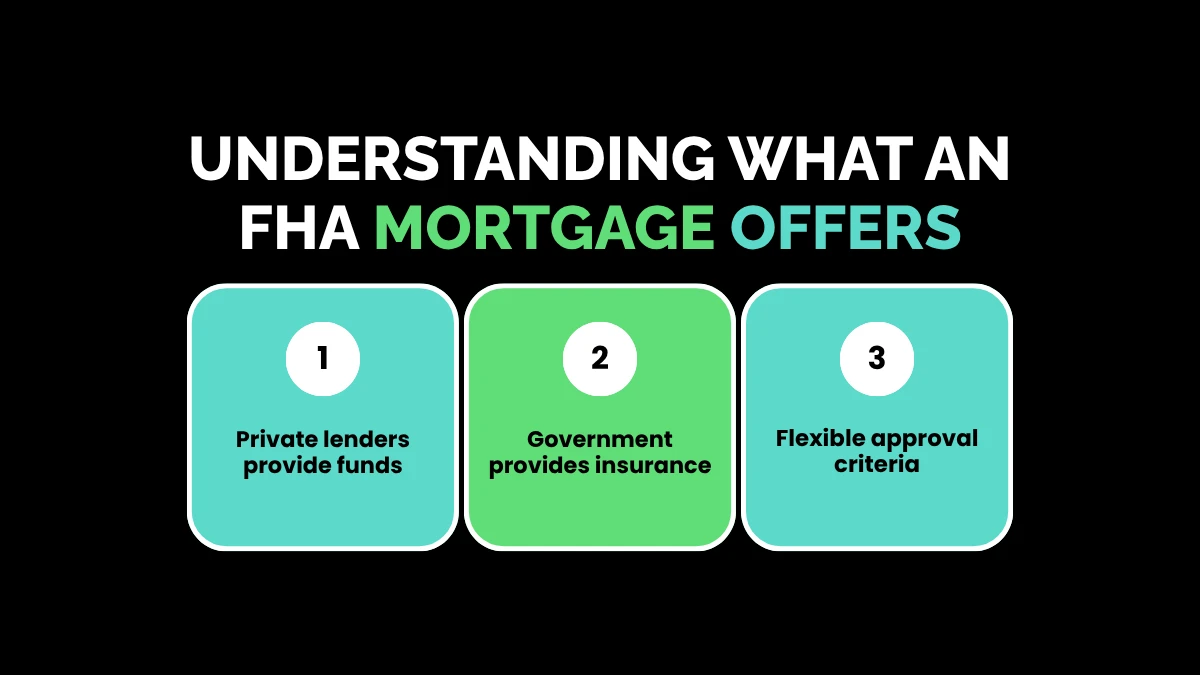
Understanding these foundational FHA mortgage facts helps you navigate the entire borrowing process smoothly. Because the government reduces financial risk for lenders, banks can offer much more flexible approval criteria. Learning about essential FHA loan requirements gives you a clear picture of what mortgage underwriters look for when reviewing your file.
When evaluating your housing choices, reviewing essential FHA loan benefits shows why millions of home buyers pick this path. From lower minimum credit score options to flexible down payment sources, FHA financing offers distinct advantages. Additionally, staying informed about core FHA loan rules ensures you avoid common approval delays during escrow.
20 FHA Loan Facts Every Home Buyer Should Know
1. FHA Loans Are Insured by the Government
The Federal Housing Administration does not lend money directly to home buyers.
Instead, private approved lenders issue the funds, while the government provides mortgage insurance.
This insurance protects lenders if a borrower happens to default on their monthly payments. These crucial FHA mortgage facts explain why banks willingly accept lower credit profiles.
2. You Can Buy a Home with a 3.5% Down Payment
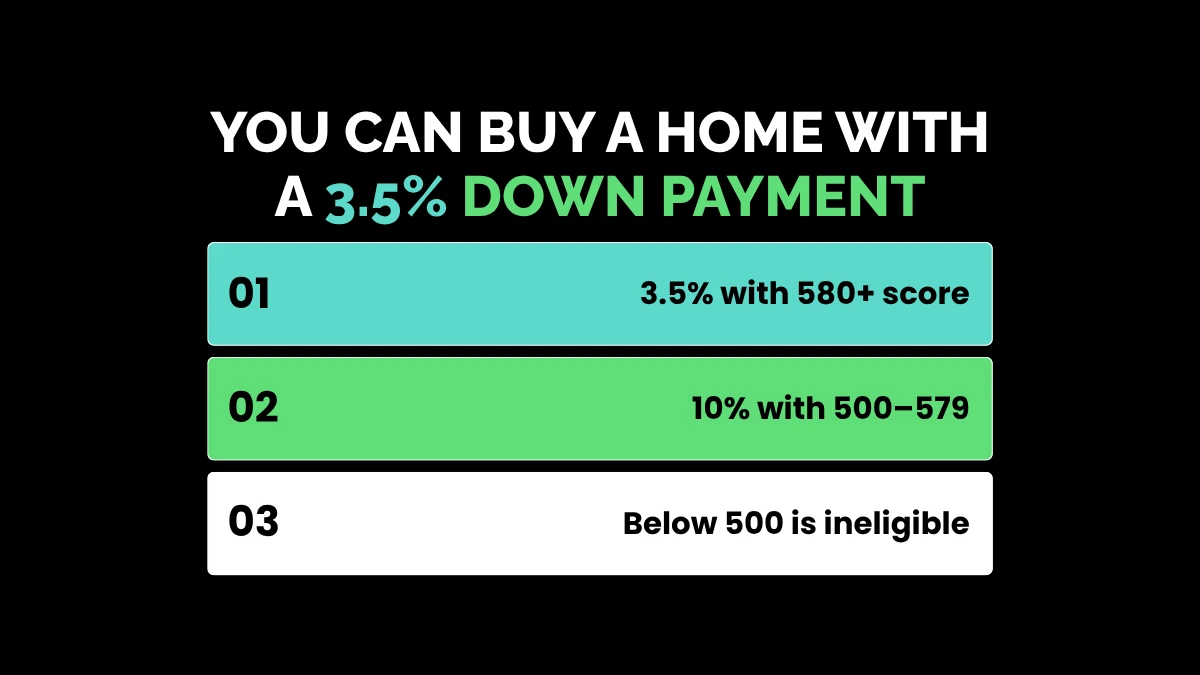
One of the biggest FHA loan benefits is the exceptionally low down payment threshold.
If your credit score is 580 or higher, you only need a 3.5% down payment.
| Credit Score Range | Minimum Down Payment Required |
| 580 or higher | 3.5% down payment |
| 500 to 579 | 10% down payment |
| Below 500 | Ineligible for FHA financing |
3. Credit Scores Can Be as Low as 500
Did you know you can qualify for an FHA mortgage with credit scores starting at 500?
While traditional conventional loans usually require at least a 620 score, basic FHA loan requirements are far more lenient.
However, scores between 500 and 579 will require a 10% down payment instead of 3.5% in most cases.
4. You Must Pay Two Types of Mortgage Insurance
FHA loans require both an Upfront Mortgage Insurance Premium (UFMIP) and an Annual Mortgage Insurance Premium (MIP).
UFMIP is currently set at 1.75% of the total base loan amount in most cases.
Annual MIP is spread out across your 12 monthly payments each year.
5. FHA Mortgage Insurance Often Lasts for the Life of the Loan
Unlike conventional loans where private mortgage insurance (PMI) disappears at 20% equity, FHA mortgage insurance usually stays put.
If you put down less than 10%, you pay annual MIP for the entire loan term.
Putting down 10% or more reduces this requirement to 11 years based on available data. Understanding key FHA loan rules around MIP prevents unexpected financial surprises later.
6. FHA Loan Limits Vary by County
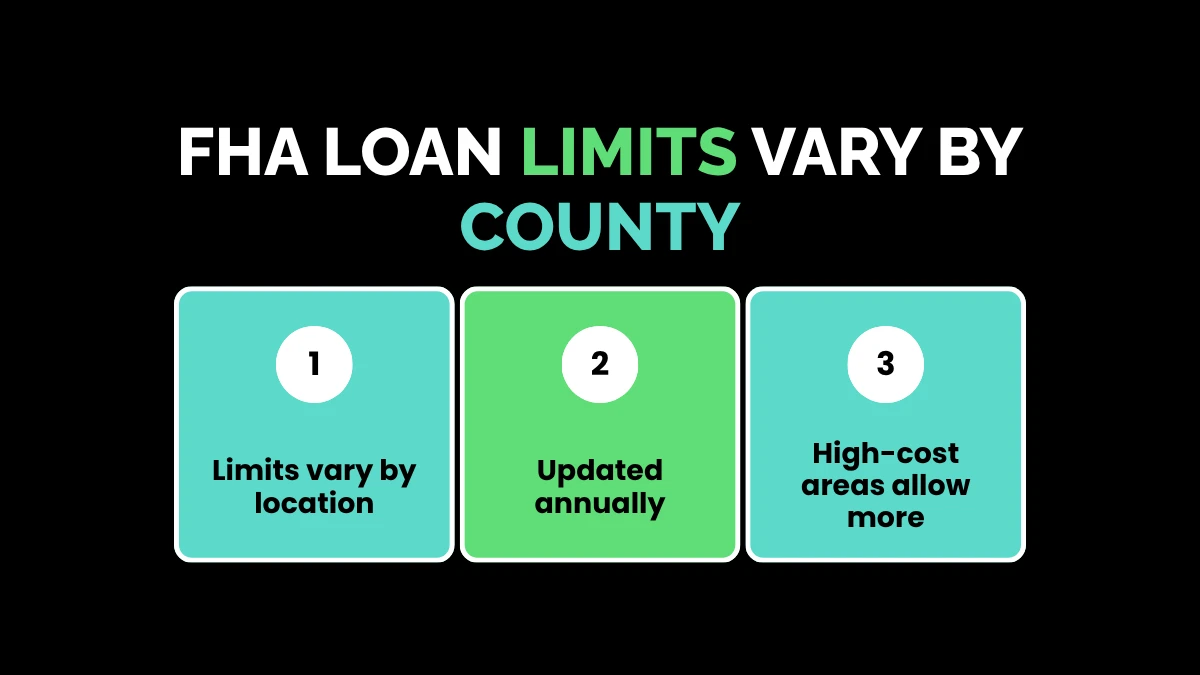
You cannot borrow an unlimited amount of money with an FHA home loan.
The Federal Housing Administration sets annual loan limits that adjust based on local housing markets and median sales prices.
| Region Type | Typical Standard Limit (1-Unit) | High-Cost Area Ceiling |
| Low-Cost Counties | ~$498,257 (estimated baseline) | Not applicable |
| High-Cost Counties | Variable | ~$1,149,825 (maximum ceiling) |
Checking local limits is an important step when gathering practical FHA home loan information.
7. Gift Funds Are Allowed for the Down Payment
Struggling to save up cash for your initial down payment?
FHA guidelines permit eligible family members, close friends, or employer assistance programs to gift 100% of your down payment funds.
This is another reason why taking advantage of FHA loan benefits helps first-time buyers get into homes faster.
8. FHA Loans Are Only for Primary Residences
You cannot use an FHA mortgage to purchase a vacation property or an investment home.
The borrower must occupy the property as their principal primary residence within 60 days of closing.
Standard FHA loan rules generally expect you to live in the home for at least one full year.
9. Multi-Unit Properties Are Eligible
Here is a cool strategy: you can purchase up to a 4-unit property using an FHA loan.
As long as you live in one of the units yourself, you can rent out the other three units to tenants.
This is a popular real estate strategy known as house hacking, highlighting key FHA mortgage facts for savvy investors.
10. The Home Must Pass an FHA Appraisal
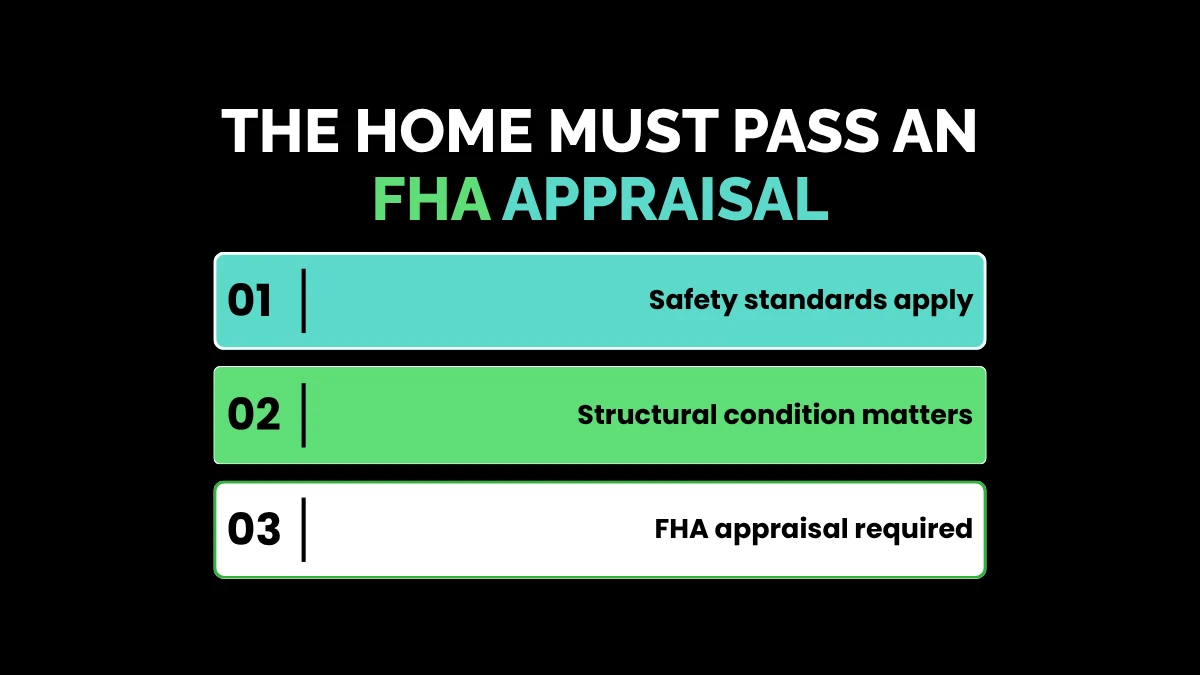
FHA appraisals are significantly stricter than standard market appraisals.
The appraiser must confirm that the property meets basic minimum property standards for safety, security, and structural soundness.
Understanding these FHA loan requirements helps sellers and buyers prepare properties before the final inspection.
11. Debt-to-Income Ratios Can Be Flexible
Lenders evaluate your Debt-to-Income (DTI) ratio to make sure you can comfortably afford your monthly payments.
Standard FHA loan rules prefer a maximum DTI of 43%.
However, with strong compensating factors like cash reserves, DTI approvals can reach up to 50% in most cases.
12. FHA Loans Are Fully Assumable
An assumable loan means a future buyer can take over your existing FHA mortgage rate and terms when you sell.
If mortgage rates rise significantly in the future, having an assumable low-rate mortgage makes your home very attractive.
Reviewing detailed FHA home loan information shows that buyers must still qualify with the lender first.
13. Student Debt Rules Are Borrower-Friendly
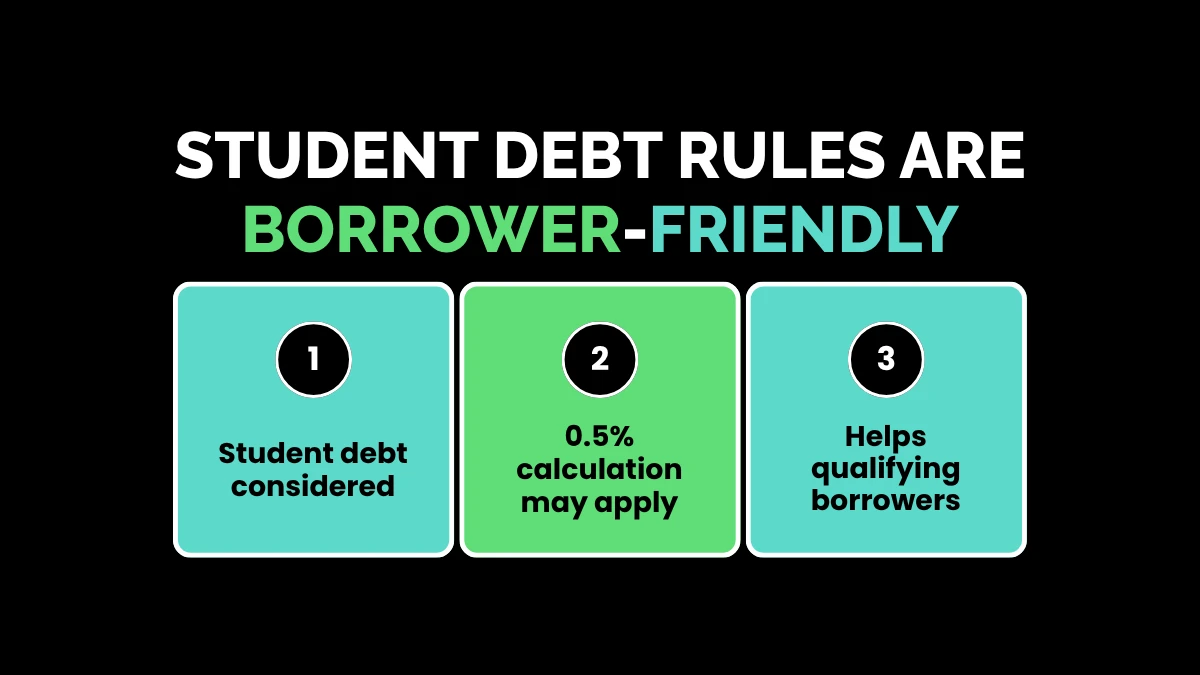
Previous guidelines made qualifying difficult for borrowers carrying significant student debt.
Updated regulations now calculate student loan payments at 0.5% of the total balance if no active payment plan is listed.
This improvement stands out among major FHA loan benefits for recent college graduates.
14. There Is No Income Cap for FHA Borrowers
Some buyer assistance programs restrict eligibility based on maximum earning caps.
FHA loans have absolutely no income limits whatsoever.
Whether you earn $40,000 or $400,000 annually, you can qualify as long as you meet standard FHA loan requirements.
15. Closing Costs Can Be Covered by Seller Concessions
FHA guidelines allow sellers to contribute up to 6% of the home’s purchase price toward your closing costs.
This includes costs like lender fees, title insurance, appraisal charges, and escrow deposits.
Knowing these FHA mortgage facts can save you thousands of dollars at the closing table.
16. You Can Qualify After Past Financial Hardships
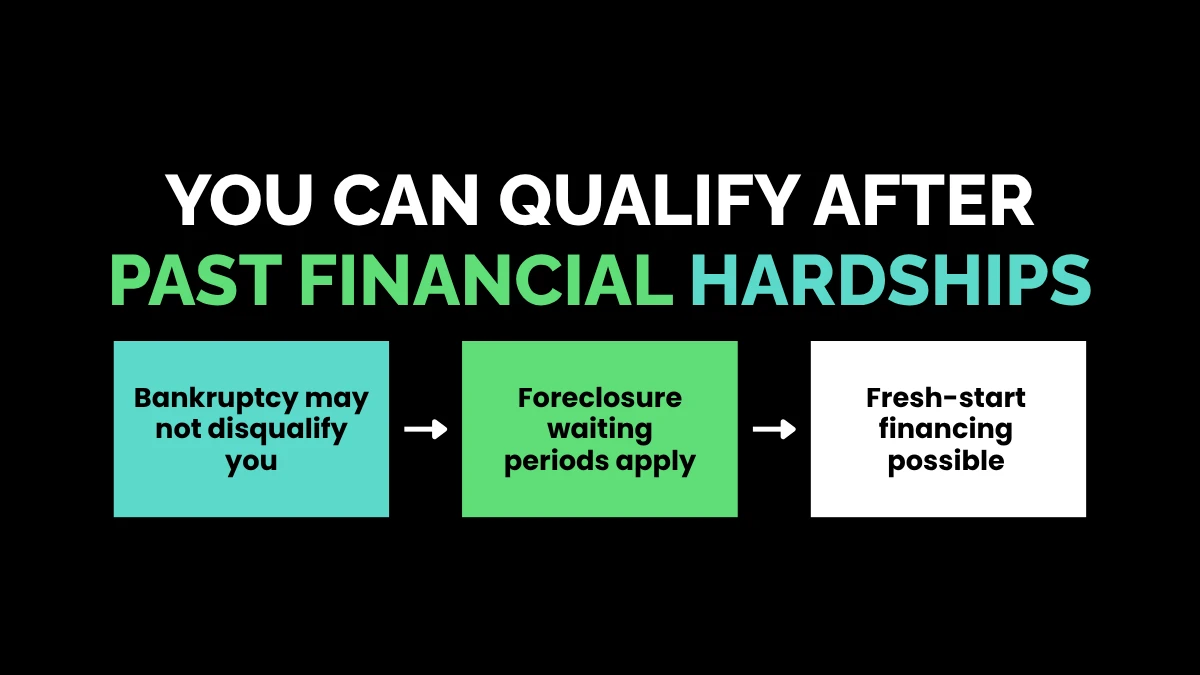
Have you experienced a bankruptcy or foreclosure in the past?
FHA guidelines offer reasonable waiting periods to give borrowers a fresh start.
Generally, you can apply two years after a Chapter 7 bankruptcy discharge and three years after a foreclosure event.
17. Non-Occupying Co-Signers Are Permitted
If your income or employment history falls slightly short, a family member can co-sign your loan.
The co-signer does not need to live in the property with you.
Their added income helps lower your total DTI ratio, fulfilling strict lender FHA loan requirements.
18. Interest Rates Are Highly Competitive
Because FHA loans carry government backing, lenders face lower overall risk.
This reduced risk allows mortgage companies to offer very competitive interest rates compared to conventional loans.
These attractive rates are among the top FHA loan benefits for budget-conscious buyers.
19. FHA Loans Offer Streamline Refinancing
When interest rates drop, FHA Streamline Refinance allows you to lower your monthly rate quickly.
This process requires minimal documentation, no income verification, and often no full appraisal.
It remains one of the most useful features for long-term homeowners.
20. Non-Permanent Residents Can Qualify
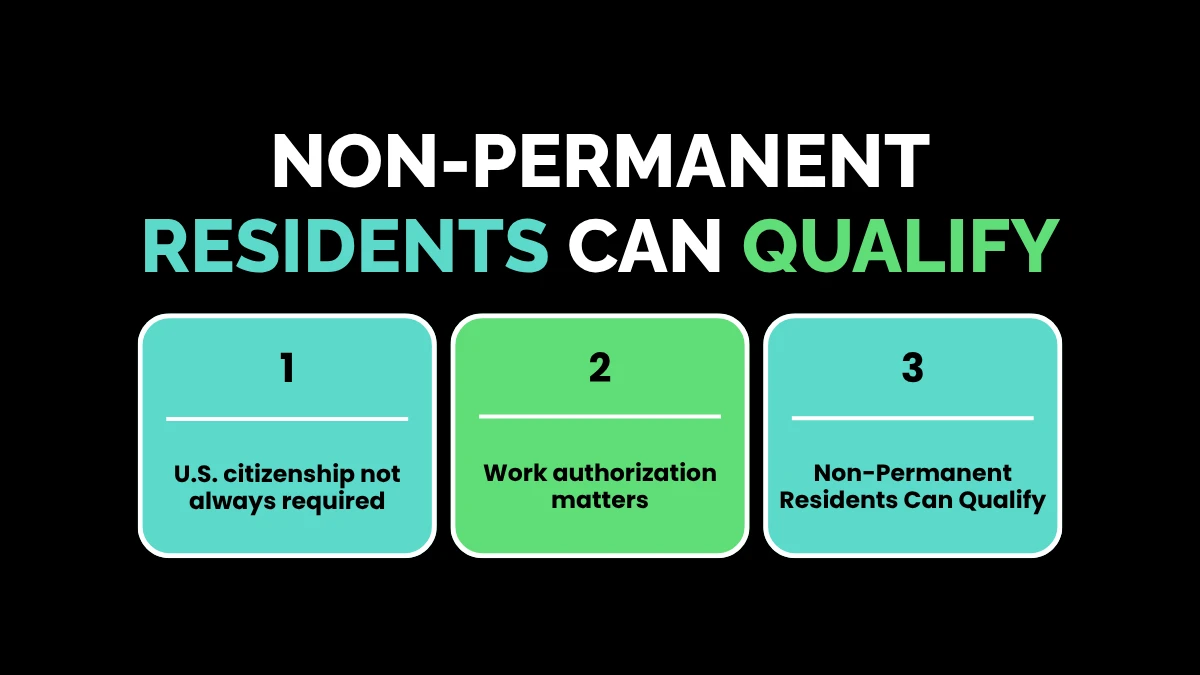
You do not need to be a U.S. citizen to get an FHA home loan.
Permanent resident aliens and non-permanent residents with valid work authorizations (like EAD cards) can apply.
Accessing verified FHA home loan information helps non-citizen buyers understand how immigration documentation satisfies lender guidelines.
Comparing FHA Loans vs. Conventional Loans
| Loan Feature | FHA Loan | Conventional Loan |
| Minimum Credit Score | 500 (with 10% down) or 580 (3.5% down) | 620 |
| Minimum Down Payment | 3.5% | 3% to 5% |
| Mortgage Insurance | Lifetime (in most cases) | Terminates at 20% equity |
| Property Types Allowed | Primary residence only | Primary, secondary, or investment |
| Seller Concessions Cap | Up to 6% | 3% to 9% depending on down payment |
Major Advantages of FHA Financing
- Lower Credit Score Barriers: Borrowers can qualify with credit scores starting as low as 500.
- Low Down Payment Thresholds: Put down as little as 3.5% with a qualifying 580 credit score.
- Generous Seller Contributions: Sellers can contribute up to 6% toward closing costs.
- Hassle-Free Streamline Refinancing: Lower interest rates later without undergoing a full appraisal.
Summary of Core FHA Loan Guidelines
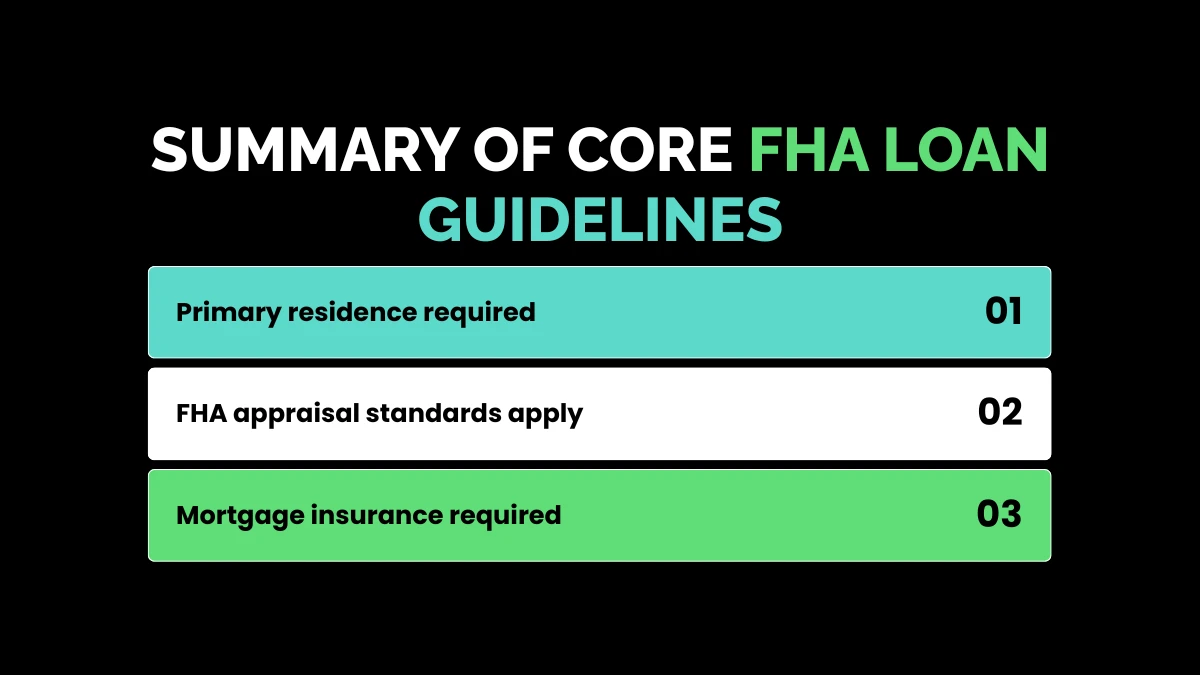
Navigating regulatory standards becomes much simpler when you review key requirements in a consolidated table format.
| Rule Category | FHA Standard Requirement |
| Occupancy Rule | Must move in within 60 days of closing and occupy as primary residence |
| Appraisal Criteria | Home must satisfy safety, security, and structural soundness standards |
| Mortgage Insurance | Requires 1.75% upfront UFMIP plus monthly annual MIP payments |
| County Loan Caps | Borrowing limits adjust annually based on local median home pricing |
Expert Insights on Navigating Home Financing
Buying a home is one of the largest financial commitments you will ever make in your lifetime. Understanding essential details ensures that you walk into the mortgage process with absolute clarity. Working with an experienced loan officer who understands specific FHA loan rules can save you both time and stress.
At Weird Wealth, our mission is to empower everyday buyers with actionable financial guidance. By examining core FHA mortgage facts, you can compare different loan options objectively. Taking time to review updated FHA home loan information puts you in the driver’s seat of your homeownership journey.
Conclusion
Navigating the home buying journey does not have to feel overwhelming when you know the basic facts. FHA loans offer exceptional flexibility with low down payment choices, relaxed credit standards, and competitive interest rates. Whether you are buying a single-family house or exploring house hacking options, understanding these rules gives you a distinct advantage.
Keep these FHA loan facts handy as you begin shopping for your dream home, and let Weird Wealth guide your journey toward financial freedom!
Frequently Asked Questions
What is the minimum credit score for an FHA loan?
The minimum credit score is 580 for a 3.5% down payment or 500 for a 10% down payment based on available data.
Can I buy an investment property with an FHA loan?
No, FHA rules require you to live in the home as your primary residence for at least one year after closing.
How long do you pay MIP on an FHA loan?
If you put down less than 10%, you pay annual MIP for the entire loan term in most cases.
Can seller concessions help with my down payment?
Sellers can contribute up to 6% toward closing costs, but concessions cannot directly cover your minimum required down payment.