

You can generally resell legally purchased estate sale items such as furniture, books, clothing, household decorations, ordinary collectibles, artwork, and many types of used electronics. However, the item must have been lawfully sold to you, and its resale must comply with applicable laws and marketplace rules. Recalled products, counterfeit goods, certain wildlife products, restricted medical equipment, and potentially stolen property require special attention.
Imagine walking into an estate sale on a quiet Saturday morning. The house is filled with objects that tell the story of someone’s life. There are books with handwritten notes, a wooden dining table, vintage lamps, framed paintings, old cameras, and a beautiful collection of porcelain dishes. You notice a small box containing three wristwatches. The price tag says $40 for the set.
A similar-looking watch is advertised online for $150. Suddenly, you’re wondering whether you’ve discovered an opportunity. Could you buy the watches, take them home, and resell them? In many cases, yes. But here’s where estate sale reselling becomes more interesting than ordinary bargain hunting. Buying an item at an estate sale doesn’t automatically mean it’s authentic, safe, unrestricted, or appropriate to list on every marketplace.
At Weird Wealth, we love finding useful value in overlooked places. Estate sales can be fascinating because they bring together objects from different decades, categories, and collecting communities. Yet a smart reseller needs more than a good eye for bargains. You need to understand ownership, resale restrictions, product safety, market demand, and actual profit.
Let’s explore what you can usually resell, what deserves extra caution, and how to build a small estate sale reselling business responsibly.
Key Takeaways
- Ordinary, legally acquired secondhand goods can generally be resold in the United States.
- Keep receipts and other records showing when and where you purchased items.
- Estate sale organizers must have authority to sell the property; don’t assume every object in a home is included.
- U.S. federal law prohibits offering recalled consumer products for sale, subject to applicable recall-remedy rules.
- Counterfeit merchandise cannot be presented as genuine.
- Some wildlife products, cultural artifacts, medical devices, hazardous goods, and other categories face legal restrictions.
- Marketplace policies can be stricter than general resale laws.
- Actual completed sales are more informative than unusually high asking prices.
- Profit calculations should include purchase costs, platform fees, transport, packaging, repairs, and time.
What Is an Estate Sale?

An estate sale is an organized sale of personal property, often involving furniture, household goods, collections, and other belongings. Estate sales frequently happen when someone dies, but they can also occur when a household is downsizing, relocating, or liquidating possessions.
A company may organize the event on behalf of the owner, executor, administrator, or another authorized representative.
Unlike a typical garage sale, an estate sale may involve much of a household’s contents. That creates an interesting mix of merchandise. You could find inexpensive kitchenware beside valuable antiques. However, the arrangement between the organizer and the property owner matters.
An estate sale company does not necessarily own everything it’s offering. It may be acting as an agent for the person or estate legally entitled to sell the goods. If an item’s ownership or inclusion in the sale is disputed, don’t purchase it until the issue is clarified.
Is It Legal to Buy Estate Sale Items and Resell Them?
Generally, yes, for ordinary lawfully acquired goods. In the United States, the legal principle commonly known as the first-sale doctrine permits many lawful owners of genuine physical goods to resell those particular copies or items without seeking new permission from the original copyright holder. But the doctrine isn’t a universal exemption.
Reselling goods can still involve trademark law, product safety requirements, restrictions on certain categories, contractual issues, and other legal obligations. For example, buying a genuine secondhand book is different from making unauthorized copies of that book and selling those copies. Likewise, owning a genuine watch doesn’t give you permission to manufacture replicas displaying its brand name.
And purchasing something prohibited from commercial sale doesn’t make the restriction disappear. The safest approach is to verify both lawful ownership and the legality of the specific item’s resale.
12 Estate Sale Items You Can Often Resell
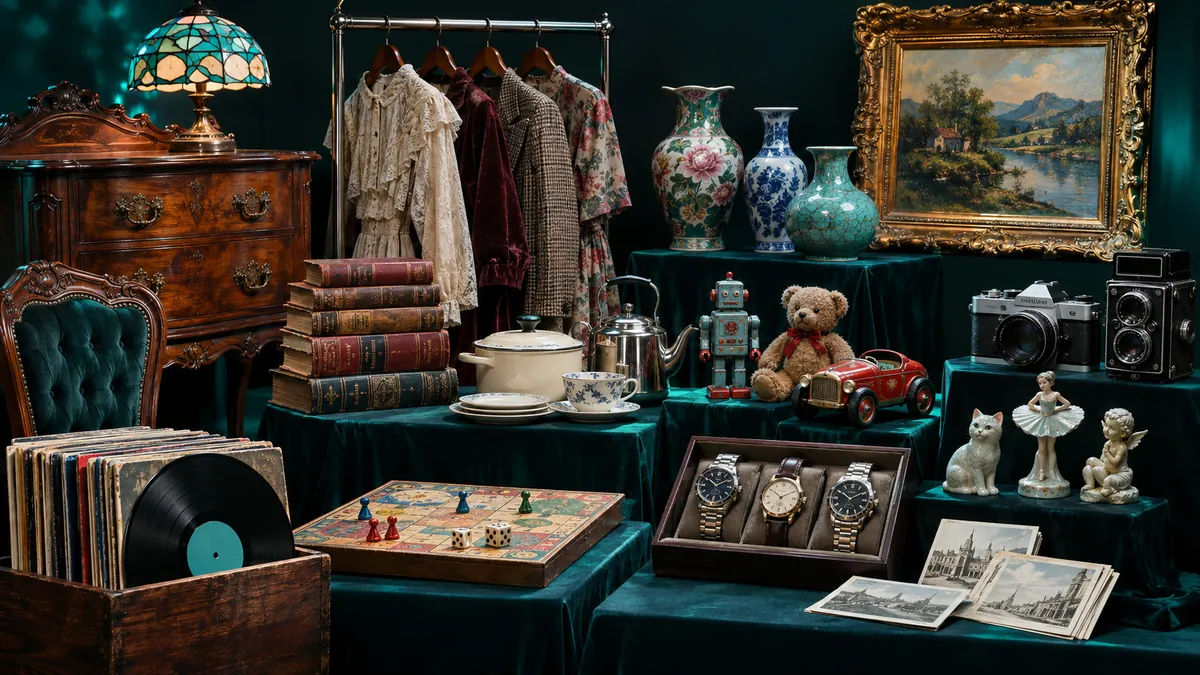
The following categories are generally worth researching, provided the individual products are authentic, safe, and legally transferable.
1. Vintage Furniture
Solid wooden tables, cabinets, chairs, and sideboards can attract buyers interested in restoration or distinctive interiors. Check structural integrity and damage. Large furniture introduces transportation and storage costs that can eliminate an apparent bargain.
2. Books
Ordinary secondhand books are a relatively accessible category. Special editions, signed copies, and out-of-print titles may appeal to collectors. Research the exact edition, printing, and condition before claiming scarcity.
3. Clothing
Vintage clothing, jackets, and accessories can be resold when permitted by local rules and marketplace policies. Inspect labels, sizing, fabric condition, and authenticity.bAvoid restricted or unsafe products, and disclose alterations and defects.
4. Home Decorations
Vases, mirrors, baskets, decorative boxes, and suitable household accessories may be practical resale inventory. These products often depend on appearance, condition, and shipping feasibility. A heavy mirror might attract a local buyer but cost too much to ship economically.
5. Ordinary Kitchenware
Certain dishes, serving trays, and utensils can interest buyers looking for replacement pieces or complete sets. Check for chips, cracks, and markings. Do not assume every vintage food-contact item is safe for modern food use. Items with uncertain lead content or other safety concerns deserve additional evaluation.
6. Artwork
Original paintings, prints, and decorative artwork may attract collectors. But signatures and handwritten labels aren’t proof of authenticity. Don’t claim that a painting is an original work by a famous artist without reliable evidence.
7. Collectible Toys
Some older toys attract collectors because of nostalgia, design, or scarcity. However, children’s products can present significant safety issues. Check recalls, applicable standards, and age-related restrictions before listing.
8. Watches
Genuine watches may have resale potential. Check model numbers, condition, repair history, and authenticity. A watch that resembles an expensive brand isn’t necessarily genuine. Authentication may be essential for valuable pieces.
9. Cameras
Film cameras, lenses, and accessories can appeal to photographers. Test functions where practical and describe any limitations accurately. Some older equipment may require specialist servicing.
10. Vinyl Records
Records can be appealing when their exact pressing and condition match collector demand. Research catalog numbers and relevant markings. Careful packaging is essential to reduce shipping damage.
11. Board Games
Complete vintage board games sometimes interest collectors and people replacing missing pieces. Count the components before listing. An incomplete set can still be worth selling honestly, but don’t describe it as complete.
12. Ordinary Collectibles
Souvenir spoons, postcards, advertising tins, figurines, and other unusual objects may have specialized buyers. Research comparable completed sales rather than assuming that an unfamiliar item is valuable.
Estate Sale Resale Categories: What Needs Caution?
| Item category | General approach | Main concern |
| Ordinary books and household decorations | Often resellable | Condition and ownership |
| Genuine clothing and accessories | Often resellable | Authenticity and marketplace rules |
| Furniture | Often resellable | Structural safety and transport |
| Electronics | Additional checks | Recalls, safety, personal data |
| Children’s products | High caution | Recalls and safety standards |
| Branded luxury goods | Authentication needed | Counterfeits |
| Wildlife-derived objects | Specialist legal review | Protected species and trade laws |
| Historical artifacts | Specialist legal review | Provenance and ownership |
| Medical devices and medicines | Restricted or prohibited in some circumstances | Licensing, safety, platform rules |
| Hazardous or regulated products | Usually avoid without qualified review | Legal and shipping restrictions |
This table is a U.S.-oriented starting point, not a definitive legal classification of every item.
What Can’t You Legally Resell From Estate Sales?
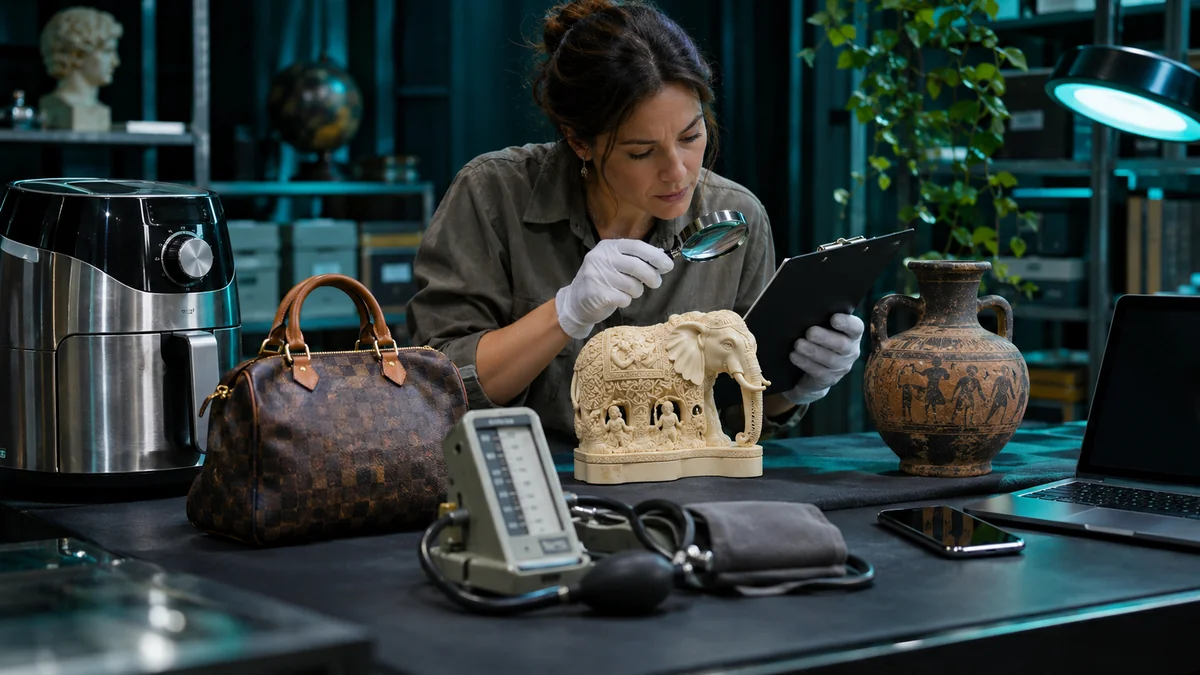
There isn’t one simple list covering every jurisdiction. However, several categories present serious concerns. Recalled Consumer Products This is one of the clearest rules. The U.S. Consumer Product Safety Commission explains that it is unlawful to sell or offer recalled consumer products for sale.
That applies to secondhand sellers, including people listing products online. If a product has been recalled, check whether an official corrective remedy exists and whether it has been properly completed. Otherwise, don’t list it.
Counterfeit Products
An estate sale might include a handbag or watch that looks like an expensive branded item. But appearance isn’t proof. eBay’s counterfeit policy requires sellers to be certain that items they list are genuine. If you can’t establish authenticity, don’t advertise the product as genuine.
Protected Wildlife Products
Objects containing ivory, protected animal materials, or parts of regulated species can involve serious restrictions. Age, inherited ownership, and an estate sale receipt do not necessarily make commercial trade lawful. Seek specialist legal guidance rather than assuming antique status creates an exemption.
Restricted Cultural Artifacts
Archaeological objects, certain antiquities, and culturally significant items may involve ownership, provenance, import, or repatriation issues. Don’t sell an object with questionable origins simply because it was found in an old house.
Medicines and Restricted Medical Devices
Old medicine cabinets can contain prescription products, medical equipment, or devices with legal resale limitations. These are not ordinary collectible inventory. Check applicable restrictions and approved disposal procedures.
Potentially Stolen Property
If there are credible reasons to suspect an item was stolen or the seller lacked authority, stop the transaction. An estate sale receipt isn’t a guarantee that every ownership dispute has been resolved.
How to Check Product Recalls Before Reselling
The CPSC maintains an official recall database. Search the manufacturer, product name, and model number. Check the item’s identifying labels and compare the specifications carefully. A similar product name doesn’t necessarily establish that a particular model is covered by a recall. The CPSC also advises secondhand sellers to inspect products closely and identify safety hazards.
An item looking undamaged isn’t enough to establish compliance. This is especially important for infant furniture and other products intended for children.
The Weird Wealth CLEAR Framework
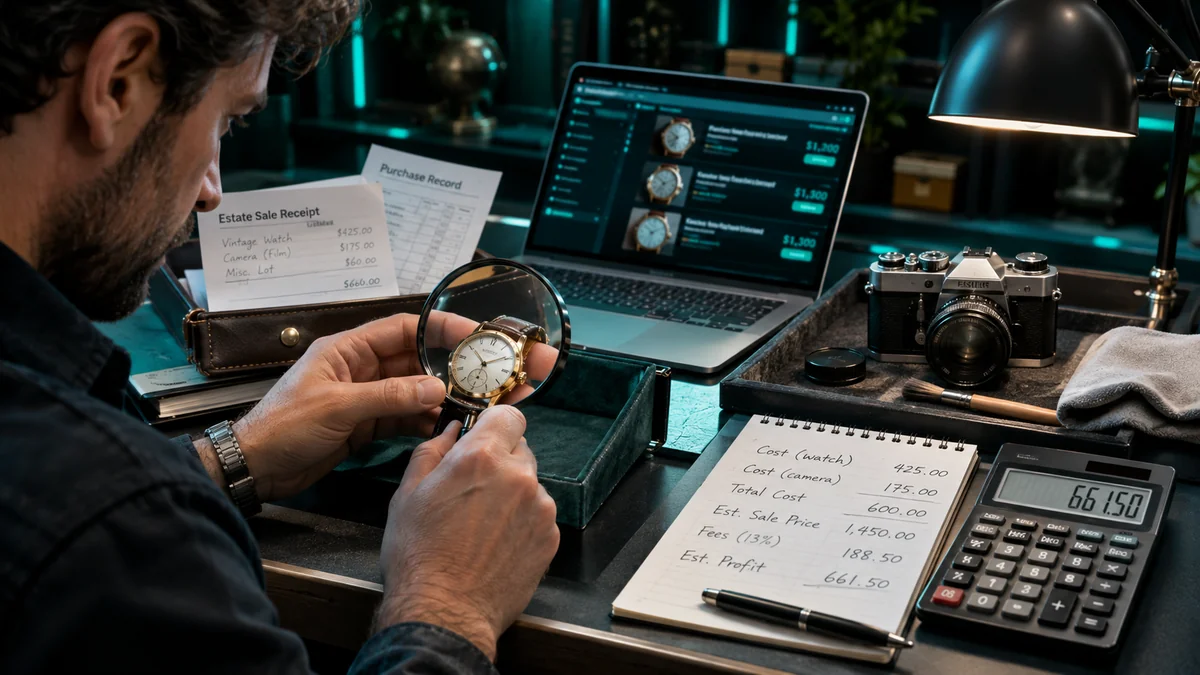
Here’s our original approach to evaluating estate sale inventory. We call it the CLEAR Framework.
C — Clear ownership: Was the item sold by someone authorized to transfer it?
L — Legal resale: Is the item permitted under applicable laws and marketplace policies?
E — Evidence of value: Have genuinely comparable items sold for worthwhile prices?
A — Authenticity and condition: Can you accurately identify the item and disclose its condition?
R — Real profit: Will the remaining margin justify the time, transportation, repairs, and other costs?
This framework prevents a common beginner mistake.
People often evaluate an item based on its potential selling price before checking whether they should sell it at all. Legal and safety questions come first. Profit comes afterward.
How to Price Estate Sale Items Without Guessing
Suppose you find a vintage table lamp for $18. You discover comparable lamps advertised for $100. That might sound promising. But look for completed sales of genuinely similar models. Imagine comparable lamps in equivalent condition have sold for $55, $68, and $75.
Those transactions provide a more grounded basis for your estimate. Now calculate the cost of actually selling yours.
A Hypothetical Profit Example
| Expense or revenue | Amount |
| Selling price | $68 |
| Estate sale purchase | −$18 |
| Marketplace and payment fees | −$9 |
| Packaging materials | −$4 |
| Seller-paid shipping | −$15 |
| Cleaning and other supplies | −$3 |
| Contribution before labor and taxes | $19 |
These are fictional planning figures, not guaranteed market prices or platform fees. The lamp appears to offer a $50 difference between purchase and resale prices. But after expenses, only $19 remains before accounting for your time, overhead, and taxes.
That’s a very different business proposition.
How to Avoid Buying Items That Won’t Sell
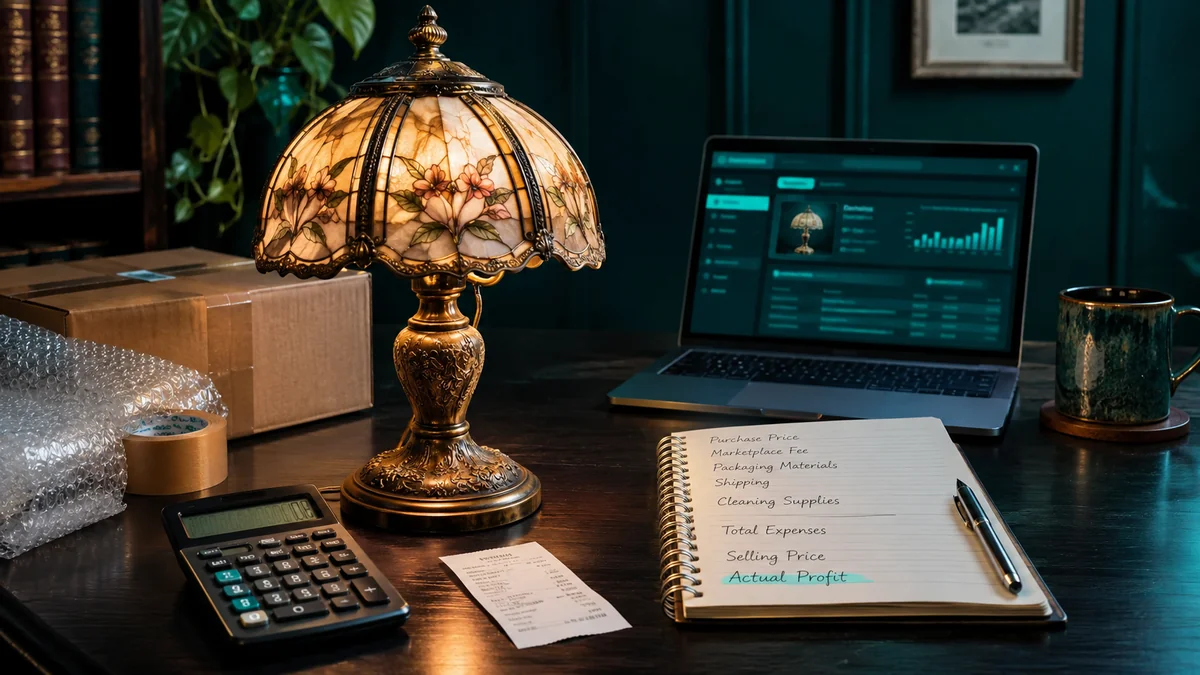
Estate sales create urgency. An interesting object may be available for only a few minutes before another buyer takes it. That pressure can encourage poor decisions. Instead, establish a buying policy before arriving. For example, you might focus on two categories you understand well.
Check completed sales and condition. Estimate transaction and shipping costs. Set a maximum purchase price. And be comfortable leaving without buying anything. A good reseller doesn’t need to purchase something at every event. Sometimes the most profitable decision is to keep your money.
Estate Sale Reselling vs. Thrift Store Flipping
Both involve buying goods for resale, but the sourcing experiences differ. Estate sales may contain concentrated collections, unusual furniture, and household objects with identifiable histories. Thrift stores generally receive a changing mixture of donated or otherwise acquired goods. Neither source guarantees cheaper merchandise or better profit.
Estate sales may have strict pickup times, final-sale policies, or separate arrangements for high-value items. Thrift stores may offer more predictable opening hours. Choose sourcing methods based on the categories you understand and the costs you can manage.
How to Build a Simple Reselling Inventory System
You don’t need sophisticated software to begin. A spreadsheet can track essential information. Record the purchase date, sale location, item description, identifying marks, acquisition cost, condition, expected selling price, and actual selling price. Include expenses such as transport, packaging, repair, and platform fees.
Keep receipts and photographs. For electronics, remove personal data appropriately before resale. If you cannot securely erase information or verify that a device is safe and legally transferable, don’t list it casually. Accurate records also make tax preparation and profitability analysis easier.
Do You Need to Pay Taxes on Estate Sale Reselling?
In the United States, reselling goods for profit can create taxable income. The IRS distinguishes business activity from hobby activity based on the overall circumstances, including profit motive, recordkeeping, time invested, and businesslike operations. A person occasionally selling a personal possession is not necessarily in the same situation as someone regularly purchasing estate sale inventory for resale.
If you operate a resale business, inventory accounting, business expenses, sales taxes, and relevant licensing may apply. Requirements vary by state, locality, and selling channel. Keep records and seek qualified tax advice when necessary.
A 30-Day Estate Sale Reselling Experiment
Week One: Choose Your Categories
Select two relatively straightforward product categories. Research authenticity, safety restrictions, and comparable sales.
Week Two: Visit Sales Carefully
Inspect available items. Purchase only inventory you can legally and economically resell. Keep purchase records.
Week Three: Prepare Listings
Clean items using appropriate methods. Photograph the actual condition, research prices, and prepare accurate descriptions.
Week Four: Measure Results
Review inquiries, completed sales, expenses, and unsold inventory. Track which categories produce genuine buyer interest. Don’t automatically reinvest everything until you understand the economics. A month may not be long enough to sell specialized collectibles. The experiment is meant to develop evidence, not promise immediate income.
Frequently Asked Questions
Can you legally resell estate sale items?
Generally, yes, if the items were lawfully acquired and their resale complies with applicable legal and marketplace requirements.
Can you sell antique furniture from an estate sale?
Ordinary legally acquired antique furniture can generally be resold, subject to applicable safety, ownership, and other restrictions.
Can you resell estate sale clothing?
Usually, yes, provided the items are genuine, appropriately described, and permitted by the relevant marketplace and laws.
Can you resell recalled products?
Under U.S. federal consumer product safety law, selling or offering recalled products is generally unlawful. An official completed recall remedy may change the product’s resale status.
Can you sell fake designer goods if you disclose they’re fake?
Disclosure doesn’t automatically make counterfeit goods legal or marketplace-compliant. eBay prohibits counterfeit items.
Can you sell ivory found at an estate sale?
Ivory and other protected wildlife products can be subject to strict restrictions. Do not assume resale is permitted without appropriate expert review.
Do you need a business license to flip estate sale items?
Requirements depend on your location and business activities. Regular resale operations may involve business registration, sales tax, or other obligations.
Are estate sales profitable for resellers?
Some items can be profitable, but outcomes depend on purchase prices, demand, fees, shipping, condition, and unsold inventory.
What should beginners buy at estate sales?
Start with lawful, easy-to-identify items in categories you understand. Avoid high-risk merchandise requiring specialist authentication or regulatory expertise.
Final Thoughts
There’s something wonderful about objects finding a second life. A dining table might become the centerpiece of a young family’s home. An old camera could inspire someone to try film photography. A forgotten book might end up in the hands of a reader who’s been searching for that edition for years.
Estate sales can bring those connections together. And if you understand the market, they may create a genuine income opportunity. But profit should never come before ownership, authenticity, or safety. A good bargain isn’t worth much if the product cannot legally be sold.
At Weird Wealth, we believe sustainable reselling starts with informed decisions rather than lucky guesses. Learn the rules. Understand your categories. Keep accurate records. And make sure the numbers still work after every expense. The best estate sale reseller isn’t the person who buys the most interesting things. It’s the person who knows which items can be sold responsibly, which buyers might want them, and when to walk away.