Finding the right business idea isn’t really about stumbling onto something completely new. It never really is. Most of the time it just comes down to spotting a real problem, figuring out exactly who’s dealing with it, and doing it a bit better, or a bit easier, than whoever’s already out there.
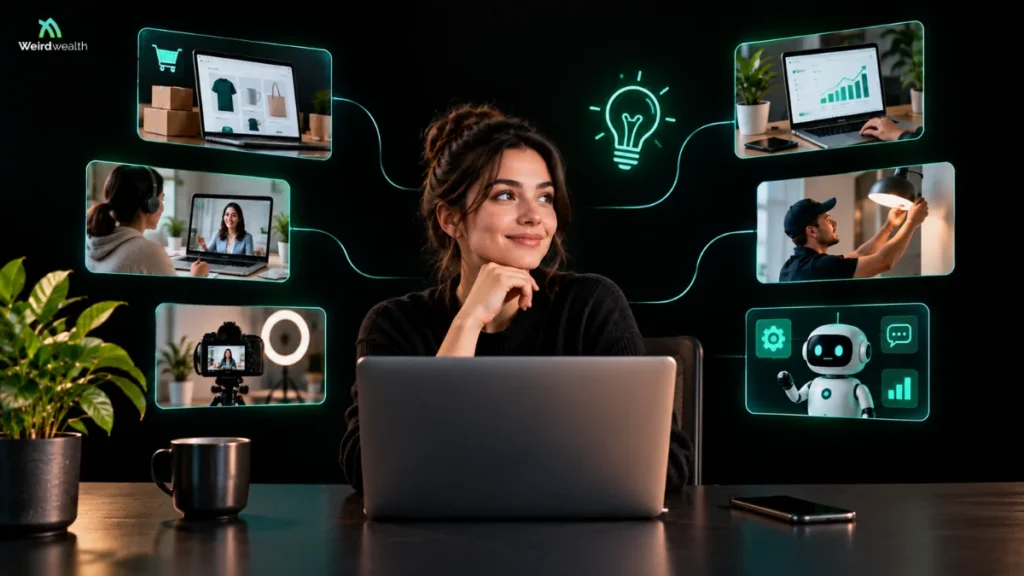
In 2026 that could mean selling online. Could mean offering some specialized service. Could mean using AI to just move faster than everyone else. Or honestly, it could just be something simple, a small local business built around whatever people already need on a normal day.
Nobody really tells you this part upfront, but the best idea isn’t always the one dangling the biggest paycheck. What actually matters is whether it fits you. Your skills. Your budget. The time you can genuinely give it.
The customers you can realistically reach without trying to be everywhere at once and burning out. The SBA doesn’t overcomplicate this either. Check the demand. See how big the market really is.Look at who you’re actually competing against. Get your pricing right. And genuinely understand what customers need before any real money’s on the line.
Key Takeaways
- Don’t chase trends. Build around a problem people actually have.
- Services are the easier starting point, honestly. Less inventory, less money tied up before you even know if it works.
- Nobody remembers “I do everything.” A tight niche sticks in people’s heads a lot better.
- AI speeds things up, sure, but it’s still your judgment doing the heavy lifting, not the tool’s.
- Before you spend real money, actually check the demand, the competition, the pricing, what people need.
- Keep it small at first. Watch what real customers respond to. Grow the stuff that’s actually working, not what you assumed would.
1. AI-Assisted Content Service
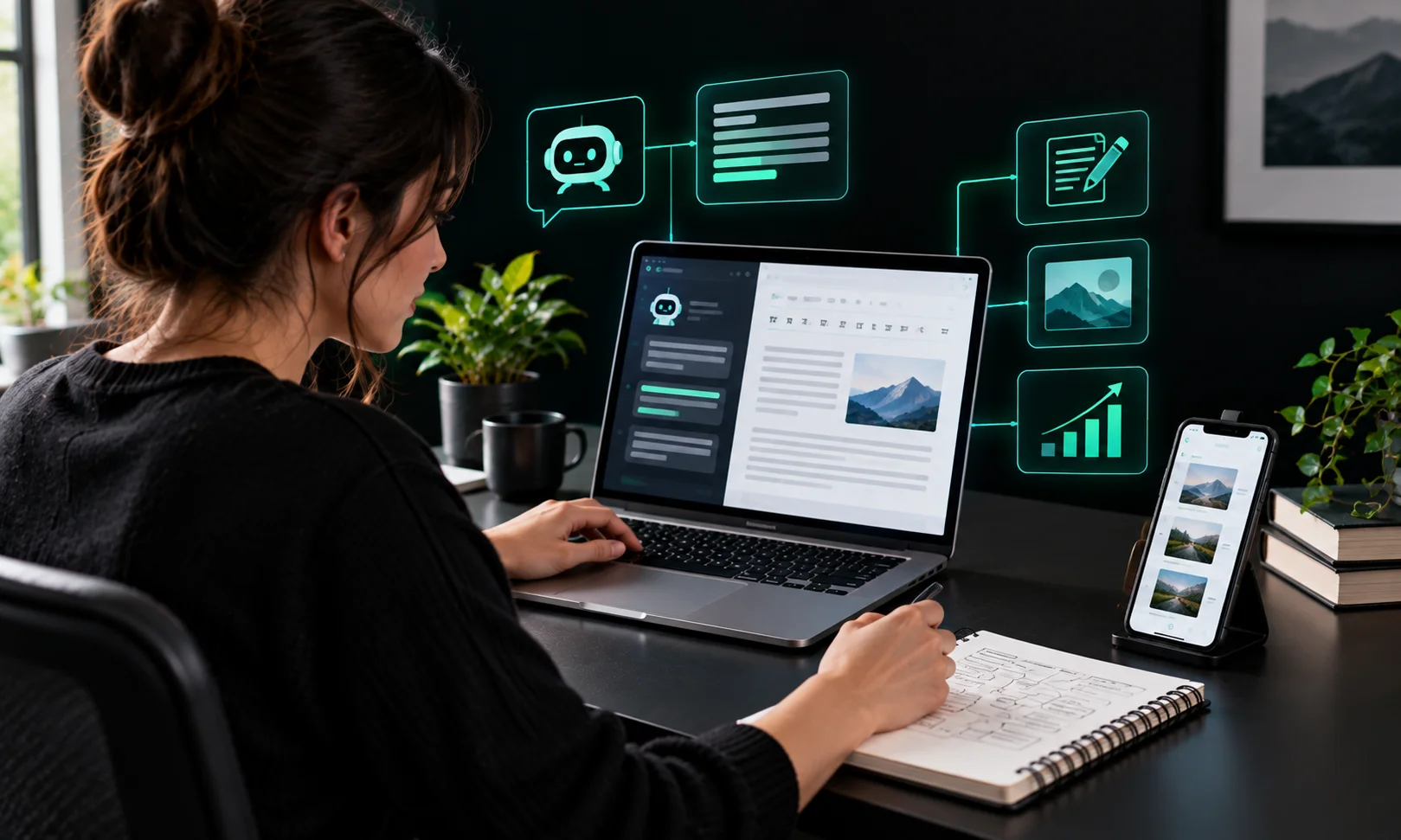
Every business needs website copy, product descriptions, newsletters, social posts, that kind of stuff, constantly. You can offer this as a service and lean on AI for the research, the brainstorming, the editing, all the repetitive grunt work nobody enjoys, while you stay in the driver’s seat doing the actual human review before anything goes out the door.
2. SEO and Local Search Service
A lot of small companies have a website sitting there, but they’re basically invisible whenever someone actually searches for what they do. An SEO service can step in here, fixing technical issues, planning out content, sorting internal linking, boosting local visibility, and putting together reports that actually show whether any of it’s working.
3. Virtual Assistant Business
A virtual assistant can take scheduling, inbox organization, customer messages, research, data entry, basic reporting, and a bunch of other admin work off someone’s plate entirely.
4. Online Tutoring
If you’re genuinely strong in a subject, tutoring turns that knowledge into a pretty straightforward service. Math, languages, programming, accounting, exam prep, school subjects- all of it works well delivered online.
5. Niche Ecommerce Store

You don’t need thousands of products to build a real online store. Actually, a focused one, built around one specific interest, one problem, or one customer group, tends to work a lot better than trying to cover everything.
Think useful accessories, hobby products, personalized items, or just a carefully chosen set of everyday goods people actually reach for. Print on demand and dropshipping can take the inventory headache off your plate, but supplier quality, shipping times, margins, and customer service still need real attention either way; that part doesn’t get outsourced.
6. Digital Products
Templates, checklists, spreadsheets, design assets, study resources, guides- all of this stuff is appealing because there’s no physical inventory involved at all.
7. Social Media Management
Small businesses usually know they should be posting consistently; they just don’t have the time to plan, create, publish, and actually keep an eye on what’s working.
8. Short-Form Video Editing
Short videos aren’t going anywhere; they’re still huge for brands, creators, educators, local businesses, basically everyone. A video editing business can take long recordings, podcasts, product footage, or just some raw phone clips and turn them into tight, shareable videos people actually watch till the end.
9. Website Setup for Small Businesses
Plenty of small businesses want a website that actually looks professional, but they don’t need some overbuilt custom platform to get there. Simple setups, landing pages, basic ecommerce stores, and ongoing updates once it’s live- that’s usually all they actually need.
10. Home Cleaning Service
Not every solid business idea lives online. Cleaning services can start with just basic equipment and grow slowly through repeat customers telling their friends.
11. Pet Care Service
Pet owners need people they can actually count on when they’re at work, traveling, or just can’t be there. Dog walking, pet sitting, basic grooming, pet transportation- all of that can turn into steady, recurring work once you’ve got a few loyal clients.
12. Home Organization Service
People often have way more stuff than time to actually organize it. A home organization business can help with wardrobes, kitchens, storage rooms, home offices, and getting a house ready to move.
13. Mobile Car Detailing
A mobile detailing business comes straight to the customer instead of the other way around. Depending on your equipment and local rules, services can cover exterior cleaning, interior cleaning, polishing, and full detailing packages.
14. Specialized Consulting
Got real professional experience in something businesses already pay good money for? Consulting’s probably one of the leanest ways to actually test that out. Marketing, bookkeeping, cybersecurity, recruiting, operations, branding, process improvement- any of that counts, as long as you’ve genuinely done the work before.
15. AI Workflow Setup for Small Businesses

AI’s not just for writing anymore; it’s crept into a lot more than that. Small businesses can lean on it for repetitive tasks, customer support, content workflows, meeting summaries, internal organization, data analysis; the list keeps growing. The SBA’s advice here is pretty sensible too: start small, actually check whether the tool’s creating real value, and think through the risks before you start relying on it more heavily.
How to Actually Choose the Right Idea
The idea that sounds most exciting on paper isn’t always the right one for you, specifically you. Start by being honest about four things. What you’re actually good at. What your real budget looks like. How much time you can genuinely commit. And who you can actually reach as a customer.
Then, before you put real money behind it, test it first. The smartest first move is almost always something small and low-risk, something that teaches you what customers actually care about before you even think about scaling. Go talk to potential customers yourself.
Look closely at your competitors. Compare what they’re charging. Look for actual proof that people are already paying for something similar. Market research isn’t just a formality either, it shows you whether the demand’s really there and how crowded that space already is.
Here’s a quick test worth running on yourself. Can you explain the problem you solve in one sentence? Can you name exactly who actually needs it? Can you describe exactly what they get for their money? If you’re stumbling on any of those three, the idea probably needs sharpening before you go any further with it.
How to Start Without Overcomplicating Everything
You don’t need a perfect logo, an expensive office, or a massive product catalog on day one. Build the smallest possible version of the business that can still produce a real result for a real customer.
For a service business, that might mean one service, one target customer, and one simple offer to start. For an ecommerce business, it might mean testing a small product range before buying a ton of inventory upfront. For a digital business, it might just mean creating one genuinely useful product and seeing whether people actually want it before building ten more.
What Makes a Business Guide Actually Trustworthy?
Good business advice should be practical and honest, grounded in how things actually work, not hype dressed up as strategy. What’s covered here sticks to real, established business models and genuine opportunities out there right now, not some promise of guaranteed income, because let’s be honest, nobody can actually promise that.
Startup costs, demand, competition, legal stuff, profitability- all of it shifts depending on your industry and where you’re located.
Because of that, treat income claims and “easy money” promises carefully, wherever you see them. A business idea is really just an opportunity. Execution, customer demand, pricing, service quality, and financial discipline are what actually determine whether it becomes a sustainable business or not.
The SBA backs this approach too, emphasizing market research, competitive analysis, startup cost planning, and genuinely understanding your customer before you launch anything.
Google’s current search guidance keeps pushing for useful, reliable, people-first content, and its August 2026 site reputation policy update further clarifies Google’s efforts against content built mainly to manipulate search rankings.
For a guide like this one, that means real usefulness and genuine value need to come before keyword placement or any kind of search engine trickery.
FAQs
Best idea for someone just starting?
No single answer, really. Depends on you. But service stuff, tutoring, virtual assistant work, cleaning, content, social media management- that’s usually the easier entry point. You’re selling a skill, not stocking a warehouse.
Can I actually do this with barely any cash?
Yeah. Online services, tutoring, digital products, local gigs- most of that starts cheap. What you’ll spend comes down to gear, software, whatever registration your state wants, and marketing. Varies a lot from person to person.
Is online still worth it in 2026?
It is, but don’t kid yourself; the competition’s fierce out there. What actually works is a tight niche, something people genuinely want, a good experience once they buy, and a real way to keep reaching them. Just posting a product online and hoping? That’s not a strategy.
How do I know if this idea’s actually good?
You don’t. Not until you test it. Go talk to people who’d actually buy this. Check out who’s already doing it. Compare what they’re charging. Run a tiny version of your idea and watch what happens. That feedback tells you fast whether it’s real or not.
Solo or partner up?
Either can work. Solo is simpler, faster, and nobody to run decisions by. A good partner adds skills or money or connections you don’t have. Just lock down who does what, who owns what, and how money gets split before anything’s official.