

Key Takeaways
-
Annual salary of $85,000 equals $40.87 per hour.
-
Standard calculation assumes a 40-hour work week.
-
Gross pay differs significantly from net take-home pay.
-
Taxes and benefits impact your final paycheck amount.
Introduction
Have you ever stared at a job offer letter or your own pay stub and wondered, “$85,000 a year is how much an hour?” You are definitely not alone.
It is one of the most common questions professionals ask when trying to map out their financial future. Understanding how your annual salary breaks down into an hourly wage is essential for budgeting and negotiating raises.
If you are currently earning $85,000 annually and working a standard 40-hour work week, your hourly rate comes out to approximately $40.87. While that headline figure feels great, it is important to remember that it represents your gross income.
At Weird Wealth, we believe that true financial literacy starts with understanding the difference between the salary you are promised and the actual take-home pay you use to cover your daily expenses.
Throughout this guide, we will break down the math, the taxes, and the factors that influence your 85000 salary hourly wage so you can navigate your finances with total confidence.
AI Overview
An annual salary of $85,000 results in an hourly wage of about $40.87, assuming a standard 40-hour work week over 52 weeks (2,080 working hours). However, 85000 a year is how much an hour is just the start. Your actual take-home pay will be lower after accounting for income taxes, social security, health insurance premiums, and potential retirement contributions, making it essential to analyze your net pay rather than just the gross annual amount.
The Math Behind Your Salary
To really understand your worth, you need to master the math. When you ask, “$85,000 a year is how much an hour?”, the calculation is actually quite simple.
Most employers define a full-time position based on a 40-hour work week. Over the course of a year, that totals 2,080 working hours.
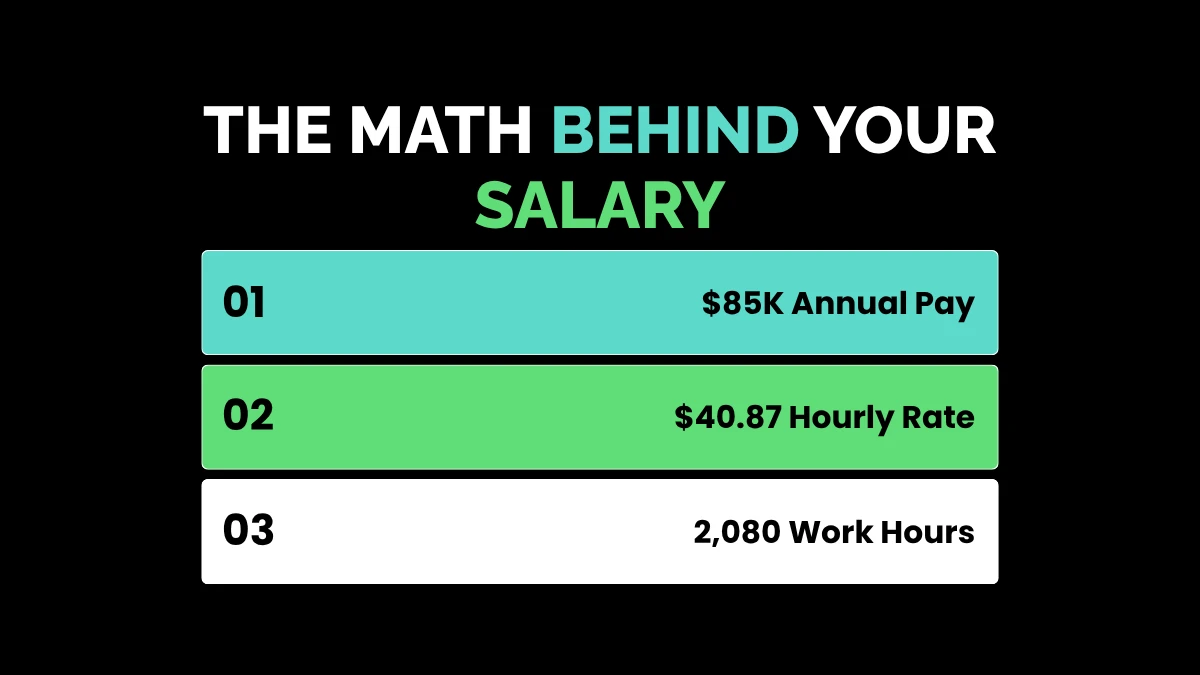
By dividing your $85,000 base salary by these 2,080 hours, you arrive at the standard hourly rate. It helps to visualize how this breaks down across different pay periods.
| Timeframe | Gross Earnings |
| Yearly | $85,000 |
| Monthly | $7,083 |
| Bi-Weekly | $3,269 |
| Weekly | $1,635 |
| Hourly | $40.87 |
It is worth noting that if your contract stipulates a different number of hours, your hourly rate will shift. For example, if you are required to work 37.5 hours per week, your 85000 salary hourly wage would mathematically increase to approximately $43.59 per hour.
Understanding this variation is vital for anyone working in industries that do not follow the standard 40-hour model.
Why Gross vs. Net Pay Matters
Many people make the mistake of calculating their lifestyle based on the $85,000 figure. This often leads to unnecessary budgeting stress.
In reality, your 85000 salary after taxes is the only number that truly counts toward your mortgage, groceries, and savings. When you receive your paycheck, you will notice that several items are removed before you even see the money.
Federal and state income taxes are the most significant deductions for most employees. Depending on your tax bracket and location, these can take a substantial bite out of your earnings.
Additionally, you have mandatory contributions like Social Security and Medicare, often referred to as FICA taxes. These are non-negotiable and usually represent about 7.65% of your gross pay.
Beyond government mandates, your company’s benefits package also impacts your take-home pay. Health insurance premiums, vision and dental plans, and voluntary contributions to retirement accounts like a 401(k) or 403(b) all reduce your immediate cash flow.
While these deductions are technically for your benefit, they still lower your net paycheck.
The Realities of Your 85k Per Hour Calculation
When you perform an 85k per hour calculation, you should be aware of the “hidden” factors that affect your daily earnings. Factors like your filing status, whether you are single, married filing jointly, or head of household, will significantly alter your tax burden.
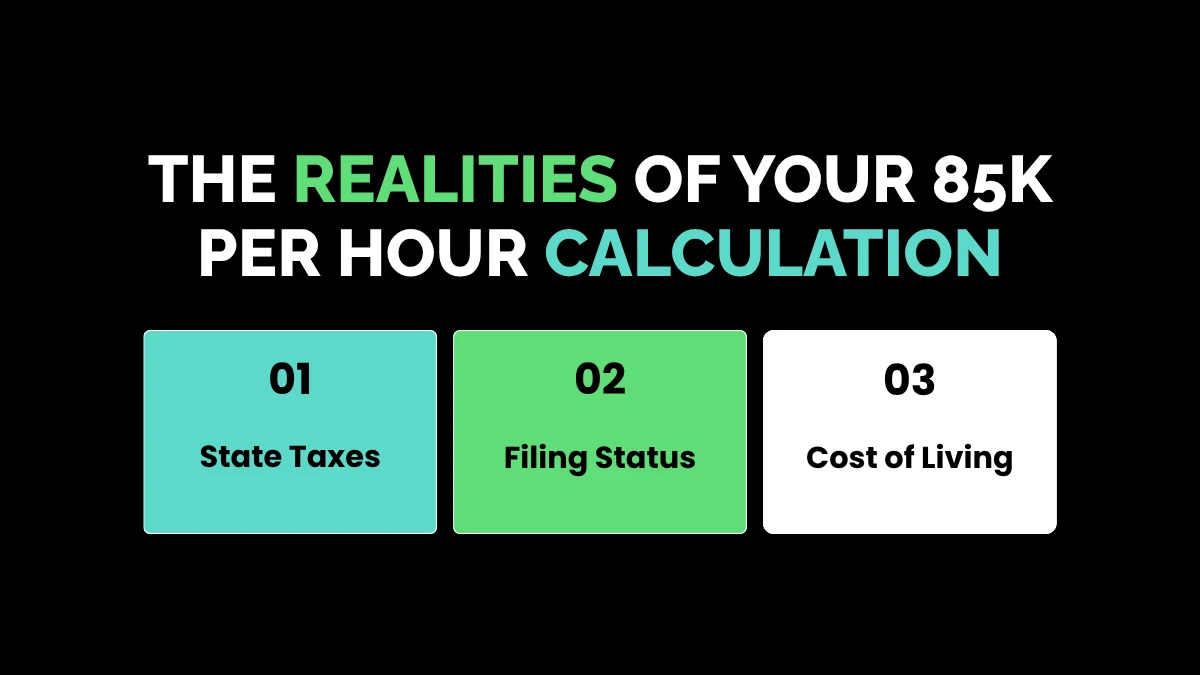
At Weird Wealth, we emphasize that your location is a massive variable. If you live in a state with high income taxes, your net pay will be significantly lower than someone earning the exact same $85,000 in a state with no state income tax.
This is why “hourly wage” comparisons can be misleading if you do not factor in the cost of living and tax environment of your specific region.
Common Deductions to Anticipate
-
Federal Income Tax: Withheld based on your W-4 information.
-
State/Local Taxes: Varies widely by your city and state residence.
-
FICA Taxes: Mandatory 7.65% for Social Security and Medicare.
-
Benefit Premiums: Costs for medical, dental, and disability insurance.
-
Retirement Savings: Pre-tax contributions to your company’s retirement plan.
How to Increase Your Take-Home Pay
You might be wondering if there is any way to improve your 85000 salary after taxes. While you cannot control tax laws, you can definitely control how you leverage your benefits.
The most effective way to optimize your net pay is to understand the tax advantages provided by your employer. If you are paying high premiums for health insurance, look into a Health Savings Account (HSA).
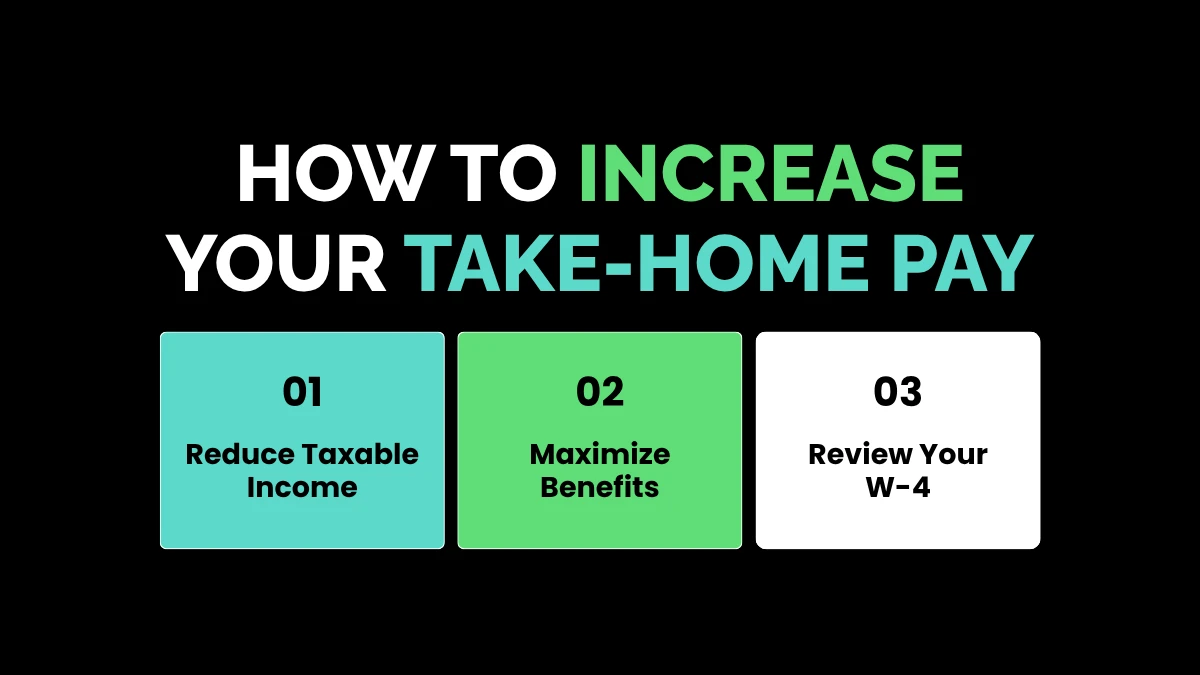
Contributions to an HSA are tax-deductible, which lowers your taxable income. Similarly, contributing to a traditional 401(k) reduces your current income tax burden, allowing you to save for the future while paying less in taxes today.
Another tip is to review your W-4 form annually. If you find yourself getting a massive tax refund at the end of every year, you are essentially giving the government an interest-free loan.
By adjusting your withholdings, you can increase your take-home pay throughout the year.
Comparing Your Salary in the Market
When you consider an 85000 salary hourly wage, it is helpful to place it in the context of your broader industry. Different sectors have different norms for compensation.
For instance, in technical or high-demand fields, a base salary of $85,000 might be seen as entry-to-mid-level. Conversely, in other sectors, this figure represents a senior-level position.
| Professional Sector | Average Hourly Competitiveness |
| Marketing & Digital Media | Moderate |
| Software Development | Entry-Level |
| Administrative Management | High |
| Human Resources | Mid-Level |
Always remember that these figures are based on available data and general industry trends. Your specific value to an employer depends on your unique skills, certifications, and years of experience.
At Weird Wealth, we recommend researching salary benchmarks in your specific city to ensure your $85,000 offer matches the local market rate.
The Role of Overtime and Bonuses
When people ask, “$85,000 a year is how much an hour?”, they are usually thinking about their base salary. However, for many roles, that is not the whole story.
If you are a non-exempt employee, you may be entitled to overtime pay. This is where your 85k per hour calculation gets a bit more complex.
In most cases, overtime is paid at 1.5 times your hourly rate. If your base is $40.87, your overtime rate would be $61.30.
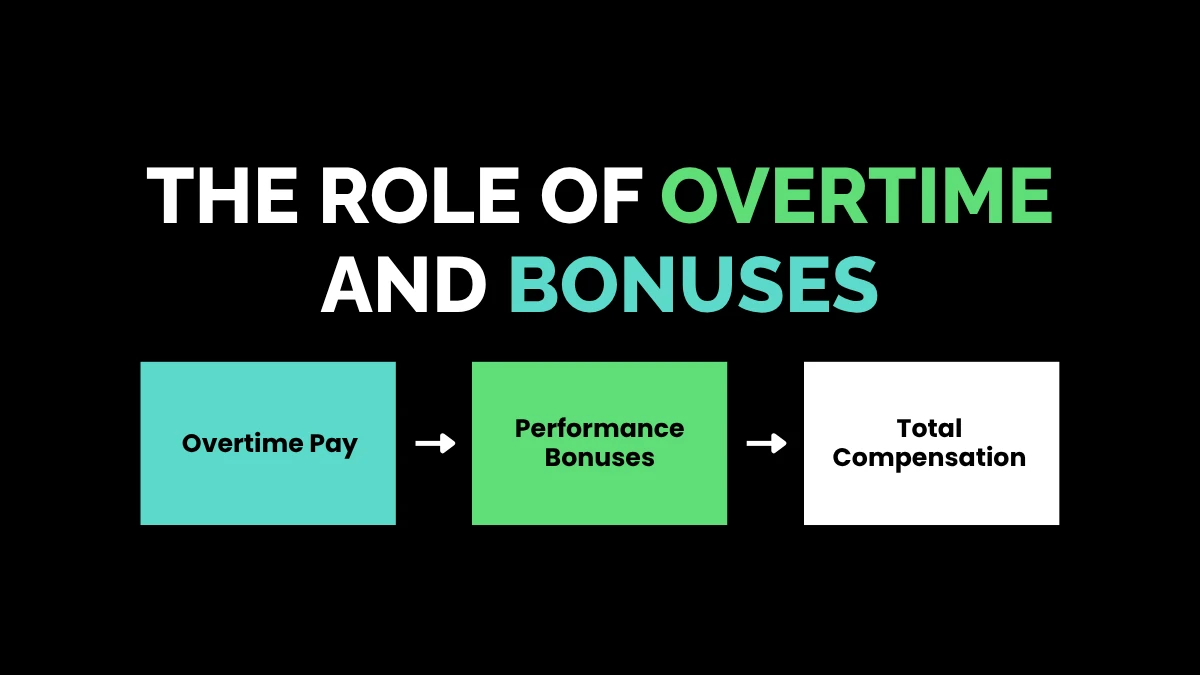
Working even a few extra hours a week can significantly boost your total annual income. Similarly, bonuses and commissions are often tied to performance.
While these are not guaranteed, they should be factored into your overall compensation package when evaluating whether a job is the right fit.
Optimizing Your Career Path
Reaching a salary of $85,000 is a significant milestone for many professionals. Once you hit this level, the next step is often finding ways to scale your income further.
This might involve acquiring new technical skills, such as advanced SEO, project management certifications, or specialized industry knowledge.
Consistency is key here. As you gain more experience, your hourly “value” increases. Always keep track of your accomplishments, as these are your primary leverage when it comes time to ask for a raise.
Moving from an 85000 salary hourly wage to a higher bracket is often about demonstrating how your work directly contributes to the company’s bottom line.
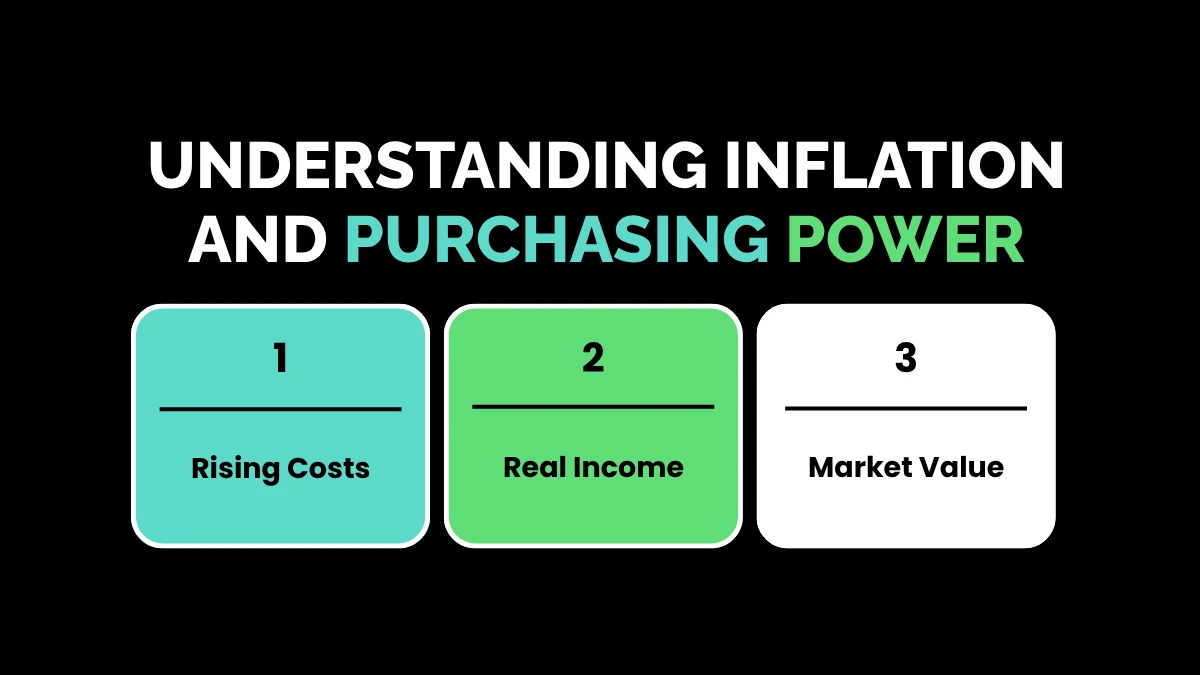
Understanding Inflation and Purchasing Power
While your nominal salary is $85,000, your real purchasing power changes over time due to inflation. This is why it is critical to keep your salary aligned with the current market.
If your income stays static for several years while the cost of living rises, your effective hourly rate is actually decreasing.
This is why regular career evaluations are so important. By periodically benchmarking your salary, you ensure that your $85,000 is still providing the lifestyle you expect.
It is a simple, logical approach to career management that keeps you in the driver’s seat.
Professional Growth Strategies
Investing in your own education is perhaps the most reliable way to boost your hourly rate over time. Many professionals overlook the power of continuing education or earning niche industry certifications.
-
Upskilling: Learning in-demand skills like AI-assisted writing or data analysis.
-
Networking: Building relationships that lead to higher-paying opportunities.
-
Performance Reviews: Using documented results to negotiate a higher base salary.
-
Job Hopping: Strategically moving between companies to capture market value.
-
Side Hustles: Supplementing your main salary with freelance or contract work.
Whether it is taking an online course or attending industry conferences, these small investments pay off in the long run. By consistently growing, you protect yourself against industry downturns.
Conclusion
Deciphering your pay can feel like a complex puzzle, but understanding that $85,000 a year breaks down to roughly $40.87 per hour gives you a much clearer perspective on your time’s value.
Whether you are creating a budget, planning for a future investment, or negotiating your next career move, having this data at your fingertips is a massive advantage.
Remember, the goal is not just to hit a high salary number, but to maximize your take-home pay through smart tax planning, benefit optimization, and regular market benchmarking.
By staying informed, you ensure that your $85,000 salary works as hard for you as you do for it. Take the time to review your deductions, look for ways to lower your taxable income, and continue building the financial foundation that allows you to thrive.
Frequently Asked Questions
Is $40.87 an hour a good salary?
Whether $40.87 is considered a “good” salary depends heavily on your location, family size, and lifestyle choices. In many areas, this wage provides a comfortable living, allowing for savings and housing security. However, in high-cost cities, it may feel much tighter, requiring careful budgeting to manage your daily expenses and long-term financial goals effectively.
Does the 85k per hour calculation include bonuses?
No, the $40.87 hourly figure is calculated based purely on your base salary. Bonuses, performance incentives, and commissions are variable and are not typically included in your standard hourly rate. These should be viewed as additional, non-guaranteed compensation that supplements your base pay, rather than being part of your fixed hourly income.
How much will I actually take home from $85,000?
Your actual take-home pay is generally your gross income minus taxes, insurance, and retirement contributions. While it varies by state, many people find they take home about 70% to 80% of their gross salary. For a clearer picture, check your specific pay stub or use an online paycheck calculator to see your state’s tax impact.
Should I calculate my hourly wage differently if I get overtime?
Yes. If your position is classified as non-exempt, your hourly rate for overtime hours is typically 1.5 times your regular base rate. When calculating your total potential income, ensure you account for both your base hours and any anticipated overtime to get a realistic view of your total earnings for the year.