
When Daniel decided he wanted exposure to Bitcoin, he faced a choice. He could buy BTC through a cryptocurrency platform and manage the practical details himself, or he could purchase a Bitcoin investment product through a brokerage account.
He chose to investigate Bitcoin ETFs first. The familiar brokerage interface appealed to him, but he wanted to know what he would actually own, how much it would cost, and whether the product was safer than buying Bitcoin directly.
Those are the right questions to ask.
A Bitcoin ETF or exchange-traded product gives investors exposure to Bitcoin’s price through shares traded on a stock exchange. A spot product typically holds Bitcoin, while a futures-based fund uses Bitcoin futures contracts. The structure affects how the investment tracks BTC, what fees apply, and which risks investors take.
Key Takeaways
- Spot Bitcoin products generally hold Bitcoin to track its market price.
- Futures-based Bitcoin funds use contracts rather than directly holding BTC.
- Buying product shares is different from owning Bitcoin in your own wallet.
- Fees, tracking differences, custody arrangements, and market volatility all matter.
- Product availability and legal treatment depend on your country and brokerage.
What Is a Bitcoin ETF?
A Bitcoin ETF is a commonly used term for an exchange-traded investment product designed to provide exposure to Bitcoin. However, not every product marketed or described as a Bitcoin ETF has the same legal structure.
In the United States, spot Bitcoin products approved for exchange listing in January 2024 were structured as exchange-traded products, including commodity-based trusts, rather than conventional investment-company ETFs registered under the Investment Company Act of 1940. The distinction matters because legal protections and requirements can vary by product. <Cite refs={[“turn874733search1″,”turn874733search4”]}/>
For investors, the essential question is what the product holds and how it delivers Bitcoin exposure.
What are the main types of Bitcoin ETFs?
Spot Bitcoin products hold Bitcoin itself. Their goal is generally to reflect BTC’s price performance, minus fees and other expenses. Their share prices can still differ from the underlying Bitcoin value.
Bitcoin futures ETFs hold futures contracts linked to Bitcoin’s price. Futures contracts have their own prices and expiration dates, so the fund’s return can differ from the performance of holding Bitcoin directly.
Bitcoin-related stock ETFs invest in businesses connected to the crypto industry, such as mining companies or exchanges. These funds offer exposure to companies, not necessarily direct exposure to BTC.
These products are not interchangeable. Before buying, confirm which category a fund belongs to rather than relying on its name alone.
How Does a Spot Bitcoin ETF Work?

Imagine a spot Bitcoin product that holds BTC with a designated custodian. Investors buy and sell shares of the product through a brokerage, while the product’s sponsor and service providers handle its operations and the underlying asset arrangements.
The value of the holdings changes as Bitcoin’s market price changes. The product calculates its net asset value according to its stated methodology, and its shares trade on an exchange during that market’s trading hours.
A simplified example shows how the process works:
- A product is established with an investment objective tied to Bitcoin’s price.
- The product holds Bitcoin through its specified custody arrangements.
- Investors buy shares through a brokerage account.
- The shares trade on an exchange as the market changes.
- Fees and other expenses reduce the return investors receive.
The product aims to track Bitcoin, but it cannot guarantee an identical return. Share supply and demand, trading liquidity, expenses, and other factors can create differences between the share price and the value of the underlying holdings.
Bitcoin ETF vs. Buying Bitcoin Directly
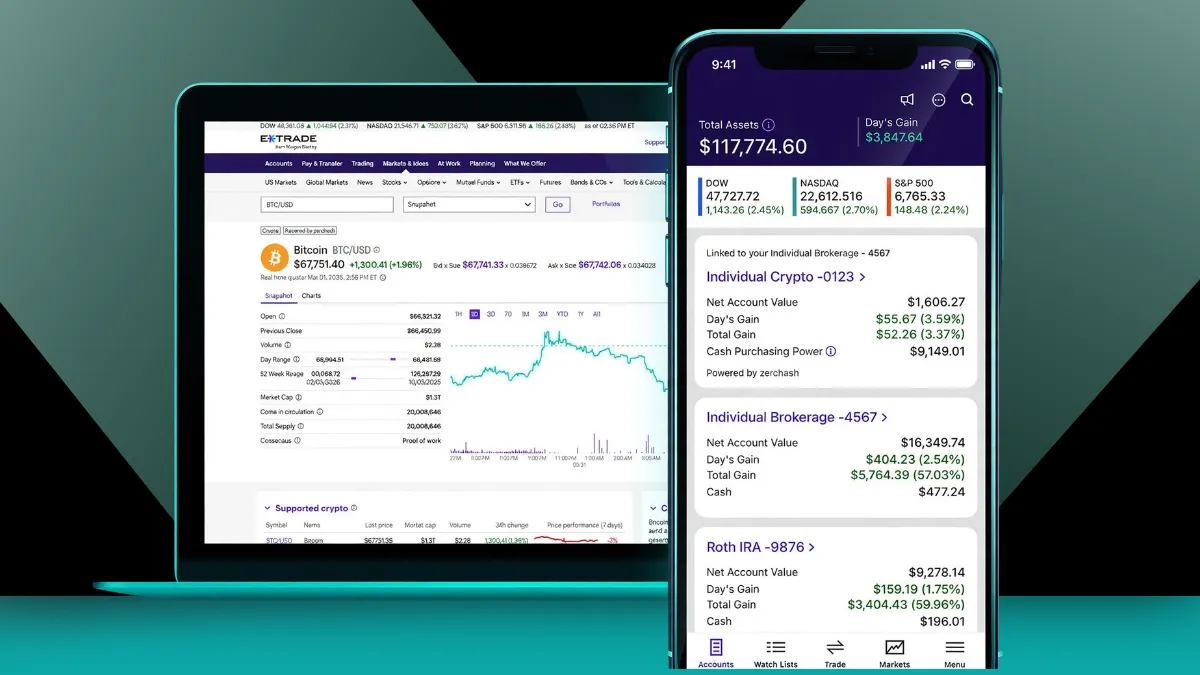
The biggest difference is ownership. With a Bitcoin exchange-traded product, you own shares in an investment vehicle. With direct Bitcoin ownership, you own BTC through a provider or wallet arrangement.
| Feature | Bitcoin ETF or exchange-traded product | Direct Bitcoin ownership |
| How you buy | Through an eligible brokerage | Through a crypto exchange, broker, or other supported method |
| What you own | Shares in an investment product | Bitcoin held through a provider or wallet |
| Personal wallet required | Usually not | Depends on the custody method |
| Trading hours | Exchange trading hours | Crypto markets generally operate around the clock |
| Main costs | Sponsor expenses, trading spread, possible brokerage costs | Trading fees, spreads, possible network and custody costs |
| Transfer BTC on-chain | Generally no, not with ordinary shares | Yes, when you control or can transfer the BTC |
| Custody responsibility | Managed within the product’s structure | Depends on whether you use a provider or self-custody |
| Main considerations | Product terms, fees, tracking, and market risk | Wallet security, provider risk, transaction mistakes, and market risk |
A Bitcoin product can simplify access for someone who already uses a brokerage account. Direct ownership may suit someone who wants to transfer BTC or use it outside traditional brokerage systems.
Neither option eliminates risk. Direct ownership requires careful handling of credentials and recovery information. An exchange-traded product adds reliance on its sponsor, custodians, service providers, and legal structure.
If you decide to explore direct ownership, learn how crypto wallet security works before transferring funds.
How Much Do Bitcoin ETFs Cost?
A Bitcoin product can charge expenses even if you never make a transaction yourself. Those costs reduce the amount of Bitcoin exposure represented by your investment over time.
Check these main cost categories:
- Sponsor or management fee: The stated annual charge for operating the product.
- Brokerage commission: A possible charge for buying or selling shares.
- Bid-ask spread: The difference between the highest price buyers offer and the lowest price sellers request.
- Tracking difference: The gap between the product’s return and Bitcoin’s price performance over the same period.
- Other expenses: Additional costs disclosed in the product’s documents.
A simple Bitcoin ETF fee example
Suppose you invest $2,000 in a hypothetical product with an annual sponsor fee of 0.25%.
The approximate annual fee on a constant $2,000 balance would be $5, before considering changes in the investment’s value, trading costs, taxes, or other expenses.
This example explains the fee calculation; it does not represent an actual product’s current fee or predict investment returns.
When comparing products, don’t choose solely by the lowest advertised fee. Review trading liquidity, tracking performance, custody arrangements, and the complete fee schedule as well.
What Risks Should You Understand Before Buying?
Bitcoin ETFs make access more convenient, but they do not make Bitcoin less volatile.
Bitcoin price risk
If Bitcoin falls sharply, a spot product designed to track its price can also lose substantial value. The exchange-traded format does not protect investors from losses in the underlying asset.
Tracking risk
The product’s share price may not perfectly match the value of Bitcoin. Fees, trading conditions, and differences in supply and demand can affect performance.
Custody and operational risk
Spot products rely on custody arrangements and other service providers. Investors should understand who holds the Bitcoin, how assets are safeguarded, and what the product documents say about operational problems.
Market and liquidity risk
Bitcoin markets can experience sharp price swings. Shares may also trade at a premium or discount to their net asset value, especially when trading conditions are unusual.
Regulatory and product-structure risk
The legal framework differs across countries and product types. A product listed on a regulated exchange is not a guarantee against losses, fraud, or every operational risk. The US Securities and Exchange Commission has specifically warned investors to evaluate product disclosures and understand that spot Bitcoin products remain speculative.
How to Choose a Bitcoin ETF Safely

Before investing, use the BITCOIN checklist. It helps you examine the product before considering its potential returns.
- B — Background: Check the sponsor’s track record and the product’s official documents.
- I — Investment structure: Confirm whether it holds spot Bitcoin or uses futures.
- T — Total costs: Compare sponsor fees, spreads, and possible brokerage charges.
- C — Custody: Understand who safeguards the underlying assets and what protections apply.
- O — Objective: Read how the product measures Bitcoin’s price and calculates its net asset value.
- I — Investor eligibility: Confirm that the product and brokerage are available to you under local rules.
- N — Net risk: Consider how a substantial Bitcoin decline would affect your finances.
This checklist is a research tool, not a guarantee of safety or investment success.
Read the prospectus or equivalent disclosure document before buying. Confirm the product’s ticker, exchange, fee schedule, holdings, custody arrangements, and risk disclosures from official sources rather than relying on social media posts or promotional summaries.
Can You Buy a Bitcoin ETF in Pakistan?
Access depends on the specific product, brokerage, investor eligibility rules, and applicable regulations. A Bitcoin product listed in the United States is not automatically available to every investor living in Pakistan.
If you are based in Pakistan, verify whether your brokerage accepts Pakistani residents and whether the specific investment is permitted under the applicable rules. Also check the requirements for overseas investments, currency transfers, and tax reporting before sending money abroad.
Do not assume that access through a foreign platform means a product is automatically authorized or suitable for you. If the rules are unclear, consult a qualified professional familiar with your circumstances.
Are Bitcoin ETFs Better Than Buying BTC?
Neither is universally better. The right choice depends on what you want to do with Bitcoin and how comfortable you are managing the associated responsibilities.
A Bitcoin exchange-traded product may be worth researching if you prefer brokerage-based investing and don’t need to transfer or spend BTC. Direct ownership may be more suitable if you want control over your coins and the ability to use them on supported networks.
Consider your time horizon, total costs, ability to tolerate losses, and the risks you understand. Avoid investing emergency savings or borrowing money to speculate on Bitcoin.
For a broader explanation of how Bitcoin compares with other major cryptocurrencies, read our guide to Bitcoin vs. Ethereum.
Frequently Asked Questions
Does a Bitcoin ETF actually own Bitcoin?
A spot Bitcoin product generally holds Bitcoin as its underlying asset. A futures-based fund instead uses Bitcoin futures contracts, so you should check the product’s actual structure.
Can a Bitcoin ETF lose all its value?
Bitcoin products are exposed to significant market and operational risks. Although a total loss is not the expected outcome of ordinary price movements, investors should not assume their principal is protected.
Do Bitcoin ETFs pay dividends?
A spot Bitcoin product generally does not generate conventional business income because Bitcoin itself does not pay dividends. Check the product documents rather than assuming it provides regular income.
Can I transfer Bitcoin from an ETF to my wallet?
Ordinary shareholders generally cannot withdraw BTC from their brokerage shares. If you want direct ownership, you would usually need to sell the shares and separately acquire Bitcoin through a supported service.
Are Bitcoin ETFs regulated?
The answer depends on the product and jurisdiction. In the United States, spot Bitcoin exchange-traded products are subject to securities registration and disclosure requirements, but they are not necessarily registered under the same legal framework as conventional ETFs. Regulation does not guarantee performance or eliminate investment risk.
What is the difference between a spot Bitcoin ETF and a futures Bitcoin ETF?
A spot product holds Bitcoin itself, while a futures-based fund holds contracts linked to Bitcoin prices. Futures prices can differ from spot prices, which may cause the fund’s performance to diverge from holding BTC directly.
The Bottom Line
Bitcoin exchange-traded products give investors another way to access Bitcoin’s price without managing a personal crypto wallet. That convenience can be useful, but it comes with product fees, custody arrangements, tracking differences, and substantial exposure to Bitcoin’s price movements.
Before buying, confirm what the product holds, what it costs, how its shares trade, and whether you can legally buy it. Daniel’s best decision wasn’t choosing the first product he saw. It was understanding the structure before putting his money at risk.
Financial disclaimer:
This article is for educational purposes only and is not individualized investment, legal, or tax advice. Bitcoin is highly volatile, and Bitcoin-linked products can lose substantial or all of their value. Availability and regulations vary by jurisdiction. Verify current product disclosures and seek qualified advice where appropriate.