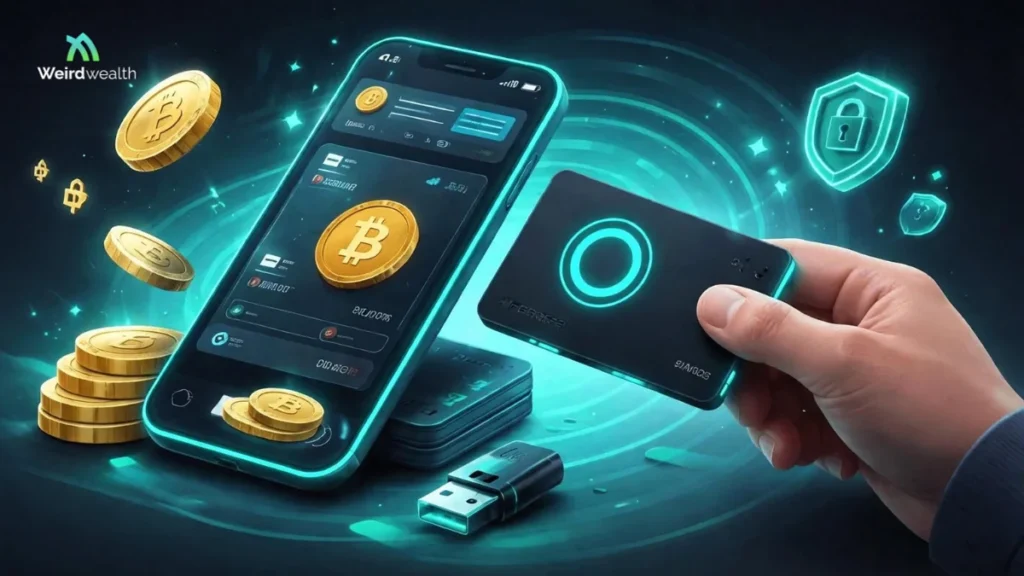

A crypto wallet can already help you store assets, review transactions, and send payments. An AI-powered wallet aims to make some of those tasks easier by adding features such as natural-language commands, transaction analysis, automated workflows, or suspicious-activity alerts.
But there is an important distinction: an AI crypto wallet is not automatically safer than a conventional wallet. Some products use AI to help users interpret blockchain data, while others use smart-contract automation or rule-based security features and market themselves as intelligent wallets. Understanding what the technology actually does matters more than the label.
For anyone considering an AI crypto wallet, the priority should be to verify its custody model, transaction permissions, security design, and the limits of its automation before connecting funds.
Key Takeaways
- AI crypto wallets may use AI to simplify transactions, explain blockchain activity, or support automated workflows.
- AI features do not replace private-key security, transaction verification, or careful recovery-phrase management.
- A chatbot, smart wallet, automated trading tool, and AI agent are different technologies, even when their features overlap.
- Giving an AI agent permission to move funds or interact with smart contracts can create additional risks.
- Evaluate a wallet based on verifiable security features, transparent permissions, and actual functionality—not AI branding alone.
What Is an AI Crypto Wallet?
An AI crypto wallet is a wallet or wallet-related platform that uses artificial intelligence to assist with cryptocurrency activities. Depending on the product, this might mean interpreting a user’s request, summarizing transactions, analyzing blockchain data, identifying patterns, or helping automate certain actions.
For example, a user might ask an AI-enabled interface to explain recent wallet activity or find the steps required to complete a token swap. The system could interpret the request, retrieve relevant information, and present a proposed action.
That does not mean the AI itself necessarily holds the private keys or executes the transaction. The wallet may rely on a separate signing system, smart contract, external service, or user confirmation.
The term AI crypto wallet does not describe one standardized product category. Before using a wallet, find out which parts genuinely use AI and which rely on ordinary wallet software, blockchain infrastructure, or predefined rules.
How Do AI Crypto Wallets Work?

An AI-enabled wallet may combine several components rather than relying on a single model.
1. Natural-Language Interfaces
Some systems allow users to describe a task in everyday language rather than navigating multiple menus.
A request might involve checking a token balance, summarizing transaction history, or preparing a transfer. The interface interprets the request and turns it into a set of proposed actions.
The user should still verify the asset, destination, network, and amount before approving any transaction.
2. Blockchain Data Analysis
AI tools can help organize information from blockchain explorers, wallet histories, and other data sources. They may summarize activity or identify patterns that would otherwise take time to review manually.
However, blockchain data can be incomplete or misleading without context. An unfamiliar transaction is not automatically fraudulent, and an apparently legitimate address is not proof that its owner can be trusted.
3. Transaction Assistance
An AI-enabled interface might help prepare a transaction by selecting an asset, identifying a network, or presenting estimated fees.
Preparing a transaction is different from authorizing it. A secure design should clearly separate the assistant’s recommendation from the signing process and provide enough information for the user to verify what will happen.
4. Automated Actions and AI Agents
Some platforms combine wallet functionality with software agents that can perform predefined tasks or interact with decentralized applications.
Depending on the architecture, an agent might monitor conditions, request a swap, or initiate a workflow under specified permissions.
Automation introduces a crucial question: what is the agent actually authorized to do? A tool that can only read public data presents a different risk from one that can sign transactions, spend tokens, or approve smart-contract access.
AI Crypto Wallets vs. Smart Wallets vs. Traditional Wallets
These terms can overlap, but they describe different ideas.
| Type | Primary purpose | What to evaluate |
| Traditional crypto wallet | Manage keys and authorize transactions | Key storage, backups, supported assets, and transaction security |
| Smart wallet | Add programmable account features, often through smart contracts | Recovery design, permissions, contract risks, and network compatibility |
| AI-assisted wallet | Use AI for explanations, analysis, recommendations, or interaction | Accuracy, data privacy, permission boundaries, and human confirmation |
| AI agent with wallet access | Let software perform tasks within a defined authorization model | Spending limits, signing authority, monitoring, and emergency controls |
A smart wallet does not necessarily use AI. Likewise, an AI assistant can be added to a conventional wallet without changing the underlying custody model.
When comparing products, identify the actual architecture instead of assuming that these labels are interchangeable.
Potential Benefits of AI Crypto Wallets
AI can make some cryptocurrency tasks more accessible, particularly for users who find blockchain interfaces confusing.
Easier Transaction Explanations
Blockchain transactions contain technical information such as addresses, contract interactions, network fees, and token movements. An AI assistant may translate some of this information into simpler language.
This can help users understand what a transaction appears to do. It cannot guarantee that the explanation is complete or correct.
More Convenient Wallet Management
A conversational interface may reduce the number of steps needed to find balances, review activity, or prepare a transaction.
The value depends on the quality of the integration. A chatbot that merely redirects users to existing menus may add little practical benefit.
Additional Monitoring
Some AI-based systems may analyze patterns and flag activity that deserves attention. Such alerts can support security reviews, especially when they provide understandable reasons for the warning.
Detection systems can still miss attacks or flag legitimate activity. Users should not interpret the absence of an alert as proof that a transaction is safe.
Support for Automated Workflows
AI agents may help coordinate multiple steps in a decentralized finance workflow or carry out repetitive tasks under defined conditions.
The more authority an agent has, the more important it becomes to restrict its permissions, test its behavior, and maintain a way to stop it.
Risks of AI-Powered Crypto Wallets

AI features can introduce new failure modes without eliminating familiar cryptocurrency risks.
Incorrect AI Recommendations
AI systems can misunderstand instructions, rely on incomplete data, or produce confident but incorrect explanations. If a system proposes a transaction involving the wrong token or network, approving it without review can lead to financial loss.
Safer approach: Treat AI output as a suggestion. Verify transaction details using the wallet’s transaction preview and trusted independent information.
Excessive Transaction Permissions
An agent with broad permissions may be able to execute actions that exceed what a user intended. Depending on the system, compromised credentials, malicious instructions, software bugs, or poorly designed authorization rules could lead to unauthorized activity.
Safer approach: Prefer narrowly scoped permissions, spending limits, clear approval requirements, and revocable access where available.
Prompt Injection and Malicious Data
AI agents may process information from websites, token descriptions, transaction metadata, or other external sources. Malicious content can attempt to manipulate the agent’s behavior.
A well-designed system should not treat arbitrary external text as authorization to transfer assets or reveal sensitive information.
Safer approach: Never let a wallet agent bypass transaction verification simply because a website, message, or token description tells it to.
Privacy and Data Exposure
An AI wallet may send prompts, transaction details, or other information to external services. The privacy implications depend on what is collected, where it is processed, how long it is retained, and whether it is shared with third parties.
Safer approach: Review the privacy policy and data controls. Never enter a seed phrase, private key, password, or other secret into an AI chat interface.
Smart-Contract and Integration Vulnerabilities
A wallet that interacts with smart contracts or decentralized applications may face risks associated with those contracts, bridges, APIs, or integrations. An AI feature does not eliminate these vulnerabilities. Automated actions can even make a problem more damaging if they execute quickly without sufficient restrictions. As with the lessons shared in these solopreneur success stories, understanding risks and making informed decisions are important when managing digital ventures.
Safer approach: Understand which contracts the wallet uses, what permissions it requests, and how you can revoke unnecessary approvals. Learning from millionaire success stories can also reinforce the importance of protecting assets while pursuing financial growth.
How to Evaluate an AI Crypto Wallet
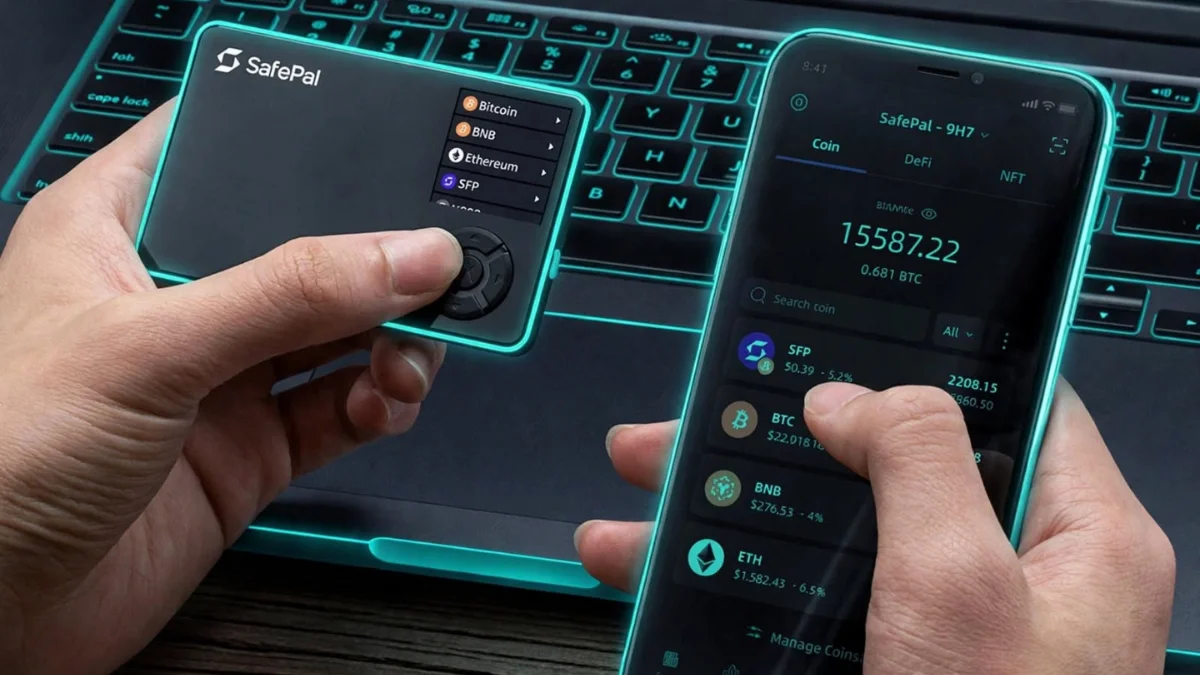
Rather than trusting a product’s marketing, use a structured review.
The CLEAR Wallet Evaluation Checklist
C — Custody: Determine who controls the private keys. Understand whether the wallet is custodial, self-custodial, or built around smart-contract accounts.
L — Limits: Identify what the AI can do. Can it only read data and make suggestions, or can it initiate transactions and spend assets?
E — Evidence: Look for verifiable security documentation, independent assessments where available, transparent development practices, and a clear record of supported features. Do not treat an audit as a guarantee.
A — Approvals: Check whether transactions require user confirmation and whether spending limits, permission controls, and revocation options exist.
R — Recovery and privacy: Understand how account recovery works, what data the AI service receives, and how access can be restored if a device or service becomes unavailable.
If a provider cannot explain these areas clearly, do not connect a wallet containing meaningful funds until the uncertainty is resolved.
How to Use an AI Crypto Wallet More Safely
If you decide to experiment with an AI-enabled wallet, start with low-risk activity.
- Verify the provider. Use the authentic website or app listing, and check for impersonation attempts.
- Understand the custody model. Know who controls the keys and which actions require your approval.
- Start with a small amount. Test basic functions before relying on the product for substantial holdings.
- Review each transaction. Check the asset, amount, network, destination, fees, and contract permissions.
- Limit agent authority. Avoid granting unrestricted spending or signing access when narrower permissions are available.
- Protect recovery information. Keep seed phrases and private keys out of AI prompts, screenshots, ordinary chat logs, and support messages.
- Review connected applications. Remove unnecessary approvals and integrations when they are no longer needed.
- Keep a recovery plan. Know how to regain access or stop automated activity if the device, service, or account is compromised.
For long-term holdings, consider whether you need AI features at all. A simpler wallet with a clear security model may be a better fit than a complex automated system.
Who Should Consider an AI Crypto Wallet?
AI-enabled wallets may be useful for people who want help understanding transactions, navigating blockchain applications, or managing repetitive tasks. Users who already understand wallet security may also be better positioned to evaluate advanced automation.
They may be less suitable for someone who expects AI to make transactions safe automatically or who is uncomfortable reviewing permissions and recovery procedures.
If your primary goal is long-term Bitcoin storage, a well-understood wallet with reliable backups may matter more than AI functionality. If your goal is automated activity, focus on authorization limits, testing, and the consequences of software errors before enabling it.
Frequently Asked Questions
Are AI crypto wallets safe?
They can offer useful features, but safety depends on the wallet’s architecture, custody model, software quality, permissions, and user behavior. AI does not guarantee security, and automated systems can introduce additional risks.
Can an AI crypto wallet manage my funds automatically?
Some platforms may allow agents to perform actions within defined permissions. The exact capabilities vary. Before enabling automation, verify which transactions the agent can initiate, whether confirmation is required, and how access can be limited or revoked.
Does an AI crypto wallet need my seed phrase?
An AI chat assistant should not need you to disclose your seed phrase or private keys. Anyone who obtains this information may be able to control the associated funds. Do not enter it into a chatbot or provide it to someone claiming to offer wallet support.
Is an AI wallet the same as a smart wallet?
No. A smart wallet generally refers to programmable wallet or account functionality, often involving smart contracts. An AI wallet uses AI for one or more tasks. A product may combine both, but one does not imply the other.
Can AI detect every crypto scam?
No. AI-based detection may identify suspicious patterns, but it can miss scams, produce false alerts, or misinterpret activity. Verify addresses, contracts, and transaction details independently.
Should beginners use an AI crypto wallet?
It depends on the product and the beginner’s understanding of wallet security. A simple wallet with clear instructions may be easier to manage. Anyone experimenting with AI features should first learn how custody, recovery phrases, transaction approvals, and permissions work.
Final Verdict
AI crypto wallets may improve how people interact with blockchain applications by simplifying information, assisting with transaction preparation, and supporting selected automated workflows. Their usefulness depends on whether those features solve a real problem and whether they are implemented with appropriate safeguards.
The strongest choice is not necessarily the wallet with the most AI features. It is the one that clearly explains custody, limits what automated systems can do, protects sensitive information, and lets users verify transactions before committing funds.
Treat AI as an assistant not as a substitute for security, judgment, or control over your cryptocurrency.
Disclaimer:
This article is for educational purposes only and is not financial, investment, or security advice. Wallet capabilities and risks vary by provider and may change. Research any product independently before connecting funds or granting transaction permissions.