
Crypto Funds vs ETFs: Imagine you want to invest in cryptocurrency, but you do not want to manage private keys, move coins between wallets, or worry about losing access to a trading account. You start comparing crypto funds and exchange-traded funds (ETFs), only to discover that both can offer exposure to digital assets while working in very different ways.
The distinction matters because a crypto fund is a broad category of investment vehicle, while an ETF is a specific fund structure that trades on an exchange. Some crypto ETFs are designed to track cryptocurrency prices, while other crypto funds use different structures, strategies, and access rules.
Understanding the difference helps you compare costs, liquidity, ownership, and risk before choosing an investment.
Key Takeaways
- Crypto funds can include private investment funds, index funds, trusts, and exchange-traded products.
- ETFs trade on stock exchanges during market hours, subject to their exchange’s rules.
- Owning an ETF linked to Bitcoin does not necessarily mean you own Bitcoin directly.
- Fees, tax treatment, liquidity, and investor eligibility vary by product and jurisdiction.
- Neither a crypto fund nor an ETF removes the underlying risks of cryptocurrency markets.
What Is the Difference Between Crypto Funds vs ETFs?
The main difference is that crypto fund describes what kind of investment arrangement you are using, while ETF describes how a fund is structured and traded.
A crypto fund might be privately managed, available only to eligible investors, or designed to track a group of digital assets. A crypto ETF is a fund that trades on an exchange, generally allowing investors to buy and sell shares through a brokerage account.
The terms can overlap. An ETF that holds cryptocurrency or provides exposure to it is also a type of crypto investment fund in the broad sense.
However, products marketed as crypto funds are not necessarily ETFs. Their legal structure, redemption rules, underlying assets, and regulatory protections can be substantially different.
Crypto Funds vs ETFs at a Glance

| Feature | Crypto funds generally | Crypto ETFs |
| Structure | Can be private funds, trusts, index funds, or other vehicles | Exchange-traded fund structure |
| Buying and selling | Depends on the fund’s rules | Typically trades on an exchange during market hours |
| Minimum investment | Can range from a small amount to a substantial commitment | Often the price of one share, subject to broker requirements |
| Management fees | Vary widely; performance fees may apply to some funds | Usually a stated annual expense ratio or management fee |
| Asset exposure | May hold crypto directly, derivatives, or other related investments | Depends on the specific ETF and its mandate |
| Access | May require eligibility checks or a specific platform | Usually requires a brokerage account with access to the product |
| Liquidity | Can be limited by withdrawal windows or lockups | Depends on trading volume, spreads, and market conditions |
| Tax treatment | Depends on the structure and local rules | Depends on the product, jurisdiction, and investor’s circumstances |
These are general comparisons, not universal rules. A private crypto fund and a publicly traded crypto ETF can differ considerably, even when both focus on Bitcoin.
What Is a Crypto Investment Fund?
A crypto investment fund pools capital or organizes investments around cryptocurrencies and related assets. Its objective might be to track a market, hold selected digital assets, or pursue returns through an active strategy. There are several common structures.
Private crypto funds
Private funds may be managed by investment firms that make decisions about which assets to buy, sell, or hold. Some are restricted to accredited, professional, or otherwise eligible investors, depending on local regulations.
They may have higher minimum investments, less frequent redemption opportunities, and more complex fee arrangements than publicly traded products.
Crypto index funds
A crypto index fund aims to follow a defined group of digital assets or a cryptocurrency market index. Instead of relying entirely on one asset, it may provide exposure to several assets according to its methodology.
Before investing, examine how the index selects assets, determines weightings, rebalances the portfolio, and handles assets that become difficult to trade.
An index fund is not automatically an ETF. It could use another legal and investment structure.
Crypto trusts and other investment products
Some products hold cryptocurrency or use other arrangements to provide market exposure. Depending on the jurisdiction, they may trade differently from conventional mutual funds or ETFs.
The label alone does not establish whether investors can redeem shares directly for cryptocurrency, whether the product is registered under a particular investment law, or what protections apply.
Always read the product’s legal documents rather than assuming that two similarly named investments operate in the same way.
Crypto Funds vs ETFs: How Does a Crypto ETF Work?

Crypto Funds vs ETFs: A crypto ETF allows investors to buy and sell fund shares through an exchange, usually using a brokerage account. Investors can also explore other ways to manage their money, such as finding the best high-yield savings accounts for cash savings.
The exact mechanism depends on the ETF. A product may hold cryptocurrency directly, invest in futures contracts, or gain exposure through other permitted investments. Investors who prefer direct Bitcoin ownership can explore the best Bitcoin wallets to understand their storage options. Similarly, those interested in building online income may consider learning how to sell Notion templates as a separate digital business opportunity.
Spot crypto ETFs
A spot cryptocurrency ETF or exchange-traded product is designed to provide exposure to the current market price of a digital asset. The product’s actual legal classification depends on its jurisdiction.
Investors buy shares of the product rather than necessarily buying the cryptocurrency itself. The product’s structure determines how the underlying asset is held and how closely its value follows the market.
Futures-based crypto ETFs
A futures-based product obtains exposure through futures contracts rather than simply holding the cryptocurrency in a wallet.
Its returns may differ from the spot market because of futures pricing, contract rolling, expenses, and other factors. As a result, performance over longer periods may not match the change in the cryptocurrency’s spot price.
Why the distinction matters
Suppose Bitcoin rises in price. A product designed to track spot Bitcoin may respond differently from a futures-based product over time. A leveraged or inverse product may behave differently still.
Do not choose an ETF based only on its name. Check its investment objective, holdings, strategy, and performance disclosures.
Crypto Fund Fees vs ETF Fees
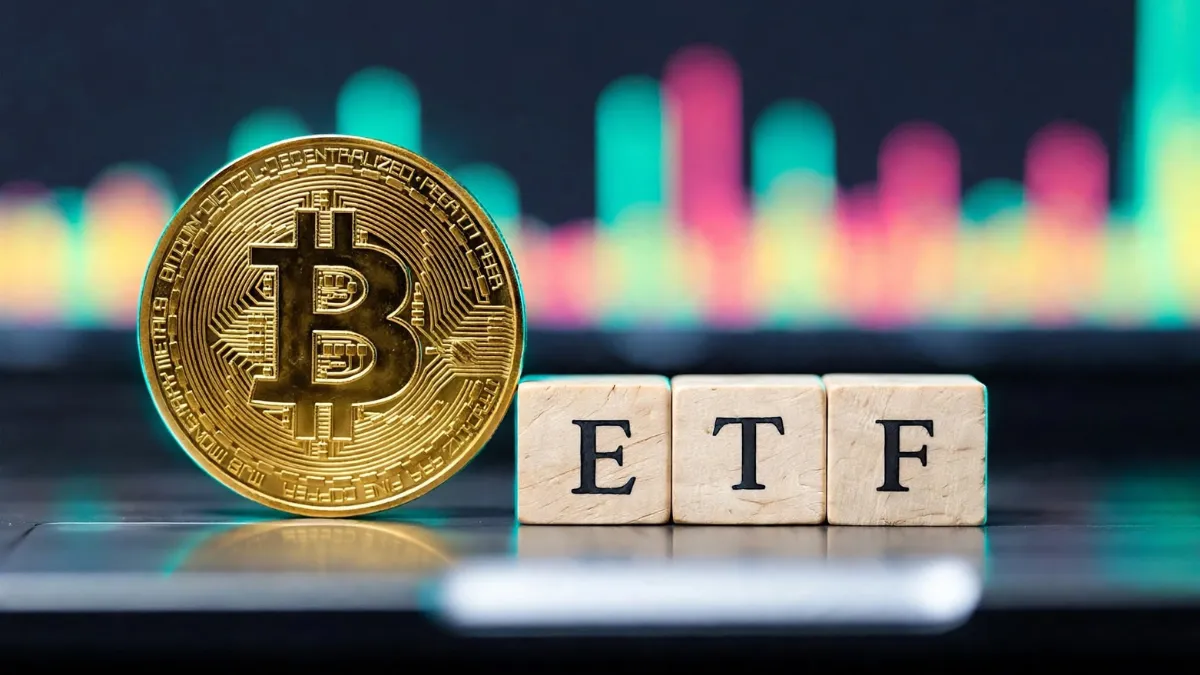
Fees can quietly reduce investment returns, particularly when you hold an investment for several years.
A crypto fund might charge an annual management fee, a performance fee, or both. Some also have subscription, redemption, administration, or custody-related expenses.
Crypto ETFs commonly disclose an annual expense ratio or management fee. However, the stated fee is not necessarily the full cost of investing.
| Cost | What to check |
| Management fee | The annual charge for managing the product |
| Performance fee | Whether the manager receives a share of gains |
| Trading spread | The difference between the buying and selling prices |
| Brokerage charges | Any commission or transaction fee charged by your broker |
| Fund expenses | Custody, administration, or other costs that may affect returns |
| Premium or discount | Whether the share price differs from the value of the underlying assets |
A simple fee example
Suppose you invest $10,000 in a product with a hypothetical annual fee of 0.25%. If the investment value stayed at $10,000 throughout the year, the fee would be approximately $25.
At a hypothetical annual fee of 1.5%, the same balance would incur approximately $150 in annual fees.
These examples exclude trading spreads, other expenses, taxes, and changes in investment value. Actual costs depend on the product’s fee calculation and account arrangements.
The cheaper product is not automatically the better one. Consider what it owns, how it tracks the market, how easily you can sell it, and what risks it introduces.
Which Is Safer: a Crypto Fund or an ETF?

Neither category is automatically safer. Risk depends on the investment strategy, underlying assets, legal structure, custody arrangements, and the protections available to investors.
An ETF may offer convenient exchange trading and public disclosures, but it can still expose you to volatile cryptocurrency prices, tracking differences, liquidity problems, and operational risks.
A private crypto fund may use active management or a diversified strategy, but it could also introduce manager risk, limited withdrawals, leverage, or less frequent valuation.
Before investing, examine these five risks:
- Market risk: Cryptocurrency prices can fall sharply, regardless of the investment wrapper.
- Custody risk: Understand who safeguards the assets and what happens if a custodian fails.
- Liquidity risk: You may not be able to sell at your preferred price or withdraw money immediately.
- Structure risk: The product may not provide direct ownership of cryptocurrency or a straightforward redemption mechanism.
- Regulatory and counterparty risk: Legal protections, service-provider reliability, and product availability vary by country.
For related practical considerations, review the difference between holding cryptocurrency through an investment product and managing it yourself before making a decision.
Can You Own Actual Cryptocurrency Through a Fund or ETF?
Sometimes, but not necessarily. A fund or ETF may hold cryptocurrency directly on behalf of the product, yet investors typically own shares or units in the investment vehicle rather than individual coins in their own wallets.
Other products use futures, derivatives, or indirect exposure. In those cases, the product may not hold the cryptocurrency that investors expect.
Direct ownership generally gives you control over your coins when you hold the private keys yourself, but it also means you are responsible for wallet security, backups, and transaction management.
An exchange-traded product can simplify access through a brokerage account, but it may not provide the ability to transfer its shares into a cryptocurrency wallet or redeem them for coins.
The key question is not simply whether the product is called a fund or an ETF. Ask what you legally own and what rights come with that ownership.
Crypto Index Fund vs ETF: Which Should You Choose?
This comparison is slightly different because an index fund describes an investment approach, while an ETF describes a fund structure. A crypto index fund can potentially be organized as an ETF, depending on the market and product.
If your priority is broad market exposure, compare the index methodology, number of assets, weighting rules, and rebalancing process. A fund that tracks an index of several cryptocurrencies may still be heavily concentrated in its largest holdings.
If you prioritize buying and selling during exchange hours, an ETF may offer a more familiar trading experience. But exchange trading alone does not guarantee deep liquidity or a tight spread.
If you want to withdraw or transfer actual cryptocurrency, investigate whether the product allows that. Many brokerage-based products do not provide this option to ordinary shareholders.
Choose according to the exposure you want, the account access available in your country, and the risks you can reasonably accept not simply the investment label.
The CLEAR Checklist for Comparing Crypto Funds and ETFs
Before putting money into any crypto investment product, use this five-part checklist.
- C — Costs: Calculate management fees, performance fees, spreads, and other expenses.
- L — Liquidity: Check trading activity, withdrawal restrictions, and redemption terms.
- E — Exposure: Confirm whether the product holds spot crypto, futures, a basket of assets, or something else.
- A — Access: Verify that the product is legally available to you and supported by your brokerage or investment platform.
- R — Rights and risks: Read the prospectus or offering documents to understand ownership, custody, investor protections, and potential losses.
If you cannot clearly explain what the product owns, how it generates exposure, and how you would exit the investment, take more time before investing.
Frequently Asked Questions
Are crypto funds and crypto ETFs the same thing?
No. Crypto funds are a broad category of investment arrangements, while ETFs are a particular type of fund that trades on an exchange. Some crypto ETFs fall within the broader crypto fund category.
Are crypto ETFs cheaper than private crypto funds?
They can be, but not always. Compare the stated annual fee, performance fees, trading spreads, brokerage charges, and other expenses. The total cost depends on the specific products.
Can a crypto ETF lose all its value?
Severe losses are possible, depending on the product and underlying exposure. A product focused on a highly volatile asset can experience substantial declines. Its structure does not guarantee your principal.
Is a crypto index fund the same as a crypto ETF?
No. An index fund describes a strategy for tracking an index, while an ETF describes a fund structure that trades on an exchange. A crypto index fund may or may not be organized as an ETF.
Can I buy crypto funds or ETFs from Pakistan?
Availability depends on the specific product, your broker, applicable regulations, and any relevant cross-border investment rules. Check the product’s eligibility requirements and local legal and tax implications before sending money to an overseas platform.
Do crypto ETFs pay dividends?
It depends on the product. Many cryptocurrency-focused products do not generate conventional dividend income. Some products may have different arrangements, so review their distribution policies rather than assuming all ETFs pay dividends.
Make the Structure Work for You
The useful comparison is not simply crypto funds versus ETFs. It is the specific investment vehicle, the exposure it provides, the total cost of holding it, and the rights you receive as an investor.
Before committing money, read the product documents, compare its fee structure with similar options, and confirm that it fits your circumstances. If you are still learning how digital assets generate returns, explore the different approaches to crypto income before choosing a product.
Financial disclaimer:
This article is for educational purposes only and does not constitute financial, investment, tax, or legal advice. Cryptocurrency-related investments can be highly volatile and may result in substantial losses. Product structures, regulations, fees, and tax treatment vary by jurisdiction. Conduct your own research and consult a qualified professional where appropriate.